Testing the set of home made pectin

I think I have another post about this, but here goes with my latest version.

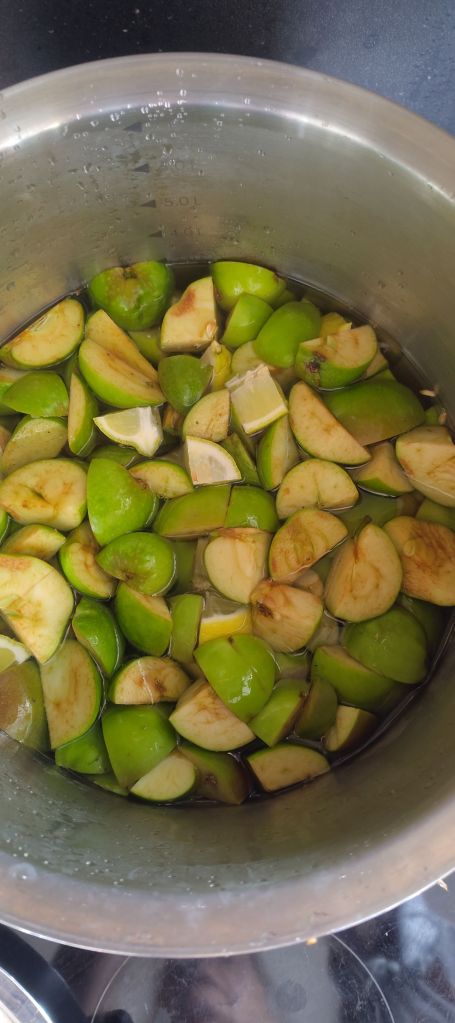
Windfalls, some were smaller and more bruised than these

We have a prolific harvest this year, so jam and other preserving is under way. Because there are several punnets of raspberries waiting to cook, I need more pectin. So I made another batch from the windfalls from the apple trees. I cut all the bruising and bugs out, and cut the pieces into 2cm chunks. Then squeezed 2 lemons and put the juice and the squashed peel into a saucepan with the apples with water to just about half way up.

Cook them until they are soft and squash them into a mush. Then strain through a muslin overnight.

Pectin after straining, such a lovely colour..

I am tempted to squeeze more juice out, but that will make the pectin cloudy, it’s up to you. 

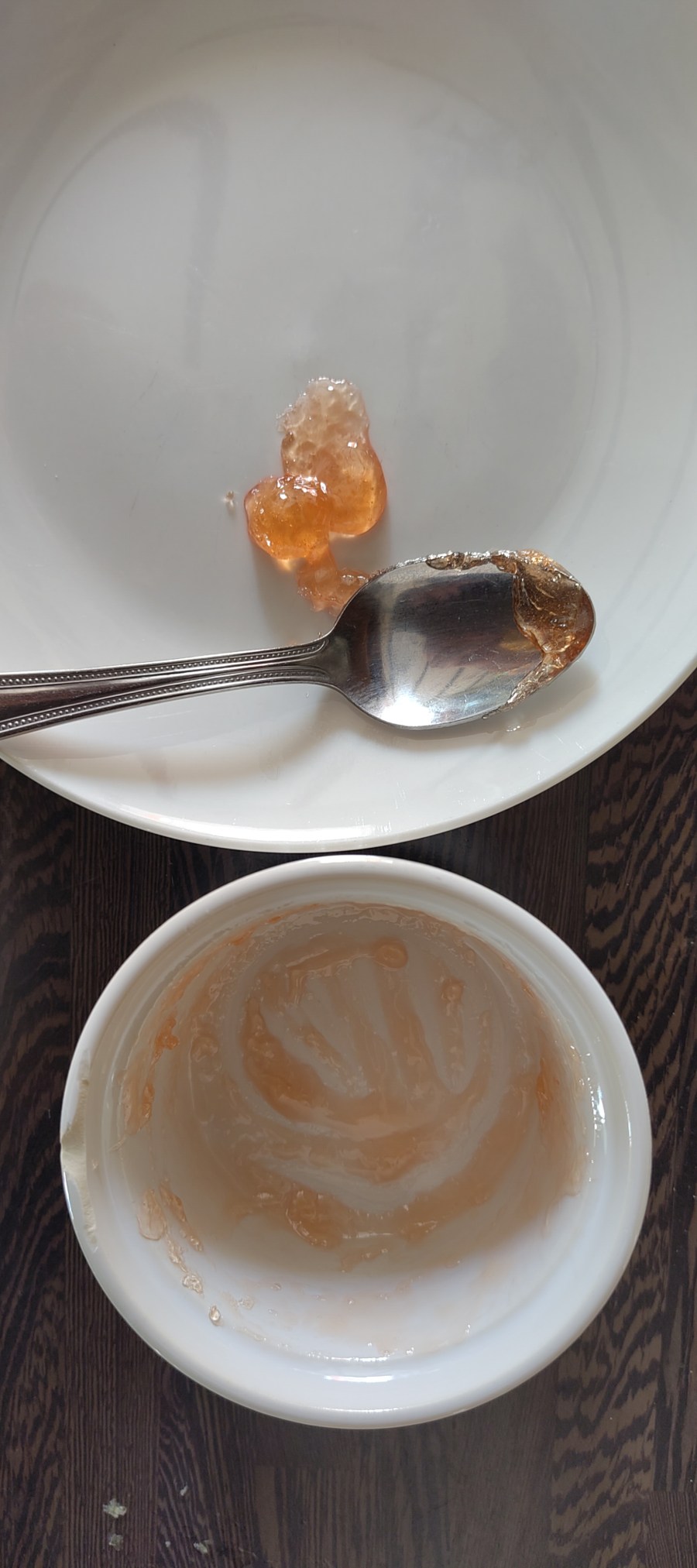
Now check for the set of the pectin. You can put small, equal amounts of sugar and pectin into a saucepan, stir, boil and rest.  But I out the two ingredients into a ramekin  and cook in the microwave for 40 seconds on full power. Take it out and stir. Repeat.
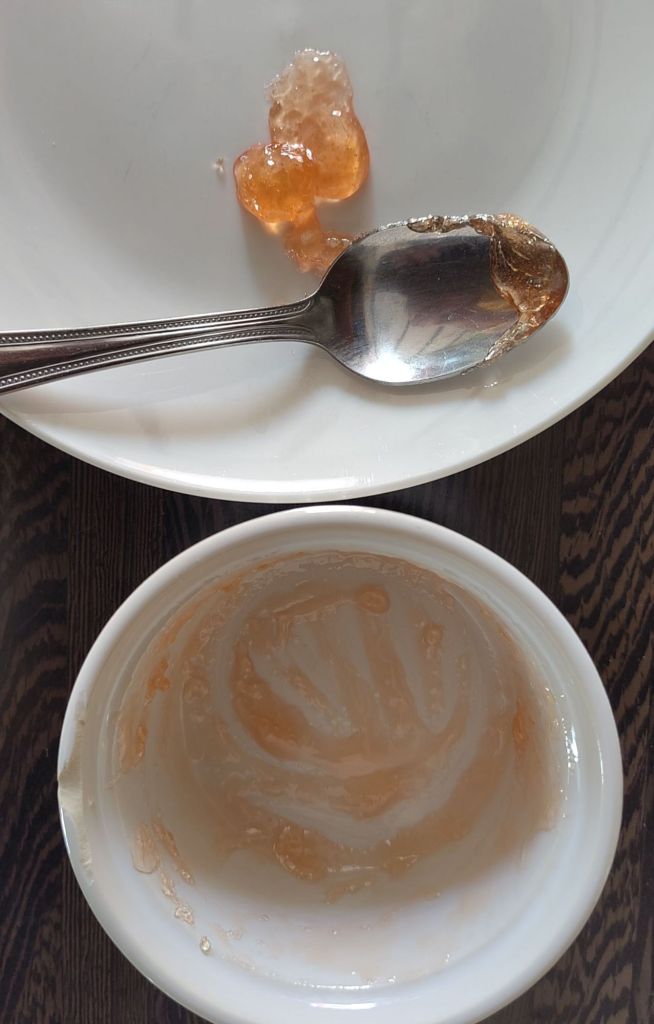
A nice form set, I couldn’t resist licking the spoon – and the blob!

Whichever cooking method to have used, drop a blob onto a chilled saucer and if it sets into a soft lump, the pectin is ready to bottle. Otherwise, return it to the saucepan and boil to reduce then retest.

Bottle the pectin in a sterilised bottle, (use the microwave for the glass bottle, but boil the metal lid).

Once cooked, store in the fridge for up to 4 weeks. Can also be frozen in a plastic container.

I use about a third to half a cup to 500g fruit when making soft fruit jam, but always test for the set before bottling jam.

Happy jam making.. 🙂
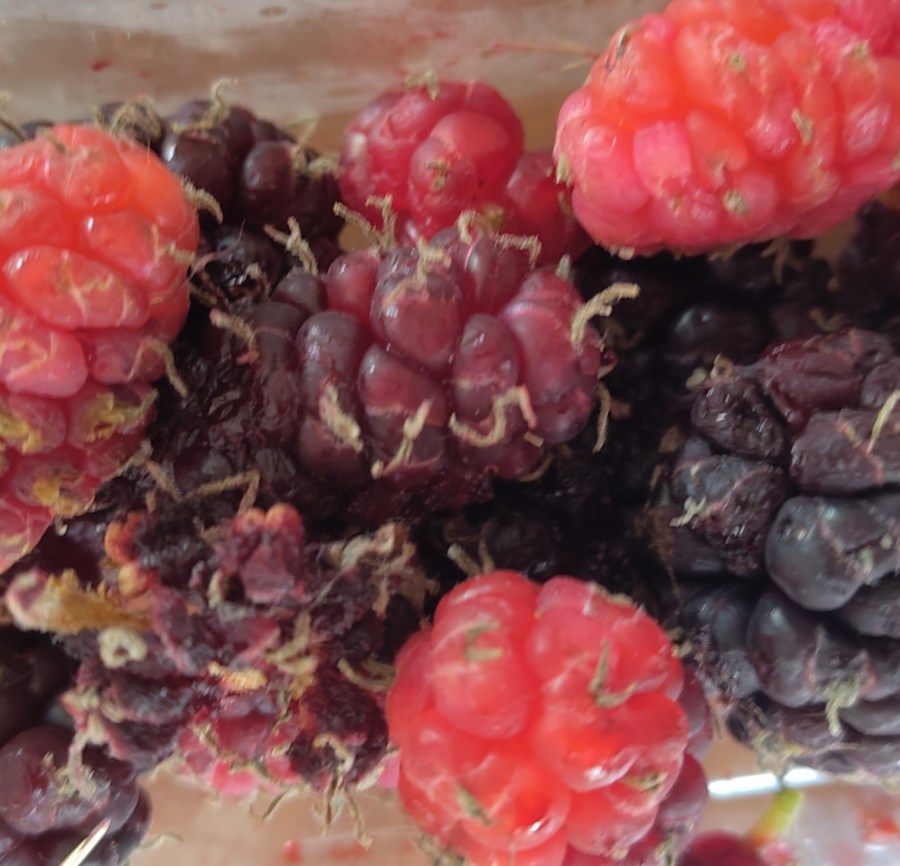
Preserving time is almost here

The warm spring and early summer has meant that everything’s cropping madly in the garden a bit early.

So to get a match on jam making I’m making a batch of pectin from the wind for apples. If you’ve made jam before you will know that pectin helps soft fruit jam set. I’ve made it before and then forgot about it as we didn’t have any windfalls  from our two apples trees worth speaking of, so I bought commercial pectin. However, after we moved here with lots of fruit trees and seeing all the wind falls and the piles of blackcurrants and mulberries saying, “make me into jam”,  reminded me that I can make my own.  Hence there is a large pot smelling very ‘appley’ bubbling on the stove right now.

Simmering windfall apples to make pectin for settng soft fruit jam

If you’ve never made your own pectin it’s very, very simple. You just chop up the little windfall apples into  chunks about two, two and a half centimeters size.  Core, peel, all goes in, then put them in a big saucepan and cover with water. Bring to the boil and simmer for about two hours, until mushy.  Then strain the whole lot through a muslin bag overnight or for about 6 hours. Give the muslin bag a good squeeze to get all the liquid out.

The liquid that you’ve strained out is the pectin and the apple pulp in the bag can be put in the compost bin. Return the pectin to the pan and reduce it until a bit thicker. There is a test with alcohol to check if it is strong enough, but I boil it with a little sugar and test the set as if it were jam and that has worked fine for me. I store the pectin in sterilised jam jars in the fridge and use within two or three weeks, but you can also freeze it, in which case it lasts about four to five months.

Just got to make all that jam now.

My best loaf yet…I hope

I’ve called this post ‘my best loaf yet… I hope’, because I haven’t sliced this sourdough loaf yet.

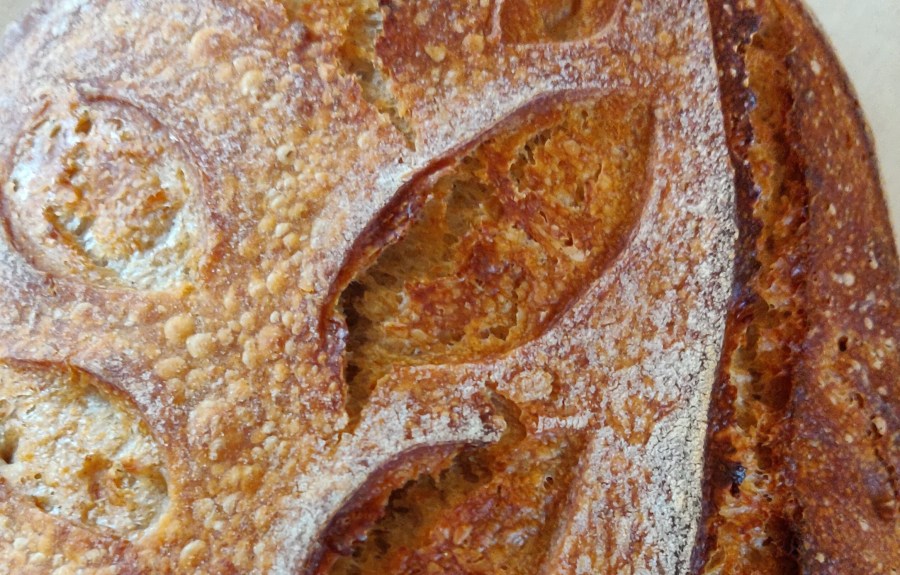
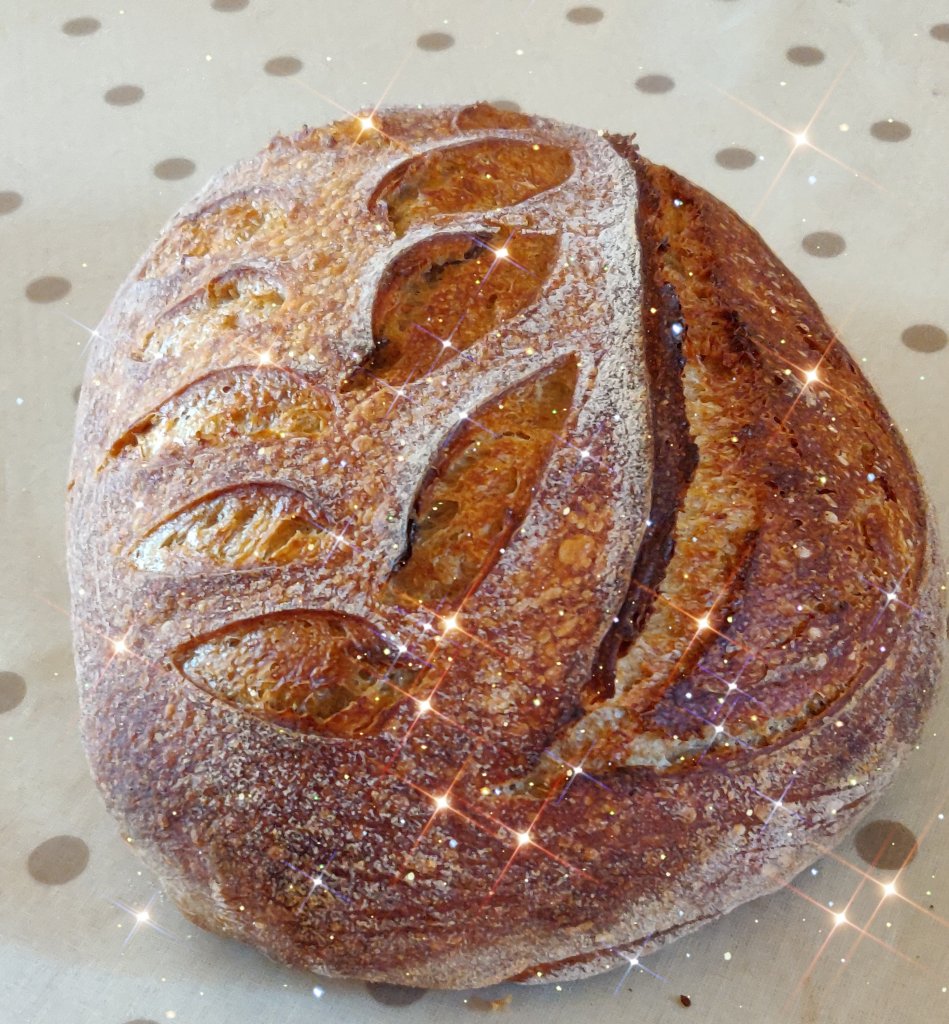
Sprinkled with a little stardust… Specially for the ‘ear’

Typically this was rather thrown together on a hot day day.and baked in a hurry, straight from the fridge, before I went out this morning. I used the same Sourly recipe as my last loaf, with 50g of the bread flour swapped for 50g Spelt. As I suspected I was allowing my shaped dough you over-prove, I put it straight in the fridge after shaping – without leaving it out for the 80 minutes that is suggested. I think in the winter it will probably need this, but the temperatures at the moment here in the UK are in the 30s so it works best without.

The starter is still my original one made from raisin-water yeast that I started in January 2020. I feed it with plain flour and occasionally with spelt or rye – just to give it a bit of a different flavour. I feed the starter with 100 g of flour and 100g of water to 100g of starter so I think this makes it 100% hydrated? Not sure.

As with my own recipe the bread dough comes out as about 70 – 72% hydrated after mixing. The main difference between the recipes is that Sourly’s uses 130g starter, and I was using 94g. I prefer using 130g as there is less starter to discard each time. Then it’s just a matter of less flour and less water to manorial the ‘baker’s percentage’. You can read more about the ‘baker’s perecentage’ in my post here.

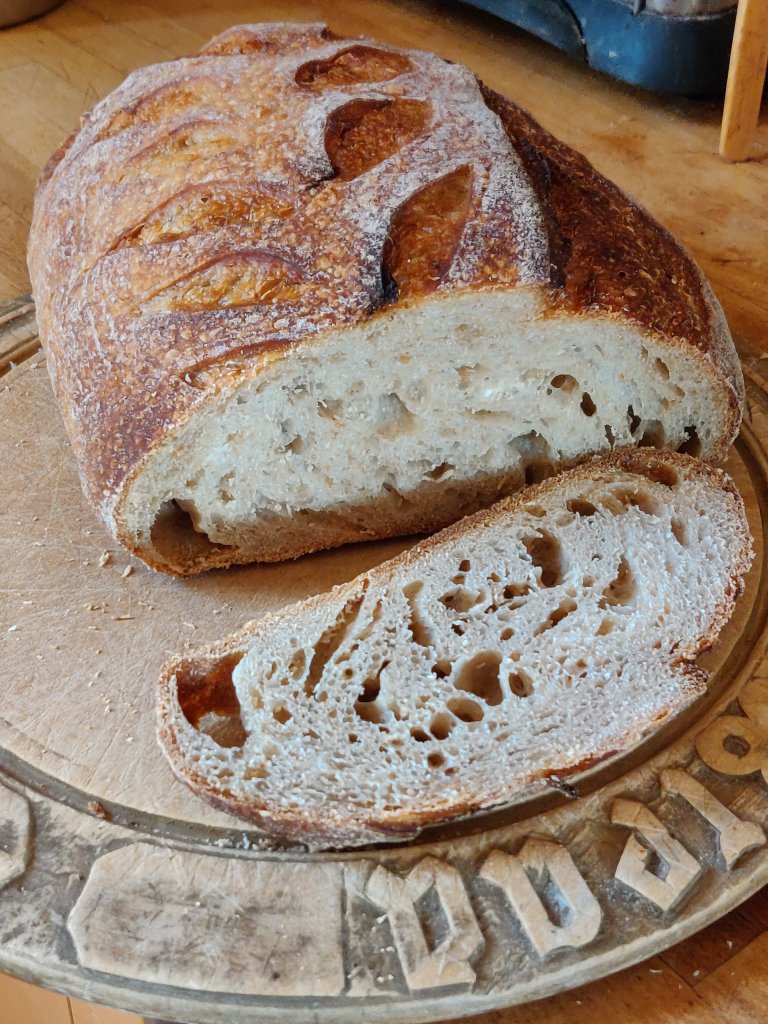
Update – crumb is as good as the crust!

Open crumb loaf sourced open