We are on holiday in Yorkshire and took the opportunity to visit the Ryedale Folk Museum in Hutton le Hole. The museum is a little gem, mostly outdoors it features original local buildings from different periods complete with information about those who lived in them. From the’ Witches Hovel’ to the Manor House, one can take a peak into the life of the people of Ryedale through the centuries.
Pre the Industrial Revolution the village subsisted on small scale farming and at one time a quarter of the population of Hutton le Hole were employed as weavers. It is not explained whether it was cause or effect, but flax was grown in the area in the 1700s and the women would have spun the flax into linen yarn on spinning wheels, examples of which are present in the houses. It is likely that wool was also spun as villagers grazed cattle and sheep on the common land and most households were largely self sufficient.
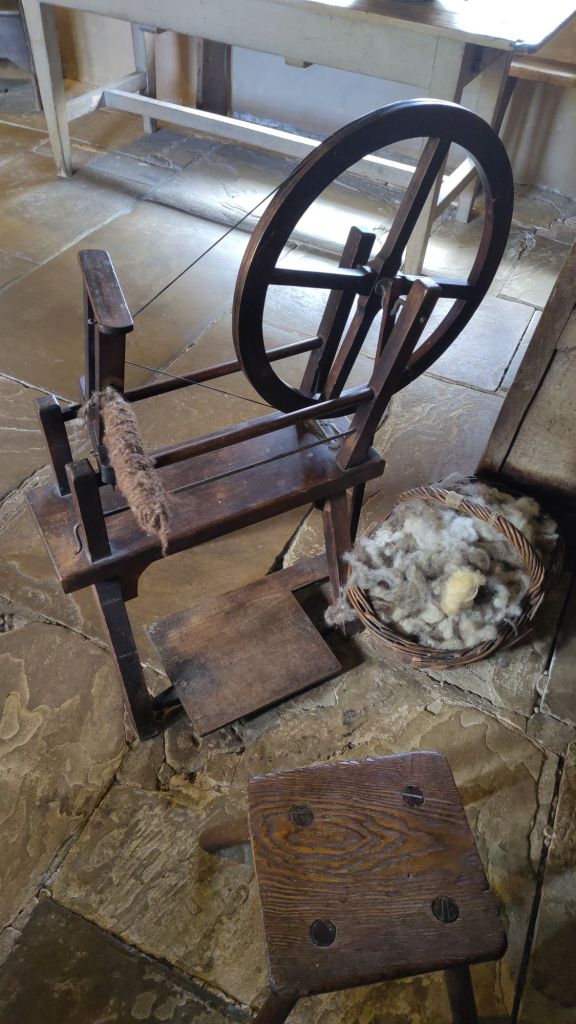
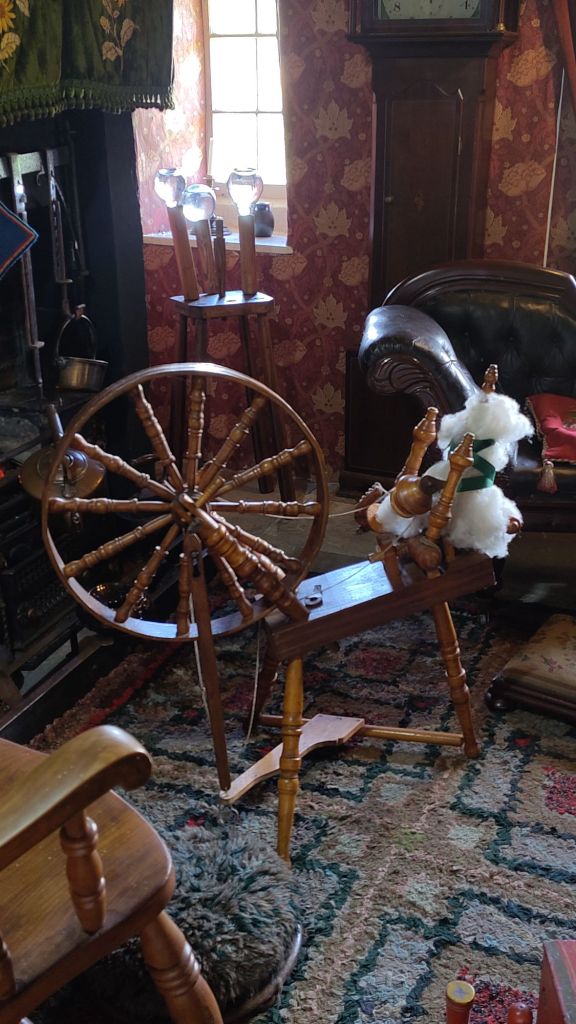
An early spinning wheel with a spindle which pre-dated the bobbin and flyer. It has a treadle which suggests that this wheel dates from after the latter part of the 1700s. Possibly originally used for flax as this was grown in the area in the 1700s to produce yarn for the village weavers. Ryedale Folk Museum.Another spinning wheel from a later period as it has a bobbin and flyer. The distaff suggests this might also have been used for flax, as wheels were, and still are, used for a range of fibres based on the spinner’s needs and skills.
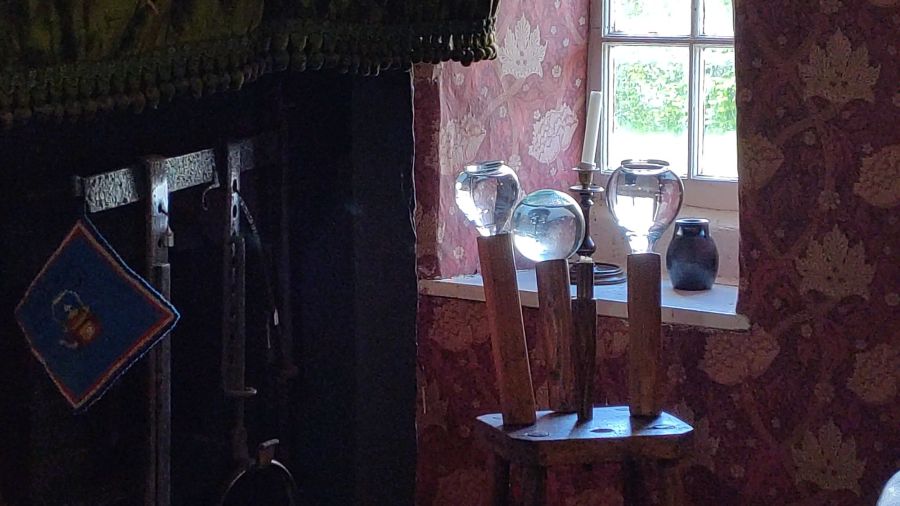
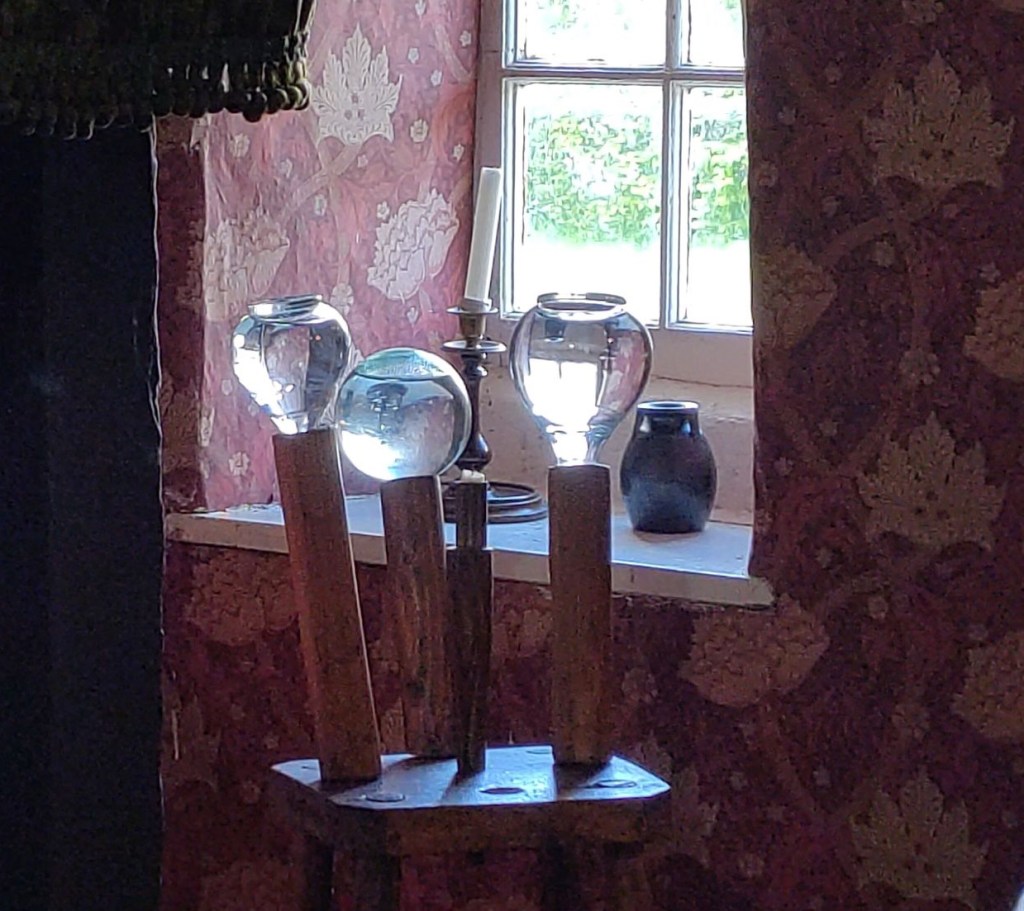
In the same room as the wheel shown above, there was a charming lace light. These glass globes amplified the light from the central candle and focused it onto the work of those sitting around the globes. I have not seen a triple globe stool version before, so that was a treat.
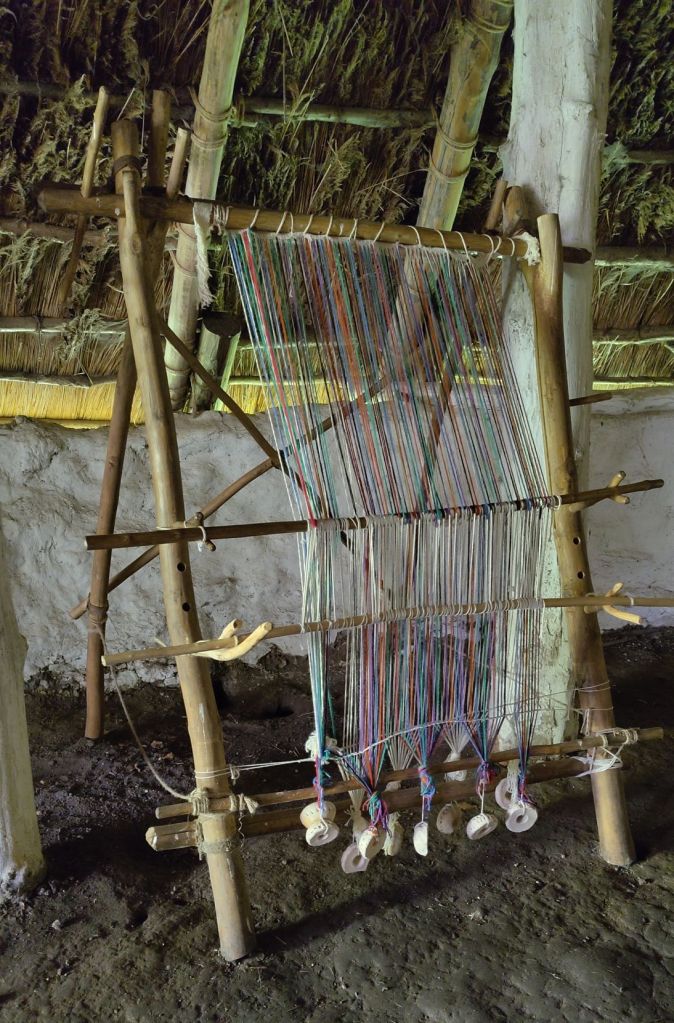
Towards the end of the path through the museum is an Iron Age roundhouse. Apparently the structure was built with wattle and daub, just as it would have been in the Iron Age. Inside there is an open fire and amongst other domestic artefacts there is a rough-built warp-weighted loom. Although there is a warp on it, there is no weaving in progress.
At a quick glance the warp-weighted loom doesn’t look that different from a modern upright loom, except for the refinements of a winding-on mechanism and reed.
I am now itching to get home to do some weaving. Luckily I have my spinning wheel with me in the caravan where I am practising spinning flax in to linen yarn.
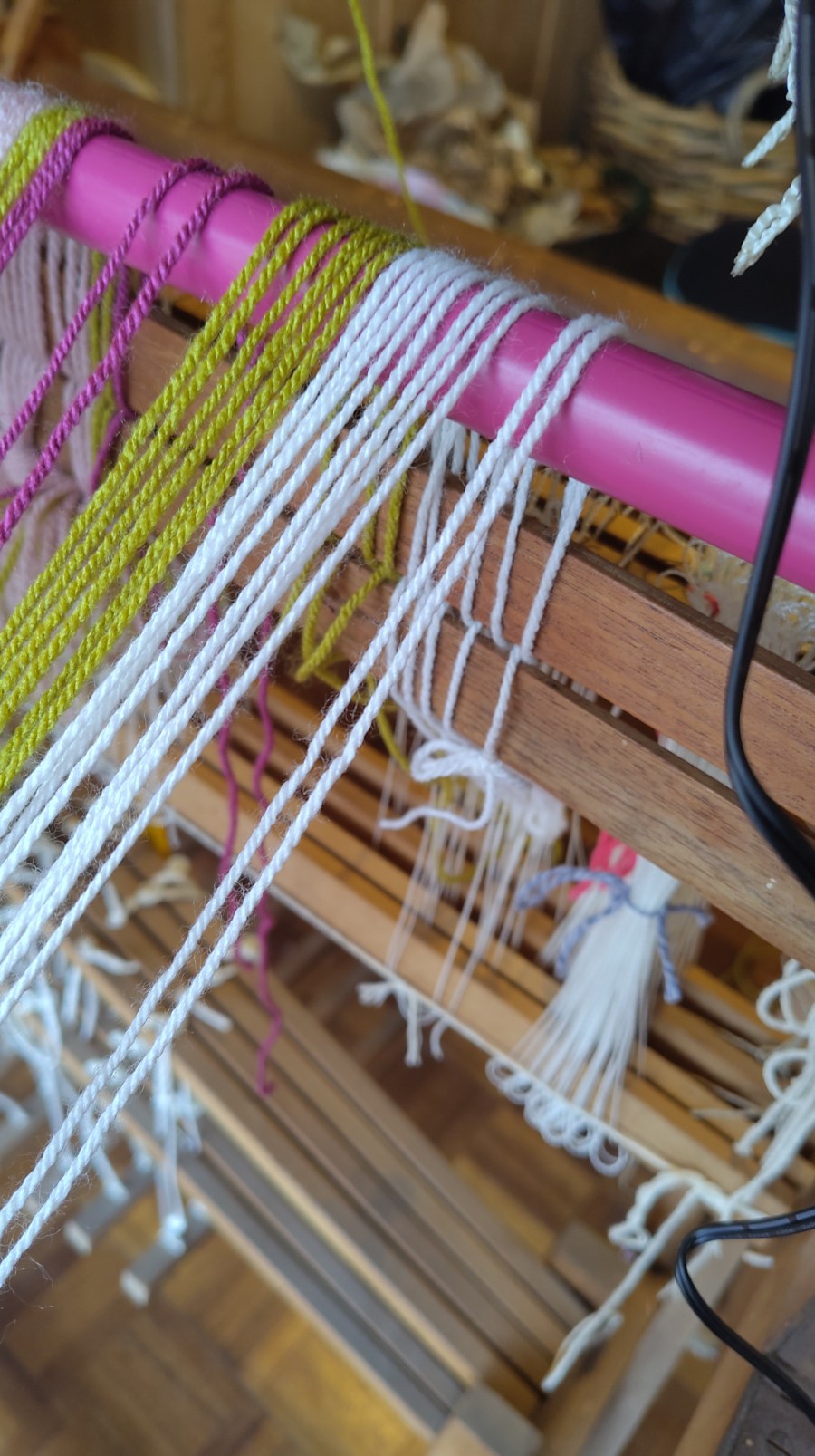
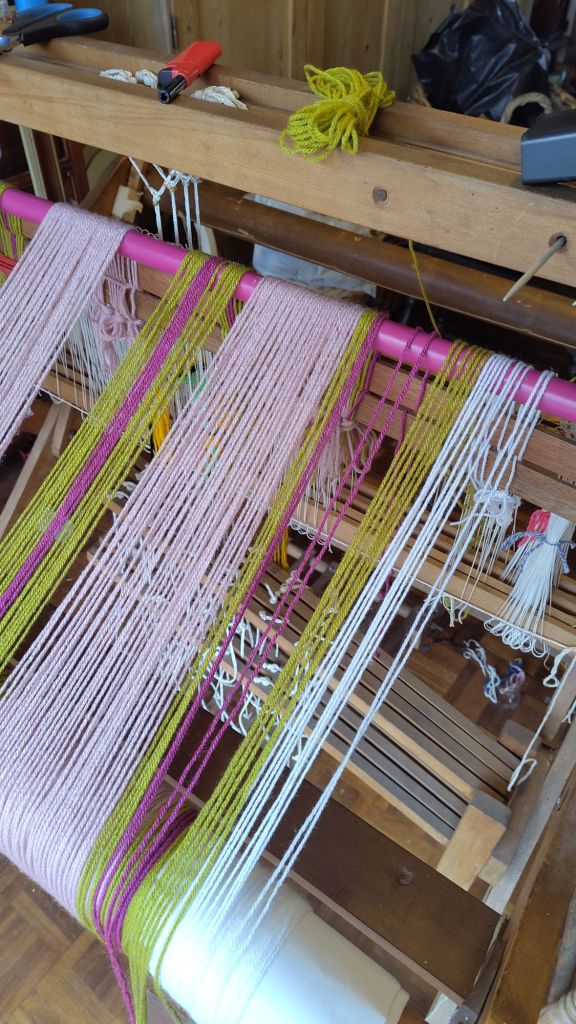
Its raining the proverbial cats and dogs here in Somerset, so it’s an afternoon indoors. I am threading up the warp for a baby blanket on my countermarche loom. Its only taken me 3 months to get this far!
Warping back to front the Peggy Osterkamp way
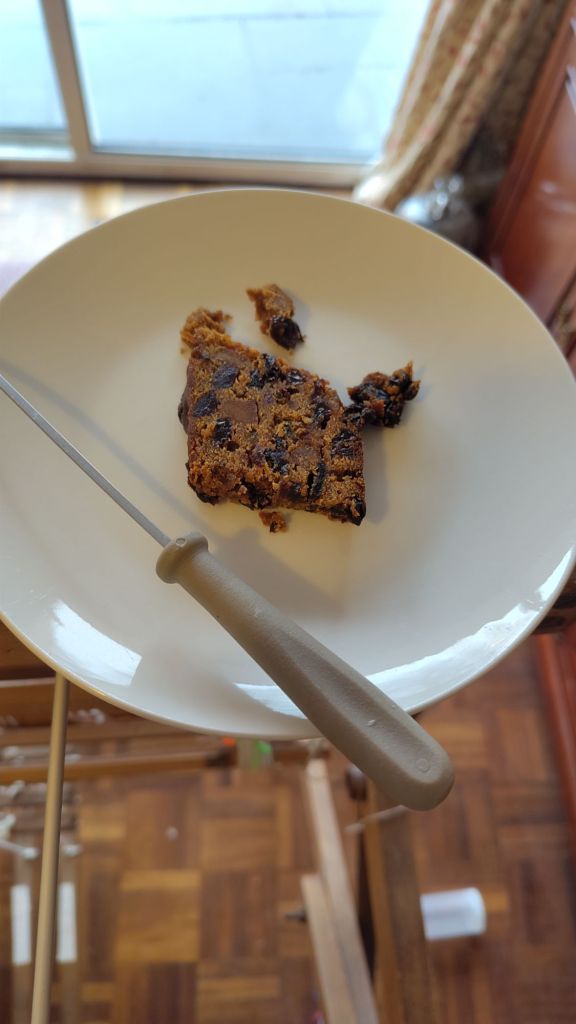
With the last slice of Christmas cake and a cup of tea at my side it’s a pretty nice afternoon inside.
Cake on a levitating plate
Of course that was then, and this is now. Somehow I have miscounted heddles and got in a right muddle. Its not such a lovely afternoon after all…
Update
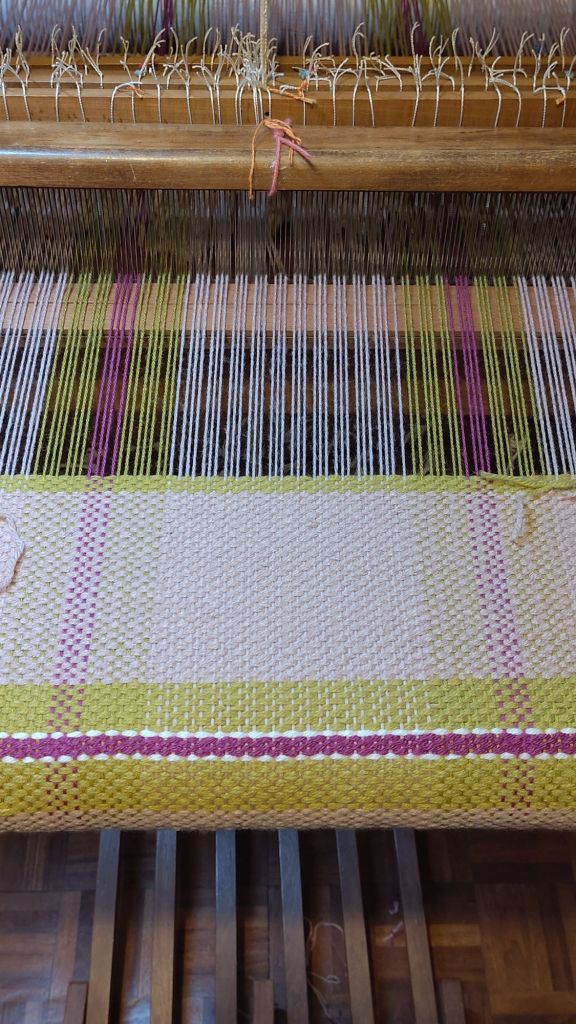
I am now 50cm into the blanket! How has it taken me this long you might ask. Well it took me ages to fine tune it, because I had some odd threads in my warp that I couldn’t get to tension right.
I have deliberately missed out the edges as they are a little bit messy, but you get the drift.
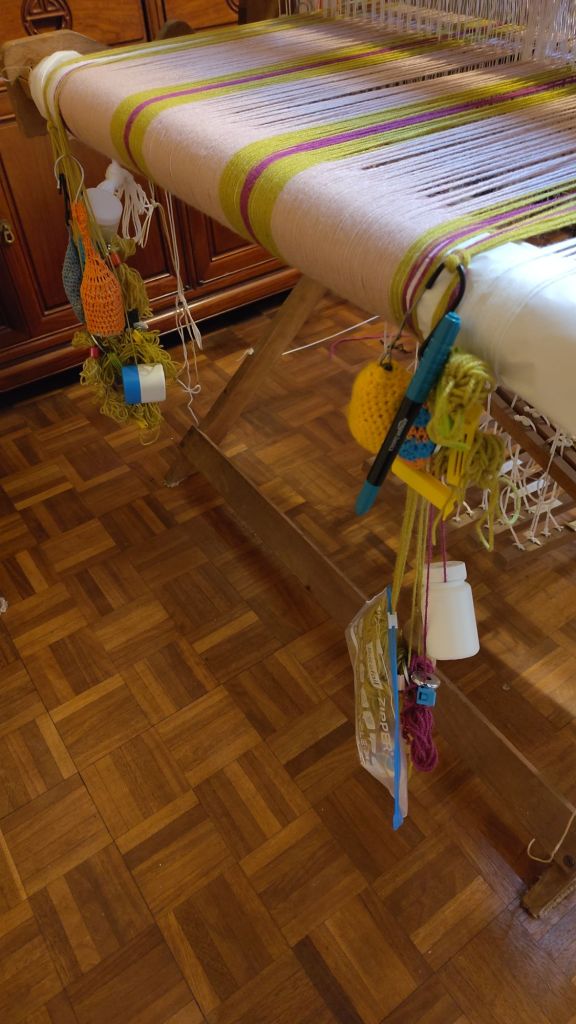
That’s sorted now I think at least for a while. The back of my loom looks like a right mess.
But seems to be holding now. I took the temple off to take the photograph, but it’s use is helping me keep my width, because one edge is still a bit wonky. My solution to that will probably be to bind it with ribbon as I did for my children’S blankets.
😂 what can I say? I’m particularly proud of the felt pen and the medicine bottles holding all the threads down.
I’m using a double thread as the weft, not quite sure why after all this time since I started, but that was what I sampled with and it worked out OK. Part of the problem was I’ve got an 8 epi reed and I thought this double knitting weight yarn would work at 8 epi. However, I’ve had to space it out further to 6 epi, because it was too bulky, but then it looked a bit thin and weedy so I decided to use a double thread in the weft.
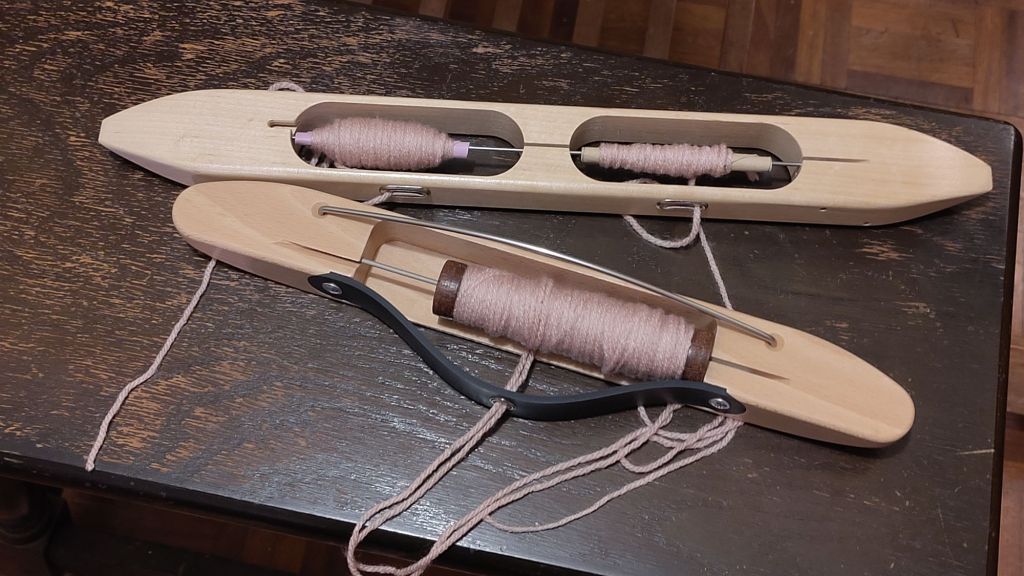
This double thread caused me problems because it was really fiddly to use two shuttles and I found putting two ends onto the bobbin of a boat shuttle meant I only got a tiny amount woven before the bobbin ran out. I have used stick shuttles for the contrast colours, but I really wanted to weave the main pink weft with a boat shuttle because it’s more efficient as I have a shuttle race on the reed.
I was gifted a Toika double shuttle for Christmas, and have not yet had the chance to practice with it but this seemed the obvious tool to use. As with everything it takes a bit of practice and I ended up with different lengths on the bobbins and the bobbins unwinding at different speeds. A tip I remembered was to twist the threads at the end so I began twisting the shuttle, and that helps. Also I learned to stop both bobbins with my fingers in an overhang catch after sending it across.
However, I was still finding that the bobbins ran out quickly and inconsistently. I was using homemade paper ones, but didn’t find I could get any more onto a cardboard quill , (and most of those I are too big for the double shuttle anyway and I don’t want to cut them down as they fit other shuttles.
Back to the drawing board. I unearthed my Louet Flying Dutchman shuttle and found some old wooden bobbins that I bought at a boot sale which have always been too long for any of my bobbins- but which I now find fit the Dutchman really well. This time I double wound the threads very carefully onto the wooden bobbins, running them through tensions to equalise them. This has become my happy place and I will probably weave the rest of the pink using the Flying Dutchman and twisting at each end.
I will add another picture after my next 50 centimeters.
Toika double shuttle at the back and the Louet Flying Dutchman at the front
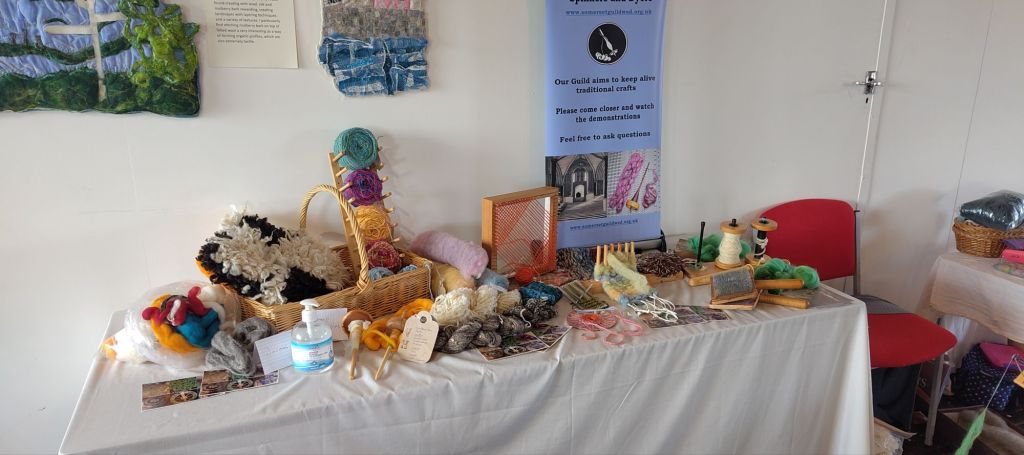
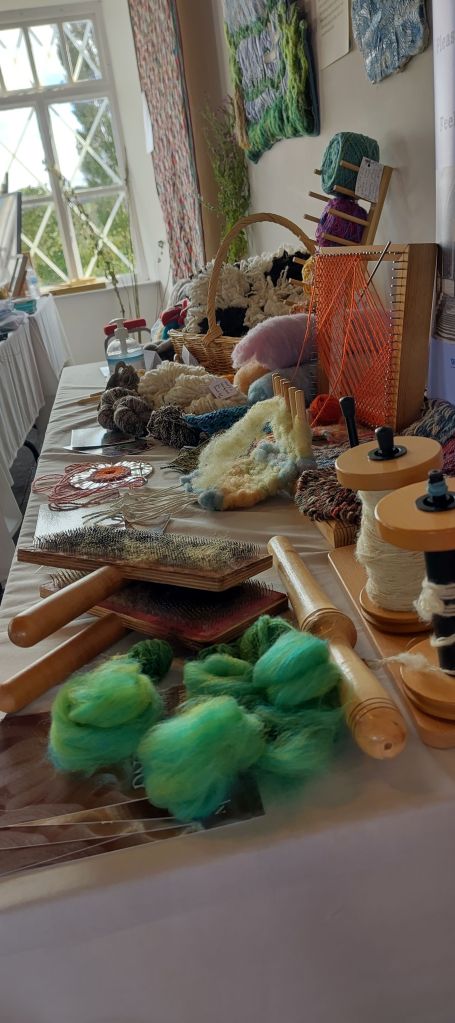
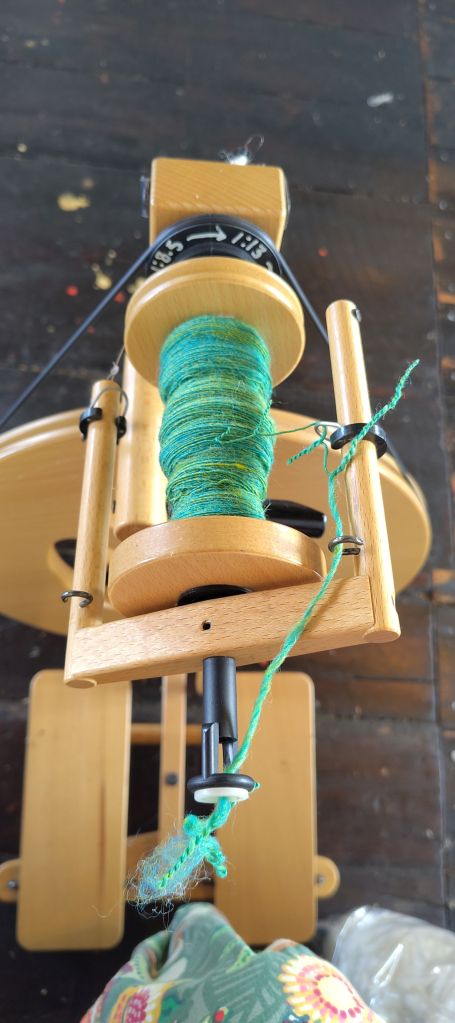
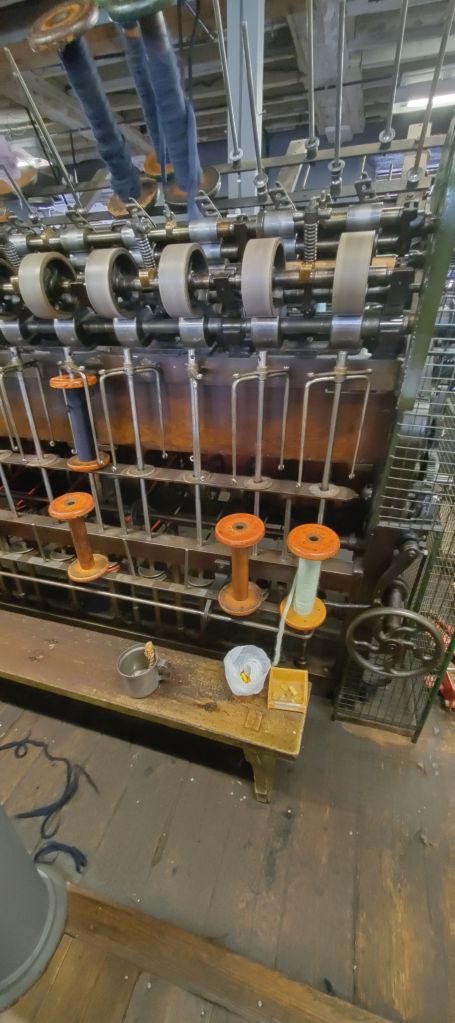
Today I was invited as a member of the Somerset Guild of Weavers, Spinners and Dyers to demonstrate spinning at the Heritage Craft Show hosted by Coldharbour Mill in Uffculme. It is a fascinating working museum with wonderful old textile machinery. Well worth a visit.
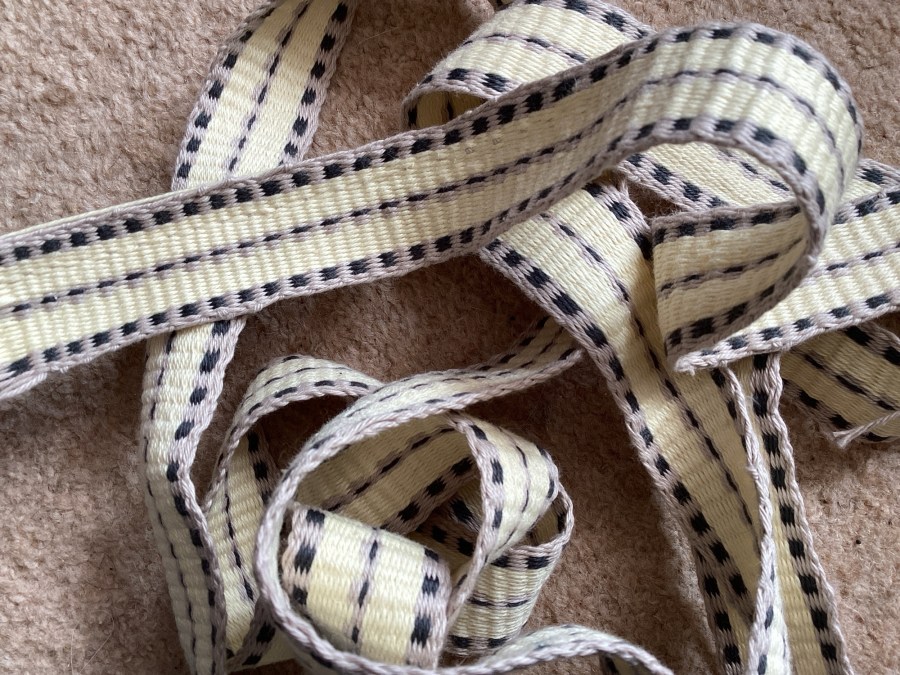
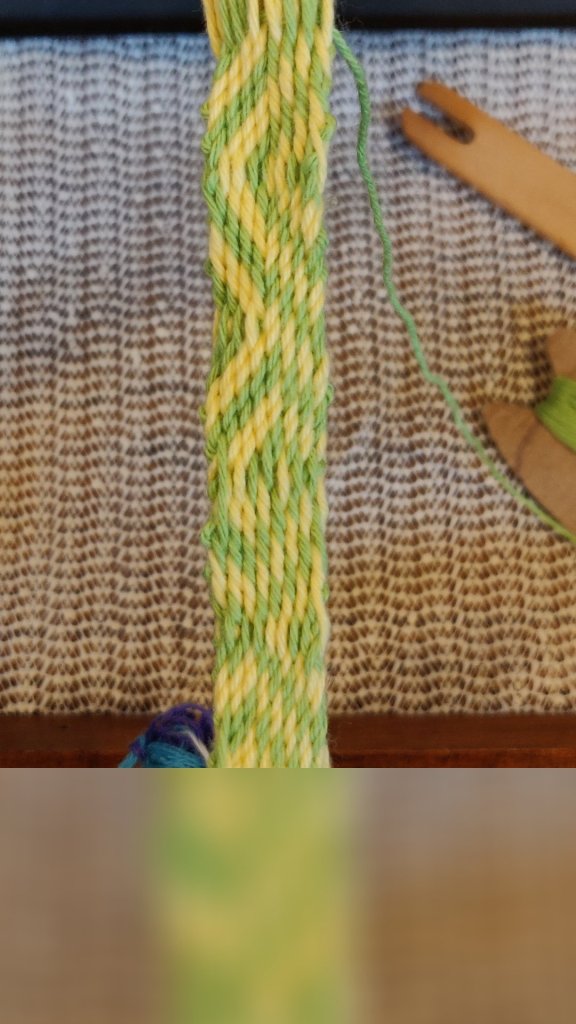
Cutting the warp off, is for me, a scarey, but exciting part of weaving. I started this inkle band during a workshop with the Somerset Guild of Spinners, Weavers and Dyers several months ago. When I got home I did a bit, but it sat part done in the corner for all this time until I was fired up to finish a few projects off and wove the last fifty or so centimetres yesterday evening.
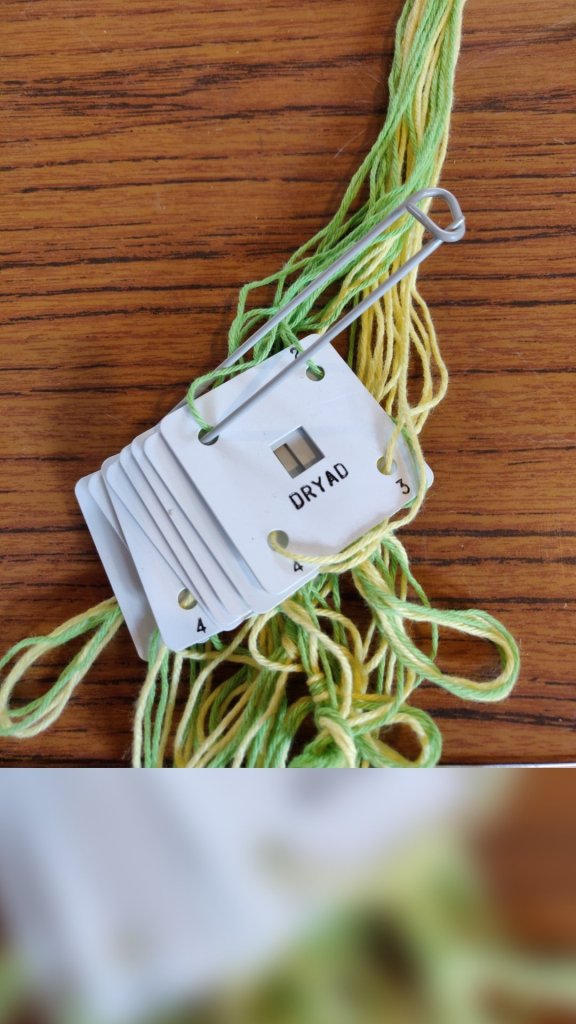
This morning I cut the warp and will now wash the band. It is in 4ply hand knit/crochet cotton and follows a simple pattern that was set for the workshop. The colours were chosen to suit the living room curtains and if I ever get around to it I will make this band into tie-backs for the curtains, (which was my original intent).
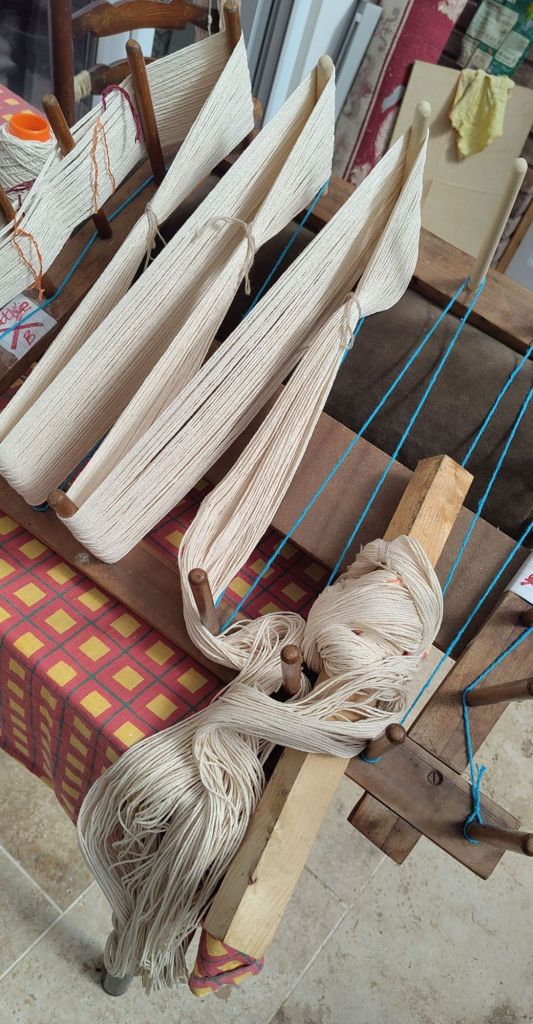
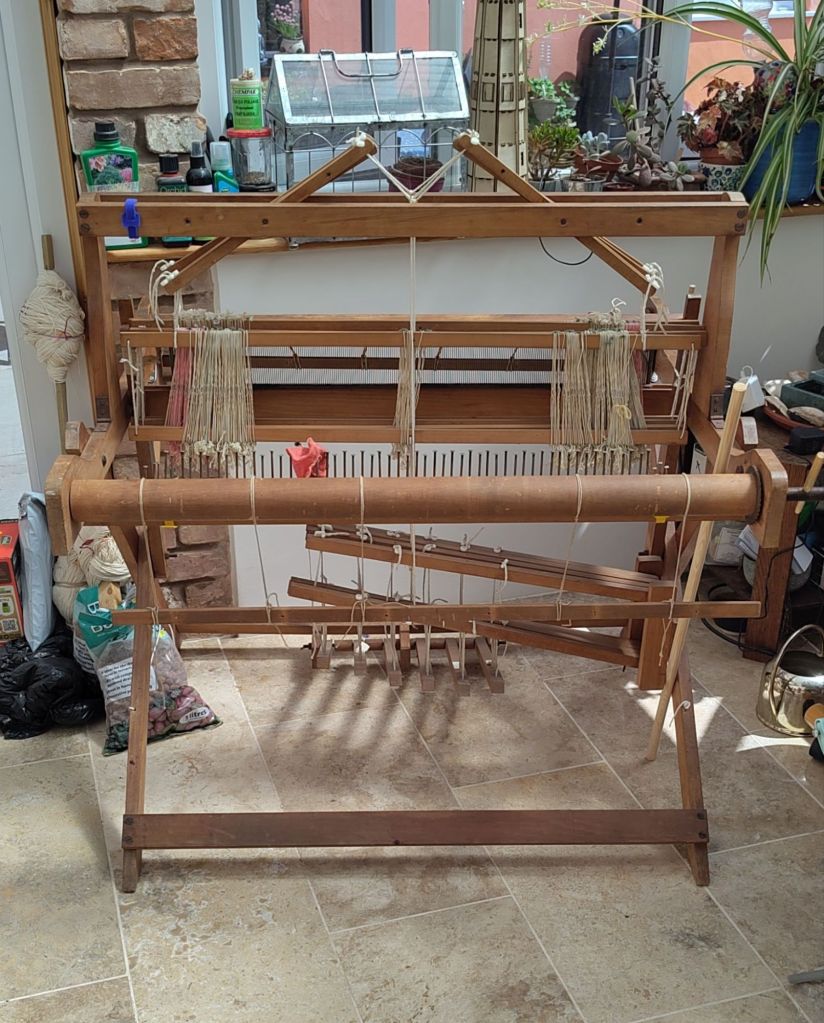
It’s taken me a while, but I have finally made the warp which I will use for testing out my new (to me) countermarch loom.
It’s taken me a while as we have building work going on in the house so I am moving from room to room to escape the chaos. I finally ran out of places to go, so ended up in the conservatory which is HOT. Lots of short breaks needed.
I am in two minds about what to weave. My heart says a fleece rug – I have two in bags in the shed, but my mind says ‘ do you need a rug,?’ What I really need is more tea towels, since my son burned a hole in one of my hand woven ones.
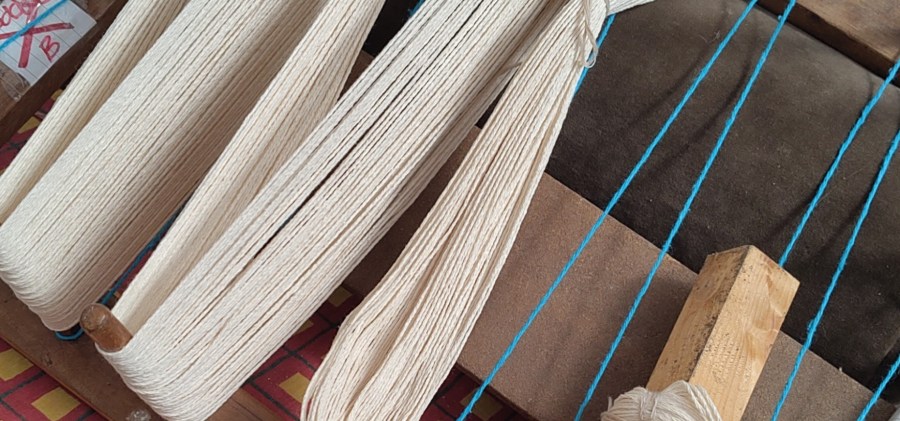
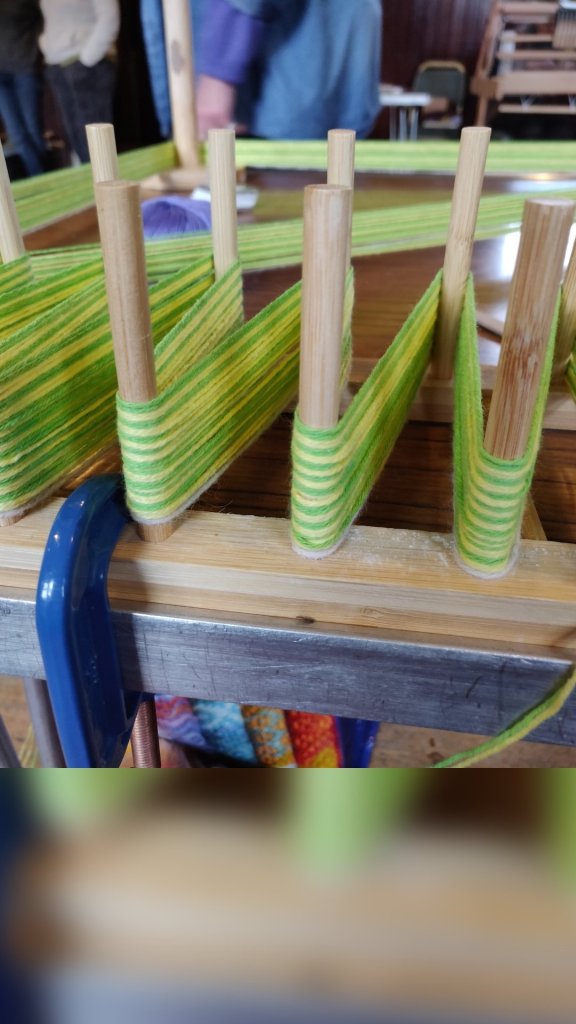
The loom has got an 8 dent reed and I am using a thickish cotton and making a sectional warp because my warping board pegs won’t take more than 80 ends of this. I’ll thread it up as a twill and let myself be guided by the spirit of the day I start to weave.
Winding the warp of the warping board onto a kite stick, as recommended by Peggy Osterkamp
The loom waiting for the warp. I know I’ll be whining about back ache quite soon…
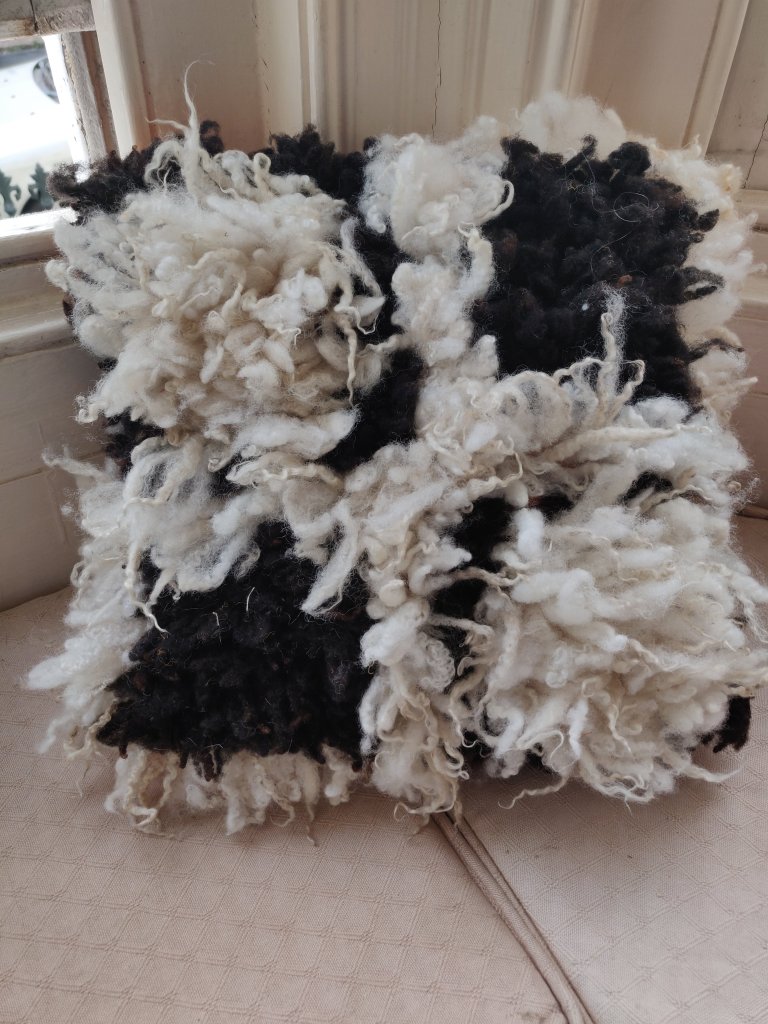
Although it’s taken me a while I have finally finished this cushion.
Front of the cushion. A tufted chequer board that is very tactile and squishy.
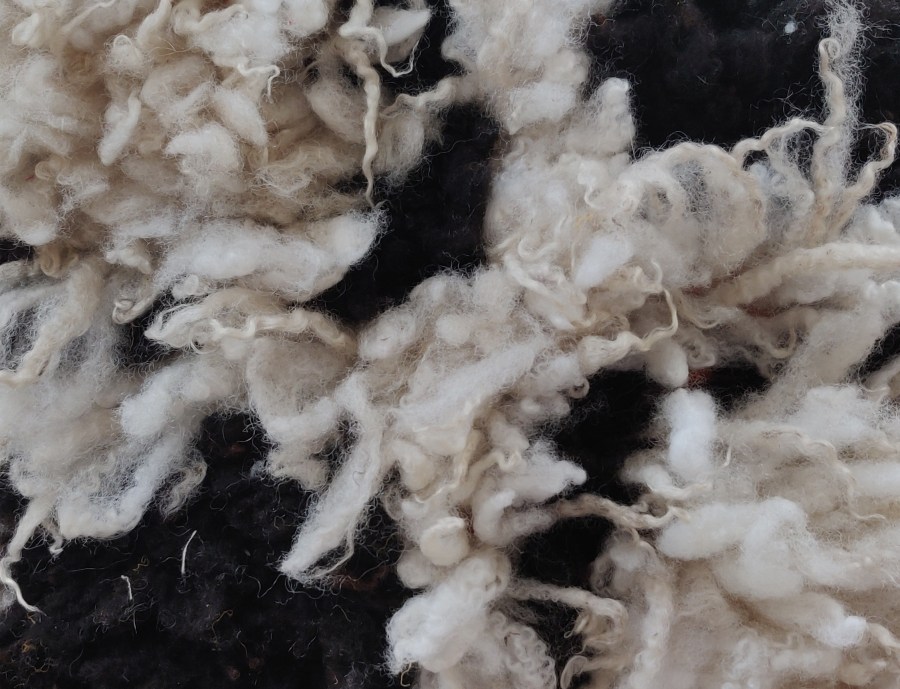
The front is Rya tufted and woven with a British wool rug yarn on a linen/cotton warp. The black tufts are Shetland staples and the cream is a mixture of Devon/Dorset staples. Although it’s not that clear in the photo, the squares are reversed; black edging with a cream centre and cream edging with a black centre.
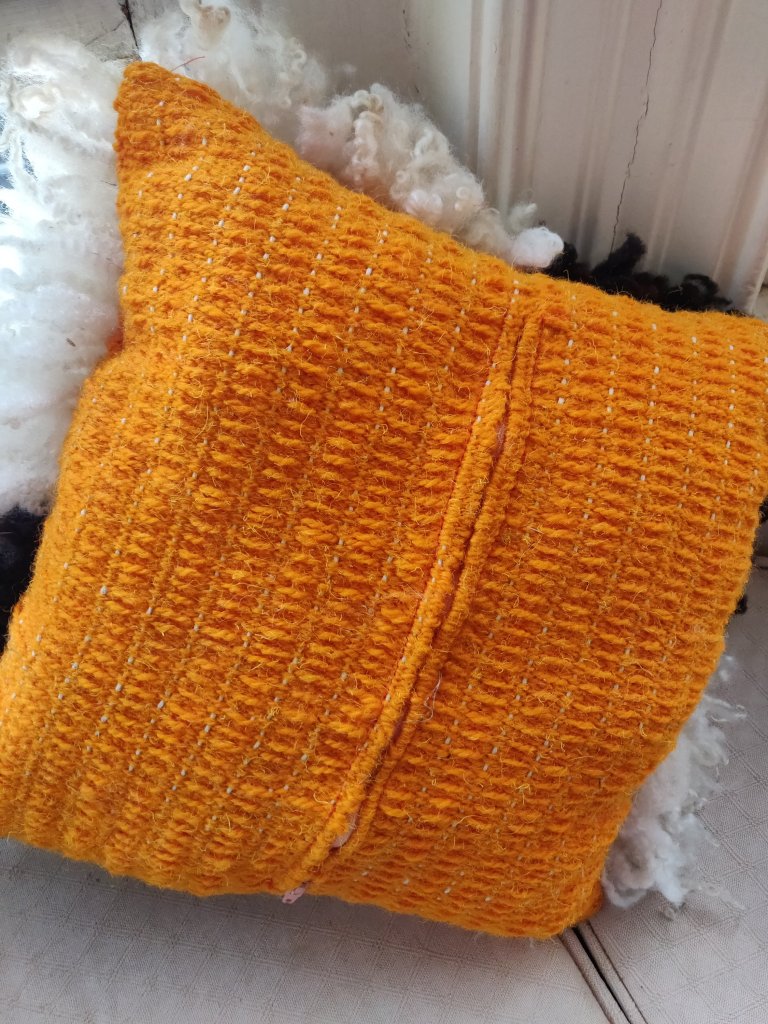
The reverse of the cushion is a faux waffle weave in the same rug yarn that underlies the Rya tufts. Because my rigid heddle loom is only a 20 inch wide, the cushion is composed of four pieces.
I took the opportunity to insert a zip in the centre back seam.
Instead of feathers or polyester wadding, the cushion is filled with a pad of lofty carded wool fleece. I will use this cushion to make my chair extra comfortable whilst spinning at my wheel.
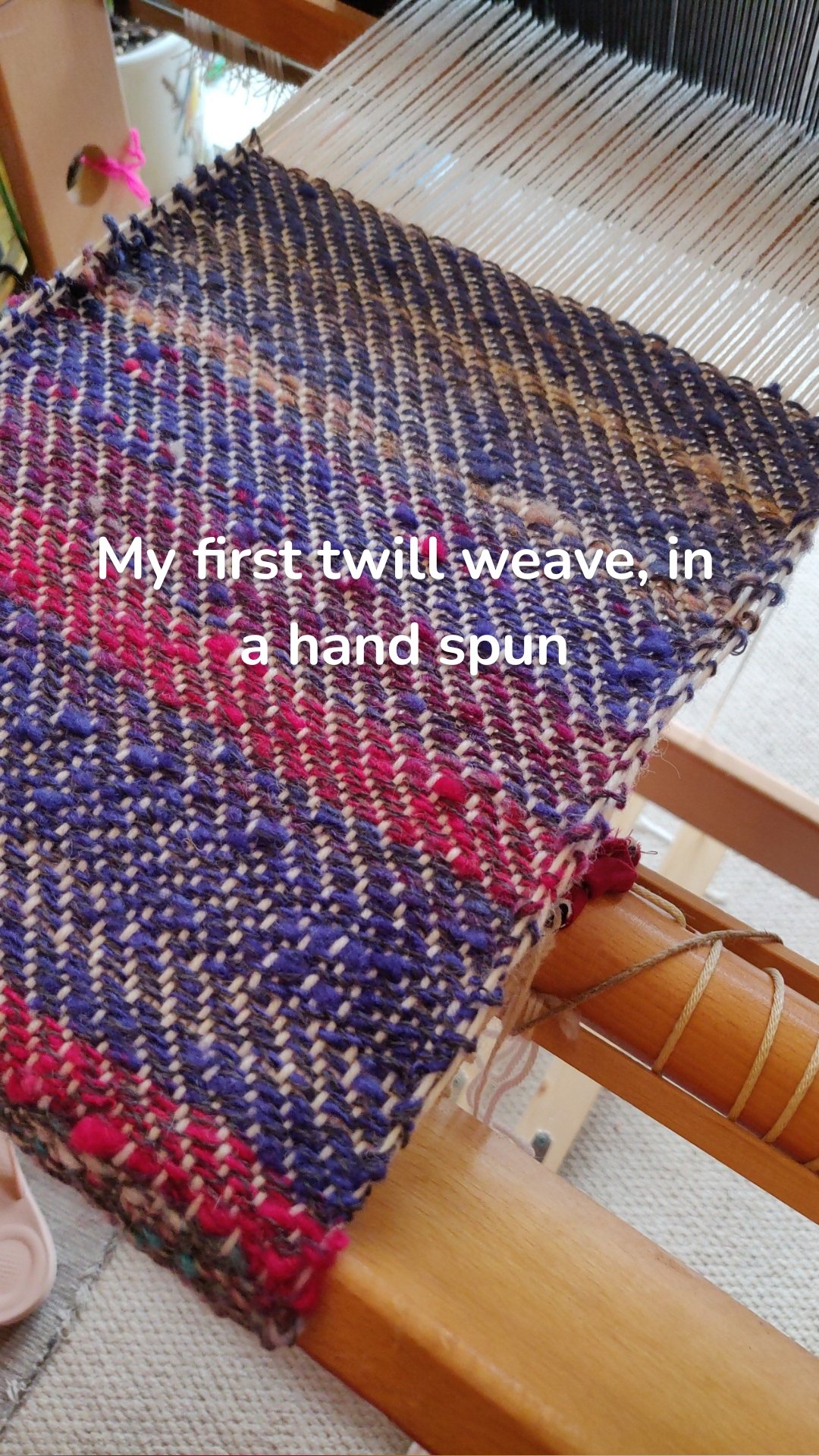
I haven’t really woven on a loom since I was a student at college. I have a Spears toy loom which I used for one project but the width is limited and the heddle is quite fiddly to work with. What I really wanted to do was to find a technique that uses up my small bits of handspun yarn my experiments and my texted handspun that I don’t think looks very good in knitting.
The Spears loom is actually quite good, and is very much like using a rigid heddle loom but with the shortcomings mentioned earlier. So I was really pleased when a friend offered to lend me 15 inch rigid heddle loom that she had in her attic. This now gives me the extra width and also the heddle is much easier to manipulate.
And so my weaving adventure has begun. Kindly she put a viscose thread warp on it for me to get me going and I’ve used this to practise using some acrylic DK yarn I had to hand.
Playing with acrylic yarn to get the feel of the loom.My first handspun effort