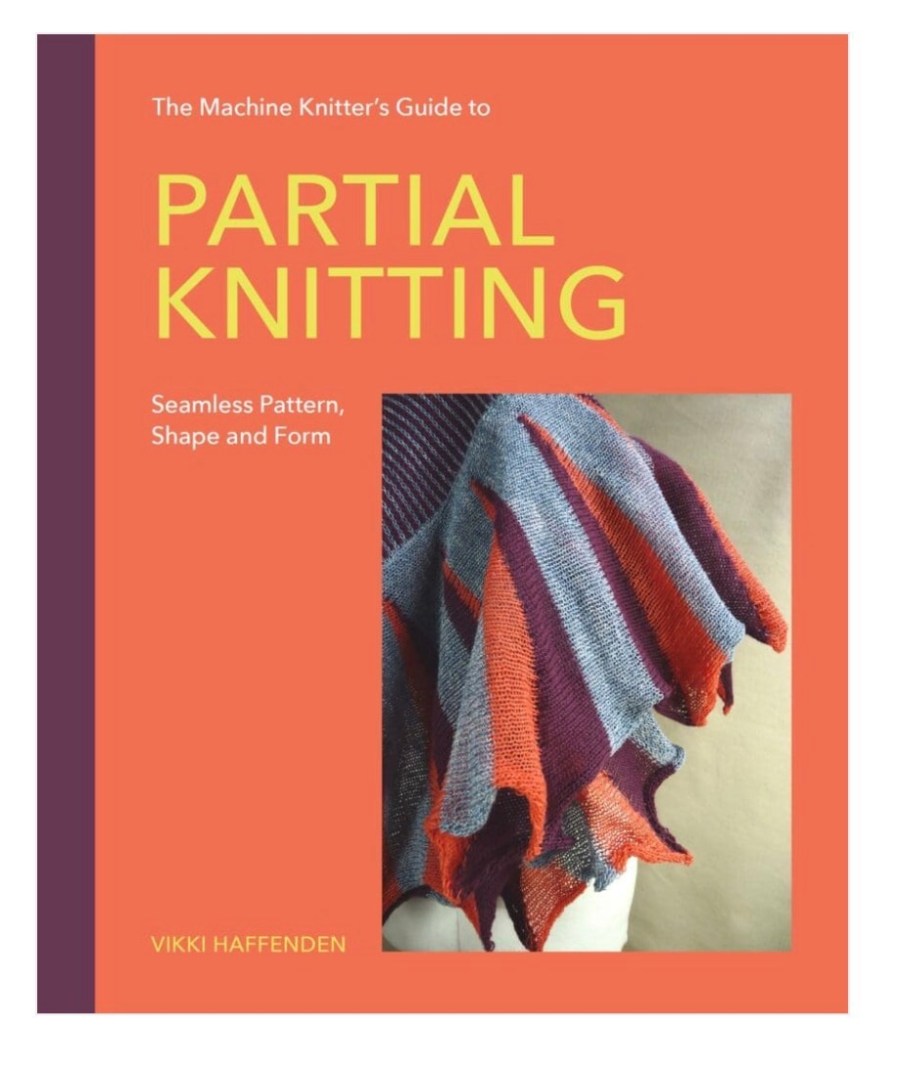
A quick peak at my latest book

‘The Machine Knitter’s Guide to Partial Knitting: Seamless Pattern, Shape and Form’, is available to pre-order in the UK from Crowood Books, and online retailers. In the US it can be ordered from Blackwells.
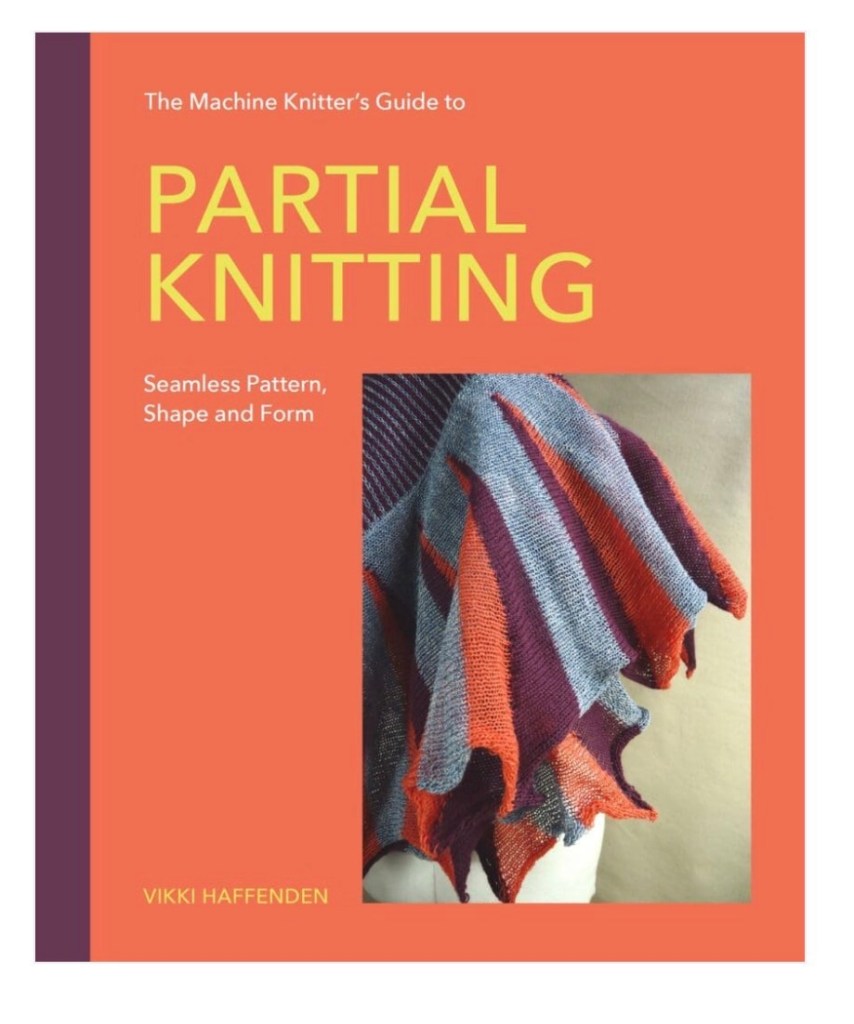
Learn how to control short rows and create fab effects with this fascinating technique.

I’ve always been fascinated by short rows, or partial knitting as this technique is also called, so when the opportunity came to write a whole book about the technique I was super excited. The book opens with some interesting information about short rows to whet the appetite, the first chapter is about the absolute basics, so is ideal for people who have not worked with short rows before. The chapters progress through the different ways of using short rows; shown with examples, diagrams and written instructions. Some also have half scale sample patterns for practising the techniques which include more advanced uses, such as 3d shaping.. There are step-by-step instructions and each chapter builds on the knowledge of the previous chapter. The book ends with a chapter of patterns exemplifying the techniques covered throughout the book.

I so look forward to receiving my first copy!
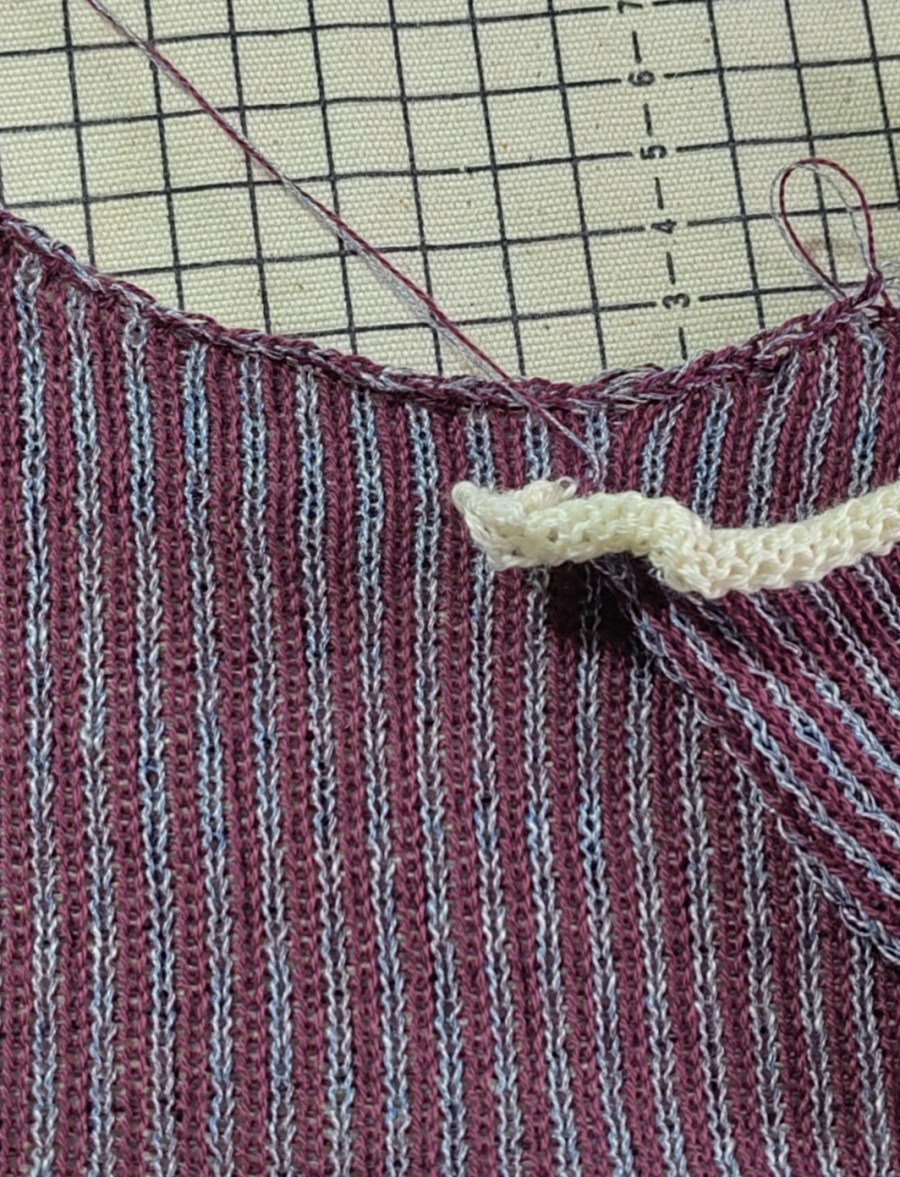
Final sample for my latest book about machine knitting

I think this might be the final sample for my latest book. The manuscript went into the publishers a week or so ago and I’m just working in a few outstanding samples and photos.

Of course machine knitters, well knitters in general, will know that ‘sorting out a sample’ is a shorthand for:

knitting several design swatches

knitting a tension swatch (or three)

working out the garment pattern

knitting it

finding you’ve made a mistake

knitting it again

steaming it

sewing it together

washing it

blocking it

etcetera, etcetera….

So I am just at the first steaming stage and getting ready to assemble the garment. And of course I’ve had to re-knit one piece because the dratted yarn got caught by the brushes irrevocably and it was easier to restart than try and sort that out. More haste, less speed is so very true in machine knitting. Nice and steady is always the best way.

I’m hoping this garment will be nice enough to go on the cover, but we will see.

Meanwhile let me tell you a little bit about the book. The title is still to be finalised, but it is all about short rows and partial knitting on a machine.  There is a lot in there for beginners, for example the first chapter is all about the principles of short rows and how you knit them and there is a whole basic techniques appendix at the back for additional support. Chapters 2 to 5 offer loads of information, samples, examples and exercises for more experienced knitters to really come to grips for short rows, and to understand how and when to use them for different results.

Chapter 6 has patterns that use short rows as they’ve been described in the earlier chapters, but applied to an item. So from these patterns you actually get to use short rows purposefully to create shape and form combined with colour and surface pattern.

So once it’s published I will obviously be shouting about it,  but keep an eye out and do pop back here for updates.

Machine Knitting workshop, Brighton TAG

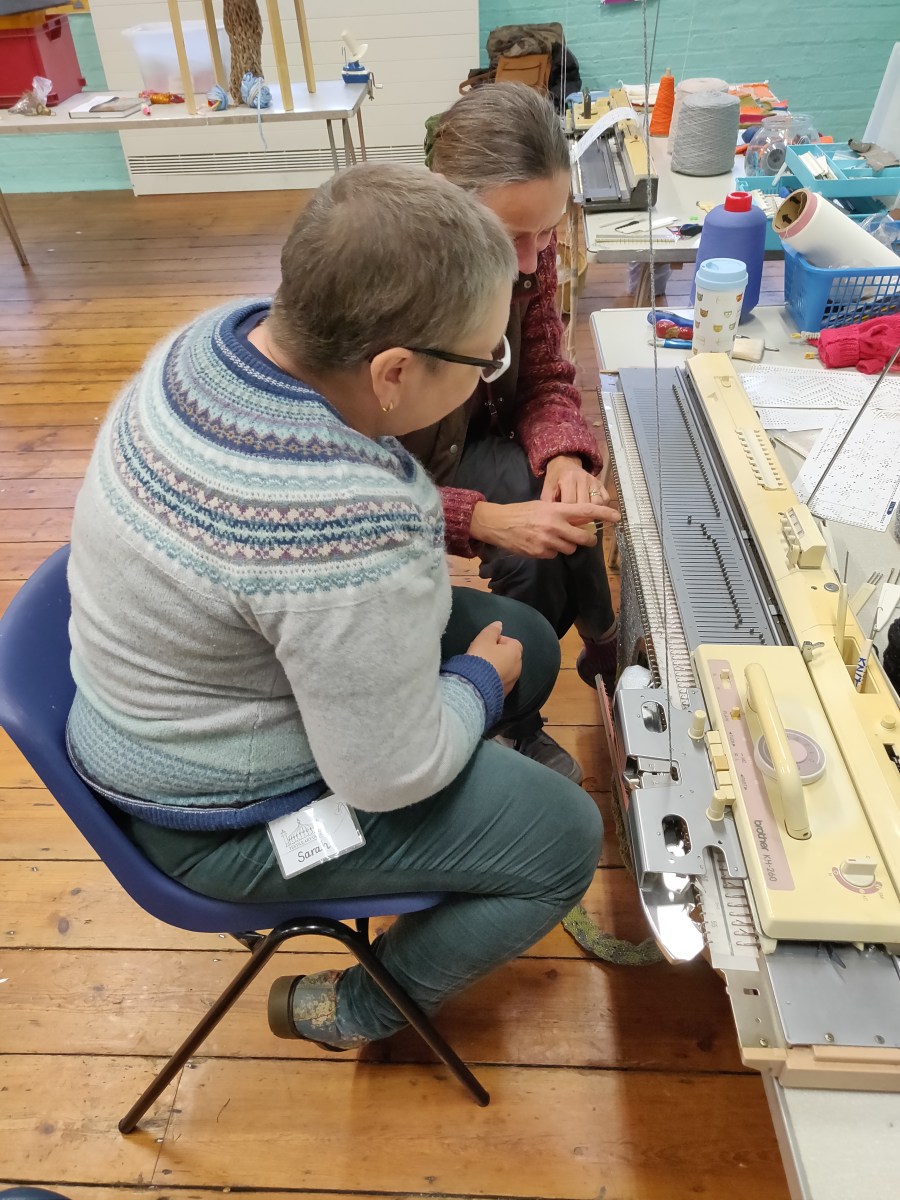
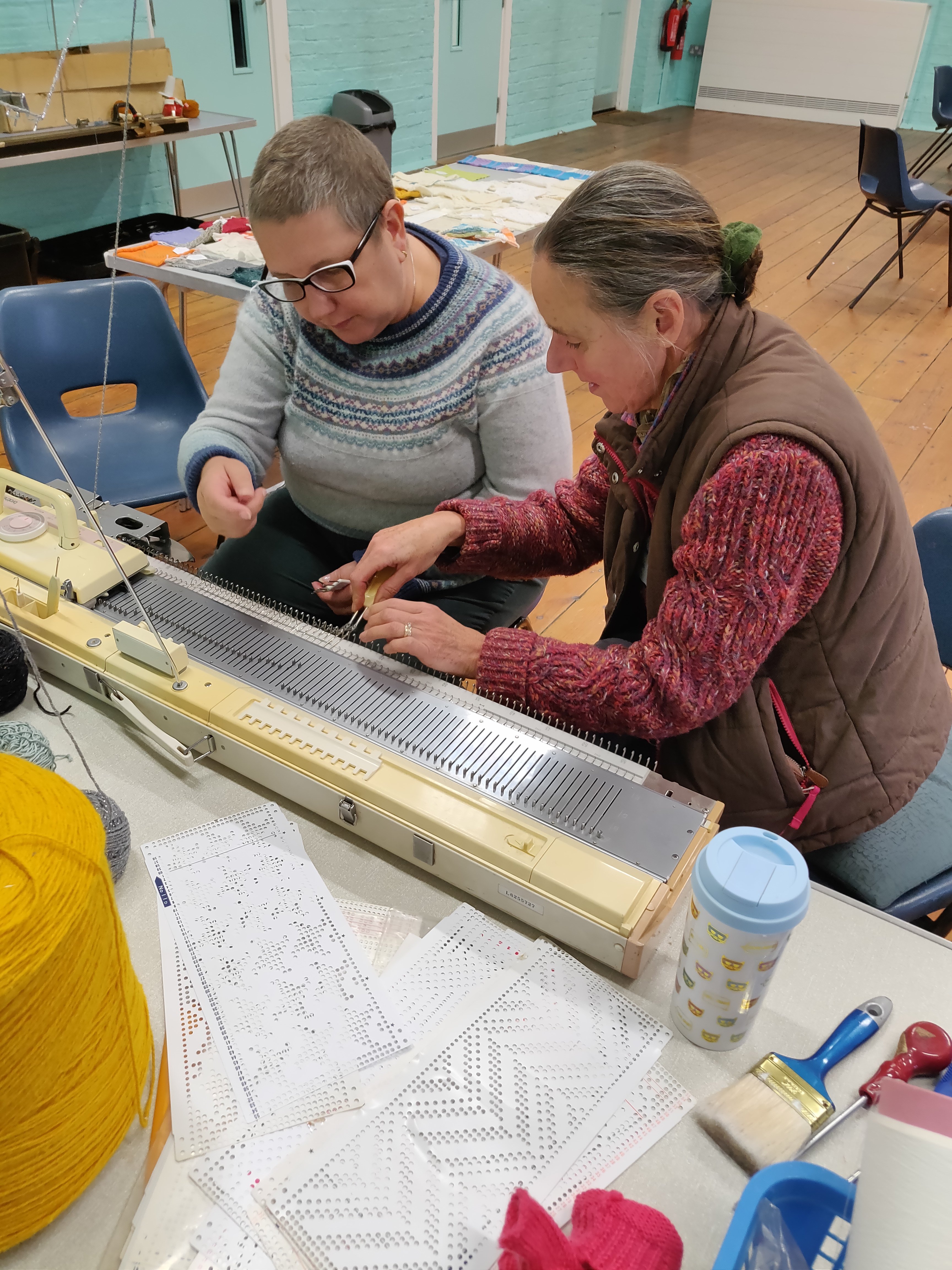
Today I ran a workshop that introduced members of Brighton Textile Art Group to machine knitting. To give a wider experience both a Knitmaster and a Brother machine were used, one standard and one chunky gauge. The chunky was particularly popular once it was found that it can knit handspun yarns.

Techniques explored included shaping, fair isle, single motif fair isle, knitwear (again great for hand spun), holding and short rows and simple, manual lace transfer.

I took along a little circular machine to demonstrate the difference between the two machine types, but the real interest was in the flat bed Japanese machines.

After the workshop response were really positive; people who had thought they would hate it had great fun, and those with machines were enthused to go home and get them out. Unfortunately the workshop clashed with the East Sussex Guild of Spinners, Weavers and Dyers meeting, so another workshop had been requested in the Spring or Summer of 2020.

‘Translating between Hand and Machine Knitting’ – publication date is 31st August

Cover of Translating between Hand and Machine Knitting
The cover features a voluminous and irresistibly tactile 3D knitted textile by Marie-Claire Canning