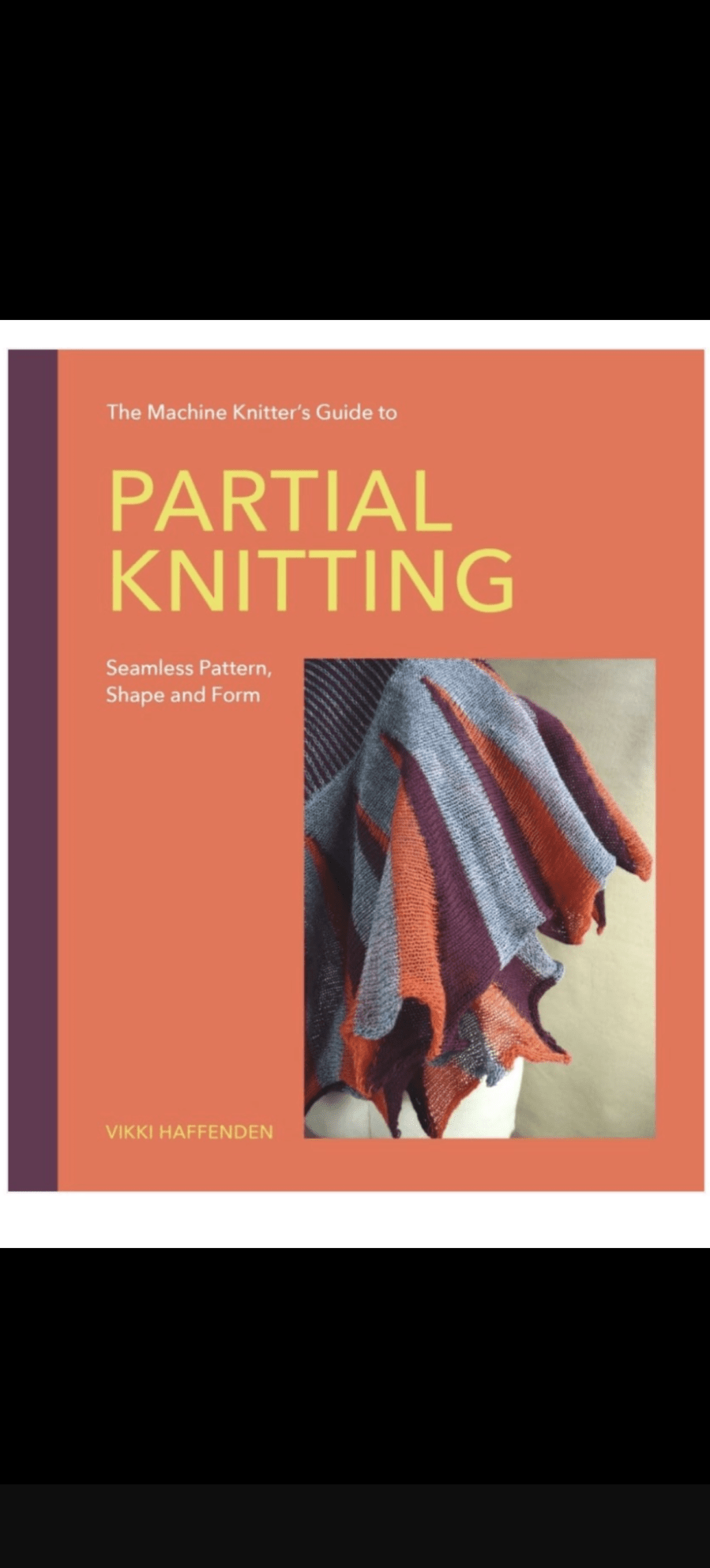
The manuscript for my latest book on machine knitting has gone to the publishers, (printers)

The Machine Knitter’s Guide to Partial Knitting; Seamless Pattern, Shape and Form

I wrote this post last July, and thought I would share it with you in retrospect, as the book has now gone to  print.

July 2025

Finally, after a long and fraught 18 months it is done!

I signed the book contract only a few weeks before we moved house. After several false starts with the sale of the house we thought we would be staying for a while and would lose the property we wanted to purchase. However, the way it happened in the end meant that we had to rush into moving in a 3 week window.

Which meant of course that we had to pack what we hadn’t already packed in a hurry, and organize everything else and then move and organize this end when we arrived. Settling in took far longer than anticipated due to unanticipated building work through last summer. It wasn’t until late autumn that I was able to safely unpack a machine and start to knit and write in earnest. Then the arrival of our first grandchild interrupted my flow for a while, the sun shone and the garden needed work done. All in all, let’s say life got in the way!

The last month has been full-on working on the book, so it was wonderful to finally send it off. Of course they will be editorial suggestions and corrections to do, and then a final check once it is laid out for printing, so it’s not finished yet.

May 2026

If you have persevered and read to this point, you might like to know what the book is about. This book, my third about machine knitting focuses on short rows, or partial knitting. It is suitable for any machine with holding position, single bed, double bed, plastic or metal bed, and any gauge. I particularly wanted to include the popular plastic bed, mid-gauge machines like the LK150. Rather than struggle to emulate the punchcard machines with repeating patterns, short row pattern and shaping can be as easily done on either type of machine.
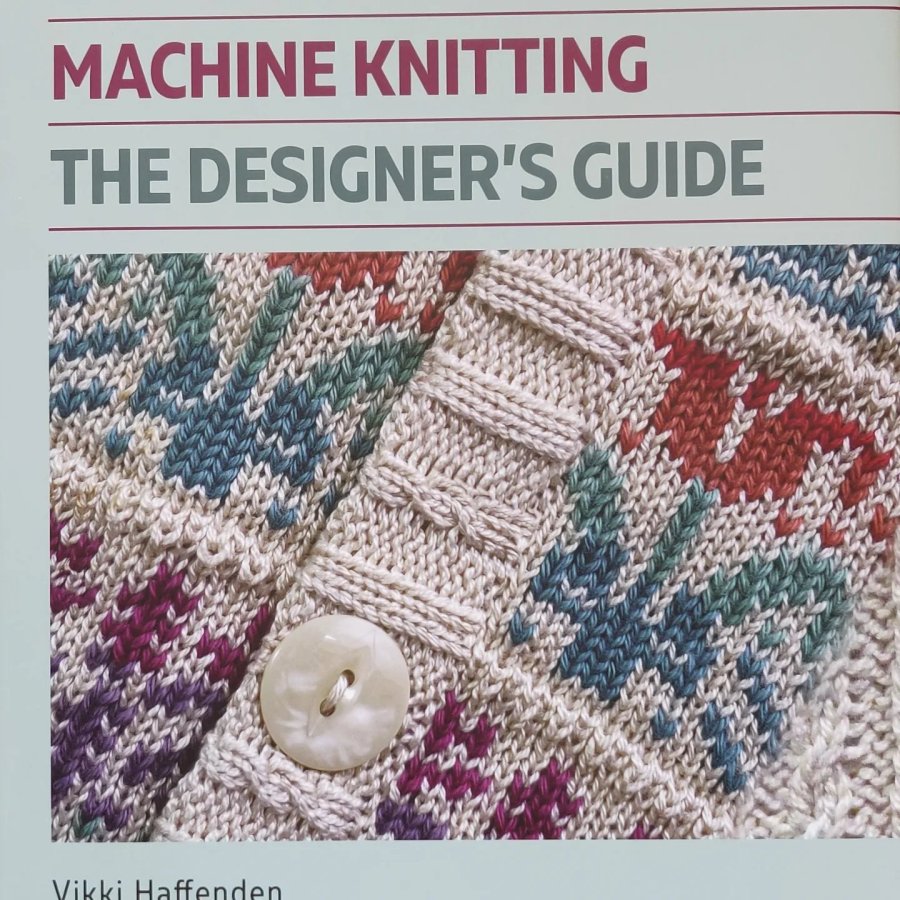
‘Single and Double Bed Machine Knitting; the Designer’s Guide’

The advance copy of my new book arrived today, and you can see some pages from the book here.

Meanwhile here is a quick look at the book.

I have made a more in depth video introduction to the book, and if you would like to watch this, please keep on scrolling down the page.

Seamless machine knit socks

Slow and steady is best when demonstrating live!

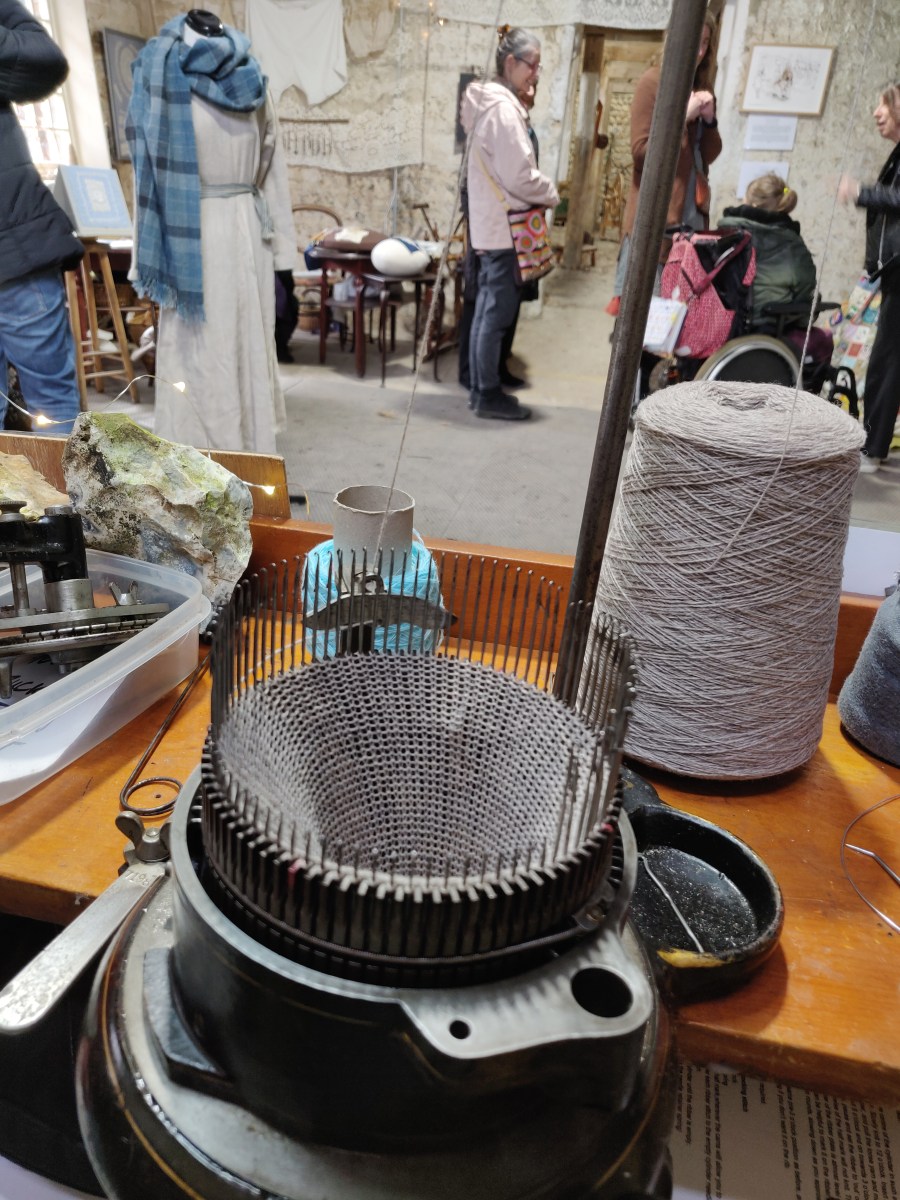
This was taken at Traditions in the Making, a Heritage Craft event at Stanmer Park, Brighton. With lots of volunteers from local community textile group Woolly Umbrella, alongside the CSM there were demonstrations of flax processing, lace making, weaving, inkle looms, wool fibre preparation (hand and drum carding), embroidery and wool and flax spinning.

The CSM is an Imperia with an 84 slot cylinder and gm here I am knitting a sock in traditional 3ply sock wool; no nylon. This was the nearest we could get that was most like the wool probably used originally on the machine. Although I have knitted on it with hand spun I felt that demonstrating required enough concentration without the worry of irregular yarn!

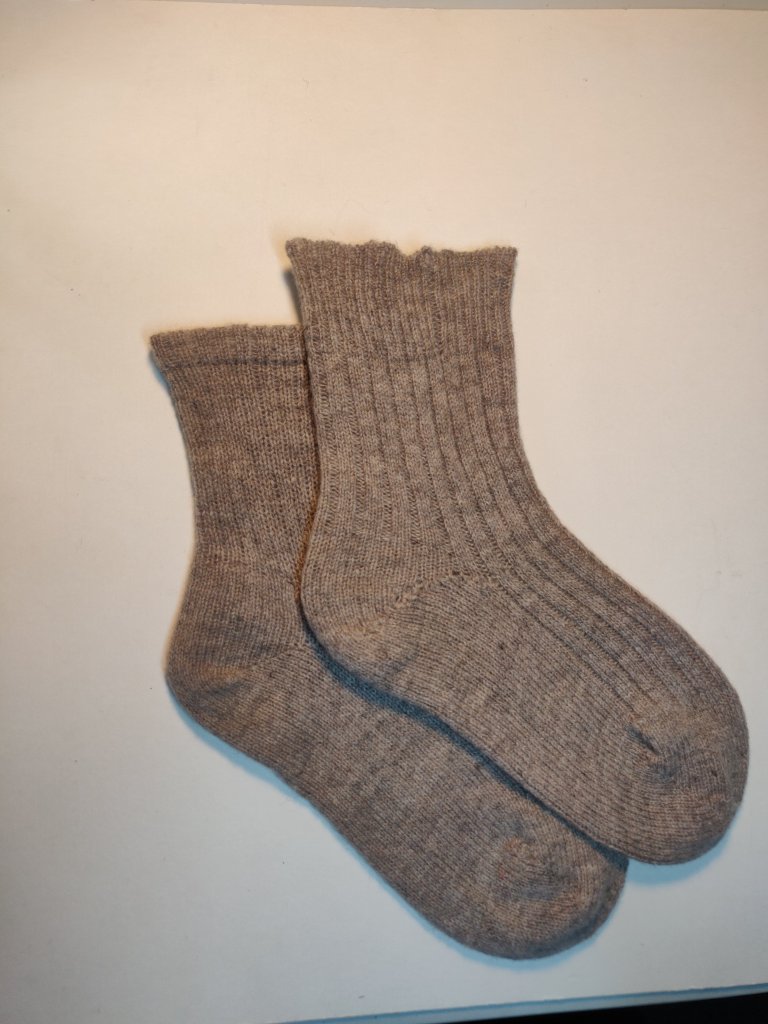
Two types of socks in the 3 ply yarn, fake rib and true rib.

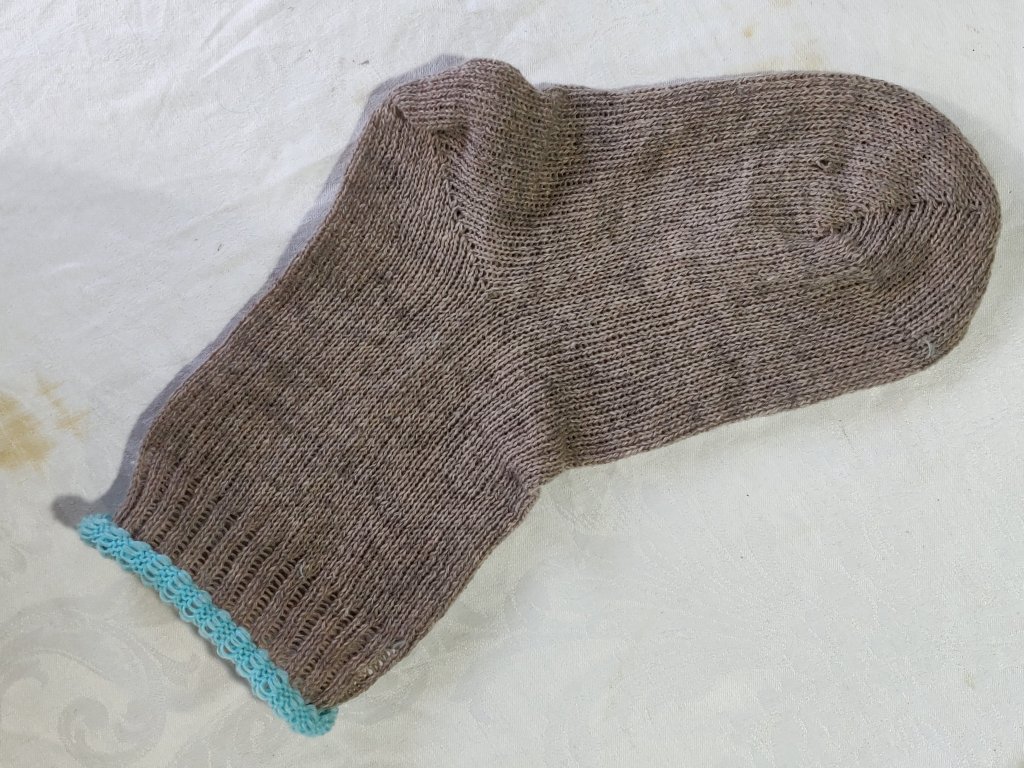
In a brave, but foolish, moment I decided to try a toe-up sock at one point. It wasn’t too bad at all, and I am quite pleased with the result.

Toe up sock, still waiting to be hand finished

Futurescan4 conference

The last two days I’ve been at the FTC Futurescan4 conference in Bolton. It was stimulating and inspirational to spend time listening to the presentations and joining in discussions with fellow fashion and textile teachers.

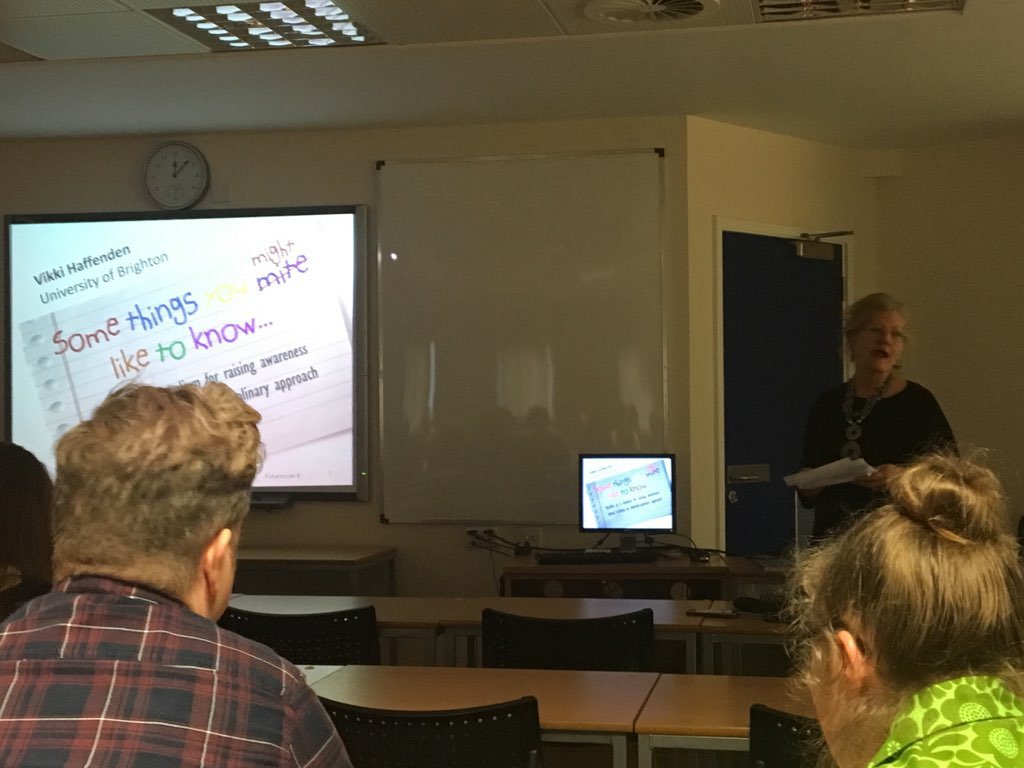
My paper was about using textiles as a medium to raise awareness scabies; not a catchy title, but a fun project. You can read more about this on the project blog.

Here I am wooing my audience

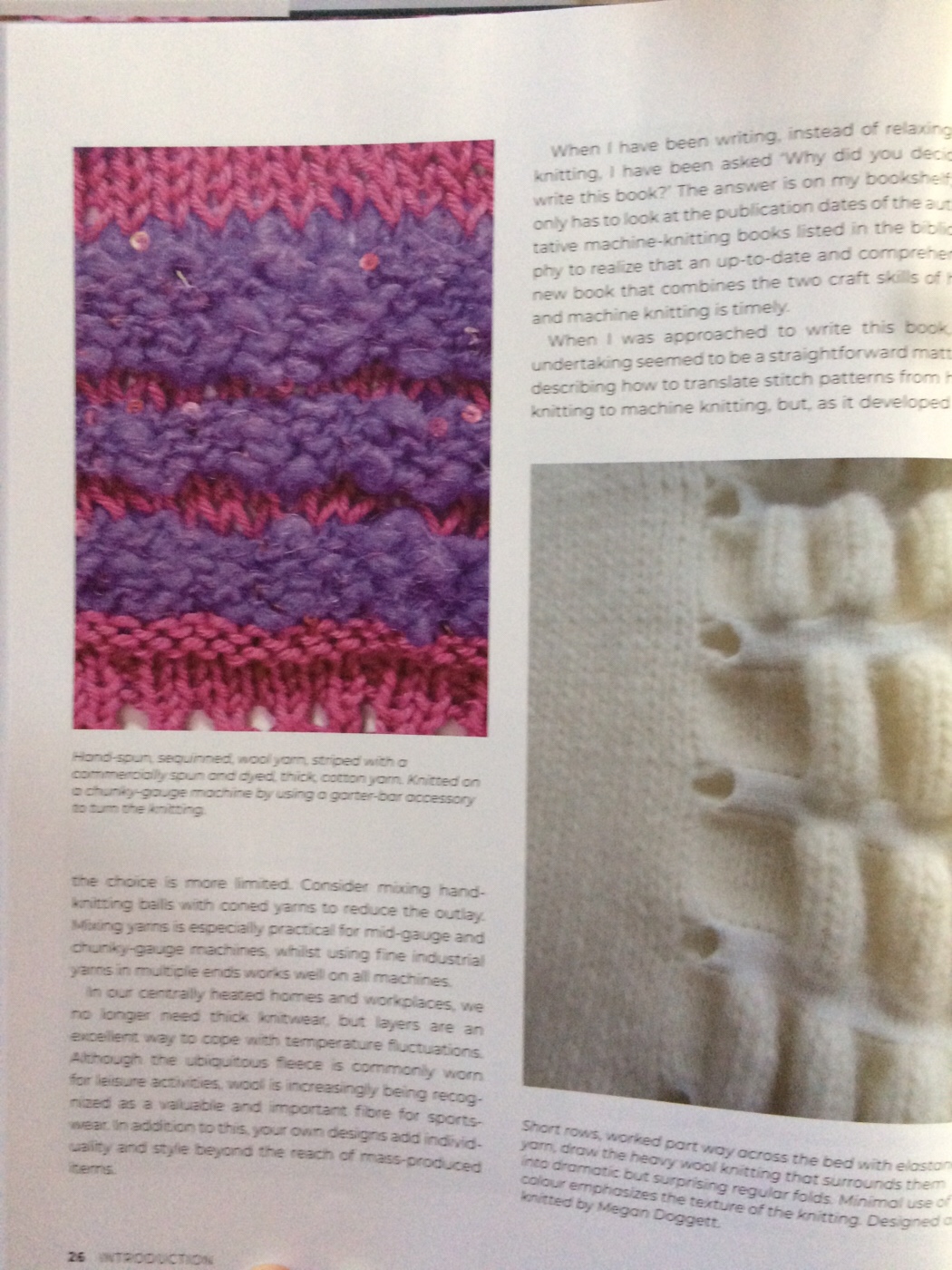
What’s inside ‘Translating Between Hand and Machine Knitting’?

Lace knitting – see more about this on my Translating Between Hand and Machine Knitting page, but in brief, yes this is explained in loads of detail, with helpful photos and diagrams, examples and step-by-step instructions.

The book does not include garment patterns, it explains how to knit different stitches by hand and machine, and why some stitches are more suitable for hand and others for machine knitting.


‘Translating between Hand and Machine Knitting’ – publication date is 31st August

Cover of Translating between Hand and Machine Knitting
The cover features a voluminous and irresistibly tactile 3D knitted textile by Marie-Claire Canning

‘Translating between hand and machine knitting’ is about to be published

i have just received my pre-publication copy of ‘Translating between Hand and Machine Knitting’, it was waiting here on my arrival home from holiday. It’s a great welcome home present.

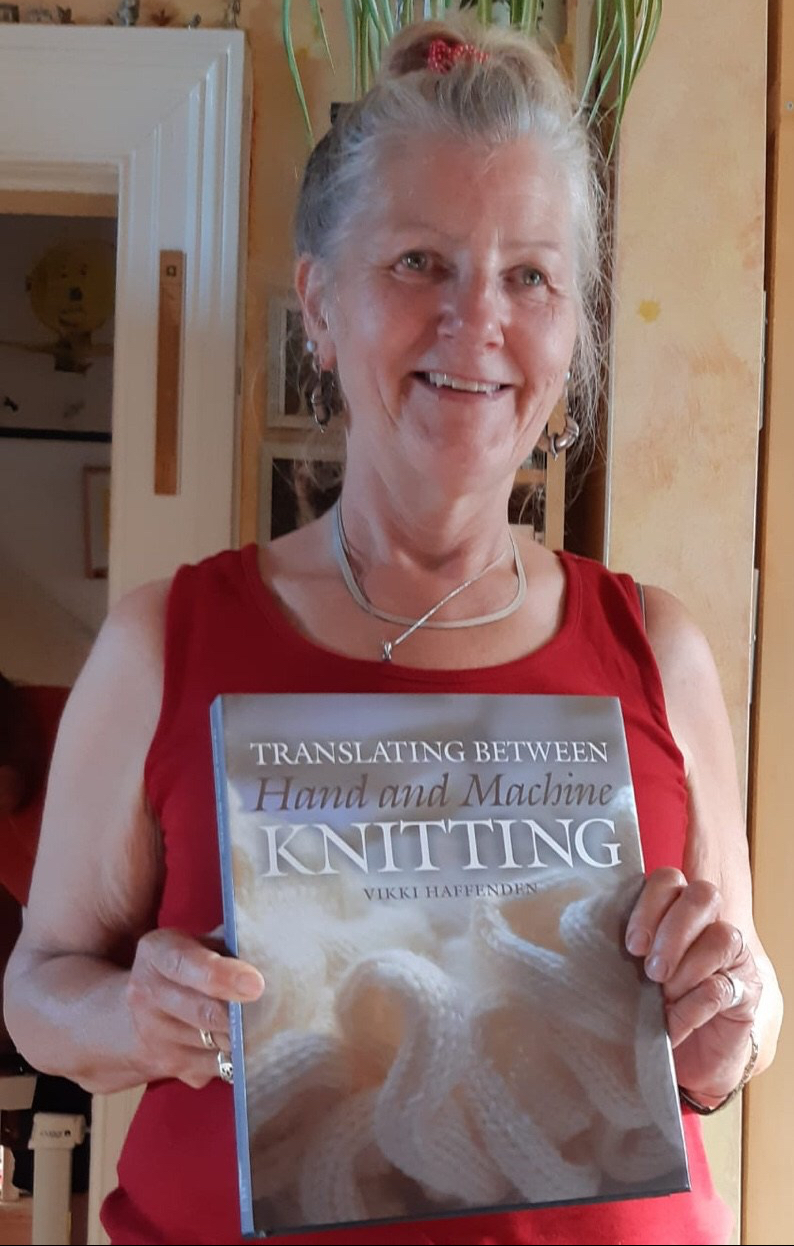
Holding the book
My pre-publication copy just out of its wrapper.

Here are some sample pages.