
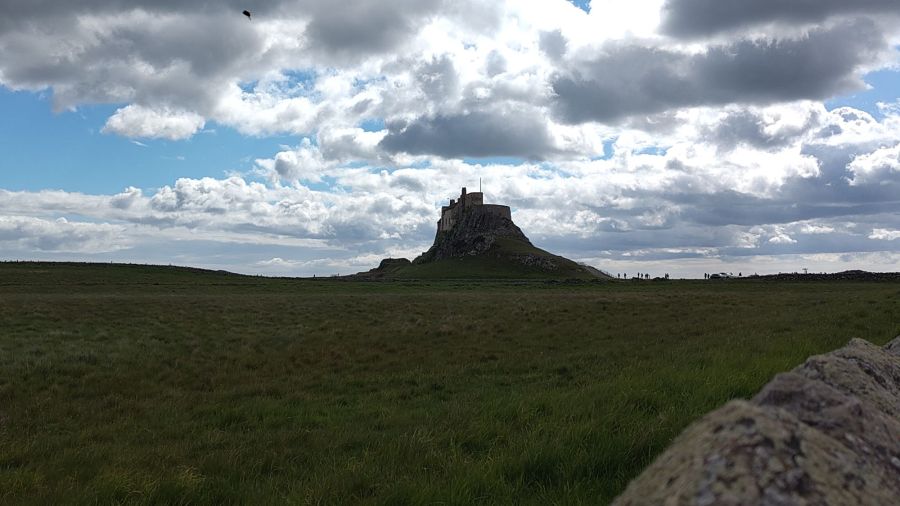
During our two week caravan holiday we visited Yorkshire and Northumbria. Although we settled on two places to park the caravan, we travelled around from these bases, going as far as Edinburgh to visit family.
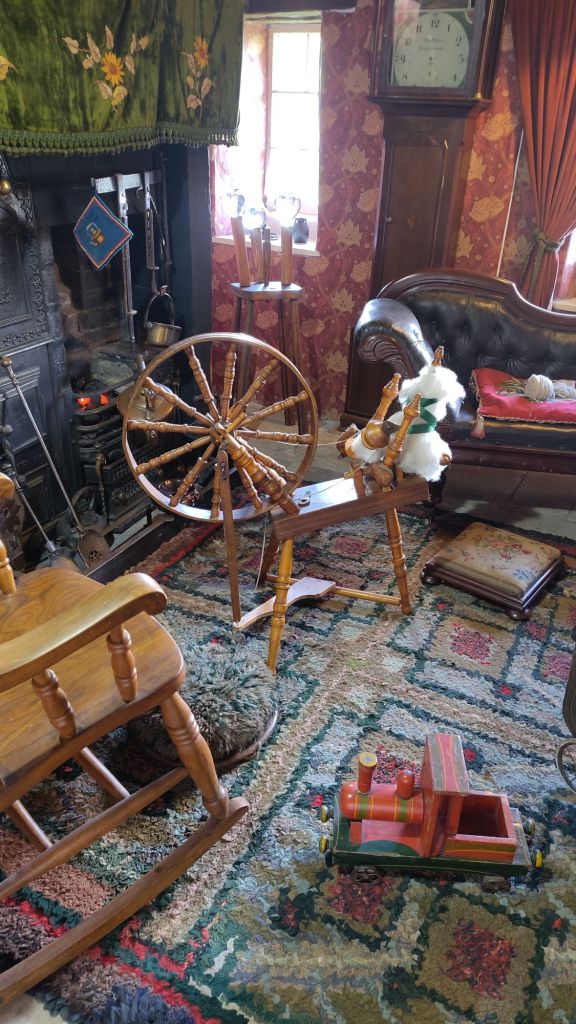
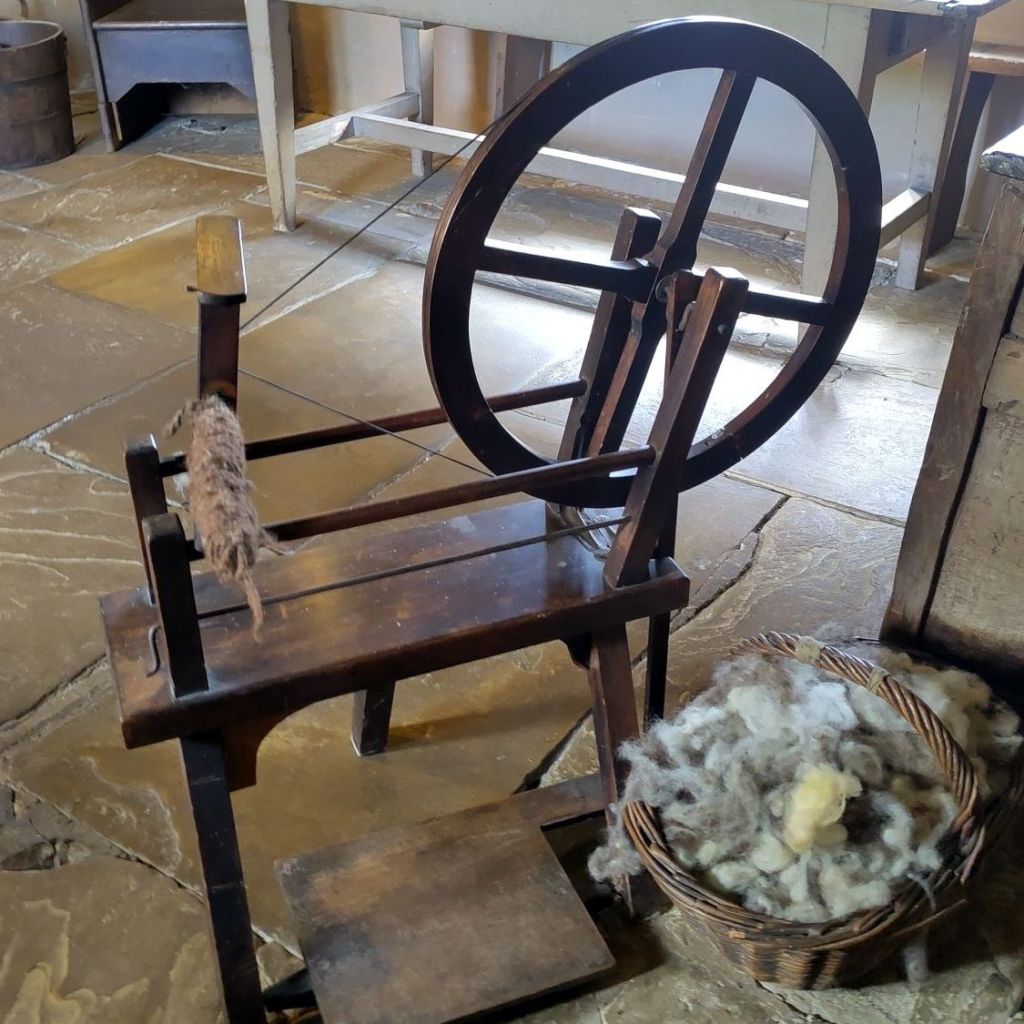
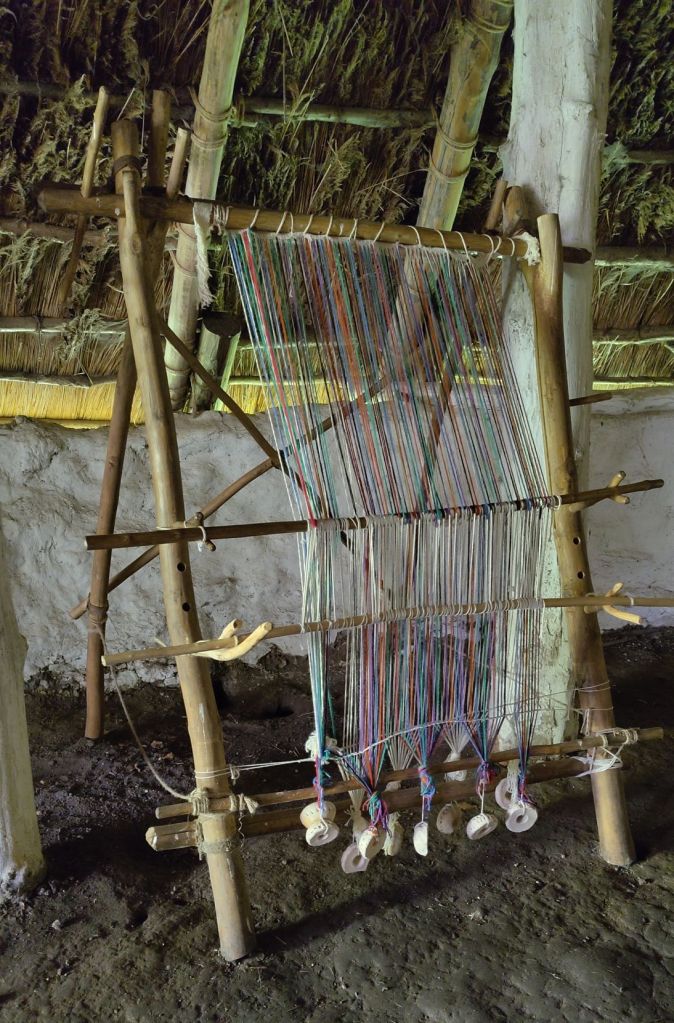
At the delightful Ryedale Folk Museum near Pickering in Yorkshire, there were several spinning wheels of different ages and types, plus a warp weighted primitive loom. Alongside one of the wheels was a lace-maker’s glass, a lovely-looking lamp that was used to focus candle light onto the work in progress. Although delightful to look at, I can imagine the lighting was still pretty dim and the lace-makers must have relied heavily on muscle-memory to produce their intricate work in their poorly-lit homes even during the daytime.
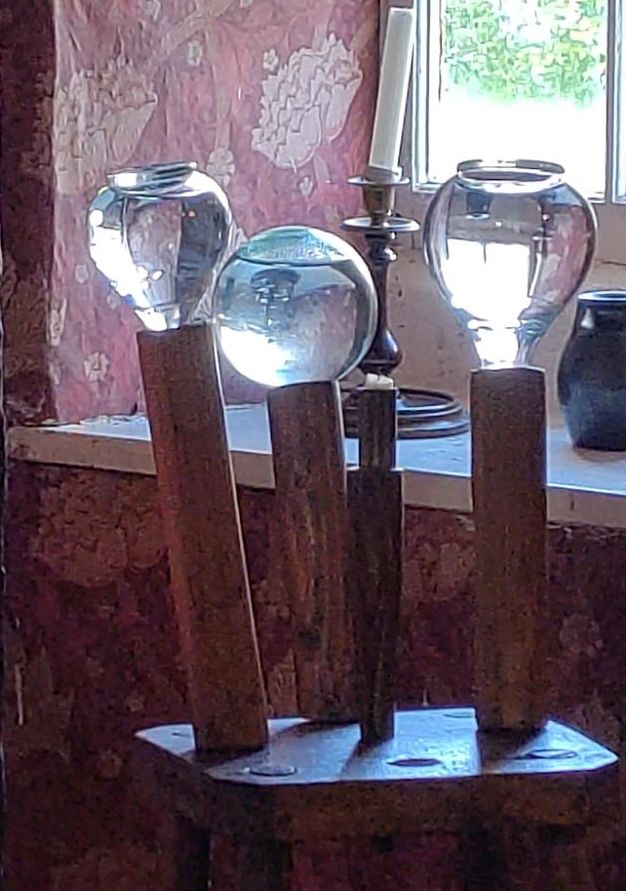
Lace-maker’s glass lamp. Although i have seen single glass versions, this is the first multiple glass globe one I have seen.
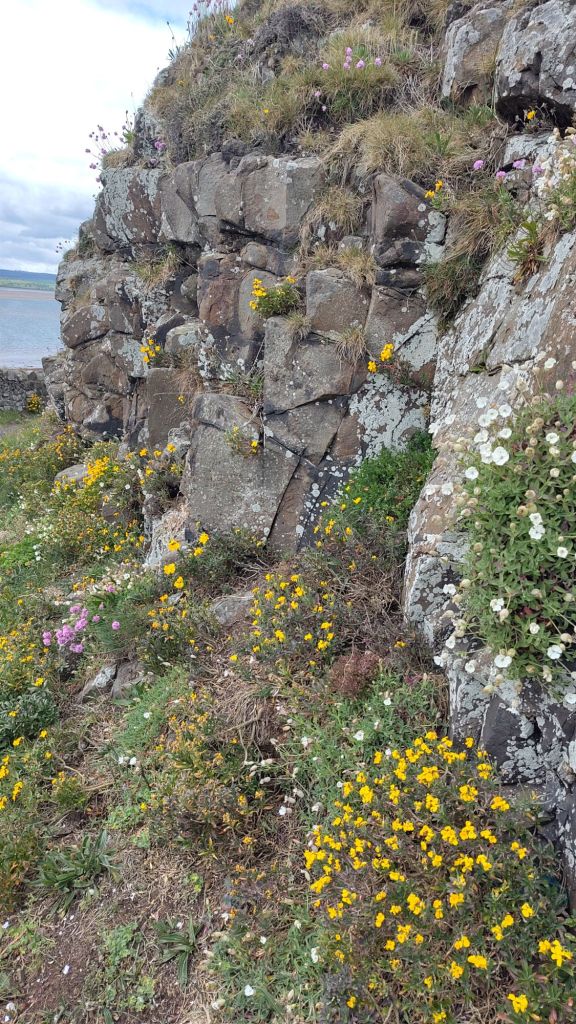
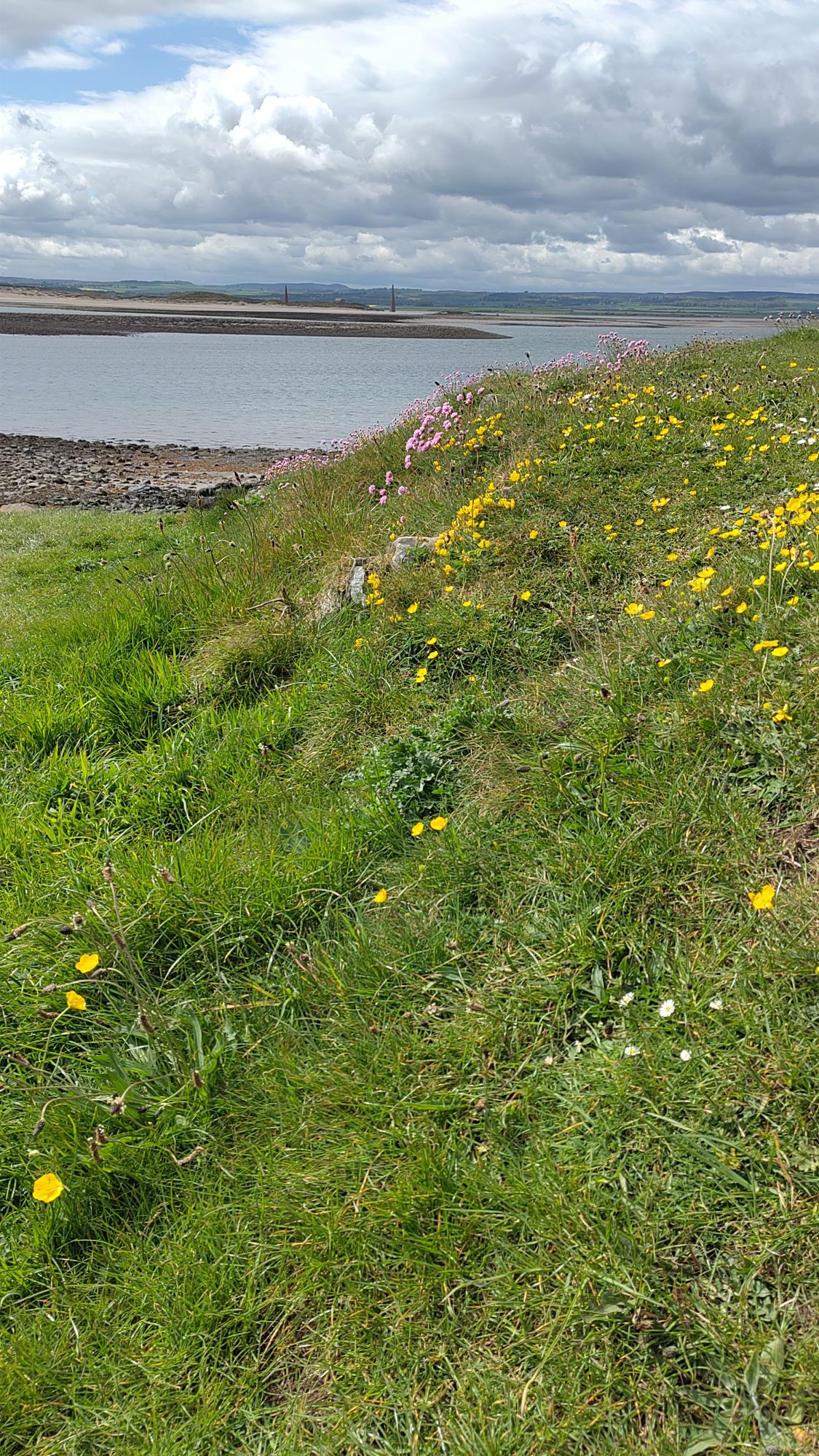
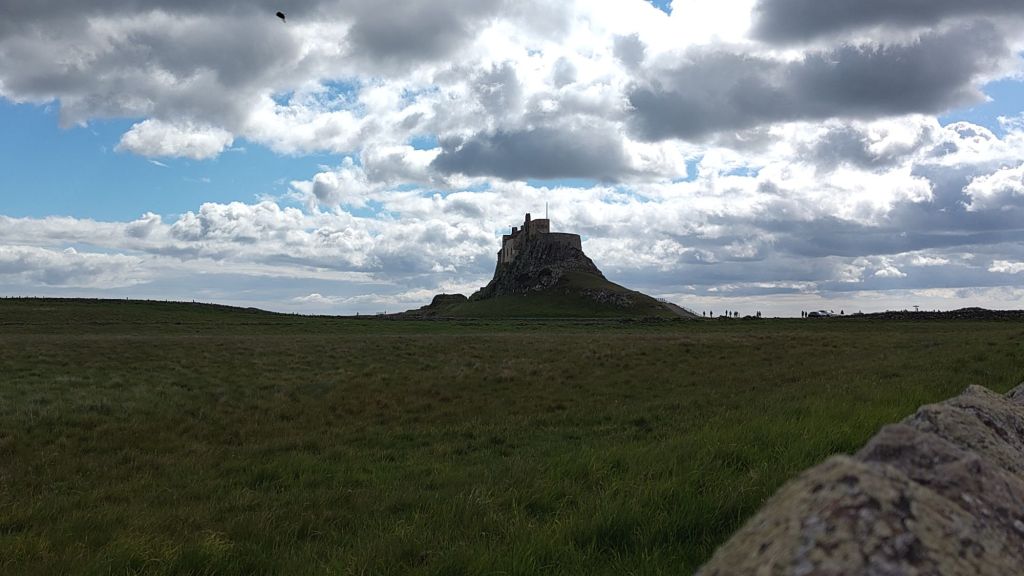
Inspiration was found all around in nature, both on the campsite and on our travels, but the small flowers growing on rugged rocks on Lindisfarne were particularly sure-catching. I’m not a botanist, but apparently some of these are quite rare, so we were fortunate to be able to see them.
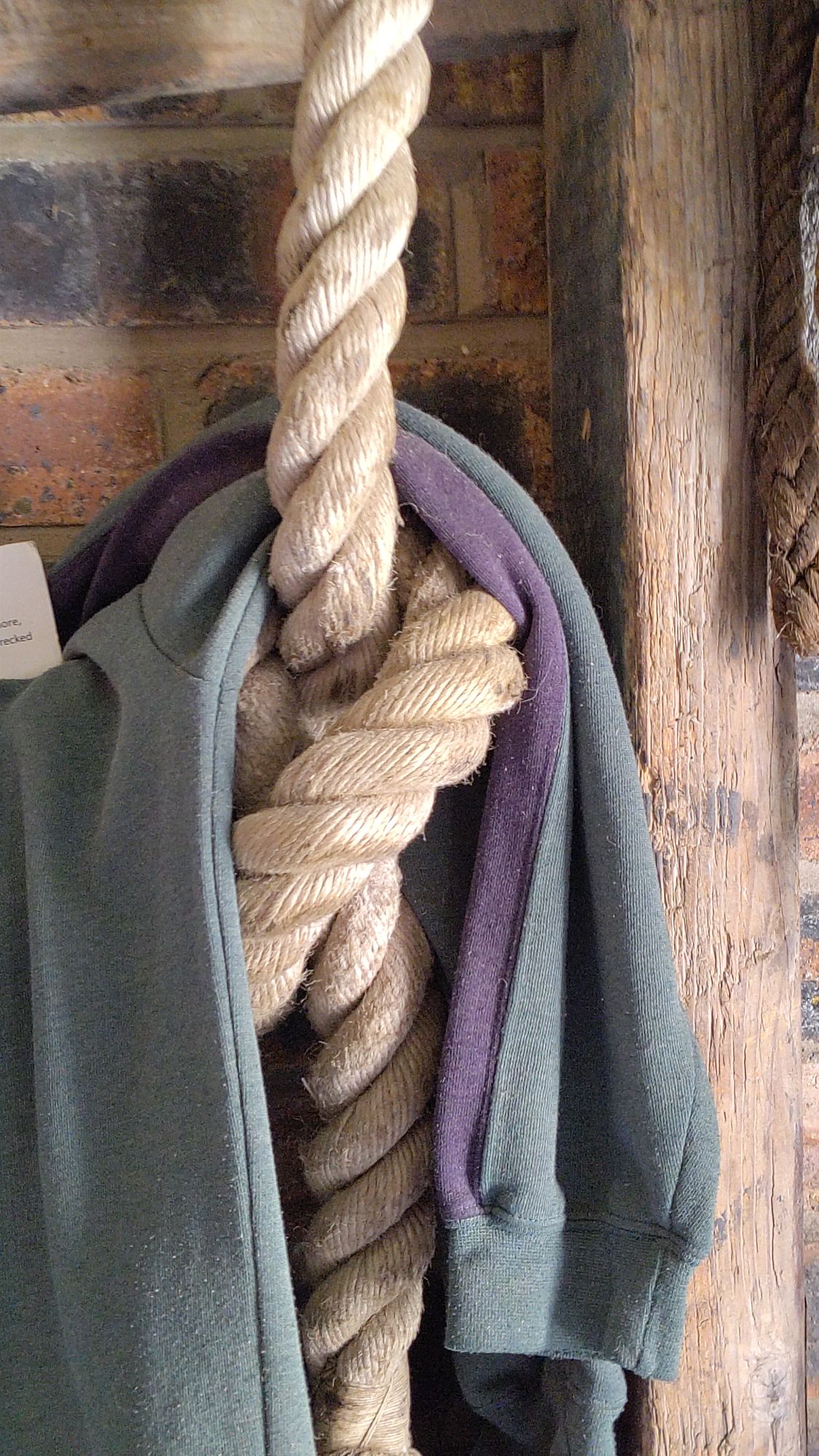
Also on Holy Island I was captivated by the sheds made from up-turned former fishing boats. These voluptuous shapes, complimented by coiled and folded ropes, all caught in the watery sunlight gave me good for thought about mixed media and overlays.
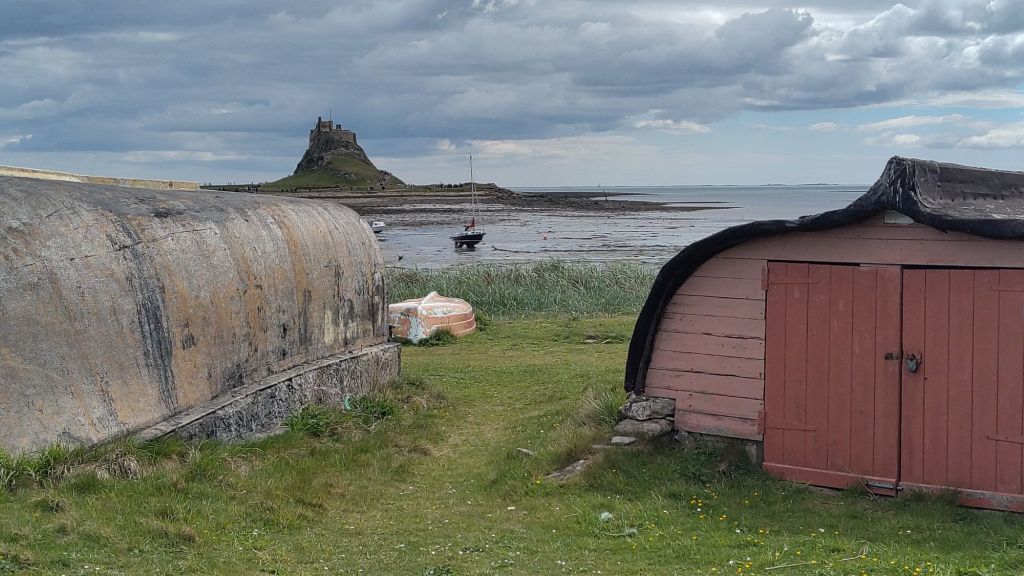
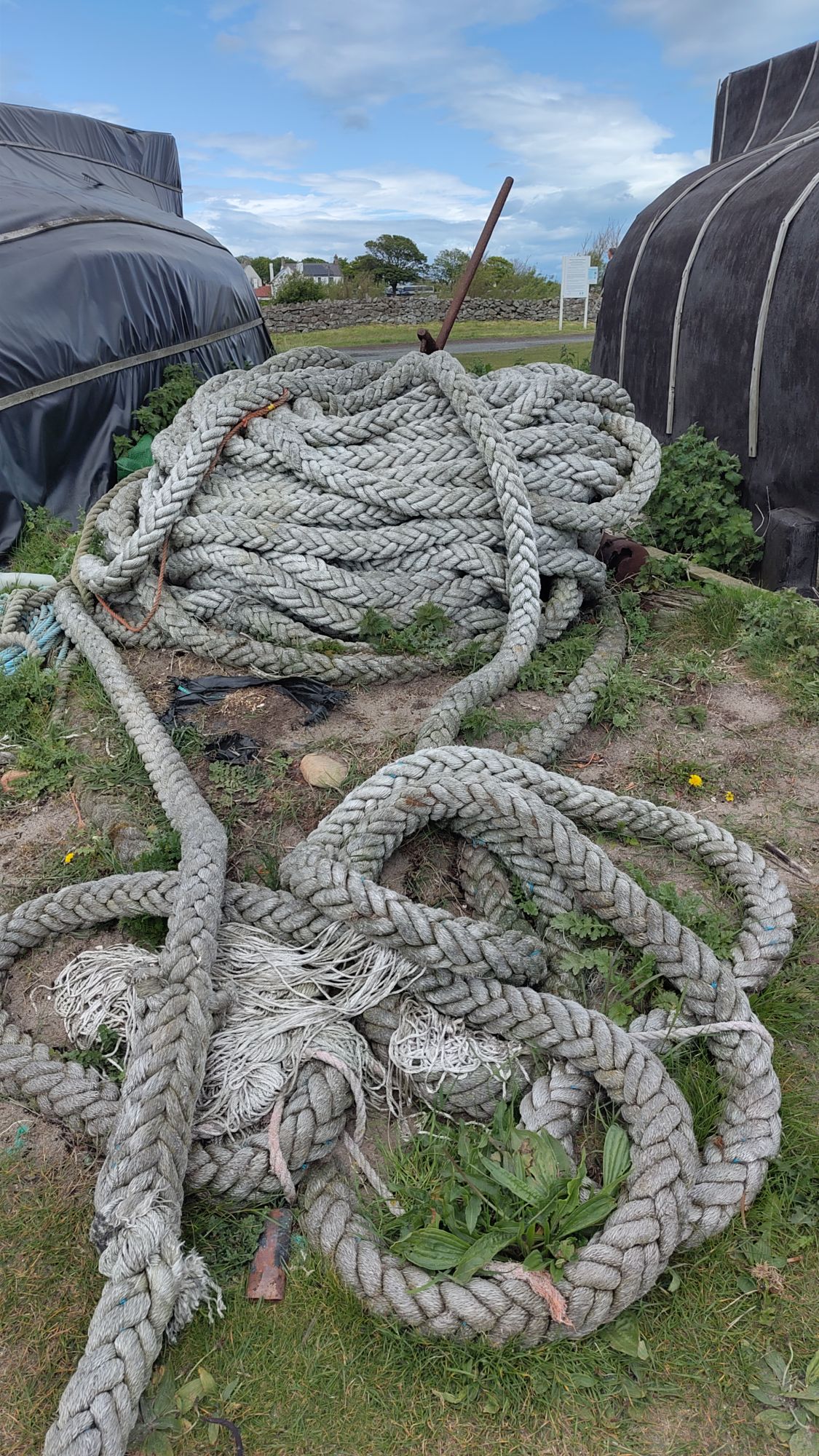
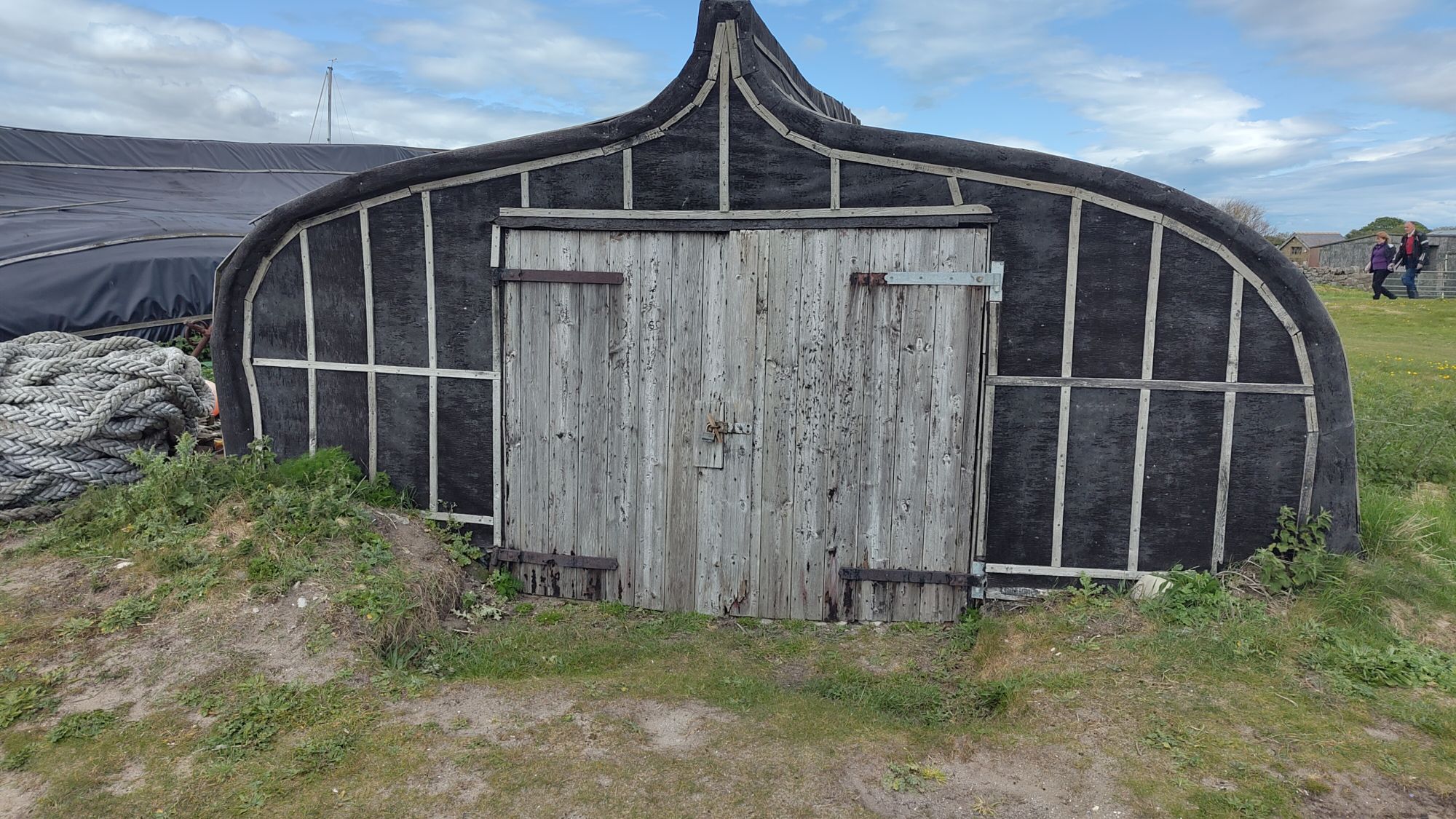
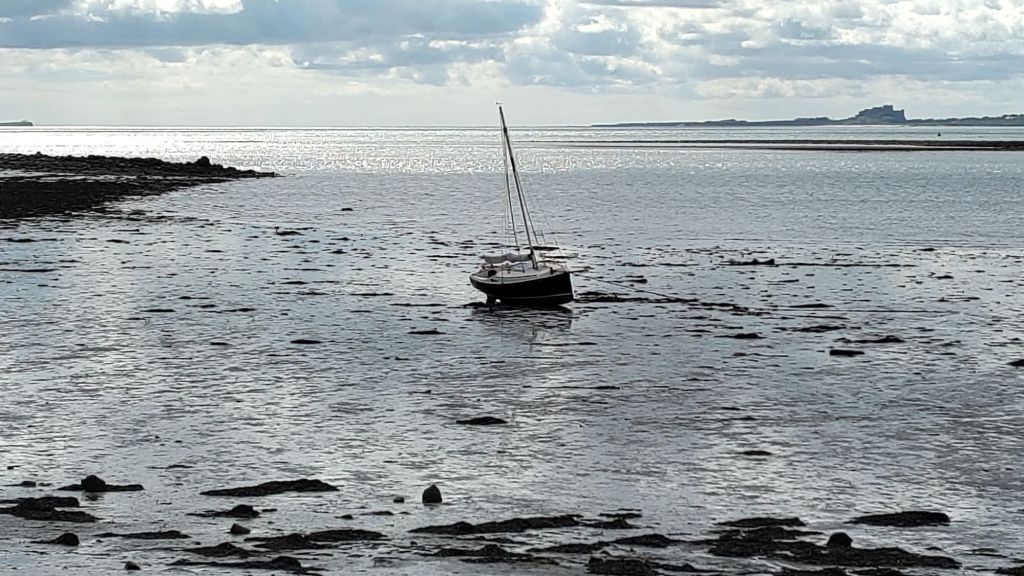
The light reflected on low water and behind the billowing clouds was also vying for my attention.
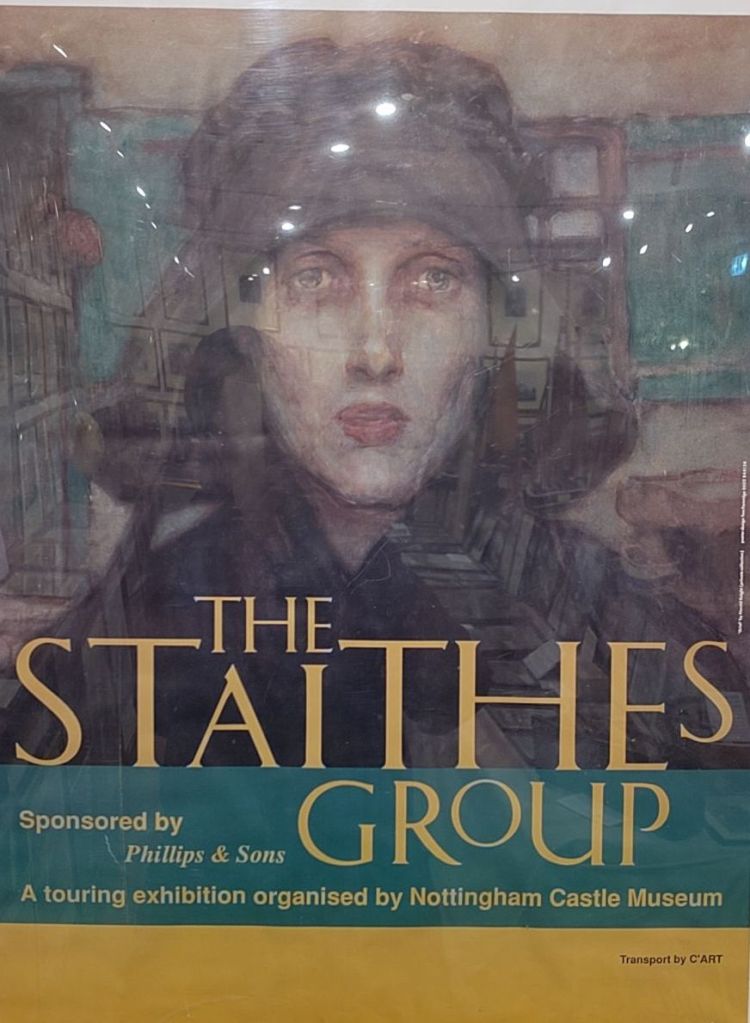
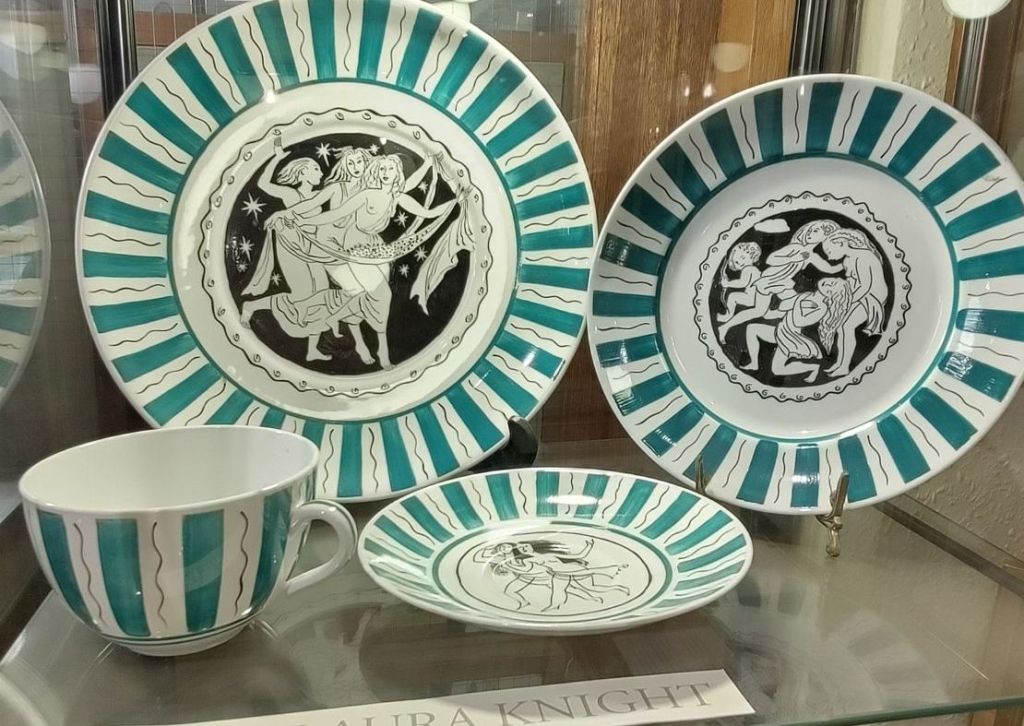
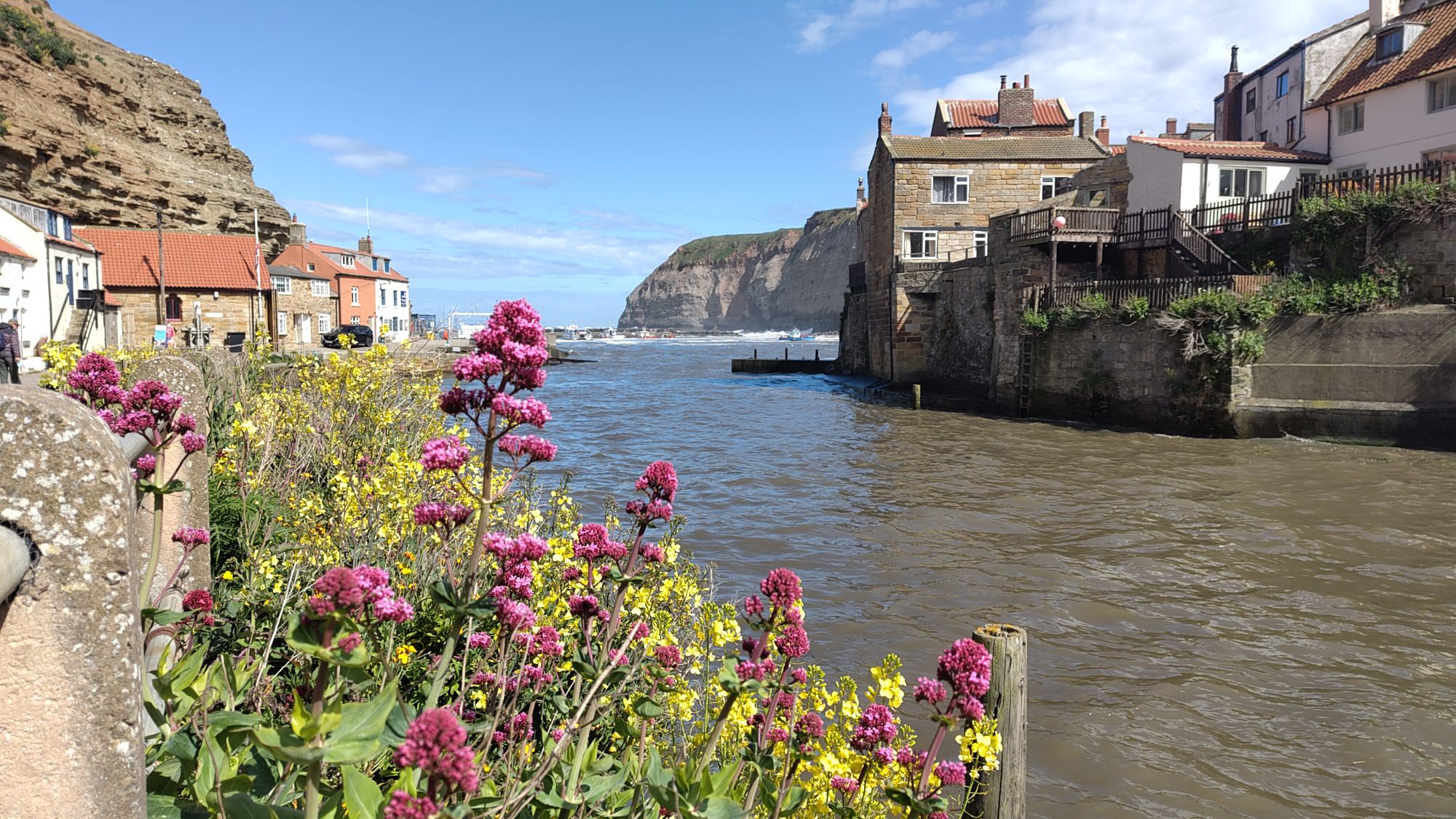
Our next visit was to Staithes, a picturesque coastal village to the north of Whitby. This village retains it’s charm, possibly because there is no car access to or parking in the village, and visits have to walk down a steep hill from the car park, (and back up of course). Staithes, means something like ‘safe landing place’, and the harbour is sheltered by encircling natural breakwaters. We saw the word ‘staithes’ used in this sense elsewhere in our travels, and could see why this little village would have earned its name when it was a busy fishing port. A small, but fascinating museum shares the history of Staithes and its environs, including not only fishing, but mining and even an artistic community.
Women worked hard in fishing villages, and in Staithes they wore a particular type of head covering which facilitated carrying baskets of fish on their heads whilst protecting their hair and neck. A roll of padding was placed inside the crown to cushion the head, the front flap was stiffened to protect the wearer from wind and rain and a drawstring inside made for a good fit, whilst the bow and long back frill kept water from the back of the neck. This ‘Staithes bonnet’ is no longer worn, the last maker having survived into the 1970s, but examples and many, many photographs and illustrations of this distinctive practical but to me, very attractive head wear are in the museum.
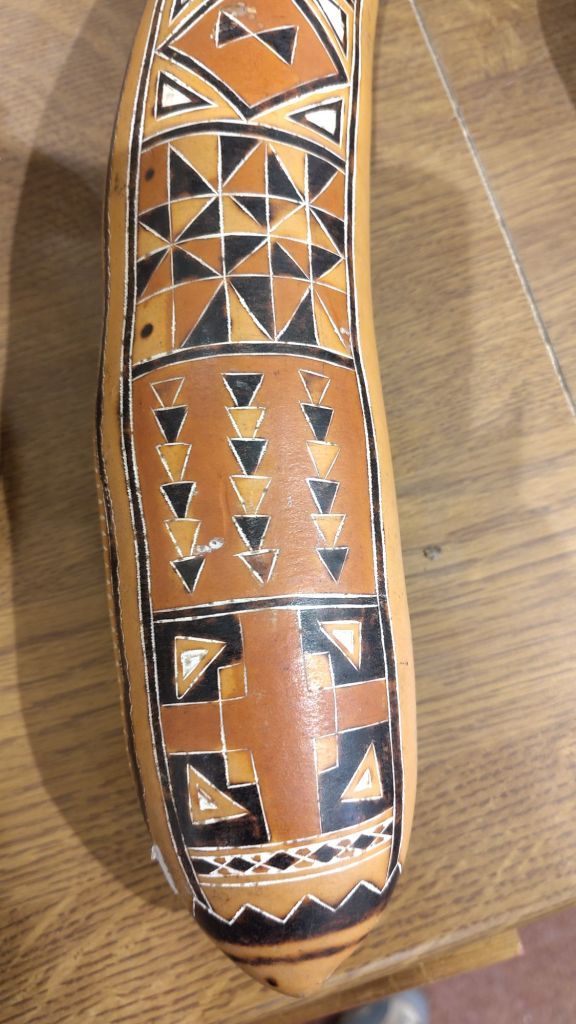
Captain Cook features in the museum, and there were several artefacts displayed from countries he visited that caught my eye for their pattern and firm.
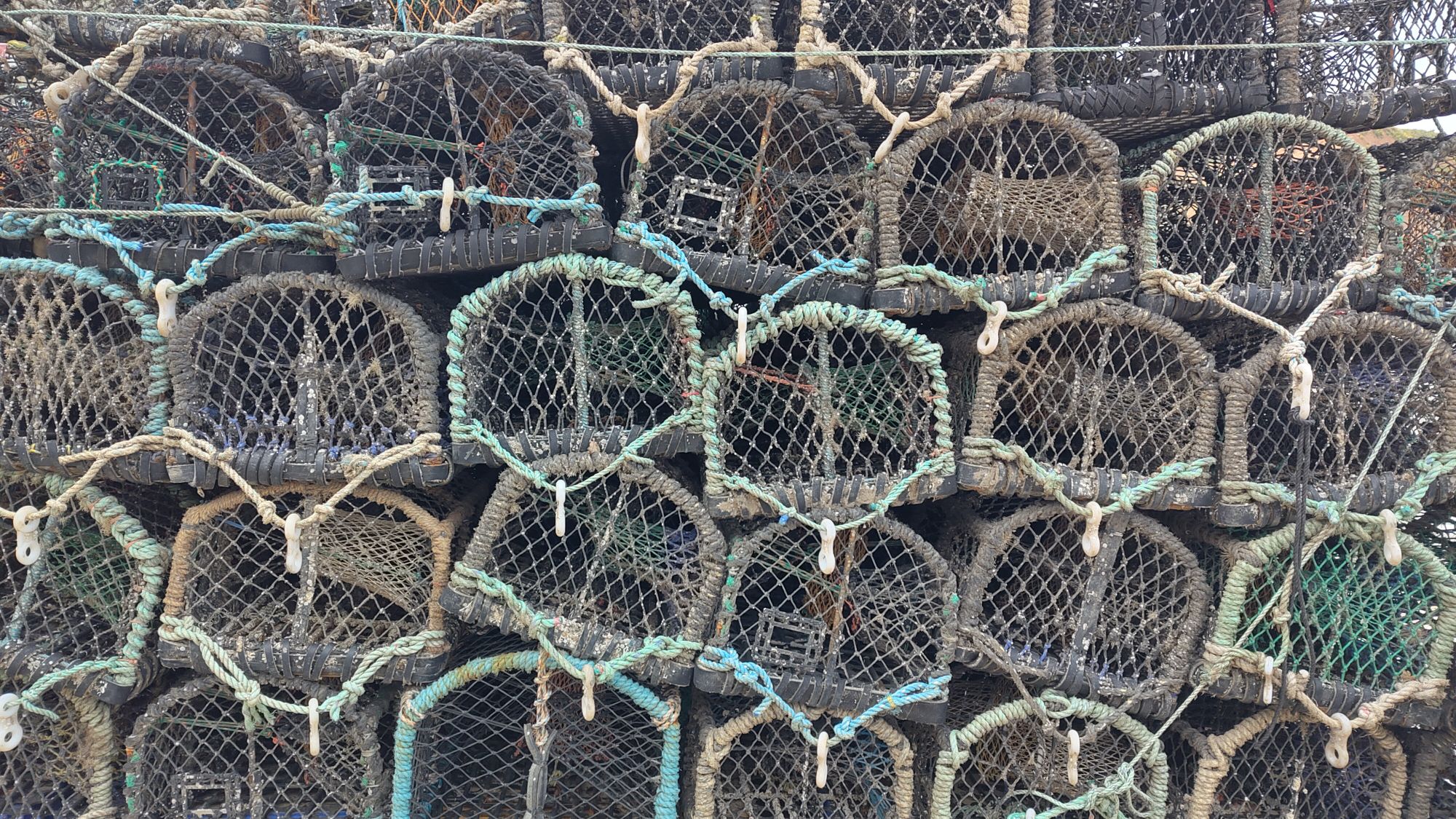
More texture and colour inspiration
Q

