I haven’t really woven on a loom since I was a student at college. I have a Spears toy loom which I used for one project but the width is limited and the heddle is quite fiddly to work with. What I really wanted to do was to find a technique that uses up my small bits of handspun yarn my experiments and my texted handspun that I don’t think looks very good in knitting.
The Spears loom is actually quite good, and is very much like using a rigid heddle loom but with the shortcomings mentioned earlier. So I was really pleased when a friend offered to lend me 15 inch rigid heddle loom that she had in her attic. This now gives me the extra width and also the heddle is much easier to manipulate.
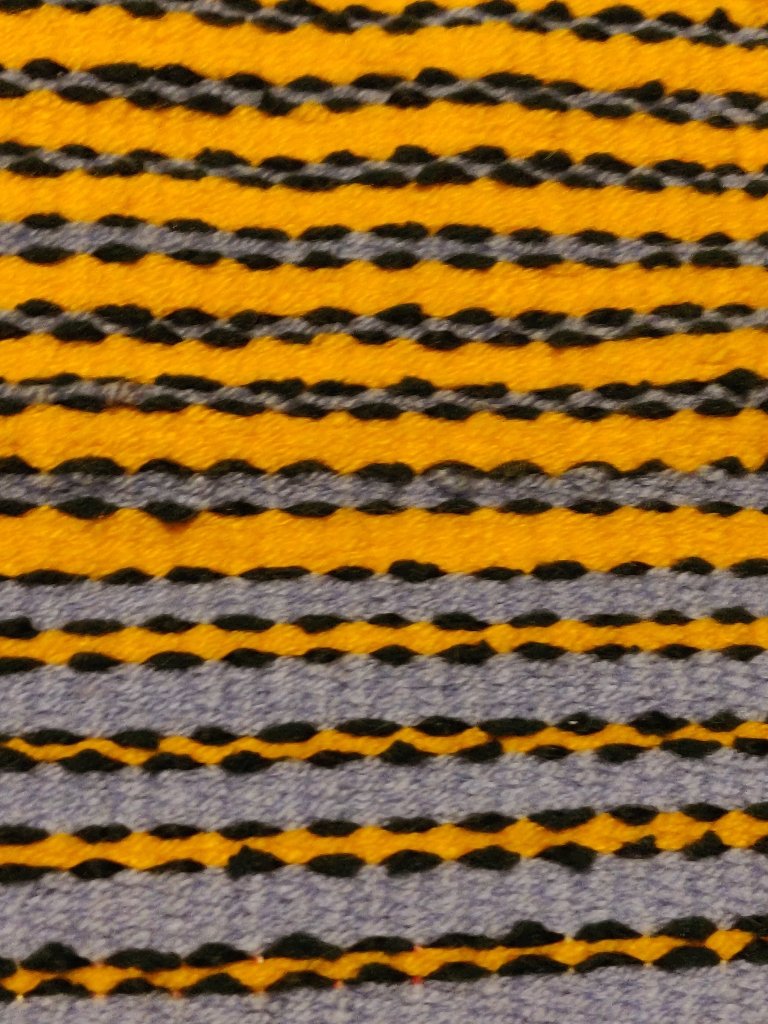
And so my weaving adventure has begun. Kindly she put a viscose thread warp on it for me to get me going and I’ve used this to practise using some acrylic DK yarn I had to hand.
Playing with acrylic yarn to get the feel of the loom.My first handspun effort
Having acquired a Devon/Cornwall fleece that is quite similar to a Romney in feel and quality, I thought I’d dye some for blending. This fine will be great to comb for a semi-worsted spun yarn.
One of my favourite methods for safely dyeing fleece without matting the fibres is to use a slow cooker. I have a large family sized one that will dye 100g comfortably and 150g at a pinch, and a single-person one that does 20g for samples etc.
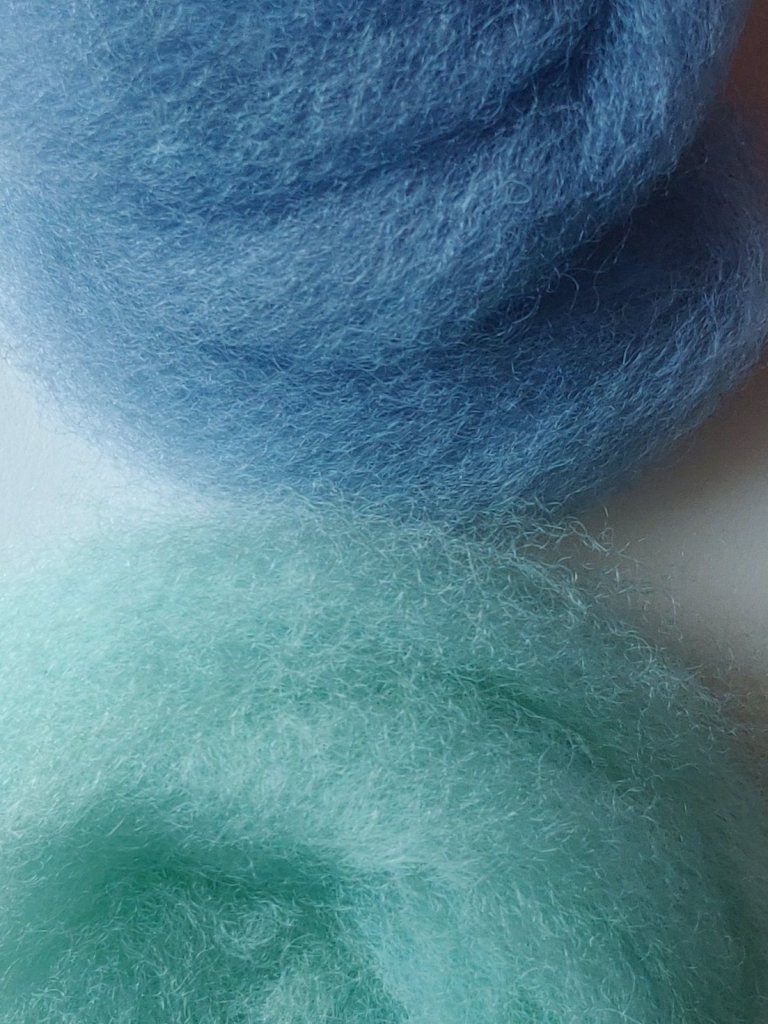
Using a pre-mixed colour I’ve used before I did a blue first. However, on this fleece it came out darker than I anticipated, but will probably lighten up once combed or carded and spun.
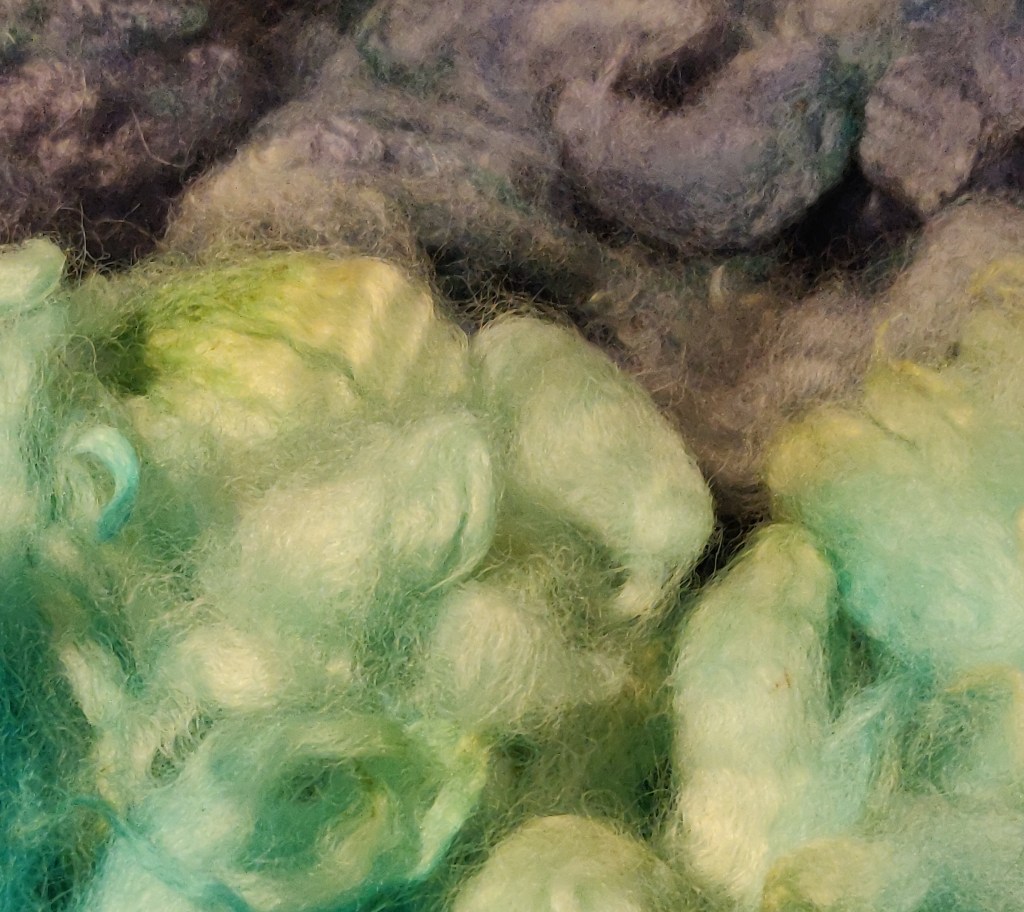
From the remains of the dyebath I got a pretty light turquoise.
The blue at the back, turquoise at the front
I have combed these colours as shown in this video.
Note that in this video I talk about ‘roving, but technically I am making ‘tops’. Roving is a similar narrow length of fibres drawn off a drum carder (usually, but can be hand carders) and has a slight twist added to keep the fibres together. After combing, both colours have come out as I hoped.
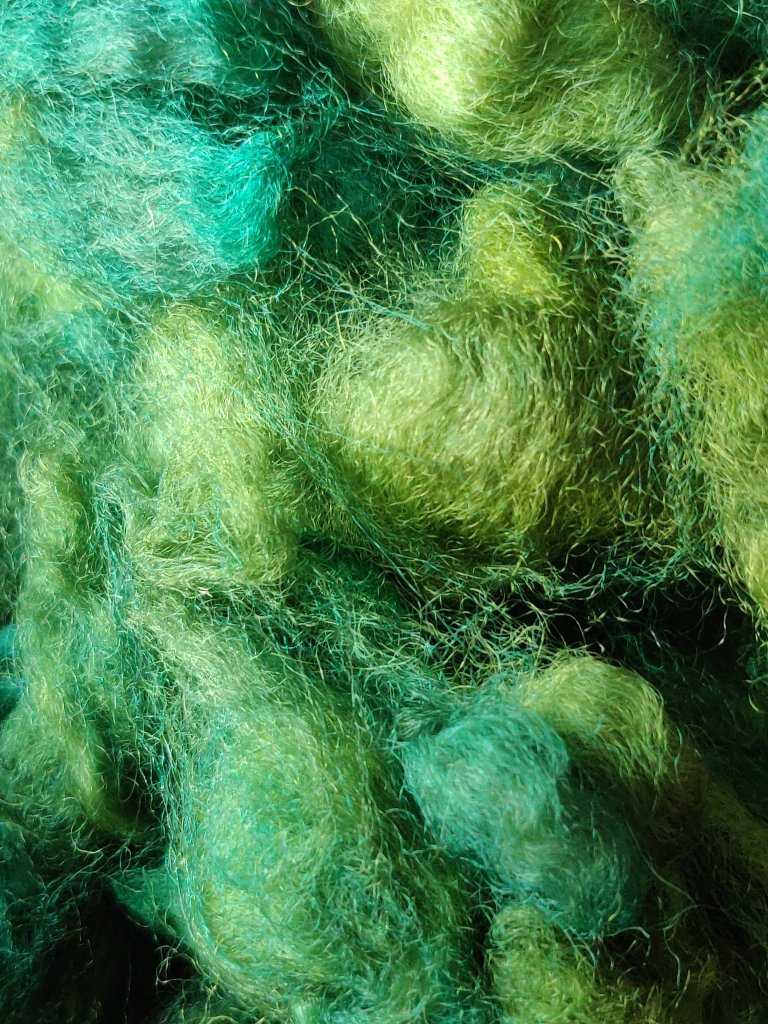
I also wanted an olive green, and have a recipe that worked perfectly on a Dorset fleece last year. I must have made a mistake somewhere, because I got a dark green instead. Maybe it is the different fleece, but I think I got my proportions wrong!
Pretty enough, but not olive green!
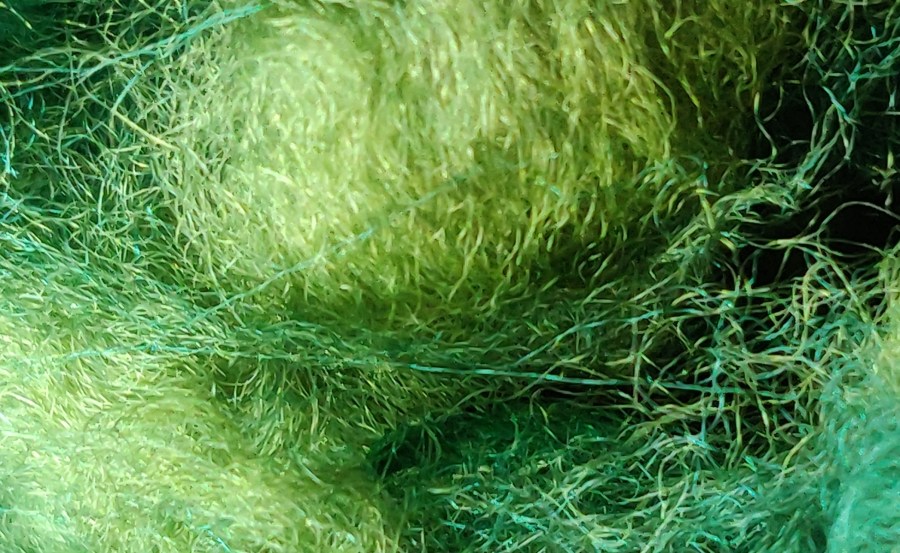
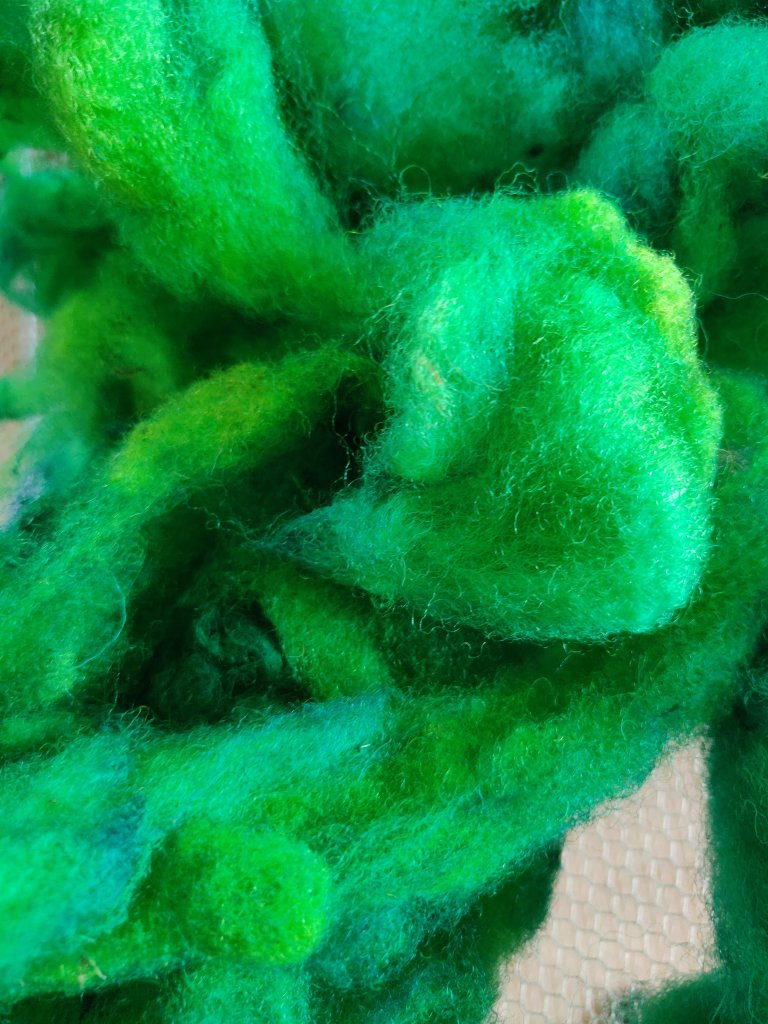
Once again they was some colour left in the bath, so in went 100g of Dorset fleece. OMG, the colour was bright! No idea what I did wrong, but it makes me blink.
The only compensation is that the fleece has not called at all due to using the slow cooker method.
That bright green total exhausted the dye – no surprise really! I will probably card this as the staples of the Dorset fleece are short and it is a soft fibre. Great for soft woollen spun yarn.
If you are interested in discovering the difference between different terms such as roving, tops etc, click here to read Abby Franquemont on Spin Off.

 Vikki Haffenden