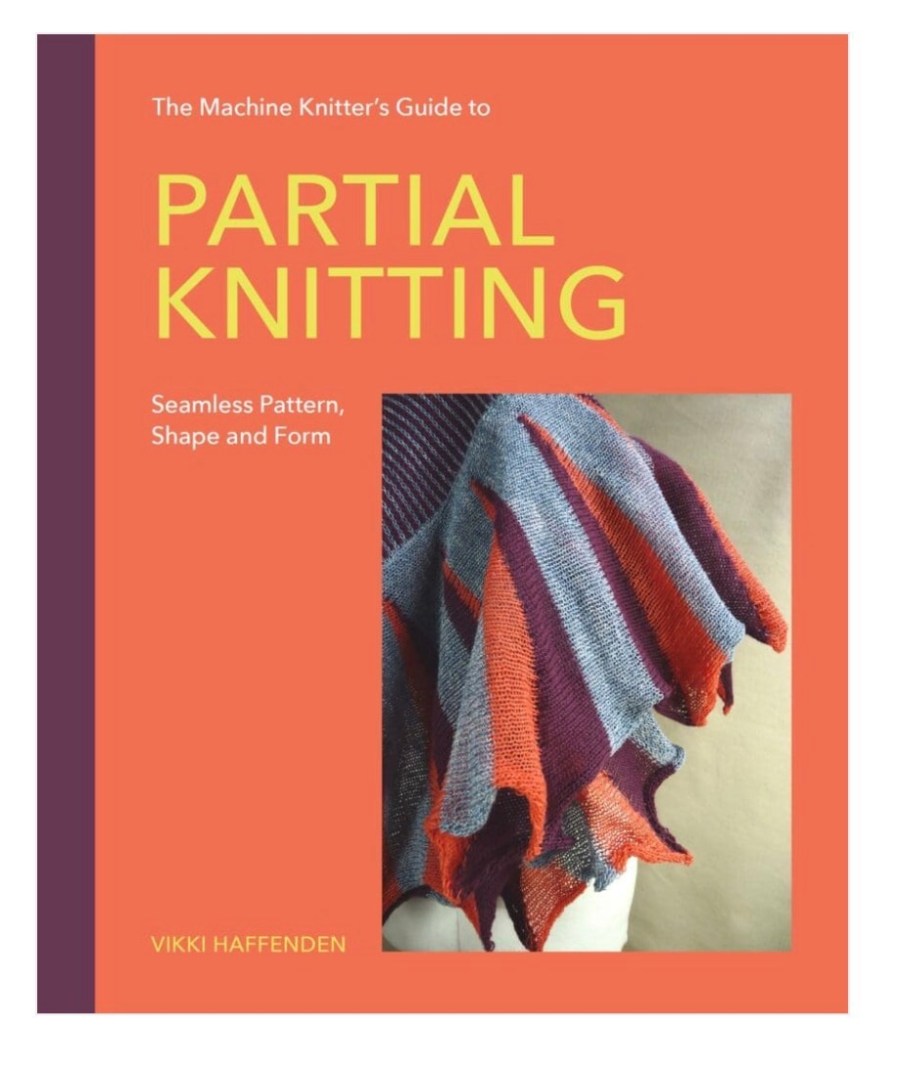
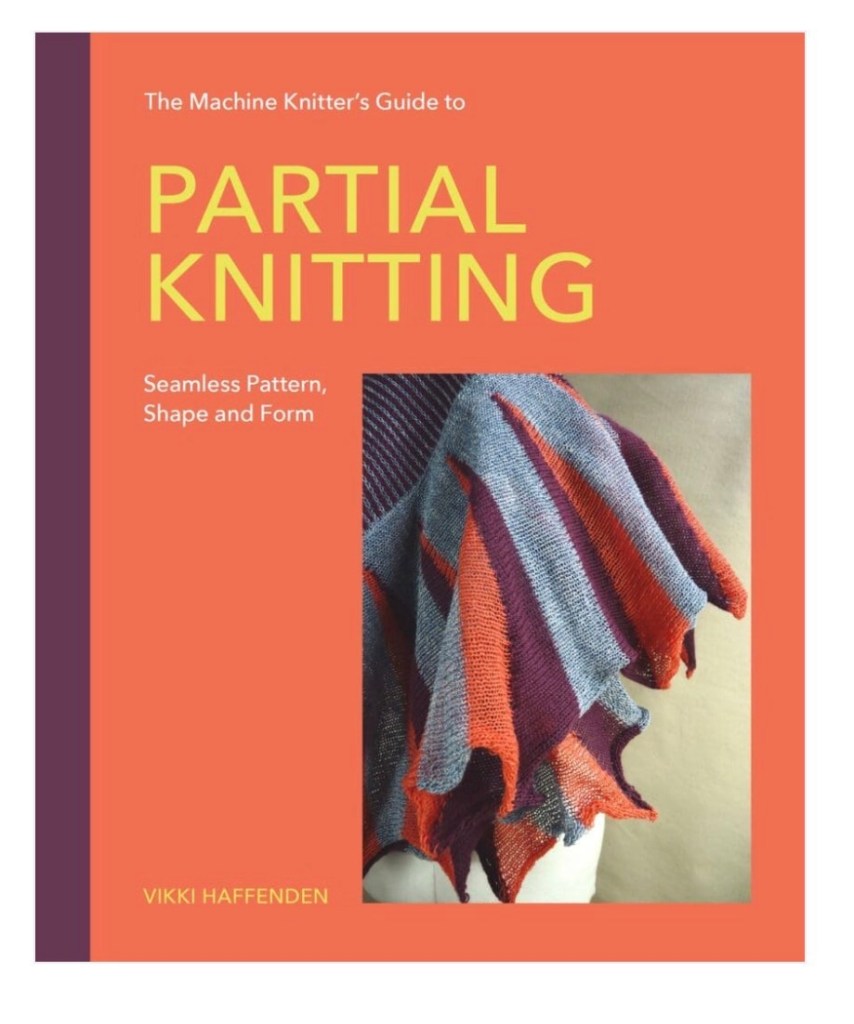
‘The Machine Knitter’s Guide to Partial Knitting: Seamless Pattern, Shape and Form’, is available to pre-order in the UK from Crowood Books, and online retailers. In the US it can be ordered from Blackwells.
Learn how to control short rows and create fab effects with this fascinating technique.
I’ve always been fascinated by short rows, or partial knitting as this technique is also called, so when the opportunity came to write a whole book about the technique I was super excited. The book opens with some interesting information about short rows to whet the appetite, the first chapter is about the absolute basics, so is ideal for people who have not worked with short rows before. The chapters progress through the different ways of using short rows; shown with examples, diagrams and written instructions. Some also have half scale sample patterns for practising the techniques which include more advanced uses, such as 3d shaping.. There are step-by-step instructions and each chapter builds on the knowledge of the previous chapter. The book ends with a chapter of patterns exemplifying the techniques covered throughout the book.
I have just been to collect a knitting machine part from Andee Knits, my local machine knitting supplier. Andrea is very helpful and knowledgeable. Highly recommended.
November’s edition of Machine Knitting Monthly has a great review of ‘Single and Double Bed Machine Knitting; the Designer’s Guide’. Amongst other nice things, they mention the broad scope of the book’s contents. I deliberately wrote so that it is suitable for any machine owner from Brother to Passap with lots of hints and tips to work on different types of machines. Thank you Machine Knitting Monthly!
Replacing the tension dial on the carriage of a Knitmaster 700, some tricks and tips to make this easier. Knitting socks and hand spinning yarn for machine knitting socks.
Follow my podcast on Spotify, Google Podcasts or iTunes.
Show Notes:
Although an older model, the Knitmaster 700 is a lovely machine. It is a punchcard machine and ball bearings so it slides very smoothly on the bed. One really nice feature is that it will knit intarsia without using a special carriage. Two white levers on the left and right of the carriage activate the intarsia setting.
Whilst knitting the sock, I found the tension dial was unreliable and replaced this with a secondhand assembly and this records doing this.
‘The Answerlady and Jack’ on YouTube are life-savers for machine repairs.
A trick for reassembling the carriage when it is difficult to get the tension assembly back into the carriage so that it will turn all the way round.
Never use metal things to poke inside your carriage unless you know what you are doing!
Mend the plastic carriage cover or any other plastic cracks, chips etc with epoxy resin glue. If you leave the cracks, particularly if they are around a metal screw head, they will quickly deteriorate and bits will break off.
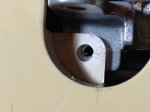
Inside the carriage handle, around the screw hole
Inside the carriage, the mounting screws
Don’t use spirit on the plastic parts of the machine, use a slightly damp cloth to wipe these parts. Metal areas can be cleaned with surgical spirit (rubbing acohol) with a drop two of oil in it. This leaves a film of oil after cleaning. Make up a small jar and keep it with your maintenance tools so that it is always to hand. Use soft cloths and cotton buds to clean your machine.
Keep your machine oiled for the best performance, oil the bed every 100 or so rows. Invest in proper sewing machine oil or knitting machine oil.
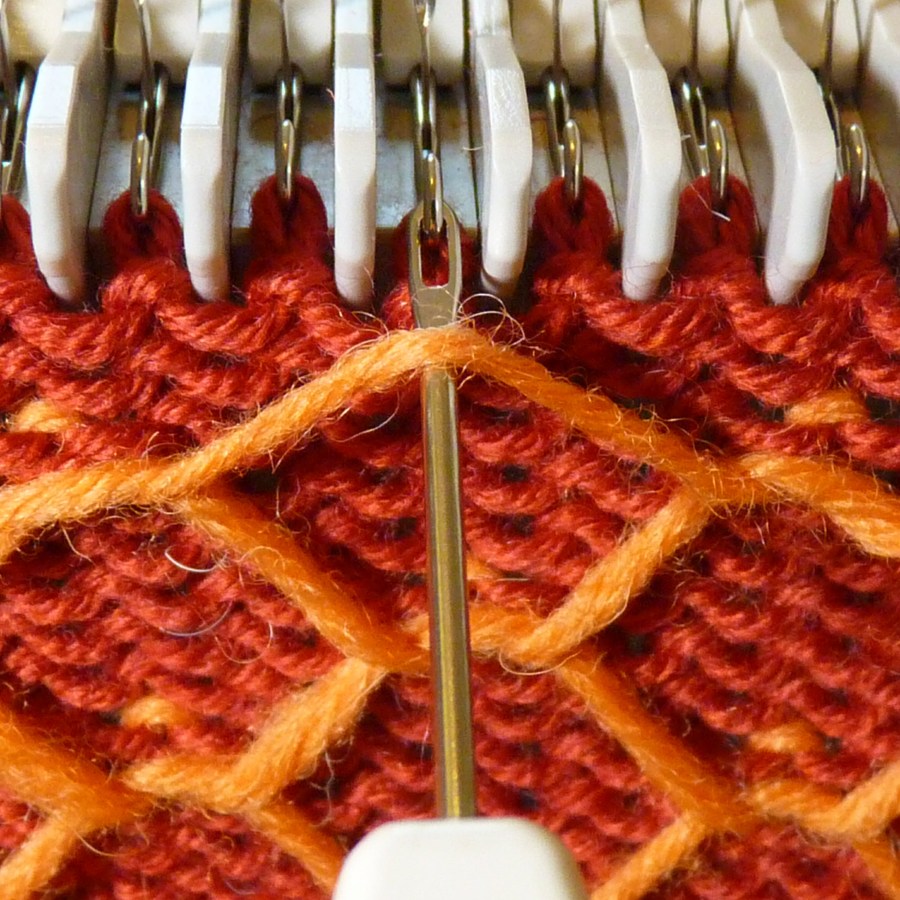
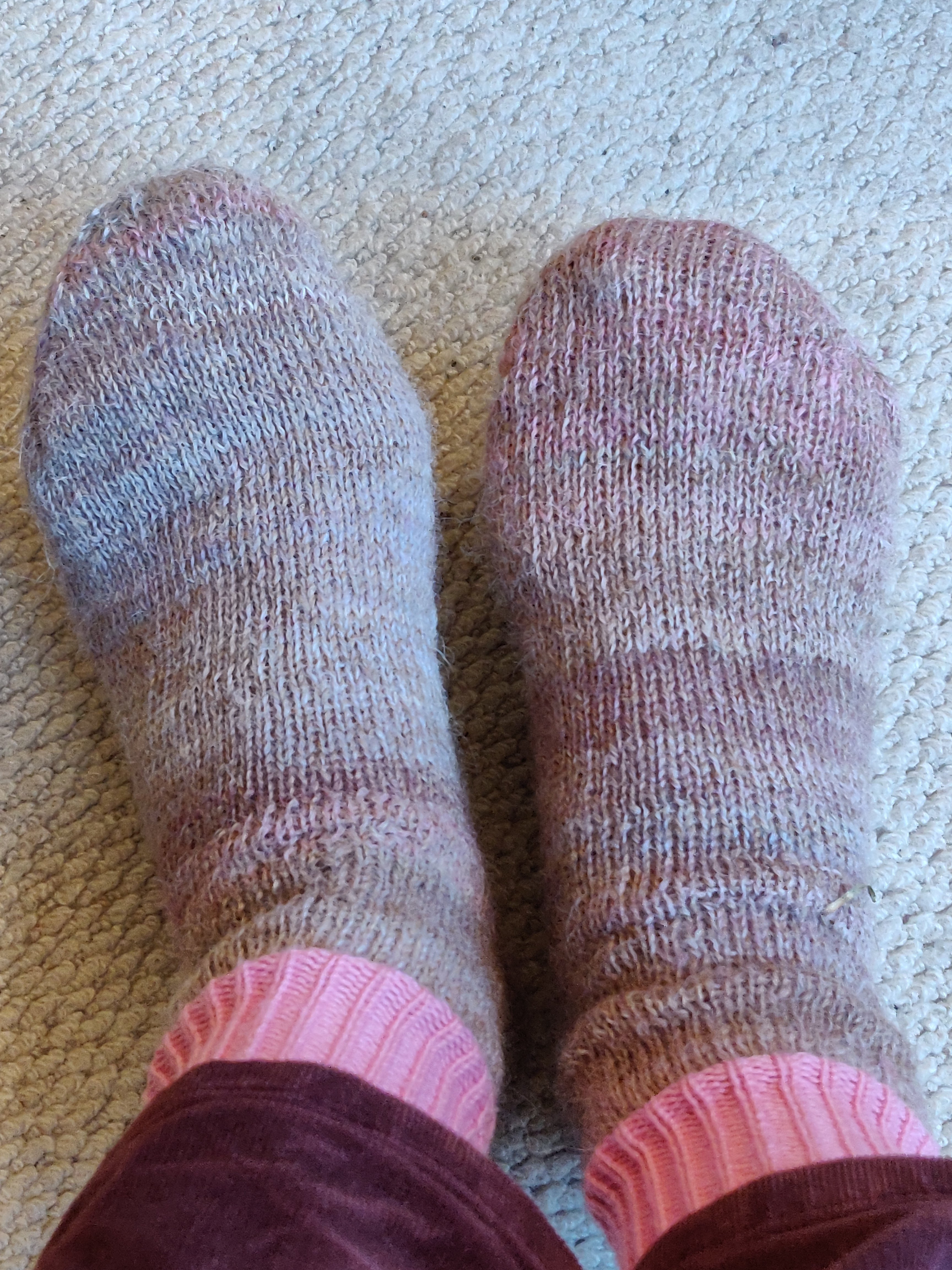
Sock knitting on the knitting machine. Not being a keen hand knitter of socks, I revisit machine knitted socks made from wool yarn. Short row heels, short row or decreased toes?


 Vikki Haffenden