I’ve got various tools that I have been using as a dizz, but there have always been shortcomings. I’ve found it difficult to get the holes smooth enough in wooden ones I have, even after quite a lot of use. I also use a big coat wooden button, (same problem with the holes), and the plastic button I used snapped in half.
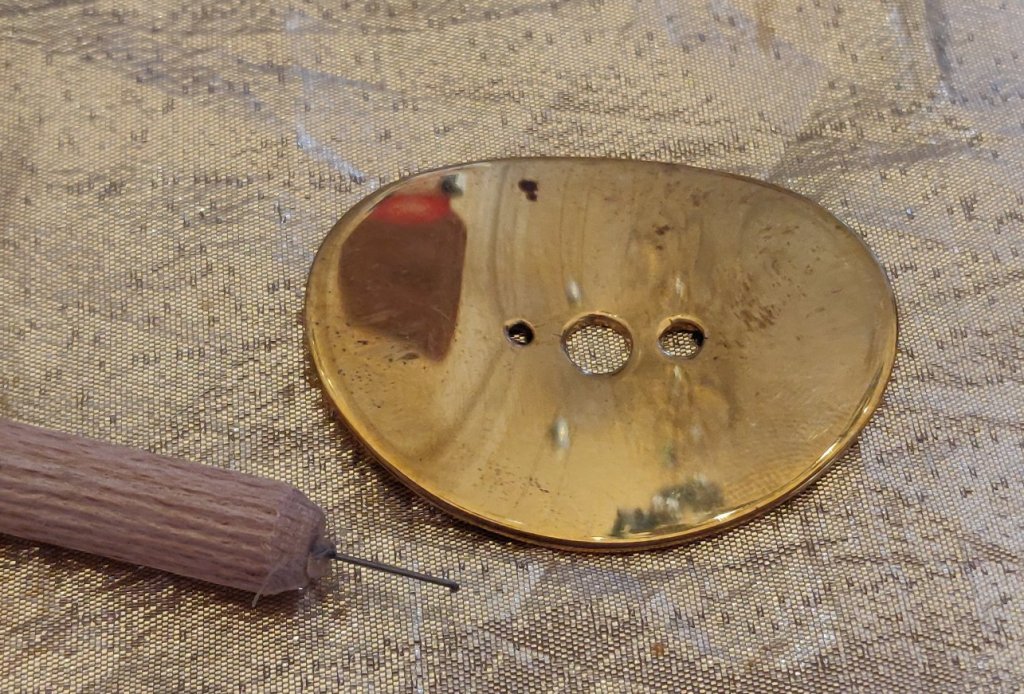
The wooden coat button is nicely concave, and I like that feature. When I saw the curved brass ones made by Majacraft I became covetous. So imagine my joy on receiving one from my son as a present at Christmas!
The little hook is great. I used an 18gge knitting machine needle before
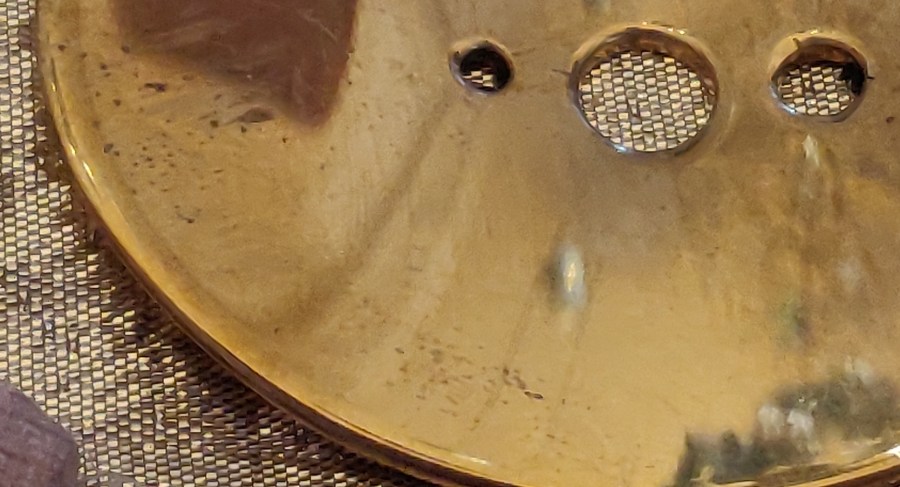
Apparently the two smaller holes (1.5mm and 3mm) are for fine and coarser wools and the largest one is for colour blending fibres as you ‘dizz’.
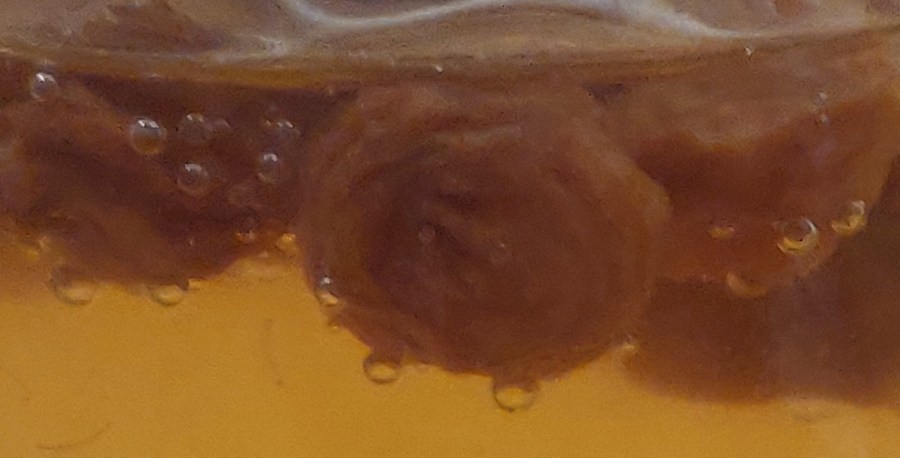
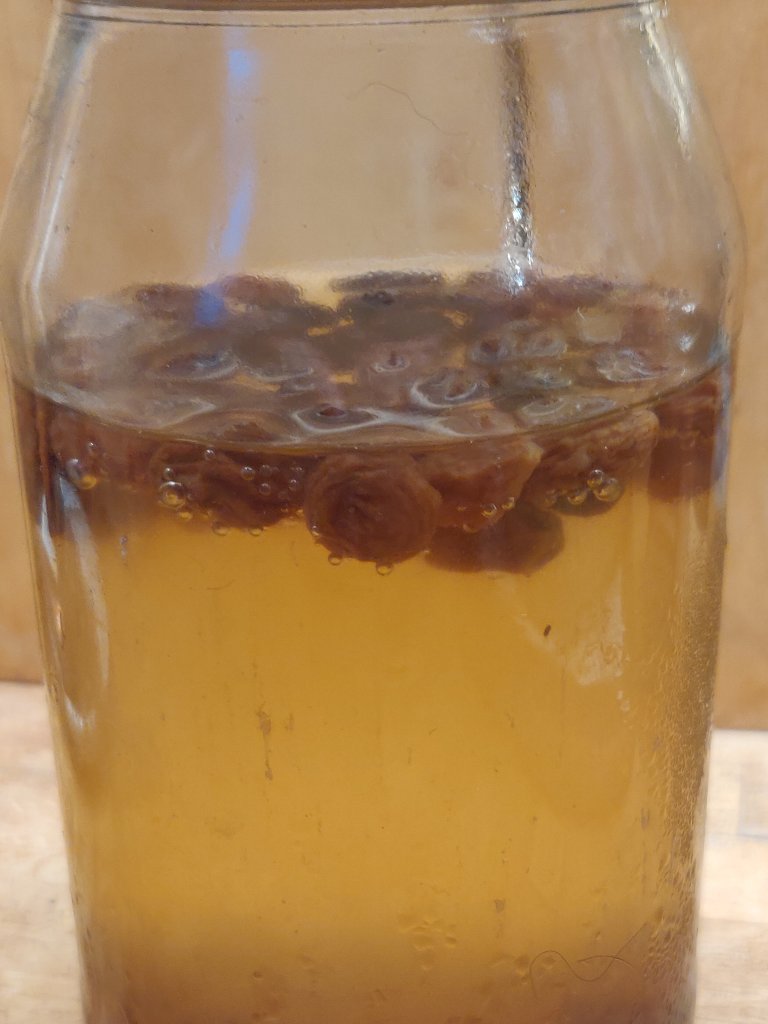
The raisin yeast that I started off at the beginning of the UK lockdown in March is still bubbling! It has sat on the fridge with very sporadic periodic teaspoons of sugar added when I remember.
Today I used some commercial yeast to seed my Stollen dough starter, but it’s pretty un-bubbly. Maybe I am used to my active sourdough starter, but I’m unimpressed. So I am going to add some of the raisin yeast to give it some welly. Let’s see what happens!
Still bubbling after 9 months of mostly fridge-life
Having a few smallish quantities of hand spun yarn I decided to dye them.
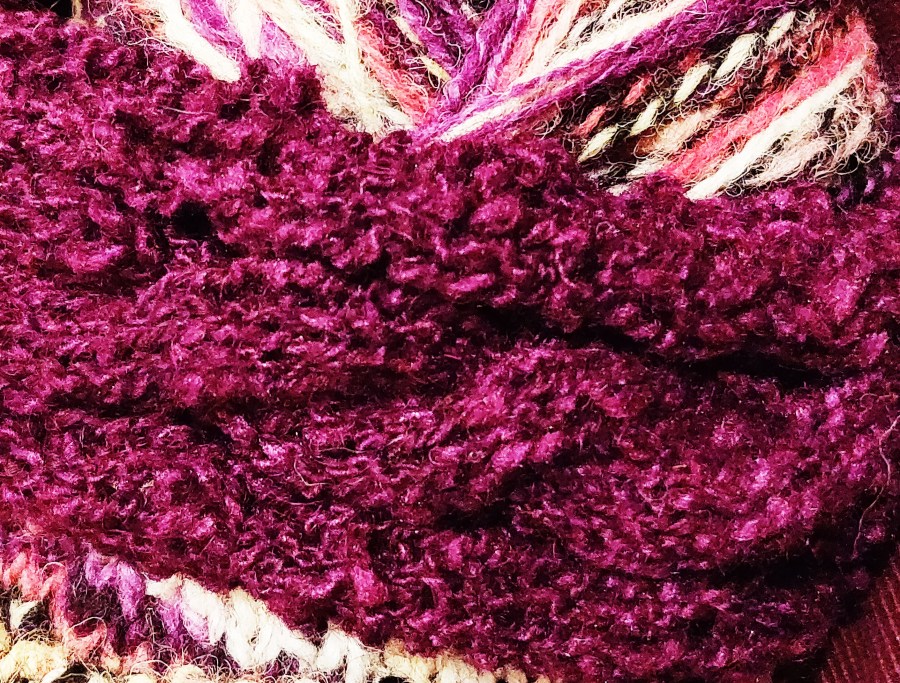
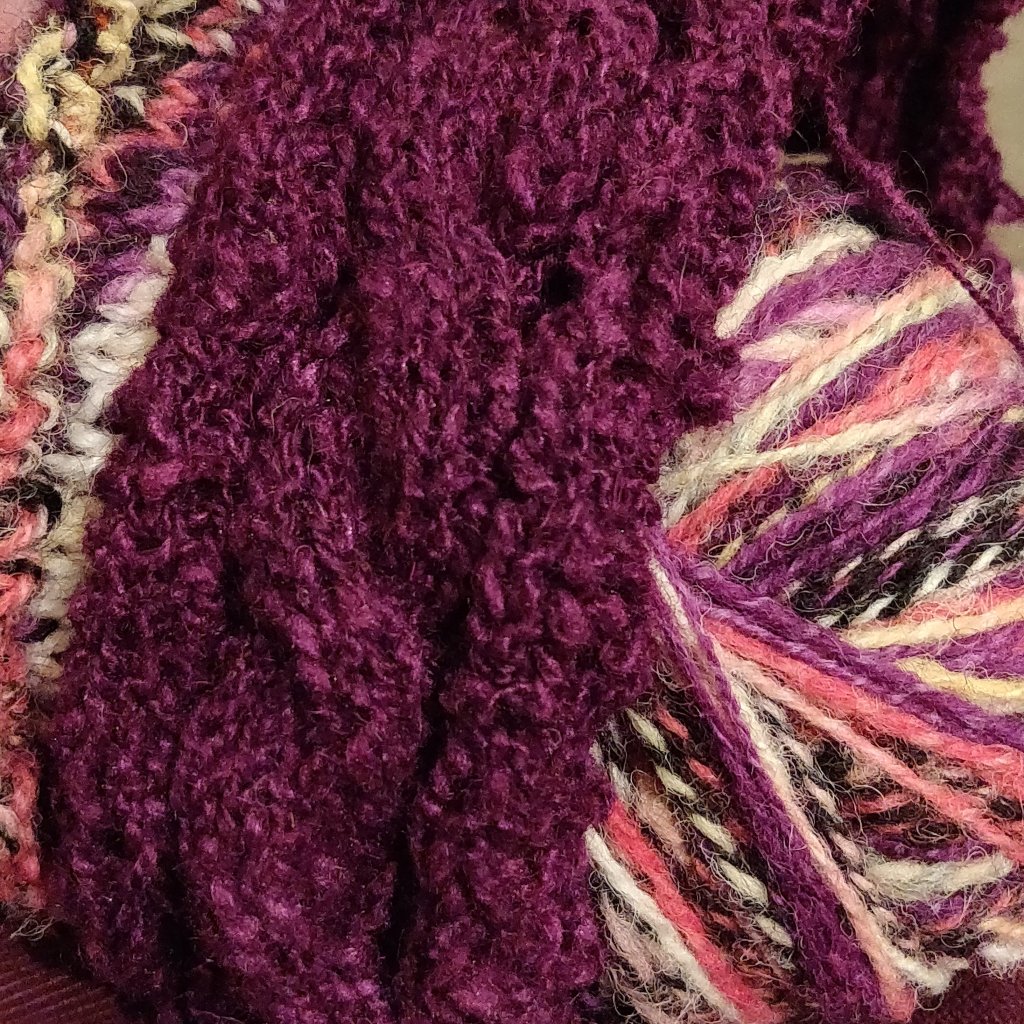
The first was about 30g of blended tussah silk/wool singles that I’d then plied with itself. This is a slightly textured yarn with an interesting matte surface owing to the silk content. It took the deep purple dye beautifully, although the different fibres had varying take up of colour, so it isn’t quite even.
The second was a black and cream space spun yarn, plied with a solid cream. The solid is made from 50g of cream Suffolk fibre, woollen spun into singles. The second singles, with which this is plied, was prepared on a drum carder in alternating stripes of the same cream yarn and stripes of black Belwin fibre. This 25g batt was then woollen spun into singles, after which the two yarns were plied together into a 50g hank. This combination created a pretty spaced marl effect along a yarn which is reasonably even in thickness throughout.
The completed yarn was dip dyed in the same dye pot as the silk/wool yarn, plus another pink dye I had on the go. It was dipped a little into some yellow as well. Over-dyeing this black and cream marl yarn gives the impression of many more colours than there really are.
I’ve used the silk/wool as a band for a hat and the over dyed marl as the crown.
The band is knitted around the head, and has a cable along its length. The stitches for the crown are picked up along the edge and knitted in the round. The ball of yarn is on the right in the photo.

 Vikki Haffenden