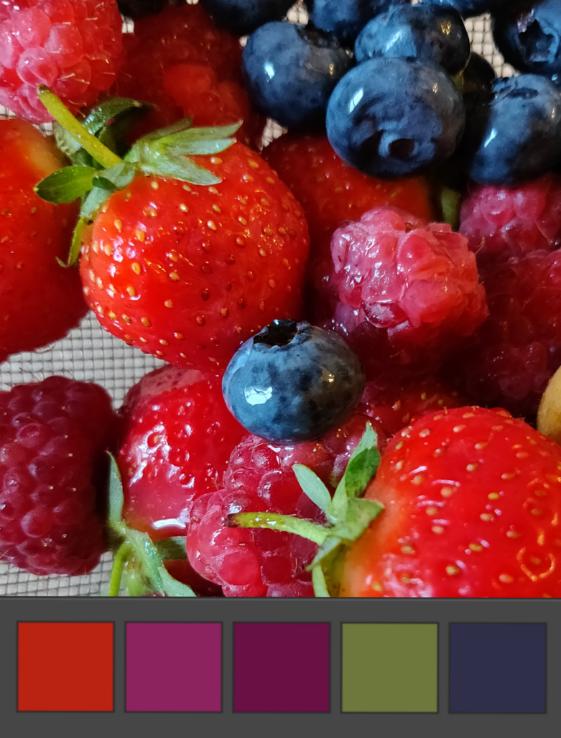
image of fruit with colour chips extracted from image

Talking to Techknitters Machine Knitting Club

On Monday I had the pleasure of talking to Techknitters Machine Knitting Club in Chicago about my book ‘Single and Double Bed Machine Knitting; the Designer’s Guide’. Although this was published in 2024 the UK, it was not published in the USA until 2025 and I was due to talk to the group in December of that year. Moving house and having a lot of building work in progress meant that I couldn’t manage an online talk at that time, so we rescheduled. The new date came around quickly, doesn’t time fly?

Although several members indicated that they already have the book, I decided to discuss the overall content of book for those who do not yet have a copy. During this I explained my thinking behind the plan of the book and the main intention behind my writing. Following on to this, I concentrated on snippets from each chapter.

One of the reviews of the book mentioned that it is unusual to find design development and process included in a knitting book, so I took this comment as the focus of the rest of my talk working with material from the chapters, ‘Designing with Colour’ and ‘Finding Inspiration and Designing Pattern’.

This section of the talk started by looking at extracting colour inspiration from one of the images used in the book, and then reviewing a sample from the book that had been designed using these colours to work stripes. The practical part of the talk was about selecting yarns, designing another stripe, and revising and developing the design. Each step was shown and design rationales discussed. The sample was knitted and a finished and steamed version was reviewed to which the group gave feedback on how it might be improved/adapted. All in all it was an enjoyable experience.

I will be talking to the group again in August about my latest book, ‘The Machine Knitter’s Guide to Partial Knitting; Seamless Patter, Shape and Form’ which is due to be published in Spring 2026 by Crowood Press.

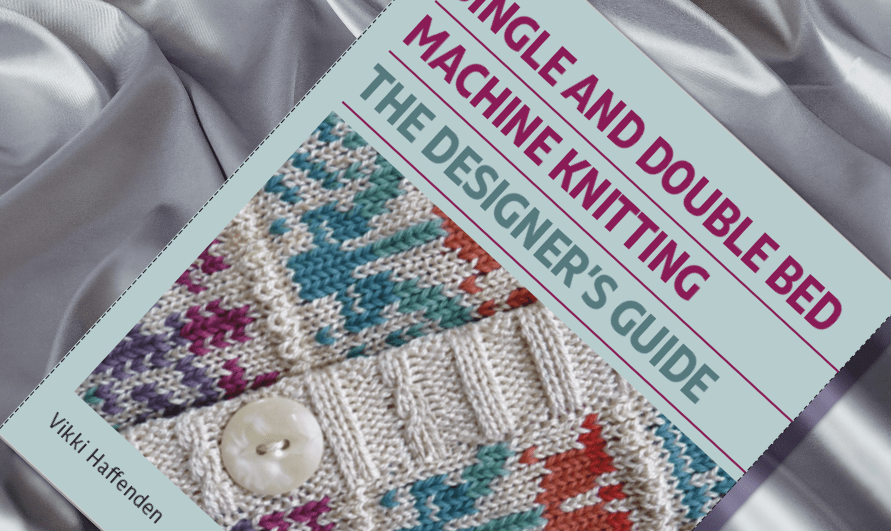
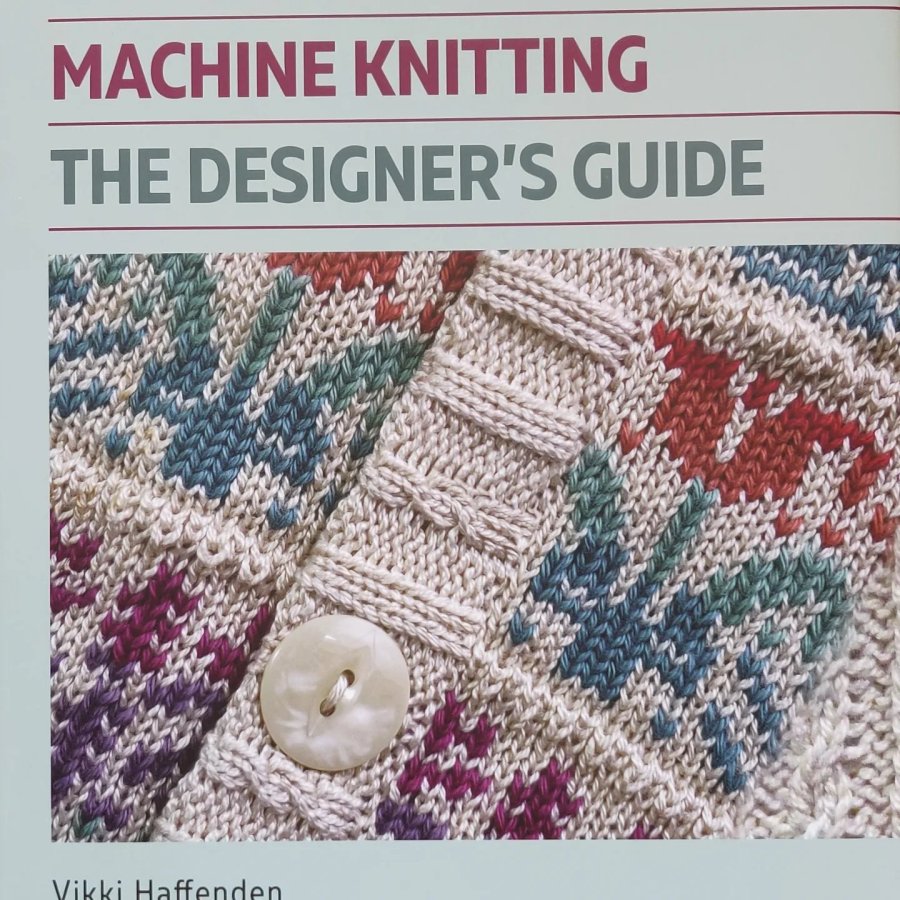
Cover of Singel and Double Bed Machine Knitting: the Designer's Guide

How to meet my readers…?

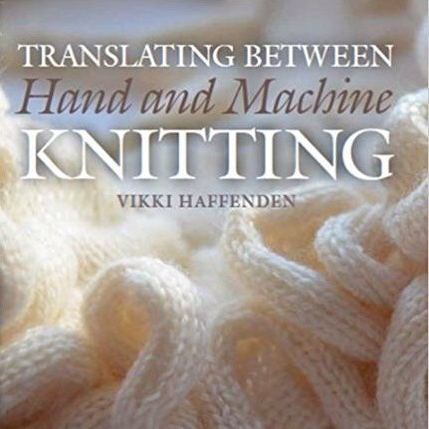
Hello there. I am keen to know my readers, and meet people who own a copy of either of my knitting books, ‘Translating Between Hand and Machine Knitting’ or ‘Single and Double Bed Machine Knitting; the Designer’s Guide’. Obviously meeting people in person might be tricky, so I have been wracking my brains about how to do this and settled on trying to set up an image gallery of people who own a copy of one of both of these books.

It would be wonderful if you could post a photo of yourself holding your copy, and with your knitting machine as well if it works for you. If you prefer not to be in the photo yourself, a photo of your copy of the book sitting on top of your knitting machine would be lovely, and a piece of your knitting as well maybe? Please also add a brief review if you have time, its always useful to get an insight into how readers see what I have written and feedback helps me develop my approach for future books.

I can only think of Facebook or Instagram, but I’m sure you will have other favourite places to post. It would be good if you could add the hashtags shown below so that I can find your posts. I will start the ball rolling on Instagram.

Hashtags   #vikkihaffenden, #TBHMK, #SDBMK, #vikkiknit, #crowoodpress, #machineknitting

When you post a photo, do feel free to leave me a message pointing to it on this page.

What a lovely review of ‘Single and Double Bed Machine Knitting; the Designer’s Guide’

November’s edition of Machine Knitting Monthly has a great review of ‘Single and Double Bed Machine Knitting; the Designer’s Guide’. Amongst other nice things, they mention the broad scope of the book’s contents. I deliberately wrote so that it is suitable for any machine owner from Brother to Passap with lots of hints and tips to work on different types of machines. Thank you Machine Knitting Monthly!

Read excerpts from the review here.

A ‘wow’ review of ‘Translating Between Hand and Machine Knitting’

I found this review on Facebook ‘Machine Knitting’ group, and have to share it. I was so thrilled that this reviewer ‘got’ the book so thoroughly.

Book Review:
Translating Between Hand and Machine Knitting by Vikki Haffenden
☆☆☆☆☆☆☆☆☆☆ 10:10
“This book ought to be mandatory reading for every new machine knitter!” -me
“This book needs to be on every machine knitter’s manuals shelf, in pride of place, no matter if you use Silver Reed or Brother!” -me
“Where was this book when I was desperately trying to learn how to design lace/translate lace cards between Brother and Silver Reed?!?!” -me

This book is absolutely essential equipment as far as I am concerned! It starts out covering and comparing materials and equipment for knitting, both hand and machine versions. The pictures will blow you away and they only get better. Please, at this point, re-read the title. It does not state ‘pattern’ in the title.
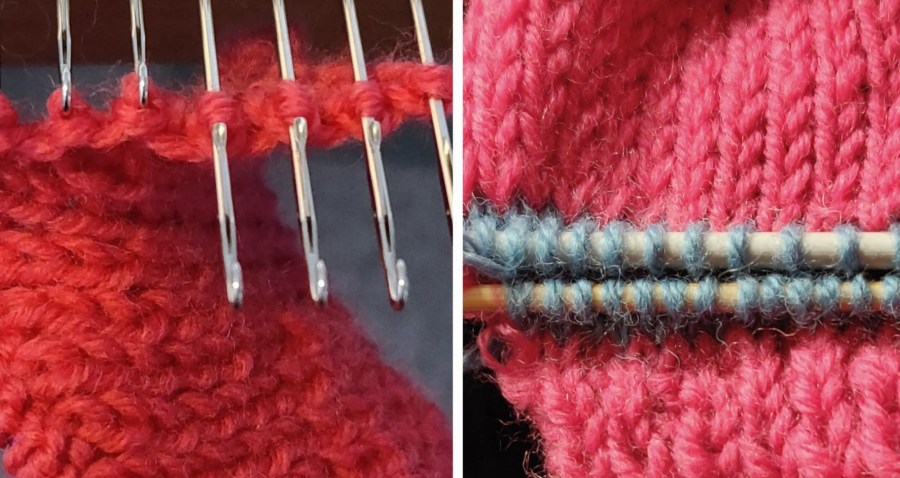
Next it goes into stitch construction and compares hand and machine and final product of each. This book give equal time to both! It goes into yarn fiber types, yarn construction(spinning), yarn types (boucle vrs worsted). The details are absolutely in depth and extremely easy to understand with stupendously clear focused pin-pointed and highlighted photography and exemplary diagrams that compare every aspect of stitches, fabric, mechanics, of hand and machine knitting. It breaks down differences between brands when there are differences, and does not favor either. There are some references to Toyota and Passap, but the main info concerns Silver Reed and Brother. This covers every type of cast-on and cast-off that I could remember!! It isn’t a how-to… it compares them and shows some GREAT visuals of them on and off the needles. Refer to your manual for specifics on how-to cast-on and cast-off. Basically, this book compiled most of the answers to questions I have asked in the past, questions I have hunted down answers to, and questions that I hadn’t even thought to ask. It is utterly fantastic. Only the very last chapter goes into translating PATTERNS between hand and machine…

Buy it! Buy it NOW!
I can not say enough how much you need this book! How much I needed this book… now if I can just convince her to write one on Passap…
No! I have no affiliation with the author… I wish I could say I know her.

Since reading it I have replied, so let’s hope we can converse about knitting I the future.

‘Single and Double Bed Machine Knitting; the Designer’s Guide’

The advance copy of my new book arrived today, and you can see some pages from the book here.

Meanwhile here is a quick look at the book.

I have made a more in depth video introduction to the book, and if you would like to watch this, please keep on scrolling down the page.

Seamless machine knit socks

Slow and steady is best when demonstrating live!

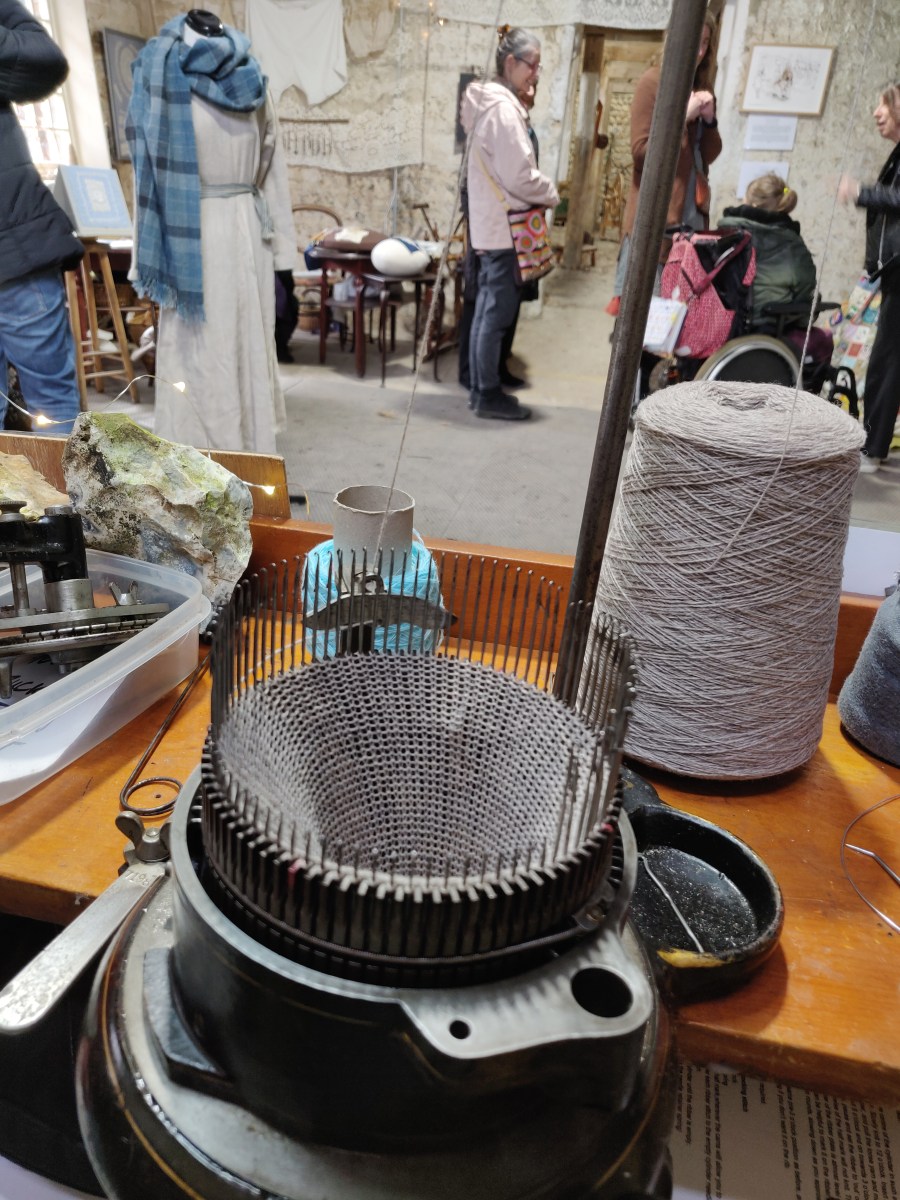
This was taken at Traditions in the Making, a Heritage Craft event at Stanmer Park, Brighton. With lots of volunteers from local community textile group Woolly Umbrella, alongside the CSM there were demonstrations of flax processing, lace making, weaving, inkle looms, wool fibre preparation (hand and drum carding), embroidery and wool and flax spinning.

The CSM is an Imperia with an 84 slot cylinder and gm here I am knitting a sock in traditional 3ply sock wool; no nylon. This was the nearest we could get that was most like the wool probably used originally on the machine. Although I have knitted on it with hand spun I felt that demonstrating required enough concentration without the worry of irregular yarn!

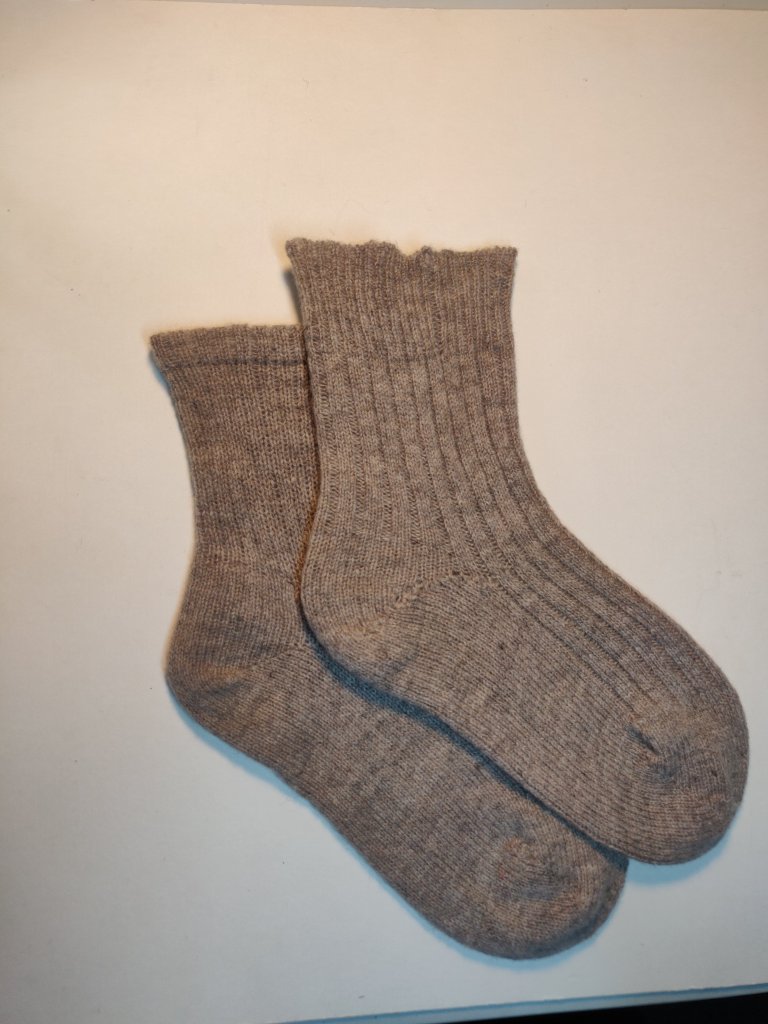
Two types of socks in the 3 ply yarn, fake rib and true rib.

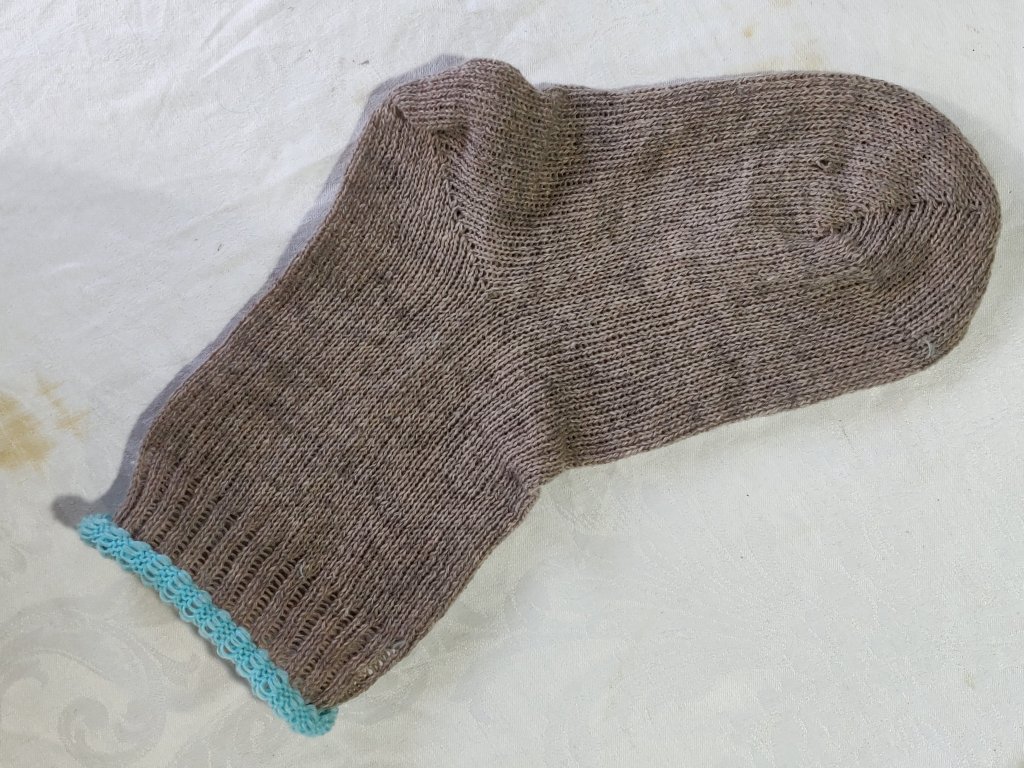
In a brave, but foolish, moment I decided to try a toe-up sock at one point. It wasn’t too bad at all, and I am quite pleased with the result.

Toe up sock, still waiting to be hand finished

Proofreading ‘Single and Double Bed Machine Knitting; the Designer’s Guide’

I am now part way through proofreading my latest book. It’s a lot knottier checking double bed as well as single bed instructions!

The book covers, without stating the obvious, single and double bed machine knitting techniques and design. Brother,  Silver reed/Knitmaster are the main machines, but Passap machines are also included in some sections.

Step by step instructions are illustrated as well as explained in the text and at the end of each chapter there is a Design Studio exploring how to develop the techniques discussed in the first part of the chapter.

It’s got to be done before Christmas, so early mornings and late nights are the order of the day. I’m baking mince pies when taking a rest from the screen.

If you enjoyed Translating Between Hand and Machine Knitting, or are looking for the definitive book on machine knitting I think to will want this book.  You will be able to pre-order soon so keep an eye out.

‘Single and Double Bed Machine Knitting’; The Designer’s Guide‘ will be published in Spring 2023. Yippee.

Googling myself again!

I took a quick look at the Amazon page for my book Translating Between Hand and Machine Knitting and thought I would share some reviews.

I notice that subscribe wishes to express their annoyance because the price has been reduced. I fully appreciate how annoying this can be, and wonder if retailers understand how this upsets customers. I felt similarly annoyed when I bought a new drawing tablet only to see it was reduced by £40 in the Black Friday sale two weeks later! They wasn’t much I could do but accept that I’d had two week’s use of the tablet already, (working on my next book). So although this is beyond my control, my apologies to anyone to whom this has happened.

So moving on from issues of frustrated shoppers, here are some of the very nice things said about the book.

JayBards from the US writes, ‘5.0 out of 5 stars Excellent Coverage of Topics, Great Photos and Illustrations’, and finishes the review with, ‘The text is really well-written, very clearly presented, easy on the eyes, and a pleasure to read. This book will become an important part of my extensive library on knitting. In short, I LOVE this book! Congratulations to Dr. Haffenden on an excellent book that should become a classic.’

Thank you JayBard for your feedback and review.

Meceo from Canada writes, ‘This is one of the best books I’ve purchased covering the hand knit patterns converting to knitting machines. It is beautifully done with lots of photos and information to help anyone interested in this type of knitting.’

Sharon Sullivan from the US writes. ‘Very well written book. Haven’t had the book very long, but the time I’ve spent going through it so far, it’s an A+ book. Content is excellent. Photography is excellent. Easy to understand. Definitely worth the cost. I don’t usually do reviews, but think everyone should know that this book will help a machine knitter immensely.’

Its so helpful as an author to get feedback, and positive criticism, (suggesting improvements rather than just pointing out what you don’t like) is the most helpful.

So thanks to all who have taken time to review my book and help others decide if it is right for them.

Talk in March 2020

I will be talking to Long Buckby Machine Group next March about my career in knitted textile and knitwear design, and the inspiration behind ‘Translating Between Hand and Machine Knitting’.

I’m looking forward to meeting members of this well-established machine knitting group.

Futurescan4 conference

The last two days I’ve been at the FTC Futurescan4 conference in Bolton. It was stimulating and inspirational to spend time listening to the presentations and joining in discussions with fellow fashion and textile teachers.

My paper was about using textiles as a medium to raise awareness scabies; not a catchy title, but a fun project. You can read more about this on the project blog.

Here I am wooing my audience