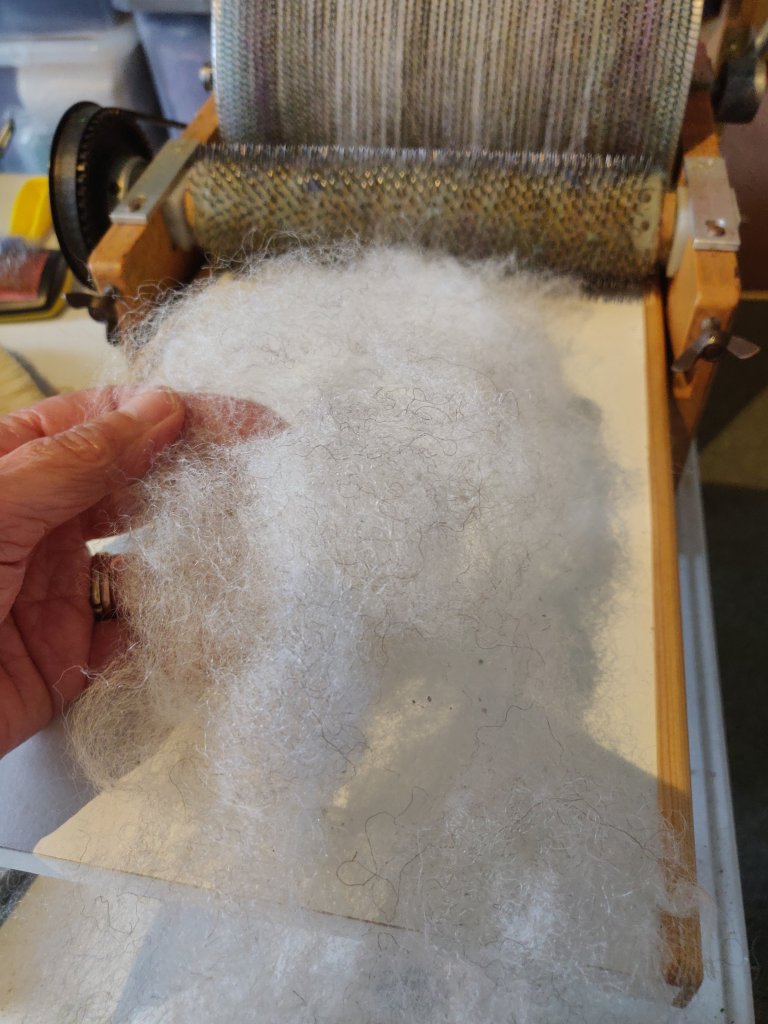
I have been doing quite a bit of drum carding of raw fleece I have gathered over the summer, and whilst doing this I recorded a couple of videos of the process.
This is the first one; picking and running the fibre through the carder the first time
I always put the batt back through the drum carder. I find this second carding makes a much nicer fibre for spinning. The second video covers doffing the fibre, splitting it and putting it back through. After this you can either take the batt off, as shown in the video below, or use a diz to take it off in a continuous roving. To do this, only separate one end of the batt (to the width of the diz), and pull the fibre off in a spiral as the drum reverses around.
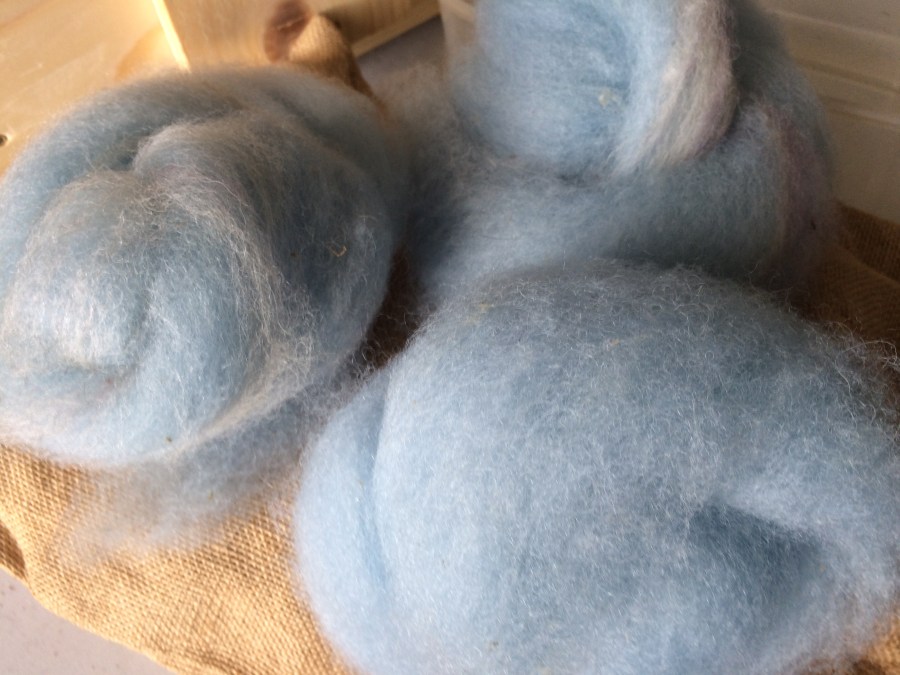
The wool is from a Dorset sheep, and I have hand-dyed it in acid dye to this rather pretty duck-egg blue.
The second video shows doffing the fibre and putting it back through the carder after splitting and drafting to thin it out.
I haven’t spun this fibre into any meaningful amount of yarn as yet. That is a pleasure I am saving for later.
In the video below you can see the fibre being picked prior to the carding.
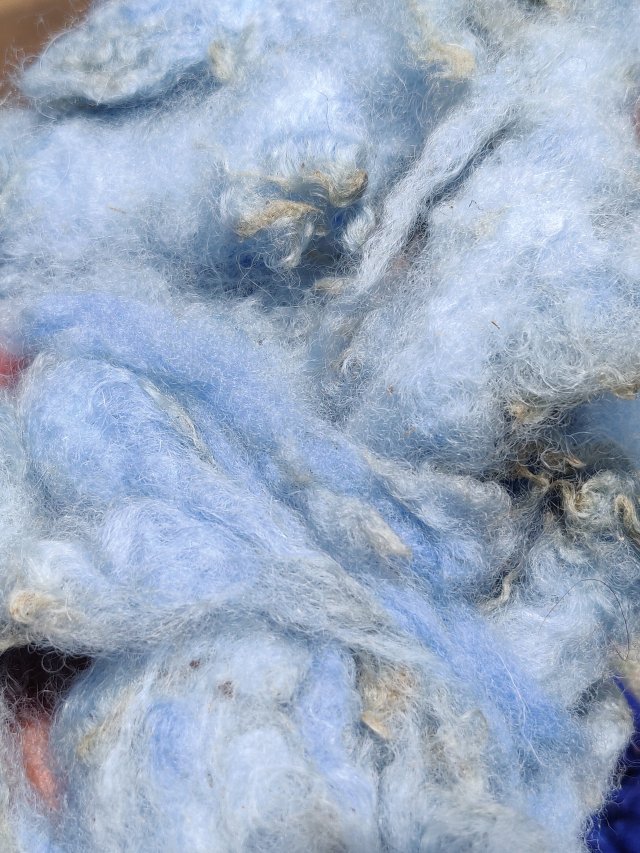
Aplologies for the portrait aspect filming of this video!This was the fleece just after dyeing
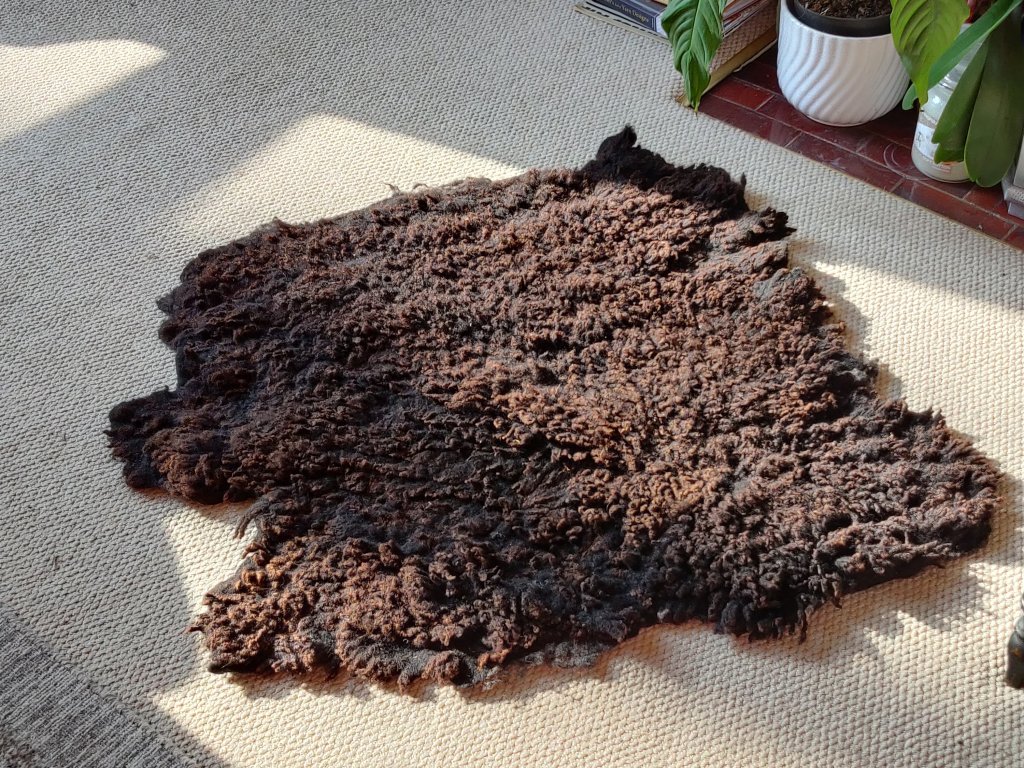
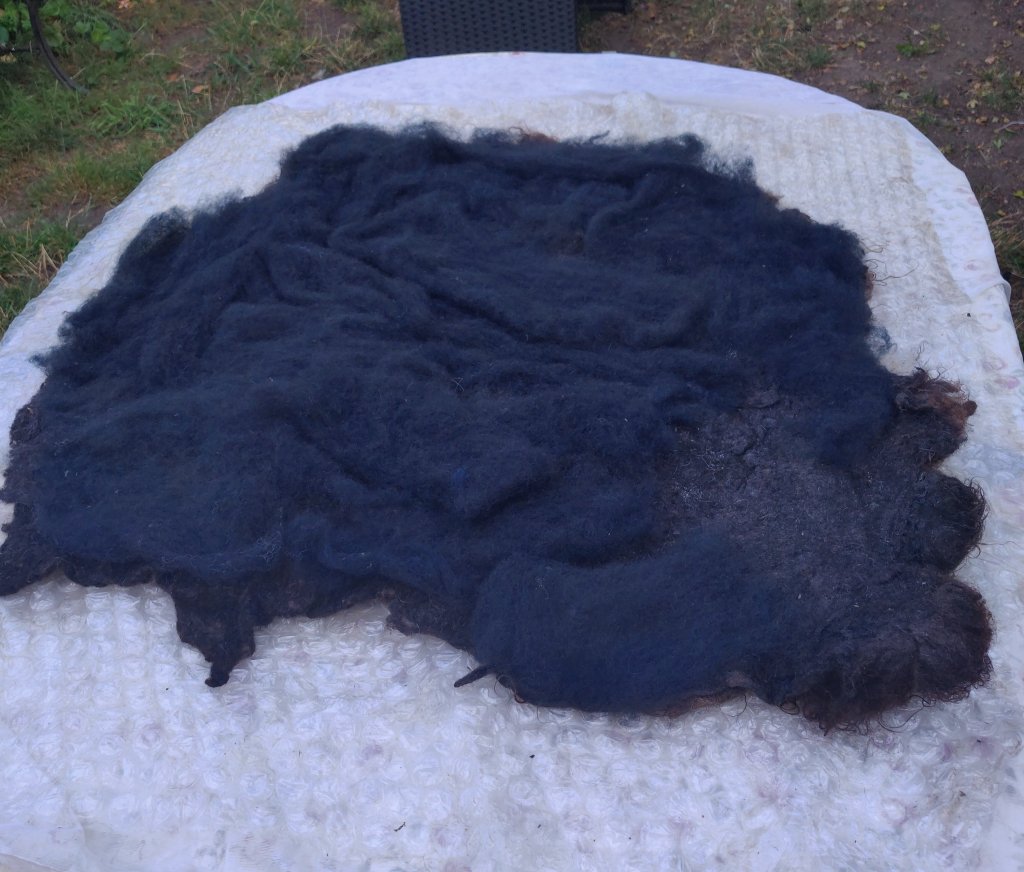
I made my first non-destructive, felted ‘sheepskin’ rug yesterday. Why I chose the hottest day of the year is beyond me. Well – it was meant to be a ‘sorting wool in the shade’ time, but a cotted mid-section of a pretty black Shetland fleece inspired me to take control and made something useful from it.
Floor rug or sofa rug, I can’t decide.
After cleaning as much VM as I could stomach from it – yes I know, I will live with the little bits forever now – I started to make the rug. I didn’t take any photos until it was done because it was a truly filthy job and I didn’t want to touch anything and needed a shower afterwards.
Update 13th August 2020
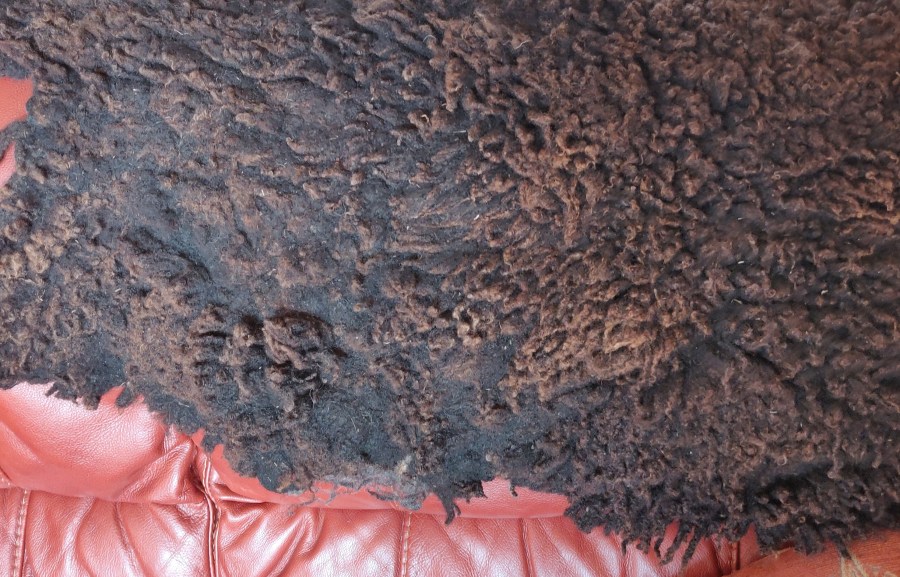
I made another one from a bi-coloured Shetland fleece and took a couple of photos,shown below
I laid the portion of fleece face down on the garden table and sewed together any holes – using wool yarn. I shaped it using this as well, so drew bits together and firmed up the edges.
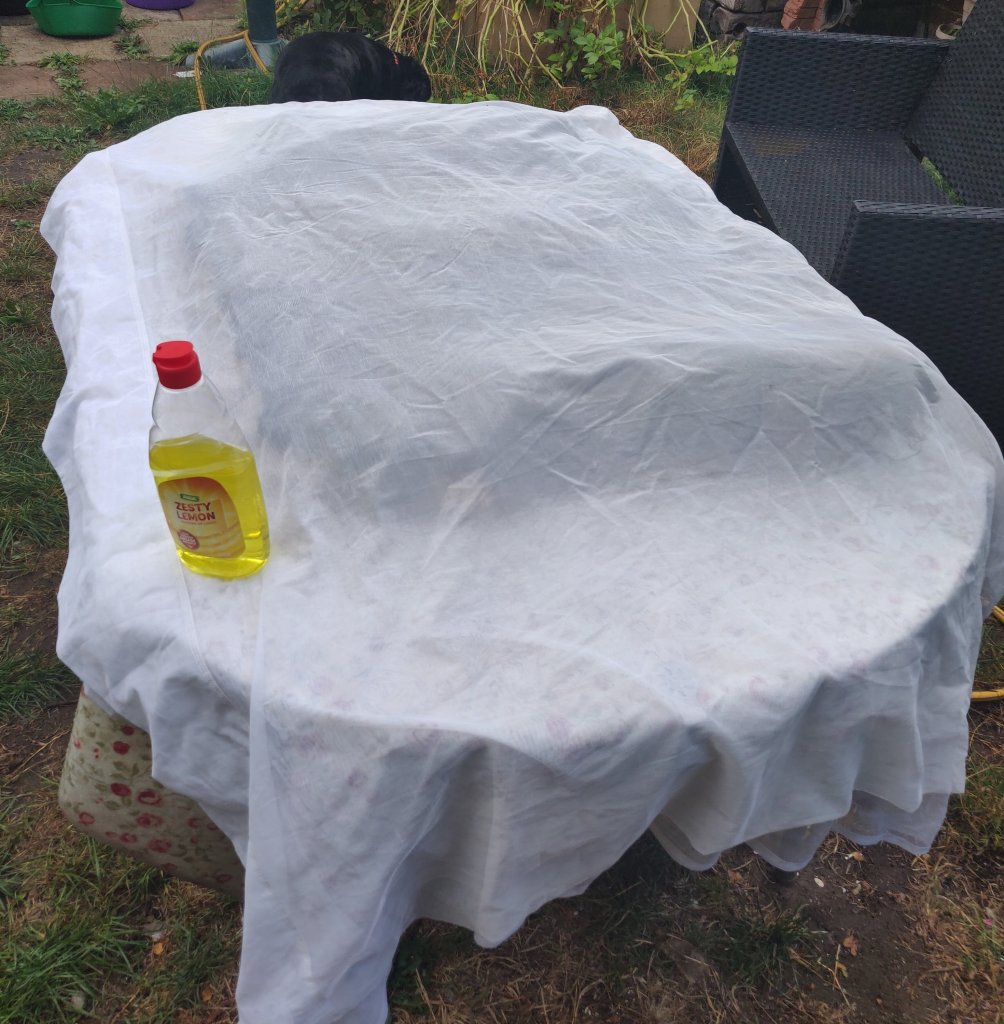
After lifting the fleece I put an old net curtain on the table and then a layer of of bubble wrap, ( I have to fight to keep a stock of this as my husband throws it out when parcels arrive). On top of this I laid the firmed up fleece face down.
Next I laid layers from my own carded batts of black Shetland across the back. This wasn’t from the same fleece, but from last years equivalent. I did a quick and dirty carding session to get the batts, once through and no picking of bits etc. I criss crossed these to make a firmer backing. Over these I laid a thin layer from a batt of Blue Faced Leicester I had in my store cupboard.
Laying on the backing fibre
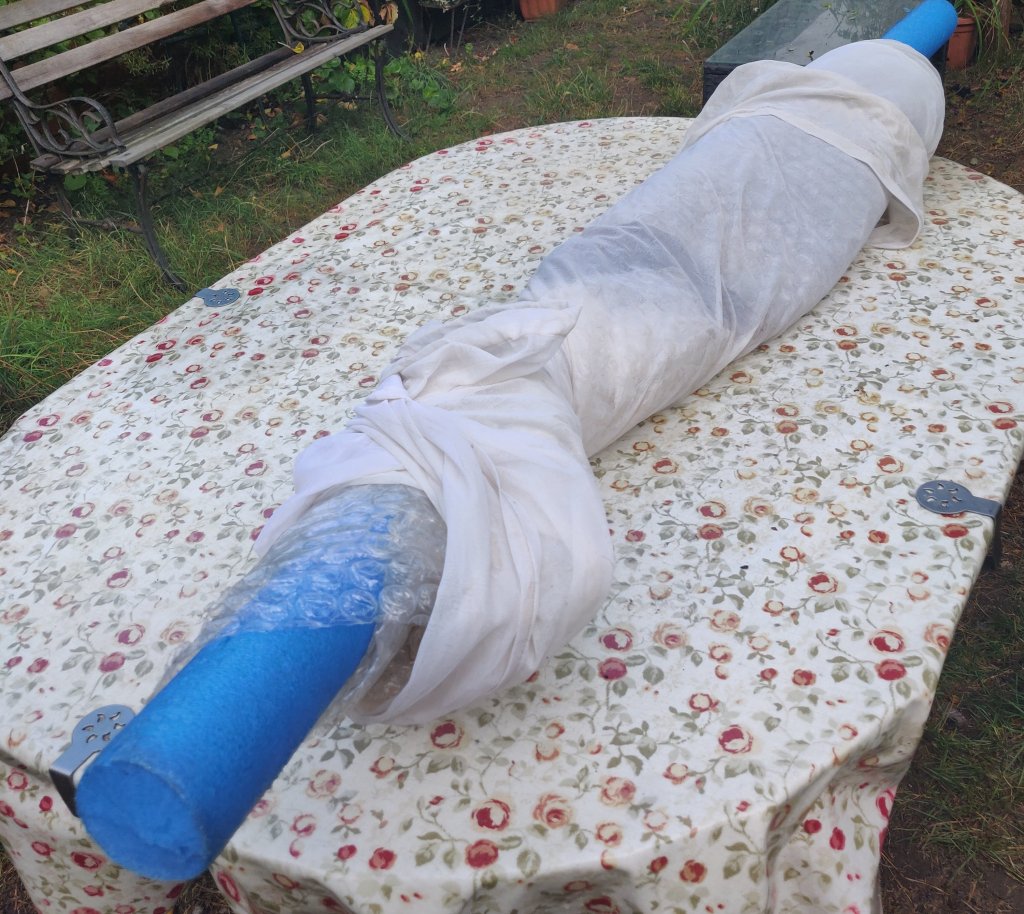
Over this I laid another old net curtain, and dribbled boiling water over it all, and some washing up liquid. Then I tightly rolled it around a pool noodle and rolled it back and forth lots of times – for a minute at least. This was the filthy part, as the dirt came out in spurts. Yuck.
Ready to rollI find rolling the package really difficult as I’ve not got a large enough hard surface in the garden, so the table had to do. It would be a lot easier on decking or concrete.
I opened it all up, checked the felting and added more hot water and rubbed and kneaded any suspect places with a bar of soap to get them felting. The re-rolled for another minute, and repeated it all again.
Of course it still needed washing, which was another filthy job, but finally it was all done!
Drying it took a day in the sunshine. Now its on the sofa, yipee.
Is it risque? It’s certainly liberating. Given the restrictions on meeting up indoors, going to the park seemed the the perfect way to meet up when we can’t go to our normal groups.
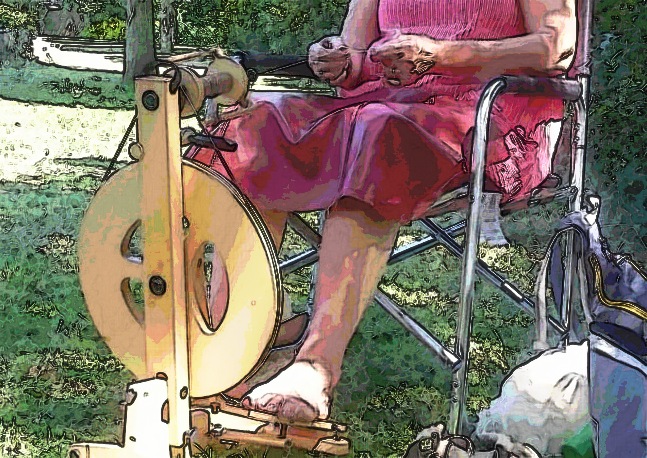
This is the second one I’ve organised and it was lovely way to spend a Friday afternoon. I took my portable Louet wheel and others brought wheels, drop spindles, knitting and crochet. And a picnic lunch!
Shade was mandatory as it was so hot, and we found a generous tree that have us a shady space big enough for plenty of social distancing.
I’m taking the photo…So someone kindly took one of me
I took along a sack of stove-top rainbow dyed fleece as described on my Dyeing Wool page. It’s a little coarse, but in nicely formed locks, so I am flick carding it and spinning it quite thick for use in a rug, (maybe)?
We had a few rainy days recently so I put a lot of fleece to soak outside – hoping the rain water would help the process along. The catch of course was that I then didn’t want the waste the opportunity that the glorious weather we had today offered for washing the fleece in the garden and getting a head start on the drying.
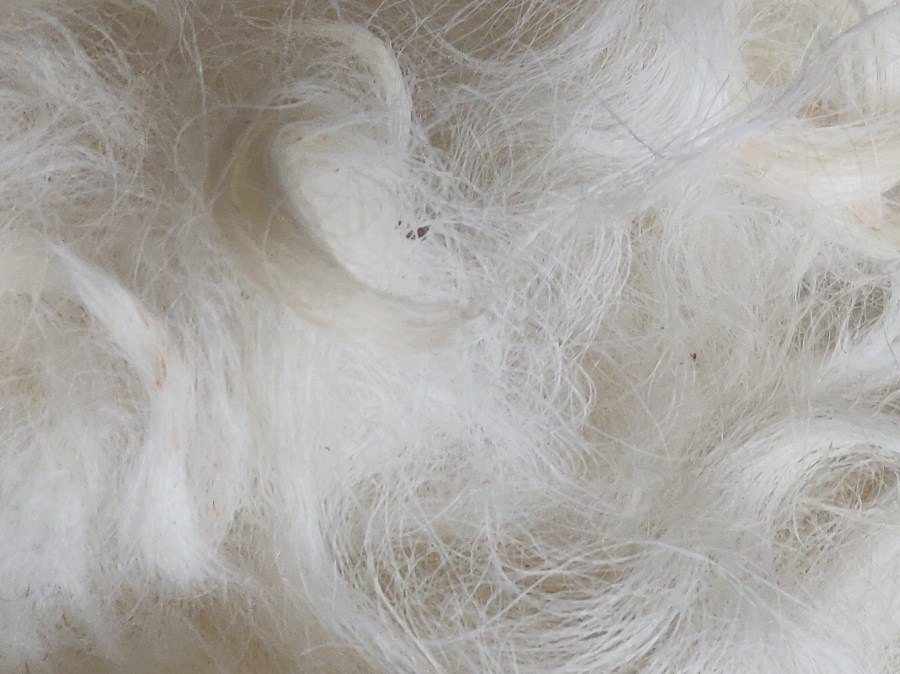
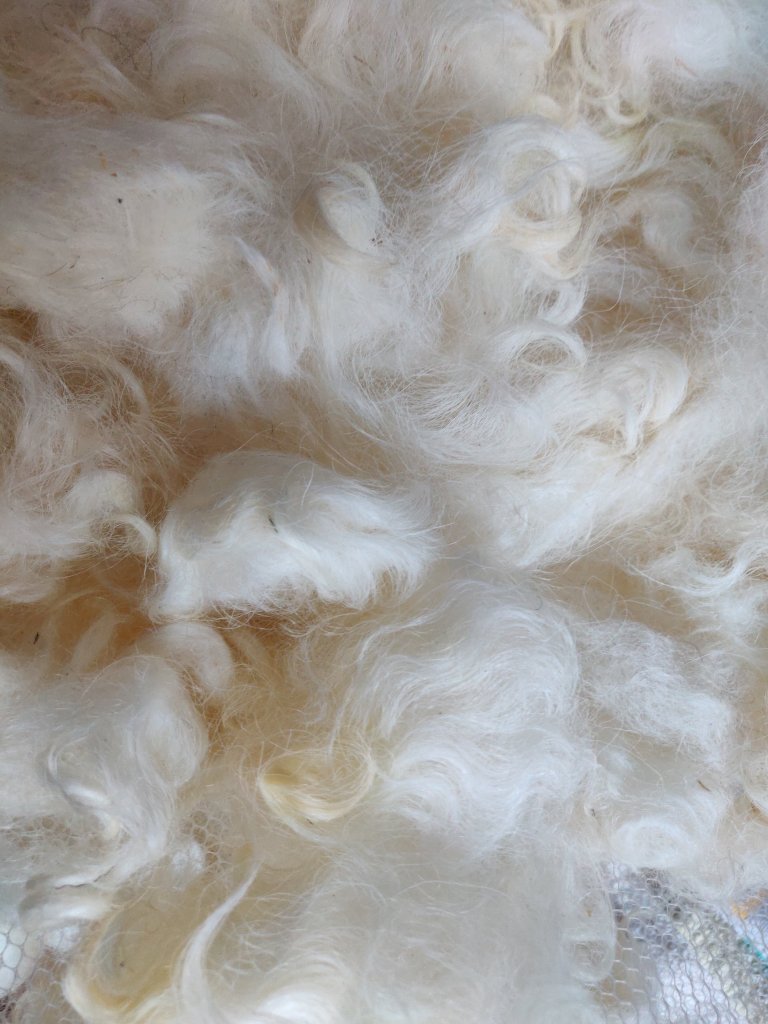
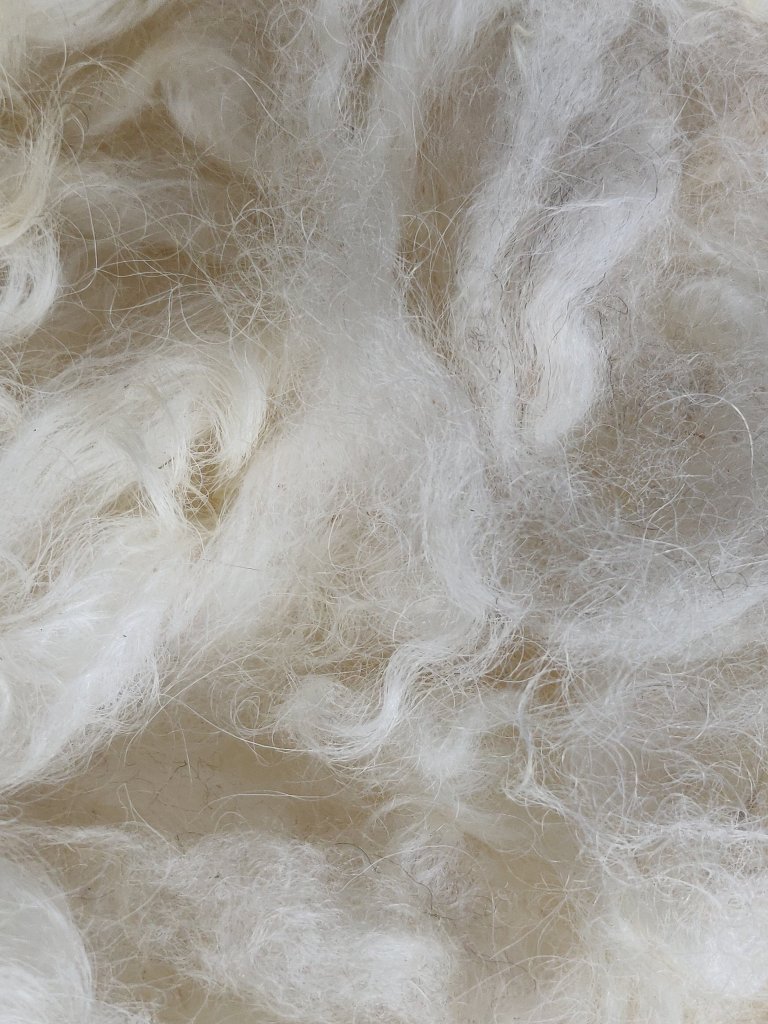
When will I learn? Four hours later I do have a load of lovely white fleece hanging up to dry on meshes, but I am exhausted.
Because I had soaked the fleece in cold water for a few days, I had to wash it by slowly heating it in batches in a pot on a stove. I wish I had an old Burco boiler – my Mum used to use one for washing the bed linen. I will keep an eye out for one. Using pots meant that I had to do four batches. I have two big maslin pans I use for this and for dyeing, so after heating the first one, the second could be warming whilst the first was cooling sufficiently for me to handle it.
It was a pretty filthy fleece and the overnight cold water soak had really helped loosen the dirt, but I still had to give each batch two washes before rinsing twice.
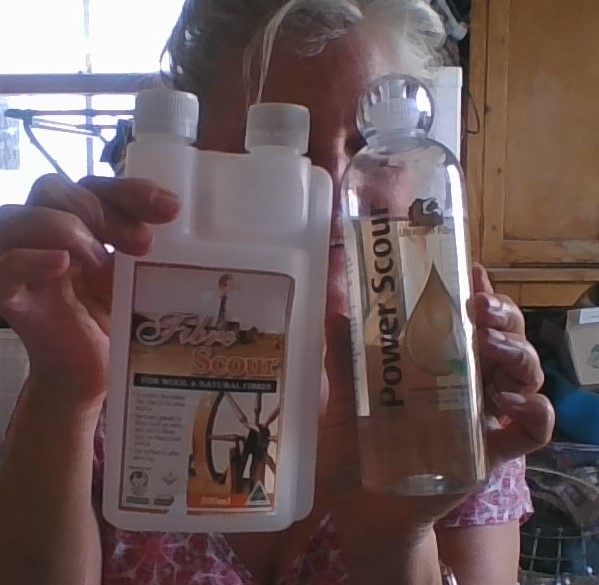
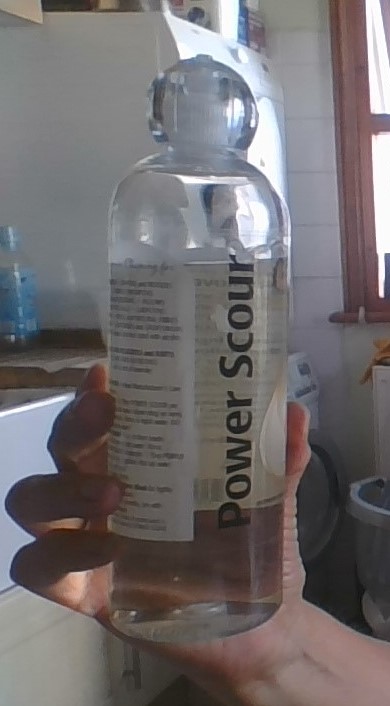
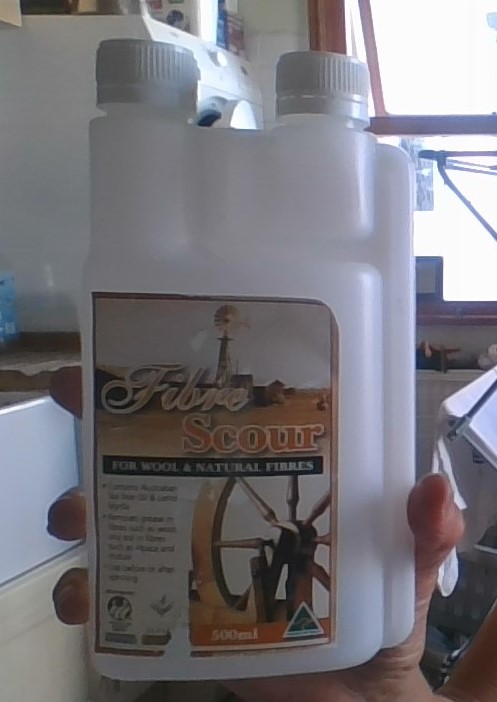
I’ve invested in both Fibre Scour and Power Scour for washing fleece, as well as working with washing up liquid. I’ve not tried Kookaburra or any other as I haven’t found them for sale in the UK. The results of both of the ‘professional’ scourers I have tested are very good, there is no doubt about it. But, and its a big BUT, is it financially worth it?
This was the first lot I have washed using Power Scour, but because I did all the fleece with this, I don’t have any of the same fleece washed in any other way to compare. However, the Power Scour has done a good job. It doesn’t foam up so is easier to use than washing up liquid. Price-wise per wash some people claim its no more expensive than using washing up liquid, but in the UK the 473ml (16 oz) bottle of Power Scour cost me £21! OK, they claim you only need a tablespoon to wash a pound of fleece, using around 2 gallons of water (that is 15ml to wash approximately 450g of fleece in 9 litres of water), but I think this will still work out more expensive than using washing up liquid.
UPDATE 11th August 2020 The Unicorn website recommend using 1 tablespoon of Power Scour to 2 gallons of water (15ml to 9 litres of water) when washing in a washing machine. As those of us in the UK don’t generally have top-loader washing machines this is not usually an option for us, but it is useful to know the water to detergent ratio as opposed to the fibre weight to detergent ratio.
2 gallons being equivalent to 9 litres is neat as that is the capacity of my maslin pans. My fleece was in batches of around 250-300g, so I used 10ml per batch). My frugal soul overrode my experimental spirit and I have to admit that I did the second wash in washing up liquid.
I also added a few drops of Tea Tree oil to the second wash for its antibacterial properties, and lovely clean smell. Fibre Scour already has Tea Tree oil as an ingredient which is a plus for me, as well as the clever bottle that measures the dose each time.
Power Scour ingredients are listed as:
Nonionic and Anionic Surfactants, Propylene Glycol or Ethanol, Copolymer, Lavender Fragrance & Filtered Water.
POWER SCOUR COST
Lets do the maths: At 15ml per wash you can get between 31 and 32 washes out of the 473ml bottle of Power Scour. If 15mls wash 450g fleece this means you can wash up to 14 kilos of fleece with one bottle (assuming you only do one wash using Power Scour).
My bottle of Power Scour cost £21 (including post and packing). Divide £21 by the number of washes (31) makes it about 68 pence per 450g wash, or £1.50 per kilo of fleece.
So how does this compare to washing up liquid?
WASHING UP LIQUID COSTS
Washing up liquid ranges between £5.64 per litre for Method, £3.56 for Ecover, £2.88 per litre for Fairy, down to £1.78 for supermarket own brands (all prices for Tesco website 30th July 2020).
Lets work with Fairy as it is pretty like Dawn, the one recommended by many spinners in the US. I will work with the regular sized 625ml bottle, not the giant one (it will offer a bit of a saving if you opt for that size, in the same way that buying a gallon of Power Scour should save on cost per wash).
I reckon you need a pretty good squirt of Fairy to wash even 100g fleece. I count 1-2-3 whilst squirting and find this about right. I’ve just measured this and it comes out as 20ml of washing up liquid (give or take a bit for the size of the nozzle and the viscosity of the liquid).
Lets do the maths again: At 20ml per wash you can get between 31 and 32 washes out of the 625ml bottle – so far so similar! However, here is the difference, if 20ml is needed to wash 100g fleece you can only wash up to 3 and a bit kilos of fleece with one bottle of Fairy, (assuming you only wash the fleece once).
A 675ml bottle of Fairy costs £1.80 at Tesco. Divide £1.80 by the number of washes (31) makes it about 6 pence per 100g wash, or 60 pence per kilo of fleece. Hmm, that seems a big difference; less than half the cost per kilo of Power Scour.
So unless my amounts or maths are totally off the mark, washing up liquid is clearly cheaper to use that Power Scour, even when the amount of washing up liquid used to wash a kilo of fleece is significantly more than Power Scour.
FIBRE SCOUR COSTS
Fibre Scour recommends 20ml to 10 litres of water – but does not give a fibre weight which I find really annoying – you can wash 10g or 500g of fibre in 10 litres! So lets opt for the 500g.
Lets do the maths: At 20ml per wash you can get 25 washes out of the 500ml bottle of Fibre Scour. If 20mls wash 500g fleece this means you can wash up to 12.5 kilos of fleece with one bottle (assuming you only do one wash using Fibre Scour).
My bottle of Fibre Scour cost £14.99 (including post and packing). Divide £14.99 by the number of washes (25) makes it about 60 pence per 500g wash, or £1.20 per kilo of fleece. Marginally cheaper than Power Scour, but no real economic challenge to washing up liquid.
Lets return to the fact that the results of both Fibre Scour and Power Scour are very good, there is no doubt about it. They also seem to make the washing a lot easier, removing the dirt more thoroughly and getting the stains out. But is it worth it?
CONCLUSION
In believe the reviews that compare the cost as ‘not that different’ are based on purchasing Power Scour in the US, where it is considerably cheaper than in the UK. US websites advertise it at around $19 for the 473ml bottle, whereas the cheapest I could find it in the UK was £19.99. $19 is about £14.50 at current exchange rates. Still pricey to my mind, but more in line with the Australian Fibre Scour which costs £12 for a 500ml bottle in the UK.
I wish I could afford to use either Fibre Scour or Power Scour for all my fleece as I do like the result. I’ve opted to purchase another bottle of Fibre Scour as it is a better financial option in the UK.
I look forward to a time when increased sales volume might mean that the ‘professional’ products come down to a more reasonable price. However, until then I shall be saving these for either extremely dirty (but what I hope are good quality fleece), or my ‘best’ planned and purchased special fleece, whilst continuing to use washing up liquid for everything else. I will mostly likely always use washing up liquid if a second wash is needed.
If there is a UK based chemical/cleaning company out there who would like to venture into ecological raw-fleece-washing territory it would be wonderful to hear from you.
There is more about my experiences scouring raw fleece here…
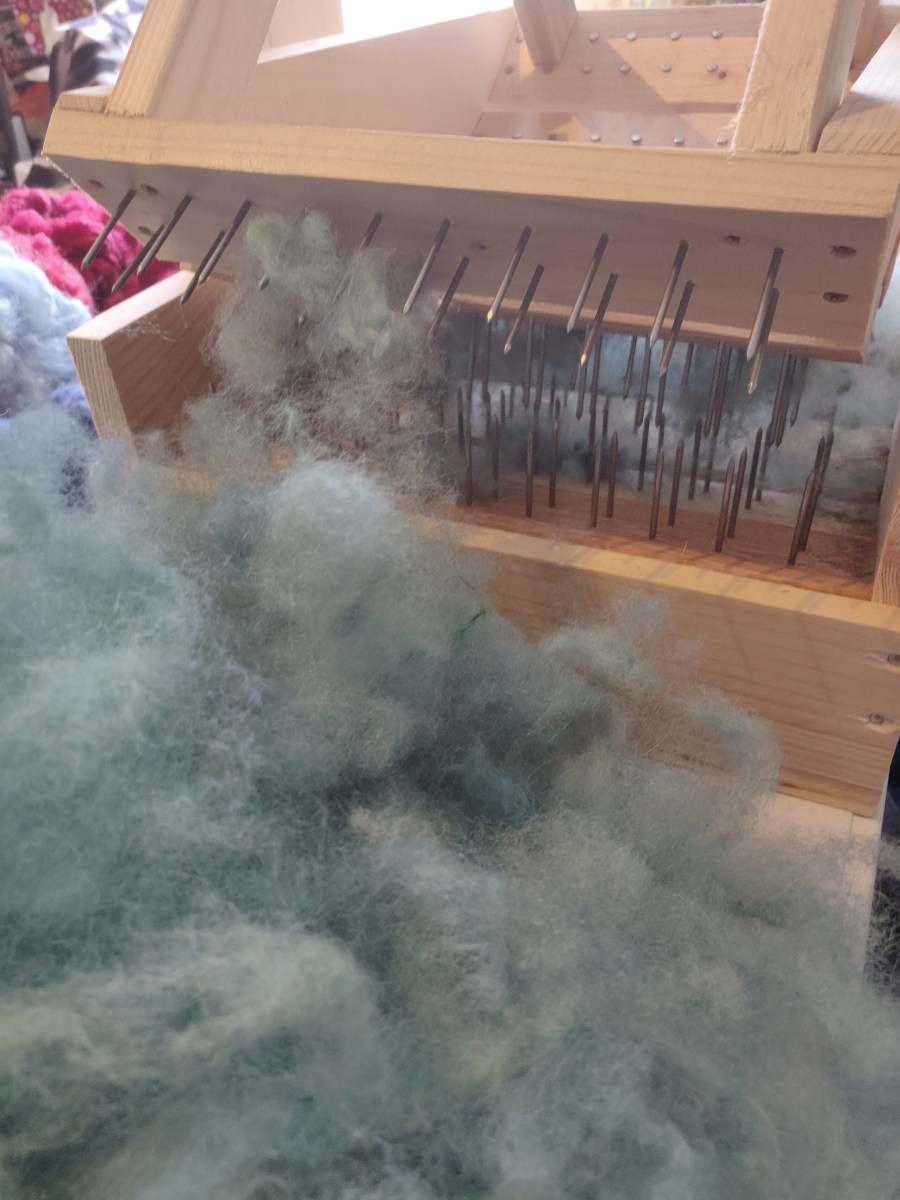
They are advantages to machinery. My son came in and is fascinated with the picker, so I can carry on carding whilst he does the picking!
I can’t believe how cloud soft the Dorset fleece I’m carding is after just a brief finger pick. You’d never have thought it would be like this if you’d seen the fleece before it was scoured!
Last week a few of us got together (safely distanced and masked), to take our textiles into the park. I enjoyed myself so much I forgot to take a photo!
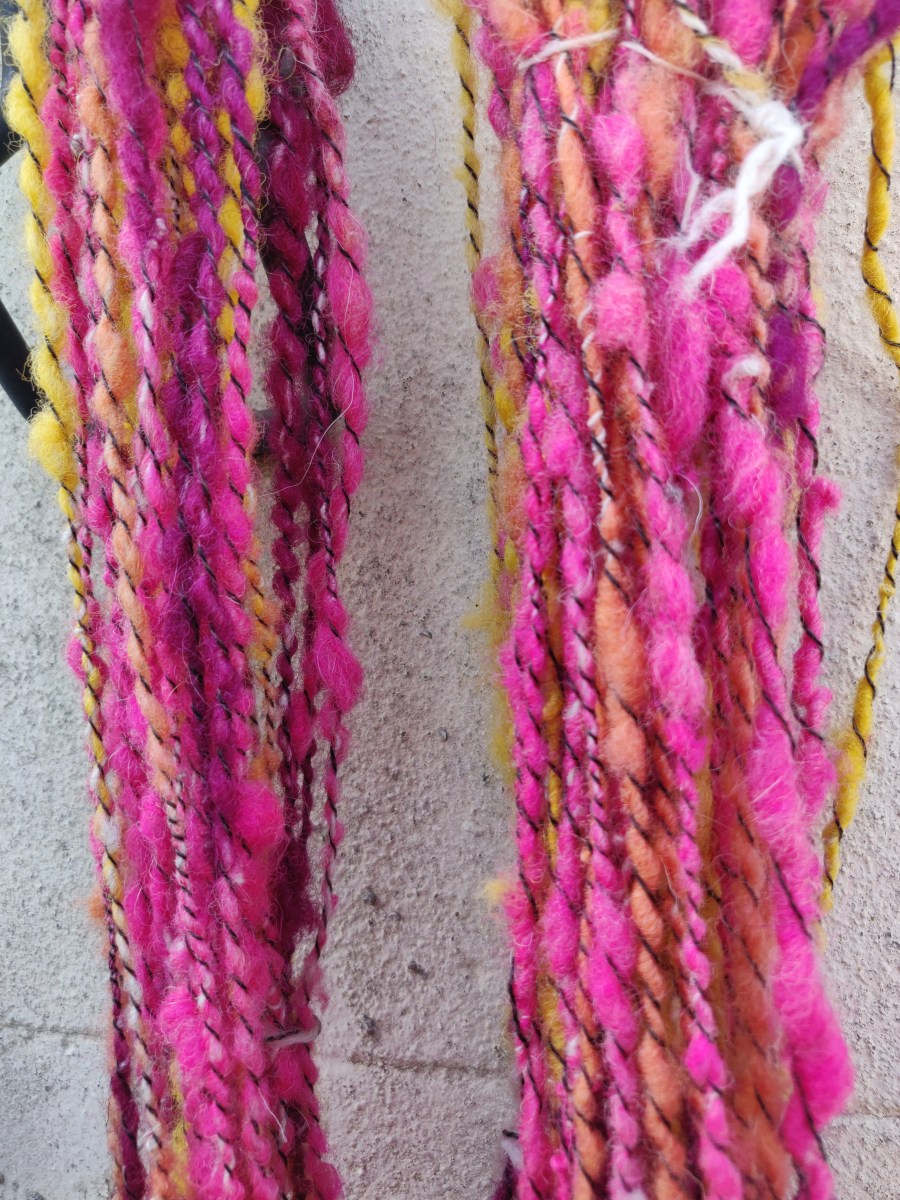
The thought of spinning outside in the sunshine encouraged me to use bright colours. So I took along some Shetland fleece I dyed a while ago using acid dyes, (I have written more about dyeing fleece with acid dye here).
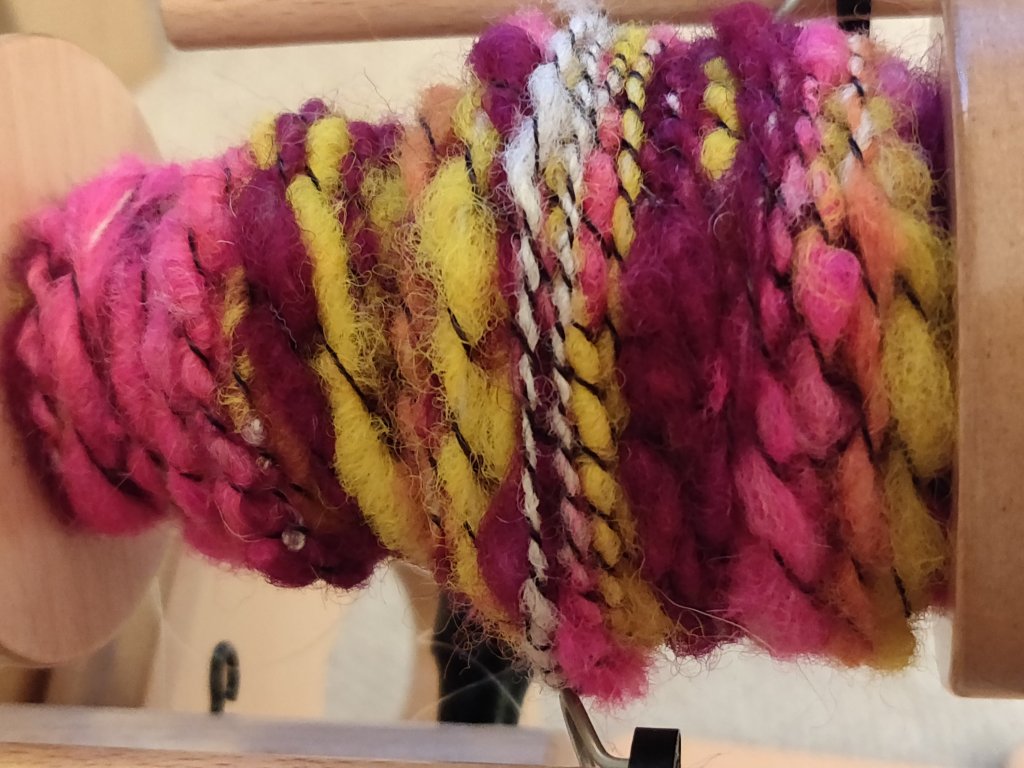
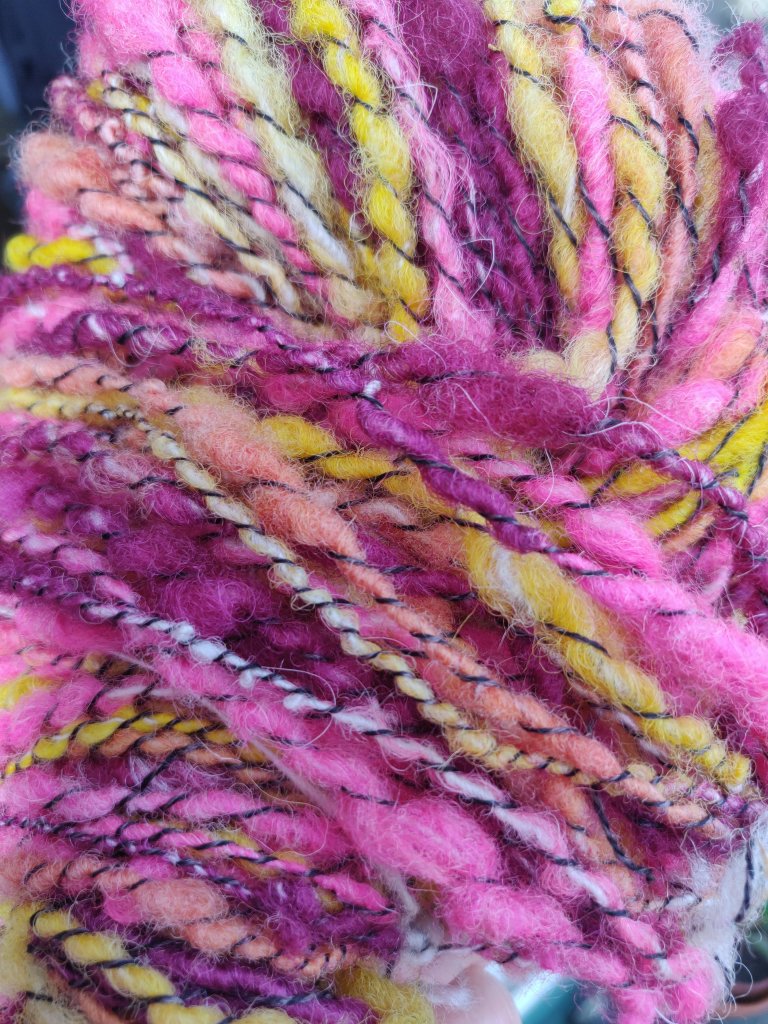
I’d spun up a bobbin of Suffolk fleece that is not very exciting, so I planned to use that as the core for a bright, irregular spun, core-spun yarn to which I would add a charcoal wrapping yarn. All 100%wool. I took my folding Louet Victoria S95 wheel which is a joy to use.
The core yarn was Z twisted quite tight. The wrapping colours were also put on Z twist, and the final charcoal, commercial yarn was S spun over the others.
Photo taken at might, so the colours are not accurate.
After washing and drying the twist the colours hardly muted and it’s come out as lovely yarn.
Washing (or scouring) raw fleece is not a quick job, I think that’s something all can agree on. It’s also surprisingly contentious. Everyone wants to tell to their method, and you gradually learn that different fleece require different scouring methods, so everyone is probably right!
So I’m going to write about my experience today.
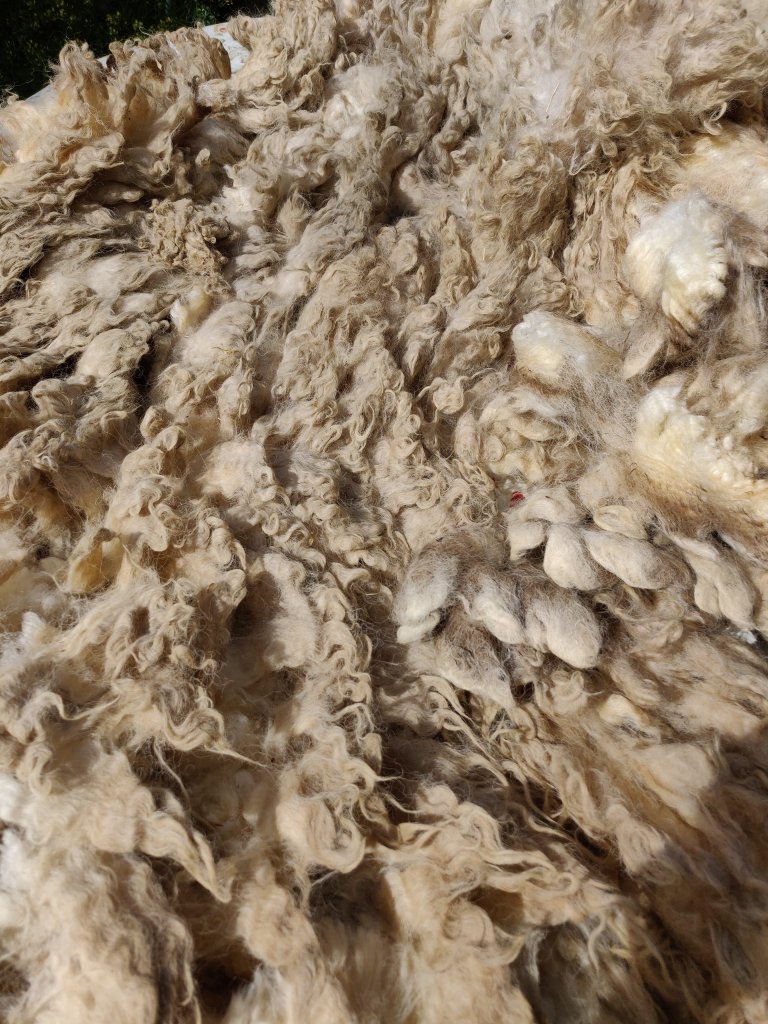
I have been given a rather nice Shetland fleece. Rather nice that is, but filthy. The fleece is very greasy and every single lock is gummed together and dirty at the tip. Underneath however, you can see the gorgeous fibre hidden under the grease-trapped dust and poo.
It doesn’t look too bad here, but thankfully this is not smelly-visionSee what I mean about those yucky tips?
I gave some of it a good hot soak yesterday with plenty of washing up liquid. The water was like oxtail soup (sorry if you like oxtail soup), but after a few rinses it seemed OK.
However, this morning’s inspection showed it to be still greasy and those dratted dirty and sticky tips were still gummed up.
Rather than transfer that gunk to my carder I reluctantly decided to re-wash the fleece. So more really hot water baths followed. The first was so hot I couldn’t put my hand in it, with loads of washing up liquid and a dose of washing soda to break the grease. I always wash the fleece separated into small mesh lingerie washing bags. With this second wash, I opened each bag, one at a time under the water and teased the locks apart, concentrating on those dirty tips to loosen the greasy dirt.
Yes it was time consuming, bit surprisingly gratifying as the dirty came out quite easily with this method. I think because the fleece has just been sheared the dirt hasn’t had to much time to harden-off.
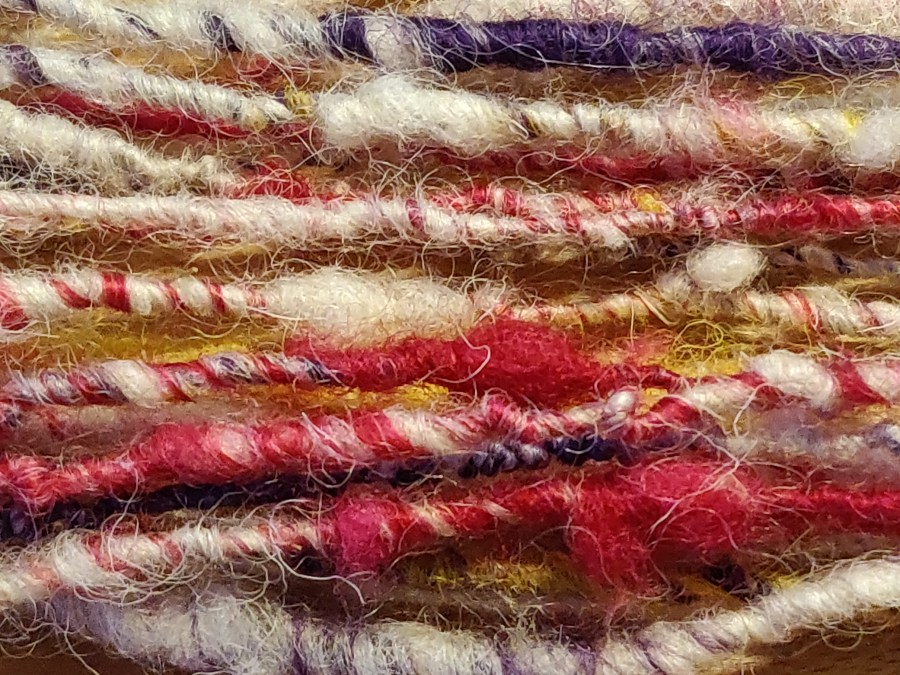
Last night I blended some rather lumpy Southdown fleece I was trying to use up with some dyed Shetland. It was just for fun – no plan involved, just testing out my DIY blending board. When I sat at my wheel – watching ‘Hidden’, I couldn’t think what to do with it. Then I remembered seeing Lexi Boeger’s method of coreless- core-spinning in her book ‘Hand Spun’. I thought the strong colours would work well against the natural if spun in this way, so I had a go.
According to Lexi the principle is to only work with a small amount of fibre at a time, and to spread the fibres wide into a trianglular web. You spin the core with the fibres at one edge of the triangle, whilst simultaneously holding the other part of the web at right angles to this so that it can wrap around the core between your drafting hand and the orifice. Its bit like patting your head and rubbing you tummy at the same time – but once I got going I enjoyed it. There were a few messy bits, which I attribute to the lumpy Southdown myself!
I love the way the colours wrap around the natural core
I’m not sure its truly core spinning, but its on the way there and I do like the effect. The yarn was very over-twisted, but after a good soak in hot water and hanging with a light weight to dry naturally it is fine now.
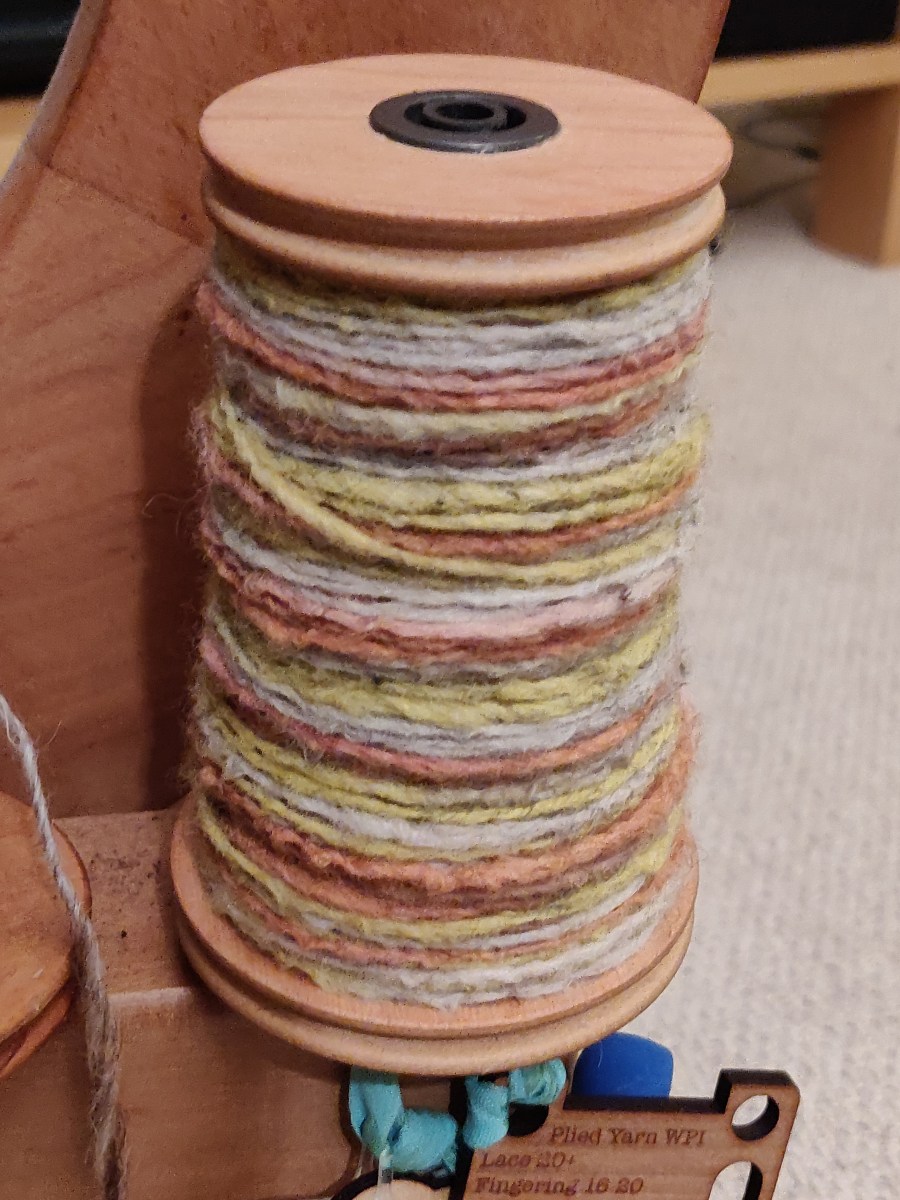
Having read about this spinning technique I though I’d have a go. It doesn’t save much time as you still have to run the yarn back through the wheel, which takes as long as simple plying. It was prompted by my practise at making a ”Z’ twist fat singles’ and so I decided to over-twist this singles yarn as I practised the night before a dyeing session. So I treated it cruelly when washed it, and also in the hot dye bath as well.
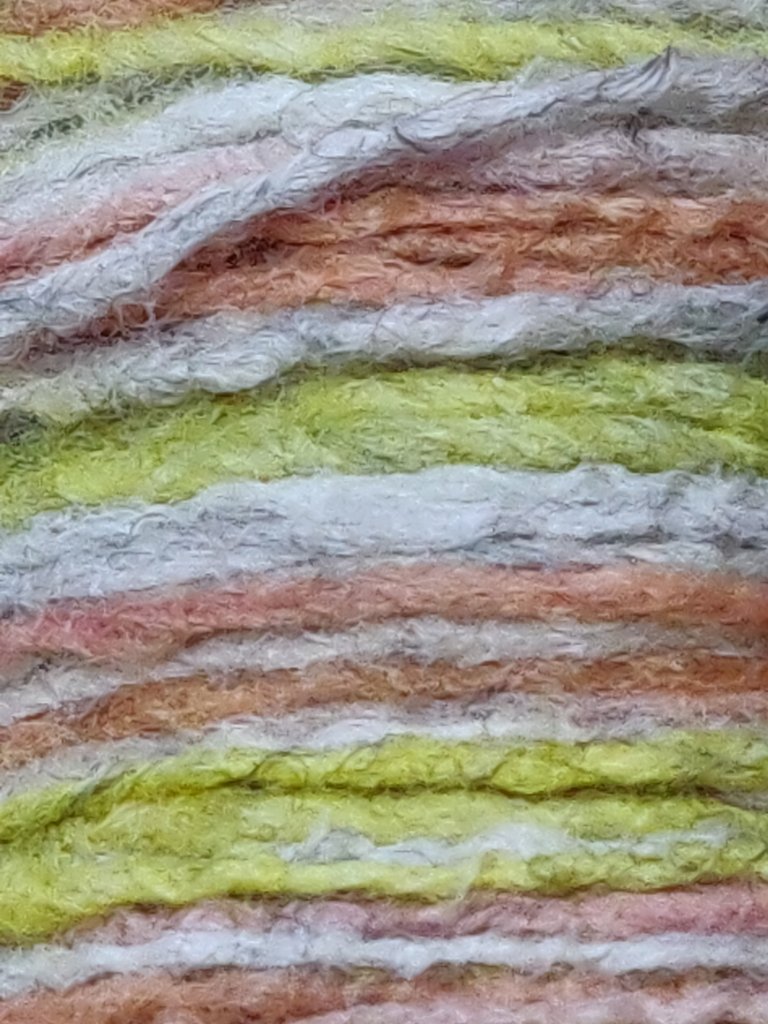
As there were several colour dye baths it was too tempting not to dip-dye the hank. Firstly it went into red-cabbage allover, and then the ends were dipped into madder and turmeric.
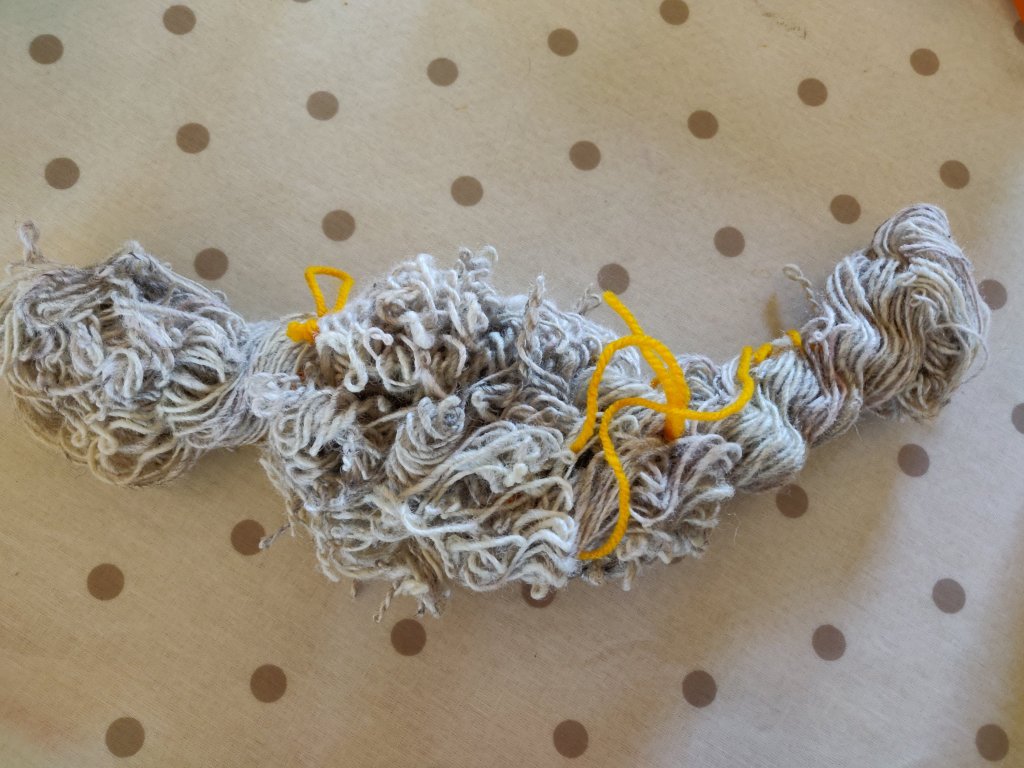
This is what it looked like before hot washing and dyeing.And after re-spinning it’s open up nicely and is quite soft.
I’ll be trying this out soon to see what it looks and feels like as a knit.
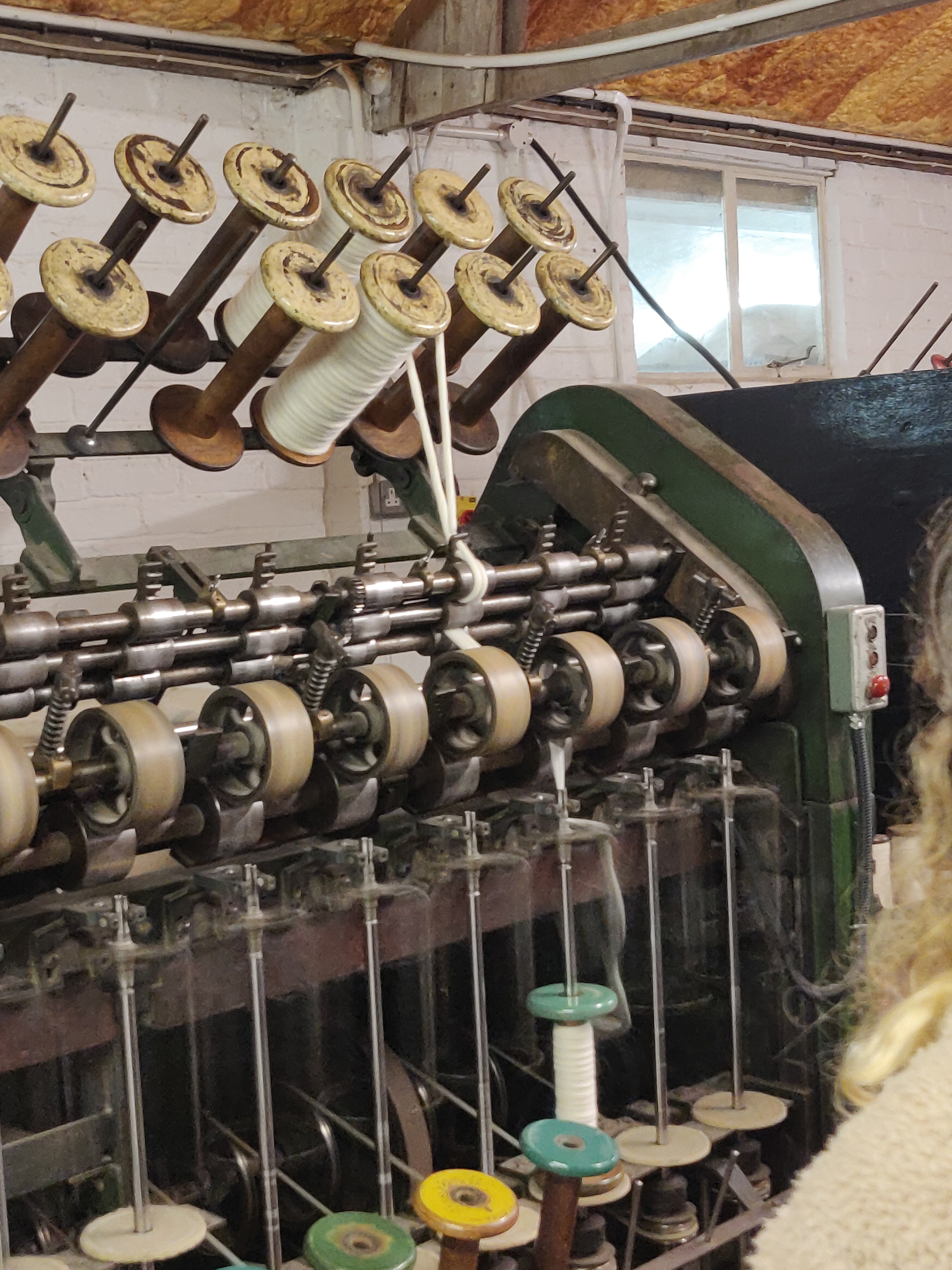
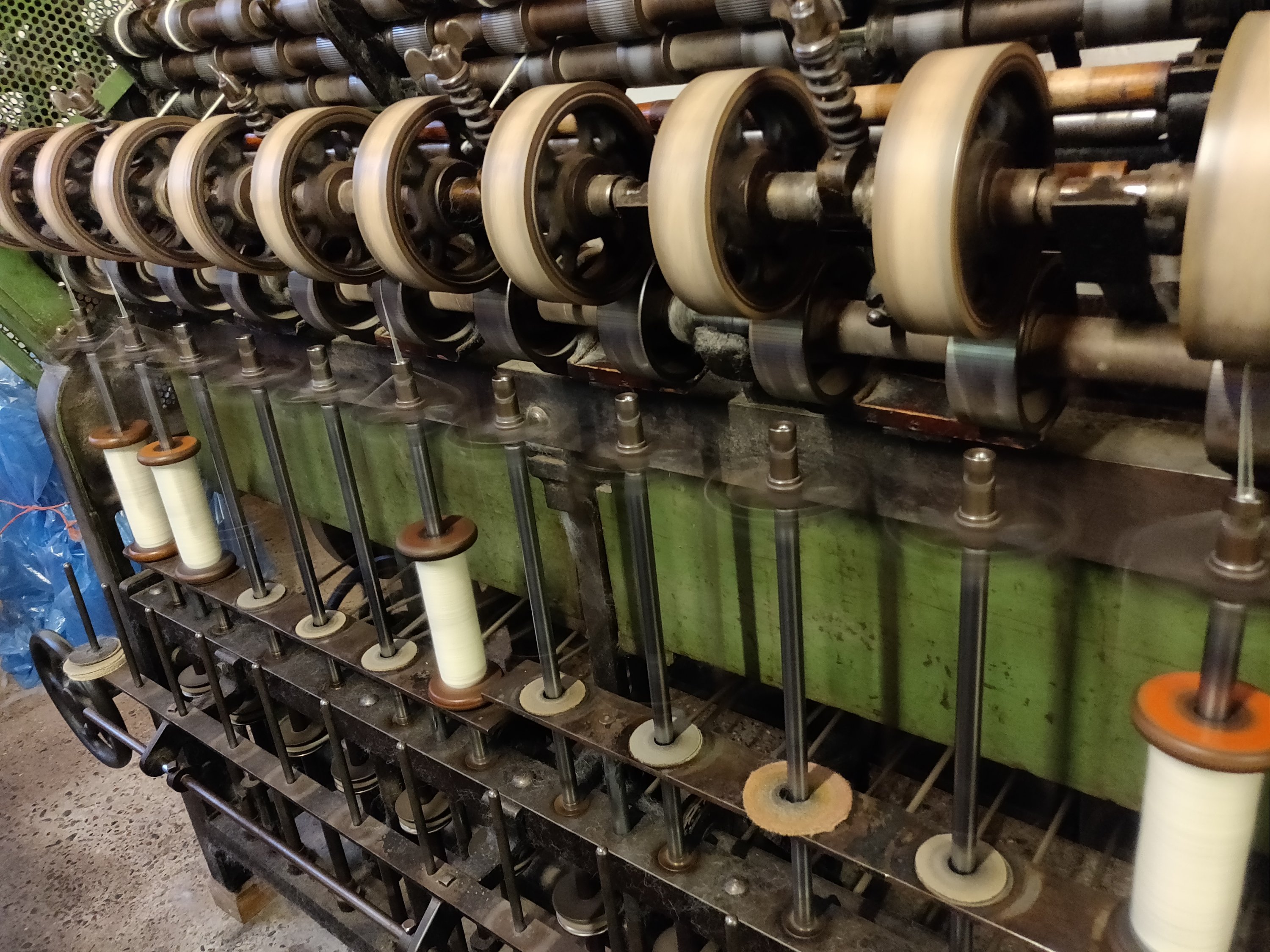
Today I accompanied a group of students on a visit to Diamond Fibres in Horam, Sussex. The company processes wool for worsted spinning, rather than woollen spinning, so concentrates more on longer staple fleece.
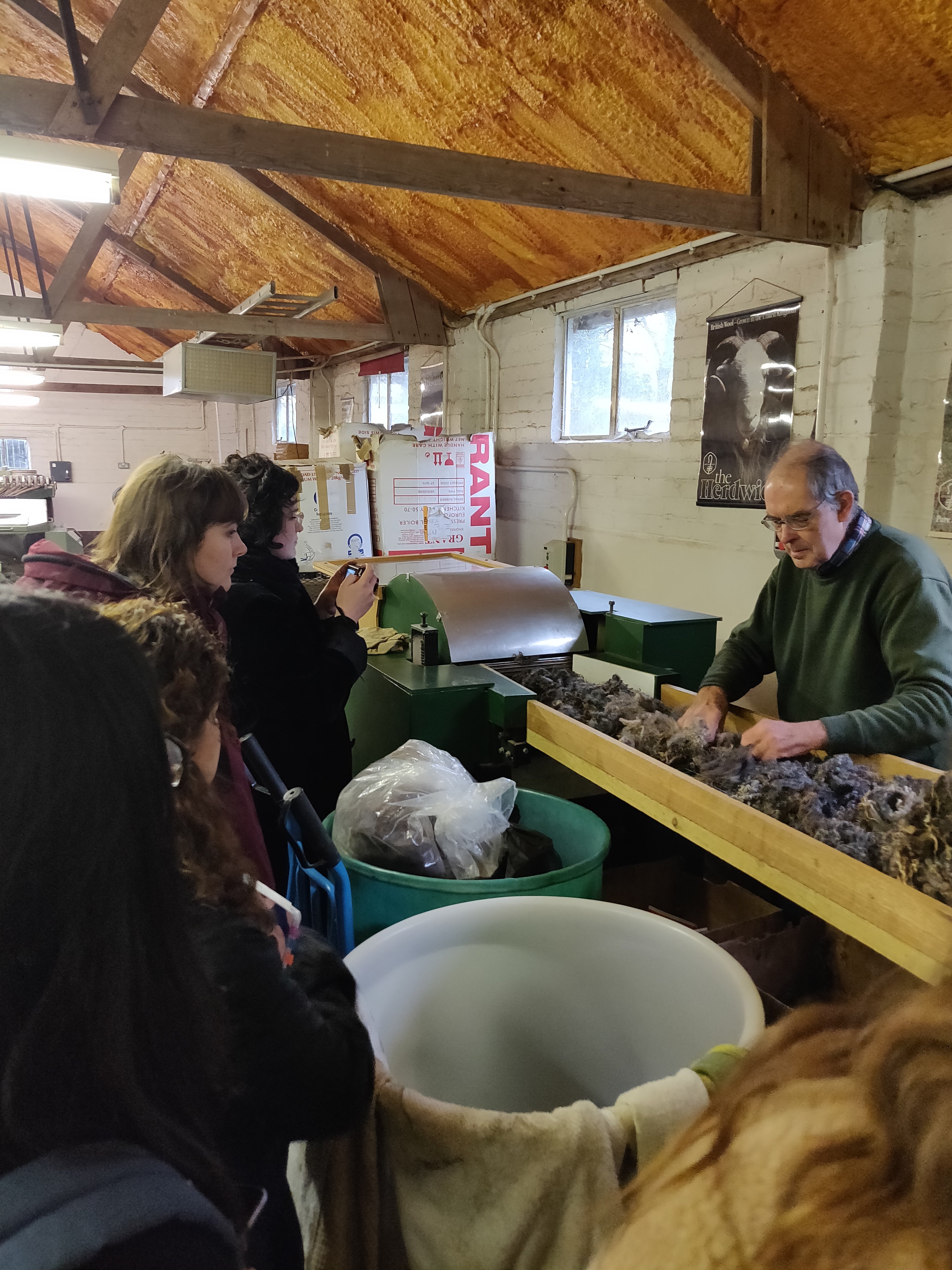
Starting in the sorting shed, we were shown round by Roger, the owner, and given a really thorough introduction to the processes involved in changing raw fleece into yarn.
There was a Wensleydale fleece on the picker, which Roger explained had already been washed once at 60 degrees to remove the first lot of dirt and oil and then dried. After picking, which would open up the compressed curls that the first wash had not reached, it would be re-washed and dried before further processing. He reckoned that it may in fact require a third pick and wash.
The students were looking tired just at the thought of this!
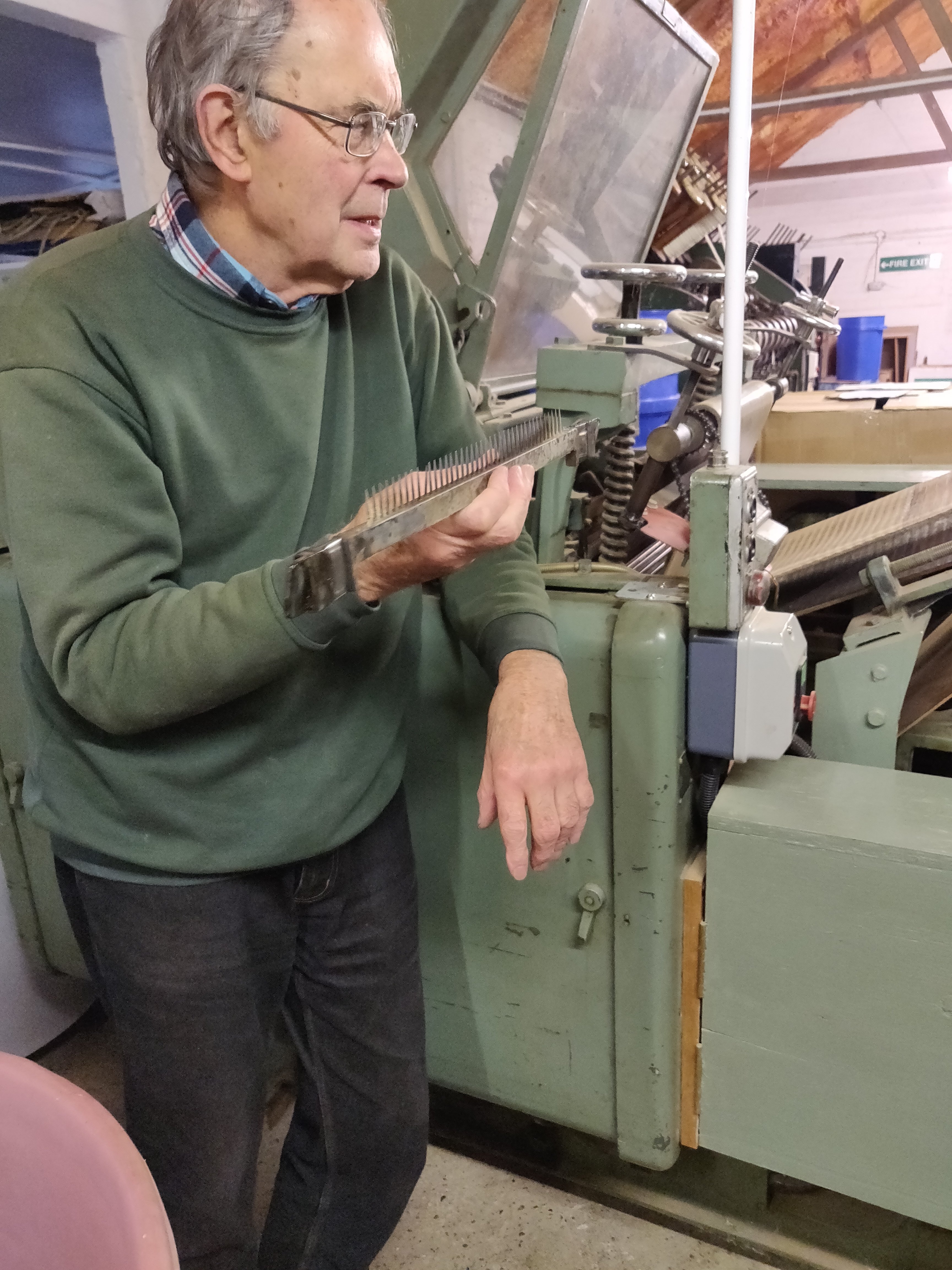
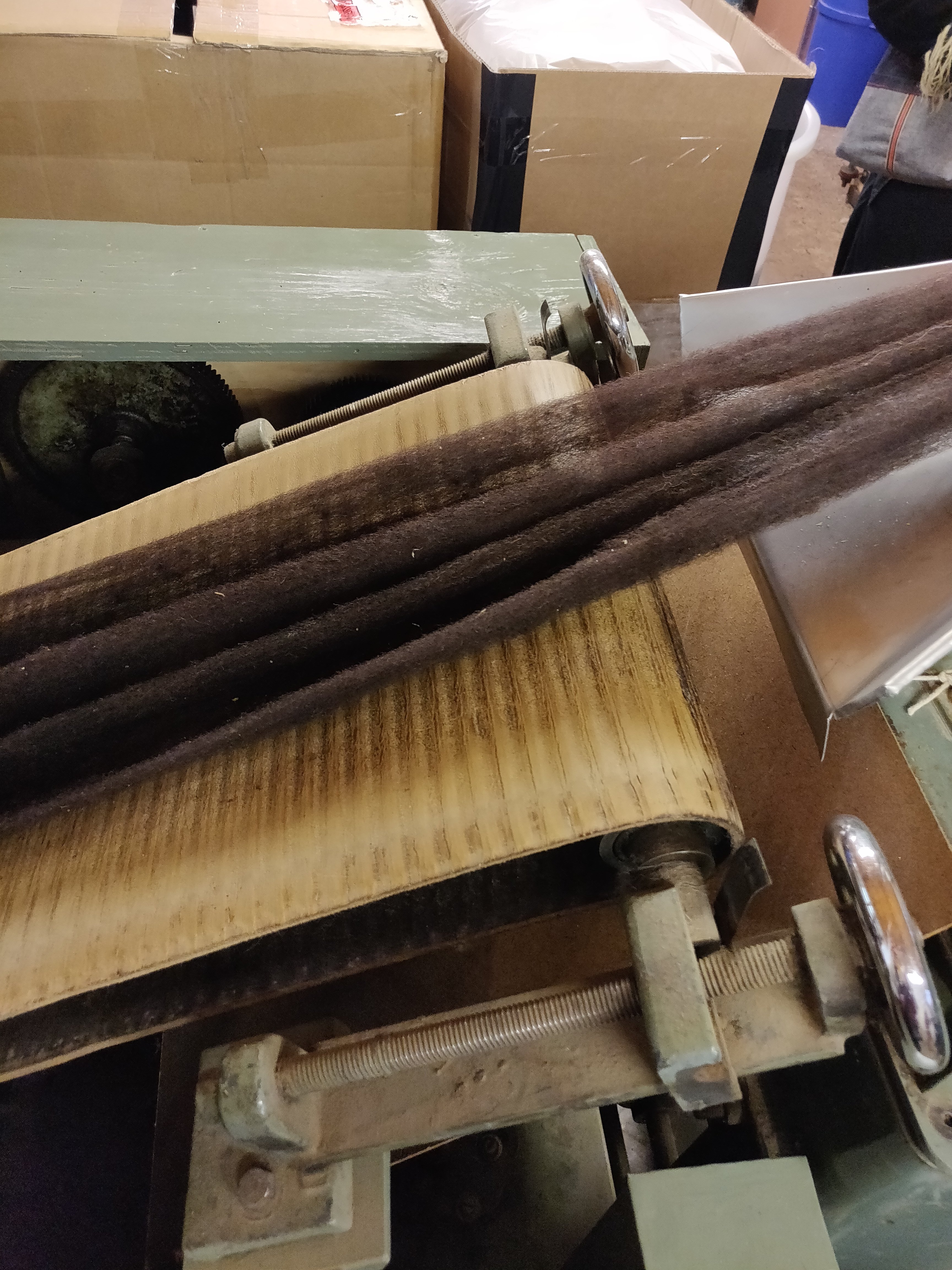
Following picking, the next process is carding the fibres to start aligning them in parallel into a continuous ”sliver’ of fibre. Unlike my meek little hand carder, they have a carding machine with 16 drums of metal, not wire, teeth. At this stage, any short fibres will still be in the sliver, it isn’t until combing that these will be removed.
The sliver begins to look more like something that is spinnable, but there are still thin and thick sections along its length. To eliminate these and even out the sliver it goes through ‘gilling’. Diamond have two of these machines. The first one has wider spaced teeth, and is used at this point, whilst the second is much finer and bulks up and evens out the sliver later on after combing.
When the sliver goes into the gilling machine, two are fed in at once, producing one thicker sliver of uniform thickness.
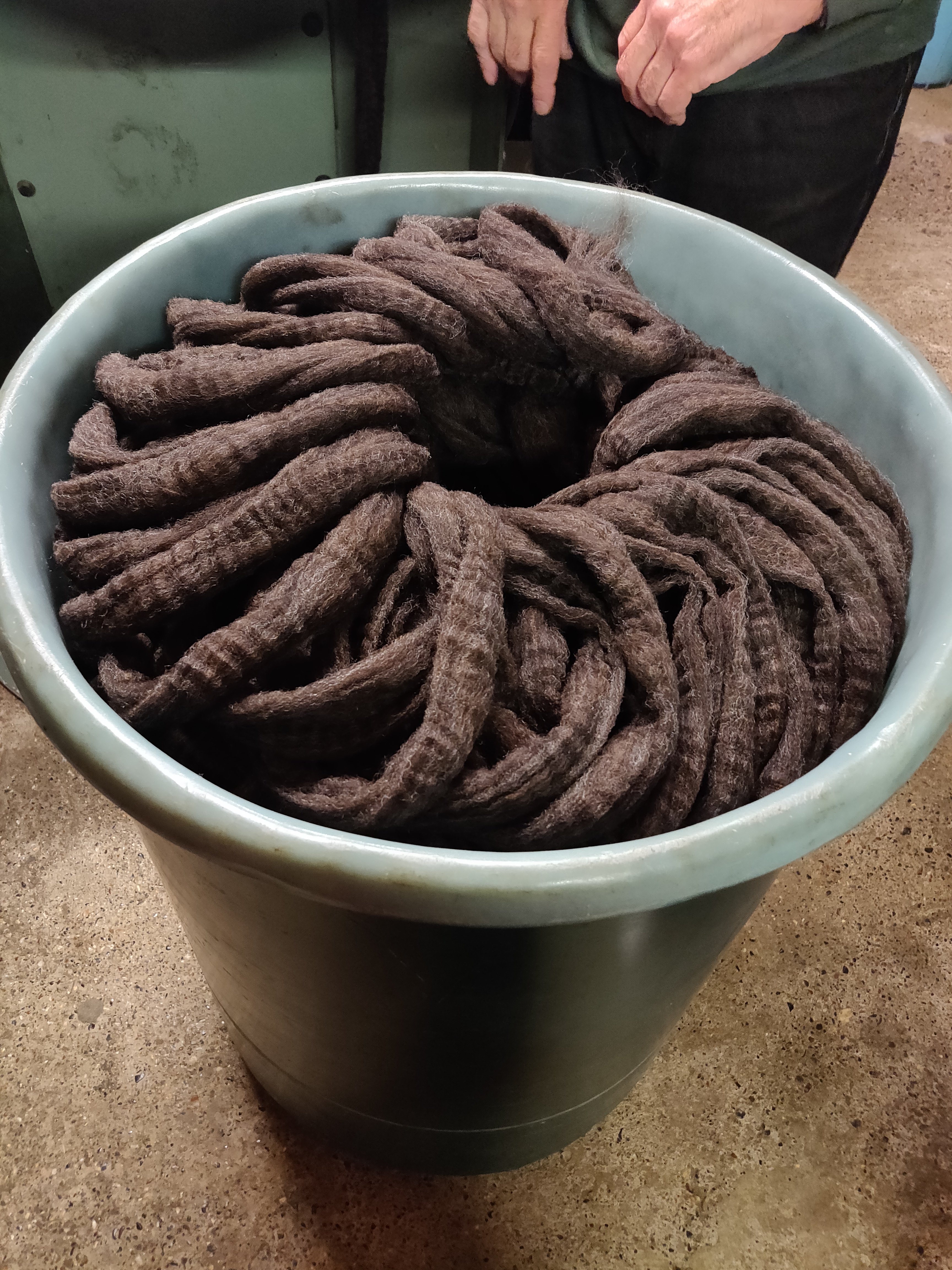
The fibre will in all likelihood go through a second gilling, during which the output sliver gradually bulks up, according to the machine settings, to achieve the required grams per metre.
If the requirement is for carded roving for hand spinning, this will be the last process. It may even be stopped earlier on, depending on what condition fibre is required.
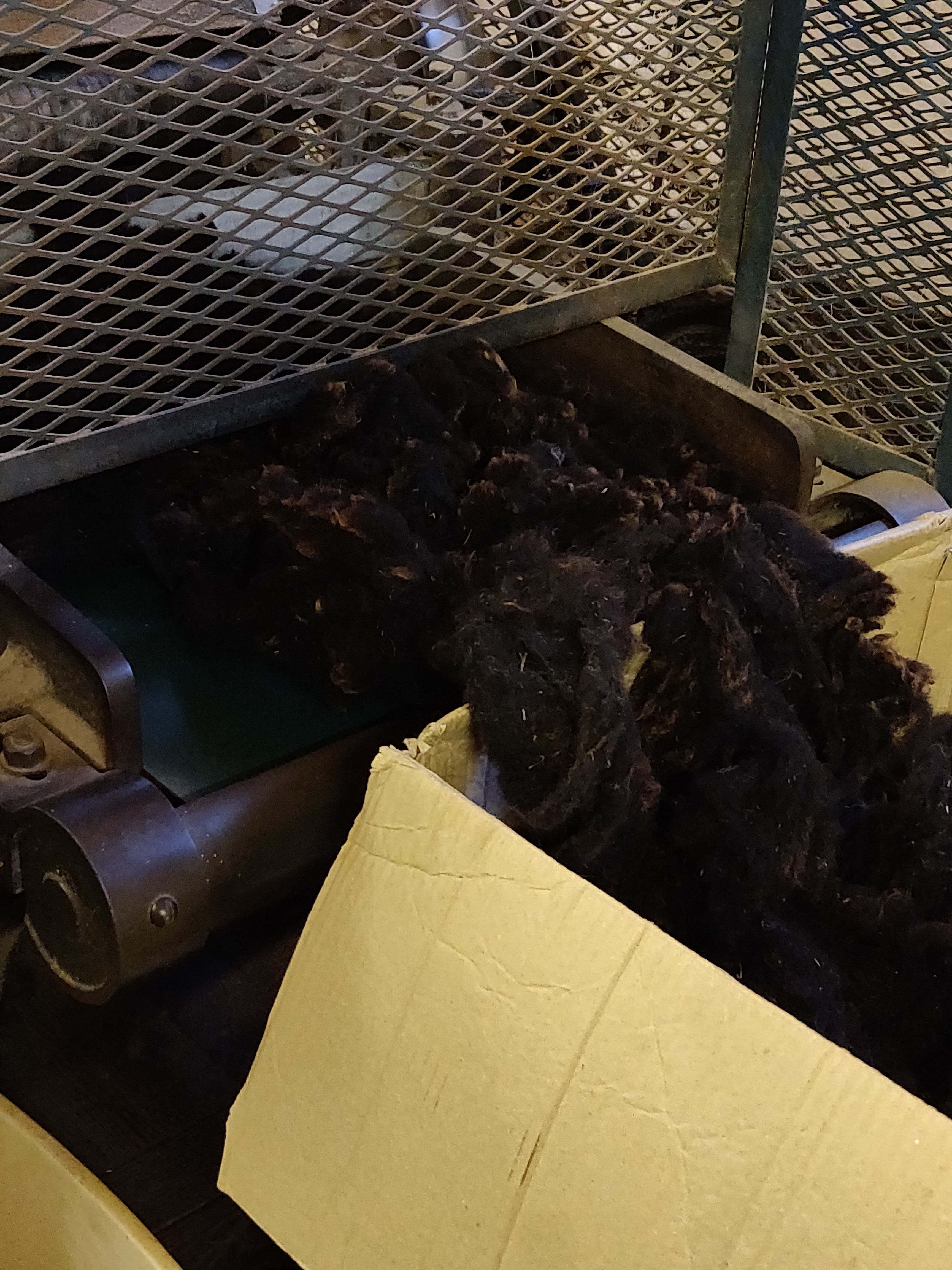
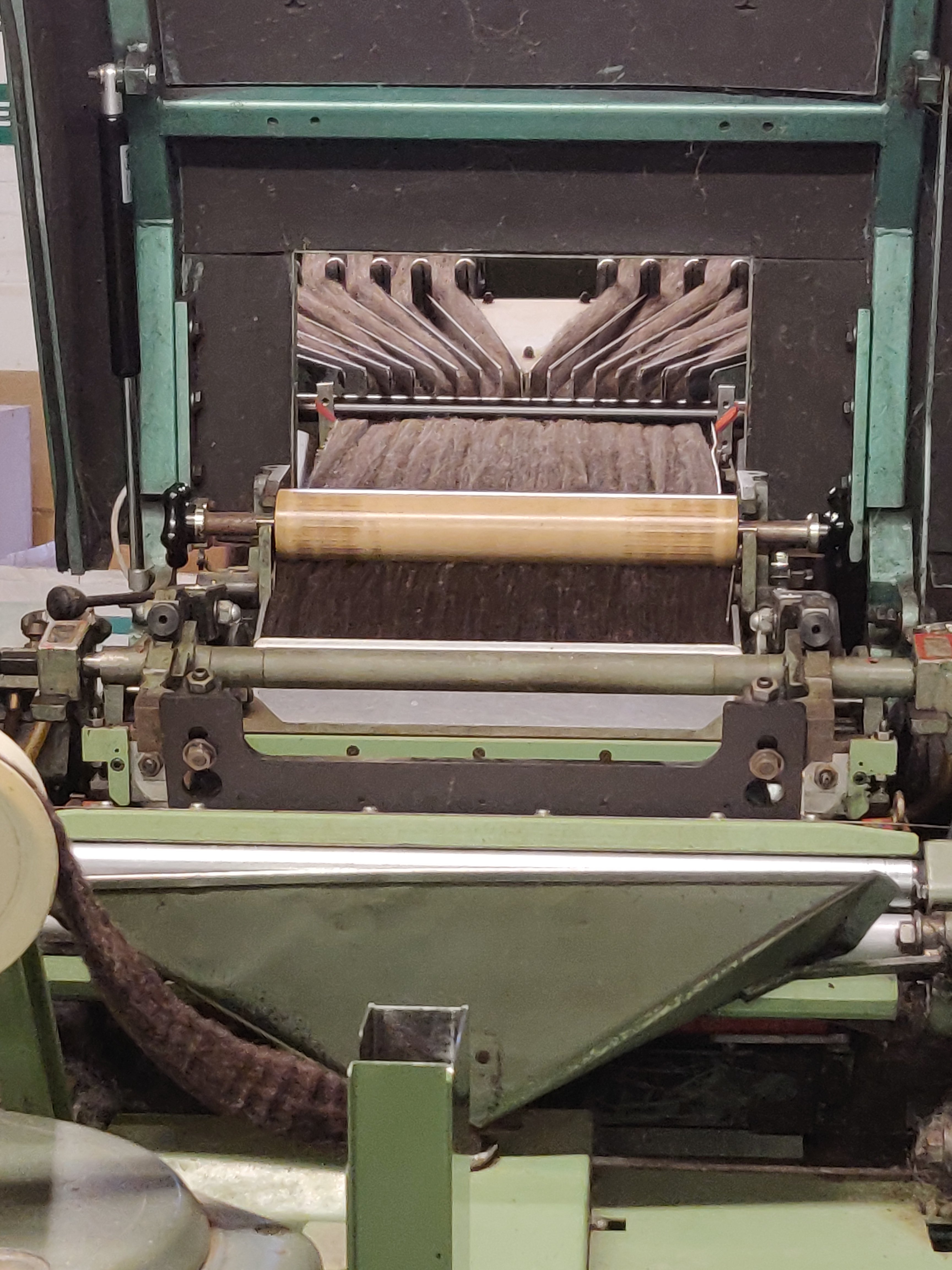
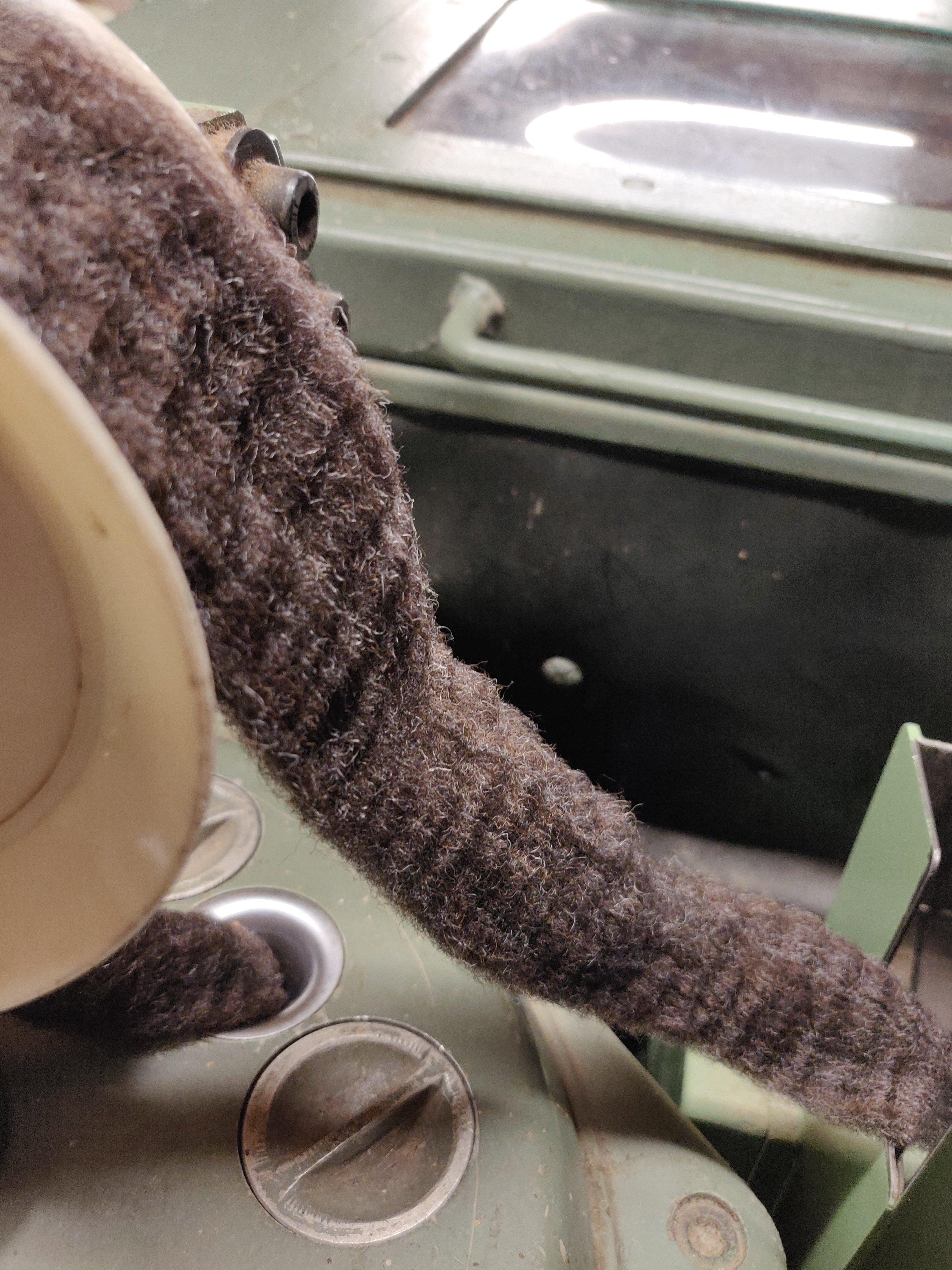
If however, the desired outcome is combed sliver, then it has to go through the combing machine. This takes up to sixteen slivers side-by-side through the combs, crimping the final sliver to compress the fibres together and prevent breakage. It looks like doll’s hair emerging from the machine. Any remaining short fibres, nepps, noils or debris fall out into a waste bin beneath the combs.
This combed sliver has become slightly uneven during the combing process, and this is when it goes through the finer gilling machine to produce a consolidated, even sliver ready to have a small amount of twist introduced, (about four turns per inch) to make a softly twisted roving.
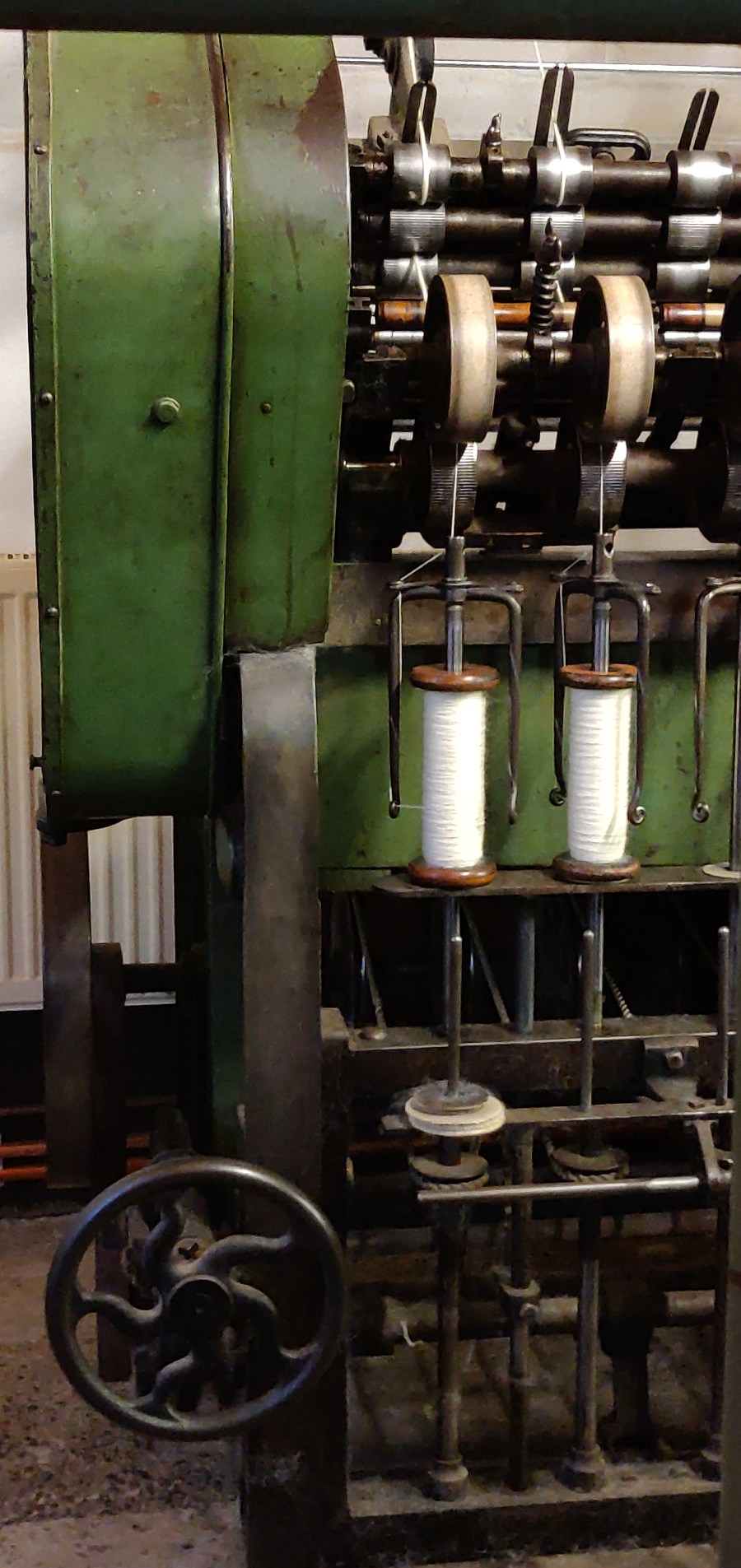
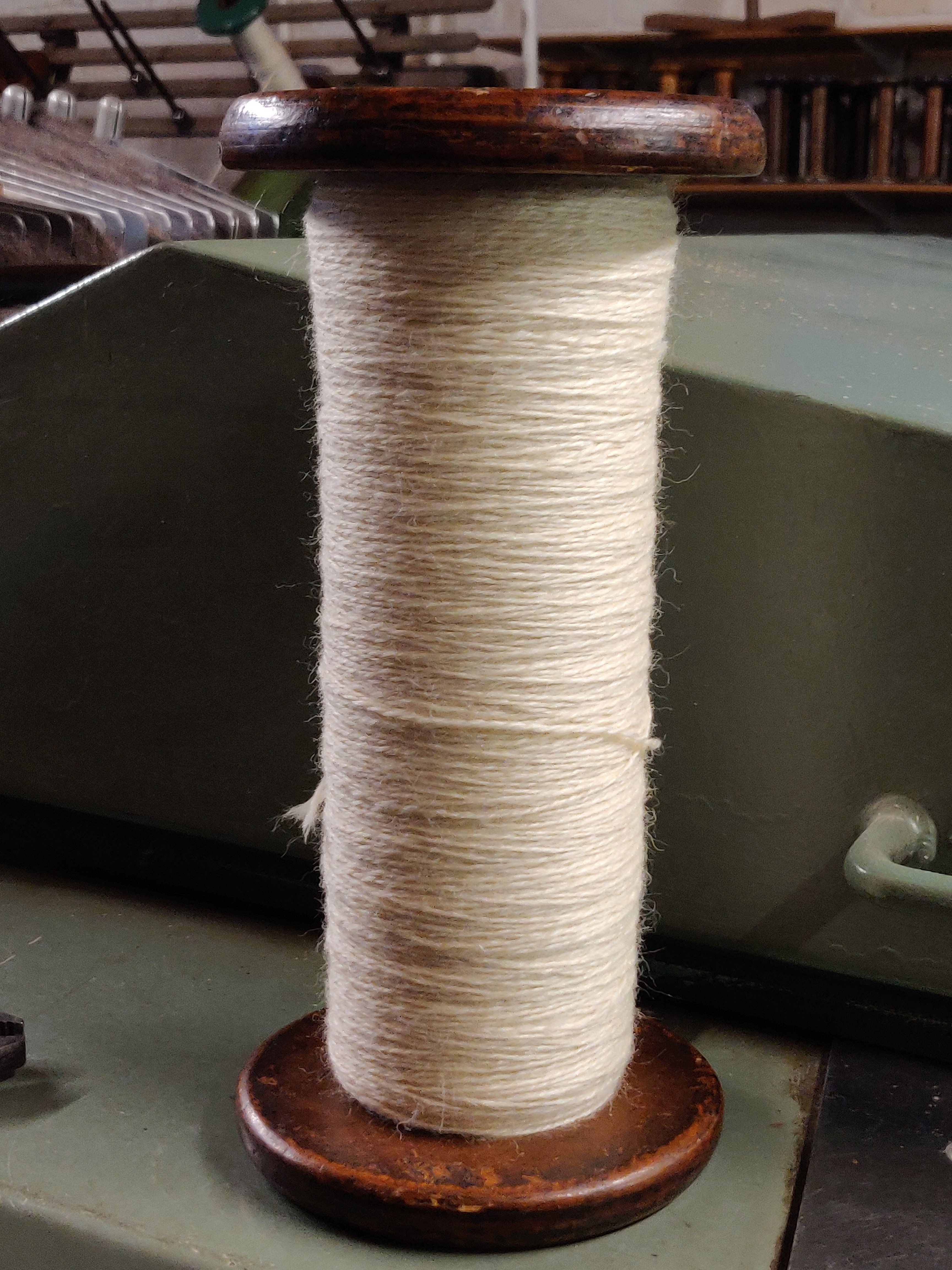
This roving is then drafted out into a thinner roving, and finally drafted and spun into singles weighing approximately 0.2g per metre. Amount of twist can be controlled to produce softer or firmer yarns at both singles and plying stages.
The singles can be plied into 2, 3, 4 etc ply yarns according to need. 2 ply tends to be flat, 3 ply rounded, and 4 ply has a square profile. To make a cable yarn, 2 x 2ply can be twisted together.
2ply yarn made from two of the 0.2g/metre singles would weigh approximately 0.4g per metre. This would yield something like 250 metres per 100g, which is within the DK category of yarn, and will be between 12-14 WPI.
Of course, as Roger pointed out, natural fibres do not conform as precisely as synthetics do, so there are highly likely to be variations in weight to length of a hank of yarn depending on humidity and other physical conditions when it is weighed. Oh the joy of natural fibres, thats why we love them!
I think the students now really appreciate how much work goes into making the yarns they pick off the yarn-store shelf. One even went so far as to say that they would never again complain about yarn being so expensive!






 Vikki Haffenden