Final sample for my latest book about machine knitting

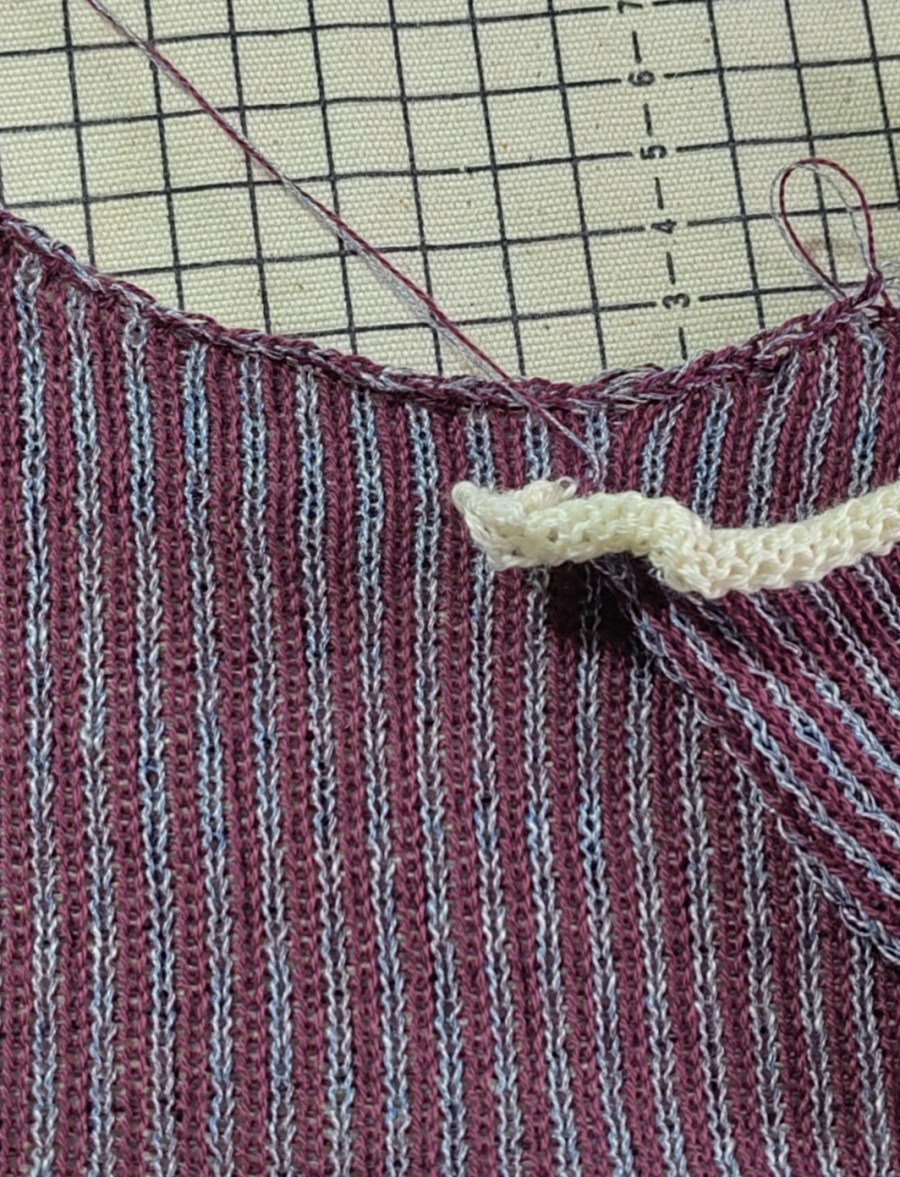
I think this might be the final sample for my latest book. The manuscript went into the publishers a week or so ago and I’m just working in a few outstanding samples and photos.

Of course machine knitters, well knitters in general, will know that ‘sorting out a sample’ is a shorthand for:

knitting several design swatches

knitting a tension swatch (or three)

working out the garment pattern

knitting it

finding you’ve made a mistake

knitting it again

steaming it

sewing it together

washing it

blocking it

etcetera, etcetera….

So I am just at the first steaming stage and getting ready to assemble the garment. And of course I’ve had to re-knit one piece because the dratted yarn got caught by the brushes irrevocably and it was easier to restart than try and sort that out. More haste, less speed is so very true in machine knitting. Nice and steady is always the best way.

I’m hoping this garment will be nice enough to go on the cover, but we will see.

Meanwhile let me tell you a little bit about the book. The title is still to be finalised, but it is all about short rows and partial knitting on a machine.  There is a lot in there for beginners, for example the first chapter is all about the principles of short rows and how you knit them and there is a whole basic techniques appendix at the back for additional support. Chapters 2 to 5 offer loads of information, samples, examples and exercises for more experienced knitters to really come to grips for short rows, and to understand how and when to use them for different results.

Chapter 6 has patterns that use short rows as they’ve been described in the earlier chapters, but applied to an item. So from these patterns you actually get to use short rows purposefully to create shape and form combined with colour and surface pattern.

So once it’s published I will obviously be shouting about it,  but keep an eye out and do pop back here for updates.
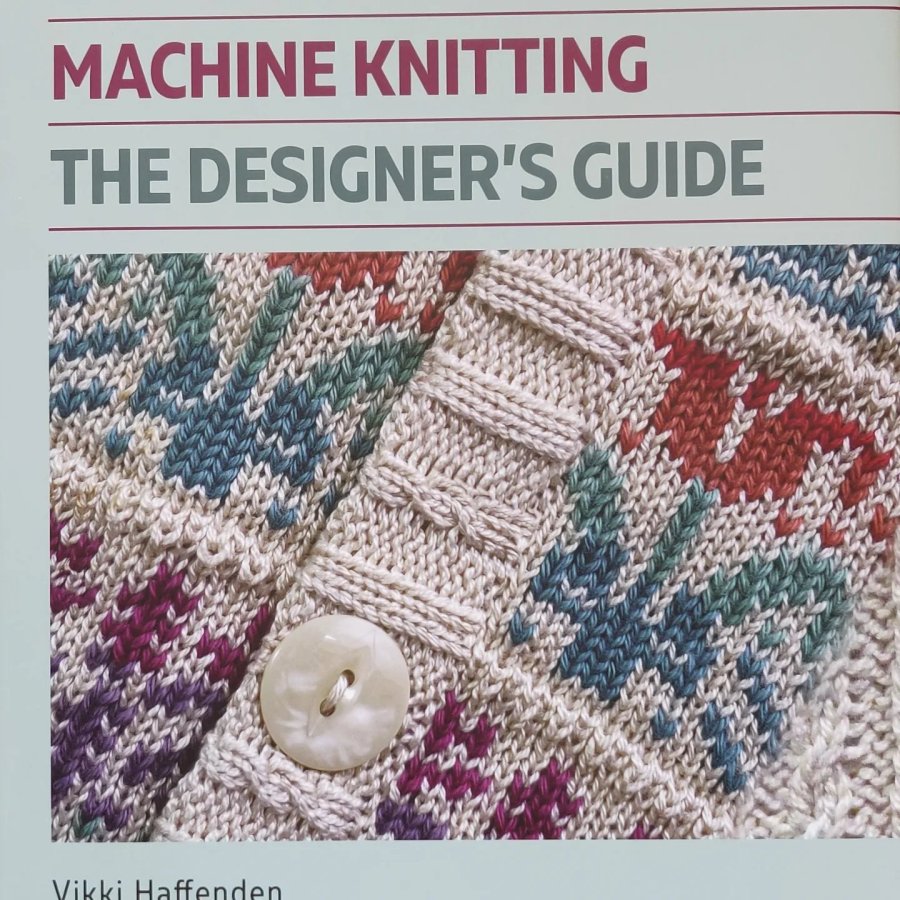
‘Single and Double Bed Machine Knitting; the Designer’s Guide’

The advance copy of my new book arrived today, and you can see some pages from the book here.

Meanwhile here is a quick look at the book.

I have made a more in depth video introduction to the book, and if you would like to watch this, please keep on scrolling down the page.

Googling myself again!

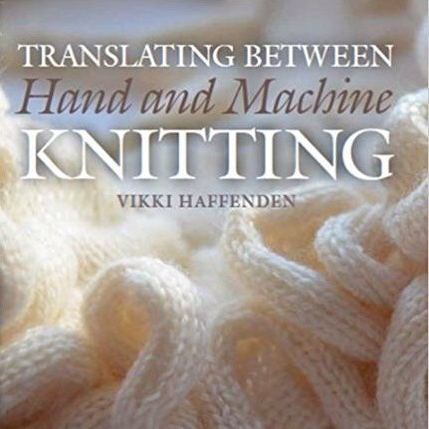
I took a quick look at the Amazon page for my book Translating Between Hand and Machine Knitting and thought I would share some reviews.

I notice that subscribe wishes to express their annoyance because the price has been reduced. I fully appreciate how annoying this can be, and wonder if retailers understand how this upsets customers. I felt similarly annoyed when I bought a new drawing tablet only to see it was reduced by £40 in the Black Friday sale two weeks later! They wasn’t much I could do but accept that I’d had two week’s use of the tablet already, (working on my next book). So although this is beyond my control, my apologies to anyone to whom this has happened.

So moving on from issues of frustrated shoppers, here are some of the very nice things said about the book.

JayBards from the US writes, ‘5.0 out of 5 stars Excellent Coverage of Topics, Great Photos and Illustrations’, and finishes the review with, ‘The text is really well-written, very clearly presented, easy on the eyes, and a pleasure to read. This book will become an important part of my extensive library on knitting. In short, I LOVE this book! Congratulations to Dr. Haffenden on an excellent book that should become a classic.’

Thank you JayBard for your feedback and review.

Meceo from Canada writes, ‘This is one of the best books I’ve purchased covering the hand knit patterns converting to knitting machines. It is beautifully done with lots of photos and information to help anyone interested in this type of knitting.’

Sharon Sullivan from the US writes. ‘Very well written book. Haven’t had the book very long, but the time I’ve spent going through it so far, it’s an A+ book. Content is excellent. Photography is excellent. Easy to understand. Definitely worth the cost. I don’t usually do reviews, but think everyone should know that this book will help a machine knitter immensely.’

Its so helpful as an author to get feedback, and positive criticism, (suggesting improvements rather than just pointing out what you don’t like) is the most helpful.

So thanks to all who have taken time to review my book and help others decide if it is right for them.

Machine Knitting workshop, Brighton TAG

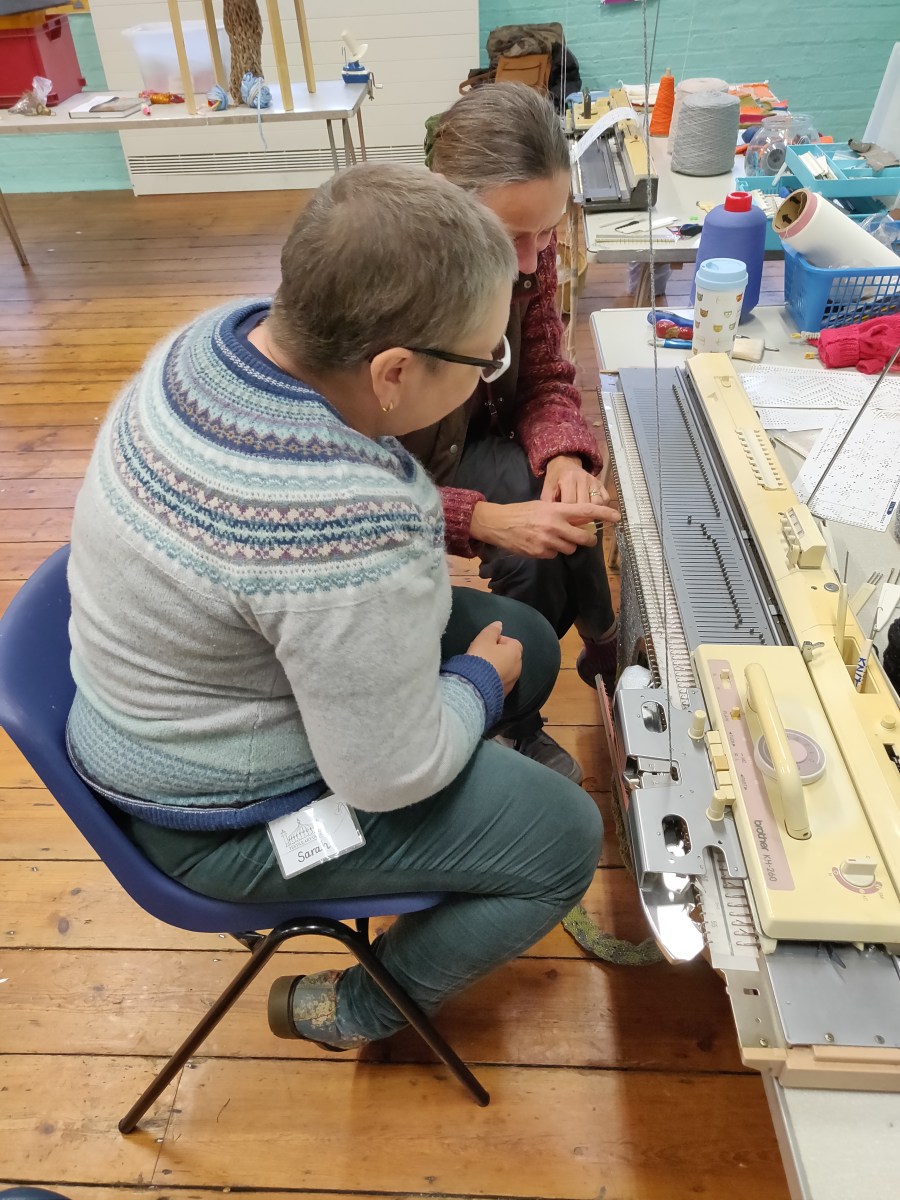
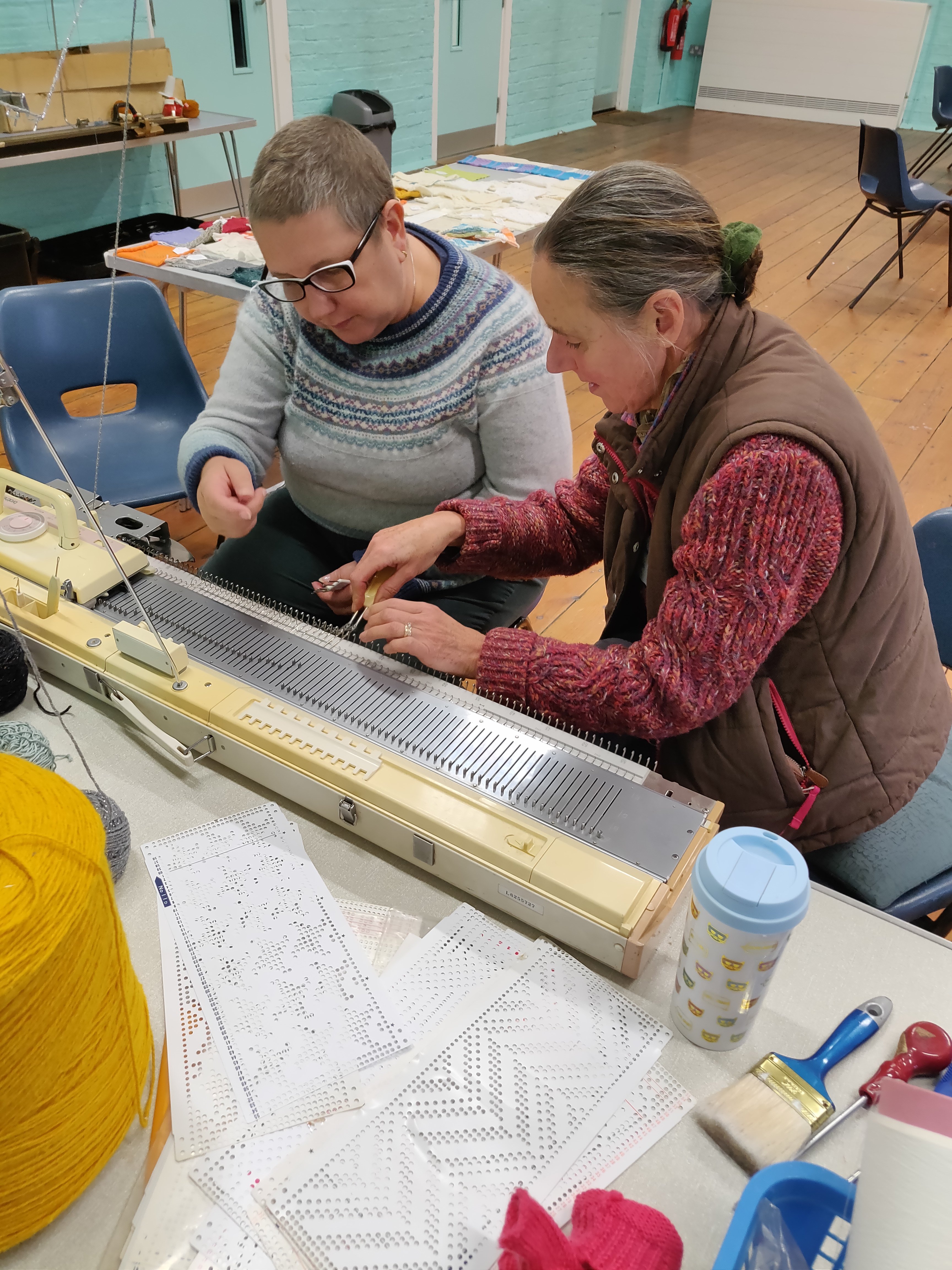
Today I ran a workshop that introduced members of Brighton Textile Art Group to machine knitting. To give a wider experience both a Knitmaster and a Brother machine were used, one standard and one chunky gauge. The chunky was particularly popular once it was found that it can knit handspun yarns.

Techniques explored included shaping, fair isle, single motif fair isle, knitwear (again great for hand spun), holding and short rows and simple, manual lace transfer.

I took along a little circular machine to demonstrate the difference between the two machine types, but the real interest was in the flat bed Japanese machines.

After the workshop response were really positive; people who had thought they would hate it had great fun, and those with machines were enthused to go home and get them out. Unfortunately the workshop clashed with the East Sussex Guild of Spinners, Weavers and Dyers meeting, so another workshop had been requested in the Spring or Summer of 2020.

From fair-isle to football boots

This was a talk that I gave at the Textile Institute. In it I discussed seamless knitting technologies, their historical roots in hand knitting methods, and the potential the ‘new’ technolgies are bringing to commerical knitwear and knitted outputs. The audience had the opportunity to handle samples produced on flat-bed Shima Seiki Wholegarment and Santoni circular seamless machinery.

This was in 2014, and since then mass produced knitted footwear of varying degrees of sophistication has become common on the high street (and it is so comfortable).

I recently purchased a pair of hi-top elastic knit trainers, with flechage (short row) shaping on the ankle and other technical knit structures on the upper and toe, for a very moderate sum. In 2014 they were still expensive and quite exclusive – so we can see the impact on footwear without looking further than the high street (or online shopping of course).

I recently heard of a business in the US that knits custom made climbing boot uppers, fascinating!

Follow this link to my media page to read more about the talk.


‘Translating between Hand and Machine Knitting’ – publication date is 31st August

Cover of Translating between Hand and Machine Knitting
The cover features a voluminous and irresistibly tactile 3D knitted textile by Marie-Claire Canning