Somerset Guild of Weavers, Spinners and Dyers Skill Share day

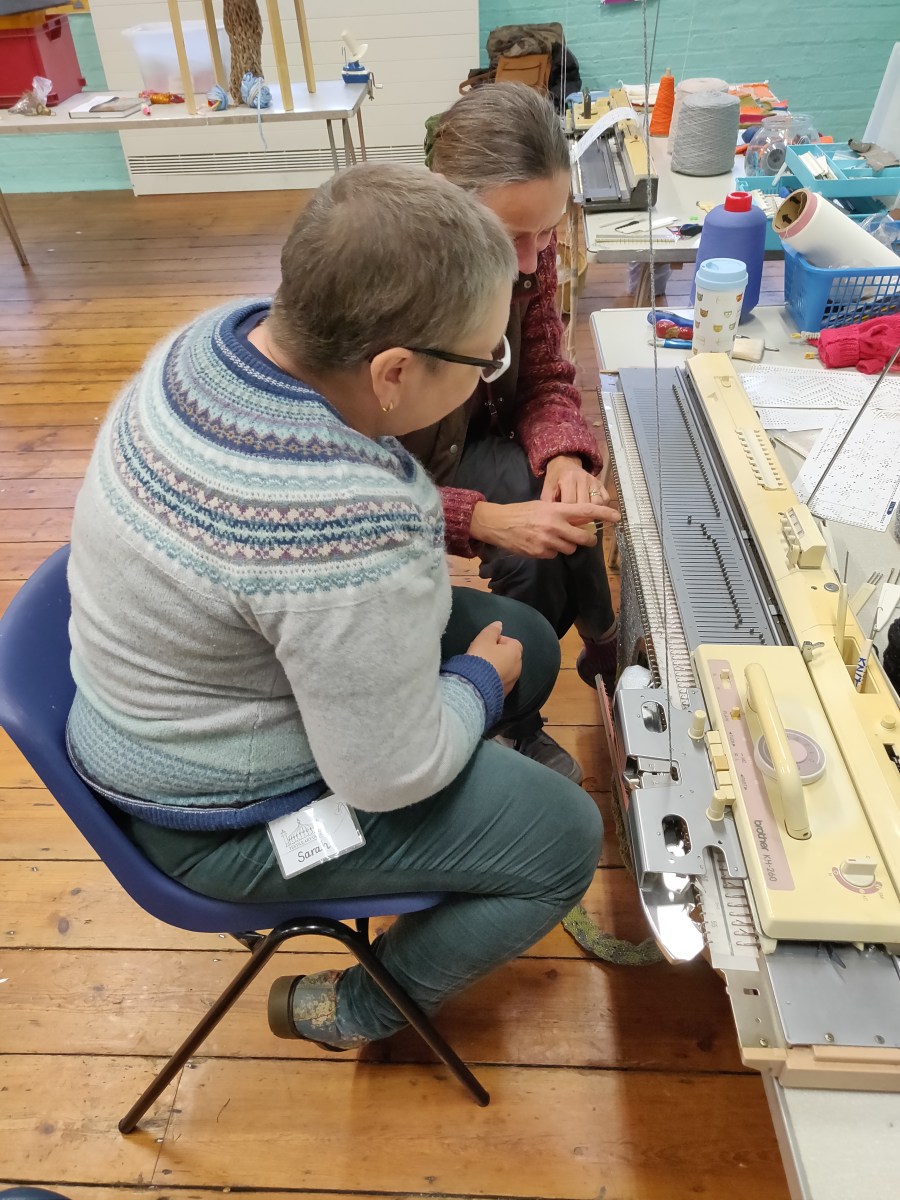
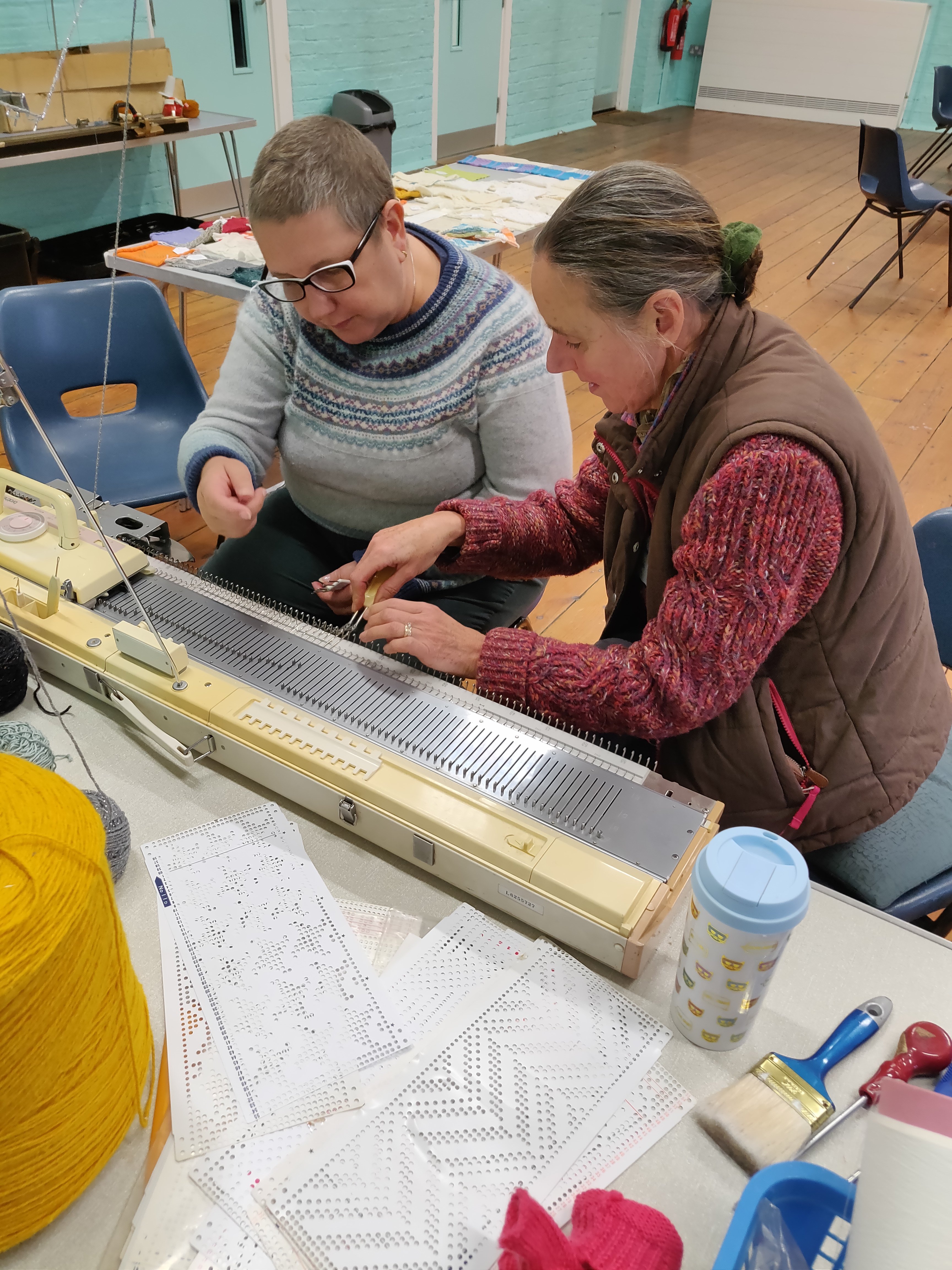
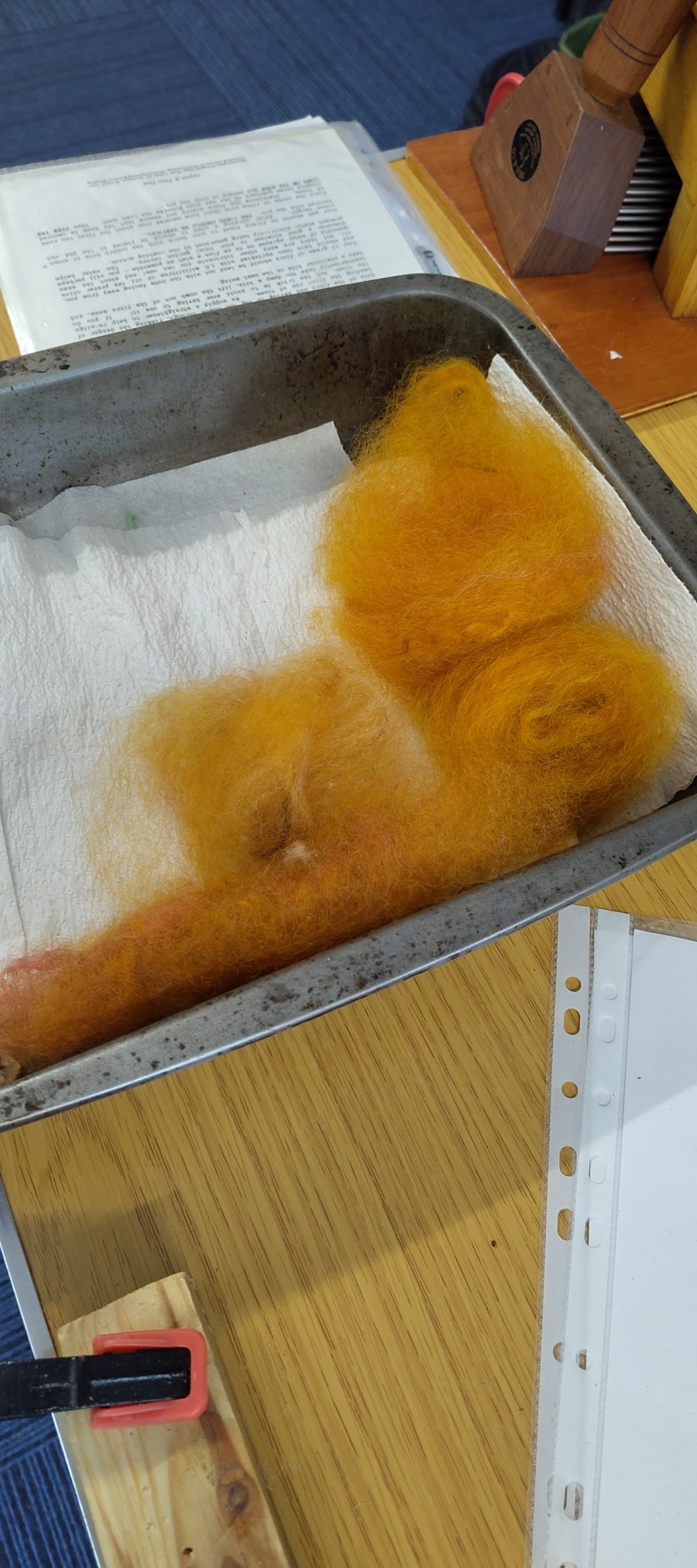
Yesterday, Easter Saturday was the Guild Skill Share. There were many generous members who shared their knowledge and skills in weaving, knitting and spinning related sessions.
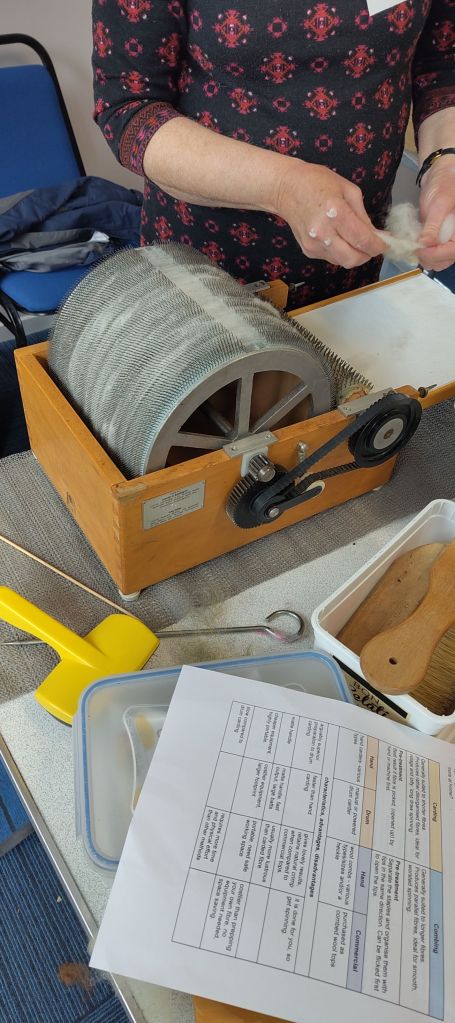
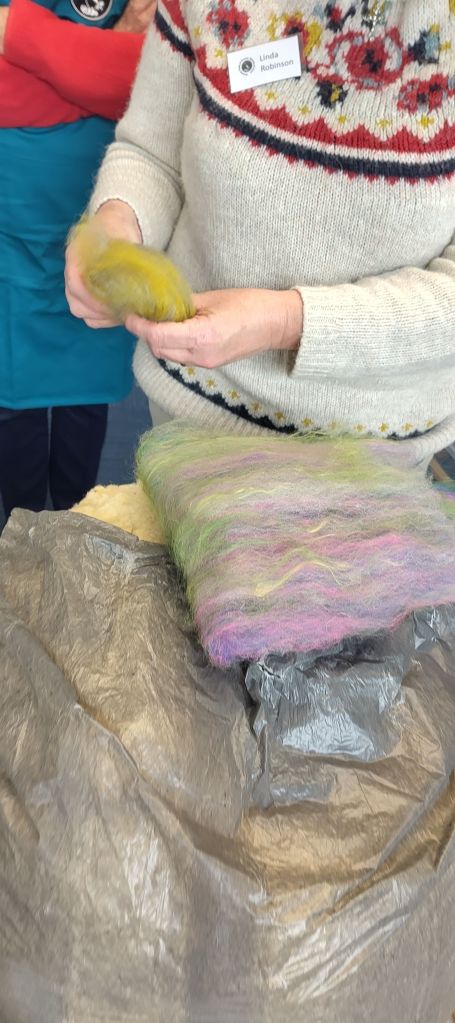
Kathy and I offered a Wool Fibre Preparation day so that members could have an induction on the Guild equipment or bring their own carders and combs etc. along to learn how to use them or just pick up some tips.

The morning was all about using swing or box pickers and hand and drum carders plus how to use these for blending. After lunch we tackled wool combing using a  pair of English Combs and smaller Valkyrie ones plus blending in a heckle.
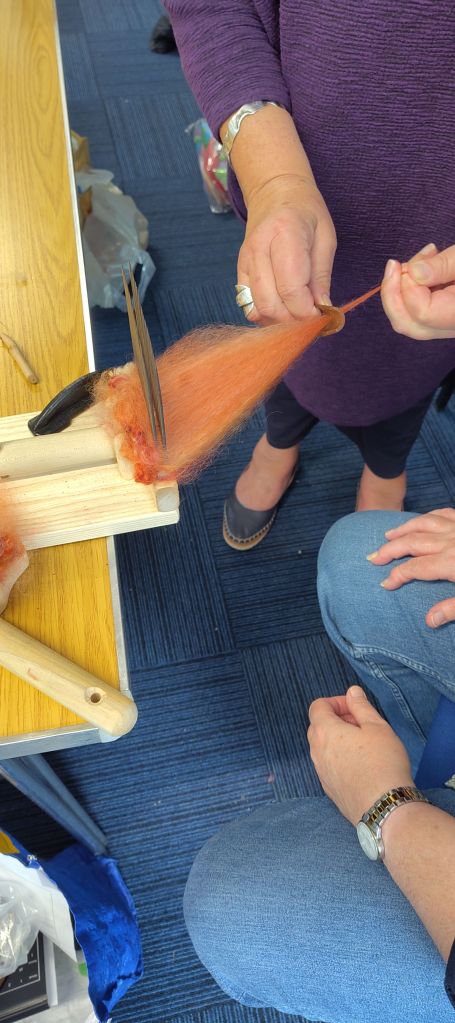
We enjoyed running the session and everyone seemed happy. After my initial H&S talk it was me that pricked my finger on the combs!
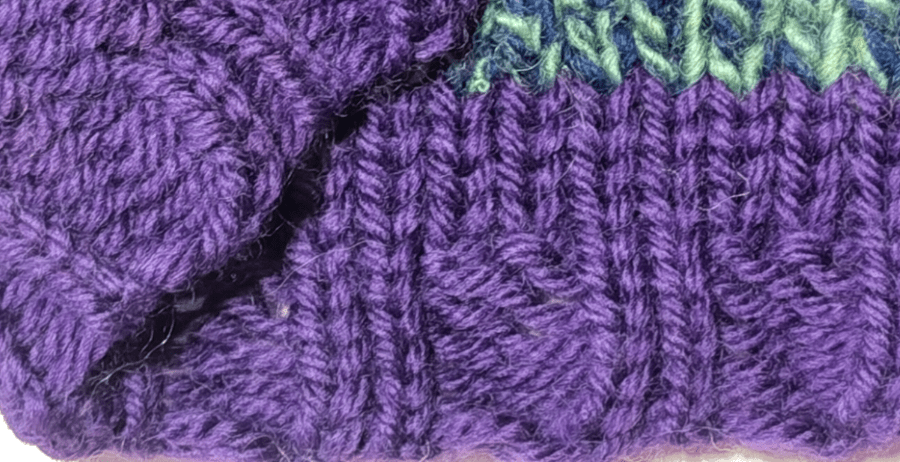
Reforming ribs on a knitting machine

Reformin, or ‘latching-up’ single bed stitches into a rib structure is sometimes seen as far too time-consuming for a ‘fast’ activity like machine knitting. However, I quite enjoy the process and have written about it and made a ‘workshop’ video of working a 2×2 reformed rib here. I hope you find it of interest and useful.

Fancy yarn workshop; spinning boucle yarn

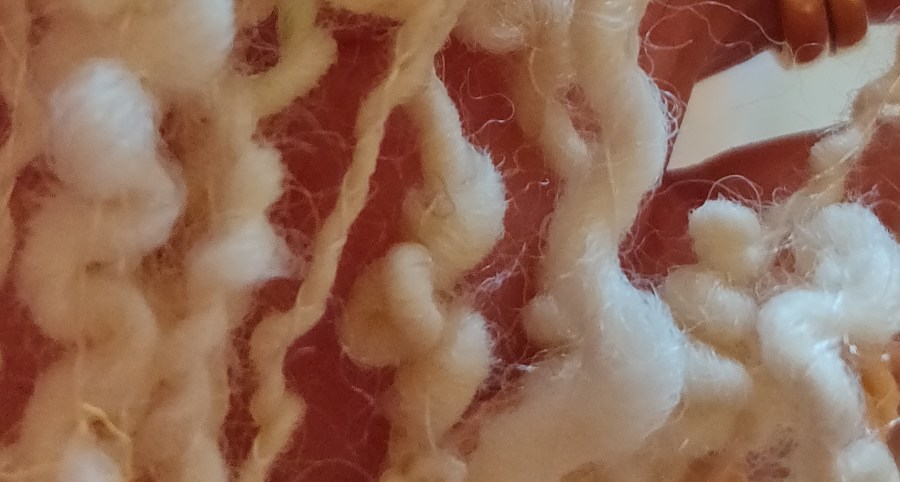
Yesterday I had a fab time at a workshop learning to spin fancy yarns. We only managed boucle and slub but that was so rewarding. The workshop was organised by the Brighton and Hove Textile Arts Group and hosted by Spring Farm Alpacas in Fletching West Sussex. Ann Dishman led the workshop and provided Blue Faced Leicester tops, still various and other threads for us to spin with.

Although I have spun both types of yarns before, I learned a lot and really enjoyed having four hours in which to practise the techniques. I also found out that Ann had been taught to spin by my spinning hero, Mabel Ross, which made me extremely envious.

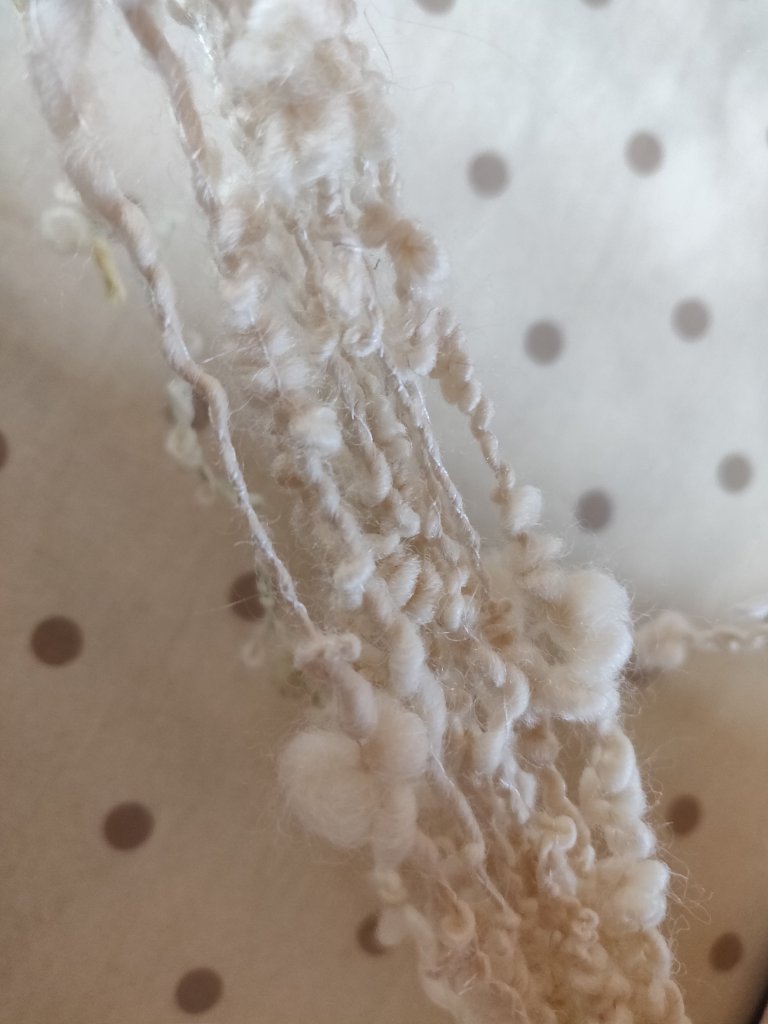
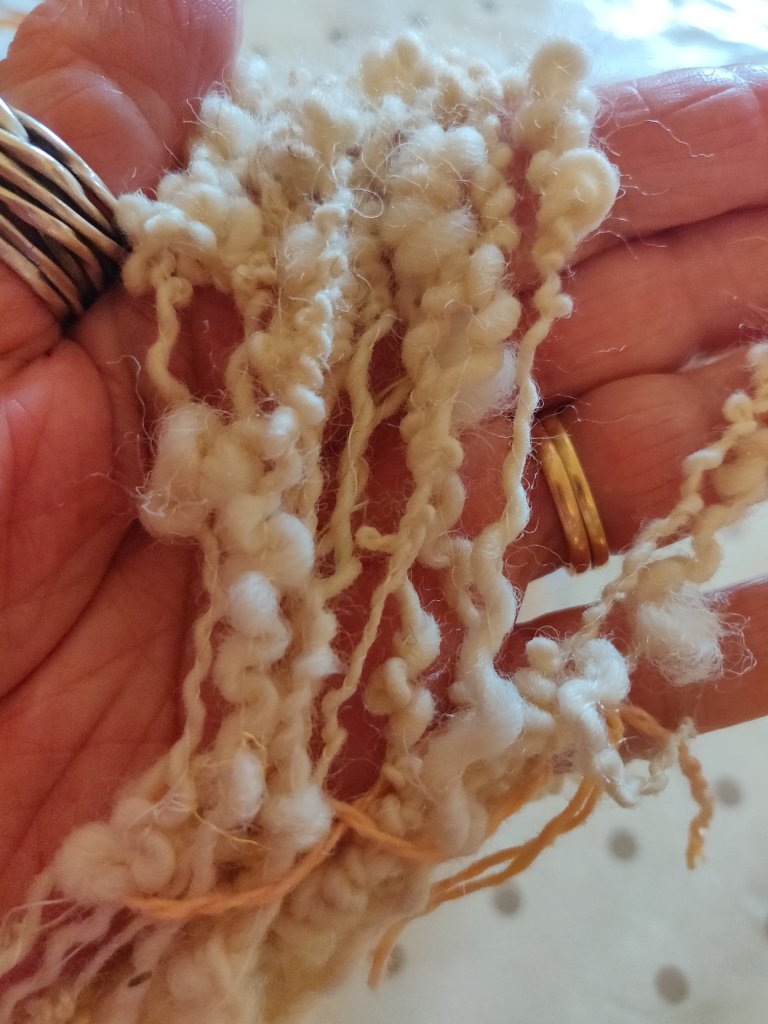
Unwashed boucle, Blue Faced Leicester singles and loops, cotton binder.
Unwashed the boucle was a bit lively, but it balanced out nicely after a strenuous washing.

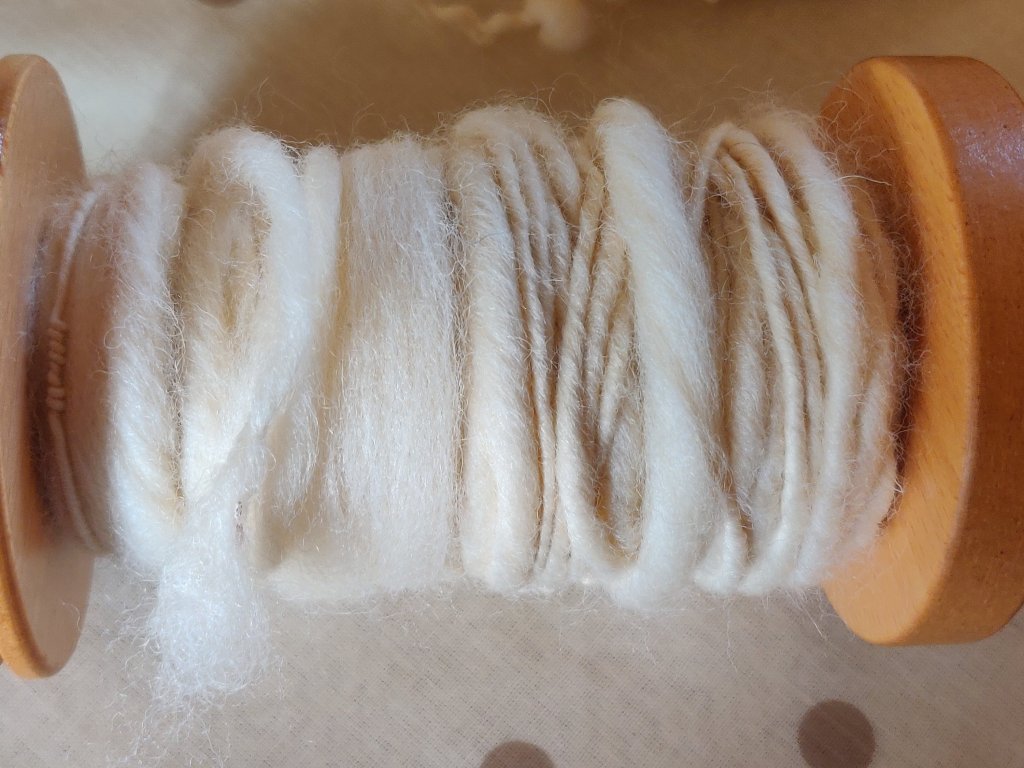
Unwashed soft slub; Blue Faced Leicester singles with a fine industrial wool binder.

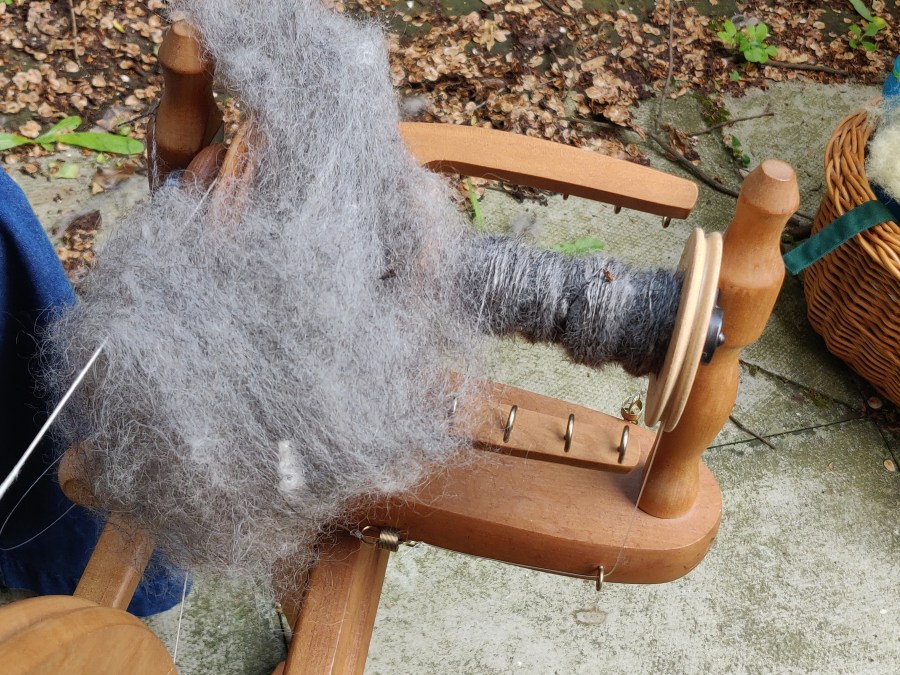
I took my Louet Victoria travel wheel and at usual she spin well and reliably, it was the user who made the mistakes!

Seamless machine knit socks

Slow and steady is best when demonstrating live!

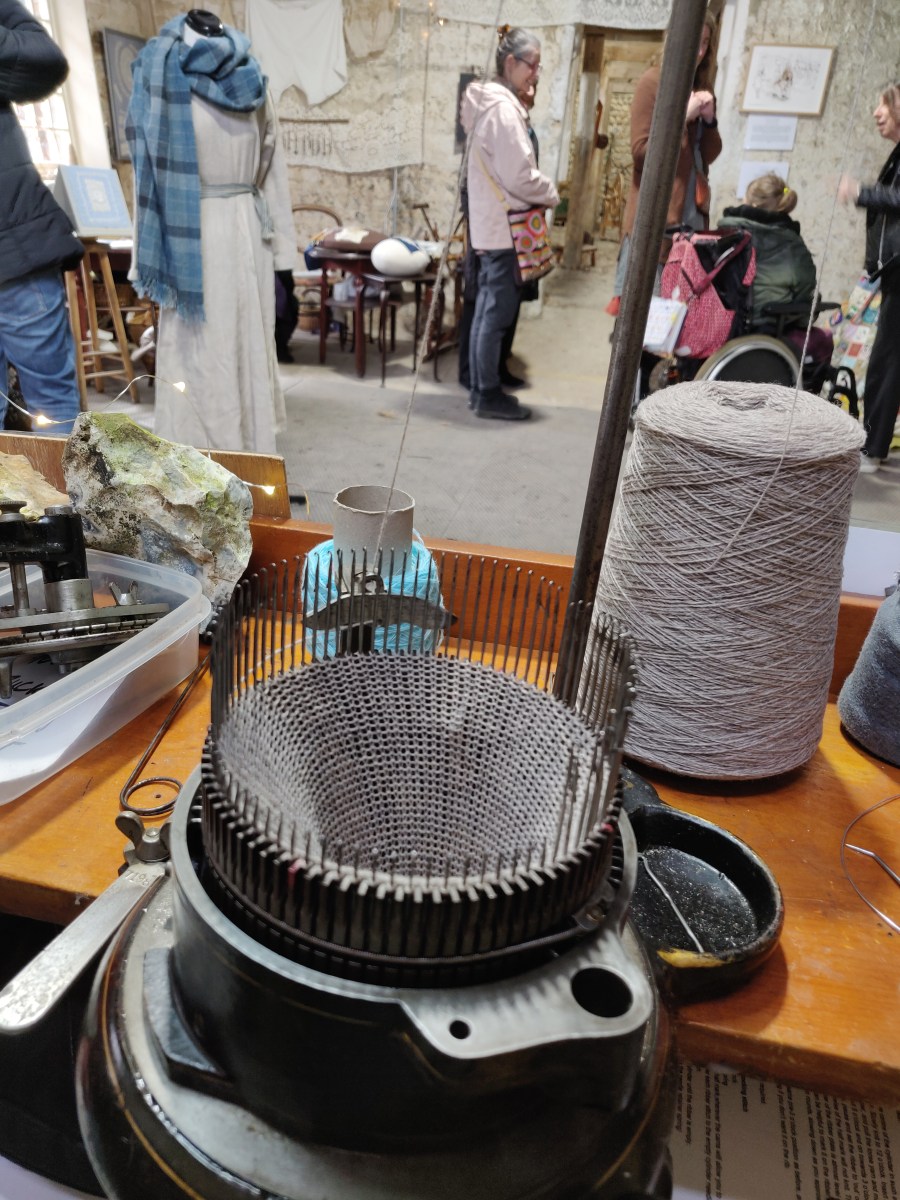
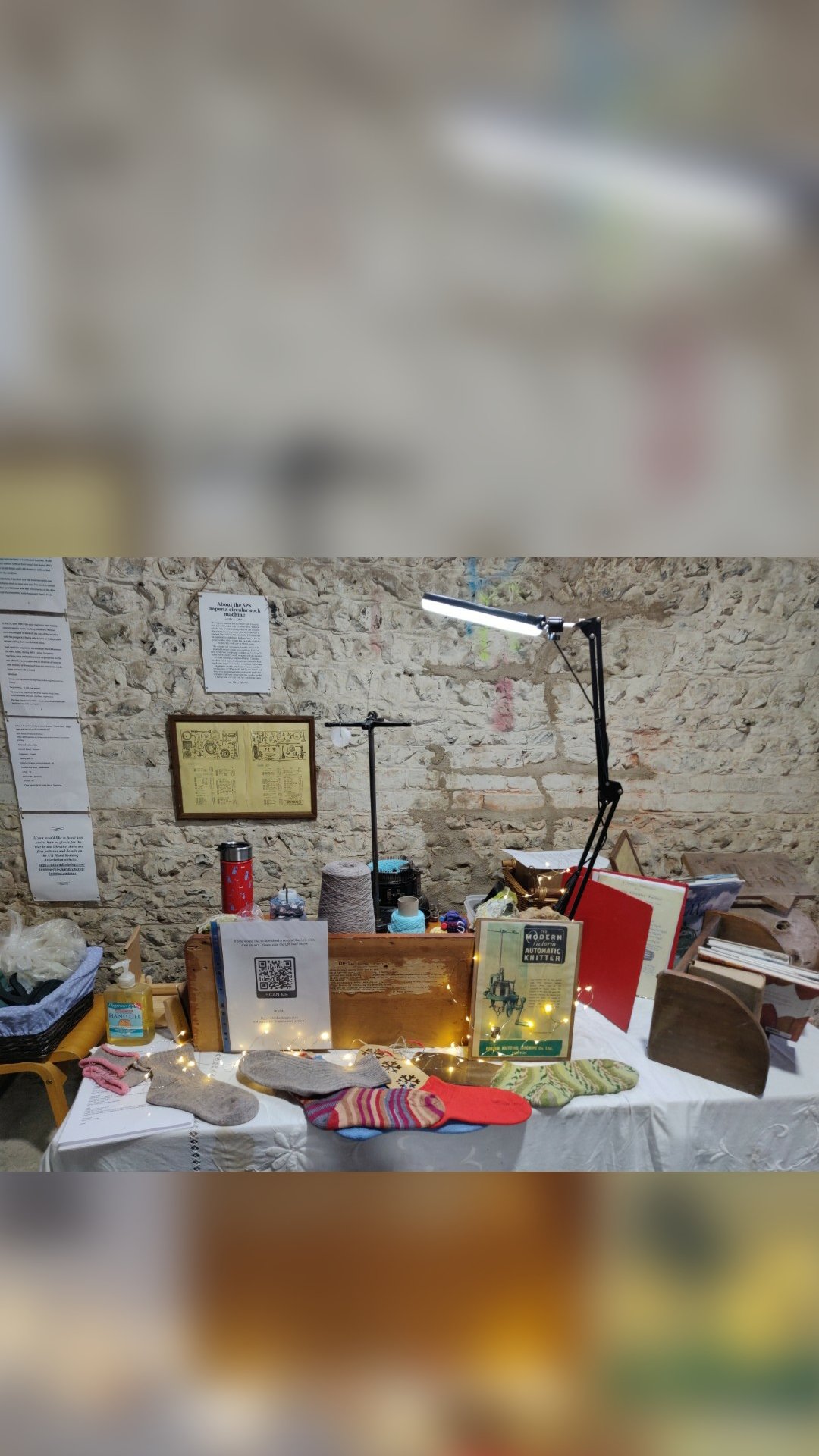
This was taken at Traditions in the Making, a Heritage Craft event at Stanmer Park, Brighton. With lots of volunteers from local community textile group Woolly Umbrella, alongside the CSM there were demonstrations of flax processing, lace making, weaving, inkle looms, wool fibre preparation (hand and drum carding), embroidery and wool and flax spinning.

The CSM is an Imperia with an 84 slot cylinder and gm here I am knitting a sock in traditional 3ply sock wool; no nylon. This was the nearest we could get that was most like the wool probably used originally on the machine. Although I have knitted on it with hand spun I felt that demonstrating required enough concentration without the worry of irregular yarn!

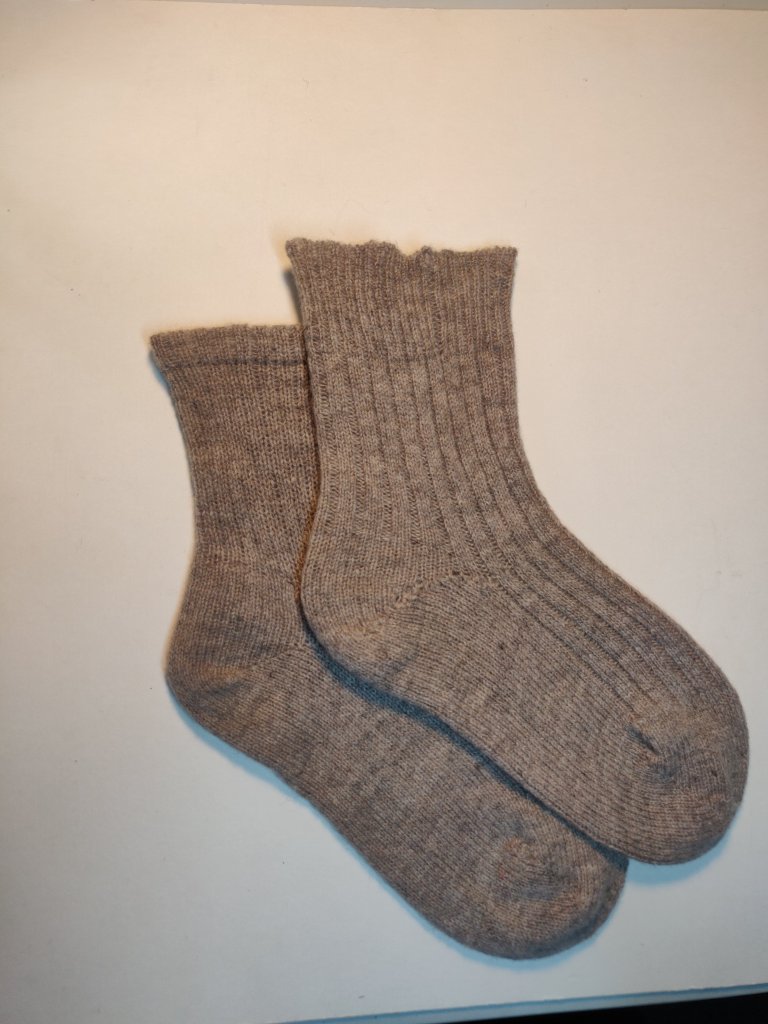
Two types of socks in the 3 ply yarn, fake rib and true rib.

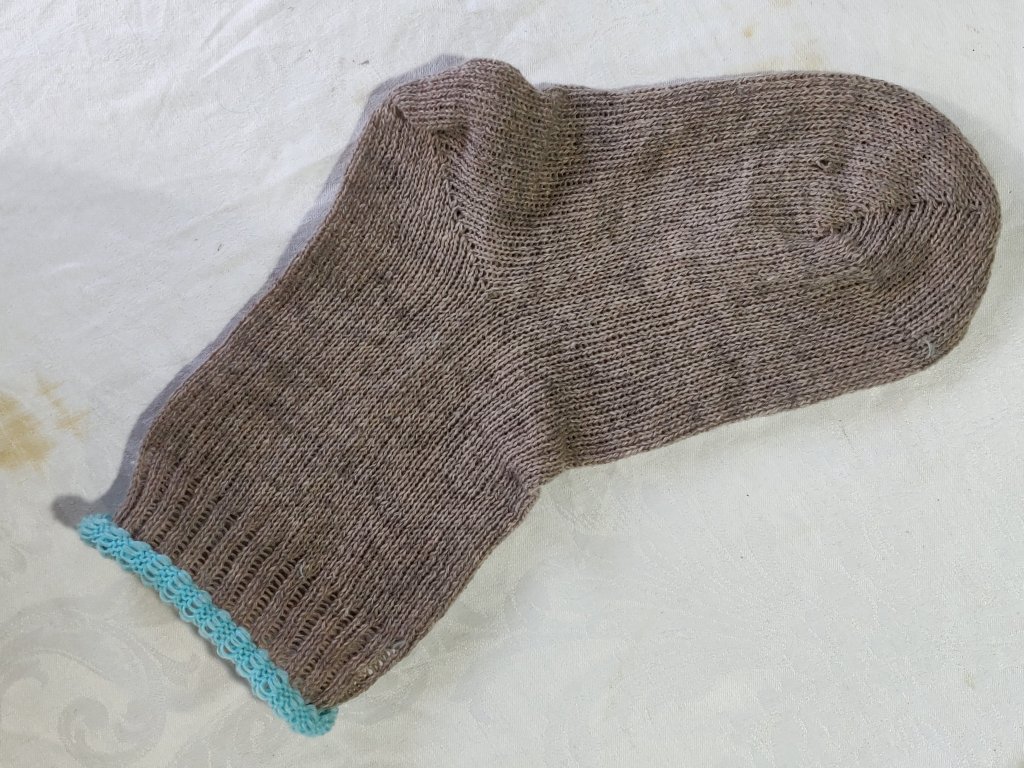
In a brave, but foolish, moment I decided to try a toe-up sock at one point. It wasn’t too bad at all, and I am quite pleased with the result.

Toe up sock, still waiting to be hand finished

First ‘in person’ TAG meeting of 2021

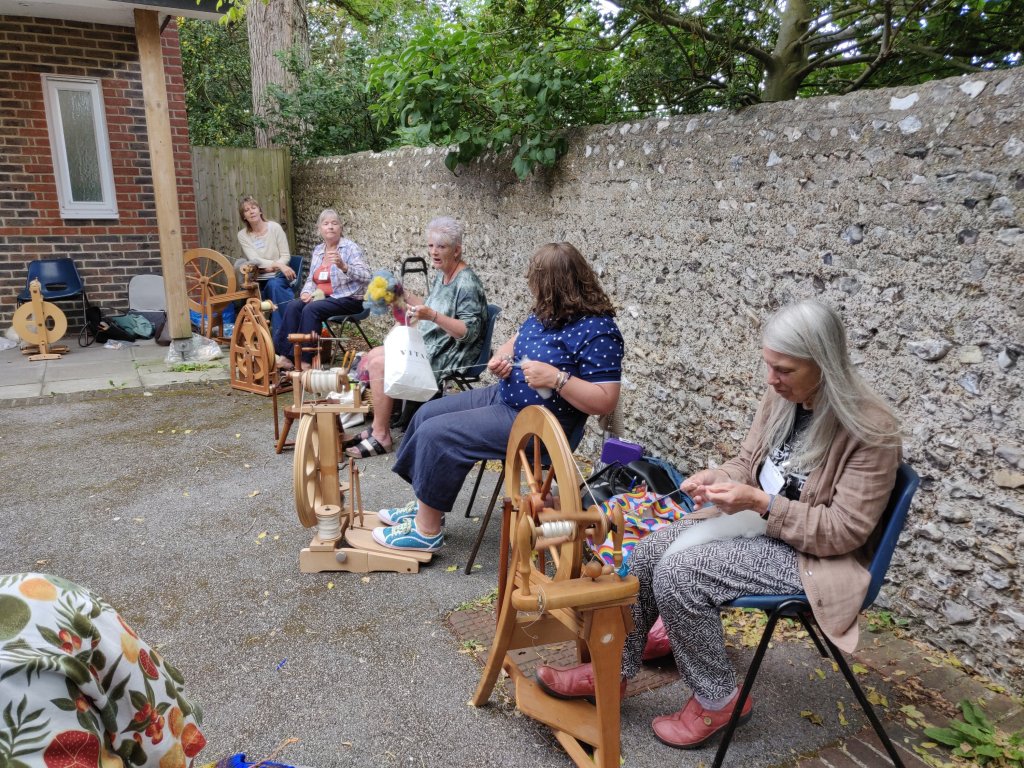
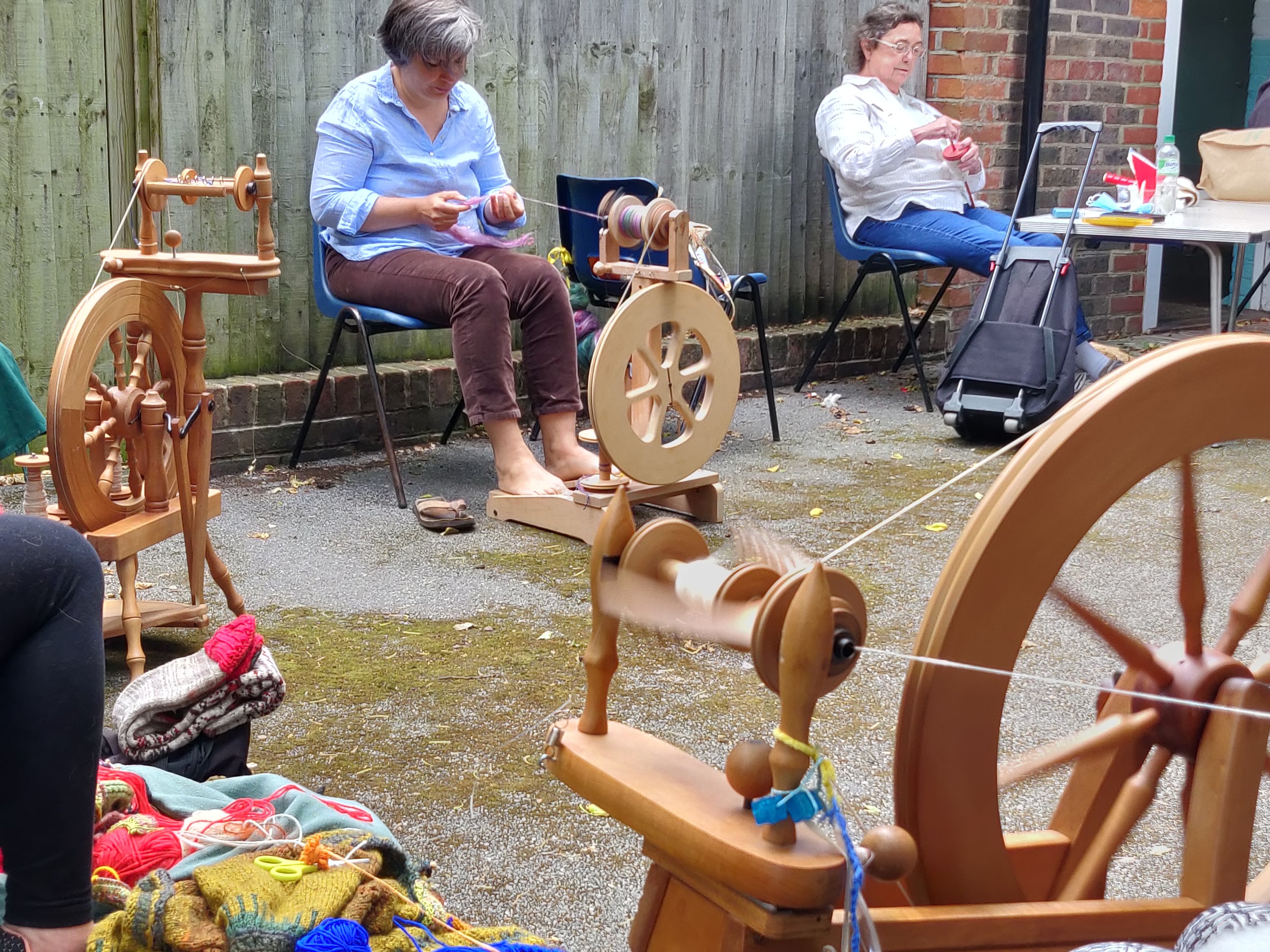
Our local Textile Arts Group (TAG), finally managed to meet today. Eight of us met up with Covid secure arrangements and as the weather was sunny we were in fact able to sit outside the hall to spin, knit and talk.

It was lovely, and everyone has been busy learning new things and perfecting their skills during lockdown.

Wheels all going madly
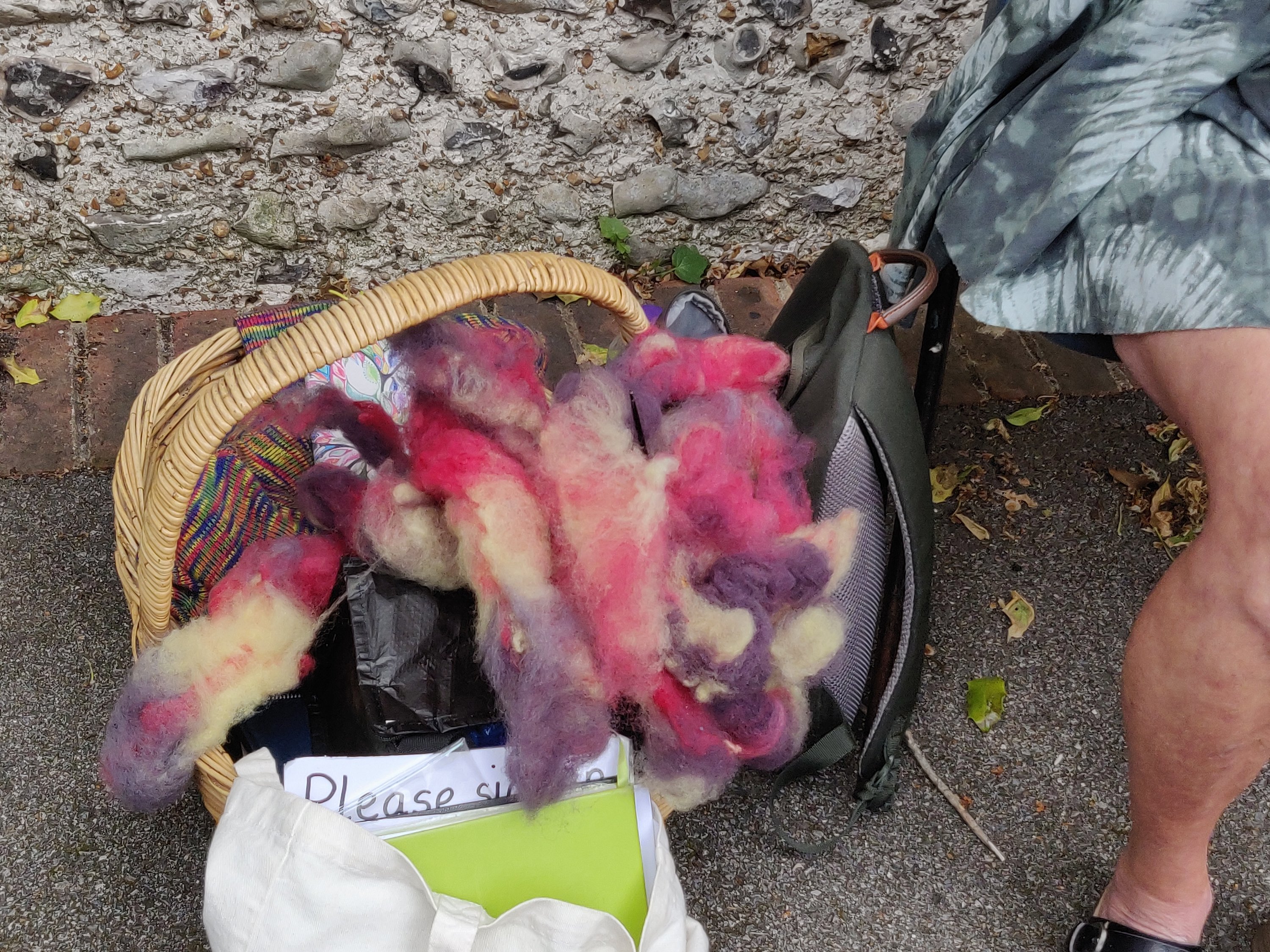
Natural dyed fibre

I took my Louet Victoria folding wheel and spun up a bag of Suffolk fibre that will be used as the core for a fancy yarn.

New members are always welcomed. If you live near Brighton and like to know more, or would like to come for a taster session, do get in touch.

Woolly Umbrella, new website

I belong to a local community textile group, and we have just launched our new website. Please take a look and see what we have been doing. Of course that has not been a lot since April 2020 as much of what we do involves going to outside events to share skills and demonstrate.

Lets hope the coming year will allow us to start doing this again. Meanwhile we have been meeting (in 6’s only) during the summer to spin outdoors, but the latest lockdown, along with the colder, shorter days has put a stop to that. Online meetings are OK, and I have organised a few, but its not the same!

We hope to be able to take ourselves along to demonstrate natural dyeing, eco dyeing, spinning, and fibre preparation at Bentley Wood Fair near Ringmer in September. Allan will hopefully demonstrate his fascinating nettle fibre preparation methods, and we will all be suitably masked and socially distanced of course.

Another natural dye workshop…

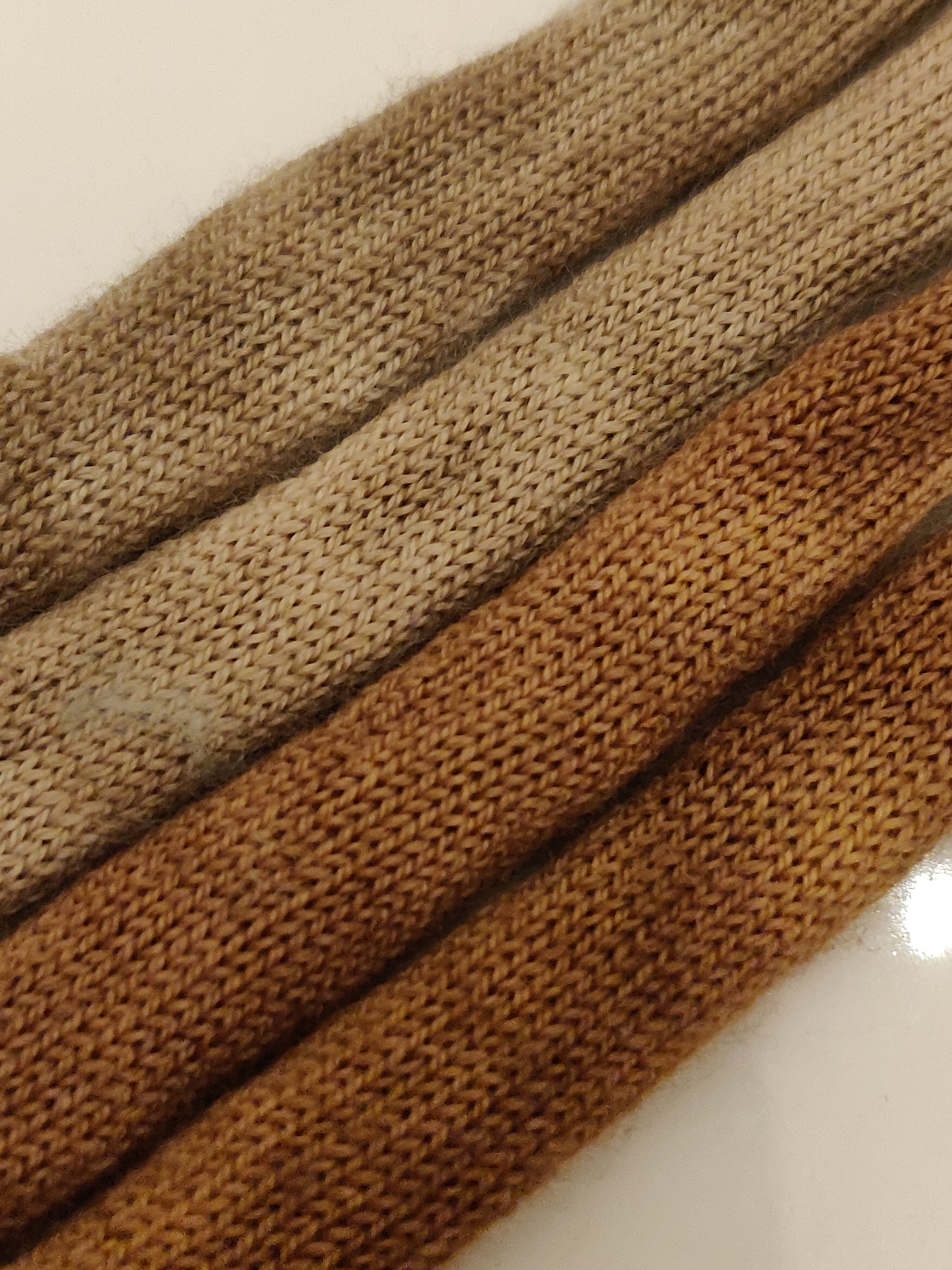
In preparation I have been experimenting with common plants to see what colours can be achieved. In the local park there are plenty of plants to try out. Cow parsley and dock (sorrel) were the ones on test recently.

I hope it was cow parsley anyway, Google lens wasn’t sure if it was hemlock or a type of chervil (cow parsely). Hoping that I wasn’t going to go the same route as Socrates I brewed up the innocent cow parsley (yes I had found out by now that it was safe).  The liquid didn’t look promising, unlike the sorrel liquid that was already a rich golden colour. Steeping the ripped leaves overnight didn’t improve it much either.

However, once the wool fabric had been immersed and heated the colour did come through. I tried an alkaline modifier on the sorrel to try to warm the brown up, and an acid on the sorrel to enhance the green. Im not sure either made much difference!

IMG_20200221_201216
From left, cow parsley, cow parsley with acid modifier, sorrel, and sorrel with alkaline modifier. All on 100% wool knit.


Machine Knitting workshop, Brighton TAG

Today I ran a workshop that introduced members of Brighton Textile Art Group to machine knitting. To give a wider experience both a Knitmaster and a Brother machine were used, one standard and one chunky gauge. The chunky was particularly popular once it was found that it can knit handspun yarns.

Techniques explored included shaping, fair isle, single motif fair isle, knitwear (again great for hand spun), holding and short rows and simple, manual lace transfer.

I took along a little circular machine to demonstrate the difference between the two machine types, but the real interest was in the flat bed Japanese machines.

After the workshop response were really positive; people who had thought they would hate it had great fun, and those with machines were enthused to go home and get them out. Unfortunately the workshop clashed with the East Sussex Guild of Spinners, Weavers and Dyers meeting, so another workshop had been requested in the Spring or Summer of 2020.