Today I cut out 28 Scabies mites – only need to sew them up now.
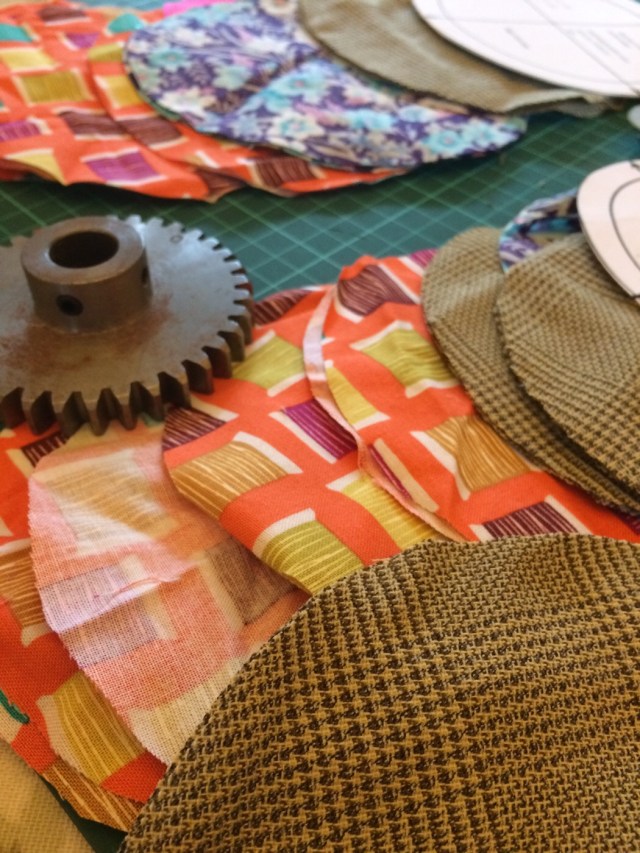
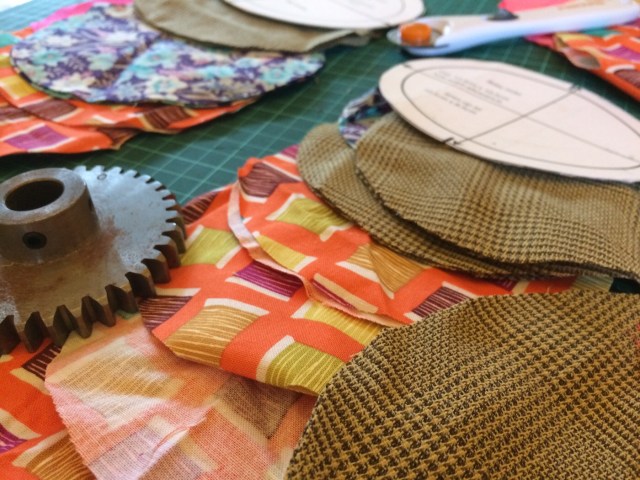

Today I cut out 28 Scabies mites – only need to sew them up now.
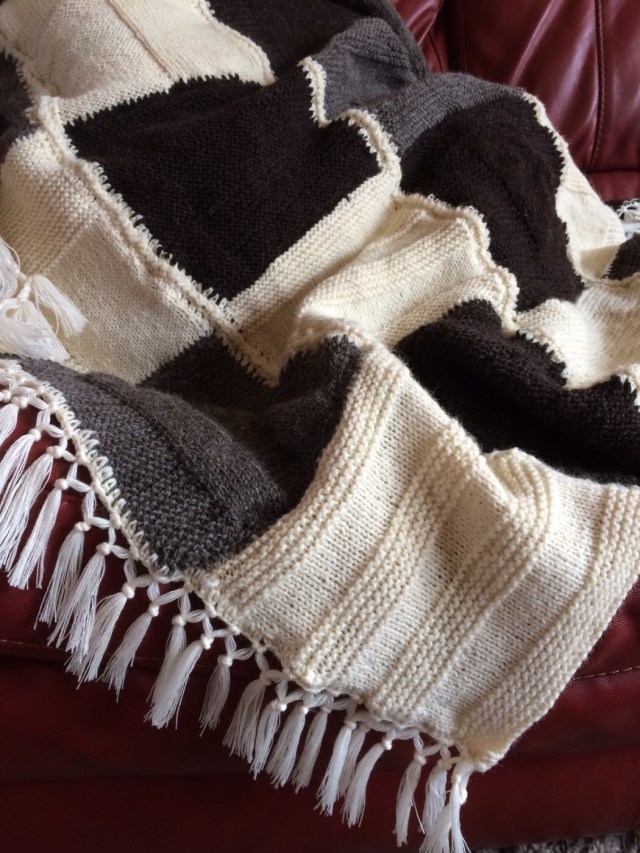
Having worked on this on-and-off for about two years I have finally finished a hand knit blanket. Worked in modular squares it was ideal for travel knitting, so has been around a bit en-route to completion. The yarn is from West Yorkshire Woollen Spinners and seems as if it is going to wear well. There are three repeated garter stitch pattern squares interspersed with plain garter stitch squares in three natural colours. The squares are joined with hairpin crochet and the blanket is fringed in a finer wool yarn with a knotted fringe.
This week has been a whirl of checking the final proofs of my book, Translating Between Hand and Machine Knitting, which will be published by Crowood Press in the summer.
If you have a knitting machine, you will know that this will be one of very very few books that have been published about machine knitting since the 1980s…so look out for it!
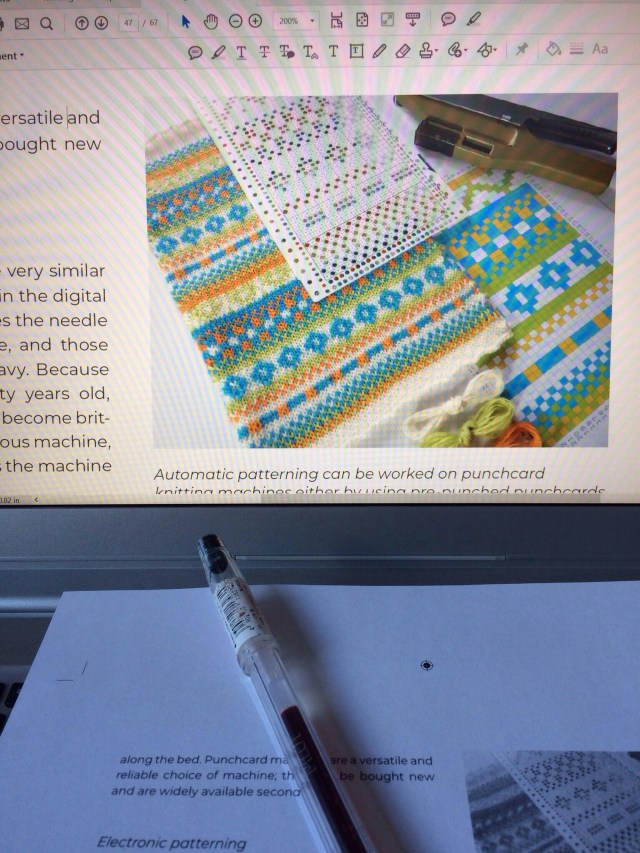
In it I explain how to work all the stitches that can be knitted using a punchcard: slip, tuck, fair isle and knitweave as well as cables and manual techniques. The book also compares and contrasts how to knit these stitches by hand and machine, which method is best for which technique and why you might like to experiment between the two methods.
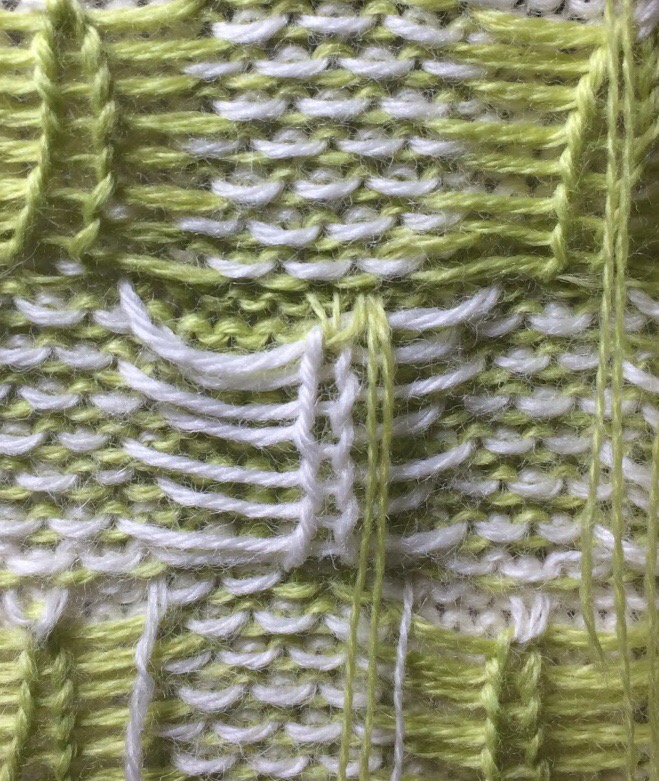 Find out how to work this, and many other useful and creative techniques in, ‘Translating Between Hand and Machine Knitting’, available next year.
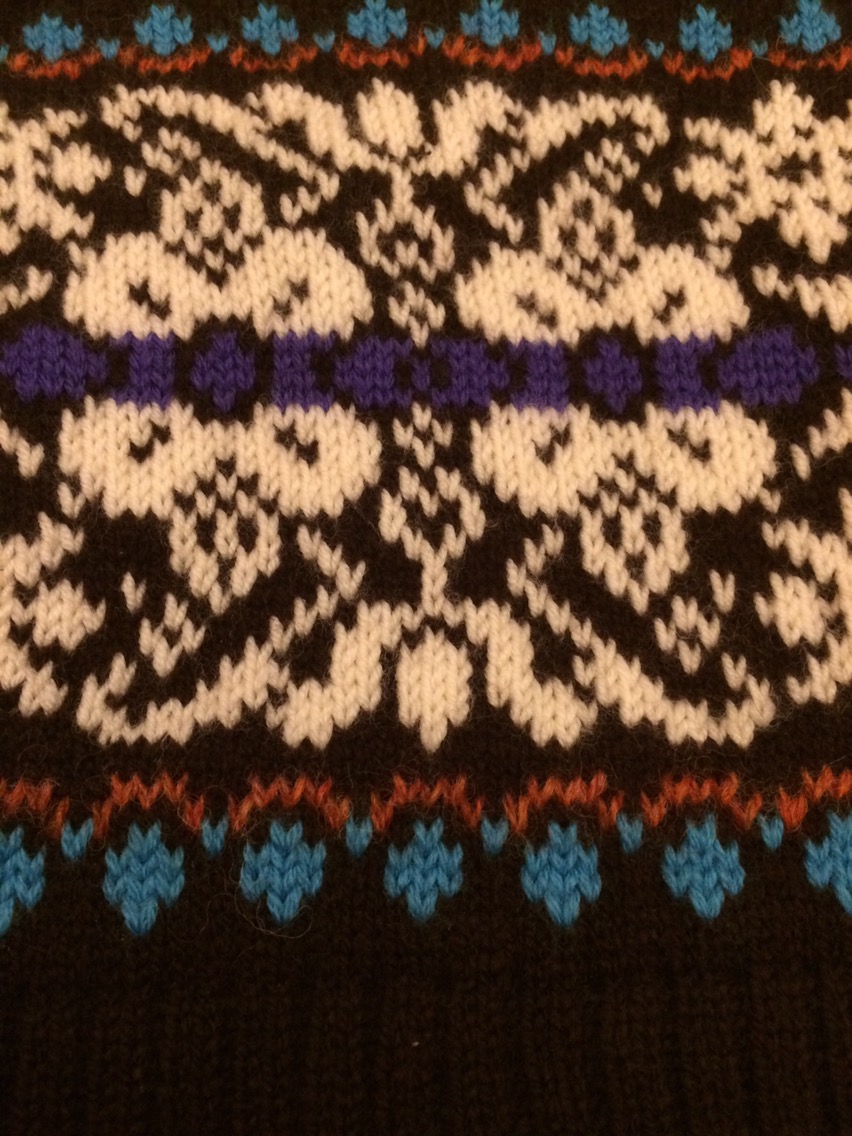 Time to play now that my manuscript has gone to the publishers.

Today was a big day. I sent the final manuscript of my latest book to the publishers. When I say ‘sent’, I mean by snail mail, as there are so many images it was too unwieldy to send digitally. I also feel safer knowing its got a physical form.
Taking such a small packet to the post office was sort of disappointing, but so liberating! I know its not over yet, but its well on its way.
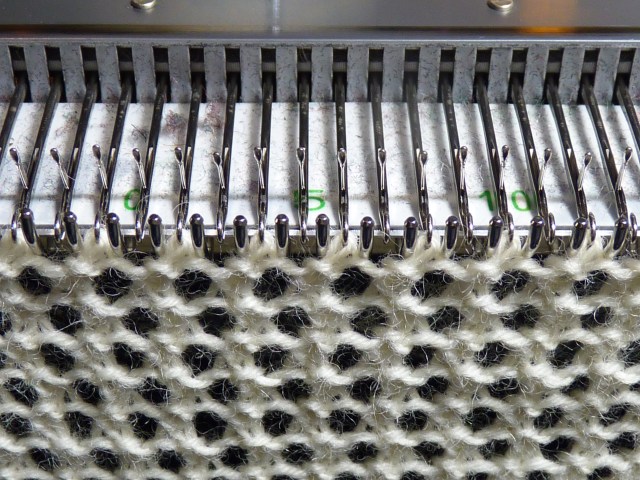
this is one of the subjects that are covered in great detail in the book. The technique is compared and contrasted to hand knit lace, and how to move between the two is explored and explained. I’ll be adding more information on the title, contents and publishing date soon.
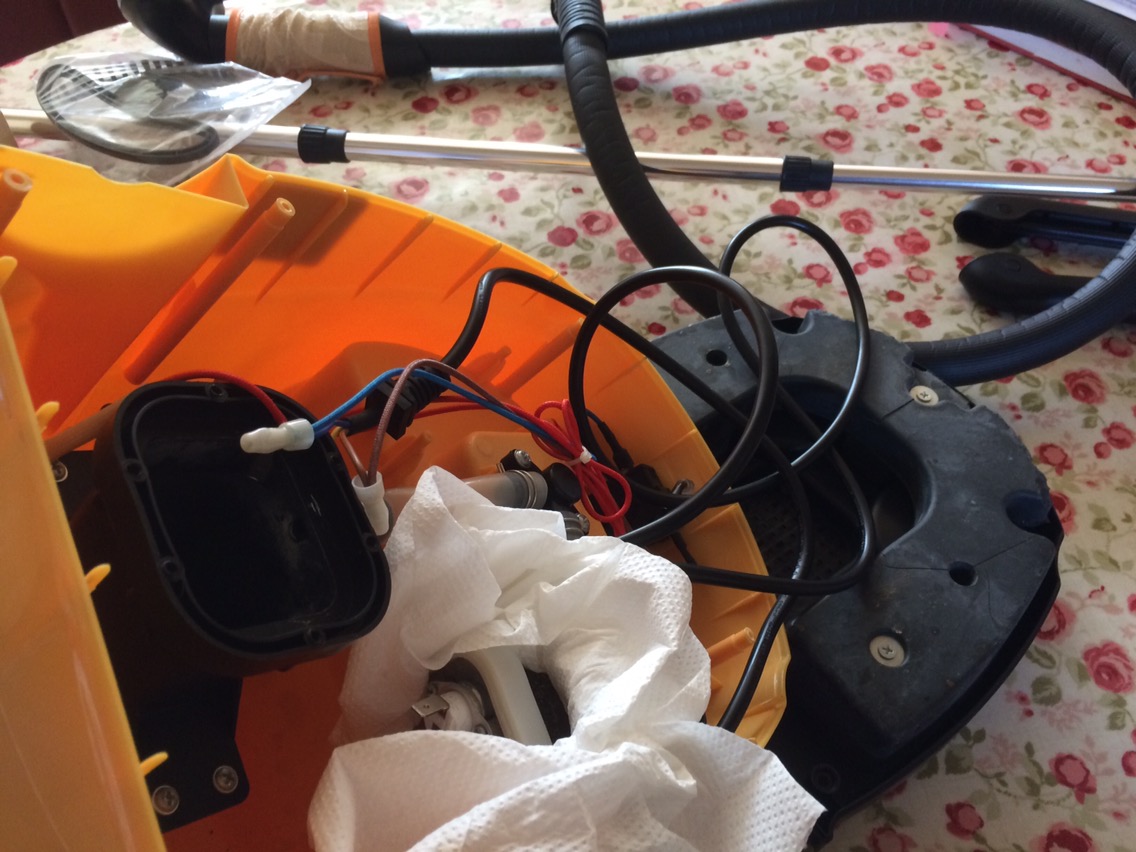
My pretty yellow Fridja garment steamer has died. It’s heating element has gone west. I decided not to buy another of this make as there were a few things that niggled me. Yes it looks cute, but that big front water hopper collected dirt and needed cleaning all the time. The Fridja weighed a lot, and when it’s taken apart you can see that’s because there is a heavy weight in the bottom. Yes it makes it stable, but the weight made cleaning it difficult. I have soaked my shoes many times. Not so bad with water, but when it’s cleaning vinegar it’s yucky.
The swivelling hanger has pros and cons. Good because you can turn the item to the light. Bad because it swivels when you don’t want it to. The new one has a clip to hold trousers etc straight, which is really useful, and would have been good on the Fridja as clothing swings away and you can’t get any purchase.
I am disappointed that a new element for the Fridja would have costed as much as a replacement steamer. It’s madness! I considered this option despite this and would have mended it, but noticed that the hose has a split and the water container valve is a bit dodgy. Plus there is some sort of green mound that grows in it that comes back whatever I do, and the shape makes it hard to clean out each time.
So bye bye little yellow blob, and hello rather ugly but functional Pur steamer.
It’s so much easier getting my samples evenly blocked since I made a blocking mat with a grid. I had an ancient foam backed mat that had a brilliant reflective, iron-proof top layer that I couldn’t use any more because the foam was disintegrating into dust. The cloth top layer has a really useful 1″ grid printed on it (yes it’s that old!). So I took it into the garden and shaved the old foam lumps off, then scrubbed the back to remove all the glue residue and it came up great. Next I mounted the original cloth cover onto a modern firm foam camping mat. It works brilliantly, the grid and reflective surface survived perfectly.
So now I’m using it to block some knit samples for my new book due to come out next summer.

Anyone can contract scabies, and my textile research, carried out in collaboration with Brighton and Sussex Medical School, allows people to experience some of the symptoms and visual disfigurement associated with scabies. My work in the exhibition is a precursor to textile research I will be undertaking with Impact and Knowledge Exchange funding over the coming year. 

 Vikki Haffenden