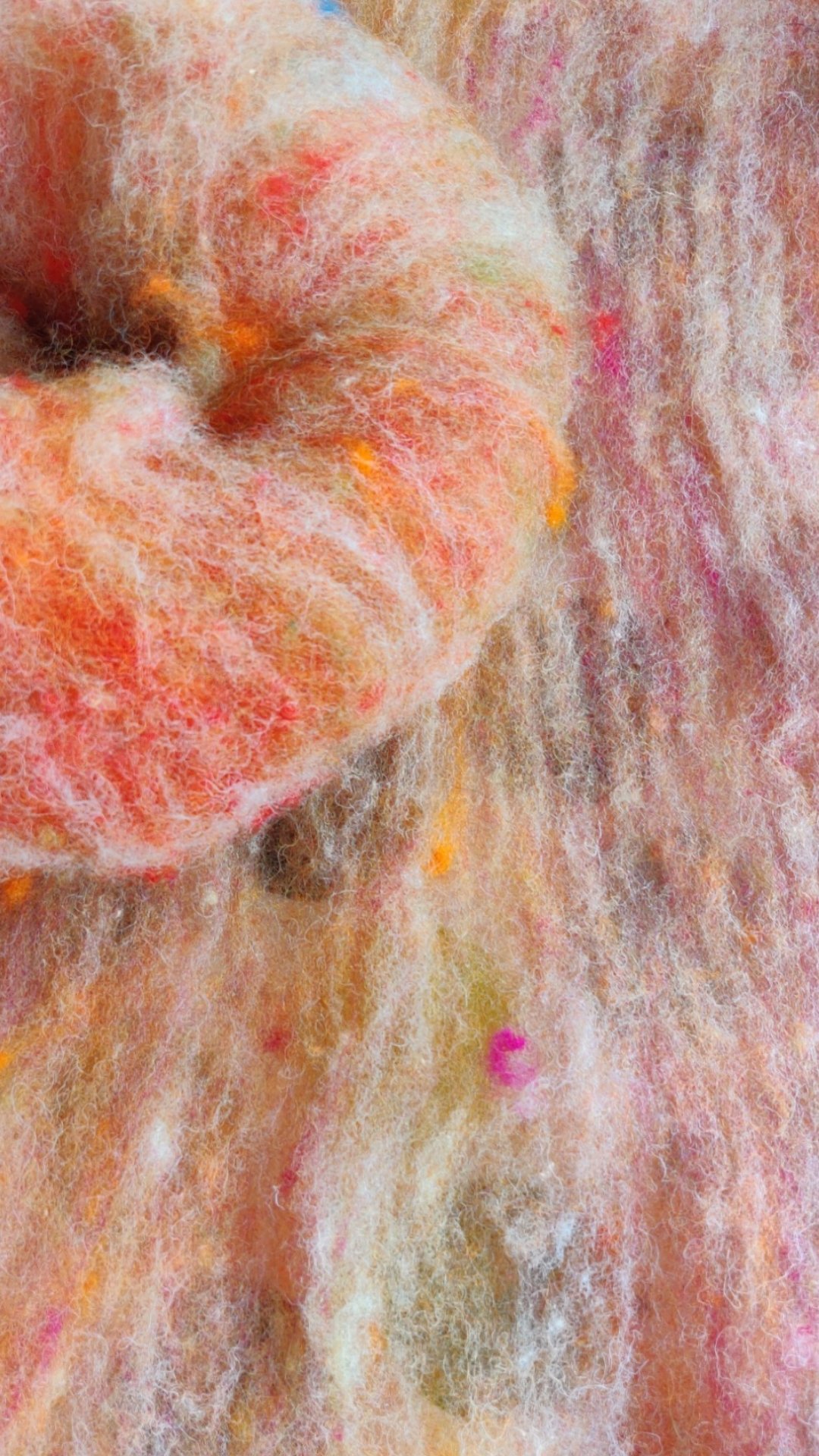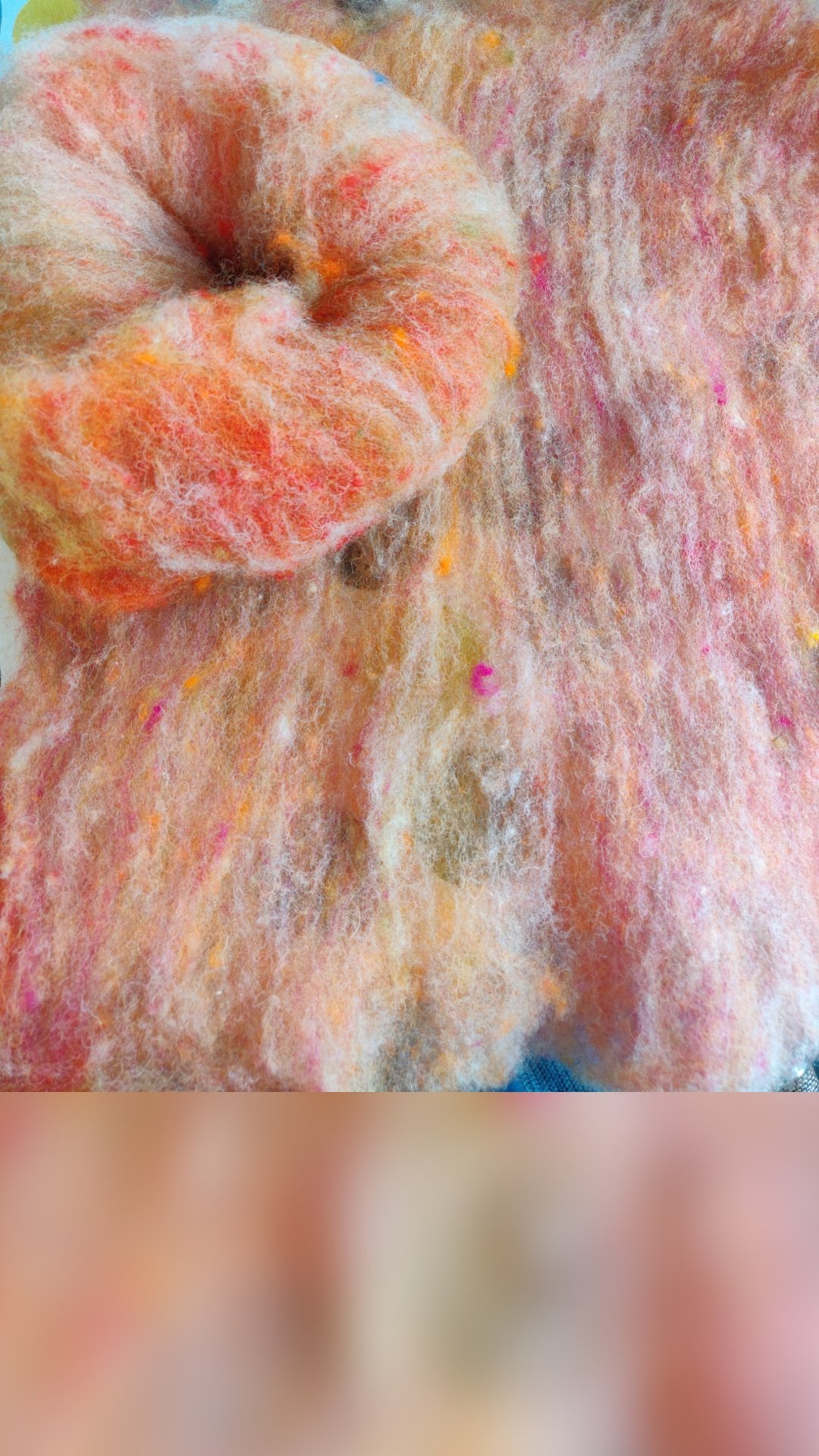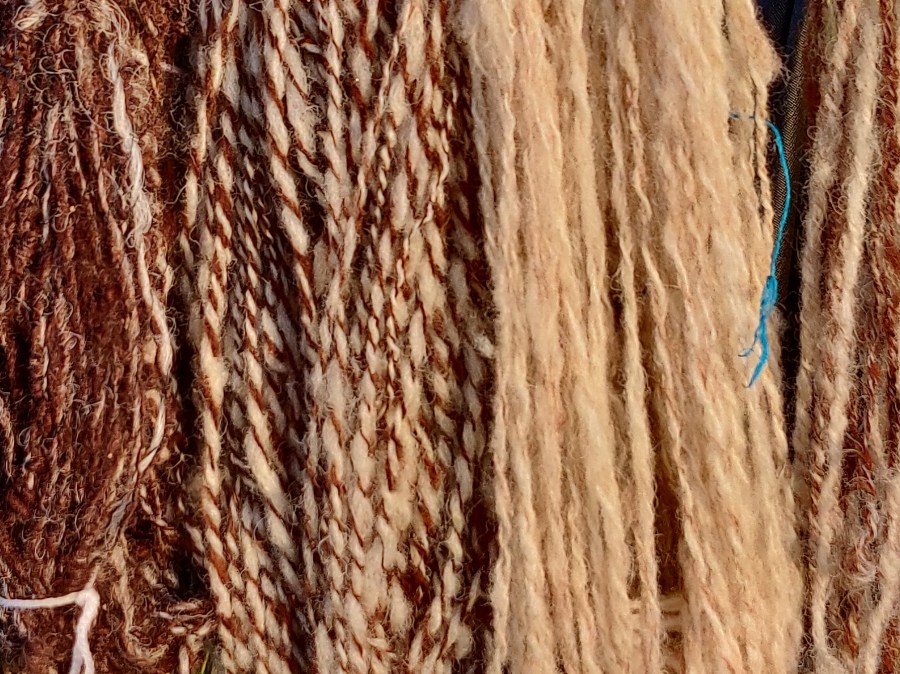
‘Wool’, a lovely yarn shop in Bath

A couple of weeks ago I spent a weekend in Bath in the Somerset with some friends.

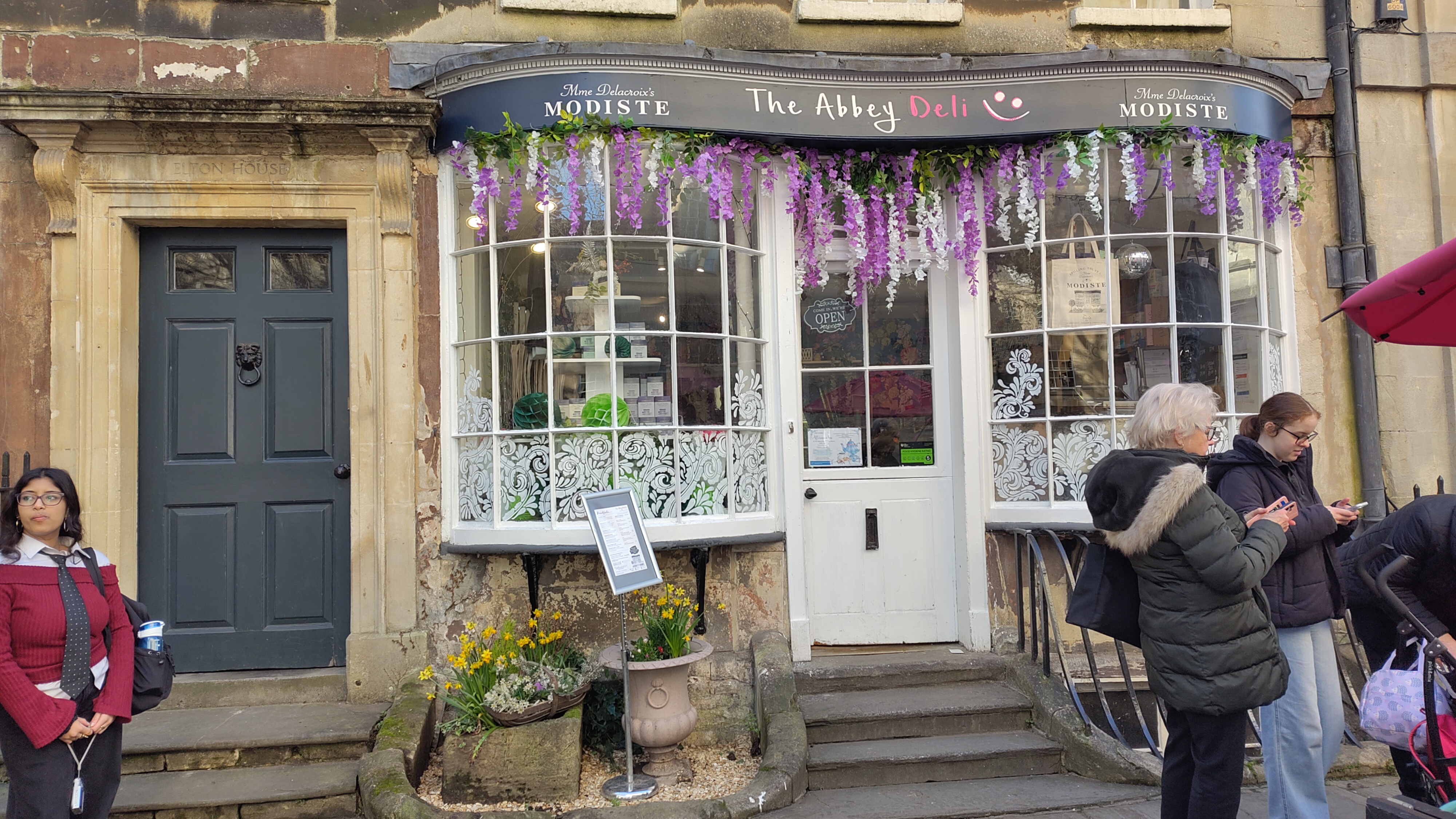
On our first day we did the touristy things like visiting the Circle and the beautiful Royal Crescent and had tea in one of the numerous teas shops. Quite by chance, the one we picked happened to have been featured in Bridgerton as the Modiste shop.
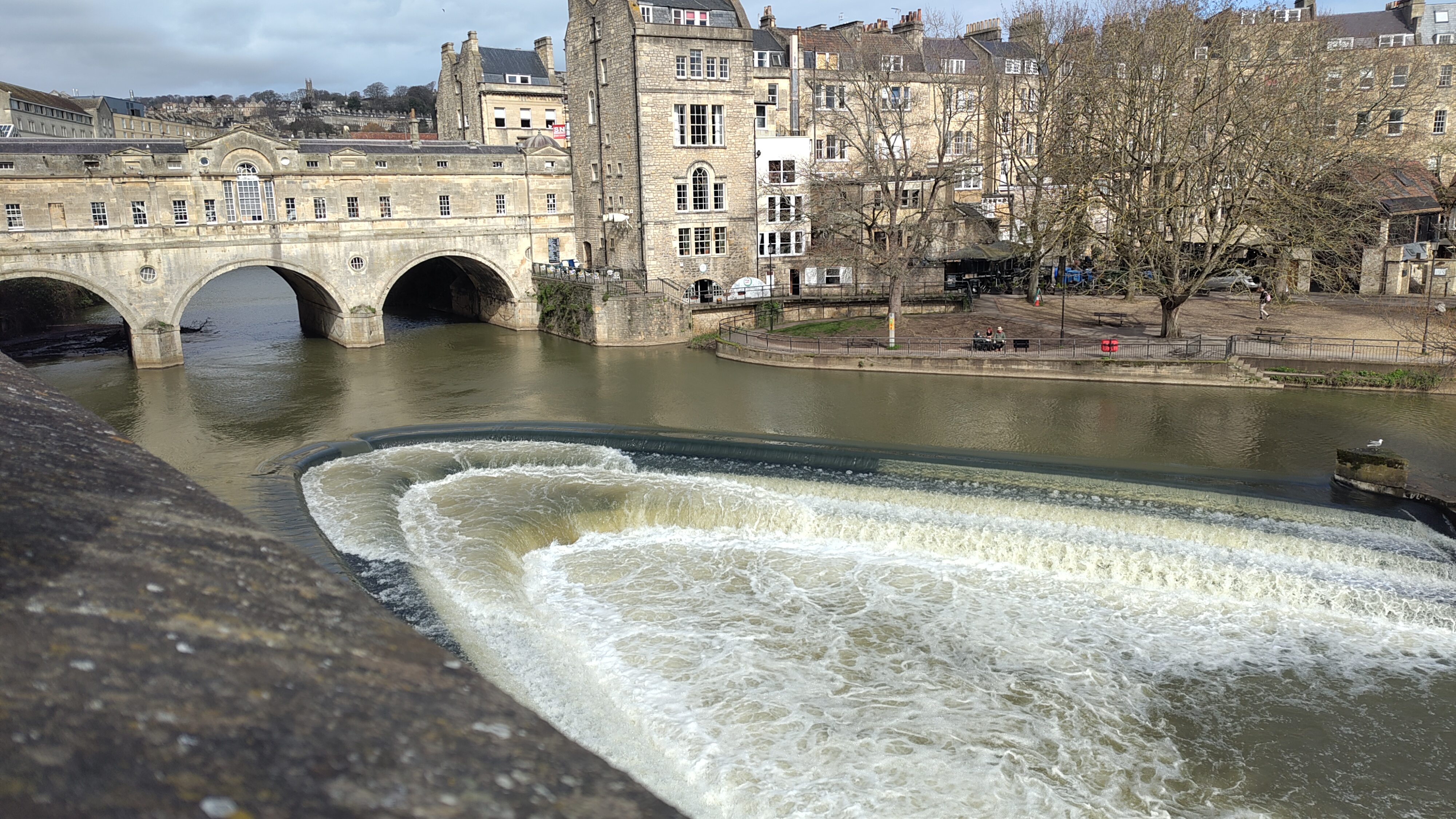
Food featured heavily in our weekend, cake being a particular favorite, so the next day we visited the historic Pulteney bridge and the tea shop which is situated on top of this bridge.
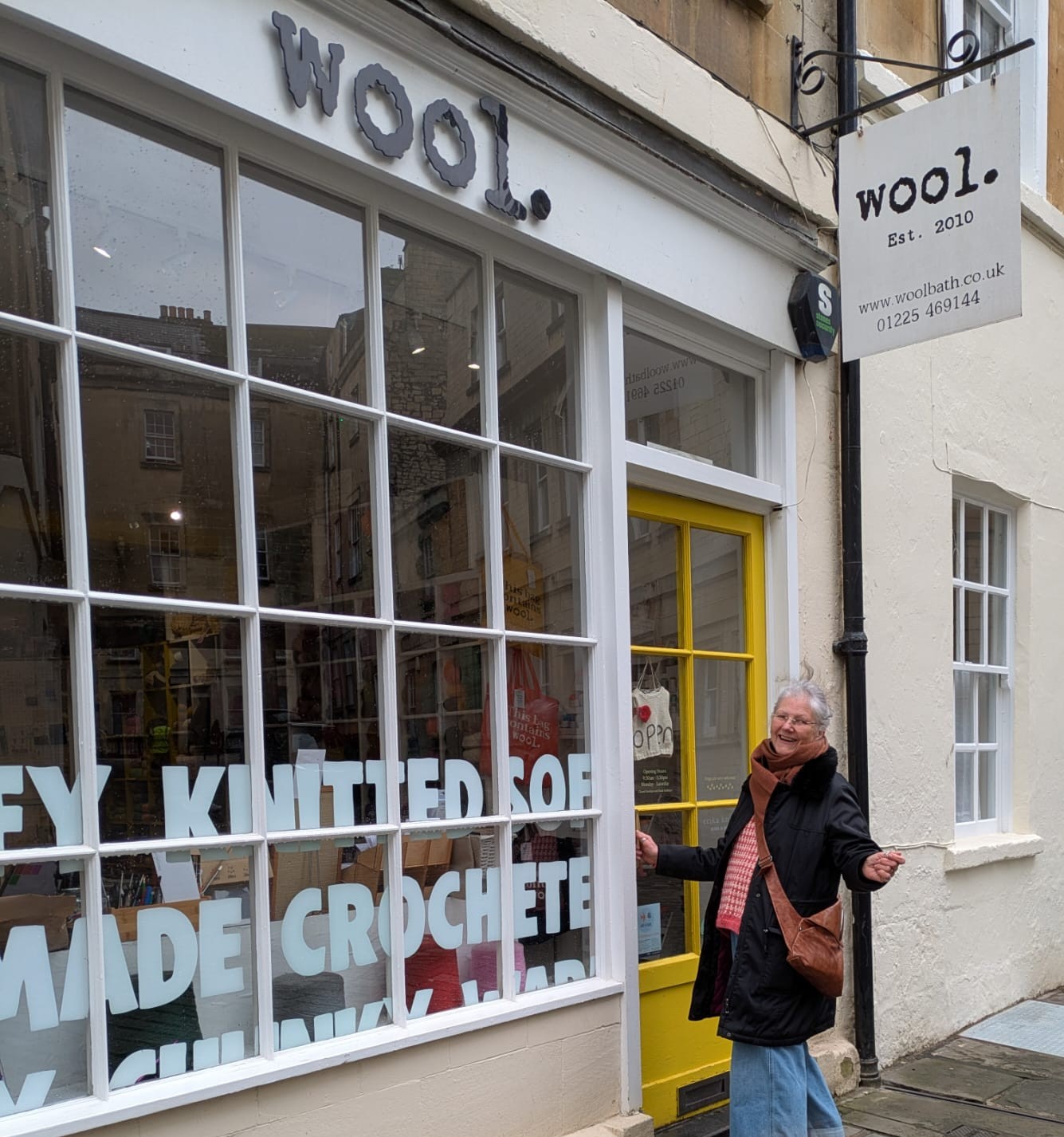
We are all knitters, so were pleased to discover there was a yarn shop close to where we were staying in the city centre. So, before leaving on our last day we paid a visit to ‘Wool’. There we found a wide selection of yarns to please all price points, that catered for all types of knitting or crochet work. Yarns included individual spun, Rowan Kid Silk and some very good value Tweedy Superwash Merino wool by King Cole. I am a bit of a sock yarn addict and bought a 100g ball of Lang sock yarn, which I have not tried before, and some 100% wool double knit in pretty pastel colours.
Someone else chose a DK pattern for a simple sweater shape which she intends to knit up in a wool and Alpaca blend yarn. The yarn is being reclaimed from a partially-knitted garment that her mother never completed, I think this is a lovely way to maintain a thread with the memory of her Mother, but to end up with a garment that she will want to wear.

The staff in the shop were particularly helpful over this explaining to my friend how to substitute a yarn in the pattern and helping her decide if she would have enough of the existing yarn. Although I could have helped her with this it would have felt a little like a busman’s holiday to do so ‘on the fly’. However I did of course tell her she could ask me later if she ran into problems.

I will certainly go back to ‘Wool’ next time I’m in Bath.
Weaving today for a relaxing time

Today is ‘me time’, weaving with a local group, mostly members of the West Sussex Guild. Although I love knitting, it can sometimes seem like work because of my teaching and writing career. Weaving however, is a new skill to learn just for pleasure. Even though I haven’t heard grasped all the basics I am having fun designing fabrics using the simpler techniques.

Waffle effect in 100% British wool. This will be the having for the Rya weave cushion cover front I have already completed.

Typically I have already acquired two kinds, both rigid heddle type, but perfect for my early steps.

Acid dyeing session

Having acquired a Devon/Cornwall fleece that is quite similar to a Romney in feel and quality, I thought I’d dye some for blending. This fine will be great to comb for a semi-worsted spun yarn.

One of my favourite methods for safely dyeing fleece without matting the fibres is to use a slow cooker. I have a large family sized one that will dye 100g comfortably and 150g at a pinch, and a single-person one that does 20g for samples etc.

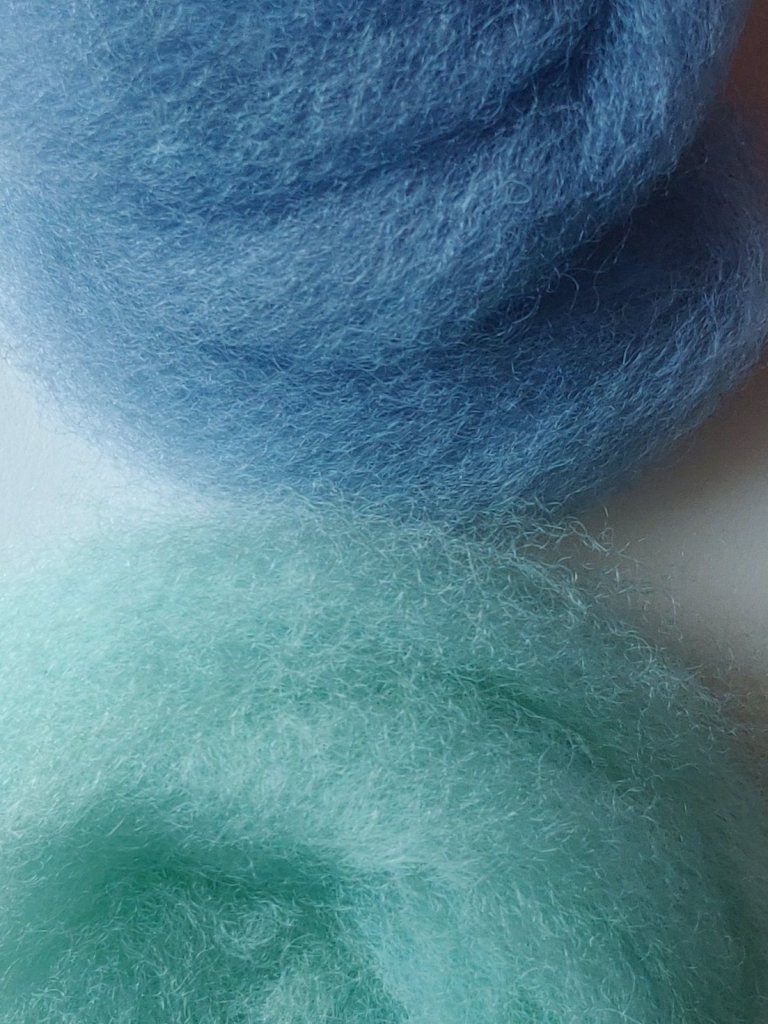
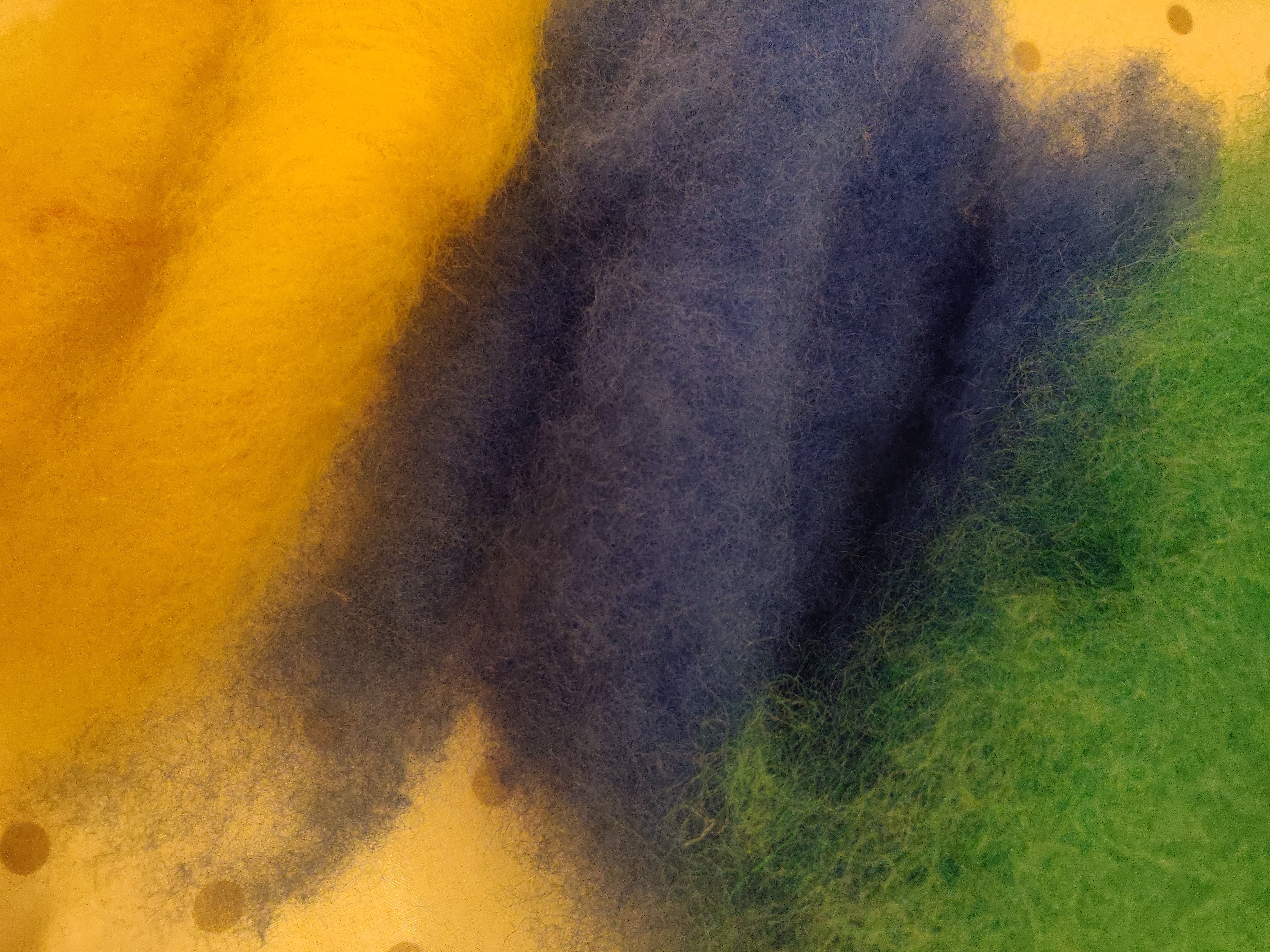
Using a pre-mixed colour I’ve used before I did a blue first. However, on this fleece it came out darker than I anticipated, but will probably lighten up once combed or carded and spun.

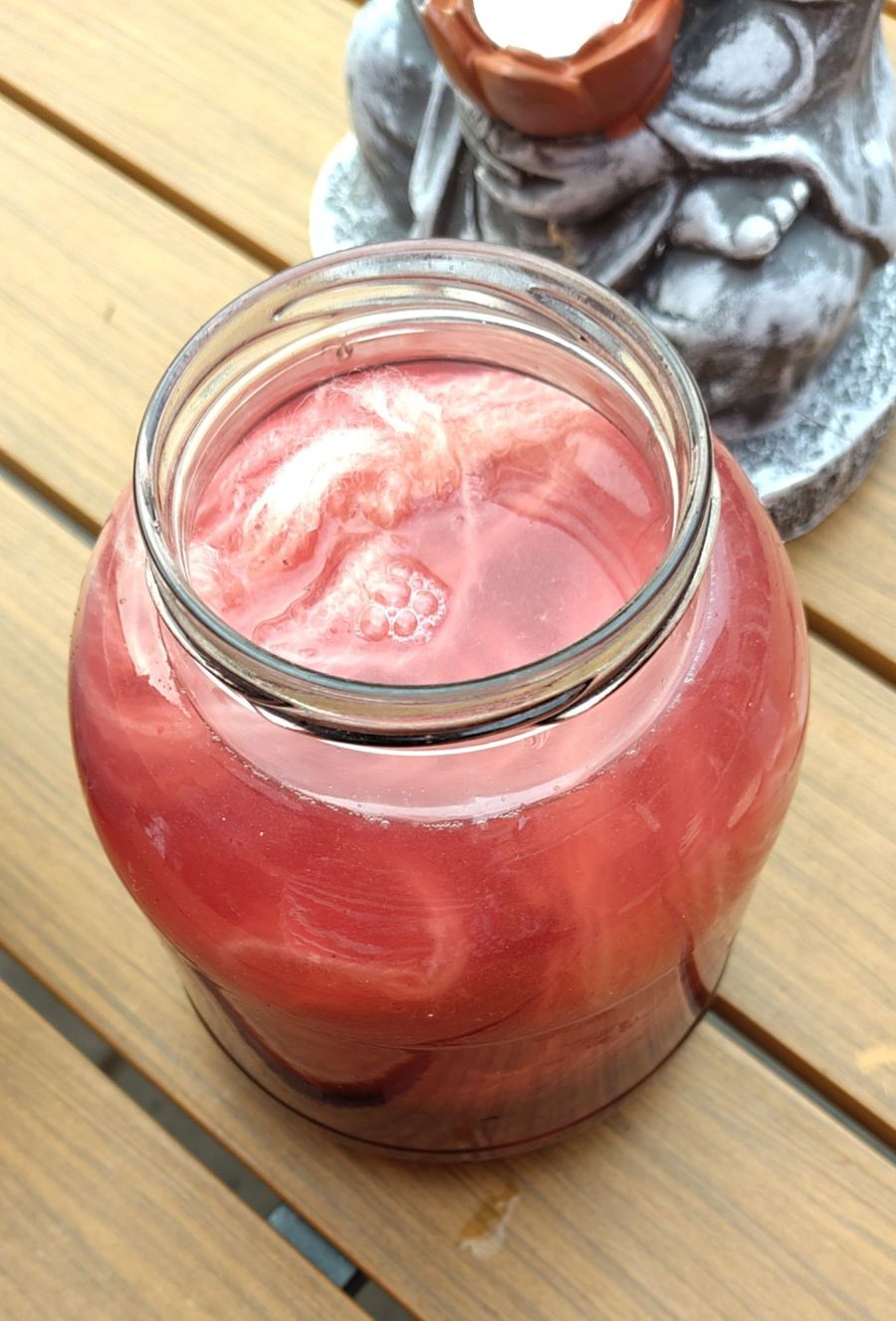
From the remains of the dyebath I got a pretty light turquoise.

The blue at the back, turquoise at the front

I have combed these colours as shown in this video.

Note that in this video I talk about ‘roving, but technically I am making ‘tops’. Roving is a similar narrow length of fibres drawn off a drum carder (usually, but can be hand carders) and has a slight twist added to keep the fibres together.
After combing, both colours have come out as
I hoped.

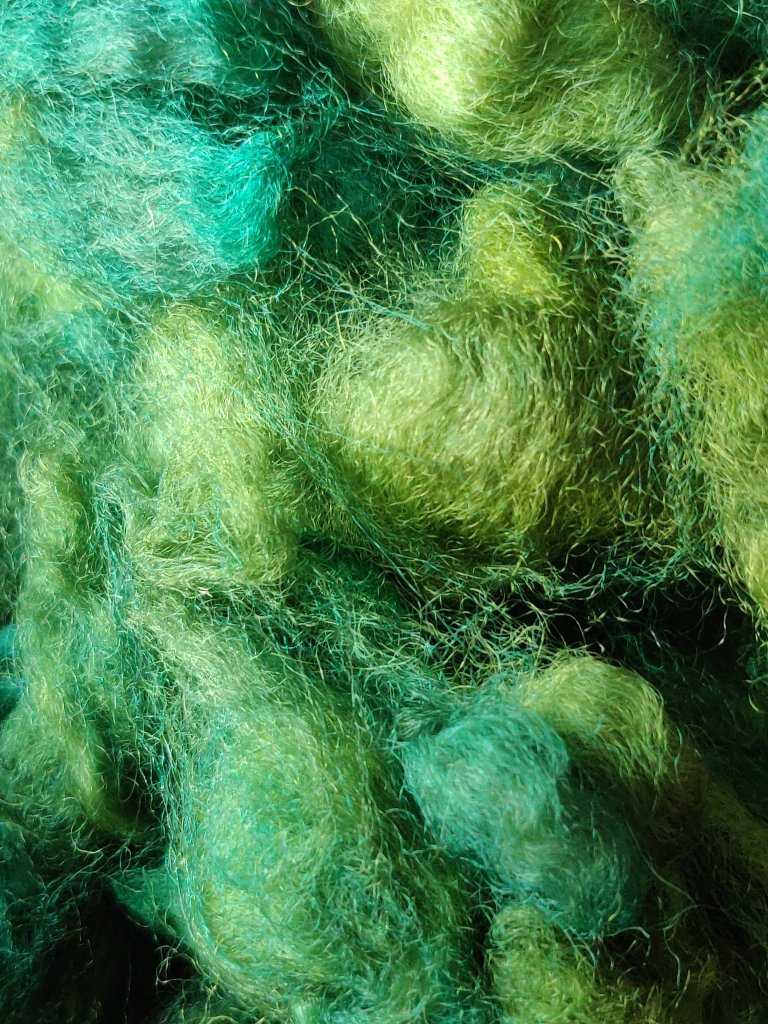
I also wanted an olive green, and have a recipe that worked perfectly on a Dorset fleece last year. I must have made a mistake somewhere, because I got a dark green instead. Maybe it is the different fleece, but I think I got my proportions wrong!

Pretty enough, but not olive green!

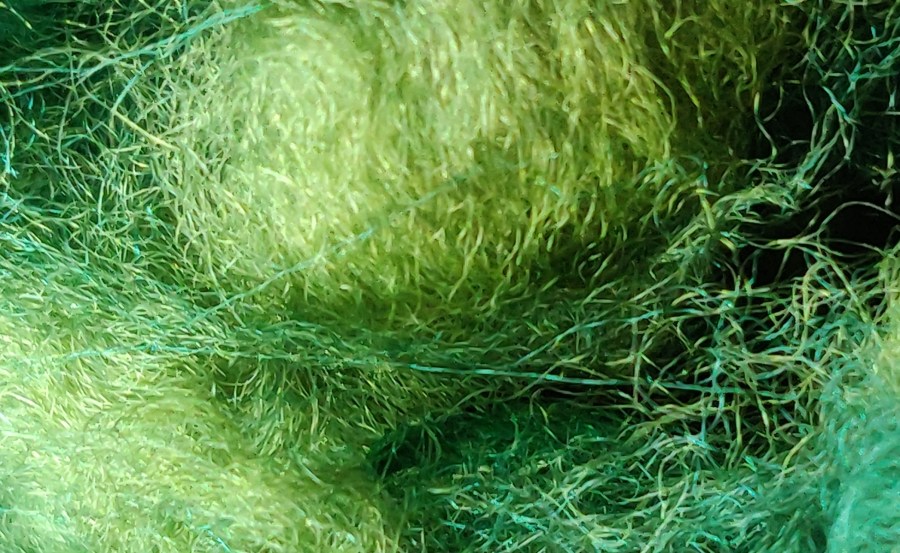
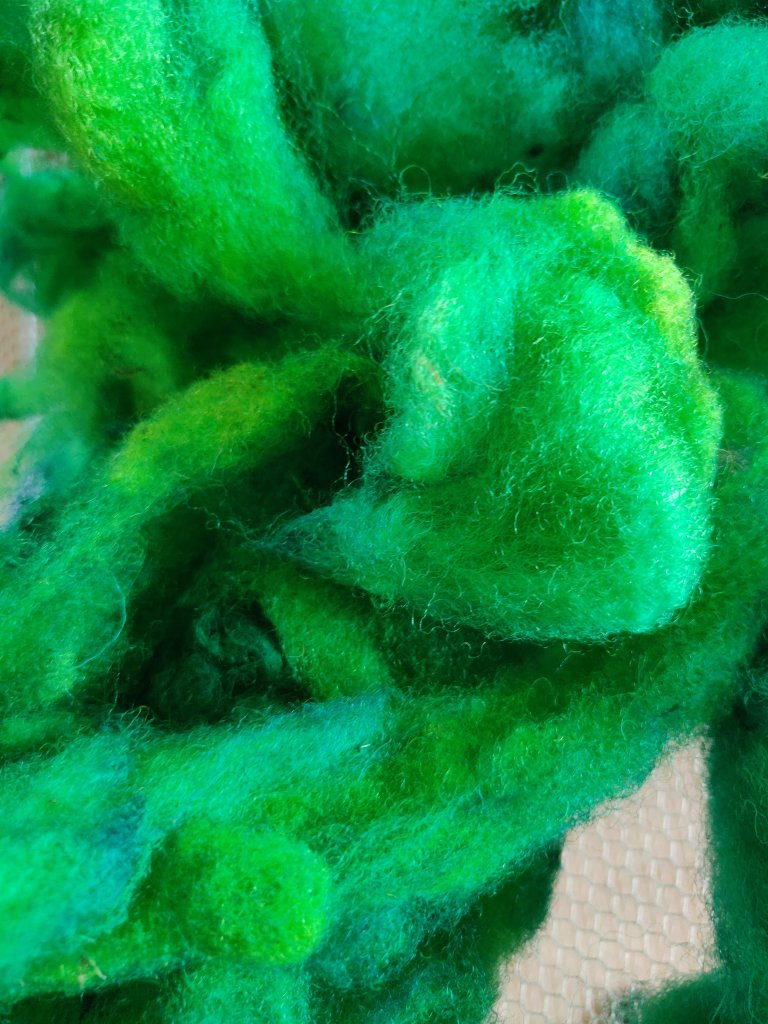
Once again they was some colour left in the bath, so in went 100g of Dorset fleece. OMG, the colour was bright! No idea what I did wrong, but it makes me blink.

The only compensation is that the fleece has not called at all due to using the slow cooker method.

That bright green total exhausted the dye – no surprise really! I will probably card this as the staples of the Dorset fleece are short and it is a soft fibre. Great for soft woollen spun yarn.

If you are interested in discovering the difference between different terms such as roving, tops etc, click here to read Abby Franquemont on Spin Off.

Spinning outdoors,(well almost) – on my Ashford Espinner

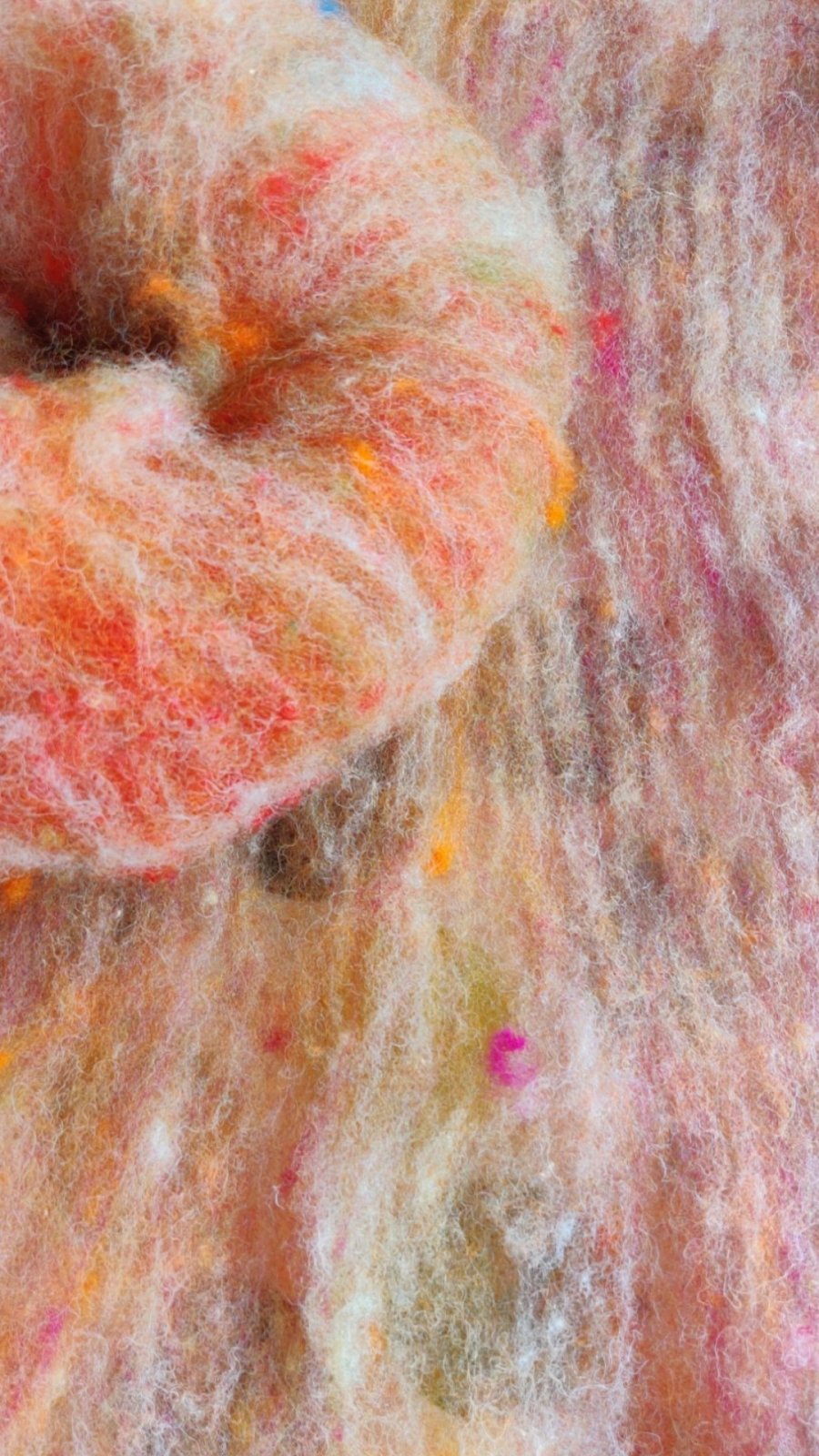
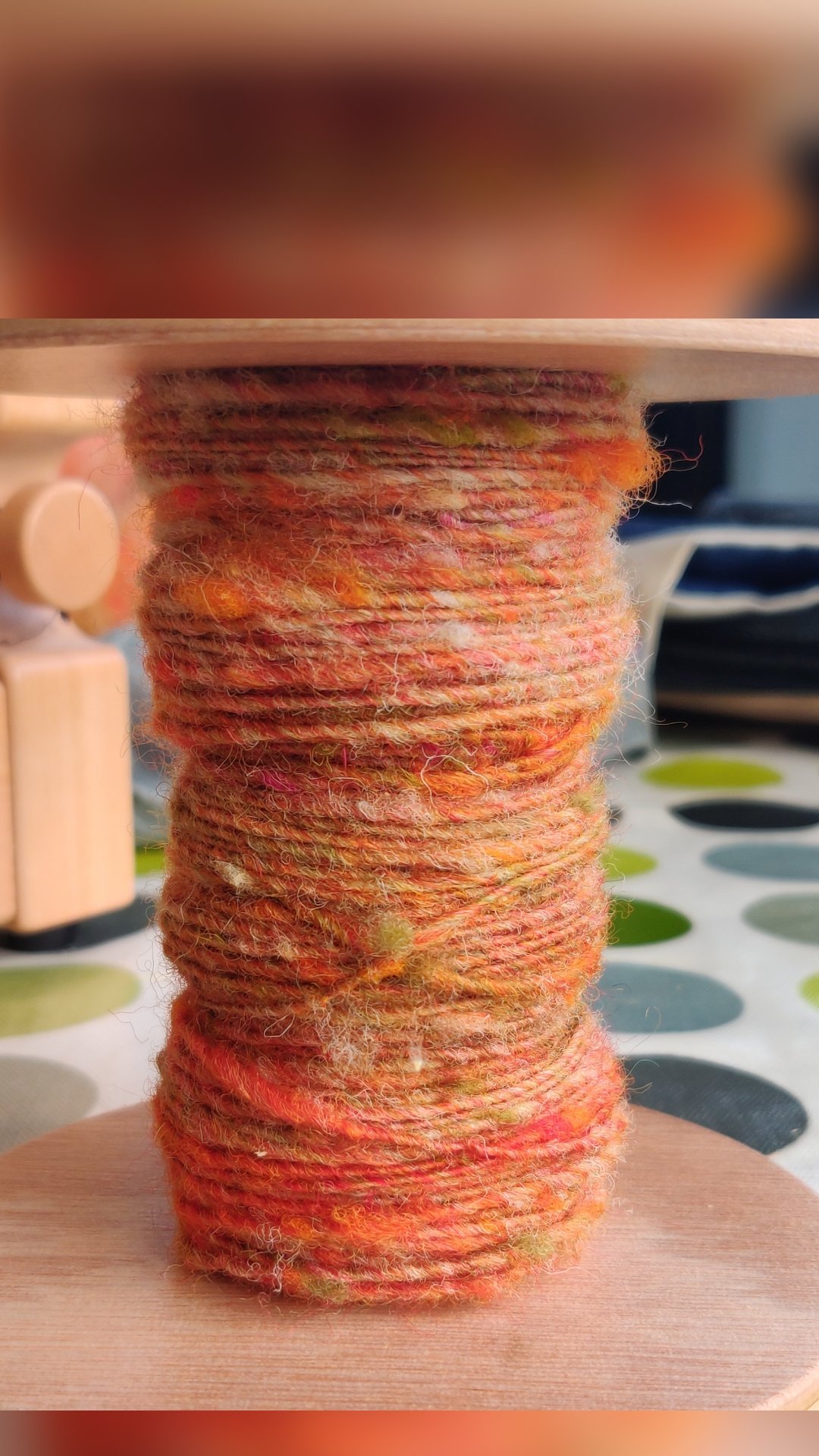
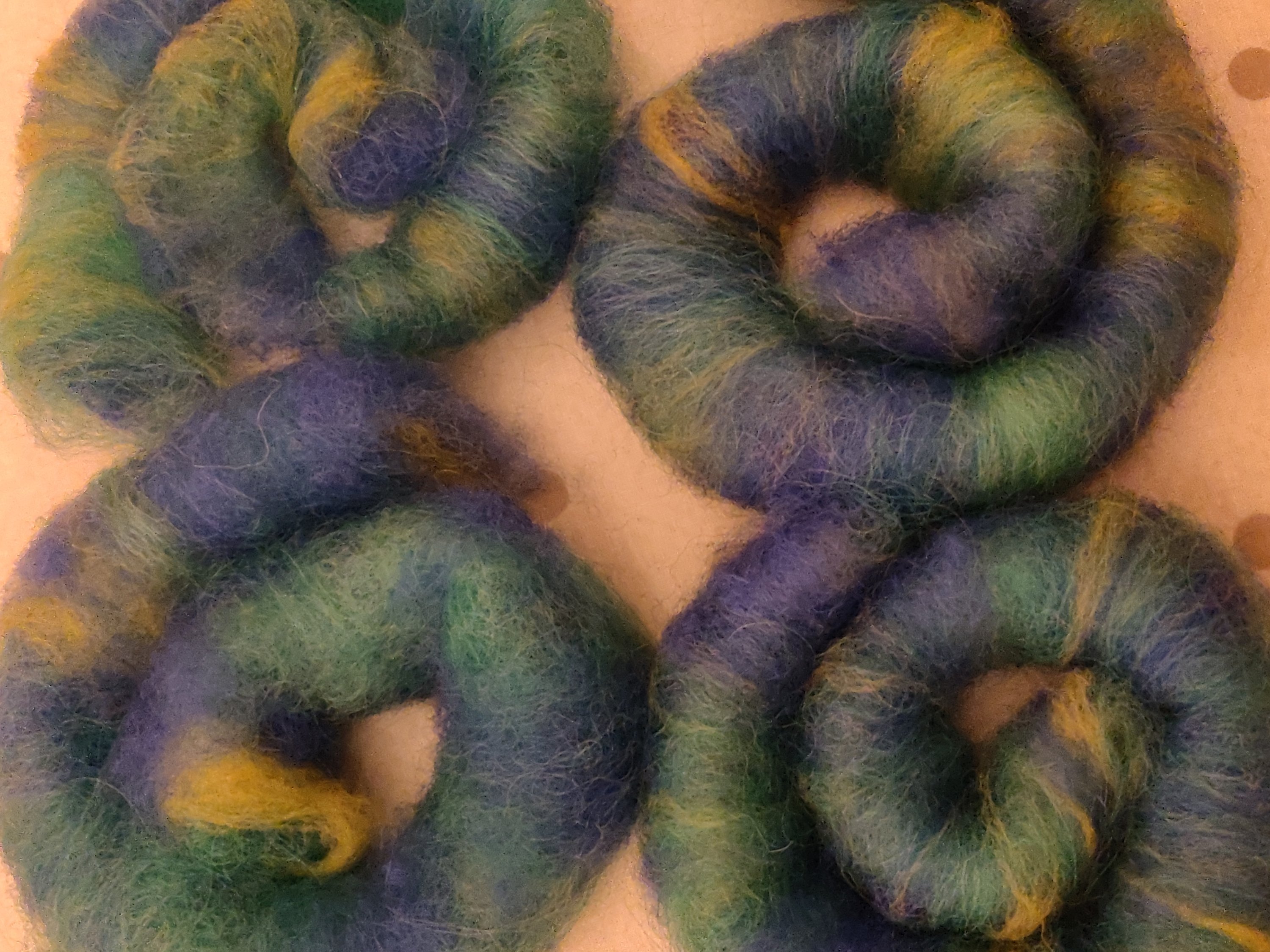
Its a mix of rain and sun this afternoon, and we are in our caravan so I decided to do some spinning on my Ashford Espinner. I’ve brought four Frankenstein batts I carded from a mixture of old cream Jacobs and two pink and orange poorly dyed batches of Dorset fleece. Plus a small amount of a pretty olive green. The poorly dyed had nepps from the partial felting, and I kept some of these when carding to add texture.

These were all carded on the electric from carder in stripes. I ended up with four largish batts which I split and spun as rolags.

Below you can see how I split the batts and I worked out the TPI of the singles on the espinner.

Author’s not: I originally intended to upload this as a ‘story’ post, but after the uploads gobbled up my mobile data and it still didn’t work properly I decided to make it a normal post.

I split the large batt horizontally into smaller sections.

The smaller sections were then hand-rolled into individual rolags. Because the batt had been double carded and divided between each carding, the colours ran from side to side. I like to work with small rolags, so halved each one, but worked with through the rolags in a zig zage way so that the ends met to keep consistency to the colour grading.

Spinning singles on my Ashford Espinner in the caravan awning
Achieving the desired TPI on an espinner is based on knowing the number of flyer rotations per minute, which is controlled by the speed dial.

For this singles I wanted around 8 TPI, and I had already measured my drafting of 2″ lengths at about 40 which equals me 80″ per minute. So I multiplied the TPI x draft length per minute

8 x 80 = 640.

So I set my speed dial to where I know I get about 640rpm. Its not exact, but neither is it on a wheel, but it gave a pretty good average of 8TPI.

I plan to ply this with a plain colour, otherwise the colours become overwhelmed by each other. Maybe a rust or cream, or even a black?

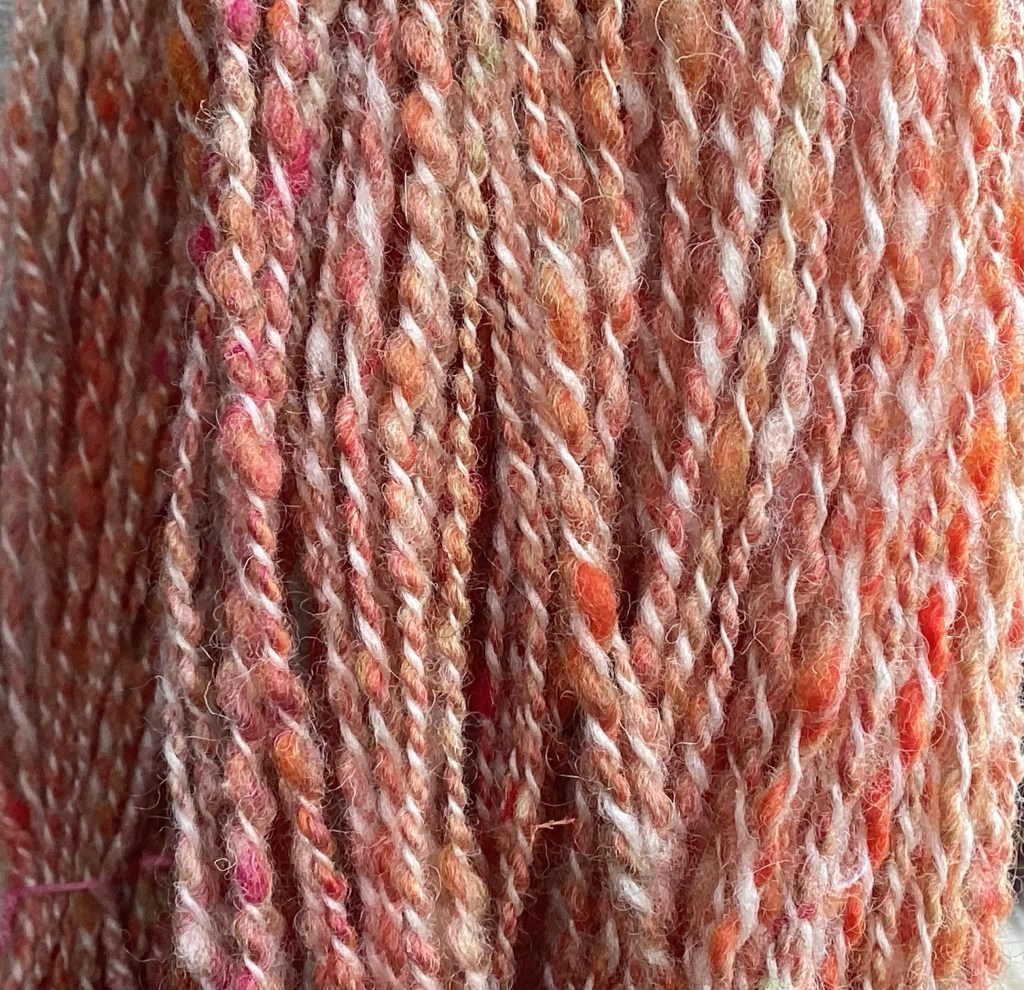
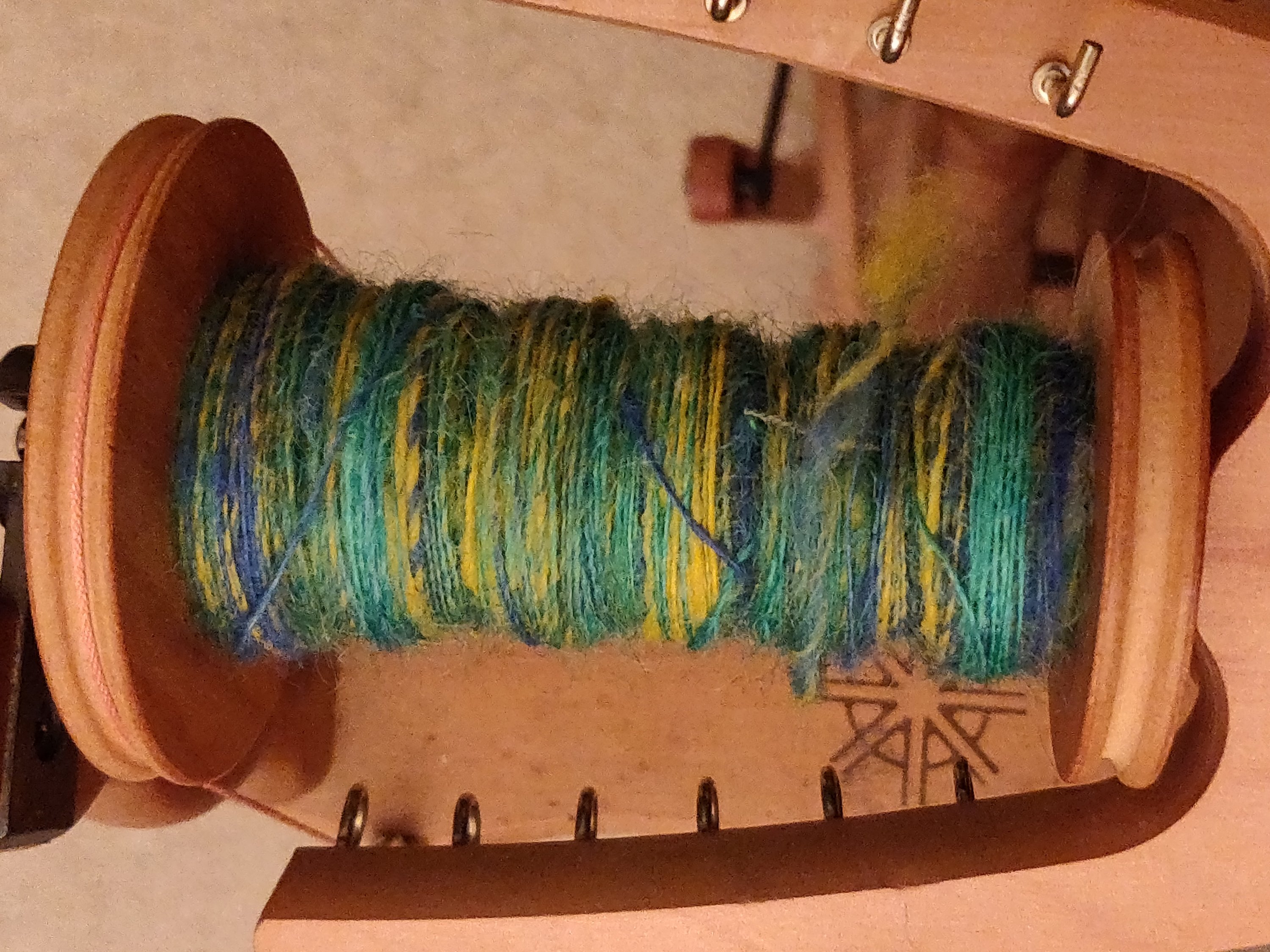
Update. I eventually plied it with a Dorset singles from my stash. Made 70g of very useable yarn or approximately 7 TPI, 8 WPI and 20 degree angle of twist.

The finished yarn.

Suint bath and lovely locks

I’ve been running a suint bath for washing fleeces this summer. Whilst the temperatures are reasonably good the suint has worked well. I’ve actually finished washing all the fleeces now so we’ll probably use the diluted suint bath as fertilizer.

Suint is explained it chemical terms by other people far better than me, but basically it means that the fleece soaks in a liquor composed of the sweat and dirt and developing microbes. The bath is built up from other fleeces. I use the dirtiest fleece first as that made the best base for the suint and have worked through 5 fleeces weighing about 1-2 kg each before going into the bath. I skirt and sort the fleece first because I don’t see the point in washing really dirty stuff that’s never going to come clean, but I equally try to preserve as much of the fleece as possible. I’ve got a bucket of the really unsalvageable stuff soaking so that I can use that liquid as a fertiliser as well.

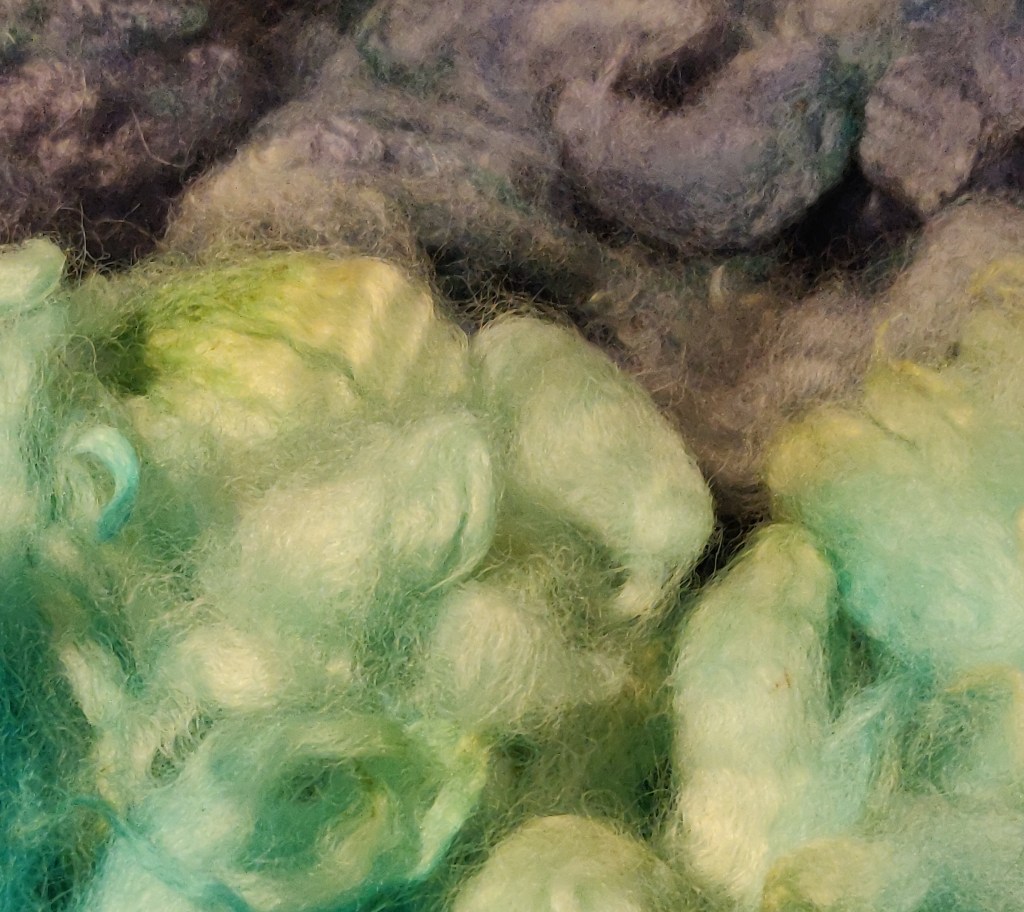
I didn’t take a photograph of the locks of this Scoth Mule fleece before the suint bath so can’t make a comparison but it has come up beautifully clean.

My process was as follows. I laid The fleece out on a mesh grid cleaned as much of the dirt out as I could by shaking it and then skirted it. Next I sorted it into qualities, picked out as much vegetable matter as I could. Each quality was put into several smallish mesh laundry bags and then into the suint in manageable quantities. The suint bath really stinks, which I think must be caused by ammonia, as it makes my eyes water!

I left the fleece in the suint for 5 to 7-days then using rubber gloves and, with a peg on my nose, I removed it and left it to drain. Once it was drained, I rinsed it in a couple of changes of clean, cold water. Because I didn’t want to put the stinky mess in spin dryer I swung and it around to remove excess water.

Next I washed the fleece in batches in hot water with Eurolana wool wash. This is good as it cleans well without loads of suds so rinses out easily. The smell was slowly fading, but even after two rinses it lingered.

A final spin and then the fleece was emptied out of the mesh bags into a two-tiered flat mesh dryer. This goes outside and by the time the fleeces are dry the smell has gone. Phew.

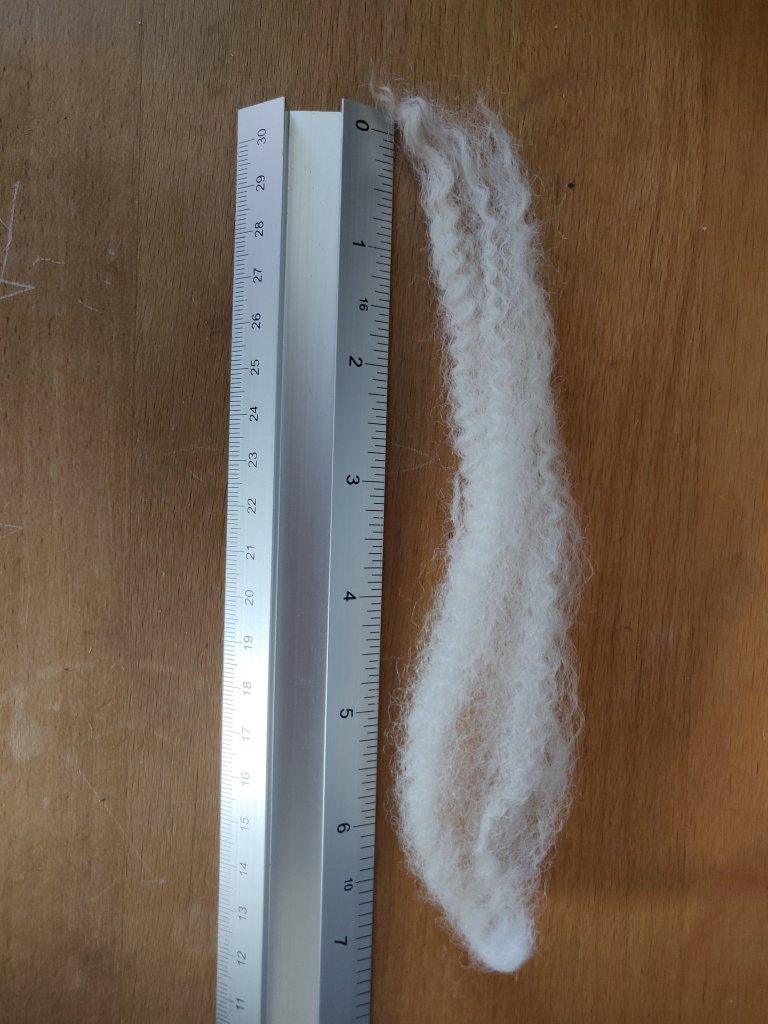
One of the clean and gorgeous locks

Distaffs

I recently read an article in SpinOff about distaffs and decided to try using one when spinning in a wheel, not just on a drop spindle. Luckily I had a handy drumstick lying around that I use to roll rolags off the blending board and it is just about the right length and weight. Its varnished surface also helps the wool slide off easily as I take it from the distaff.

At the moment I am spinning Ryeland fleece and have been preparing batts on the drum carder. I used to be able to take a roving off but since the carder was motorised its not so easy as it won’t rotate freely. So now I split the batts into narrower lengths to wind around the distaff. This seems to work OK and after a spray with spinning oil I find the fibre supply much easier to handle in this manner. Using my (new) large double drive wheel I get a good speed up and even doing short draft can spin a surprising amount, (for me anyway) at a sitting.

I will carry on with this and see how it works out. I may even get to attach the distaff to one of the wheel uprights which might be even more efficient.

Distaff held in my waistband, but sometimes under my arm or in my outside fingers.

Spinning a balanced yarn

The fleece I am working with is not brilliant, but I am using it to practise making a balanced, soft spun woollen yarn for knitting. To do this I read up on Mabel Ross’ method, and with a little tweaking to suit my preferred yarn handle, it worked!

Mabel Ross worked it out for us and it is quite logical really. You do need to know your wheel’s ratios, work consistently with your draft and count your treadling to start with, so if thats not your style, don’t go there.

I was aiming for around 2tpi in the finished yarn, but actually increased this a little after the first samples.

The equation is to do with spinning the singles at the tpi you want and then plying them to get the final tpi you want. Its really helpful to remember that if you spin your singles Z, when you ply them S you will be unwinding some of the single’s twist. (update- I have subsequently spun some yarn at a much higher tpi using a 1:10 whorl that has come out soft after a similarly balancing plying method. Maybe I’m getting it…)

I worked backwards from my 2tpi goal.

For example: I was working with a 1:6 whorl, therefore one revolution of my wheel would turn the bobbin 6 times. I was spinning ‘Z’ twist with a long draw of 12″.

First of all I needed to know how many treadles to the 12″ draft would give me the tpi I required. Yes I know I’ve muddled metric and imperial, but it still works.

Number of treadles = (required tpi x planned draft length)/ divided by wheel ratio (which i know will be 6)

tpi of my singles = tpi of my plied yarn divided by number of plies

II reckoned that if I want 2tpi in the plied yarn, I needed to spin the singles at around 4tpi.

The equation I worked with using MR method to find out how many treadles I needed to a set draft length was:

tpi = (wheel ratio x treadles)/divided by draft length.

Go back to the earlier question of how many treadles?

Number of treadles = (required tpi x planned draft length)/ divided by wheel ratio (which i know will be 6)

which came out as

tpi (4) x draft (12″) = 48/6 = 8.

So 8 treadles using the 1:6 whorl to a 12′ draft should give me 4tpi. in my singles…

Well I wrote this post a while ago, and since then have done some spinning. It was not successful, way to soft and loose spun for my taste, but a balanced yarn – no twisting and it knits without bias.

I upped singles tpi a little and also the ply by a smaller amount and the yarn improved. and stayed balanced! A lesson learned.