Acid dyeing handspun remainders

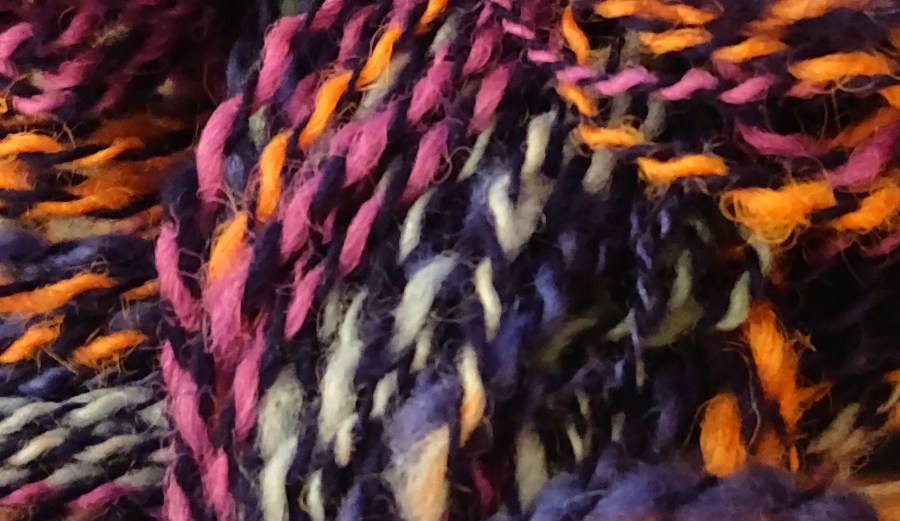
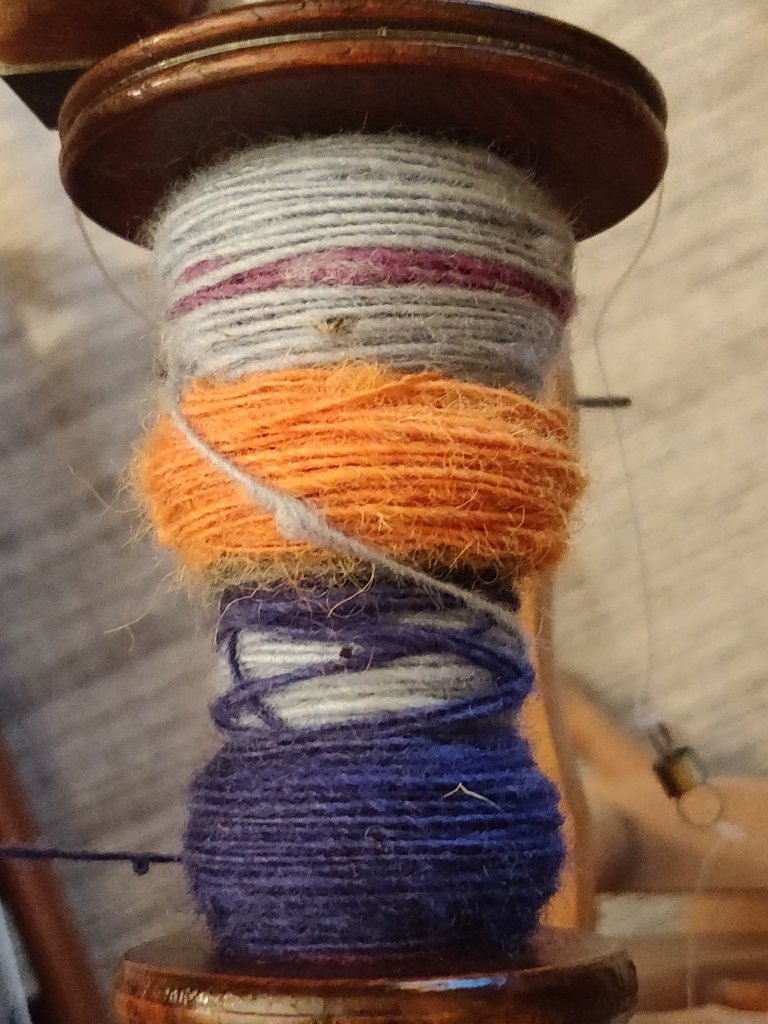
A recent stock-take of the various bits of hand-spun yarn sitting on bobbins I now want to use for other projects inspired me to ply them all up and dye them into interesting yarns. Only small quantites of most, but great for small items.

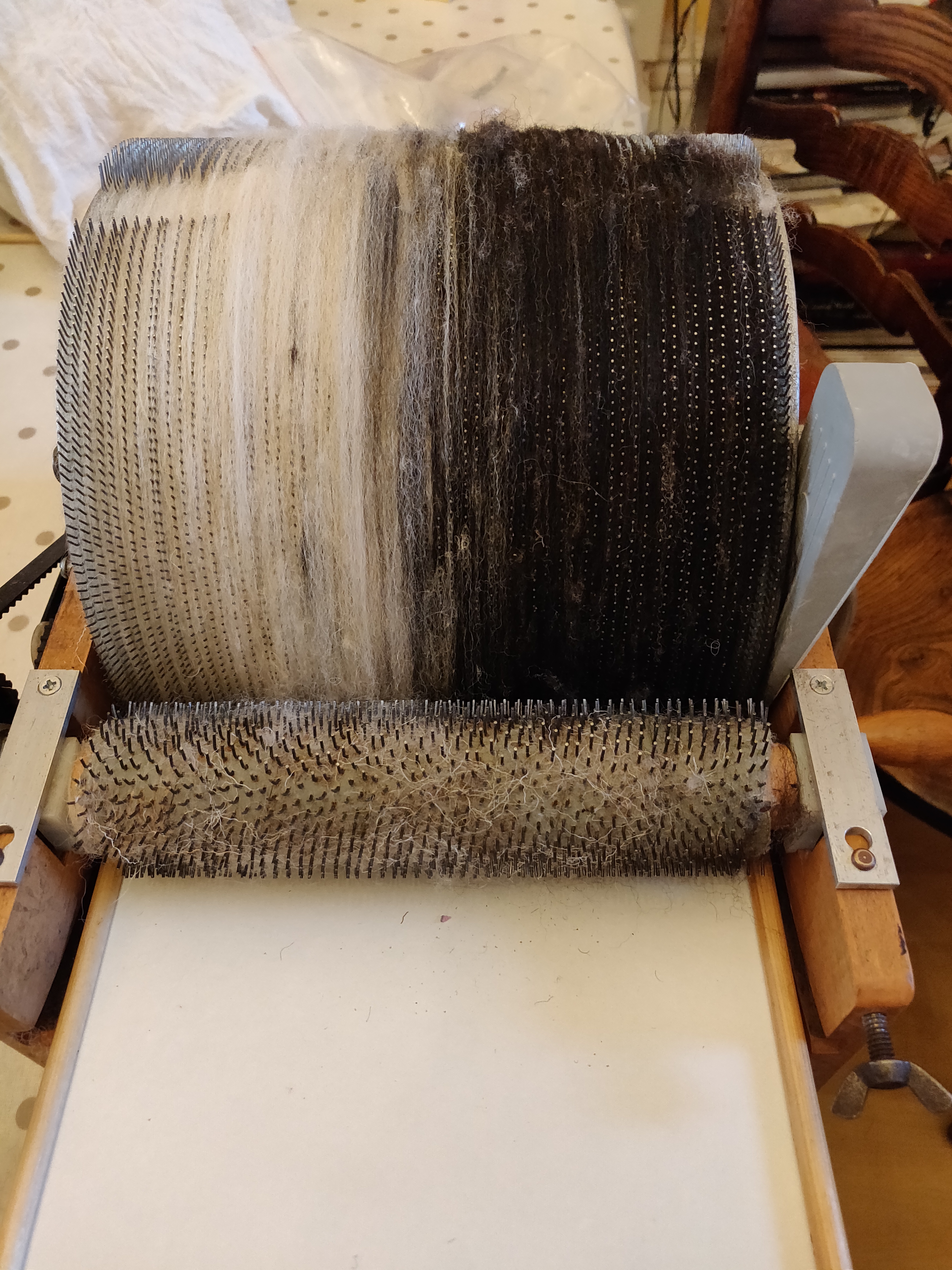
One was a test of blending Tussah silk with Lleyn fleece, and I plied this with some nice soft spun Dorset singles. The silk added a pleasant dry handle to the plied yarn, and the noils added texture. There was more Dorset singles left, so I plied these together as a separate yarns. Next I plied two ends of Suffolk together, they were somewhat different thicknesses and twists, so made a slightly uneven, spiralled yarn. Finally I worked with a lovely colour changing singles, spun from a blend of Alpaca and Texel (cream) and Black Alpaca and Dark Grey (almost black) Suffolk fleece. The Alpaca blends had been carded in stripes on the drum carder so that when it was spun off the batt it alternated in dark and then light lengths. I plied this with a pale grey Suffolk single that I had acquired from a farm in Hereford last summer.

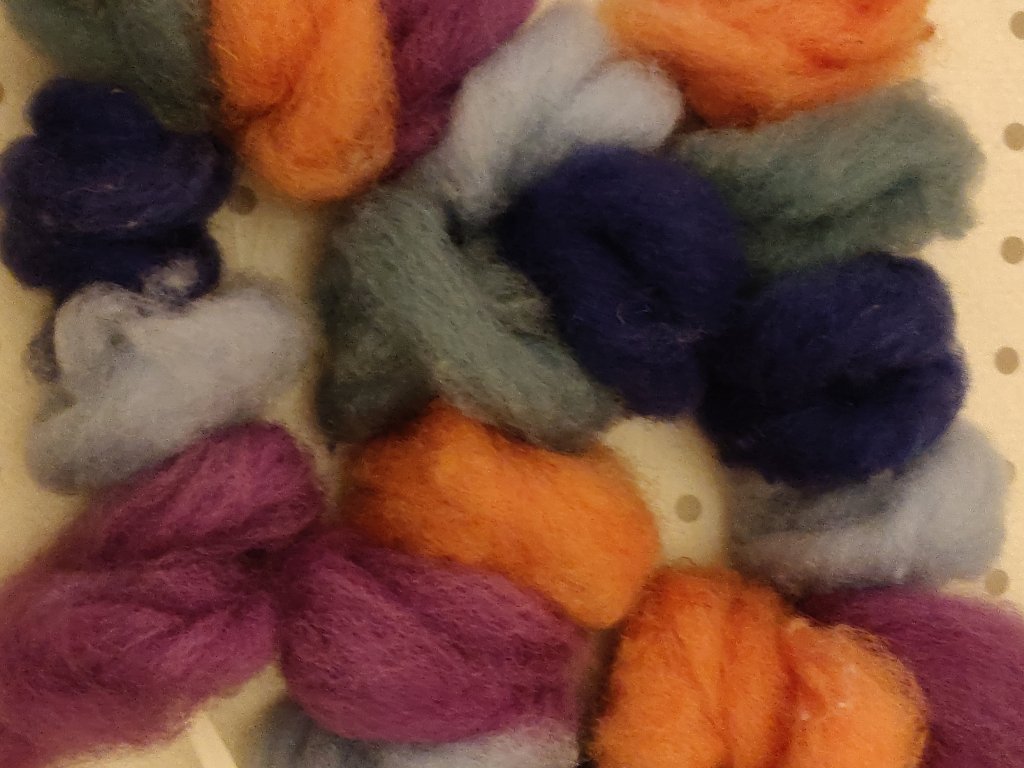
All these came out as interesting yarns in their own right, but I wanted to add some COLOUR. So I got out the dye kettle and the acid dyes. After some thought I decided to aim for a Deep Red and a Blue-Violet. I’ve been trying to be more technical about my dye mixing, and so with the aid of an Excel spreadsheet I have devised, I carefully mixed the solutions, but the Blue-Violet still emerged as Violet.

There was 66g of the Dorset and Suffolk/Dorset, and they went into the Red dyebath, whilst the 45g of Lleyn/Tussah/Dorset went into the Blue-Violet bath and they gently cooked away for an hour or so.

Part of my improved technique is to use a jam thermometer to keep the bath below 90C, preferably just above 89C to prevent felting. I also walk away so I am not tempted to STIR IT! The only stir I am allowed is after teh bath gets to temperature, when I gently remove the yarns, add the vinegar and stir it in. I read that doing this allows the different colours in the mix to be absorbed into the yarn (or fibre), before the acid does its work to set the dye to the fibres. Both these techniques seem to work well for me as I am getting less felting and more even, accurate colours (apart from the Blue Violet of course).

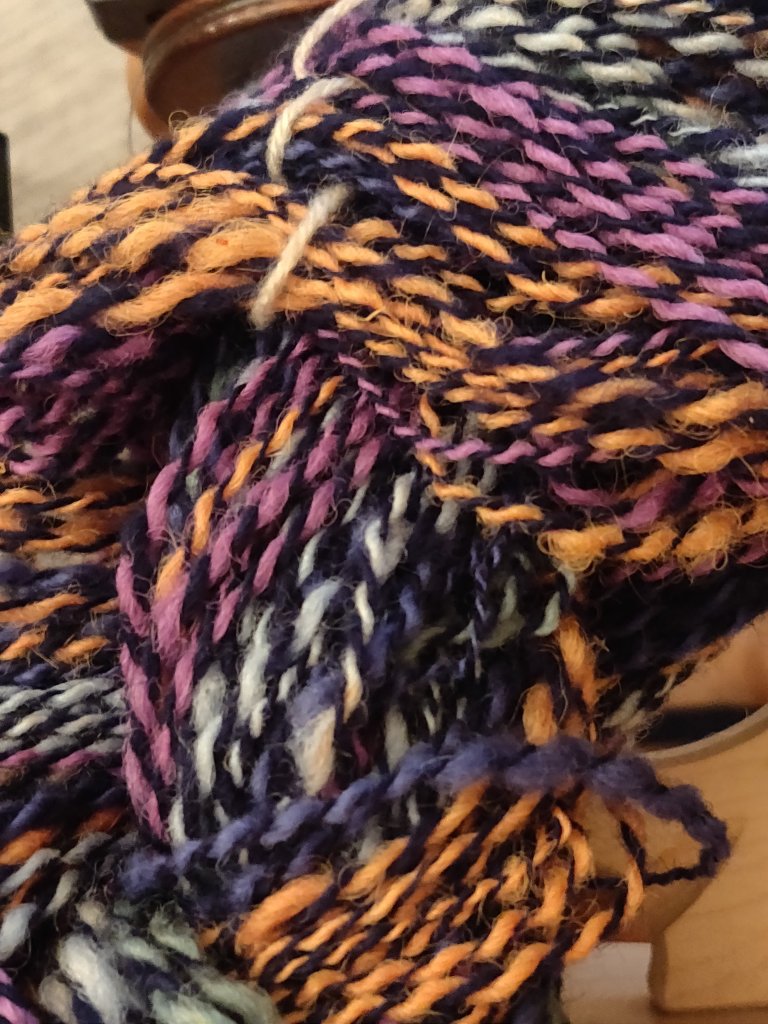
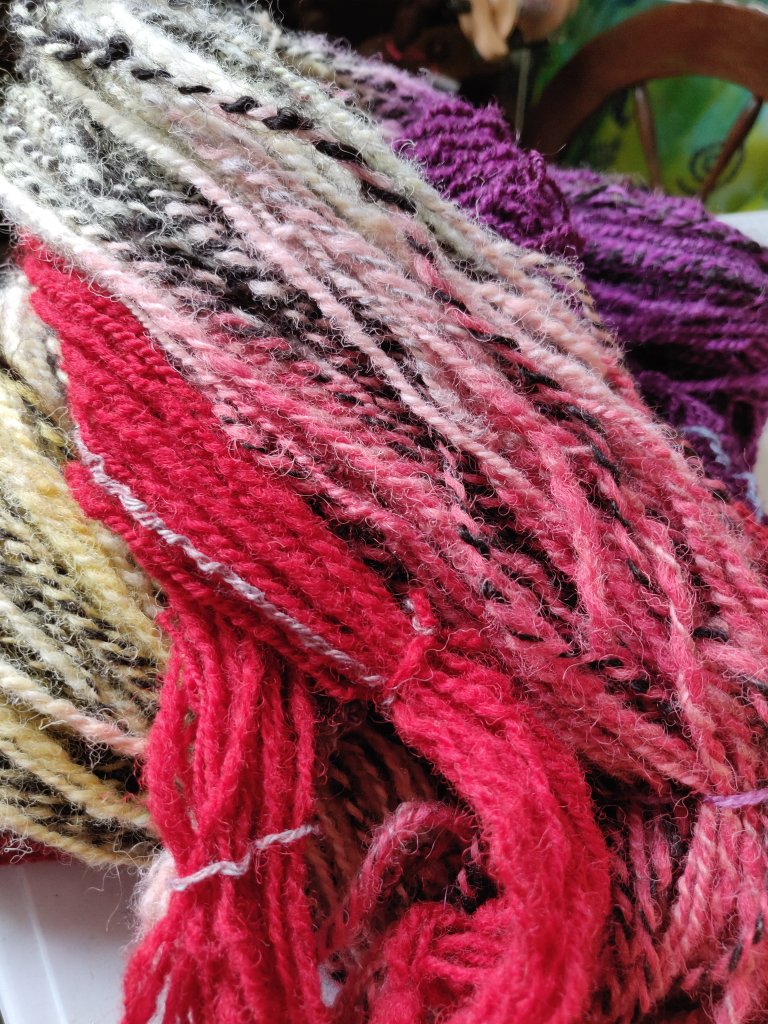
The dye baths were not exhausted – I had worked with a 2% colour to fibre weight ratio for medium depth of colour – so the lovely tweed ply was dip dyed into both pots, leaving mid-sections of the natural tweed plies undyed. I felt this needed a third colour to lift the others, so a very small section between each of the main colours was dipped into a weak yellow dye.

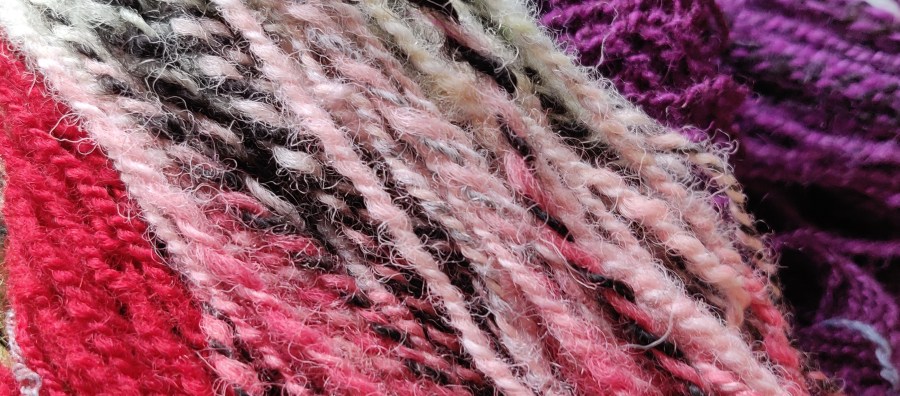
Dark red in front, dip dyed tweed in the middle, blue-violet at the back. You can just see the texural Tusssah silk blended purple yarn.

I’m really pleased with the products of the session – carried out whilst I watched the new TV programme ‘Roadkill’. Unfortunately I was a bit stupid, or maybe it was the effect of the programme I was watching, and whilst mixing a new batch of yellow stock solution I mindlessly poured boiling water onto the dye powder in a plastic jar. Of course the jar melted, buckled sideways and then toppled to the floor before I could catch it. Waves of strong yellow dye flooded the kitchen floor (I am exaggerating, it was only 150ml or so, it just felt like waves). It took five washes to clean the floor so that no-one would walk yellow onto the beige carpets, and my socks will never be the same again! Plus I had to start again with the stock solution. I did debate mopping the floor with some yarn, but decided that might be too hit-and-miss even for me…

In fact this morning, whilst hiding from the dog, (don’t ask why) I noticed a snail-trail of yellow dye snaking down the side of the kitchen cabinet – how did I miss that one?

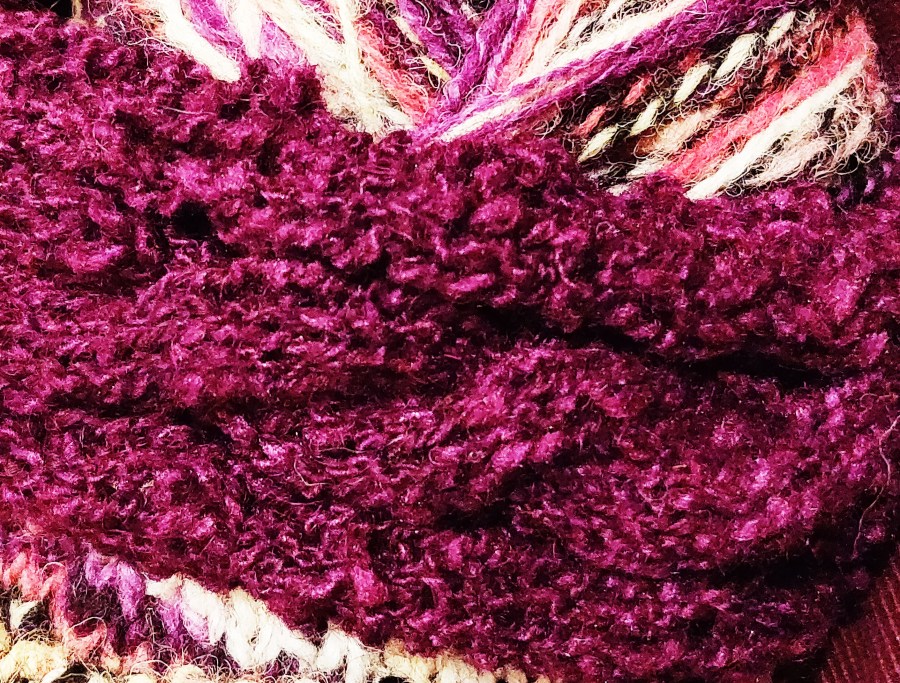
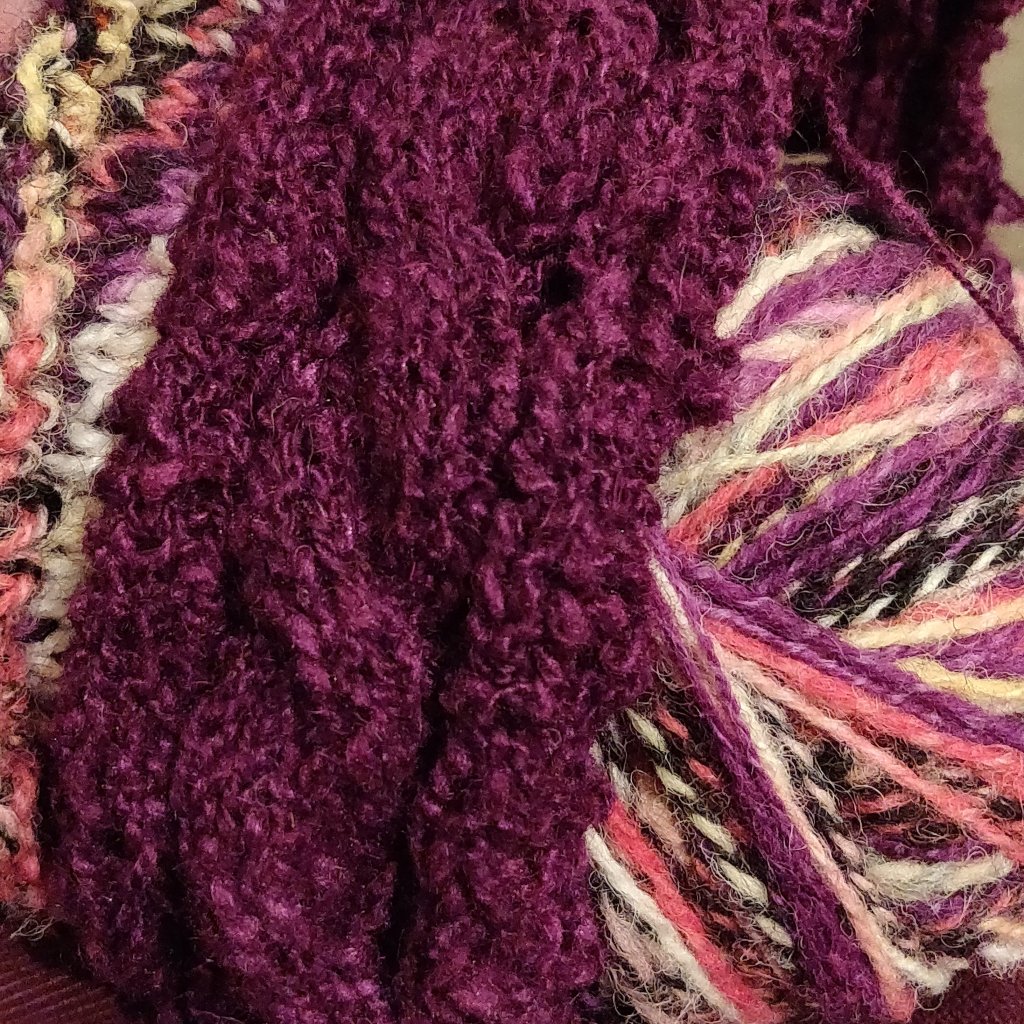
What am I going to use the yarns for? I think a warm hat to cheer me up with its bright colours during this depressing winter-to-come is on the cards. I might knit it by hand or I maybe use my Brother KH260 chunky machine, and hope to report back on here when its finished.

Footnote:

Leaving the dye overnight in the pots – I was tired after all that floor-mpopping – the next morning I decided to finally extract the last from each one. So 50g of Dorset fleece went into each, and I got a rich coral pink, and surprisingly bright lilac for my troubles. It was so rewarding to empty clear water out of the dye baths afterwards.

Waste-not-want-not is a good motto.

Ancient fleece – an experiment

Whilst digging in our loft today to make space for the plumber to run new pipes, I found a fleece!

I couldn’t believe what I saw, because I was sure I remembered throwing it away years ago, and I mean years…probably the best part of twenty years! I can say that with quite a lot of certainty because it was given to my Mother when she wanted to learn to spin on her Westbury wheel. She had bought it in the 1970s I think, in Glastonbury, as a kit. My Father made it up for her and she stained it a dark walnut colour. But she didn’t have any fleece – or to be honest the faintest idea how to spin. A friend of a friend found her two Jacob fleeces from a local shepherd in Somerset, but I don’t believe she ever got any yarn off the wheel.

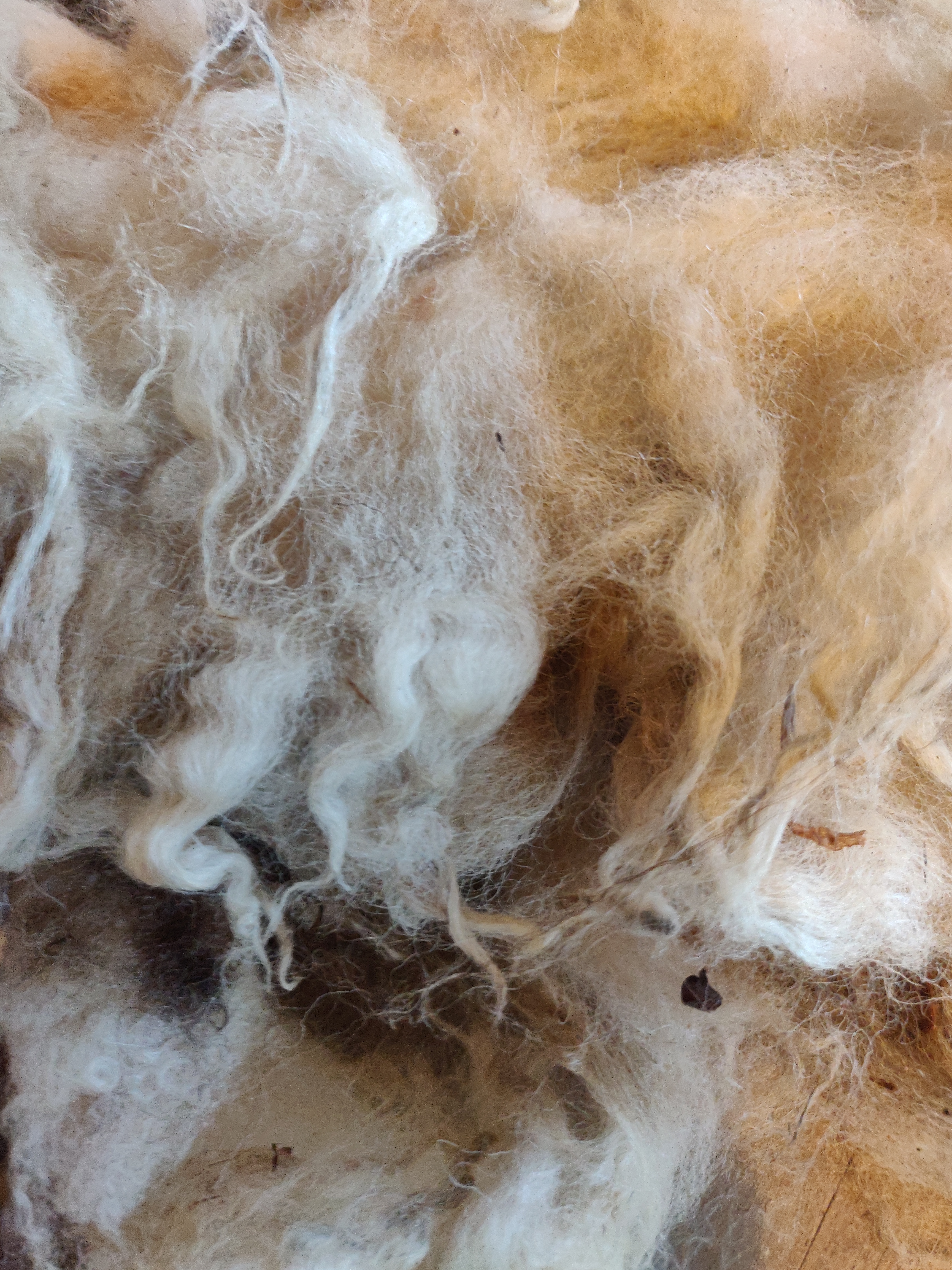
Not bad for a 20 year old fleece

I ‘inherited’ the wheel (and the fleece) when I bought a flat and had space to house it. Once again it sat unused, and the fleece sat lonely and unloved as well. When I had children, the wheel became the object of their attention. They delighted in treadling it and bits fell off.

After my Mother died I took the drastic decision to sell it to save it, if you see what I mean. I so regret that now, I wish I’d put it in the loft, which is somehow where this fleece ended up – I must have chucked the other one, or maybe gave it with the wheel.

Since then, I have acquired an Ashford Traveller and a Traditional, but I would love to have another Westbury for sentimental reasons. So if anyone is looking to sell a Westbury wheel do get in touch with me first.

So today the fleece saw the light of day after many years. I thought it would be absolutely ruined, if not full of moth, but no, it is fine. I don’t think it was very greasy to start with, and there isn’t much VM. I’m in the middle of a test wash of a part of it to see what happens. I can’t believe it has survived, but I’ve given parts a good tug and there isn’t any breakage, and very little discolouration. It is a beautiful chocolate brown and cream, so I plan to separate the colours and spin it as a tweed-effect, providing all goes well.

It will lovely if I can spin it; a sort of homage to my Mum who never quite got it together to spin it herself, much as she would have loved to. If I could spin it on a Westbury, my homage would be complete!

Photoshoot in the rain

Today was the deadline for an Infinity Scarf pattern that I had been commissoned to write at short notice, you know the sort of thing that happens!

Anyway, as I’d only finished knitting it last night we had to do the photoshoot today, even though it was raining and grey. So we set off with a collection of coloured umberellas, plastic bags for camera stuff and my nifty, home made, shower-cap camera raincover! Luckily I had been clearing out the bathroom cupboard yesterday and unearthed a bundle of those freebie ones from hotels. I knew they would be useful some day. The other thing they are great for is proving bread, but I digress…

Finding a model at short notice was not easy, but my lovely friend Jo came up trumps, and offered to stand in the rain before shooting off to see her Mum.

It was fun anyway, because I love photoshoots; seeing your knit design come to life on a person is so rewarding.

As always there were loads and loads of shots to sift through, but it was well worth braving the rain for such a nice photo.

I will be releasing the pattern on this website once it has been published later on in the Autumn so do drop back if you would like to knit the scarf. There will be a page for the Infinity Scarf with the pattern, hints and tips on working the pattern, and tutorials for the various knitting techniques used. Techniques used in the pattern, including a great stretchy cast on, are also featured in my popular knitting ‘bible’, The Knitting Book.

…and here is the final image I selected, and I’m pretty pleased with the result!

Thanks once again to Jo for her stoicism and humour.

Carding raw fleece – another post!

I have been doing quite a bit of drum carding of raw fleece I have gathered over the summer, and whilst doing this I recorded a couple of videos of the process.

This is the first one; picking and running the fibre through the carder the first time

I always put the batt back through the drum carder. I find this second carding makes a much nicer fibre for spinning. The second video covers doffing the fibre, splitting it and putting it back through. After this you can either take the batt off, as shown in the video below, or use a diz to take it off in a continuous roving. To do this, only separate one end of the batt (to the width of the diz), and pull the fibre off in a spiral as the drum reverses around.

The wool is from a Dorset sheep, and I have hand-dyed it in acid dye to this rather pretty duck-egg blue.

The second video shows doffing the fibre and putting it back through the carder after splitting and drafting to thin it out.

I haven’t spun this fibre into any meaningful amount of yarn as yet. That is a pleasure I am saving for later.

In the video below you can see the fibre being picked prior to the carding.

Aplologies for the portrait aspect filming of this video!
This was the fleece just after dyeing

Rose petal dye anyone?

Update:

The weather has turned so I have taken both sample skeins out of the dye. The results are shown below.

Over ripe strawberries on hand spun Dorset fibre on the left and dark red rose petals on handspun Shetland fibre the right.

Original post

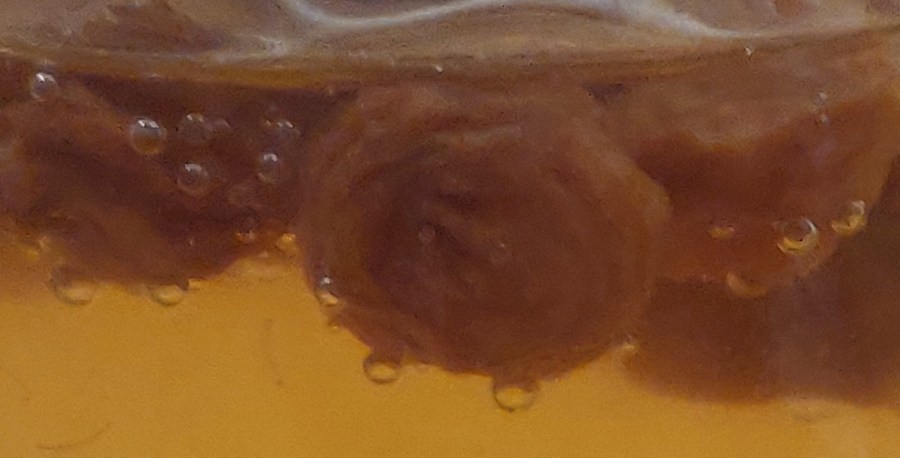
My lovely husband gave me roses a week ago, but sadly they have drooped and begun to drop petals. I’ve decided to use the petals for dyeing; they were a lovely dark red and I hope I’ll get at least a pale pinky-brown from them.

The main thing I have learned is not to overheat petals – or any red natural dyes for that matter – as that seems to make them brown.

I tore up the petals and covered them in cold water, then added a little salt and white vinegar to the pot before gently heating it to below a simmer. I left the petals overnight to steep and strained the liquid off this morning. After that I put the drained petals into a muslin bag, returned this to the pan and added a skein of wet mordanted yarn to the cold liquid before reheating to a mid range temperature.

Hand spun Shetland yarn in the pan – hand spun never seems to take the dye as well as commercially spun yarn, but its more fun to try with my own yarn.

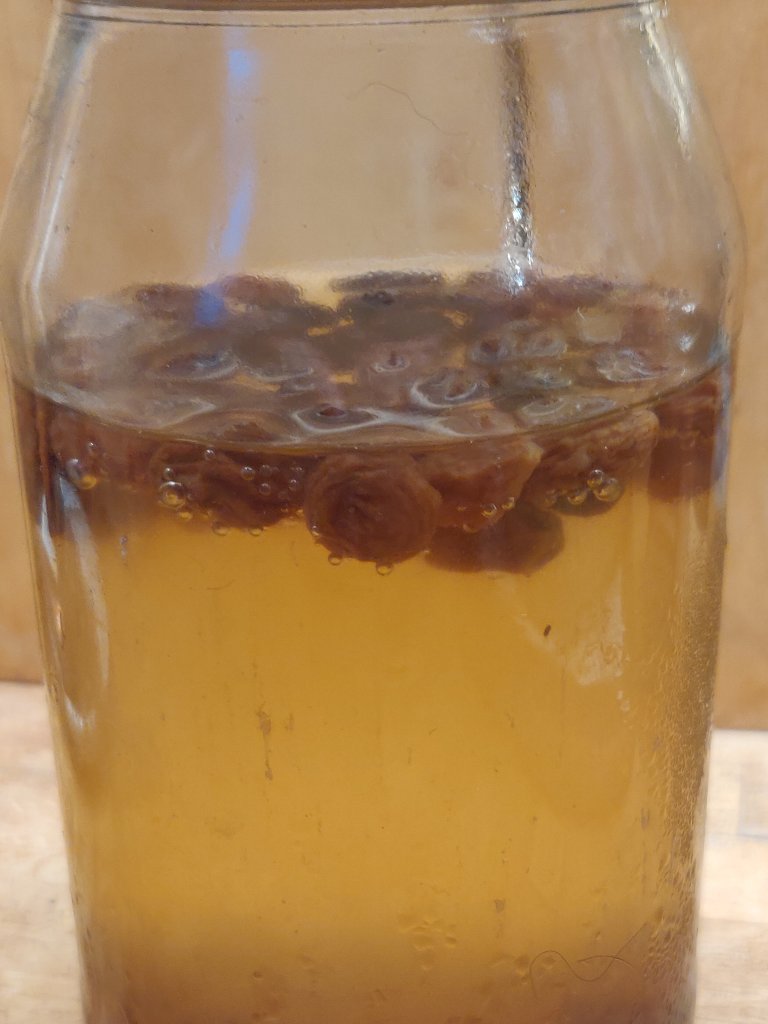
After heating the dye I poured the contents of the pan into a large lidded jar and have left it to steep for as long as it needs…

The dye looks jewel-like in the glass jar, but I bet I get a brown yarn!

I’ve also put some over-ripe strawberries into a solar-dyeing jar next to the rose petals.

The dye smells wonderful!

No sheep died for this rug.. (plus an update of new photos)

I made my first non-destructive, felted ‘sheepskin’ rug yesterday. Why I chose the hottest day of the year is beyond me. Well – it was meant to be a ‘sorting wool in the shade’ time, but a cotted mid-section of a pretty black Shetland fleece inspired me to take control and made something useful from it.

Floor rug or sofa rug, I can’t decide.

After cleaning as much VM as I could stomach from it – yes I know, I will live with the little bits forever now – I started to make the rug. I didn’t take any photos until it was done because it was a truly filthy job and I didn’t want to touch anything and needed a shower afterwards.

Update 13th August 2020

I made another one from a bi-coloured Shetland fleece and took a couple of photos,shown below

I laid the portion of fleece face down on the garden table and sewed together any holes – using wool yarn. I shaped it using this as well, so drew bits together and firmed up the edges.

After lifting the fleece I put an old net curtain on the table and then a layer of of bubble wrap, ( I have to fight to keep a stock of this as my husband throws it out when parcels arrive). On top of this I laid the firmed up fleece face down.

Next I laid layers from my own carded batts of black Shetland across the back. This wasn’t from the same fleece, but from last years equivalent. I did a quick and dirty carding session to get the batts, once through and no picking of bits etc. I criss crossed these to make a firmer backing. Over these I laid a thin layer from a batt of Blue Faced Leicester I had in my store cupboard.

Laying on the backing fibre

Over this I laid another old net curtain, and dribbled boiling water over it all, and some washing up liquid. Then I tightly rolled it around a pool noodle and rolled it back and forth lots of times – for a minute at least. This was the filthy part, as the dirt came out in spurts. Yuck.

Ready to roll
I find rolling the package really difficult as I’ve not got a large enough hard surface in the garden, so the table had to do. It would be a lot easier on decking or concrete.

I opened it all up, checked the felting and added more hot water and rubbed and kneaded any suspect places with a bar of soap to get them felting. The re-rolled for another minute, and repeated it all again.

Of course it still needed washing, which was another filthy job, but finally it was all done!

Drying it took a day in the sunshine. Now its on the sofa, yipee.

Spinning outdoors

Is it risque? It’s certainly liberating. Given the restrictions on meeting up indoors, going to the park seemed the the perfect way to meet up when we can’t go to our normal groups.

This is the second one I’ve organised and it was lovely way to spend a Friday afternoon. I took my portable Louet wheel and others brought wheels, drop spindles, knitting and crochet. And a picnic lunch!

Shade was mandatory as it was so hot, and we found a generous tree that have us a shady space big enough for plenty of social distancing.

I’m taking the photo…
So someone kindly took one of me

I took along a sack of stove-top rainbow dyed fleece as described on my Dyeing Wool page. It’s a little coarse, but in nicely formed locks, so I am flick carding it and spinning it quite thick for use in a rug, (maybe)?