Rub-a-dub-a-fleece

Washing (or scouring) raw fleece is not a quick job, I think that’s something all can agree on. It’s also surprisingly contentious. Everyone wants to tell to their method, and you gradually learn that different fleece require different scouring methods, so everyone is probably right!

So I’m going to write about my experience today.

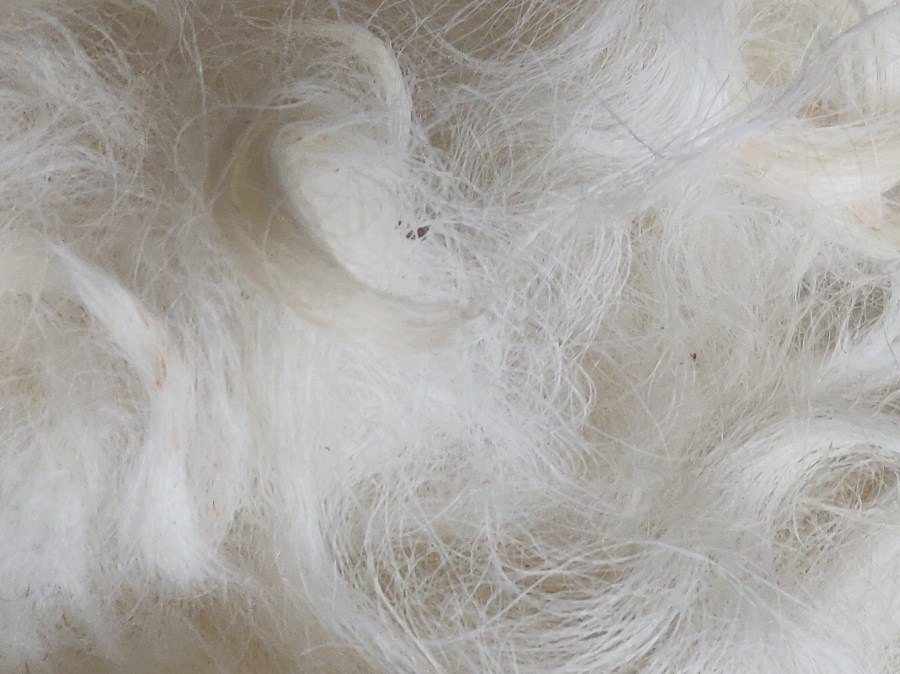
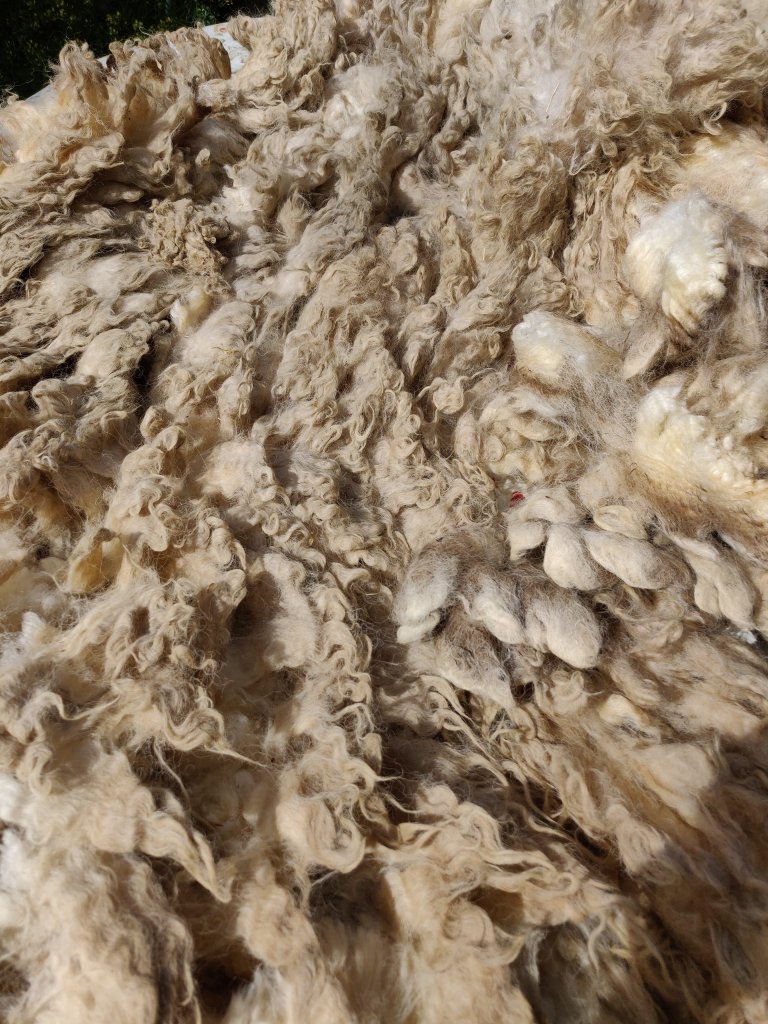
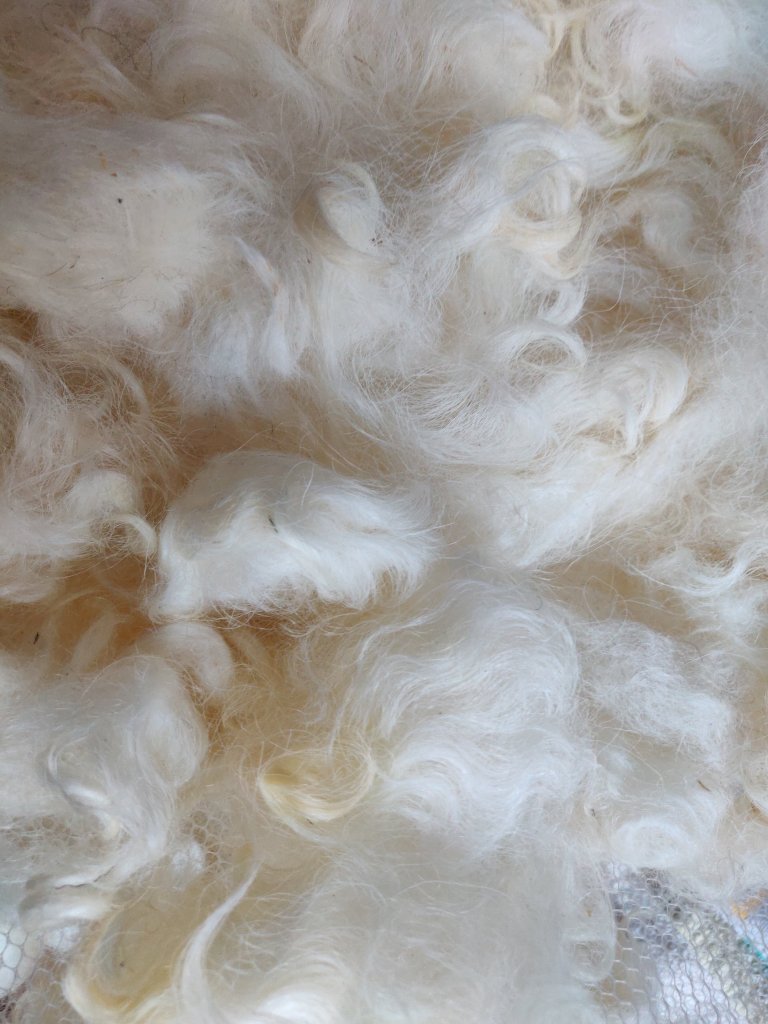
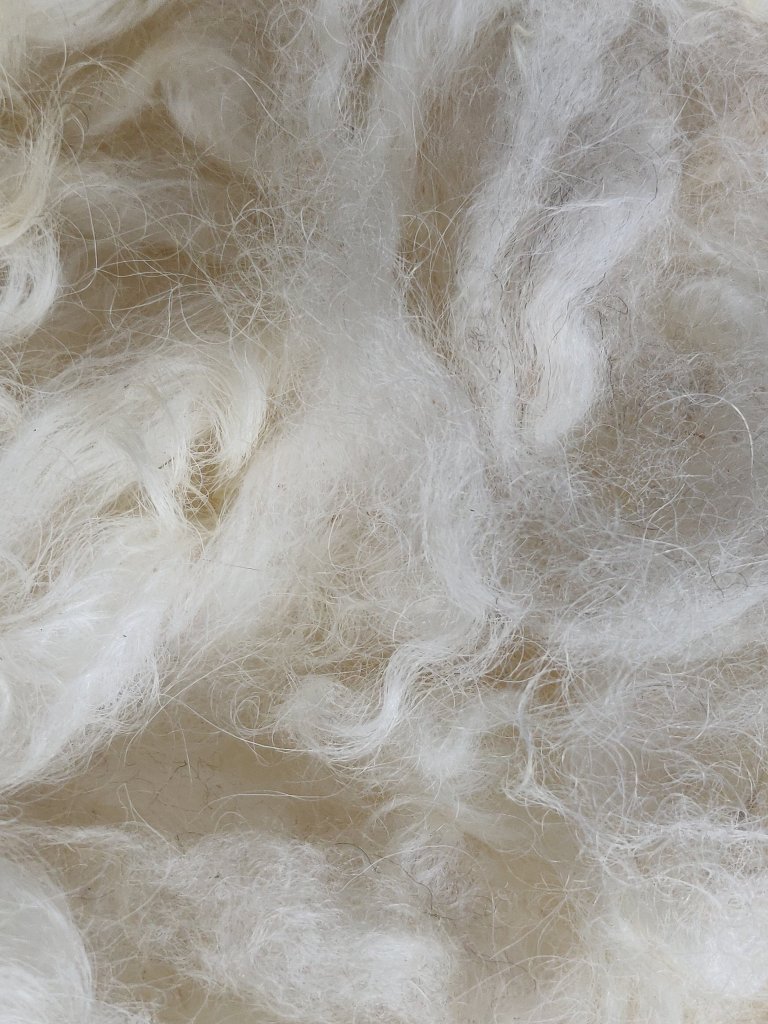
I have been given a rather nice Shetland fleece. Rather nice that is, but filthy. The fleece is very greasy and every single lock is gummed together and dirty at the tip. Underneath however, you can see the gorgeous fibre hidden under the grease-trapped dust and poo.

It doesn’t look too bad here, but thankfully this is not smelly-vision
See what I mean about those yucky tips?

I gave some of it a good hot soak  yesterday with plenty of washing up liquid. The water was like oxtail soup (sorry if you like oxtail soup), but after a few rinses it seemed OK.

However, this morning’s inspection showed it to be still greasy and those dratted dirty and sticky tips were still gummed up.

Rather than transfer that gunk to my carder I reluctantly decided to re-wash the fleece. So more really hot water baths followed. The first was so hot I couldn’t put my hand in it, with loads of washing up liquid and a dose of washing soda to break the grease. I  always wash the fleece separated into small mesh lingerie washing bags. With this second wash, I opened each bag, one at a time under the water and teased the locks apart, concentrating on those dirty tips to loosen the greasy dirt.

Yes it was time consuming, bit surprisingly gratifying as the dirty came out quite easily with this method. I think because the fleece has just been sheared the dirt hasn’t had to much time to harden-off.

Now it’s drying out looks amazing and is so soft.

I’m itching to get spinning

DIY cloth face mask – free pattern and instructions

I organised an online face-mask-making workshop yesterday, and the links below are to the instructions and pattern for the mask we made. You can read more about making different types of masks on my DIY mask making page. If you just want to get stuck in, please use the links below to download the pattern and instructions and make cotton face masks for your family and to donate to key workers. The pattern has an opening to allow a filter to be inserted.

Pencil spinning

Due to the virus situation the workshops have been closed at the University where I work, and we are ‘remote teaching’ from now on. That is quite a challenge for a practical subject like knitted textiles.

One thing I have enjoyed over the years of teaching first year knit design students is their excitement and enthusiasm when they realise that they can make their own yarns. Normally I would be running a hand spinning workshop for them next week, but obviously not anymore. We have two spinning wheels and I take in a box of drop spindles. Cartons of fibre are pulled out of cupboards and spill all over the floor, its a lovely day with some wild yarn developments taking place. I think its a great way to encourage them to explore the raw materials of textiles, and also to introduce them to yarn design.

But sadly this year its not to be! So I decided that before they left I would demonstrate ‘pencil spinning’ using two commercial yarns. Even this simple method was received with excitement, so I have made two short videos for the students, but have shared them on YouTube for everyone and put them on here as well. Bear in mind they were made for the students, following a demonstration so I refer to this, and the focus is on making small amounts of marl yarn for hand knit design sampling.

They have taken yarns away with them, so I hope to see that they have applied their wonderful creativity to making new and colourful yarns.

Long Buckby machine knitting club talk

Today I had a lovely day with Long Buckby Machine Knitting Club. They had asked me to come and talk about my book Translating Between Hand and Machine Knitting and gave me a wonderfully friendly welcome. This meant talking about my experiences as a machine knitter was like sharing with friends.

I met so many interesting people who have interests in common and was pleased to see some younger faces on the audience.

Janet Collins, Chair of the Knitting and Crochet Guild was there and spoke to the meeting about the recent amalgamation of the Knitting and Crochet Guild and the Guild of Machine Knitters. She also gave an impassioned plea for members to encourage younger people to become members. She told me that if the Guild is not offering what young knitters want, the way forward is to find out what they do want and make this an aim, otherwise the Guild will dwindle. As there are 1,500 members this would be a real shame.

I’m now on my way home feeling a warm glow from the kind words and the opportunity to meet genie machine knitters with so many skills.

Felted singles

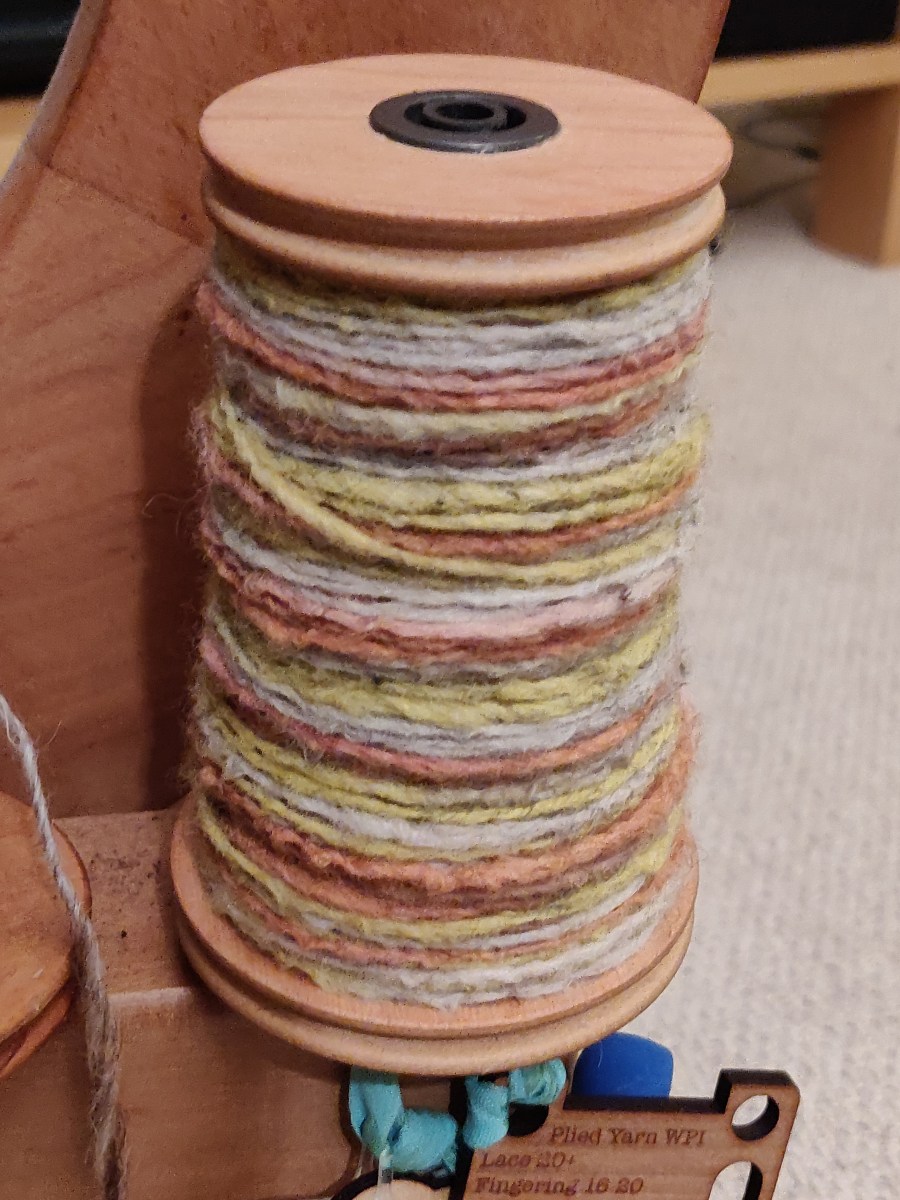
Having read about this spinning technique I though I’d have a go. It doesn’t save much time as you still have to run the yarn back through the wheel, which takes as long as simple plying. It was prompted by my practise at making a ”Z’ twist fat singles’ and so I decided to over-twist this singles yarn as I practised the night before a dyeing session. So I treated it cruelly when washed it, and also in the hot dye bath as well.

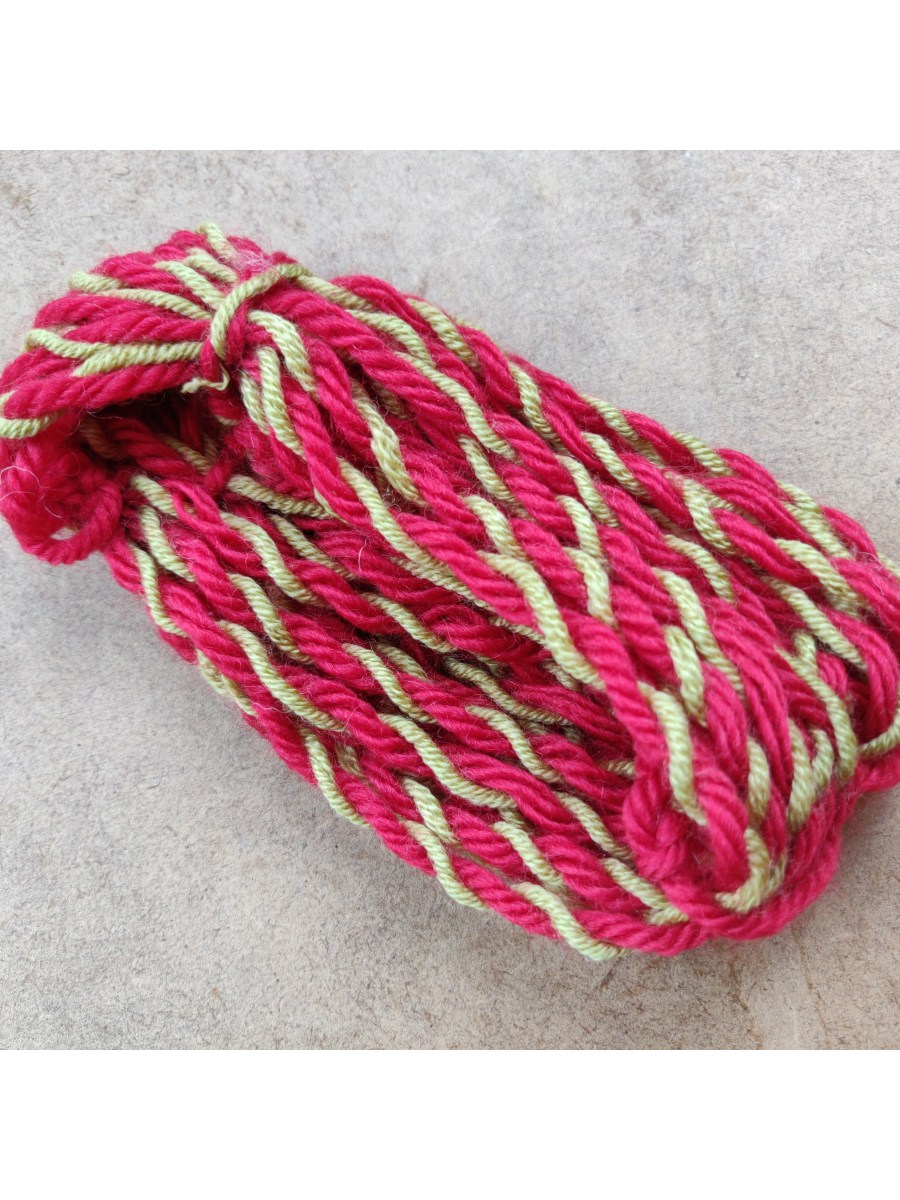
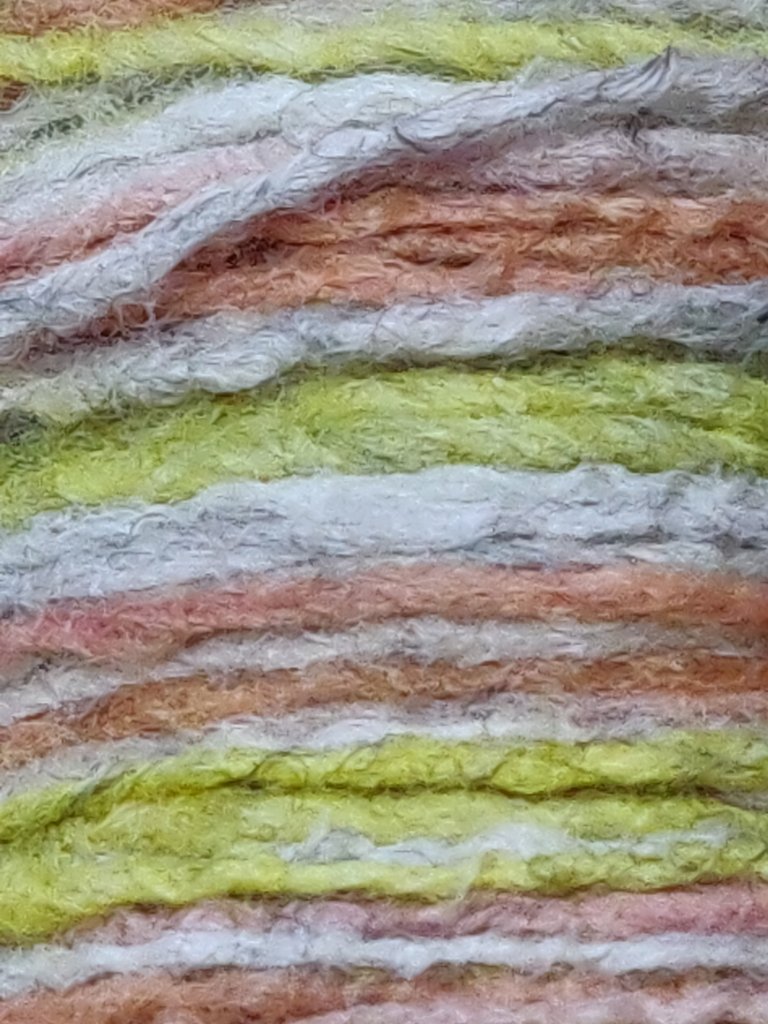
As there were several colour dye baths it was too tempting not to dip-dye the hank. Firstly it went into red-cabbage allover, and then the ends were dipped into madder and turmeric.

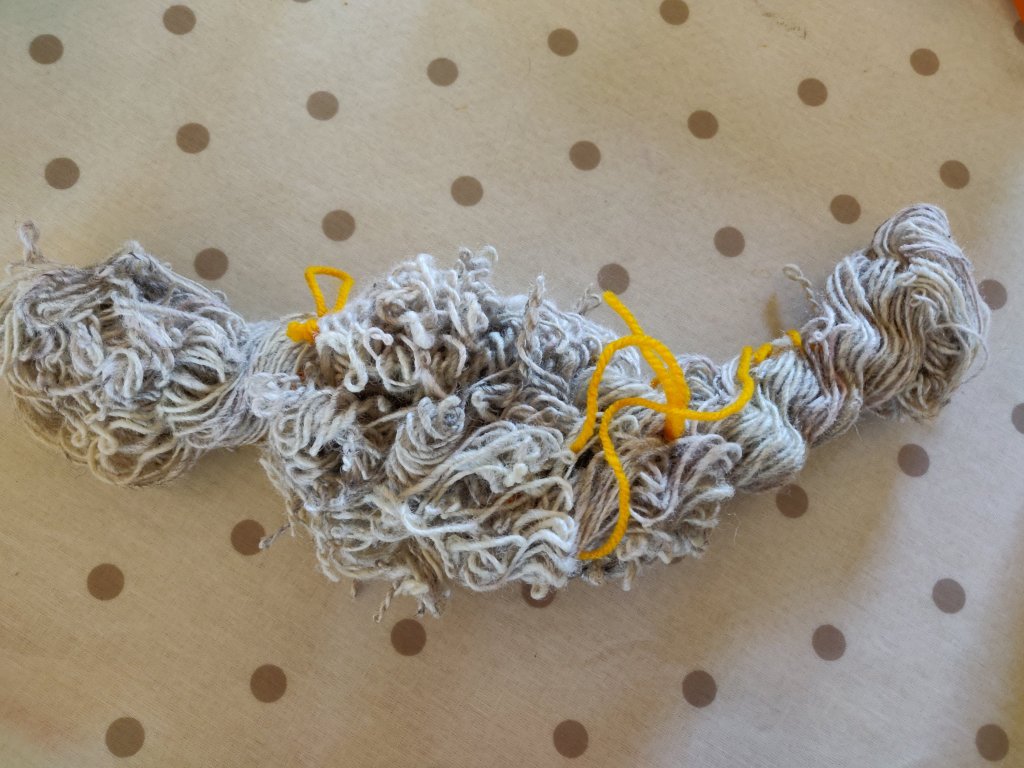
This is what it looked like before hot washing and dyeing.
And after re-spinning it’s open up nicely and is quite soft.

I’ll be trying this out soon to see what it looks and feels like as a knit.

Knit Step by Step – new edition

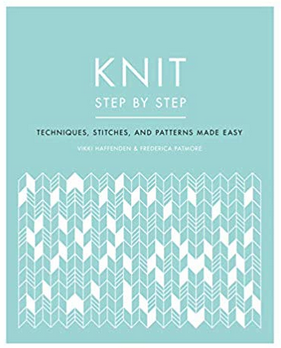
A new edition of Knit Step by Step has been published this month. With new content including step-by-step instructions (with lots of lovely photos) of how to work the exciting on-trend chunky ‘arm knitting’. All wrapped in a smart new cover it looks great!

step by step 2020
Cover of the 2020 editon of Knit Step by Step

Visit to Diamond Fibres – wool processors

Today I accompanied a group of students on a visit to Diamond Fibres in Horam, Sussex. The company processes wool for worsted spinning, rather than woollen spinning, so concentrates more on longer staple fleece.

Starting in the sorting shed, we were shown round by Roger, the owner, and given a really thorough introduction to the processes involved in changing raw fleece into yarn.

There was a Wensleydale fleece on the picker, which Roger explained had already been washed once at 60 degrees to remove the first lot of dirt and oil and then dried. After picking, which would open up the compressed curls that the first wash had not reached, it would be re-washed and dried before further processing. He reckoned that it may in fact require a third pick and wash.

The students were looking tired just at the thought of this!

Following picking, the next process is carding the fibres to start aligning them in parallel into a continuous ”sliver’ of fibre. Unlike my meek little hand carder, they have a carding machine with 16 drums of metal, not wire, teeth. At this stage, any short fibres will still be in the sliver, it isn’t until combing that these will be removed.

The sliver begins to look more like something that is spinnable, but there are still thin and thick sections along its length. To eliminate these and even out the sliver it goes through ‘gilling’. Diamond have two of these machines. The first one has wider spaced teeth, and is used at this point, whilst the second is much finer and bulks up and evens out the sliver later on after combing.

When the sliver goes into the gilling machine, two are fed in at once, producing one thicker sliver of uniform thickness.

The fibre will in all likelihood go through a second gilling, during which the output sliver gradually bulks up, according to the machine settings, to achieve the required grams per metre.

If the requirement is for carded roving for hand spinning, this will be the last process. It may even be stopped earlier on, depending on what condition fibre is required.

If however, the desired outcome is combed sliver, then it has to go through the combing machine. This takes up to sixteen slivers side-by-side through the combs, crimping the final sliver to compress the fibres together and prevent breakage. It looks like doll’s hair emerging from the machine. Any remaining short fibres, nepps, noils or debris fall out into a waste bin beneath the combs.

This combed sliver has become slightly uneven during the combing process, and this is when it goes through the finer gilling machine to produce a consolidated, even sliver ready to have a small amount of twist introduced, (about four turns per inch) to make a softly twisted roving.

This roving is then drafted out into a thinner roving, and finally drafted and spun into singles weighing approximately 0.2g per metre. Amount of twist can be controlled to produce softer or firmer yarns at both singles and plying stages.

The singles can be plied into 2, 3, 4 etc ply yarns according to need. 2 ply tends to be flat, 3 ply rounded, and 4 ply has a square profile. To make a cable yarn, 2 x 2ply can be twisted together.

2ply yarn made from two of the 0.2g/metre singles would weigh approximately 0.4g per metre. This would yield something like 250 metres per 100g, which is within the DK category of yarn, and will be between 12-14 WPI.

Of course, as Roger pointed out, natural fibres do not conform as precisely as synthetics do, so there are highly likely to be variations in weight to length of a hank of yarn depending on humidity and other physical conditions when it is weighed. Oh the joy of natural fibres, thats why we love them!

I think the students now really appreciate how much work goes into making the yarns they pick off the yarn-store shelf. One even went so far as to say that they would never again complain about yarn being so expensive!

“This book ought to be mandatory reading for every new machine knitter!”

I came across this review of my book, ‘Translating Between Hand and Machine Knitting’, and would like to share some of it with you.

“This book needs to be on every machine knitter’s manuals shelf, in pride of place, no matter if you use Silver Reed or Brother!”
“Where was this book when I was desperately trying to learn how to design lace/translate lace cards between Brother and Silver Reed?!?!”

This book is absolutely essential equipment as far as I am concerned!
The pictures will blow you away and they only get better.
The details are absolutely in depth and extremely easy to understand with stupendously clear focused pin-pointed and highlighted photography and exemplary diagrams that compare every aspect of stitches, fabric, mechanics, of hand and machine knitting. 
It isn’t a how-to… it compares them and shows some GREAT visuals of them on and off the needles. Refer to your manual for specifics on how-to cast-on and cast-off. Basically, this book compiled most of the answers to questions I have asked in the past, questions I have hunted down answers to, and questions that I hadn’t even thought to ask. It is utterly fantastic.
Buy it! Buy it NOW!
I can not say enough how much you need this book! How much I needed this book… now if I can just convince her to write one on Passap…
No! I have no affiliation with the author… I wish I could say I know her.’
Thank you to B. Newson on Amazon.com


Test run of my new Louet Victoria

Today I’m taking my new Louet S95 Victoria folding spinning wheel out on a test run. We are taking the bus – with a change in town – to my spinning group.

I’m using its own rucksack to carry her, and so far it’s OK. I’ll probably add chest and waist straps in the future to make it more comfy. I’ve popped my my lunch, a spare bobbin and some fibre in the front pocket. As I don’t know if the rucksack is waterproof I’m hoping it doesn’t rain.

I’ve got a little trolley I planned to use for taking my Ashford Traveller to group, but still haven’t got round to buying some stretchy ropes to secure the wheel to the trolley. Which is partly why I’m using the rucksack as a rucksack today.

I’m on the way home now, and that went well. I took the time with the group to play with the ratios of the Victoria , which are 1:6, 1:8.5, 1:13. I found that I could match the same fibre spun into yarn spun on the largest whorl of my Traveller, (which I think is 1:6.5), best on the 1:8.5 whorl, but that might be the way I was handling the fibre today. I spun the sample I was working from a few weeks ago, and do find temperature and humidity effect the fibre and my hands.

I will have to name my Louet, my Traveller is Dora, my Traditional is Hector. My little old Scottish double drive wheel is SweetPea because she is tiny, delicate and beautiful and treadles so sweetly.

Machine Knitting workshop, Brighton TAG

Today I ran a workshop that introduced members of Brighton Textile Art Group to machine knitting. To give a wider experience both a Knitmaster and a Brother machine were used, one standard and one chunky gauge. The chunky was particularly popular once it was found that it can knit handspun yarns.

Techniques explored included shaping, fair isle, single motif fair isle, knitwear (again great for hand spun), holding and short rows and simple, manual lace transfer.

I took along a little circular machine to demonstrate the difference between the two machine types, but the real interest was in the flat bed Japanese machines.

After the workshop response were really positive; people who had thought they would hate it had great fun, and those with machines were enthused to go home and get them out. Unfortunately the workshop clashed with the East Sussex Guild of Spinners, Weavers and Dyers meeting, so another workshop had been requested in the Spring or Summer of 2020.