If you have seen some of my earlier posts about machine knitting and spinning you might realise that I am keen to put the two together. I was given a fleece that is long-staple, not-very crimped and quite lustrous, but I don’t know what breed it is from. Its also quite coarse with well defined locks. The first batch I stove-top rainbow dyed, and spun from flicked locks. It worked OK, and I got a reasonably fine yarn. I also have a lovely soft, long staple Alpaca fleece, so I worked with the two as separate singles to ply together. This yarn worked at tension 8 on a standard gauge knitting machine.
However, I was determined to get it thinner. I started with the Alpaca, and after hand carding the fibres, spun it worsted using a double drive wheel with the lace flyer and was so pleased with the results. I got a 28wpi singles from the Alpaca which was quite dense, not light an airy, but I wanted it to match the coarser fibre’s density. To prepare the long-staple wool I decided to comb the locks on wool combs. At first I was slow, because although I have done this before I’ve not practised a lot. It was exciting to find I got faster quite quickly and began to get some lovely long slivers coming off the comb. After spinning in the same set up as the Alpaca, I have also managed to get the rather coarser wool to produce a 28wpi singles, so I am pretty pleased as this will give around 14wpi 2ply.
I have plied all of the yarn, and am waiting for the second skein to dry. Meanwhile I have knitted a tension swatch on the Knitmaste SK840 and can get it to knit at either tension 5 or 6. Tension 5 is a nice looking stitch, but the handle is stiff, so I opted for tension 6 instead. I probably should have tried between the two, but when each metre of yarn takes so long to prepare and spin I was reluctant to use too much on sampling at this stage. I will add photos of the fabric once I have given it a wash and steam.
Replacing the tension dial on the carriage of a Knitmaster 700, some tricks and tips to make this easier. Knitting socks and hand spinning yarn for machine knitting socks.
Follow my podcast on Spotify, Google Podcasts or iTunes.
Show Notes:
Although an older model, the Knitmaster 700 is a lovely machine. It is a punchcard machine and ball bearings so it slides very smoothly on the bed. One really nice feature is that it will knit intarsia without using a special carriage. Two white levers on the left and right of the carriage activate the intarsia setting.
Whilst knitting the sock, I found the tension dial was unreliable and replaced this with a secondhand assembly and this records doing this.
‘The Answerlady and Jack’ on YouTube are life-savers for machine repairs.
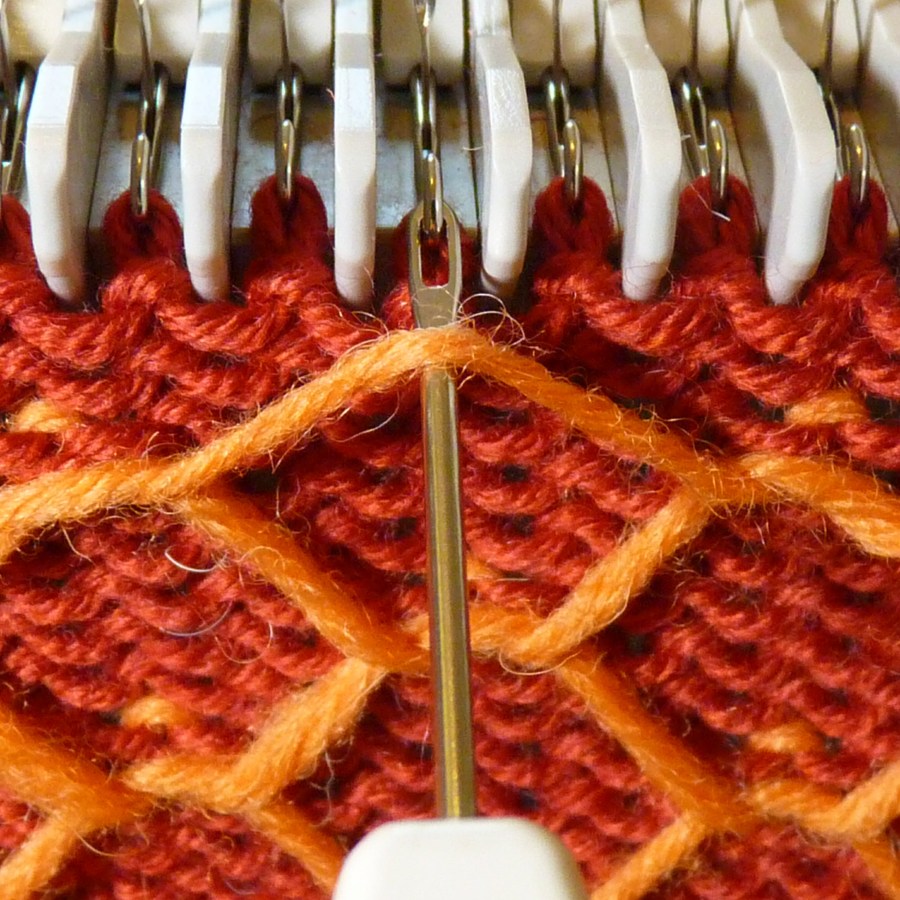
A trick for reassembling the carriage when it is difficult to get the tension assembly back into the carriage so that it will turn all the way round.
Never use metal things to poke inside your carriage unless you know what you are doing!
Mend the plastic carriage cover or any other plastic cracks, chips etc with epoxy resin glue. If you leave the cracks, particularly if they are around a metal screw head, they will quickly deteriorate and bits will break off.
Inside the carriage handle, around the screw hole
Inside the carriage, the mounting screws
Don’t use spirit on the plastic parts of the machine, use a slightly damp cloth to wipe these parts. Metal areas can be cleaned with surgical spirit (rubbing acohol) with a drop two of oil in it. This leaves a film of oil after cleaning. Make up a small jar and keep it with your maintenance tools so that it is always to hand. Use soft cloths and cotton buds to clean your machine.
Keep your machine oiled for the best performance, oil the bed every 100 or so rows. Invest in proper sewing machine oil or knitting machine oil.
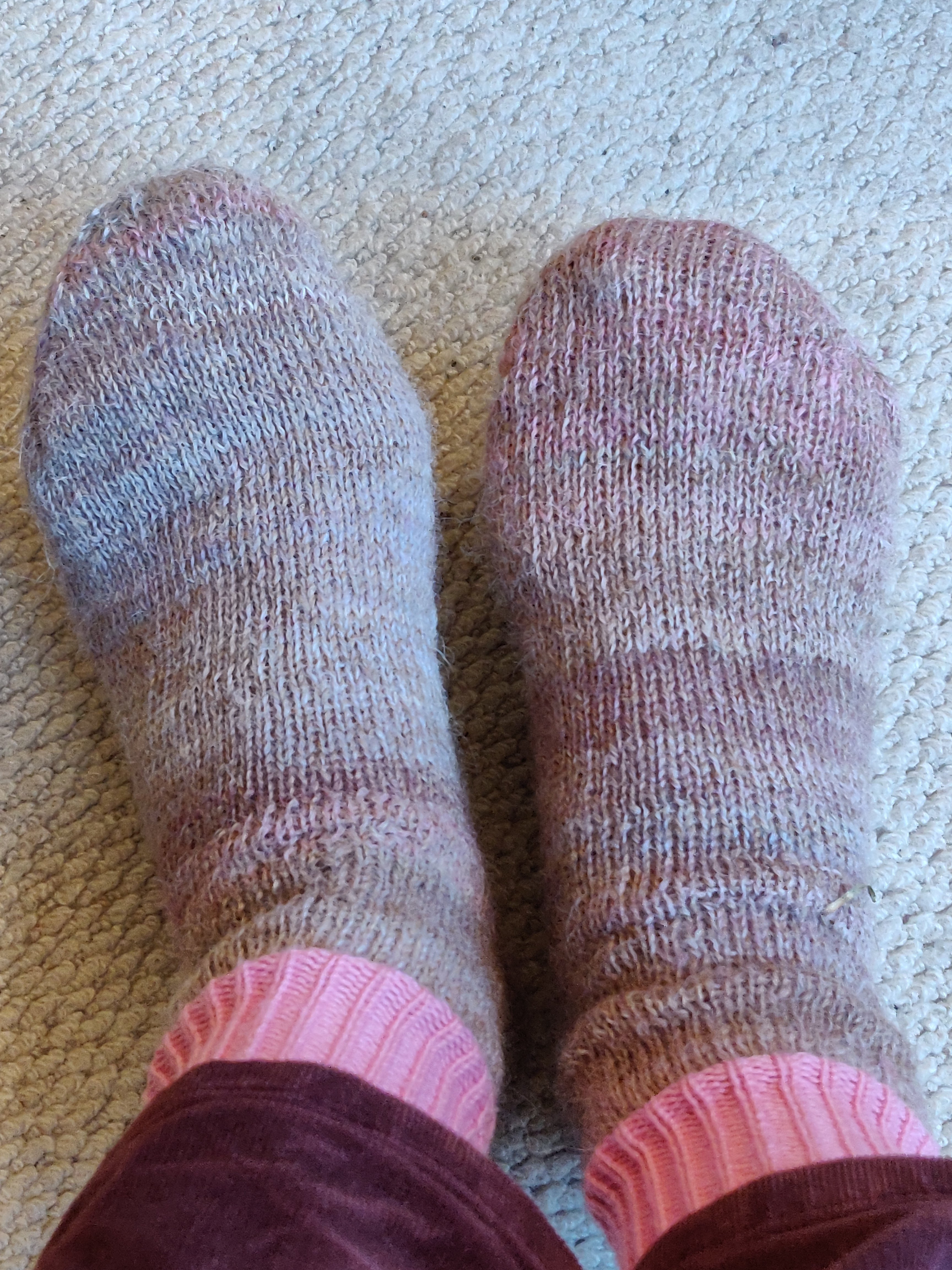
Sock knitting on the knitting machine. Not being a keen hand knitter of socks, I revisit machine knitted socks made from wool yarn. Short row heels, short row or decreased toes?
Having a few smallish quantities of hand spun yarn I decided to dye them.
The first was about 30g of blended tussah silk/wool singles that I’d then plied with itself. This is a slightly textured yarn with an interesting matte surface owing to the silk content. It took the deep purple dye beautifully, although the different fibres had varying take up of colour, so it isn’t quite even.
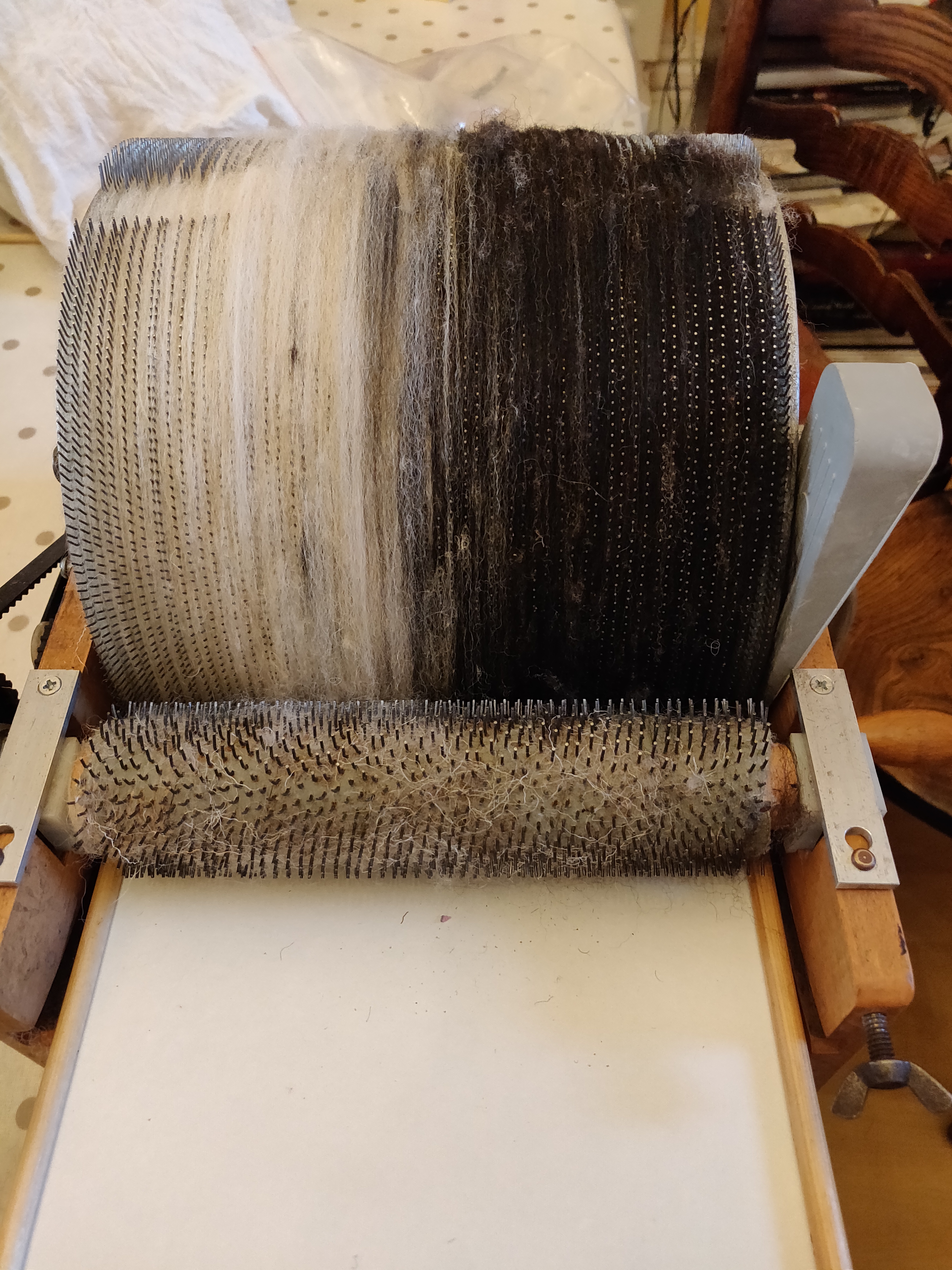
The second was a black and cream space spun yarn, plied with a solid cream. The solid is made from 50g of cream Suffolk fibre, woollen spun into singles. The second singles, with which this is plied, was prepared on a drum carder in alternating stripes of the same cream yarn and stripes of black Belwin fibre. This 25g batt was then woollen spun into singles, after which the two yarns were plied together into a 50g hank. This combination created a pretty spaced marl effect along a yarn which is reasonably even in thickness throughout.
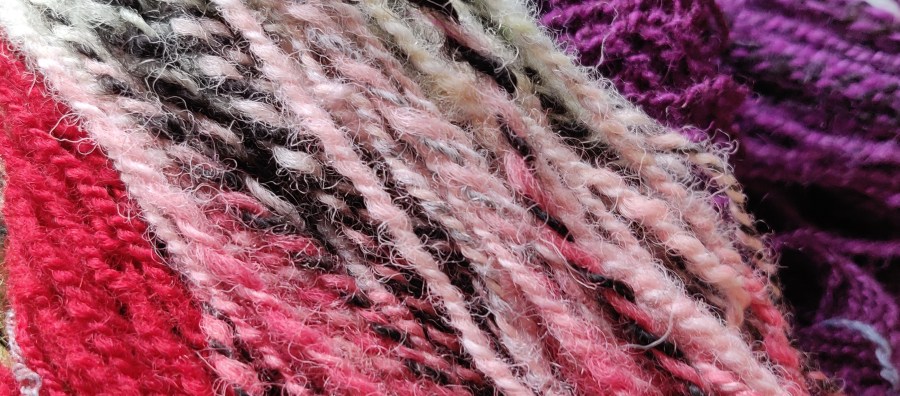
The completed yarn was dip dyed in the same dye pot as the silk/wool yarn, plus another pink dye I had on the go. It was dipped a little into some yellow as well. Over-dyeing this black and cream marl yarn gives the impression of many more colours than there really are.
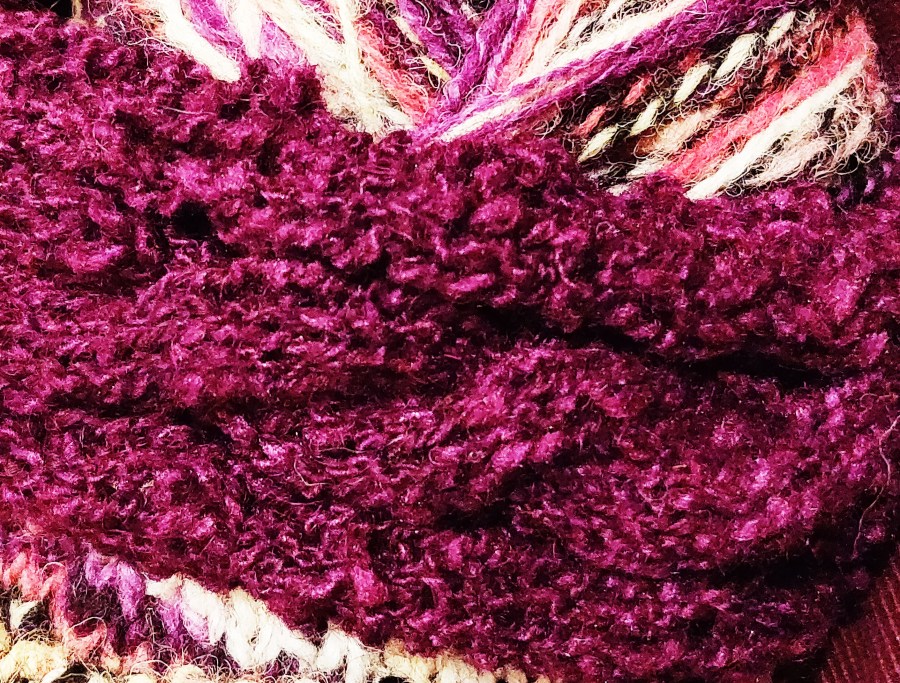
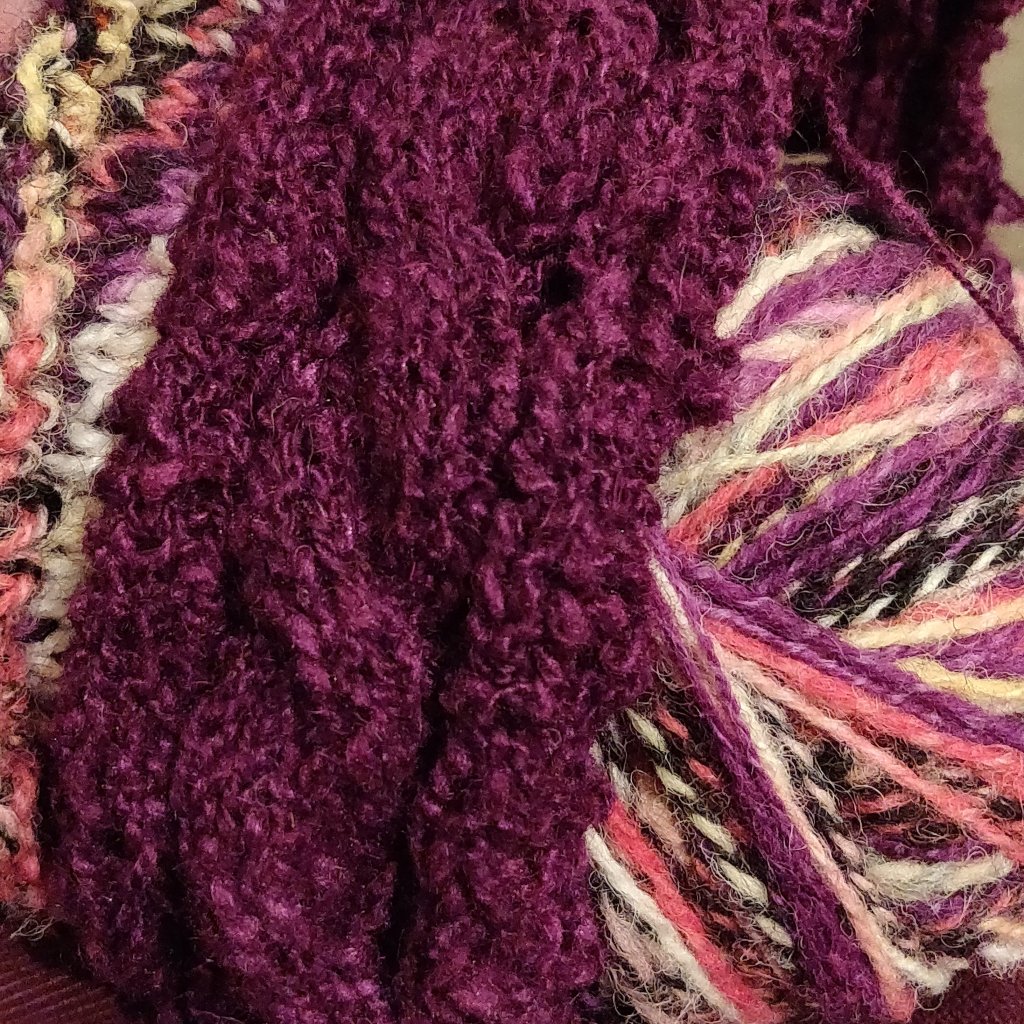
I’ve used the silk/wool as a band for a hat and the over dyed marl as the crown.
The band is knitted around the head, and has a cable along its length. The stitches for the crown are picked up along the edge and knitted in the round. The ball of yarn is on the right in the photo.
After years in the doldrums of the spare room, I have finally got this machine somewhere I can get to work on it properly.
I am fortunate to have instruction manual, pattern book and several knowledgeable authors books on the subject, which have helped a lot. But still it took me a while to remember what I had forgotten and learn a few new things – or maybe I had totally forgotten these?
It’s an early model so at the moment won’t take downloads – (or is it uploads) from Designaknit, but I hope to rectify that soon. Meanwhile I need to get up to speed. Luckily it’s just the programming as I am confident on Duomatics and all their dials, buttons and foibles, and do love the knit quality from a Passap.
I am slightly ashamed to be sharing such a basic sample, but will do so nevertheless.
Pattern 1030 in single row tuck stitch Knit Tech 129.
Not being able to switch patterns mid swatch is really annoying compared to the Japanese electronics which are more flexible. It seems all the patterns and knit techs have to be input before to start. Or am I missing something?
I remembered that I can skip through a cast on that is already knitted and on the machine to a pre-programmed pattern using GX and empty rows. But am stumped by having to have input all my patterns before I start. I feel sure I worked out how to do this before…
A recent stock-take of the various bits of hand-spun yarn sitting on bobbins I now want to use for other projects inspired me to ply them all up and dye them into interesting yarns. Only small quantites of most, but great for small items.
One was a test of blending Tussah silk with Lleyn fleece, and I plied this with some nice soft spun Dorset singles. The silk added a pleasant dry handle to the plied yarn, and the noils added texture. There was more Dorset singles left, so I plied these together as a separate yarns. Next I plied two ends of Suffolk together, they were somewhat different thicknesses and twists, so made a slightly uneven, spiralled yarn. Finally I worked with a lovely colour changing singles, spun from a blend of Alpaca and Texel (cream) and Black Alpaca and Dark Grey (almost black) Suffolk fleece. The Alpaca blends had been carded in stripes on the drum carder so that when it was spun off the batt it alternated in dark and then light lengths. I plied this with a pale grey Suffolk single that I had acquired from a farm in Hereford last summer.
Stripe carding blended fibres
Bi-coloured rolags
All these came out as interesting yarns in their own right, but I wanted to add some COLOUR. So I got out the dye kettle and the acid dyes. After some thought I decided to aim for a Deep Red and a Blue-Violet. I’ve been trying to be more technical about my dye mixing, and so with the aid of an Excel spreadsheet I have devised, I carefully mixed the solutions, but the Blue-Violet still emerged as Violet.
There was 66g of the Dorset and Suffolk/Dorset, and they went into the Red dyebath, whilst the 45g of Lleyn/Tussah/Dorset went into the Blue-Violet bath and they gently cooked away for an hour or so.
Part of my improved technique is to use a jam thermometer to keep the bath below 90C, preferably just above 89C to prevent felting. I also walk away so I am not tempted to STIR IT! The only stir I am allowed is after teh bath gets to temperature, when I gently remove the yarns, add the vinegar and stir it in. I read that doing this allows the different colours in the mix to be absorbed into the yarn (or fibre), before the acid does its work to set the dye to the fibres. Both these techniques seem to work well for me as I am getting less felting and more even, accurate colours (apart from the Blue Violet of course).
The dye baths were not exhausted – I had worked with a 2% colour to fibre weight ratio for medium depth of colour – so the lovely tweed ply was dip dyed into both pots, leaving mid-sections of the natural tweed plies undyed. I felt this needed a third colour to lift the others, so a very small section between each of the main colours was dipped into a weak yellow dye.
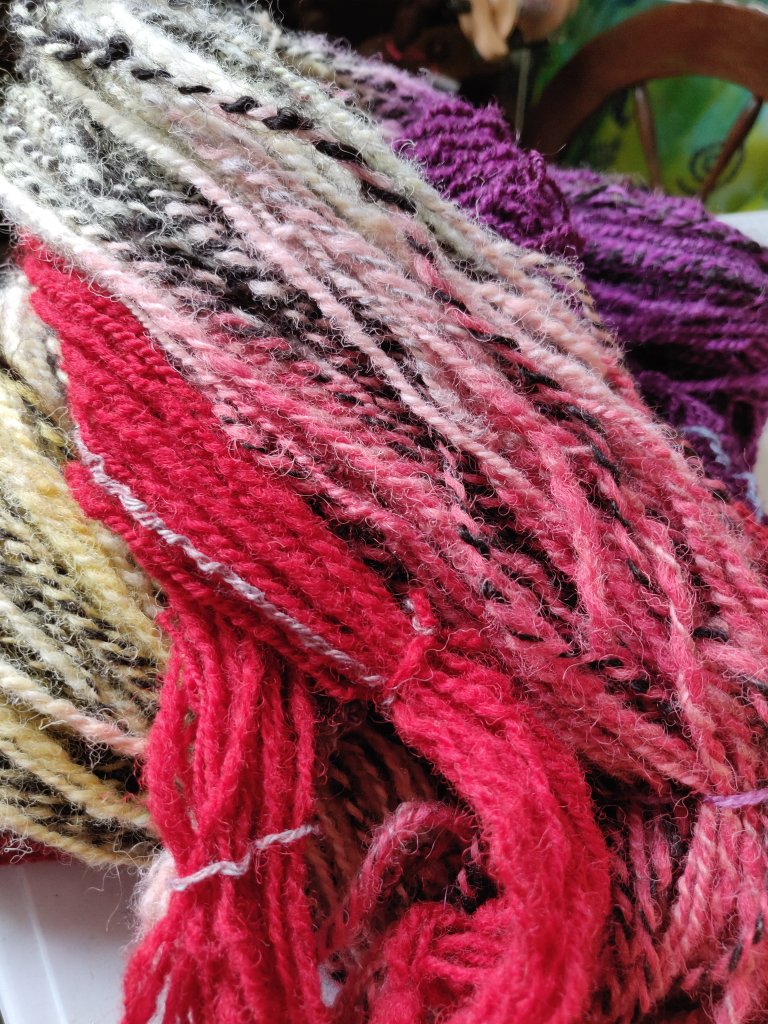
Dark red in front, dip dyed tweed in the middle, blue-violet at the back. You can just see the texural Tusssah silk blended purple yarn.
I’m really pleased with the products of the session – carried out whilst I watched the new TV programme ‘Roadkill’. Unfortunately I was a bit stupid, or maybe it was the effect of the programme I was watching, and whilst mixing a new batch of yellow stock solution I mindlessly poured boiling water onto the dye powder in a plastic jar. Of course the jar melted, buckled sideways and then toppled to the floor before I could catch it. Waves of strong yellow dye flooded the kitchen floor (I am exaggerating, it was only 150ml or so, it just felt like waves). It took five washes to clean the floor so that no-one would walk yellow onto the beige carpets, and my socks will never be the same again! Plus I had to start again with the stock solution. I did debate mopping the floor with some yarn, but decided that might be too hit-and-miss even for me…
In fact this morning, whilst hiding from the dog, (don’t ask why) I noticed a snail-trail of yellow dye snaking down the side of the kitchen cabinet – how did I miss that one?
What am I going to use the yarns for? I think a warm hat to cheer me up with its bright colours during this depressing winter-to-come is on the cards. I might knit it by hand or I maybe use my Brother KH260 chunky machine, and hope to report back on here when its finished.
Footnote:
Leaving the dye overnight in the pots – I was tired after all that floor-mpopping – the next morning I decided to finally extract the last from each one. So 50g of Dorset fleece went into each, and I got a rich coral pink, and surprisingly bright lilac for my troubles. It was so rewarding to empty clear water out of the dye baths afterwards.
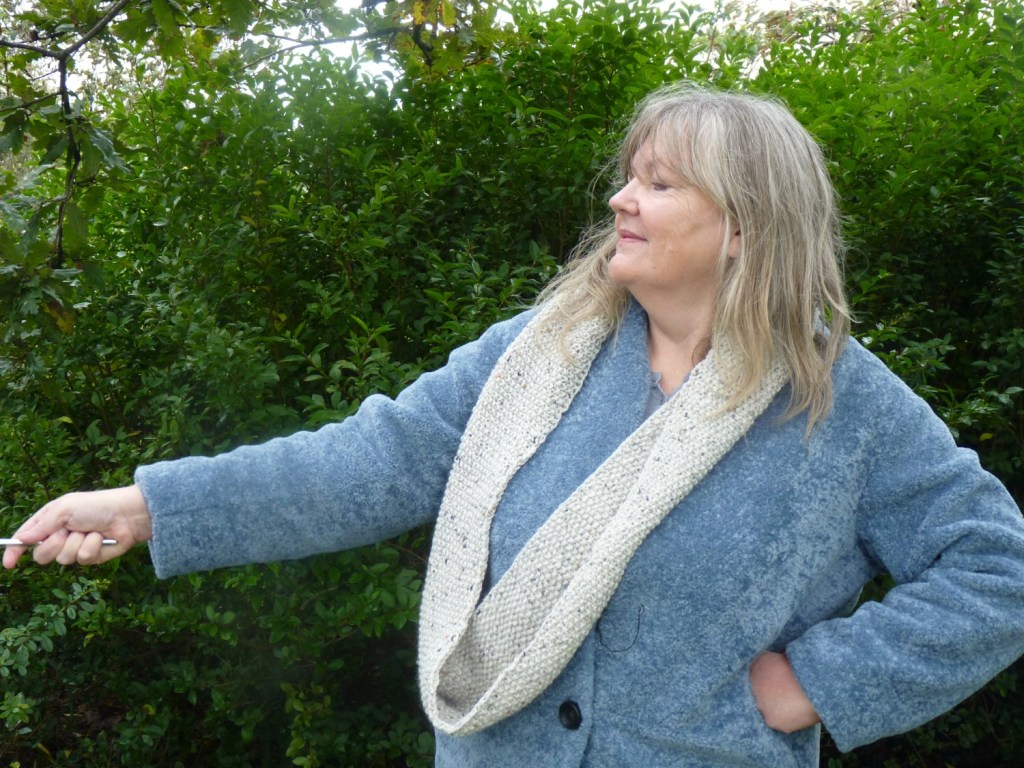
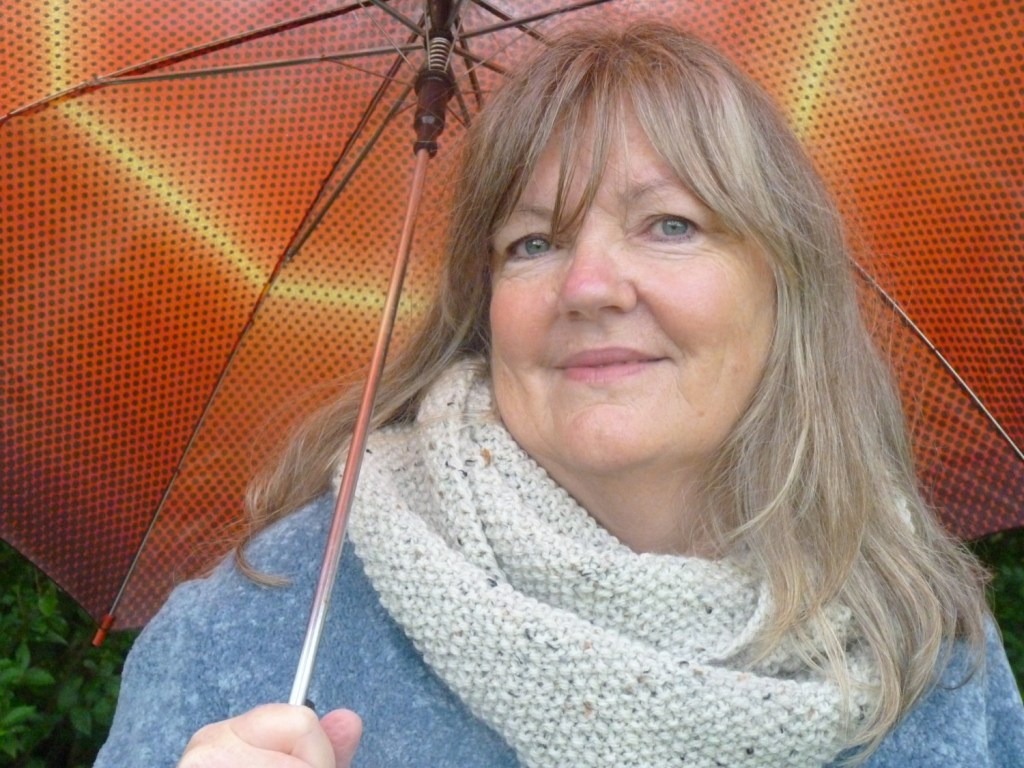
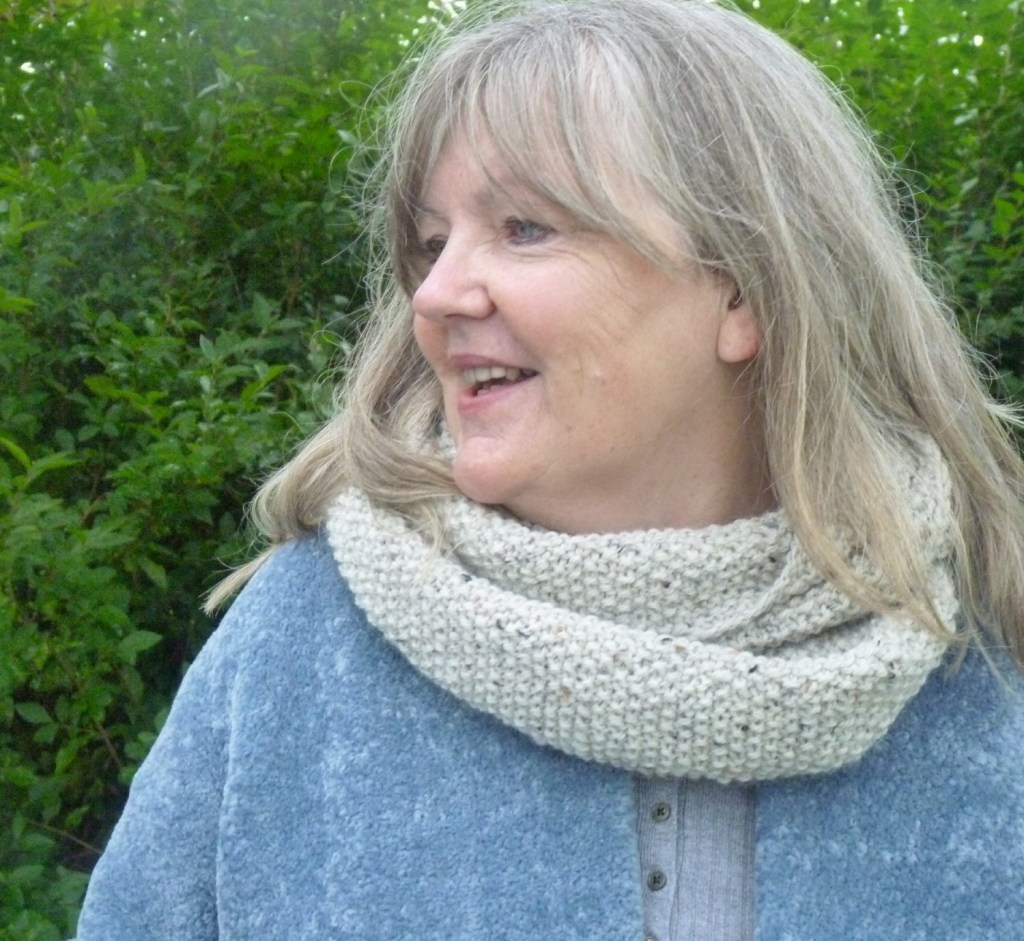
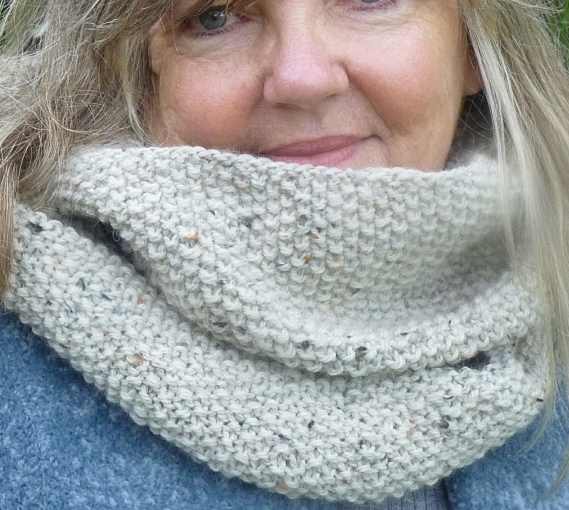
Today was the deadline for an Infinity Scarf pattern that I had been commissoned to write at short notice, you know the sort of thing that happens!
Anyway, as I’d only finished knitting it last night we had to do the photoshoot today, even though it was raining and grey. So we set off with a collection of coloured umberellas, plastic bags for camera stuff and my nifty, home made, shower-cap camera raincover! Luckily I had been clearing out the bathroom cupboard yesterday and unearthed a bundle of those freebie ones from hotels. I knew they would be useful some day. The other thing they are great for is proving bread, but I digress…
Finding a model at short notice was not easy, but my lovely friend Jo came up trumps, and offered to stand in the rain before shooting off to see her Mum.
It was fun anyway, because I love photoshoots; seeing your knit design come to life on a person is so rewarding.
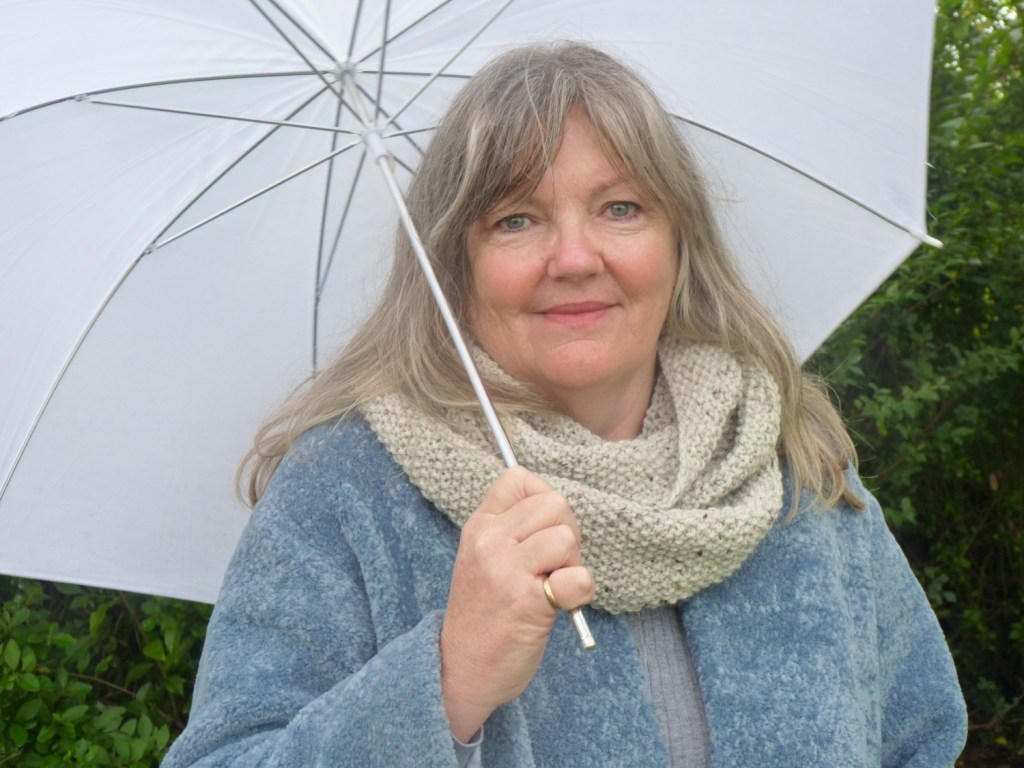
As always there were loads and loads of shots to sift through, but it was well worth braving the rain for such a nice photo.
you can never have enough umbrellas
I will be releasing the pattern on this website once it has been published later on in the Autumn so do drop back if you would like to knit the scarf. There will be a page for the Infinity Scarf with the pattern, hints and tips on working the pattern, and tutorials for the various knitting techniques used. Techniques used in the pattern, including a great stretchy cast on, are also featured in my popular knitting ‘bible’, The Knitting Book.
…and here is the final image I selected, and I’m pretty pleased with the result!
Thanks once again to Jo for her stoicism and humour.
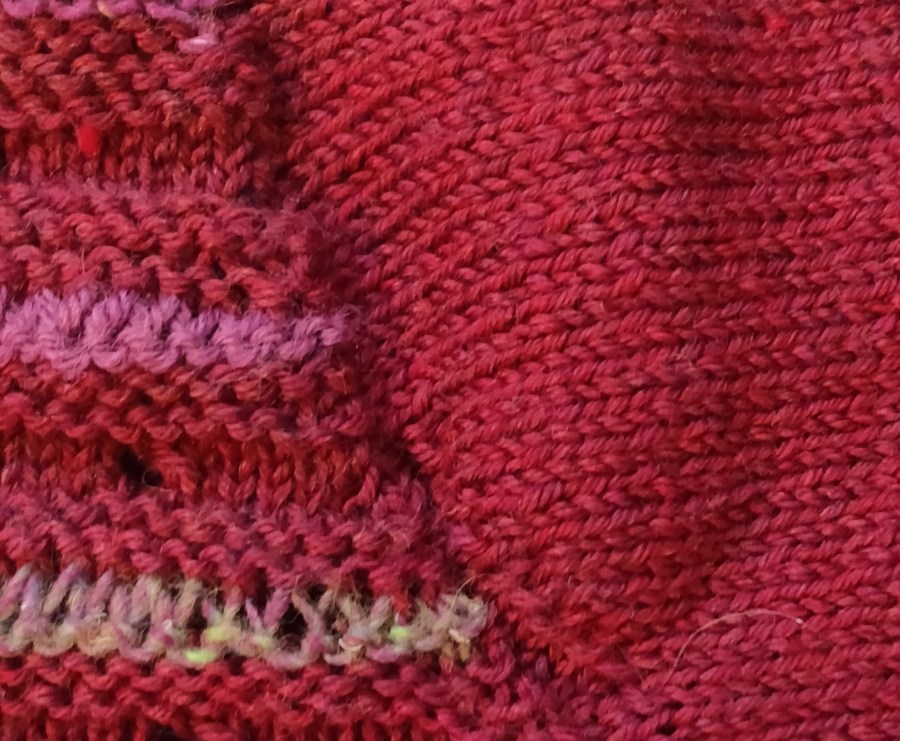
Today I finally completed a top-down jumper I started last December! I bought the main 100% wool yarn in Hereford, and the stripes are worked in two odd balls, one Noro and the other Icelandic. I’m looking forward to hearing it next winter.
Due to the virus situation the workshops have been closed at the University where I work, and we are ‘remote teaching’ from now on. That is quite a challenge for a practical subject like knitted textiles.
One thing I have enjoyed over the years of teaching first year knit design students is their excitement and enthusiasm when they realise that they can make their own yarns. Normally I would be running a hand spinning workshop for them next week, but obviously not anymore. We have two spinning wheels and I take in a box of drop spindles. Cartons of fibre are pulled out of cupboards and spill all over the floor, its a lovely day with some wild yarn developments taking place. I think its a great way to encourage them to explore the raw materials of textiles, and also to introduce them to yarn design.
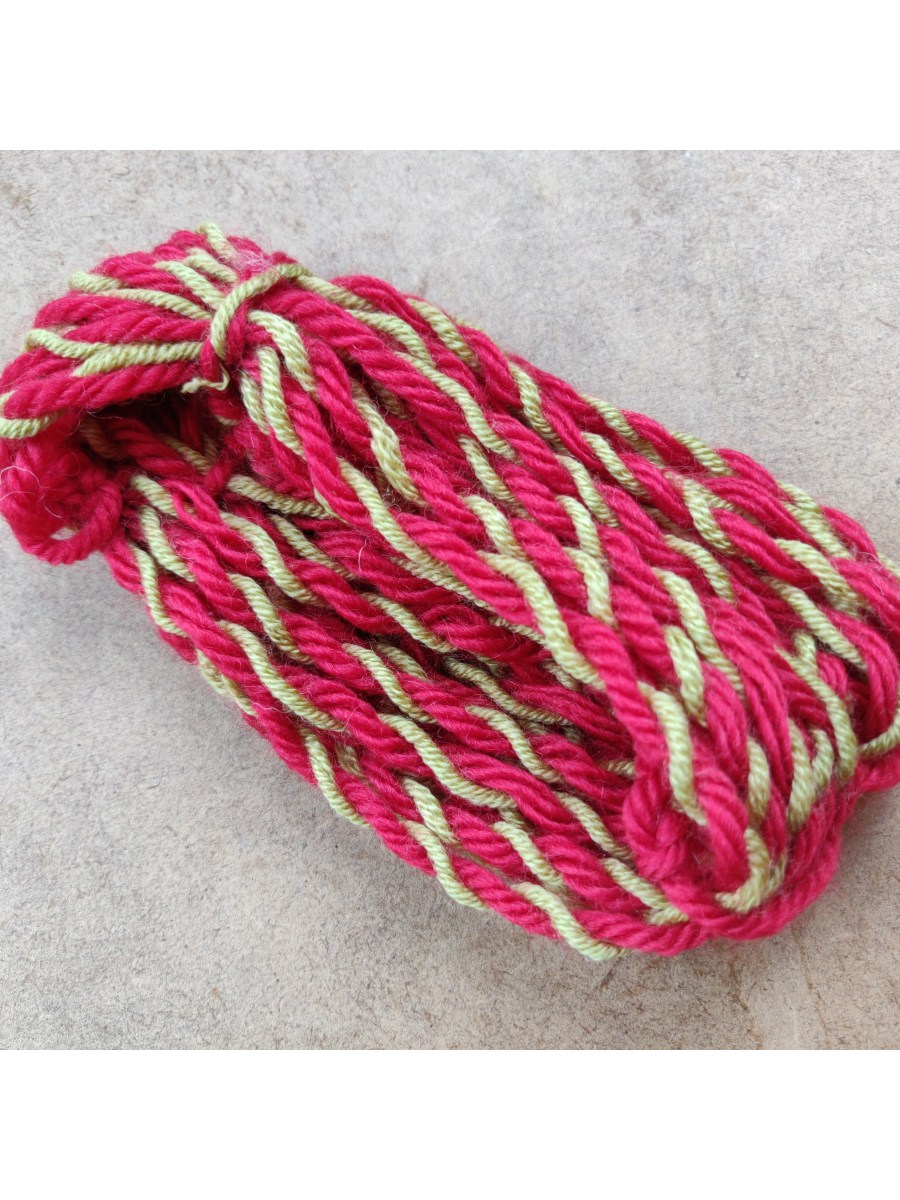
But sadly this year its not to be! So I decided that before they left I would demonstrate ‘pencil spinning’ using two commercial yarns. Even this simple method was received with excitement, so I have made two short videos for the students, but have shared them on YouTube for everyone and put them on here as well. Bear in mind they were made for the students, following a demonstration so I refer to this, and the focus is on making small amounts of marl yarn for hand knit design sampling.
They have taken yarns away with them, so I hope to see that they have applied their wonderful creativity to making new and colourful yarns.
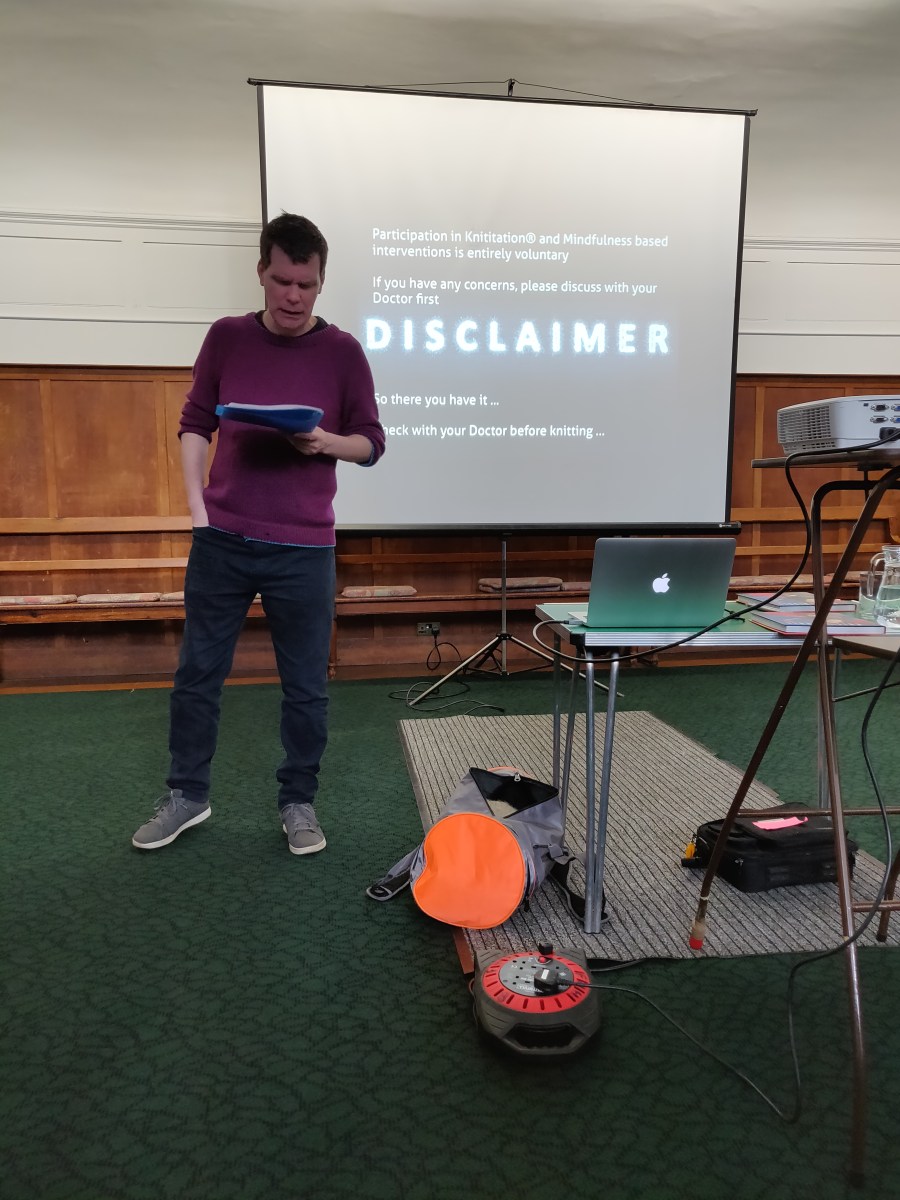
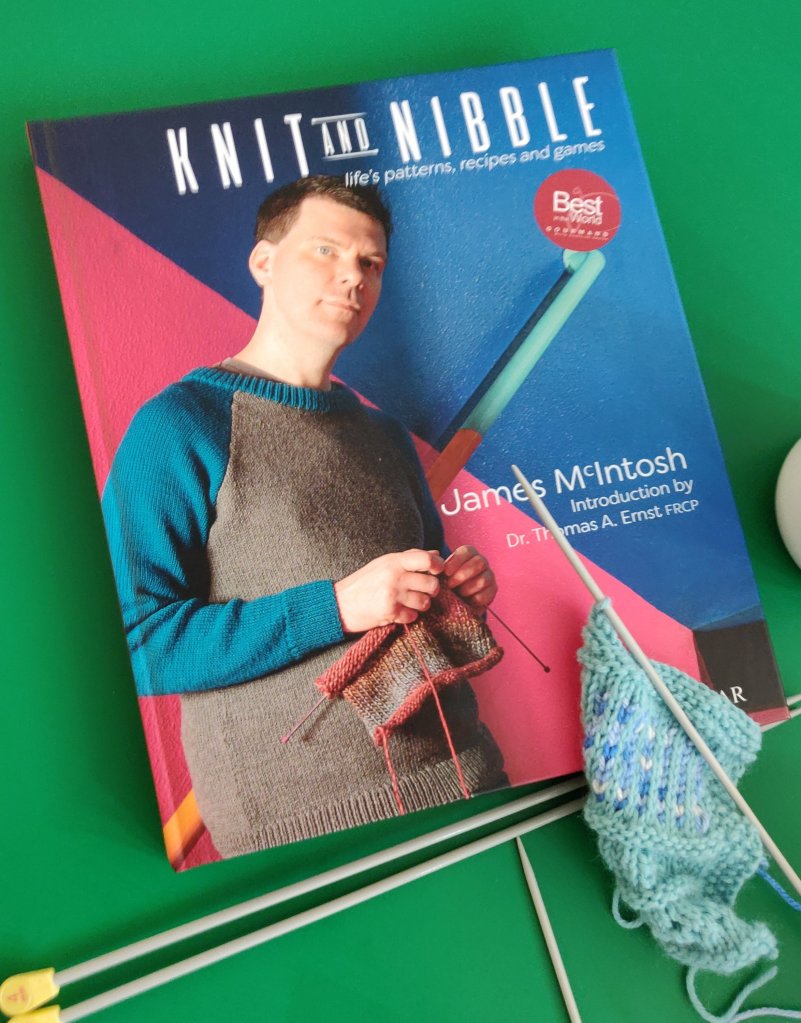
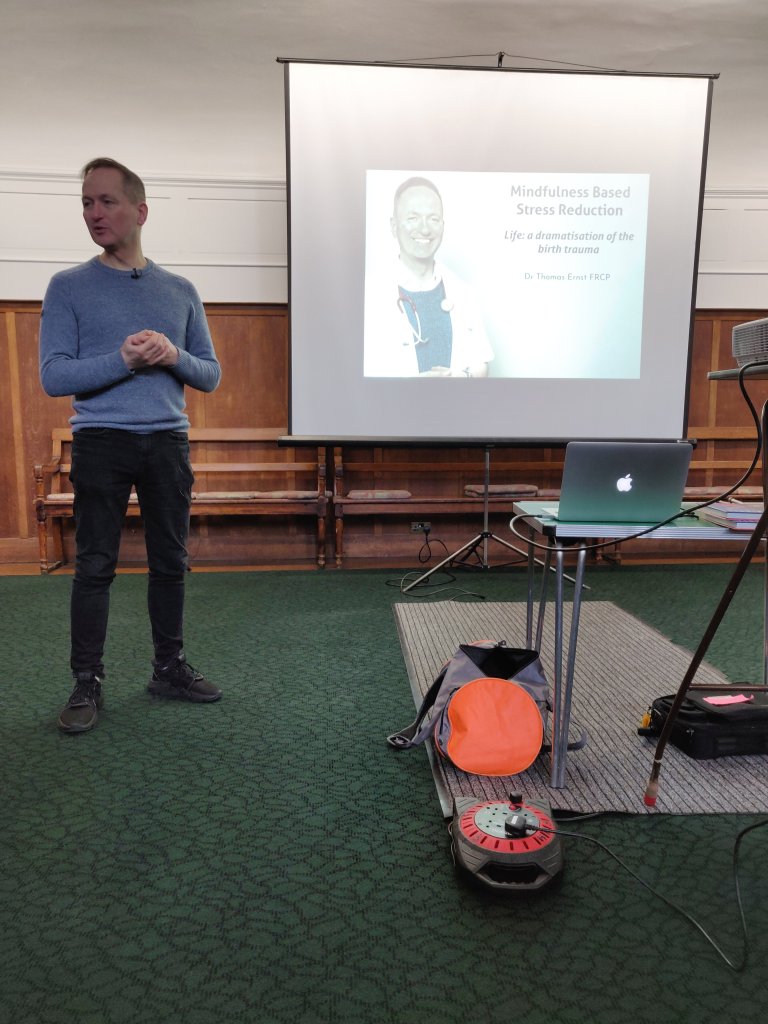
Today met James McIntosh and Dr Thomas Ernst, inventors of the term ‘knititation’ and authors of Knit and Nibble. They had been invited to speak at the University of Brighton School of Art’s Centre for Arts and Wellbeing event, Knitting and Wellness.
When we first met, James told me that he had found The Knitting Book really helpful when he was teaching himself to knit – which was truly gratifying feedback. It’s nice to find out how people use and value my contribution to sharing knowledge.
James was first to speak, and he described his personal journey through depression and how knitting mindfully enabled his recovery and brought colour back into his life. Thomas discussed the science behind mindfulness and it’s aptness to knitting.
Nina Dodds, author of Invisible Jumpers, and I provided yarn and needles so that everyone who wanted to could knit during the event. We were gratified that everyone took up the opportunity!
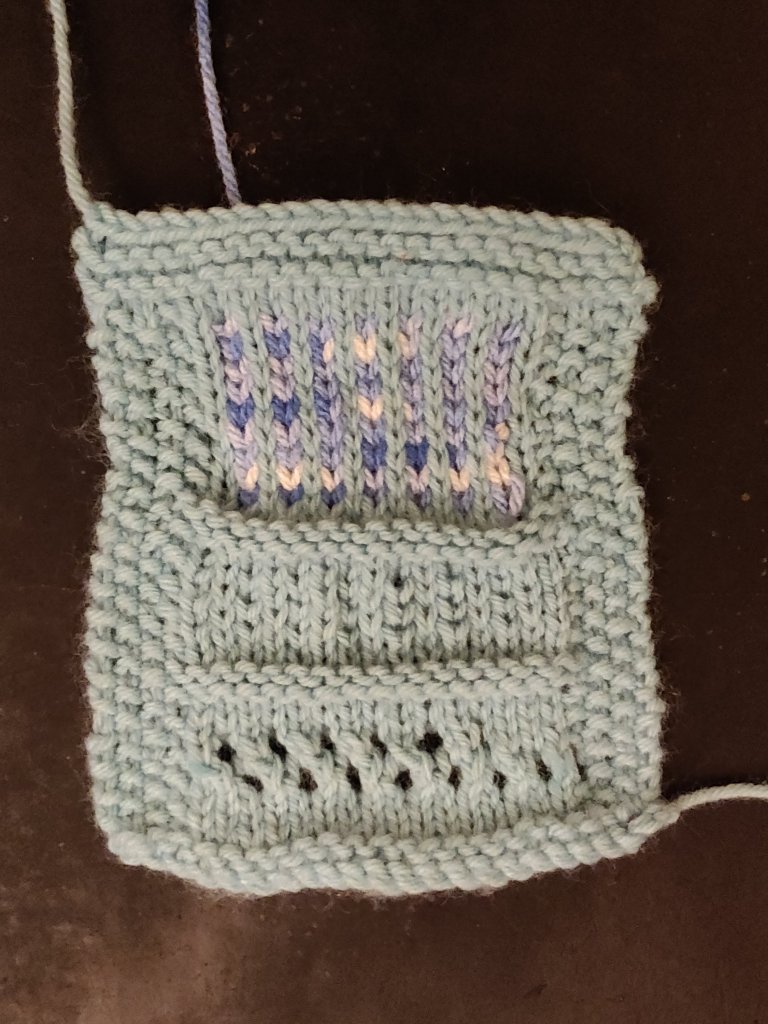
This was my piece of knitting.
It was a great talk, entertaining and interesting. James and Thomas kindly gave me a copy of their book which I am reading this weekend.
At the end Thomas led a short mindfulness session, which was a new expressive for some of the audience. Hopefully we all left feeling refreshed.
Like James, and so many others, I find hand knitting keeps me calm; it’s repetitive movements bringing my attention back in a rythmic cycle. So now I’ve written this it’s time to take up my needles for a soothing session.




 Vikki Haffenden