
I have just been to collect a knitting machine part from Andee Knits, my local machine knitting supplier. Andrea is very helpful and knowledgeable. Highly recommended.
Category: Textiles
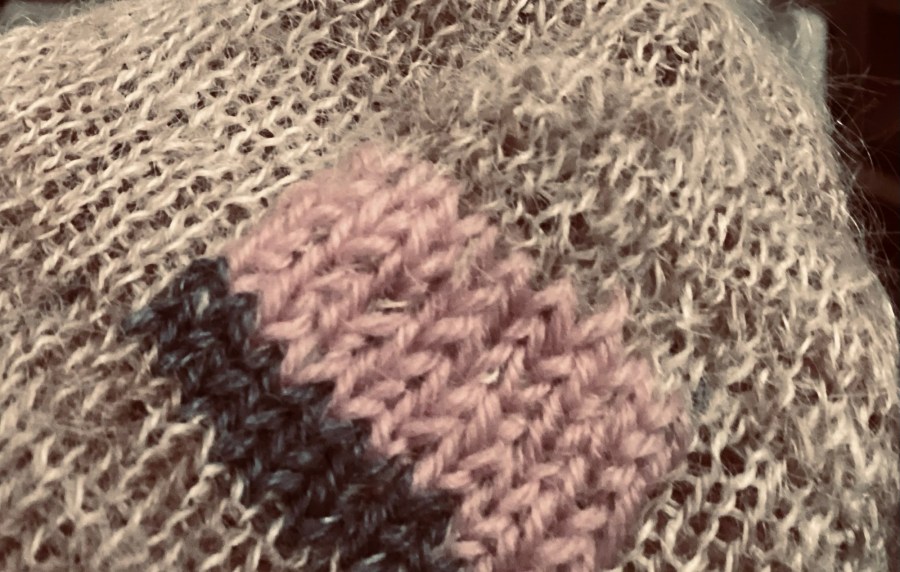
Sock mending this evening
It’s a howling gale outside tonight, so the place to be is by the fire doing a bit of mending. The subject is a pair of socks machine knitted from my hand spun yarn. These sticks are like , ‘Trigger’s broom’ from Only Fools and Horses.
I plied the yarn from singles of Alpaca and Texel fibre, but did not include any nylon. Consequently, but after a reasonable amount of wear they have begun to thin and finally the stitches have burst. First of all the big toes went, and now the heels.
I had a little of the yarn left, but now it’s onto improvised and colourful mending…
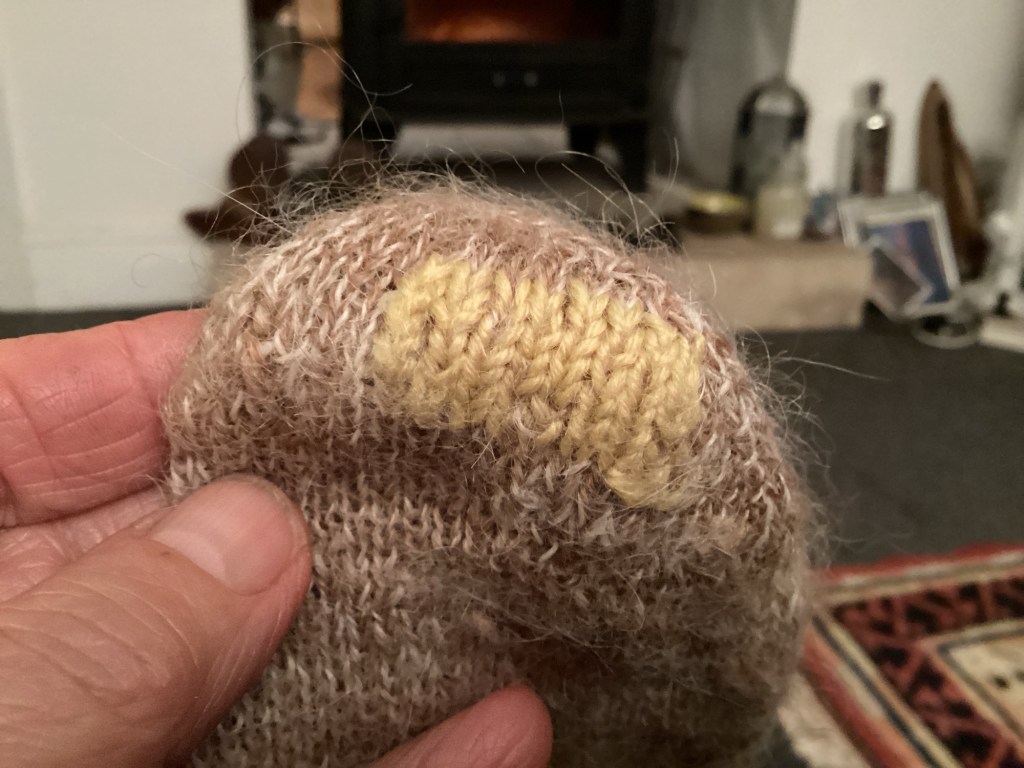
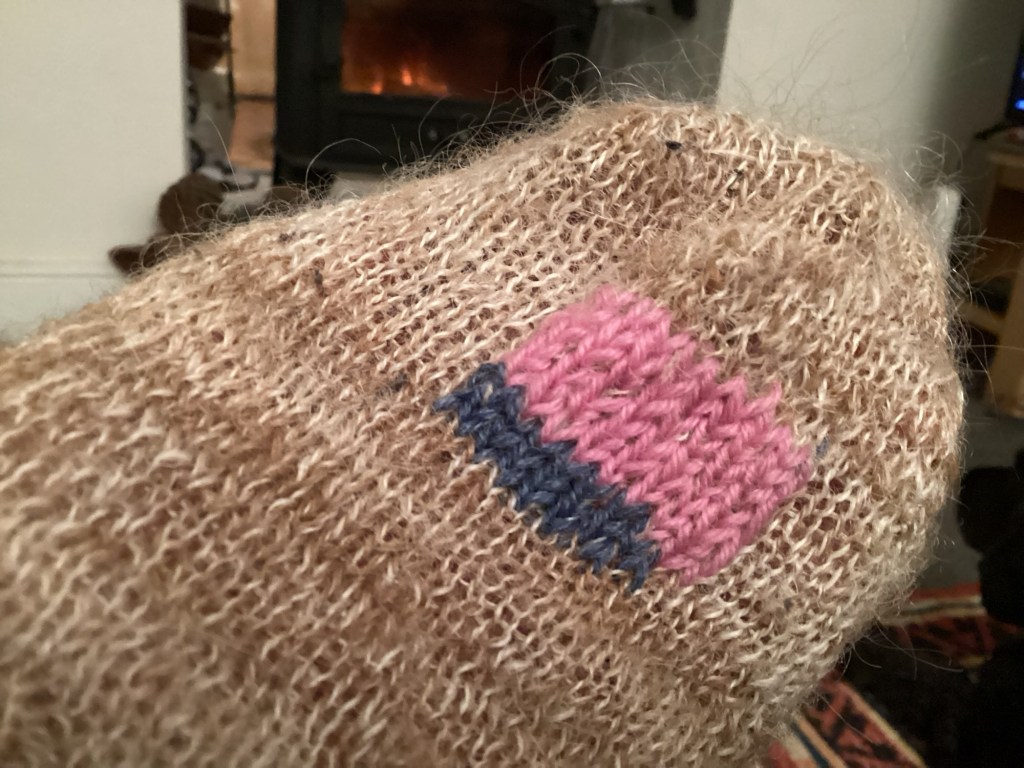
I used one of those little mending looms for the toe repair, but the heels have been done ‘freehand’ using a technique from a 1970s mending book. I bought this useful book secondhand when a penniless student in the 80s, well before ‘slow textiles’ and ‘visible mending’ became a thing. Since then, useful book has helped me extend the life of many items for reasons of economy and necessity rather than fashion. Now my mending is on trend and it’s good to see the skill encouraged by a plethora of modern books on the subject.
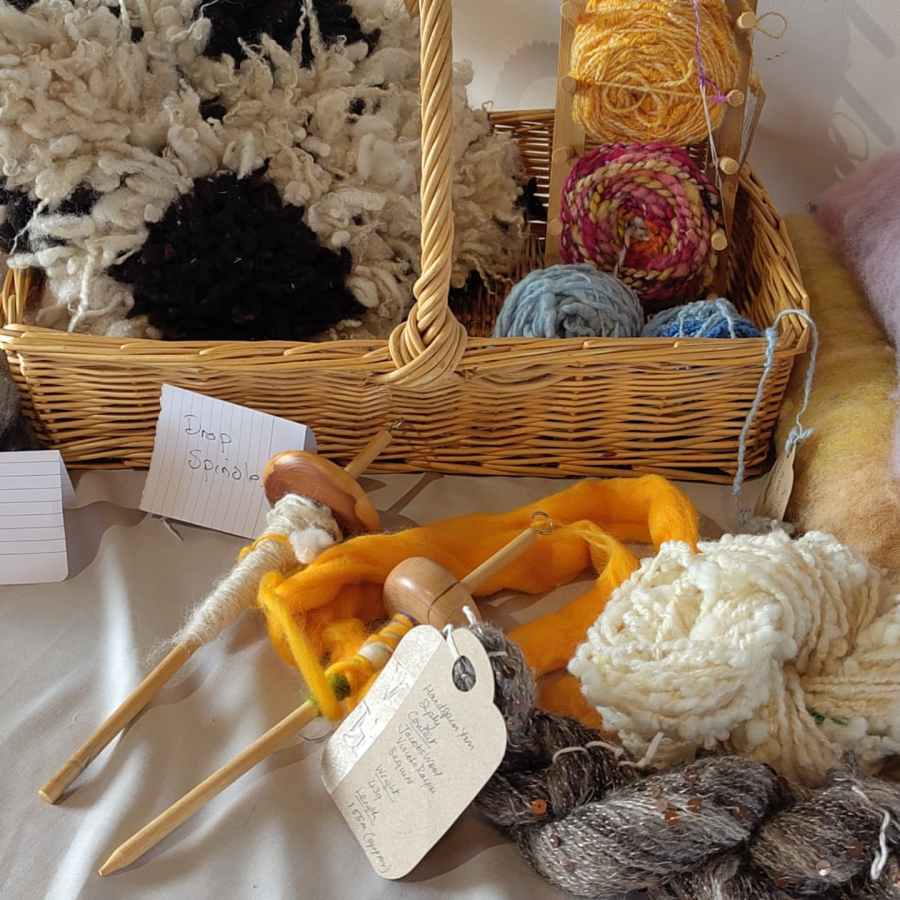
Demonstrating at Coldharbour Mill
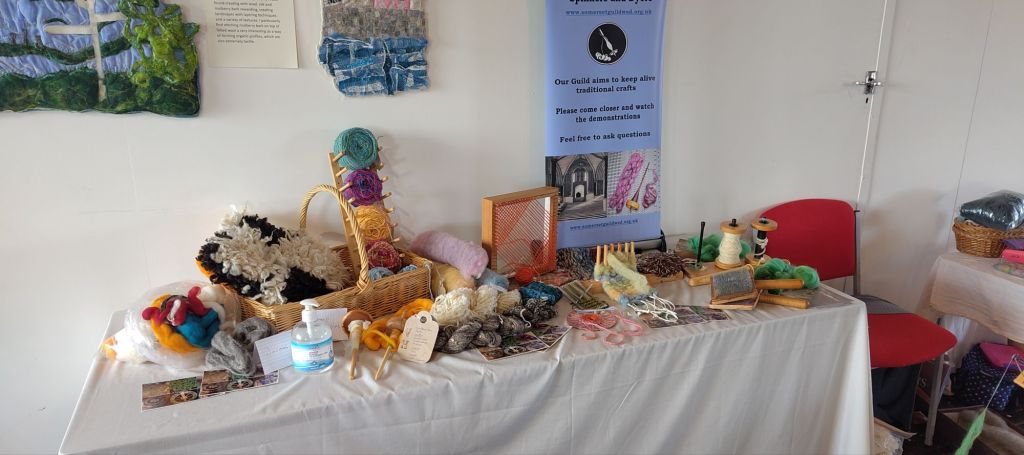
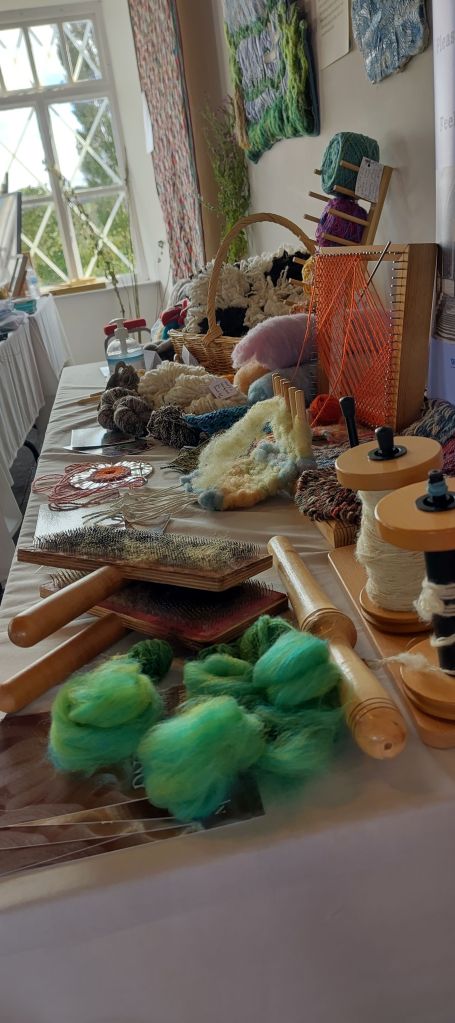
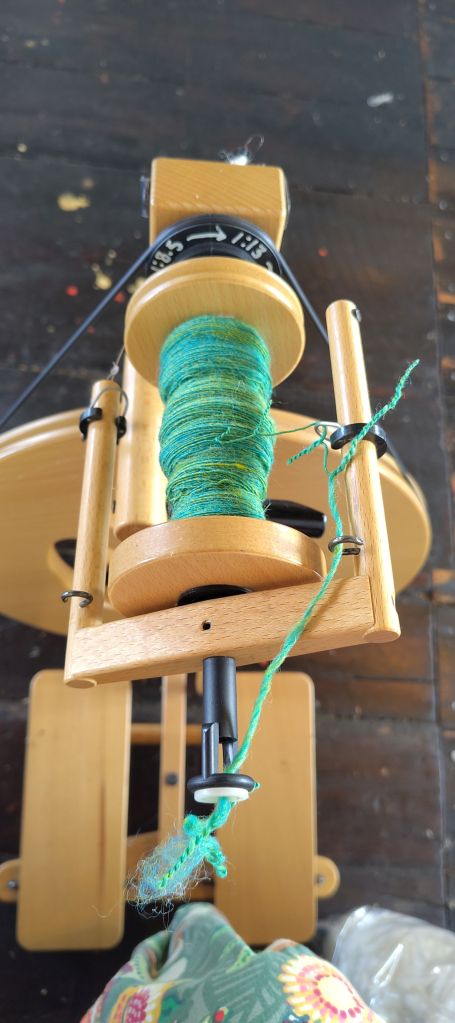
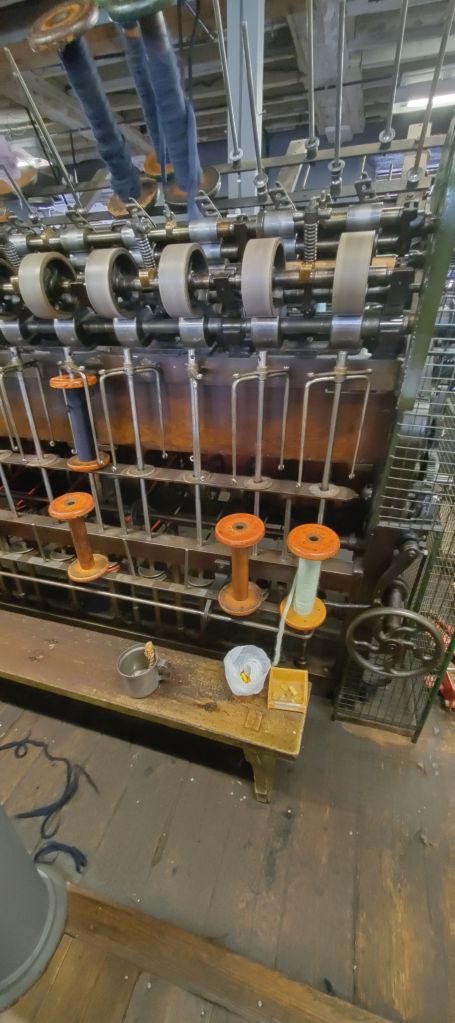
Today I was invited as a member of the Somerset Guild of Weavers, Spinners and Dyers to demonstrate spinning at the Heritage Craft Show hosted by Coldharbour Mill in Uffculme. It is a fascinating working museum with wonderful old textile machinery. Well worth a visit.
Home
Cutting a warp off my inkle loom
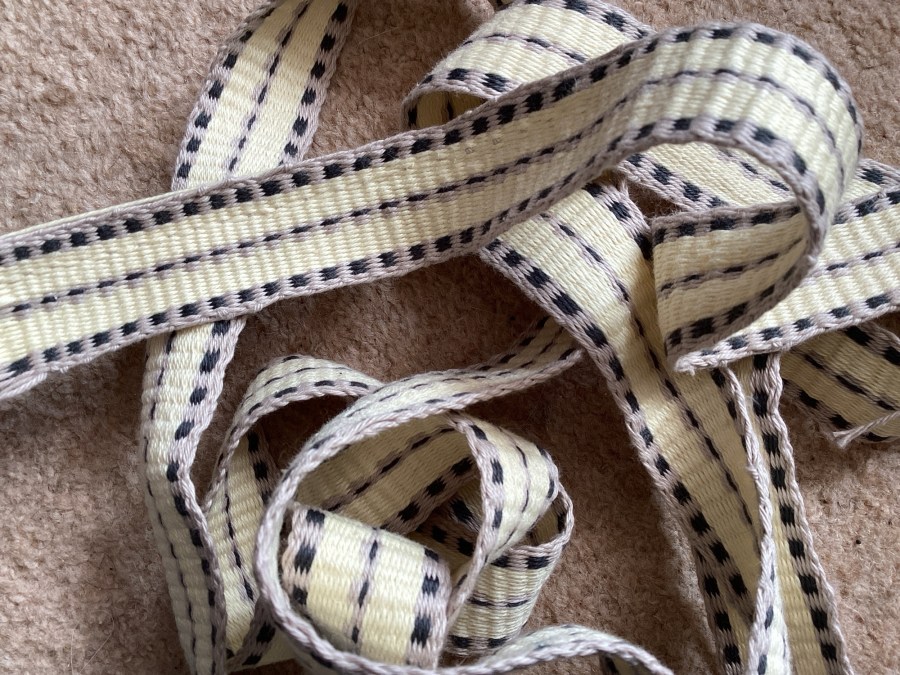
Cutting the warp off, is for me, a scarey, but exciting part of weaving. I started this inkle band during a workshop with the Somerset Guild of Spinners, Weavers and Dyers several months ago. When I got home I did a bit, but it sat part done in the corner for all this time until I was fired up to finish a few projects off and wove the last fifty or so centimetres yesterday evening.
This morning I cut the warp and will now wash the band. It is in 4ply hand knit/crochet cotton and follows a simple pattern that was set for the workshop. The colours were chosen to suit the living room curtains and if I ever get around to it I will make this band into tie-backs for the curtains, (which was my original intent).
Making a warp for testing out my countermarch loom
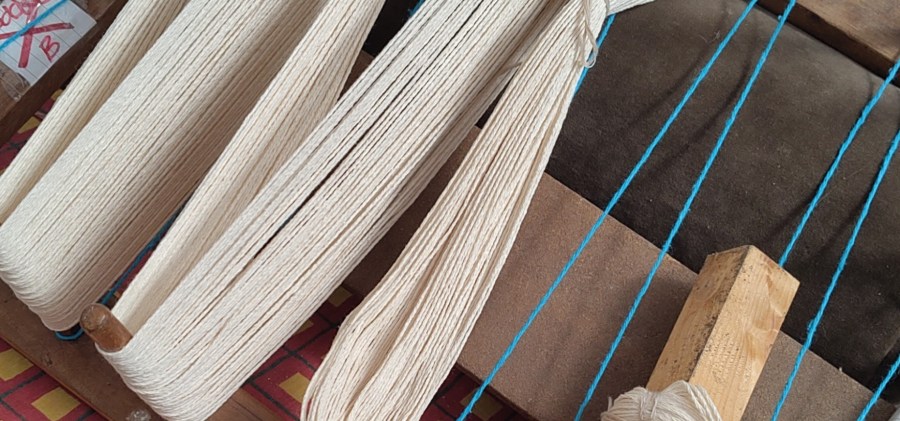
It’s taken me a while, but I have finally made the warp which I will use for testing out my new (to me) countermarch loom.
It’s taken me a while as we have building work going on in the house so I am moving from room to room to escape the chaos. I finally ran out of places to go, so ended up in the conservatory which is HOT. Lots of short breaks needed.
I am in two minds about what to weave. My heart says a fleece rug – I have two in bags in the shed, but my mind says ‘ do you need a rug,?’ What I really need is more tea towels, since my son burned a hole in one of my hand woven ones.
The loom has got an 8 dent reed and I am using a thickish cotton and making a sectional warp because my warping board pegs won’t take more than 80 ends of this. I’ll thread it up as a twill and let myself be guided by the spirit of the day I start to weave.
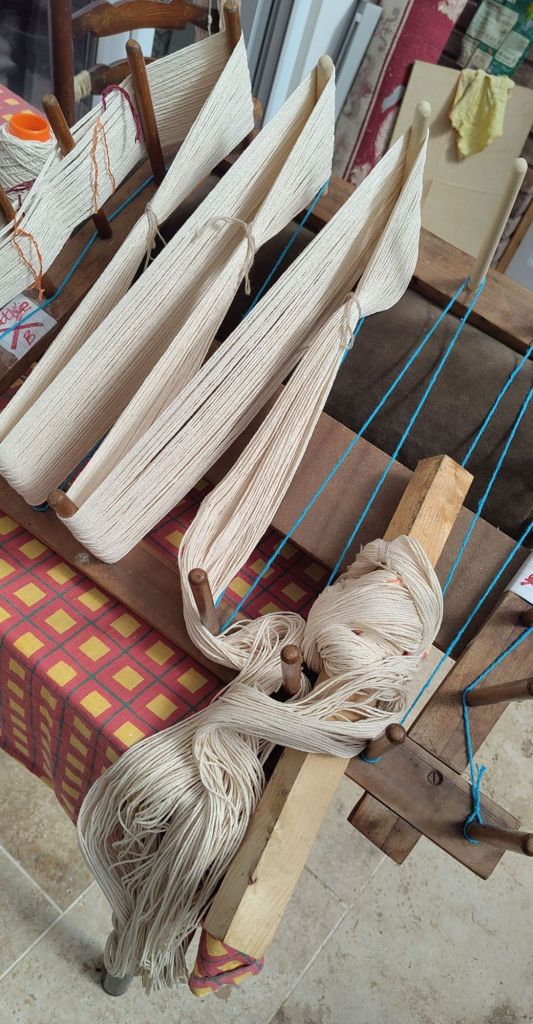
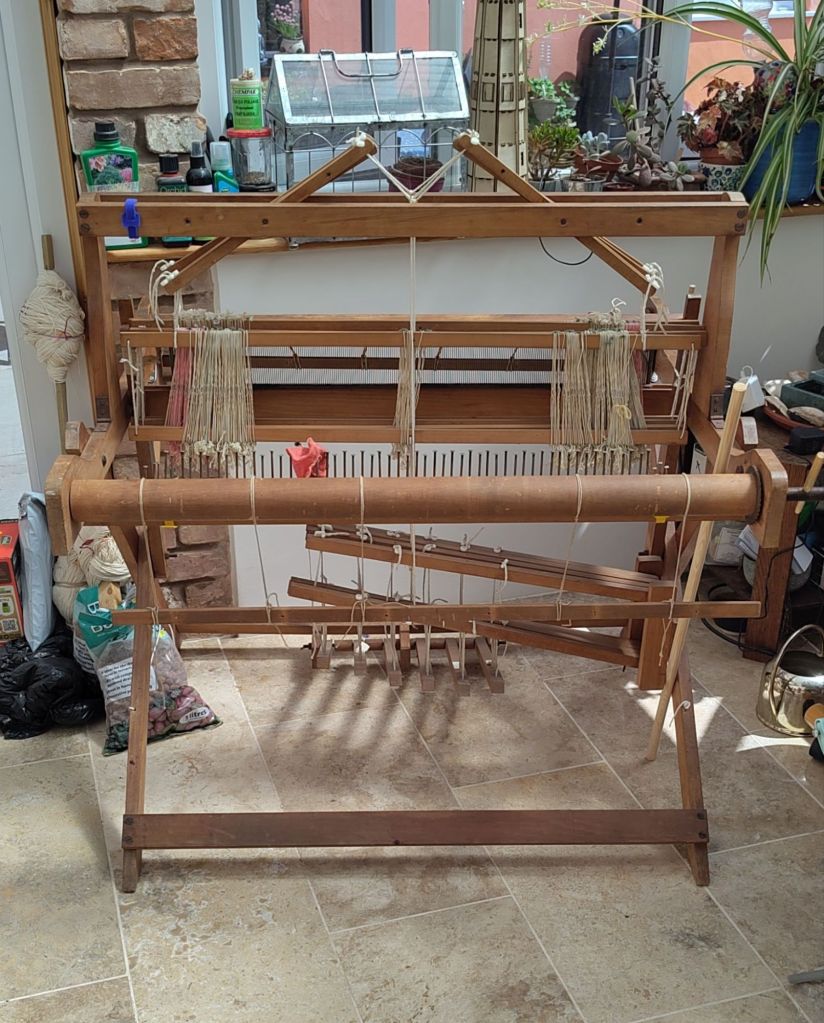
The loom waiting for the warp. I know I’ll be whining about back ache quite soon…
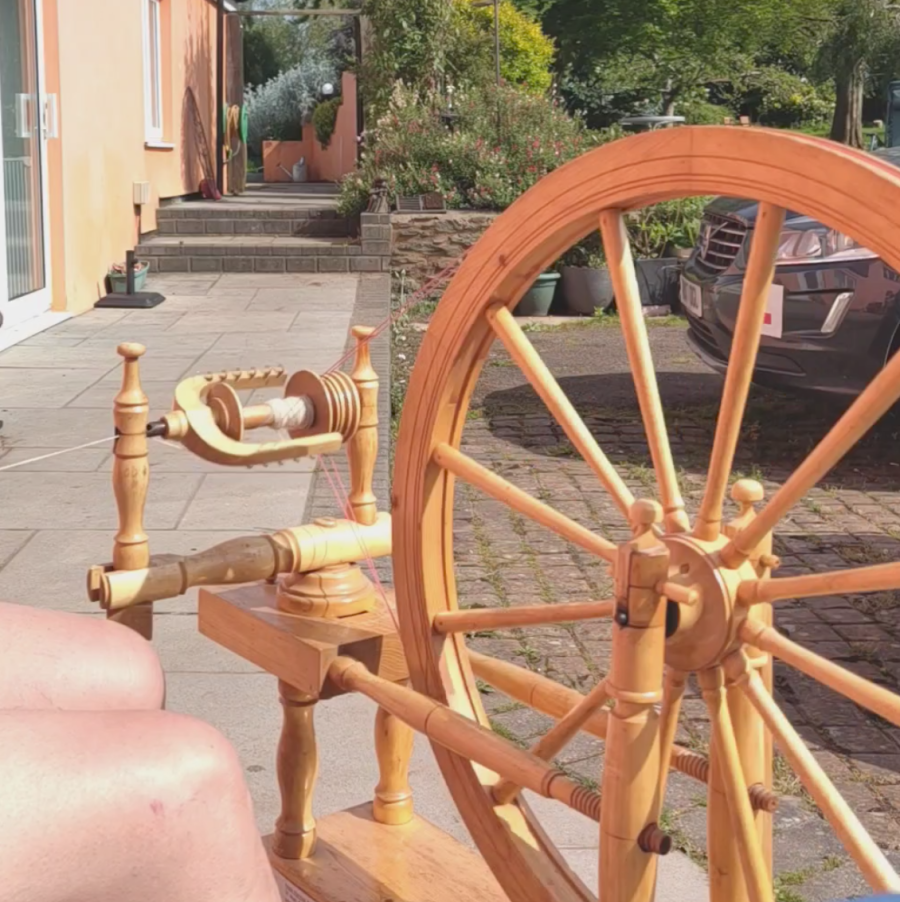
Making the most of the sunshine
How often do we have such gorgeous weather in May in the UK?
So I decided to take advantage of it by having a swim and then sitting down with my spinning wheel to spin up some Jacob’s rolags I’d carded last night. What more perfect way of spending on Friday afternoon.
Ok the garden needs attention and I’ve got plants to plant out and I should be writing and all sorts of things, but sitting in the sun and spinning just seemed undeniable.
See more about machine and hand knitting and hand spinning on my ‘Vikkikit’ YouTube channel.
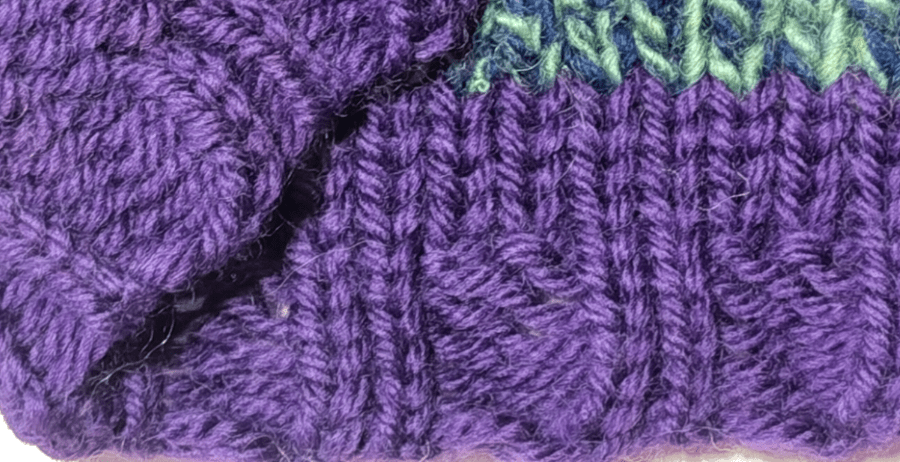
Reforming ribs on a knitting machine
Reformin, or ‘latching-up’ single bed stitches into a rib structure is sometimes seen as far too time-consuming for a ‘fast’ activity like machine knitting. However, I quite enjoy the process and have written about it and made a ‘workshop’ video of working a 2×2 reformed rib here. I hope you find it of interest and useful.
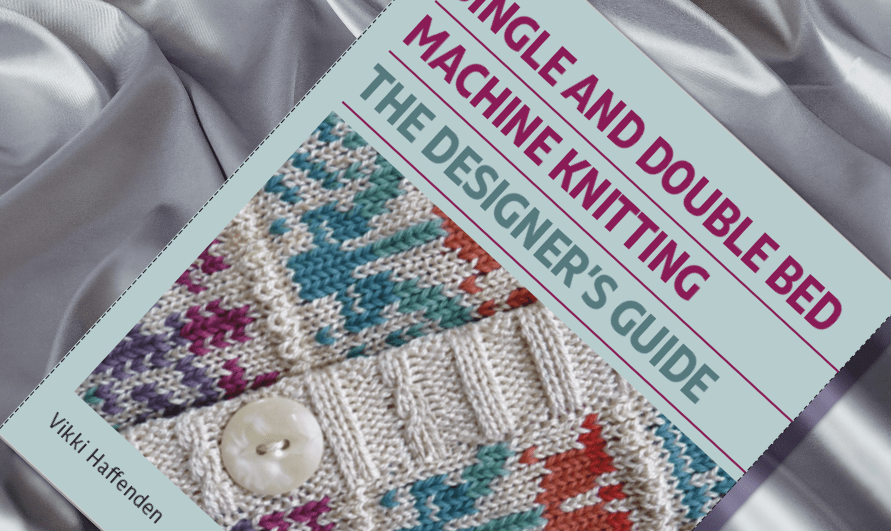
How to meet my readers…?
Hello there. I am keen to know my readers, and meet people who own a copy of either of my knitting books, ‘Translating Between Hand and Machine Knitting’ or ‘Single and Double Bed Machine Knitting; the Designer’s Guide’. Obviously meeting people in person might be tricky, so I have been wracking my brains about how to do this and settled on trying to set up an image gallery of people who own a copy of one of both of these books.
It would be wonderful if you could post a photo of yourself holding your copy, and with your knitting machine as well if it works for you. If you prefer not to be in the photo yourself, a photo of your copy of the book sitting on top of your knitting machine would be lovely, and a piece of your knitting as well maybe? Please also add a brief review if you have time, its always useful to get an insight into how readers see what I have written and feedback helps me develop my approach for future books.
I can only think of Facebook or Instagram, but I’m sure you will have other favourite places to post. It would be good if you could add the hashtags shown below so that I can find your posts. I will start the ball rolling on Instagram.
Hashtags #vikkihaffenden, #TBHMK, #SDBMK, #vikkiknit, #crowoodpress, #machineknitting
When you post a photo, do feel free to leave me a message pointing to it on this page.

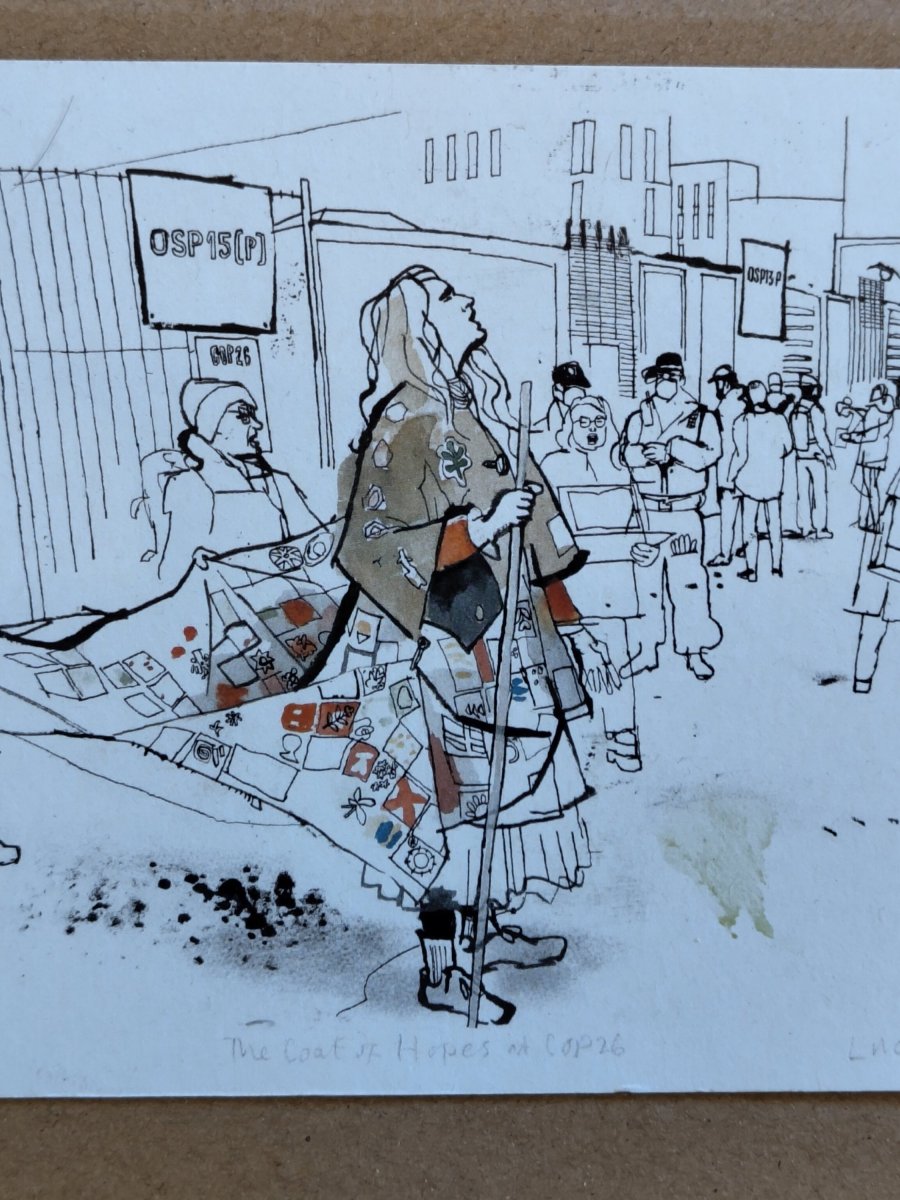
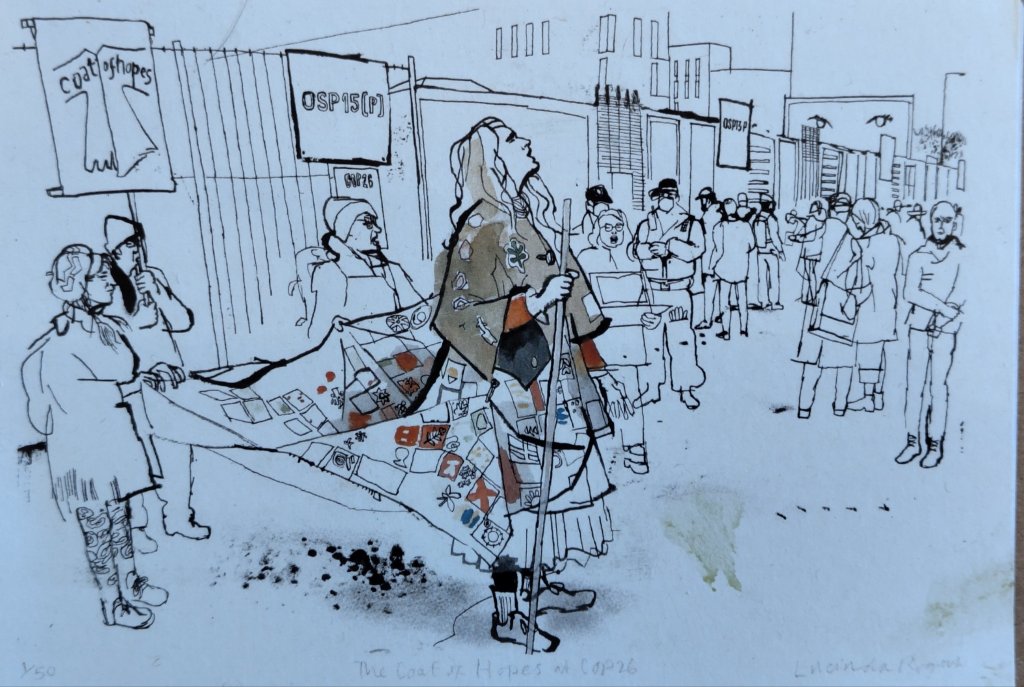
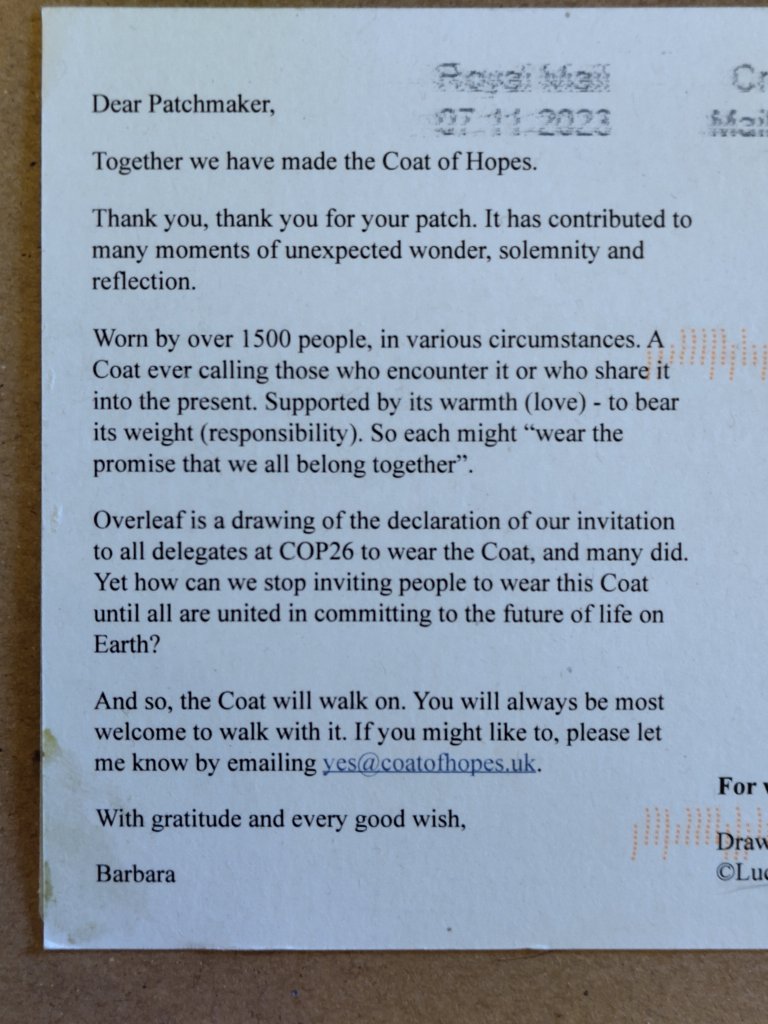
Postcard from the Coat of Hopes
Today I received this card following up my contribution of a patch to the Coat of Hopes.
Patches were created by so many people who feel strongly about our climate health and future. Into each patch the maker wove their, “griefs, remembrances, prayers and hopes for the place they call home”.
The coat was worn on a walk designed to coincide with COP26 which took place between August and October 2021 from Lewes in Sussex to Glasgow. The coat is still on an ongoing journey through the UK. See more on the Coat of Hopes website.
A ‘wow’ review of ‘Translating Between Hand and Machine Knitting’
I found this review on Facebook ‘Machine Knitting’ group, and have to share it. I was so thrilled that this reviewer ‘got’ the book so thoroughly.
Book Review:
Translating Between Hand and Machine Knitting by Vikki Haffenden
☆☆☆☆☆☆☆☆☆☆ 10:10
“This book ought to be mandatory reading for every new machine knitter!” -me
“This book needs to be on every machine knitter’s manuals shelf, in pride of place, no matter if you use Silver Reed or Brother!” -me
“Where was this book when I was desperately trying to learn how to design lace/translate lace cards between Brother and Silver Reed?!?!” -me
This book is absolutely essential equipment as far as I am concerned! It starts out covering and comparing materials and equipment for knitting, both hand and machine versions. The pictures will blow you away and they only get better. Please, at this point, re-read the title. It does not state ‘pattern’ in the title.
Next it goes into stitch construction and compares hand and machine and final product of each. This book give equal time to both! It goes into yarn fiber types, yarn construction(spinning), yarn types (boucle vrs worsted). The details are absolutely in depth and extremely easy to understand with stupendously clear focused pin-pointed and highlighted photography and exemplary diagrams that compare every aspect of stitches, fabric, mechanics, of hand and machine knitting. It breaks down differences between brands when there are differences, and does not favor either. There are some references to Toyota and Passap, but the main info concerns Silver Reed and Brother. This covers every type of cast-on and cast-off that I could remember!! It isn’t a how-to… it compares them and shows some GREAT visuals of them on and off the needles. Refer to your manual for specifics on how-to cast-on and cast-off. Basically, this book compiled most of the answers to questions I have asked in the past, questions I have hunted down answers to, and questions that I hadn’t even thought to ask. It is utterly fantastic. Only the very last chapter goes into translating PATTERNS between hand and machine…
Buy it! Buy it NOW!
I can not say enough how much you need this book! How much I needed this book… now if I can just convince her to write one on Passap…
No! I have no affiliation with the author… I wish I could say I know her.
Since reading it I have replied, so let’s hope we can converse about knitting I the future.
 Vikki Haffenden