Fancy yarn workshop; spinning boucle yarn

Yesterday I had a fab time at a workshop learning to spin fancy yarns. We only managed boucle and slub but that was so rewarding. The workshop was organised by the Brighton and Hove Textile Arts Group and hosted by Spring Farm Alpacas in Fletching West Sussex. Ann Dishman led the workshop and provided Blue Faced Leicester tops, still various and other threads for us to spin with.

Although I have spun both types of yarns before, I learned a lot and really enjoyed having four hours in which to practise the techniques. I also found out that Ann had been taught to spin by my spinning hero, Mabel Ross, which made me extremely envious.

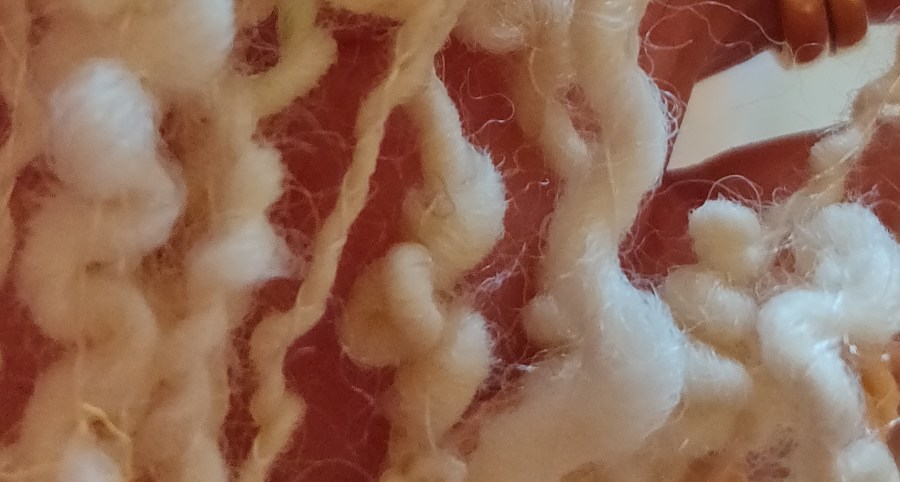
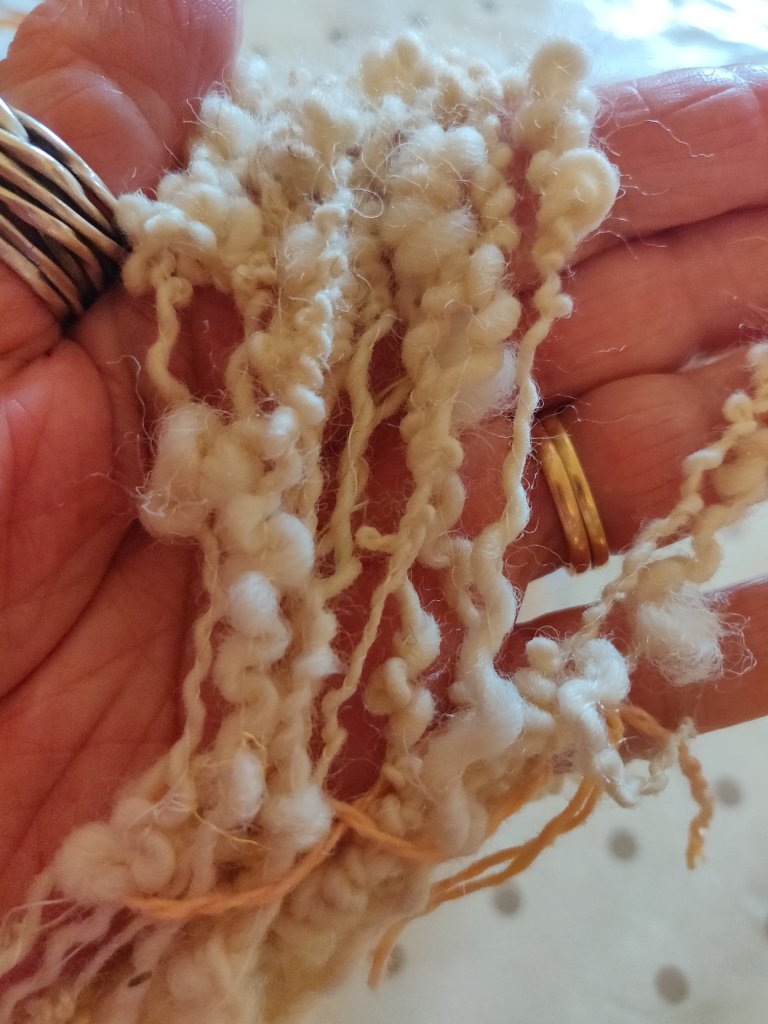
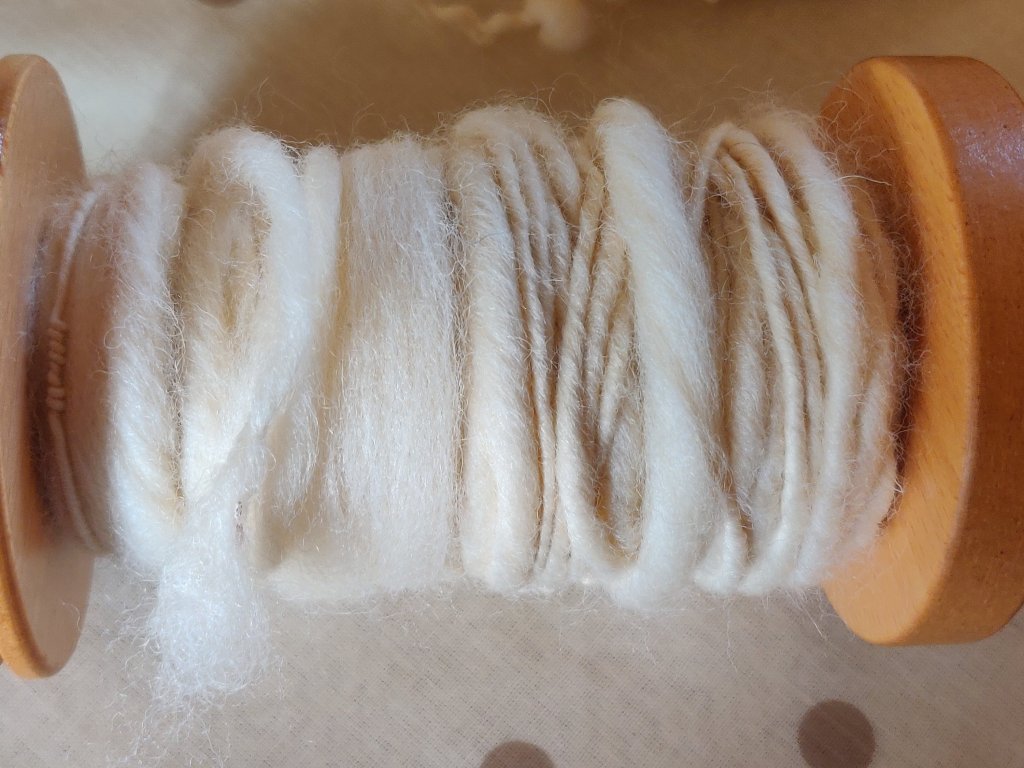
Unwashed boucle, Blue Faced Leicester singles and loops, cotton binder.
Unwashed the boucle was a bit lively, but it balanced out nicely after a strenuous washing.

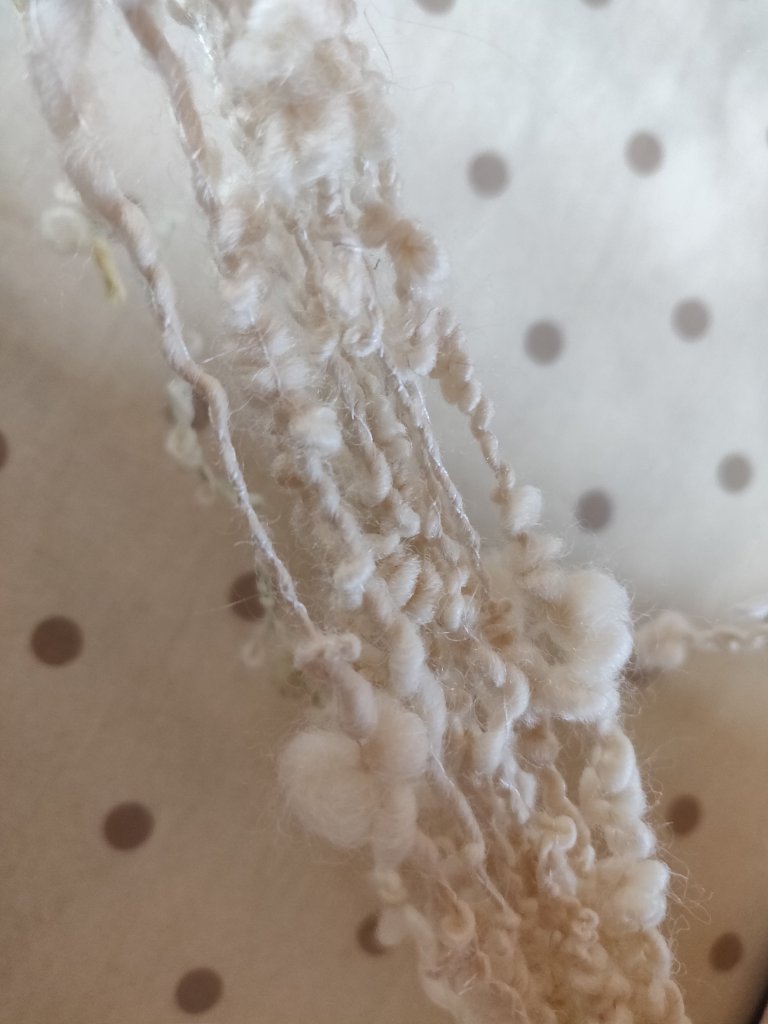
Unwashed soft slub; Blue Faced Leicester singles with a fine industrial wool binder.

I took my Louet Victoria travel wheel and at usual she spin well and reliably, it was the user who made the mistakes!

Rya weave cushion completed

Although it’s taken me a while I have finally finished this cushion.

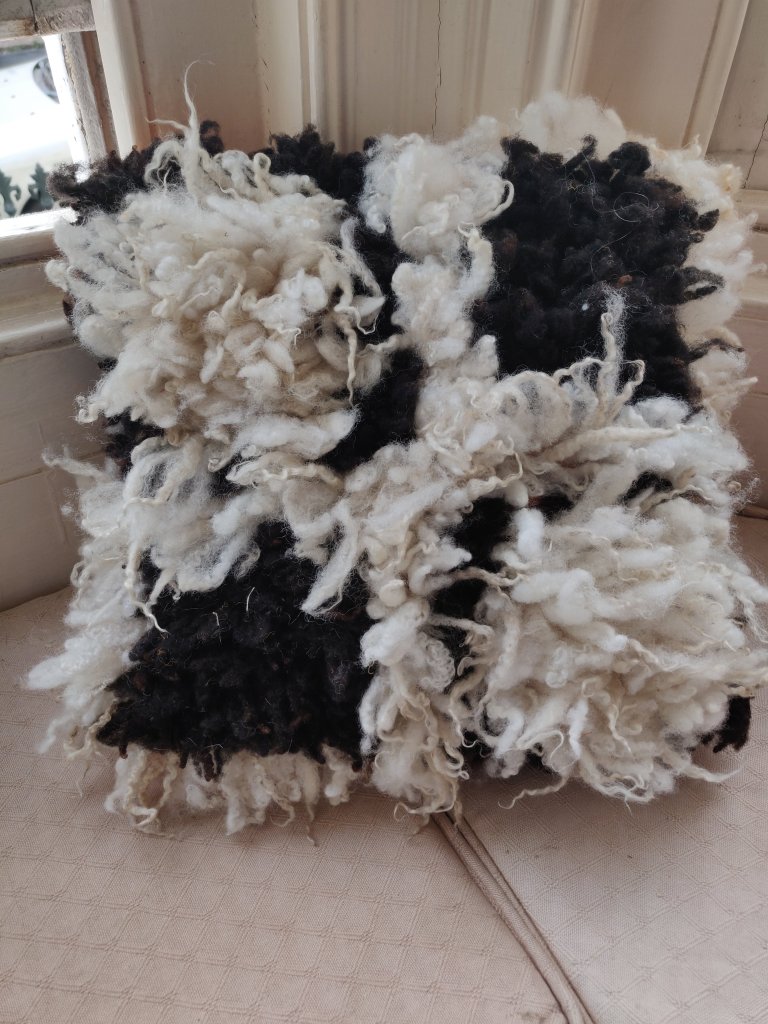
Front of the cushion. A tufted chequer board that is very tactile and squishy.

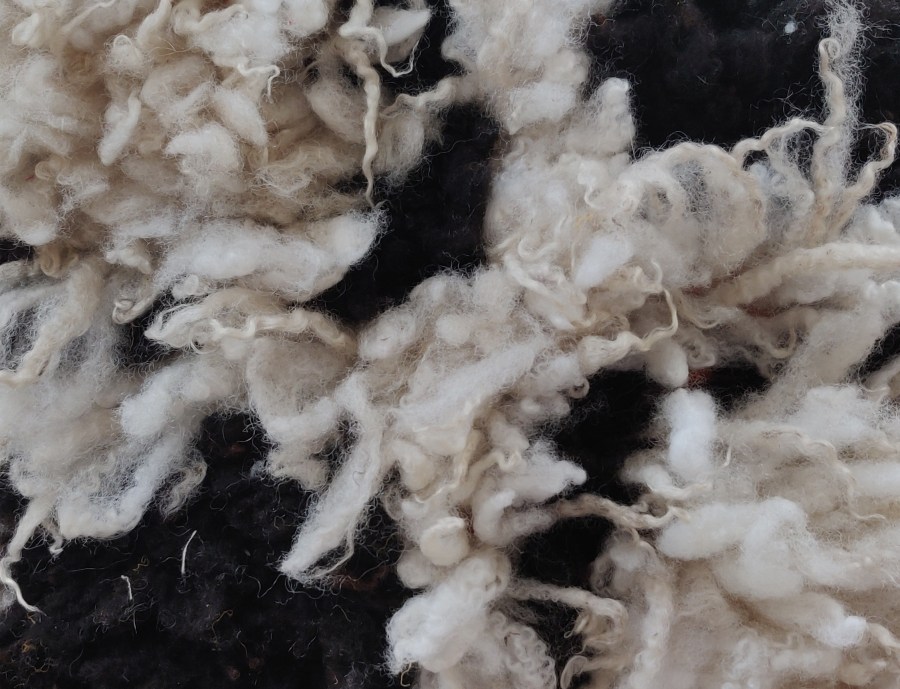
The front is Rya tufted and woven with a British wool rug yarn on a linen/cotton warp. The black tufts are Shetland staples and the cream is a mixture of Devon/Dorset staples. Although it’s not that clear in the photo, the squares are reversed; black edging with a cream centre and cream edging with a black centre.

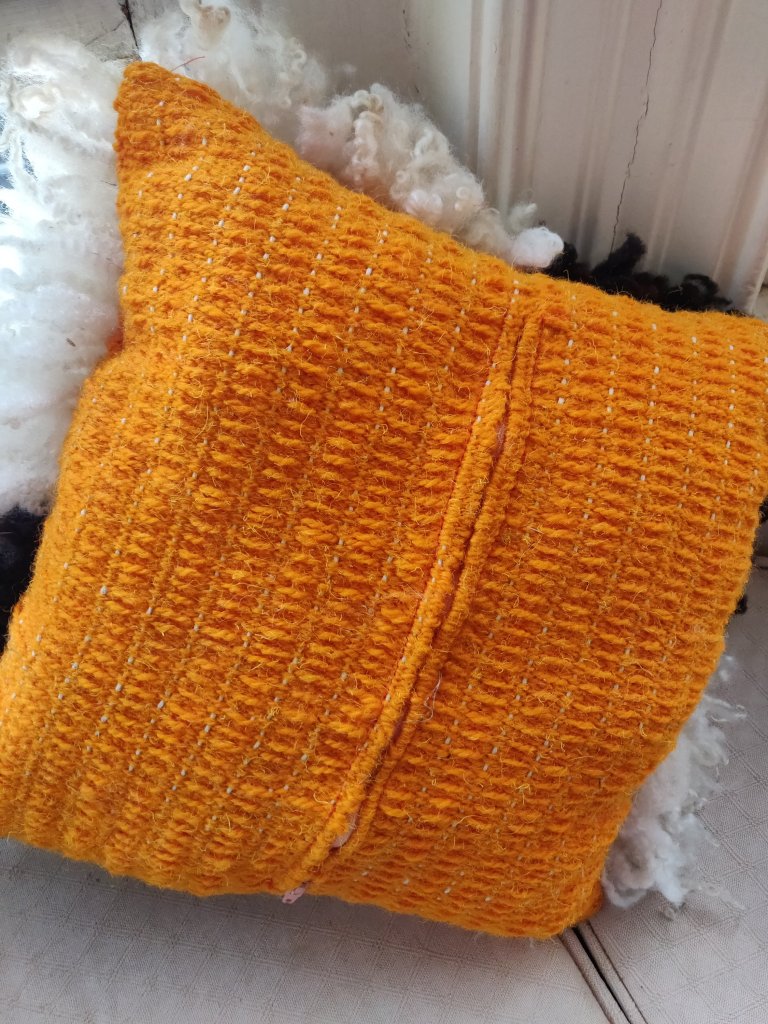
The reverse of the cushion is a faux waffle weave in the same rug yarn that underlies the Rya tufts. Because my rigid heddle loom is only a 20 inch wide, the cushion is composed of four pieces.

I took the opportunity to insert a zip in the centre back seam.

Instead of feathers or polyester wadding, the cushion is filled with a pad of lofty carded wool fleece. I will use this cushion to make my chair extra comfortable whilst spinning at my wheel.

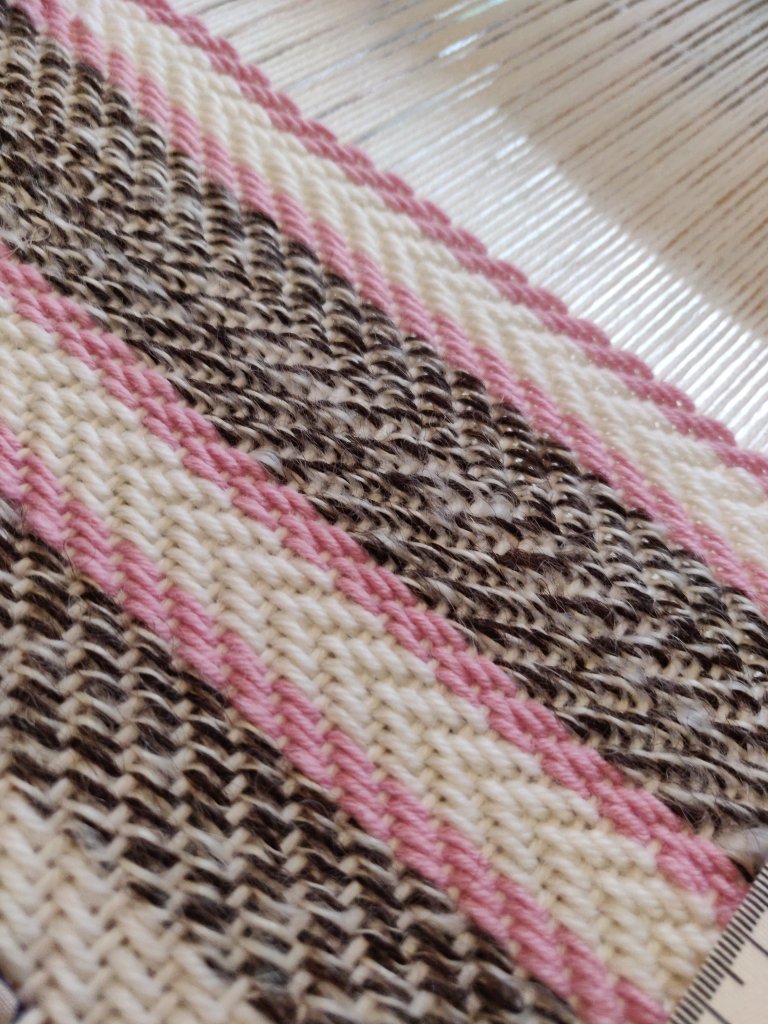
Weaving today for a relaxing time

Today is ‘me time’, weaving with a local group, mostly members of the West Sussex Guild. Although I love knitting, it can sometimes seem like work because of my teaching and writing career. Weaving however, is a new skill to learn just for pleasure. Even though I haven’t heard grasped all the basics I am having fun designing fabrics using the simpler techniques.

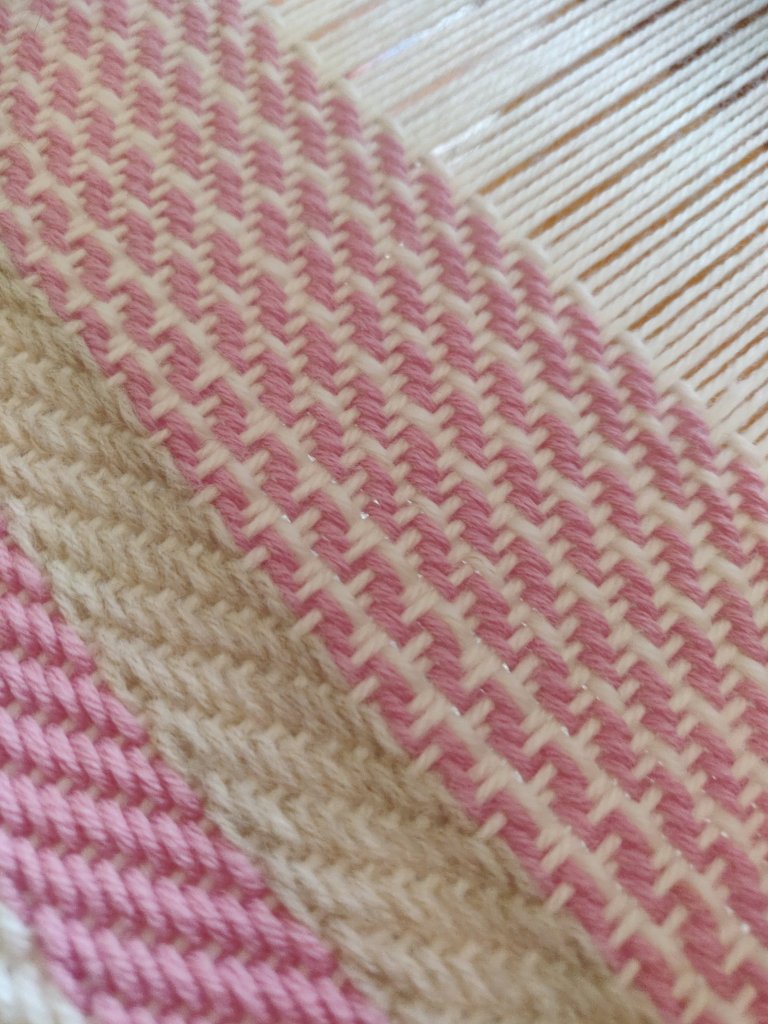
Waffle effect in 100% British wool. This will be the having for the Rya weave cushion cover front I have already completed.

Typically I have already acquired two kinds, both rigid heddle type, but perfect for my early steps.

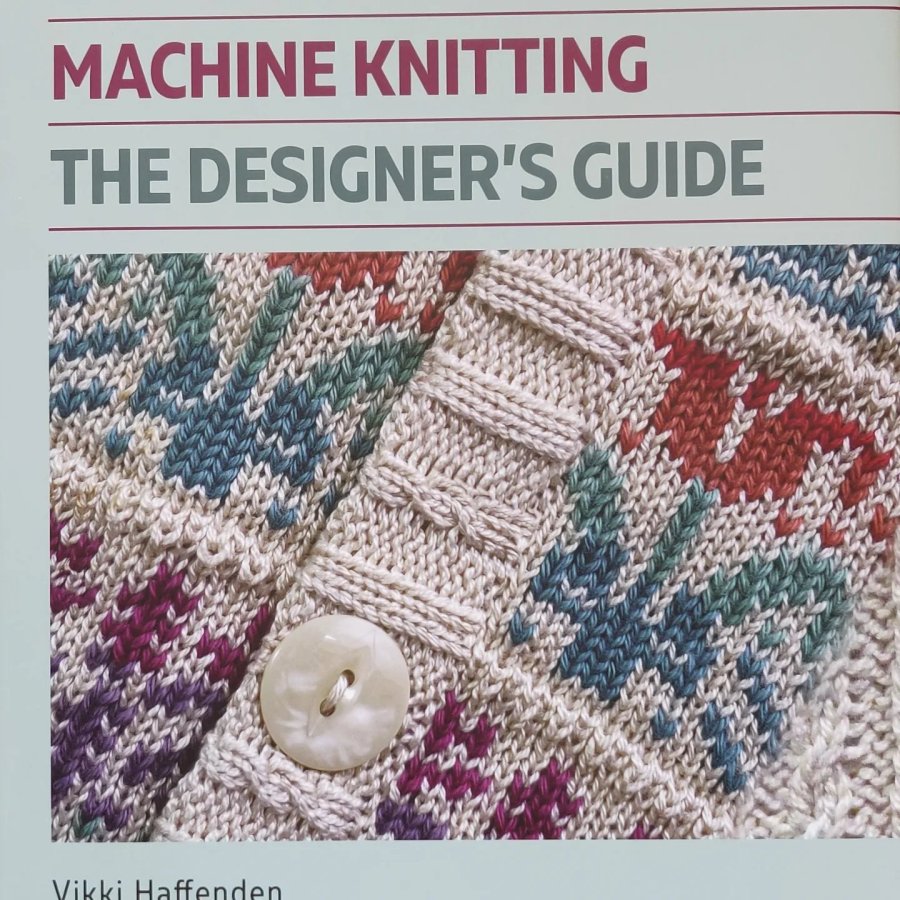
‘Single and Double Bed Machine Knitting; the Designer’s Guide’

The advance copy of my new book arrived today, and you can see some pages from the book here.

Meanwhile here is a quick look at the book.

I have made a more in depth video introduction to the book, and if you would like to watch this, please keep on scrolling down the page.

Seamless machine knit socks

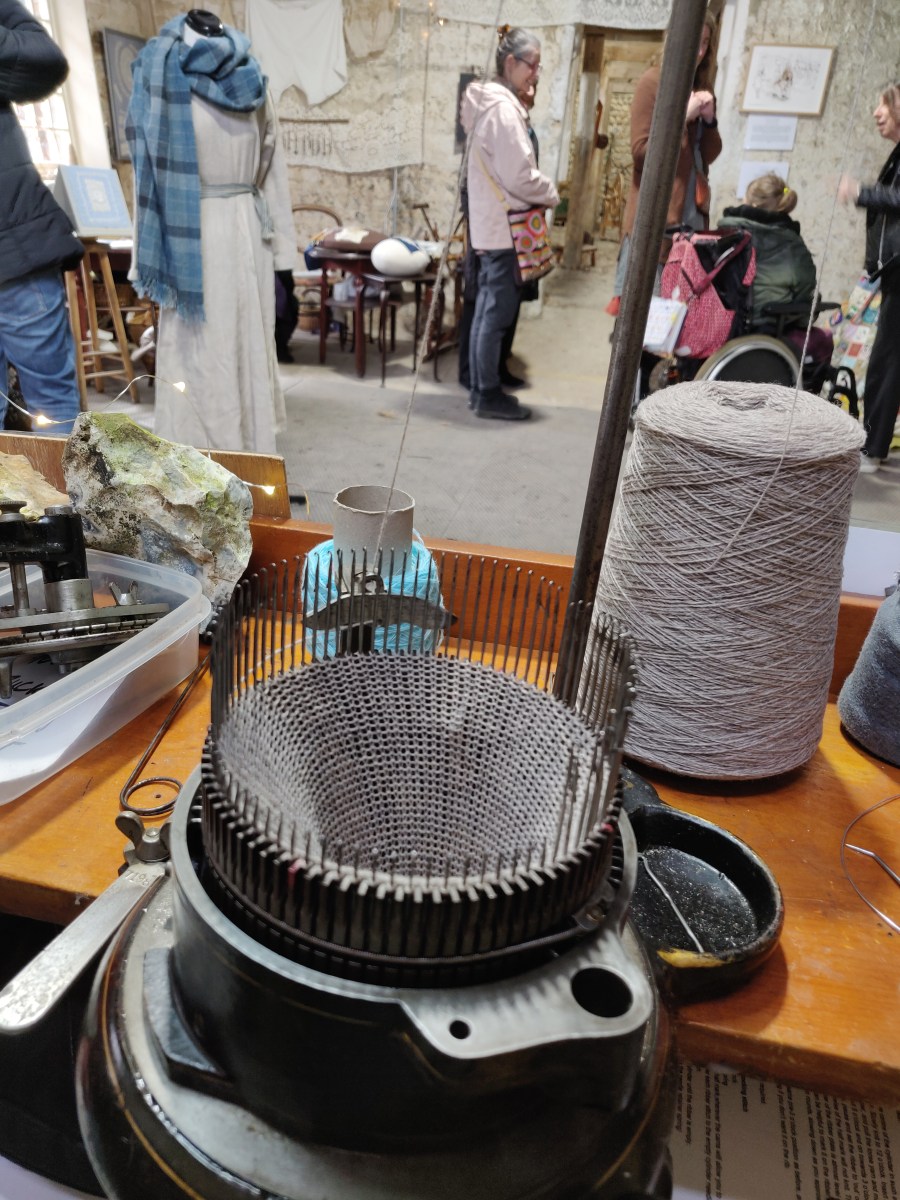
Slow and steady is best when demonstrating live!

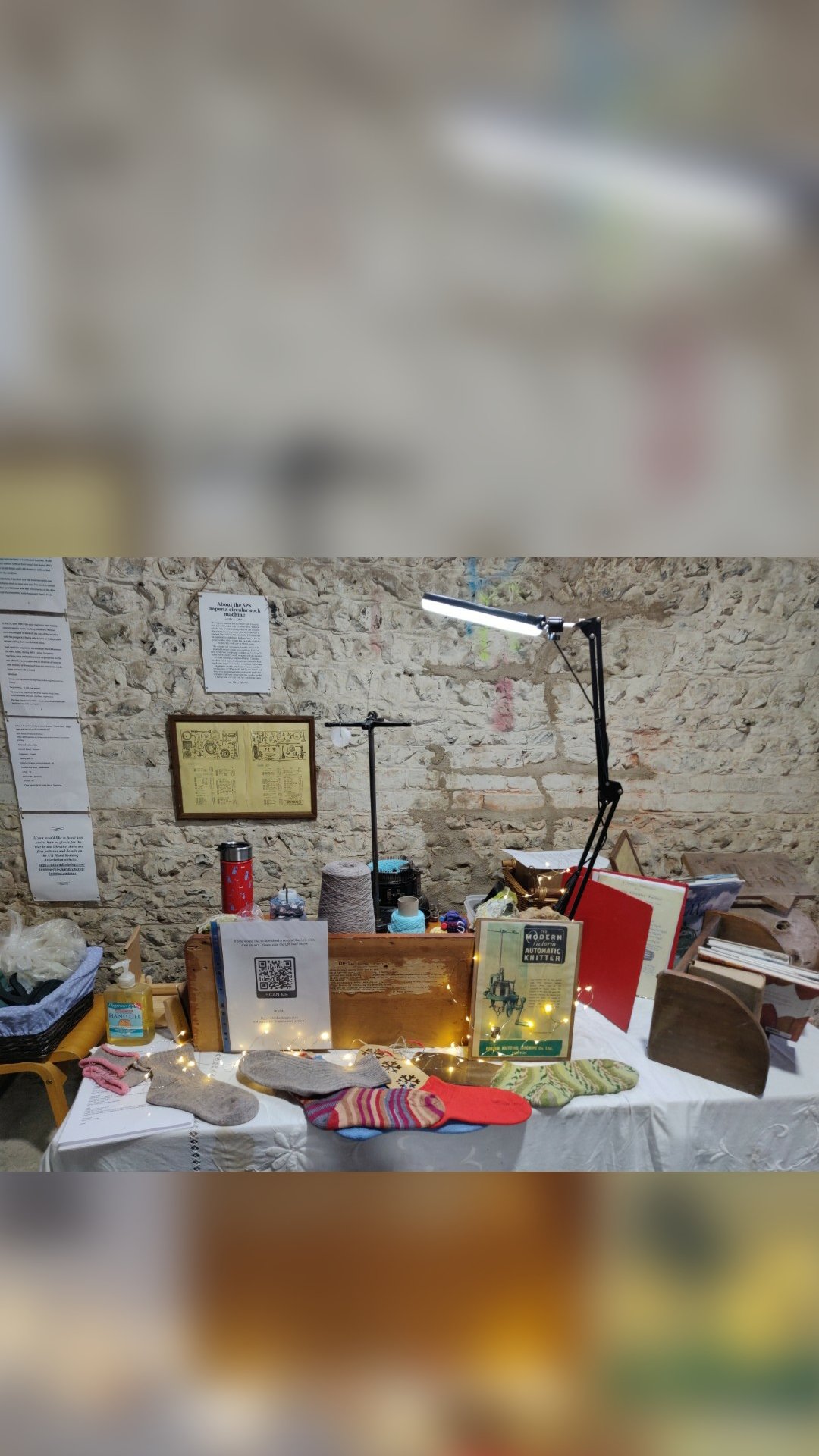
This was taken at Traditions in the Making, a Heritage Craft event at Stanmer Park, Brighton. With lots of volunteers from local community textile group Woolly Umbrella, alongside the CSM there were demonstrations of flax processing, lace making, weaving, inkle looms, wool fibre preparation (hand and drum carding), embroidery and wool and flax spinning.

The CSM is an Imperia with an 84 slot cylinder and gm here I am knitting a sock in traditional 3ply sock wool; no nylon. This was the nearest we could get that was most like the wool probably used originally on the machine. Although I have knitted on it with hand spun I felt that demonstrating required enough concentration without the worry of irregular yarn!

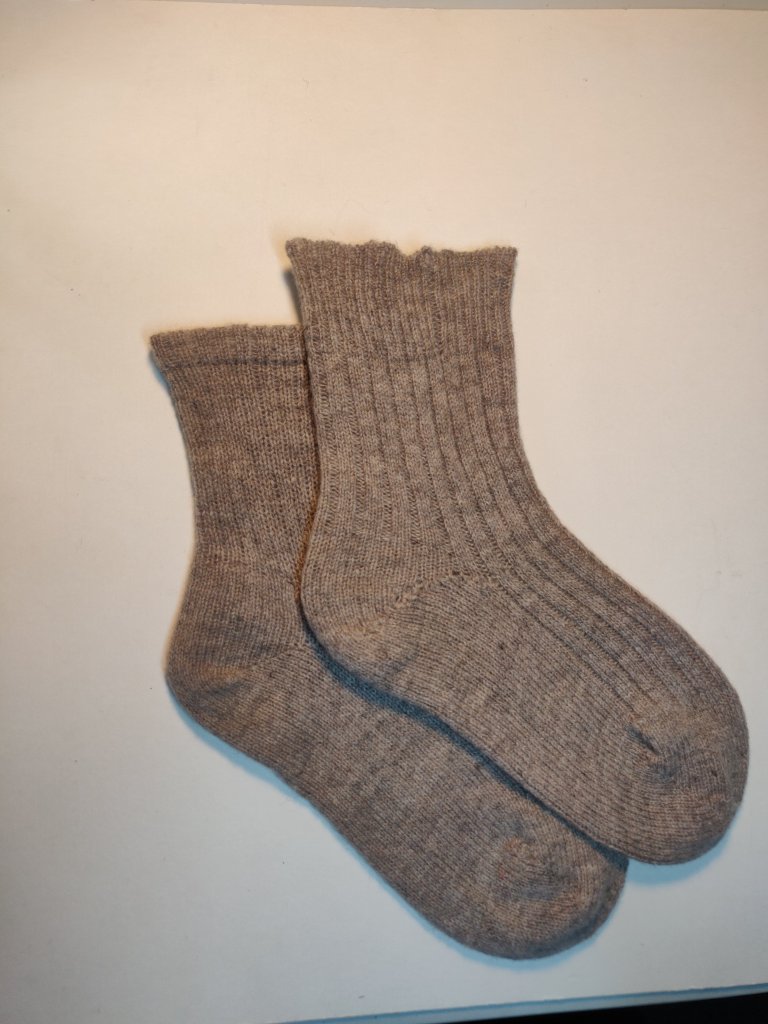
Two types of socks in the 3 ply yarn, fake rib and true rib.

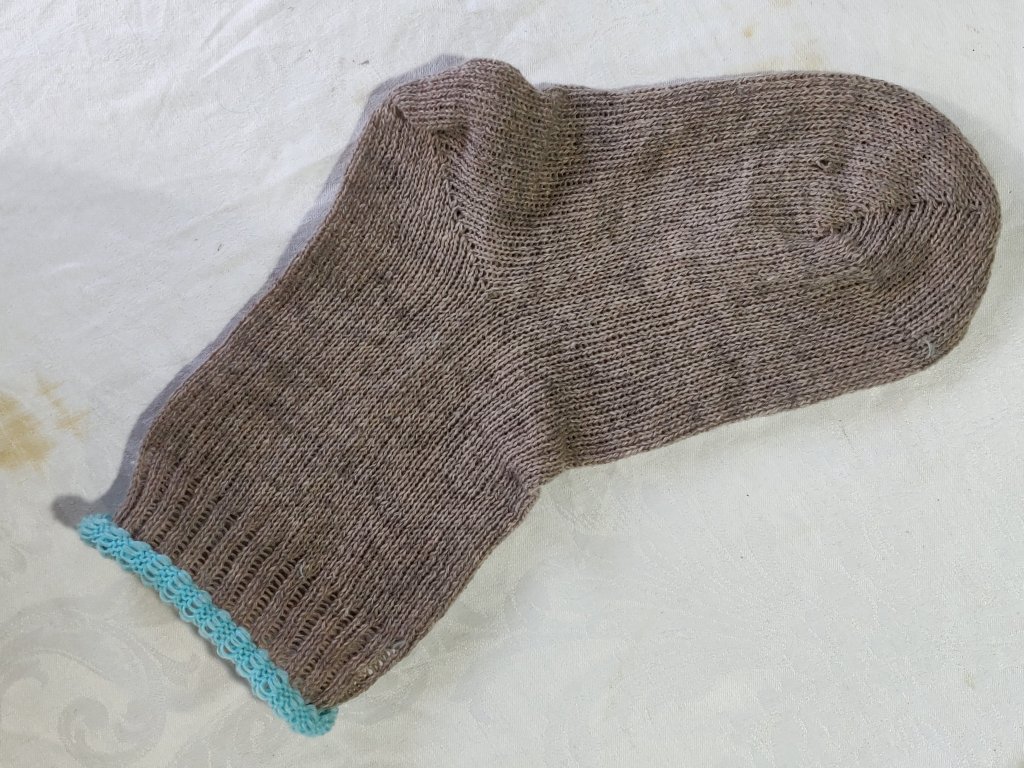
In a brave, but foolish, moment I decided to try a toe-up sock at one point. It wasn’t too bad at all, and I am quite pleased with the result.

Toe up sock, still waiting to be hand finished

Proofreading ‘Single and Double Bed Machine Knitting; the Designer’s Guide’

I am now part way through proofreading my latest book. It’s a lot knottier checking double bed as well as single bed instructions!

The book covers, without stating the obvious, single and double bed machine knitting techniques and design. Brother,  Silver reed/Knitmaster are the main machines, but Passap machines are also included in some sections.

Step by step instructions are illustrated as well as explained in the text and at the end of each chapter there is a Design Studio exploring how to develop the techniques discussed in the first part of the chapter.

It’s got to be done before Christmas, so early mornings and late nights are the order of the day. I’m baking mince pies when taking a rest from the screen.

If you enjoyed Translating Between Hand and Machine Knitting, or are looking for the definitive book on machine knitting I think to will want this book.  You will be able to pre-order soon so keep an eye out.

‘Single and Double Bed Machine Knitting’; The Designer’s Guide‘ will be published in Spring 2023. Yippee.

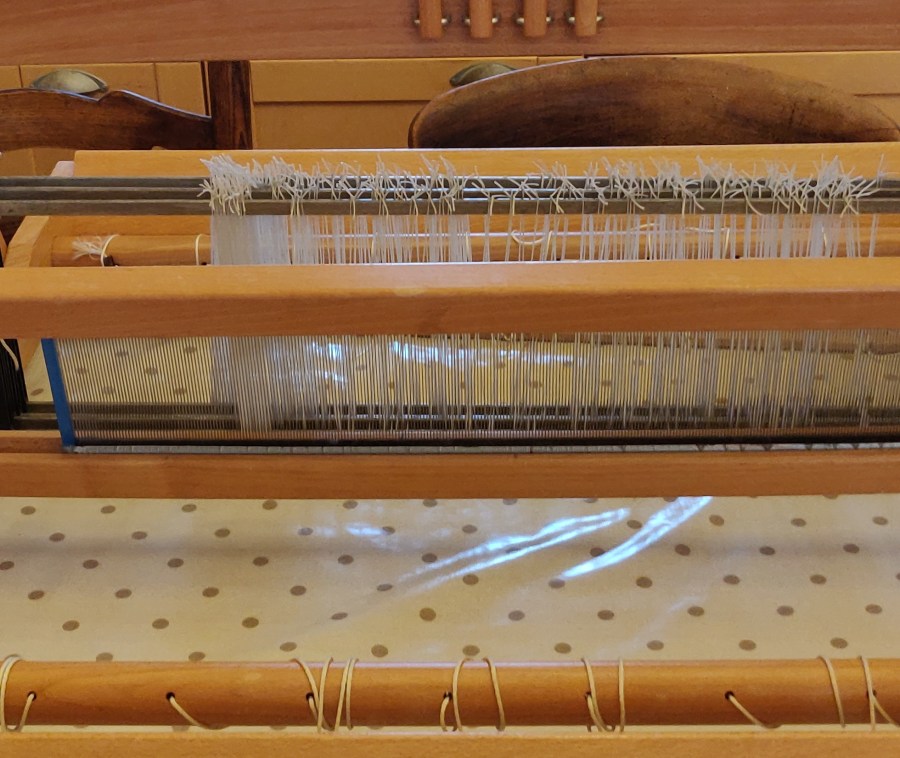
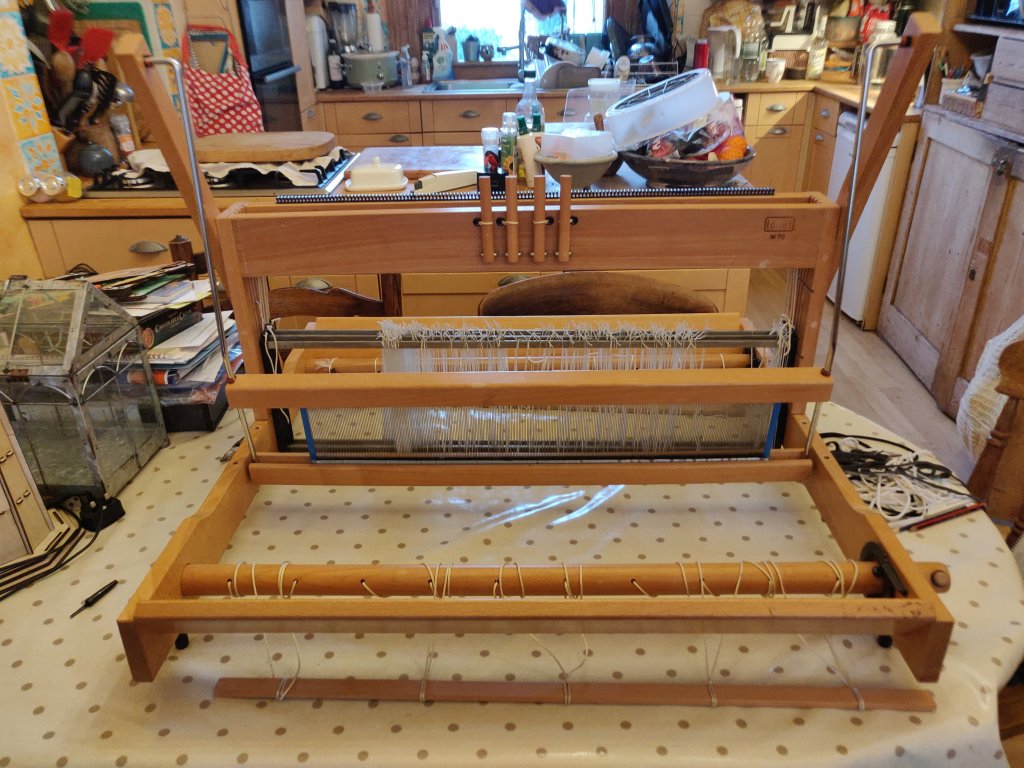
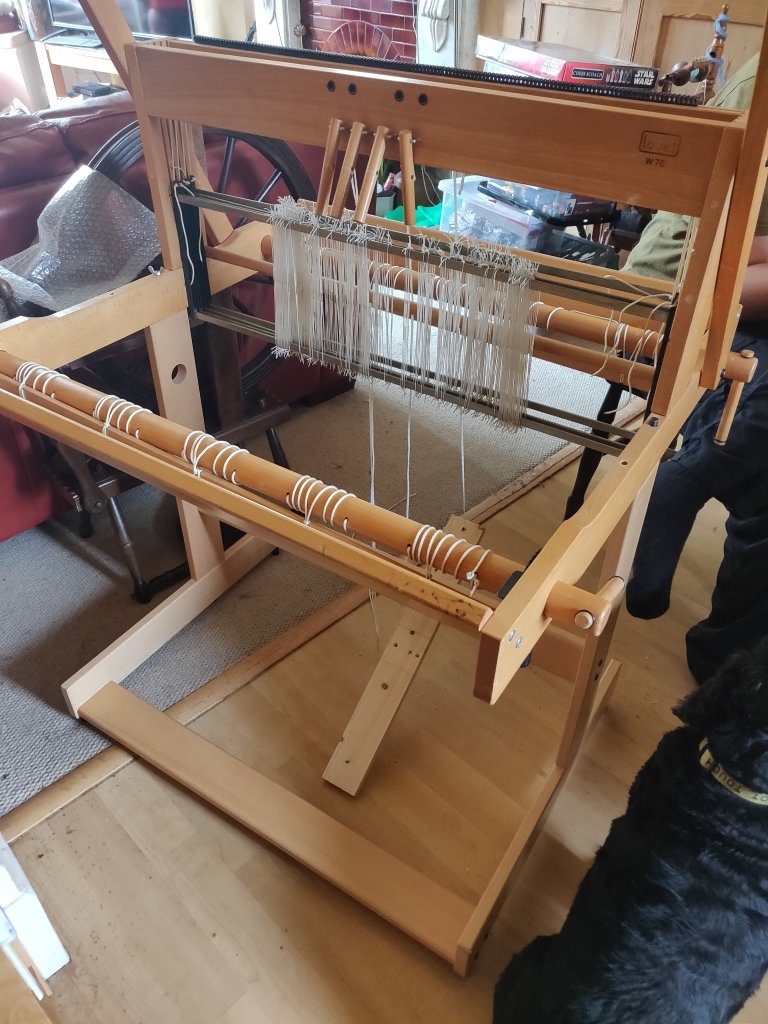
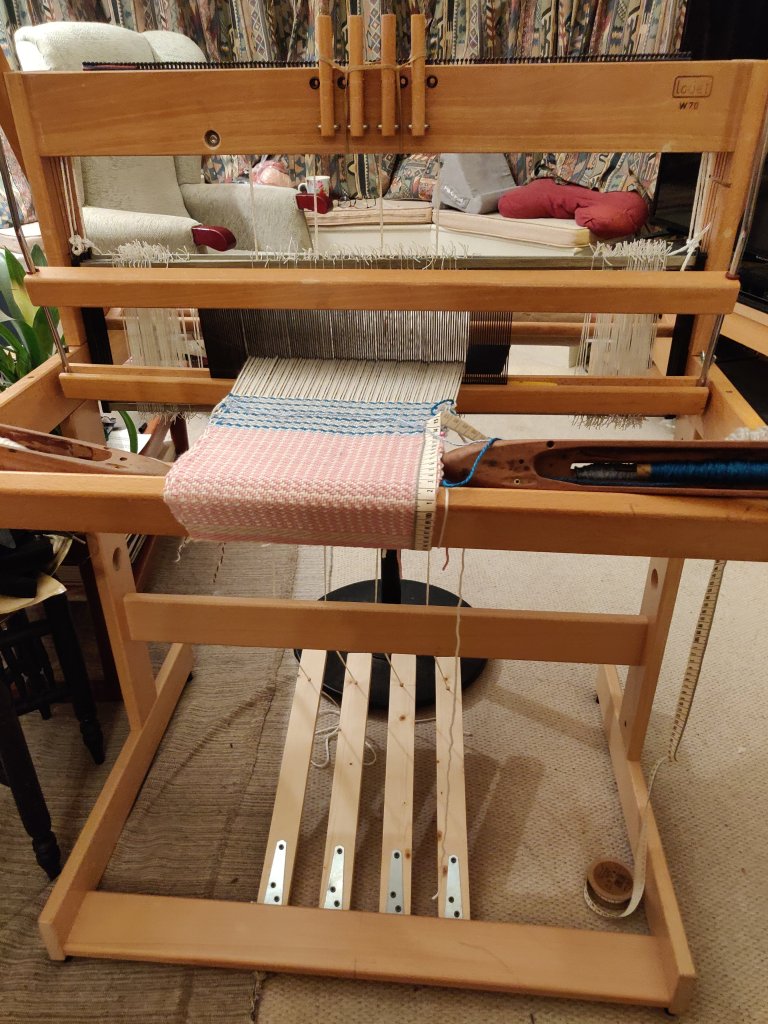
Another addiction: weaving on a rigid heddle loom

I haven’t really woven on a loom since I was a student at college. I have a Spears toy loom which I used for one project but the width is limited and the heddle is quite fiddly to work with. What I really wanted to do was to find a technique that uses up my small bits of handspun yarn my experiments and my texted handspun that I don’t think looks very good in knitting.

The Spears loom is actually quite good, and is very much like using a rigid heddle loom but with the shortcomings mentioned earlier. So I was really pleased when a friend offered to lend me 15 inch rigid heddle loom that she had in her attic. This now gives me the extra width and also the heddle is much easier to manipulate.

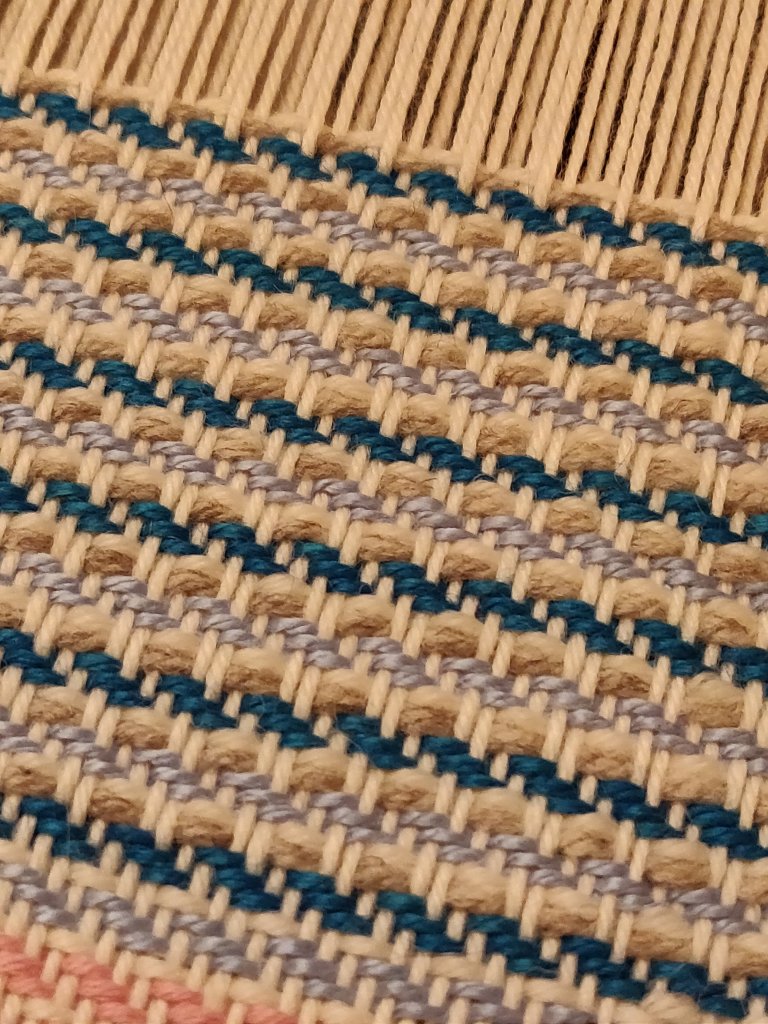
And so my weaving adventure has begun. Kindly she put a viscose thread warp on it for me to get me going and I’ve used this to practise using some acrylic DK yarn I had to hand.

Playing with acrylic yarn to get the feel of the loom.
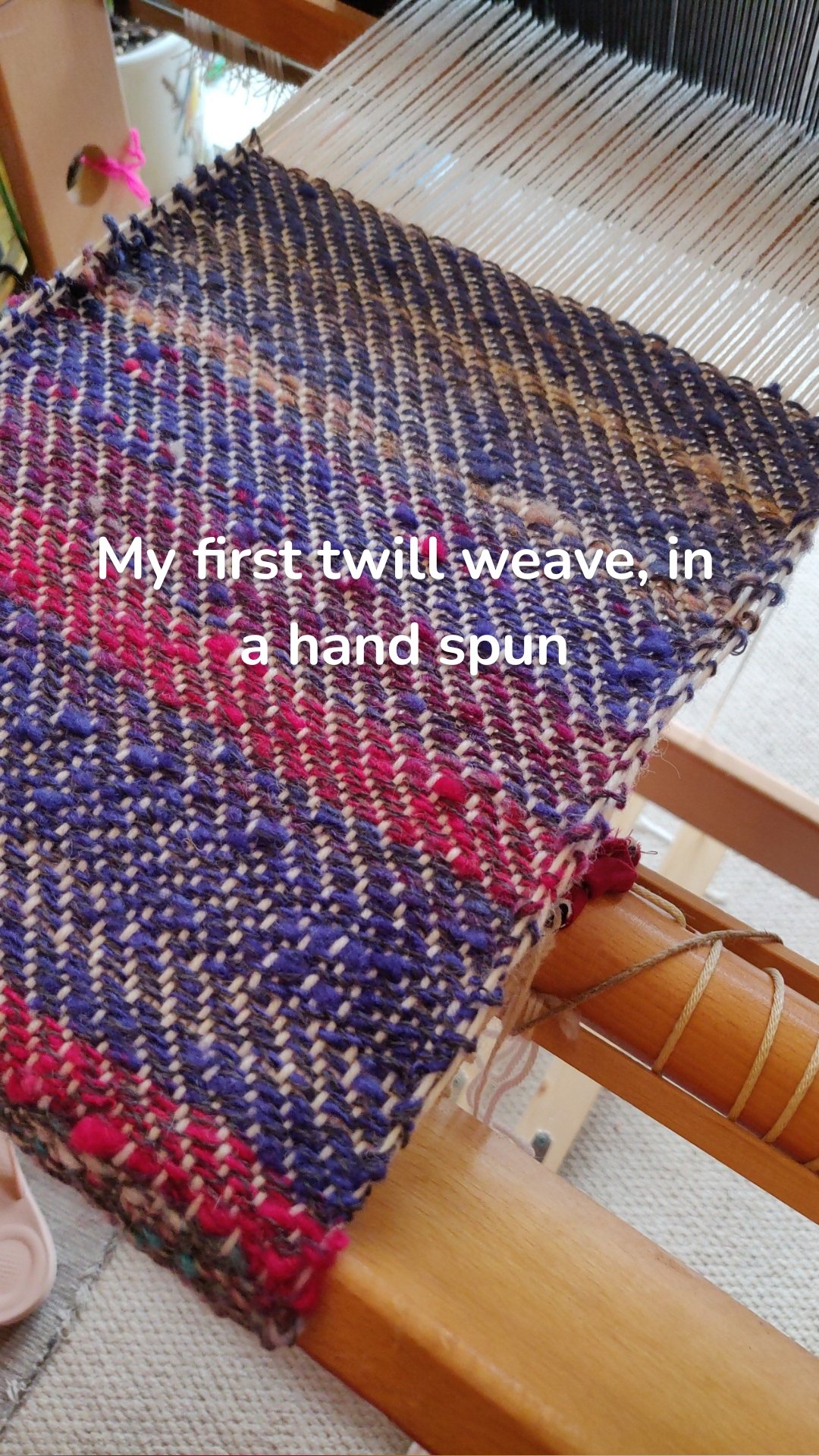
My first handspun effort

Acid dyeing session

Having acquired a Devon/Cornwall fleece that is quite similar to a Romney in feel and quality, I thought I’d dye some for blending. This fine will be great to comb for a semi-worsted spun yarn.

One of my favourite methods for safely dyeing fleece without matting the fibres is to use a slow cooker. I have a large family sized one that will dye 100g comfortably and 150g at a pinch, and a single-person one that does 20g for samples etc.

Using a pre-mixed colour I’ve used before I did a blue first. However, on this fleece it came out darker than I anticipated, but will probably lighten up once combed or carded and spun.

From the remains of the dyebath I got a pretty light turquoise.

The blue at the back, turquoise at the front

I have combed these colours as shown in this video.

Note that in this video I talk about ‘roving, but technically I am making ‘tops’. Roving is a similar narrow length of fibres drawn off a drum carder (usually, but can be hand carders) and has a slight twist added to keep the fibres together.
After combing, both colours have come out as
I hoped.

I also wanted an olive green, and have a recipe that worked perfectly on a Dorset fleece last year. I must have made a mistake somewhere, because I got a dark green instead. Maybe it is the different fleece, but I think I got my proportions wrong!

Pretty enough, but not olive green!

Once again they was some colour left in the bath, so in went 100g of Dorset fleece. OMG, the colour was bright! No idea what I did wrong, but it makes me blink.

The only compensation is that the fleece has not called at all due to using the slow cooker method.

That bright green total exhausted the dye – no surprise really! I will probably card this as the staples of the Dorset fleece are short and it is a soft fibre. Great for soft woollen spun yarn.

If you are interested in discovering the difference between different terms such as roving, tops etc, click here to read Abby Franquemont on Spin Off.