Googling myself again!

I took a quick look at the Amazon page for my book Translating Between Hand and Machine Knitting and thought I would share some reviews.

I notice that subscribe wishes to express their annoyance because the price has been reduced. I fully appreciate how annoying this can be, and wonder if retailers understand how this upsets customers. I felt similarly annoyed when I bought a new drawing tablet only to see it was reduced by £40 in the Black Friday sale two weeks later! They wasn’t much I could do but accept that I’d had two week’s use of the tablet already, (working on my next book). So although this is beyond my control, my apologies to anyone to whom this has happened.

So moving on from issues of frustrated shoppers, here are some of the very nice things said about the book.

JayBards from the US writes, ‘5.0 out of 5 stars Excellent Coverage of Topics, Great Photos and Illustrations’, and finishes the review with, ‘The text is really well-written, very clearly presented, easy on the eyes, and a pleasure to read. This book will become an important part of my extensive library on knitting. In short, I LOVE this book! Congratulations to Dr. Haffenden on an excellent book that should become a classic.’

Thank you JayBard for your feedback and review.

Meceo from Canada writes, ‘This is one of the best books I’ve purchased covering the hand knit patterns converting to knitting machines. It is beautifully done with lots of photos and information to help anyone interested in this type of knitting.’

Sharon Sullivan from the US writes. ‘Very well written book. Haven’t had the book very long, but the time I’ve spent going through it so far, it’s an A+ book. Content is excellent. Photography is excellent. Easy to understand. Definitely worth the cost. I don’t usually do reviews, but think everyone should know that this book will help a machine knitter immensely.’

Its so helpful as an author to get feedback, and positive criticism, (suggesting improvements rather than just pointing out what you don’t like) is the most helpful.

So thanks to all who have taken time to review my book and help others decide if it is right for them.
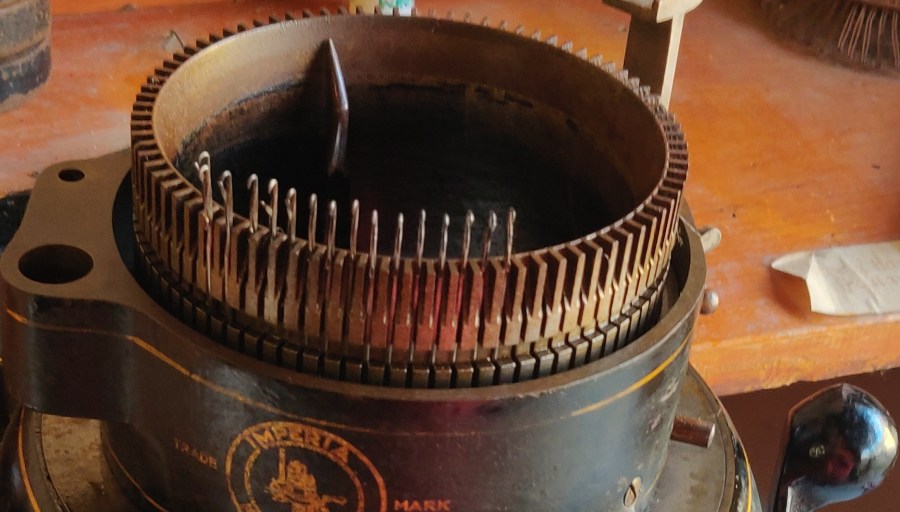
Renovating an Imperia circular sock machine

Through one of my fellow members of the Woolly Umbrella spinning group I was asked if I would help renovate a vintage sock machine. The machine is part of the Stanmer Preservation Society collection and they hoped it could be got working for their Heritage Week this week.

Sue sent me a photo of the manual, but with little info on the machine apart from. ‘It worked a few years ago’, I was in the dark.

So today I packed a range of tools, oil and cloths etc and set off for Stanmer not sure what I would find. The machine was in a sad state. Not really bad, and most of the parts seem to be there, but it was pretty rusty. It seems to have been left uncovered and un-oiled in a damp shed for the last few years so had a thick layer of dust along with the rust.

Luckily the instruction manual is with the machine, but there is no maintenance manual. Having used one of these before I know the general points about it, but not the precise specifics. A quick YouTube trawl found some useful videos and it was time to tackle the job.

The rib dial was not attached and I didn’t want to address that in this session. My aim was to get the machine working well single bed first. So the rib dial stayed in the somewhat dusty and rusty spares box for now.

A thorough dusting helped a bit, but there was no air hose or even a vacuum cleaner so it was down to cloths and some blowing and picking the dust out of cracks. I dismantled the top tension and removed the yarn feeder. That was a bit rusty so some gentle fine emery paper was needed to clean it up. Next came removing the spring to allow the needles to be taken out and the dial removed. Most needles were slightly rusty on the hook if not the shaft as well, so I gently emery papered the bad areas and then soaked them in surgical spirit and oil for a while. Two broken and two bent needles were rejected at this point as too far gone to salvage. Meanwhile the cams were now revealed and could now be inspected and cleaned.

Once all seemed OK, if not in perfect condition, I reassembled the machine. Some needles still felt sticky, so it was a matter of replacing them one by one in the jamming areas to eliminate bad ones.

The Imperia sock machine being re-needled

Time to cast on with that horrible little ‘daisy’ claw tool. A job that I hate, but went OK in fact. Sticky latches caused several repeating ladders and miss stitching, but after some use, and easing the latches it began to knit properly. Only one needed to be replaced before the whole dial would work! So satisfying.

I want to get the machine knitting a reciprocating sock heel before I tackle the rib dial, but if that goes well next time, I hope to be able to tackle the rib dial after that. There seem to be some spare needles for the rib dial, but not sure if there are enough. We will see…

I’ve marked the dial into quarters; the half way mark was already filed of the needle truck. So far it’s working for a creating the heel, but returning the needles to work causes holes.

We took it to pieces again in better light, and found that the cam is a little with on one end, but I’m not sure that’s the problem.

https://youtu.be/T-0_rSJCrbw

Plein-aire spinning

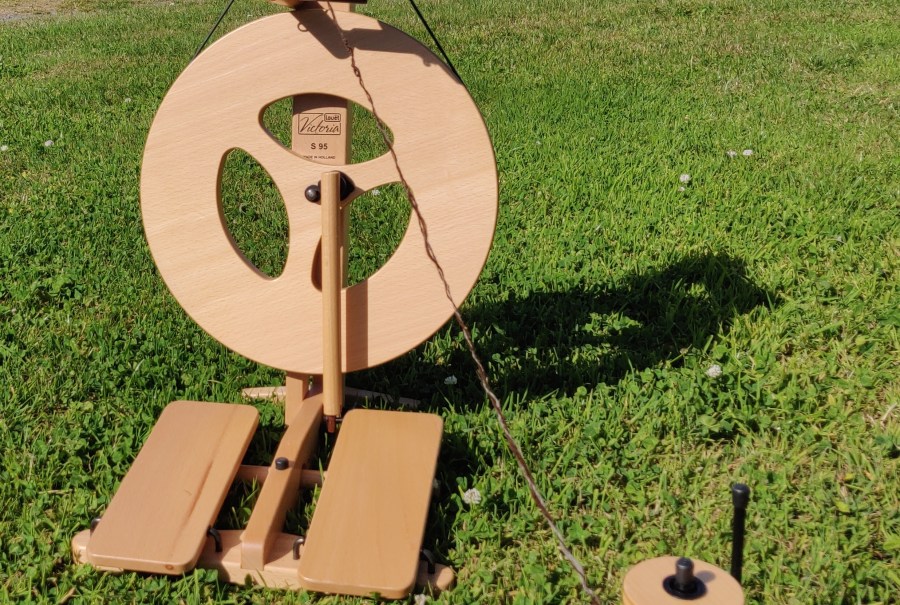
A bit like outdoor anything – providing its not raining or freezing – spinning is enhanced by the open-air. I took my little Louet wheel with me whilst on holiday on the Pembroke coast recently. We were being careful and avoiding towns etc in our caravan sitting on a farm, so there was plenty of opportunity to spin in the lovely sunshine. It seems ages ago now, but was so refreshing.

Victoria beside the caravan, enjoying the view.

I took a bag full of mixed colour Jacob’s fleece and sorted it into dark and light before hand carding it. Ifirst of all spun a skein of cream to test the tpi and grist I was aiming at and on a rainy day decided to dye it with the onion skins from our soup.

All very earthy!

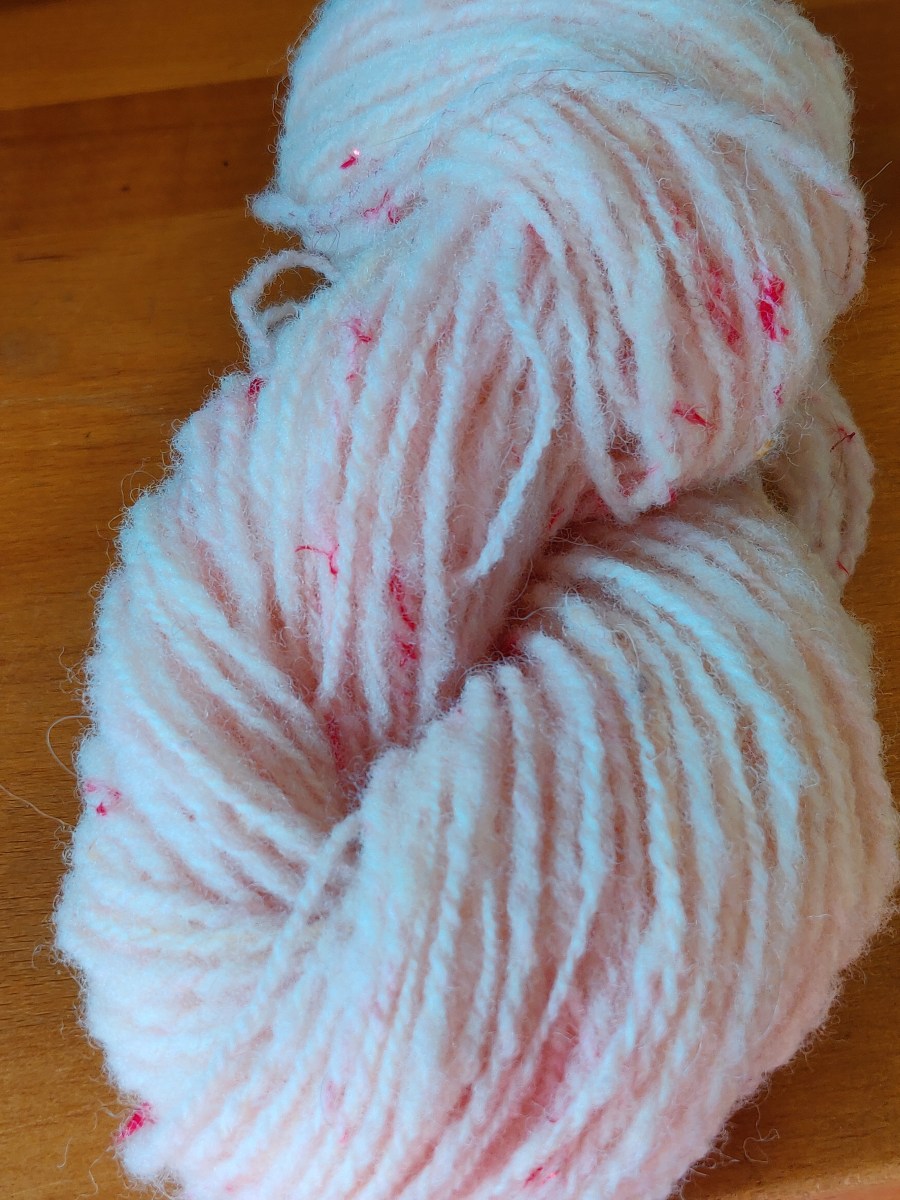
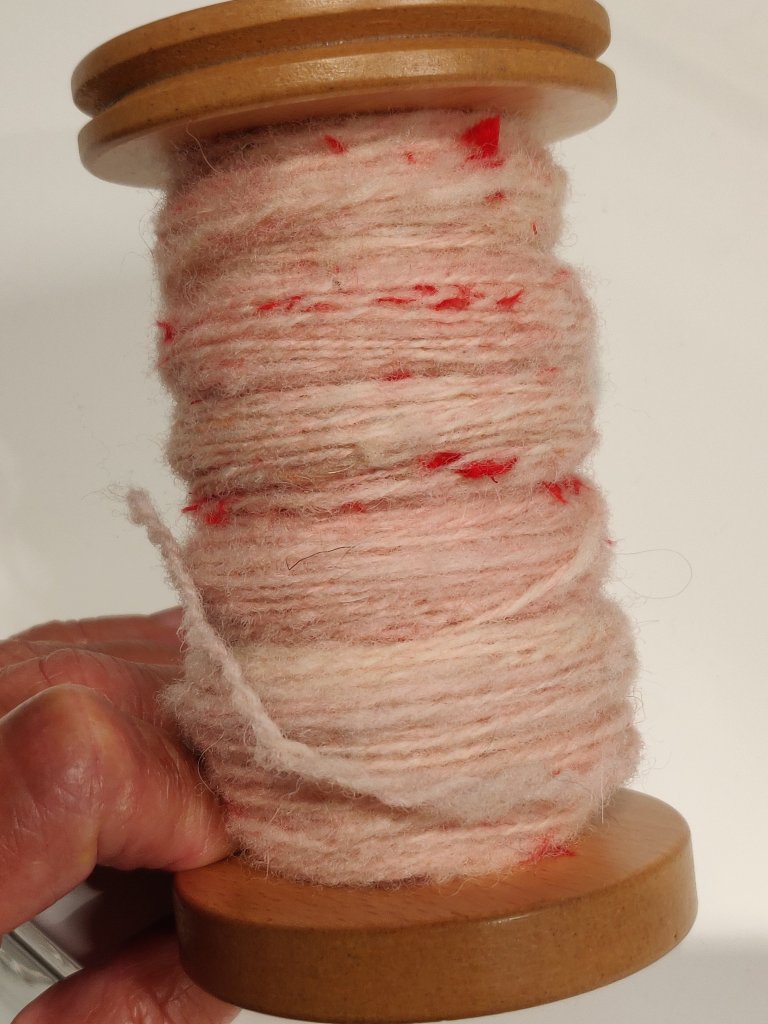
I can’t resist a marl yarn, so plied the colours into variations on this.

From left: knot or knop marl, slubby marl, onion dyed 2 ply, chain plied random carded colours

With good weather, fleece washing starts…

Although I promised myself not to get any more fleece until I had emptied my cupboard, I’ve cheated . Well only a bit. Over the winter I have used a lot up, but not all of it!

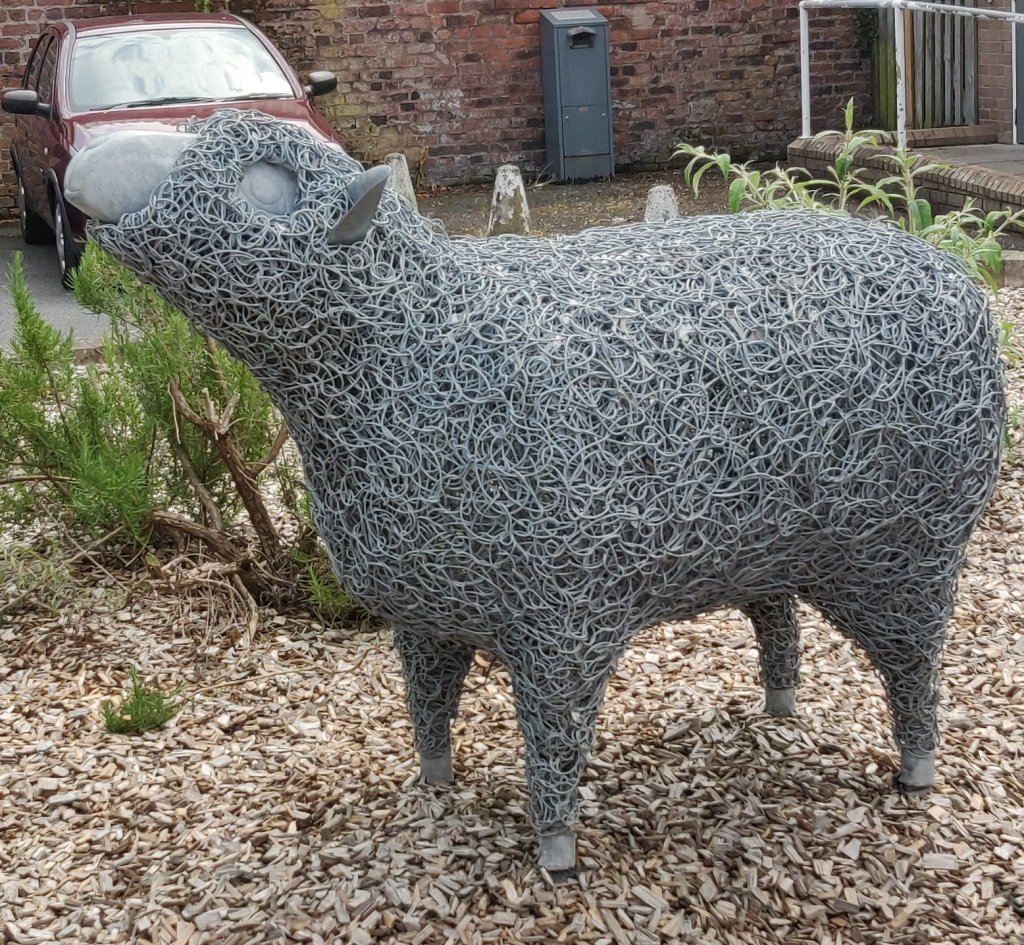
Having been to Herefordshire and seen the Ryeland sheep sculpture in Leominster I read up about the Ryeland breed and wanted to try a fleece. From what I understand the Ryeland was one of the breeds that can from the Romans crossing their imported Merino sheep with local British breeds. This is probably why they look like Teddy Bears with dense fleece. This breed was instrumental in the success of the British wool trade in the Middle Ages and after, which laid the foundations for wealth in Britain, especially in Herefordshire. Fascinating stuff!

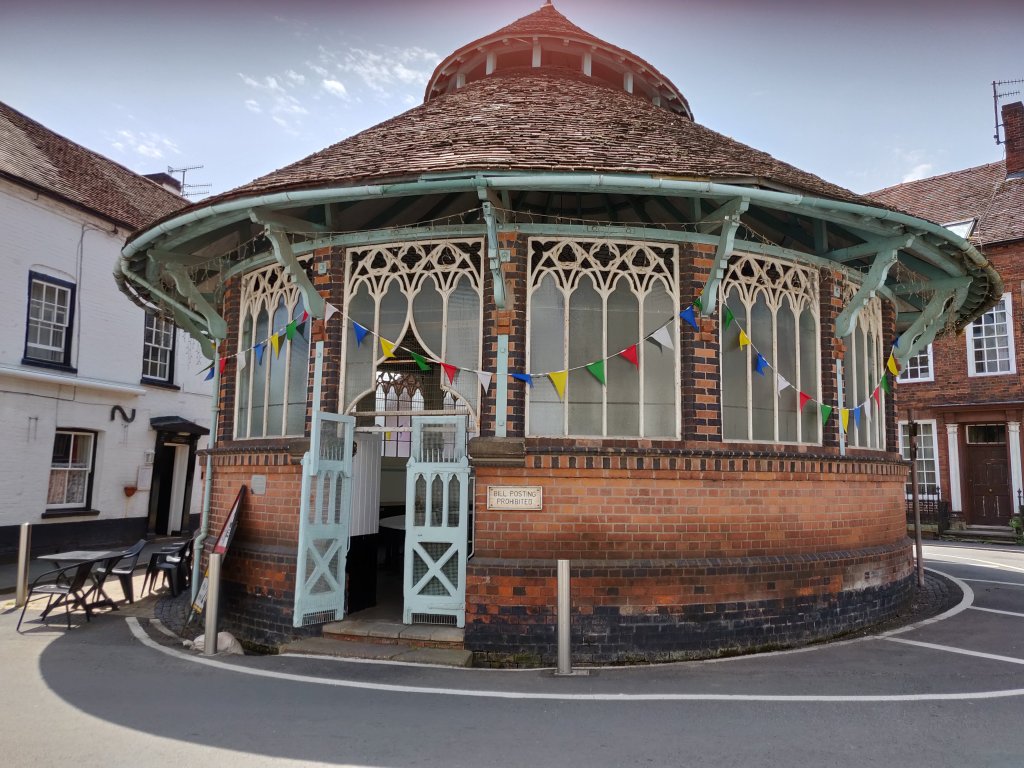
The Old Market hall. Tenbury Wells.
Sculpture of a Ryeland sheep in Leominster.

The long and the short of it is that I now have a Ryeland fleece to play with. I sorted out today and have started to wash it with promising results. Not to much VM, but a bit yellowed – the name for this escapes me right now, is it ‘yoked’? I’m guessing its last years crop.

You can see a staple in the photo, and i’ll post once I start spinning. I plan to spin Long Draw, ply and then to dye it.

Washed Ryeland staple. Its about 3.5 inches when straight, but is quite crimpy. Yummy.

Dodgy iPhone connection on lightning charger lead

I replaced my iPhone 5s with an Android phone about 18 months ago. One of the reasons was that the charging was acting up. I tried it with two other leads, but it seemed to be the lightning port that was faulty. Of course there were other reasons – battery running out fast, storage limited, camera OK but not brilliant, apps getting slow and becoming un-updateable. Don’t start me about the iPad that is also getting totally unuseable because of these issues!

Anyway, Covid came along and I needed a webcam that had good resolution and zoom. I found out that I could use the old iPhone for this, and downloaded the IVCam app to my PC and iPhone on wifi. The app wasn’t brilliant, but I paid for the full version and updates have improved it hugely recently. The nice thing is you can use it wifi or with a lead. Wifi meant that the battery remained a problem, but on the lead it was excellent – except – the connection kept failing due to that dodgy port.

I did a bit of internet browsing and found a topic on a forum somewhere about this issue. The writer suggested using a wooden toothpick to clean any dust out of the port. Really? I thought, then I remembered the fluff and dust in my handbag and thought – yes, really, lets give it a go!

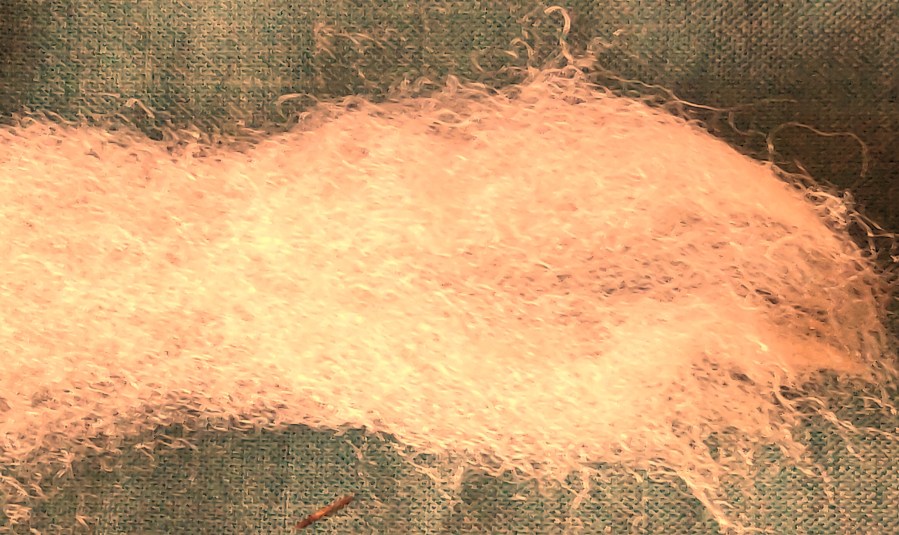
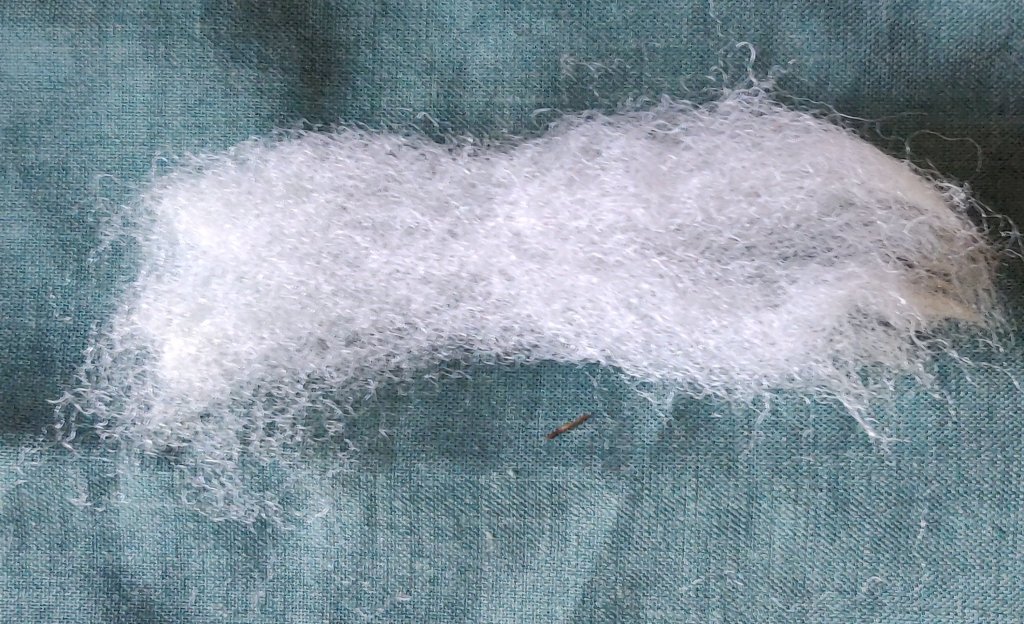
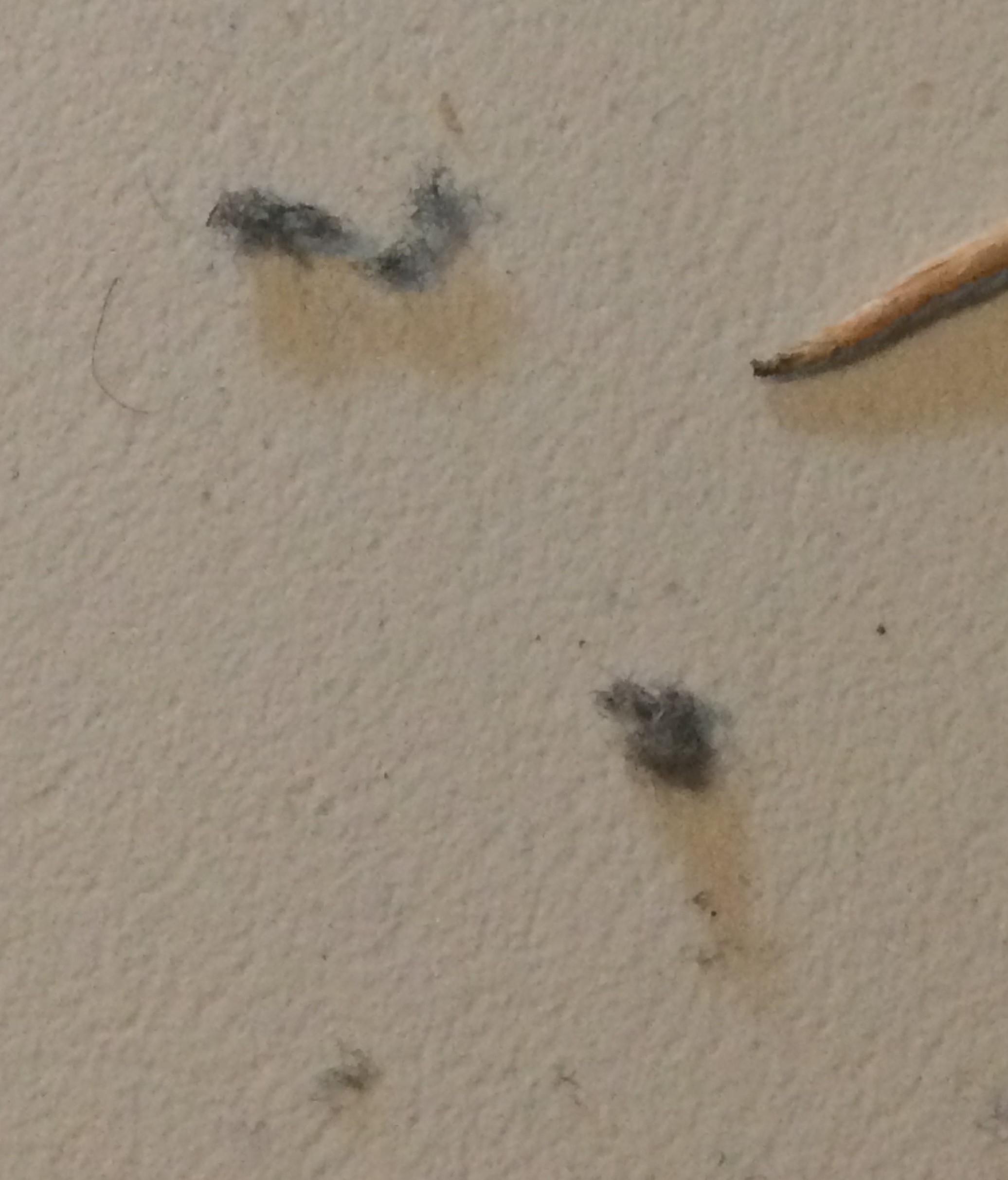
So I did, and its worked! Loads of fluff and dust came out and now the lead fits snuggly and securely in the port – its rare to loose the connection – and usually due to me tugging the lead. See how much fluff came out in the photo below. I still prefer the Android phone for use as a phone, but am chuffed to have found a use for my now redundant iPhone and to have solved the problem with the lightning port.

Only use a soft wooden toothpick, but it was certainly worth it for me. I guess because the lightning port doesn’t have a central bit you can’t really hurt it by poking something soft in there?

The Knitting Thingamabob – mending a Knitmaster 700 carriage and knitting socks

Replacing the tension dial on the carriage of a Knitmaster 700, some tricks and tips to make this easier. Knitting socks and hand spinning yarn for machine knitting socks.

Follow my podcast on Spotify, Google Podcasts or iTunes.

Show Notes:

Although an older model, the Knitmaster 700 is a lovely machine. It is a punchcard machine and ball bearings so it slides very smoothly on the bed. One really nice feature is that it will knit intarsia without using a special carriage. Two white levers on the left and right of the carriage activate the intarsia setting.

Whilst knitting the sock, I found the tension dial was unreliable and replaced this with a secondhand assembly and this records doing this.

Follow this link to the accompanying video that shows how to remove the handle, cover, dial and cam lever, replace the dial and cam lever and re-assemble the carriage.

‘The Answerlady and Jack’ on YouTube are life-savers for machine repairs.

A trick for reassembling the carriage when it is difficult to get the tension assembly back into the carriage so that it will turn all the way round.

Never use metal things to poke inside your carriage unless you know what you are doing!

Mend the plastic carriage cover or any other plastic cracks, chips etc with epoxy resin glue. If you leave the cracks, particularly if they are around a metal screw head, they will quickly deteriorate and bits will break off.

Don’t use spirit on the plastic parts of the machine, use a slightly damp cloth to wipe these parts. Metal areas can be cleaned with surgical spirit (rubbing acohol) with a drop two of oil in it. This leaves a film of oil after cleaning. Make up a small jar and keep it with your maintenance tools so that it is always to hand. Use soft cloths and cotton buds to clean your machine.

Keep your machine oiled for the best performance, oil the bed every 100 or so rows. Invest in proper sewing machine oil or knitting machine oil.

Sock knitting on the knitting machine. Not being a keen hand knitter of socks, I revisit machine knitted socks made from wool yarn. Short row heels, short row or decreased toes?

Hand spun yarn for socks. Yarn spun from locally sourced fleece of indeterminant type, but definitely ideal for socks. To save time washing this filthy fleece I used stove-top dyeing to clean and rainbow dye the fleece. The resultant locks were nice to spin, but made a rather hard yarn.

Spinning yarn for 4.5mm standard gauge knitting machine on an Ashford Traveller, semi-worsted or maybe semi-woollen?

Use a waxing disk when working with hand spun on a knitting machine.

Combining commercial spun wool with hand spun wool when knitting a sock.

I got a Majacraft dizz for Christmas!

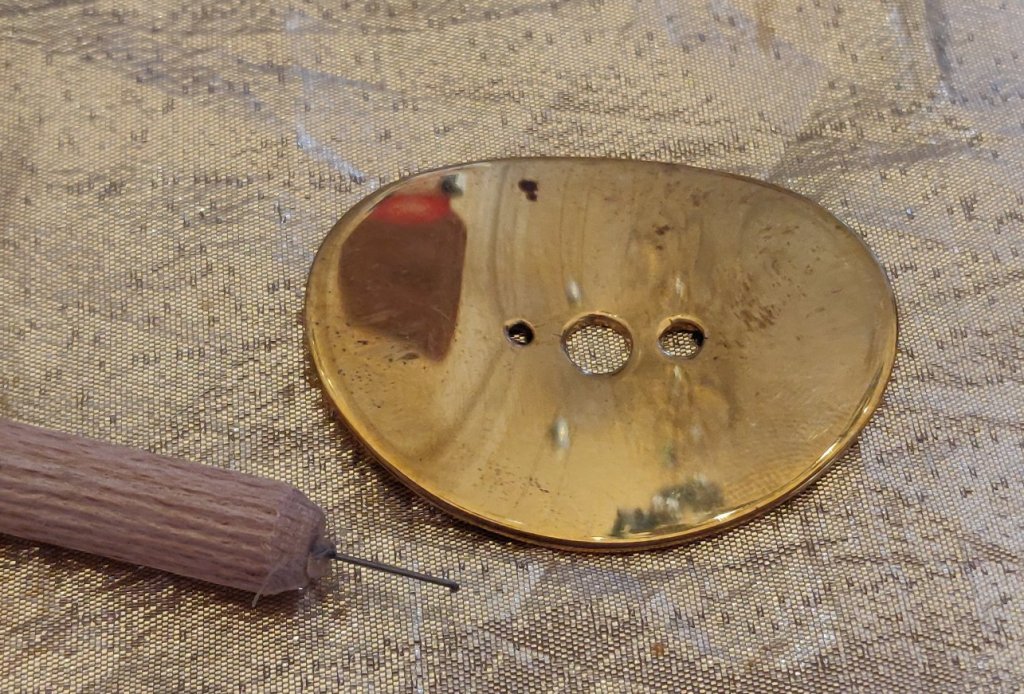
I’ve got various tools that I have been using as a dizz, but there have always been shortcomings. I’ve found it difficult to get the holes smooth enough in wooden ones I have, even after quite a lot of use. I also use a big coat wooden button, (same problem with the holes), and the plastic button I used snapped in half.

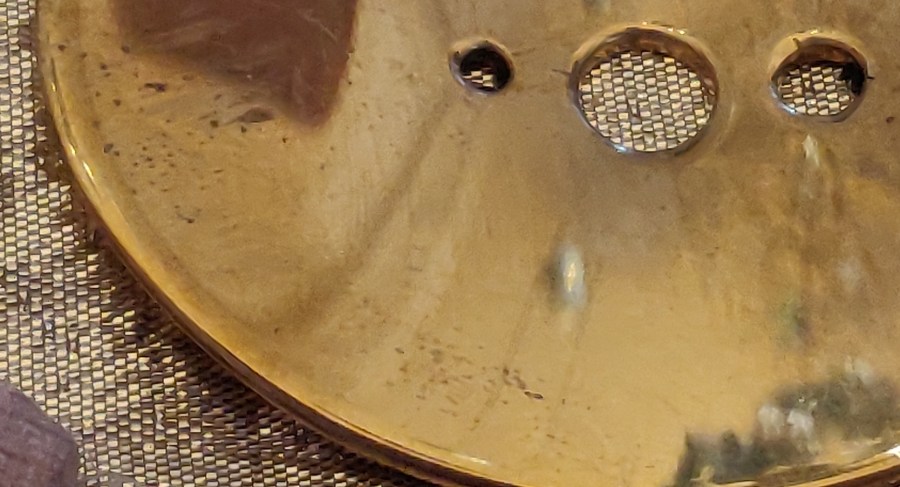
The wooden coat button is nicely concave, and I like that feature. When I saw the curved brass ones made by Majacraft I became covetous. So imagine my joy on receiving one from my son as a present at Christmas!

The little hook is great. I used an 18gge knitting machine needle before

Apparently the two smaller holes (1.5mm and 3mm) are for fine and coarser wools and the largest one is for colour blending fibres as you ‘dizz’.