‘Wool’, a lovely yarn shop in Bath

A couple of weeks ago I spent a weekend in Bath in the Somerset with some friends.

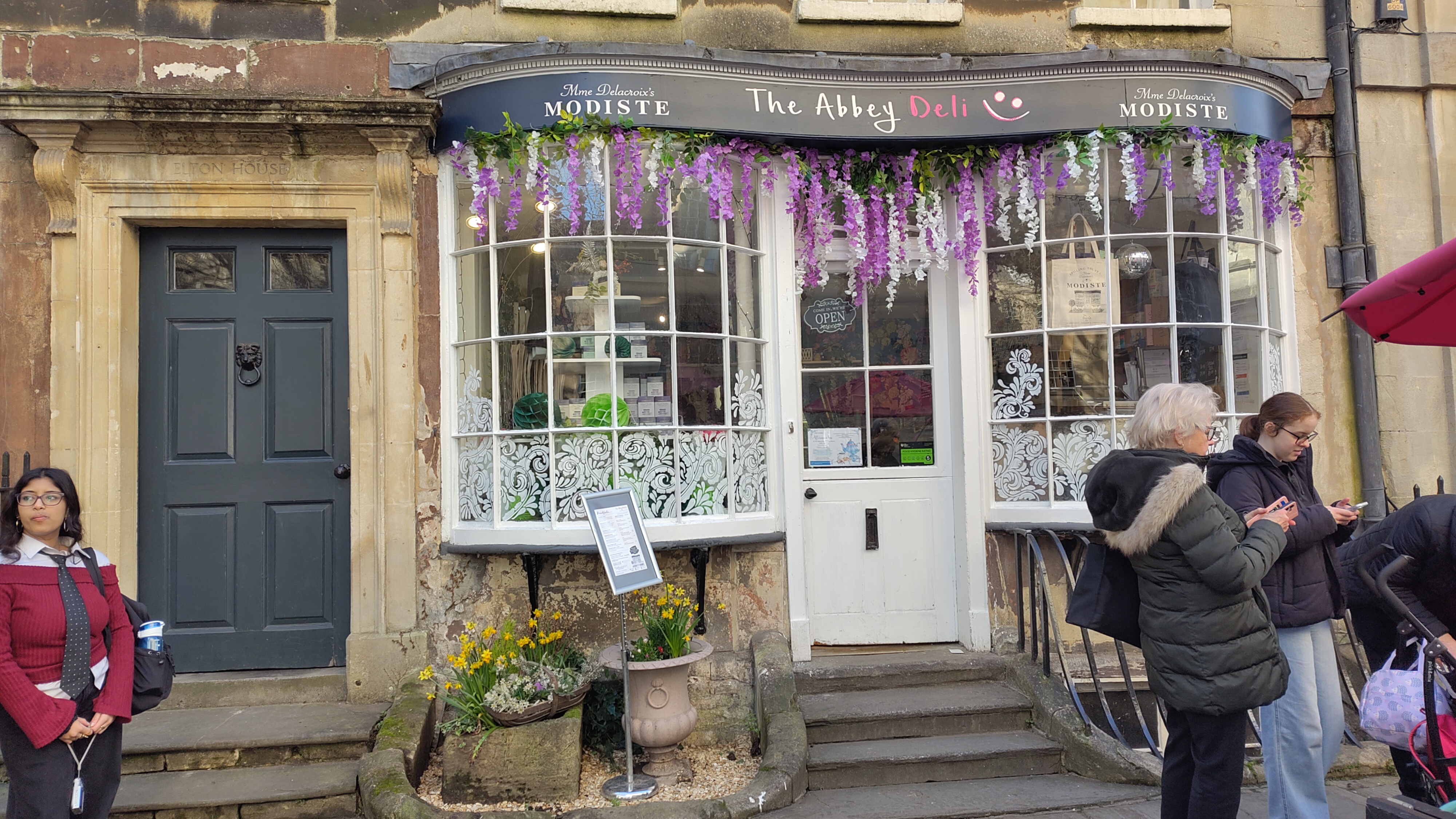
On our first day we did the touristy things like visiting the Circle and the beautiful Royal Crescent and had tea in one of the numerous teas shops. Quite by chance, the one we picked happened to have been featured in Bridgerton as the Modiste shop.

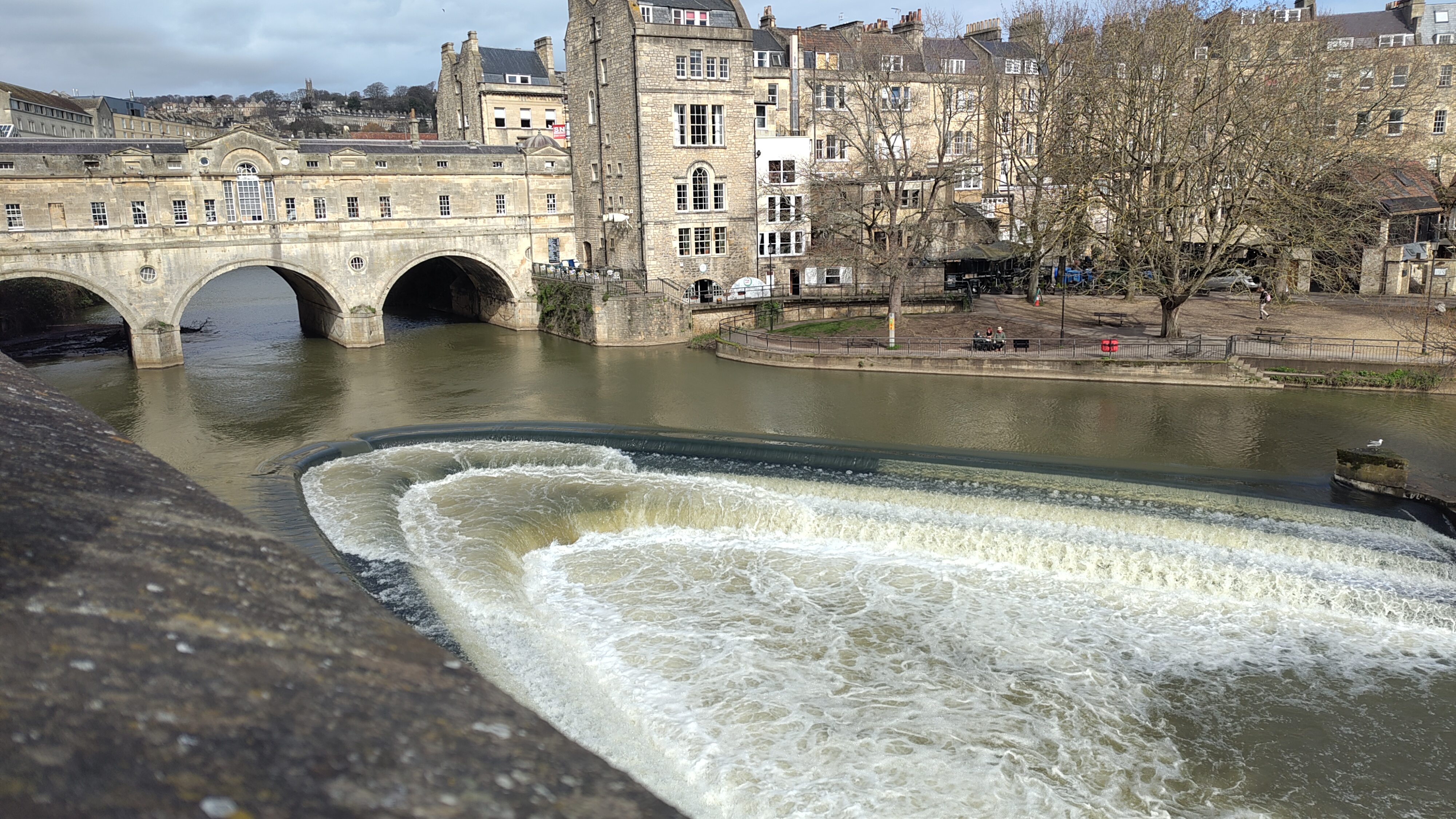
Food featured heavily in our weekend, cake being a particular favorite, so the next day we visited the historic Pulteney bridge and the tea shop which is situated on top of this bridge.

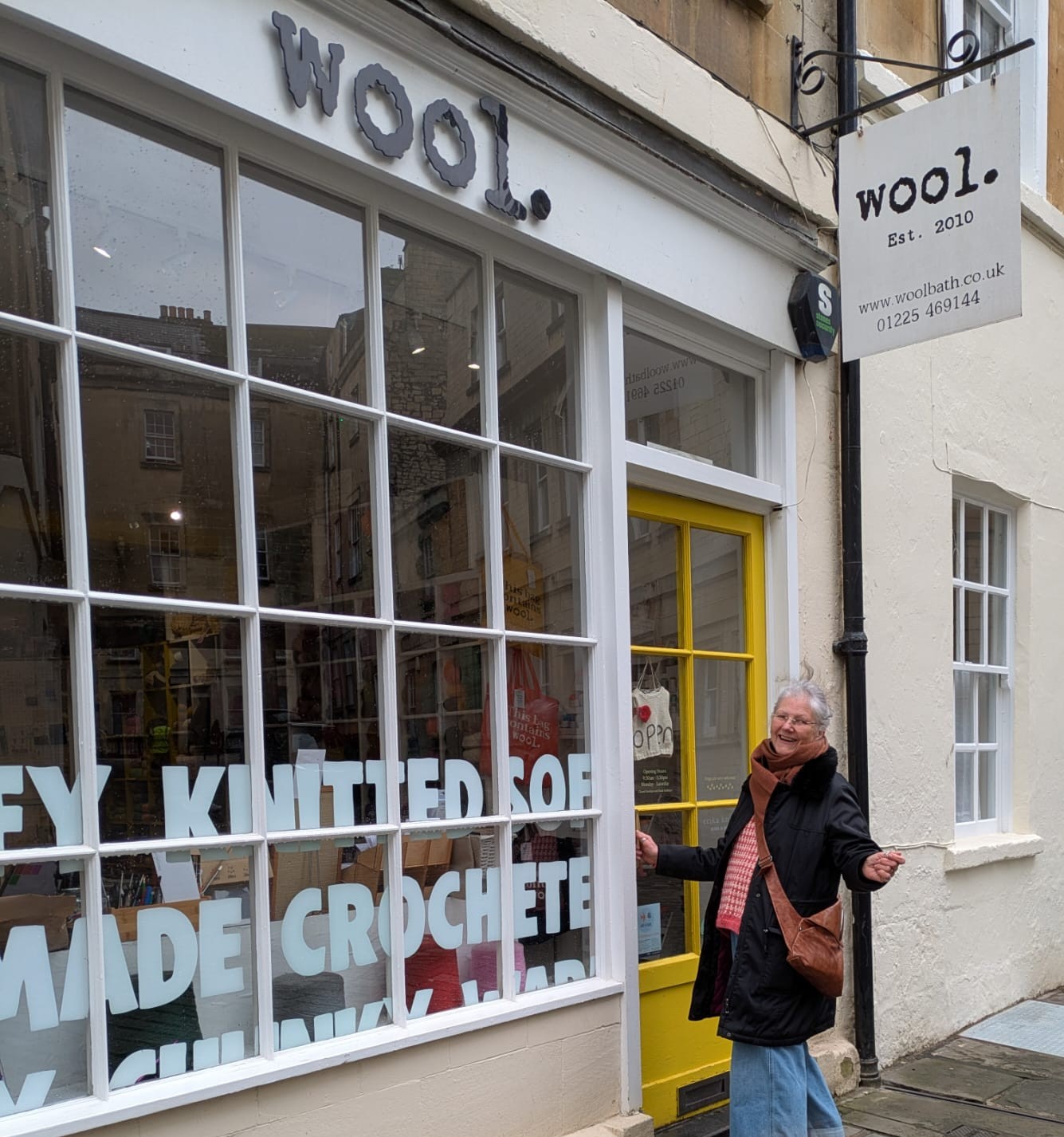
We are all knitters, so were pleased to discover there was a yarn shop close to where we were staying in the city centre. So, before leaving on our last day we paid a visit to ‘Wool’. There we found a wide selection of yarns to please all price points, that catered for all types of knitting or crochet work. Yarns included individual spun, Rowan Kid Silk and some very good value Tweedy Superwash Merino wool by King Cole. I am a bit of a sock yarn addict and bought a 100g ball of Lang sock yarn, which I have not tried before, and some 100% wool double knit in pretty pastel colours.

Someone else chose a DK pattern for a simple sweater shape which she intends to knit up in a wool and Alpaca blend yarn. The yarn is being reclaimed from a partially-knitted garment that her mother never completed, I think this is a lovely way to maintain a thread with the memory of her Mother, but to end up with a garment that she will want to wear.

The staff in the shop were particularly helpful over this explaining to my friend how to substitute a yarn in the pattern and helping her decide if she would have enough of the existing yarn. Although I could have helped her with this it would have felt a little like a busman’s holiday to do so ‘on the fly’. However I did of course tell her she could ask me later if she ran into problems.

I will certainly go back to ‘Wool’ next time I’m in Bath.

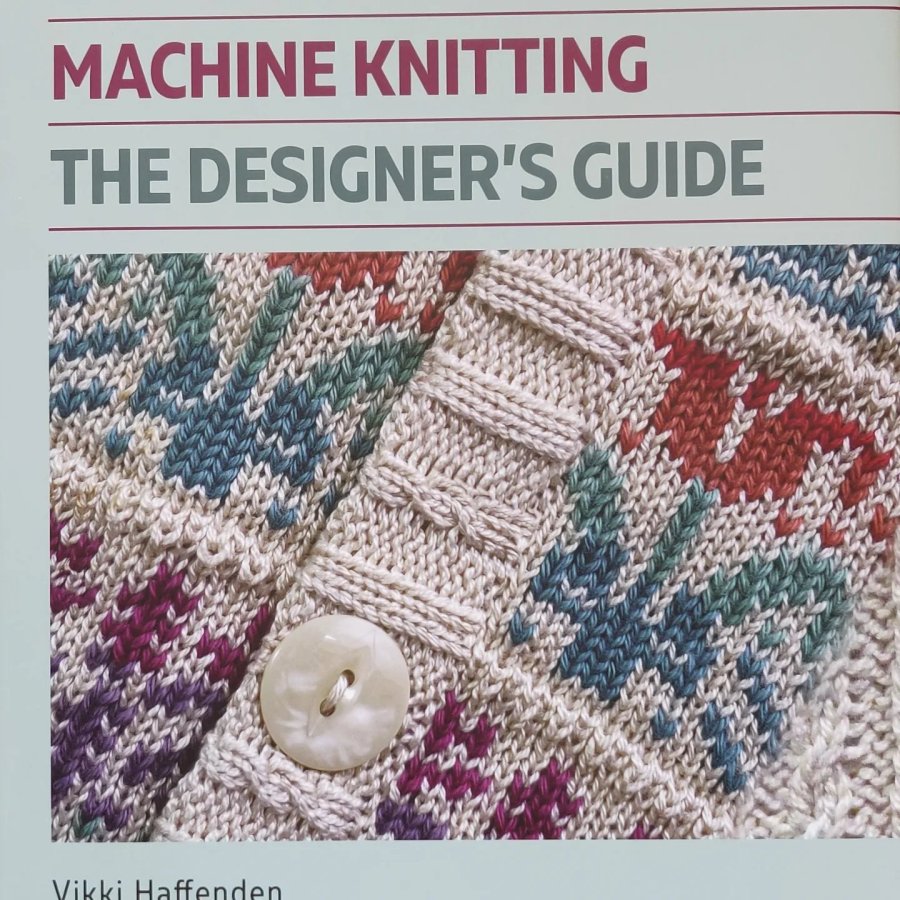
‘Single and Double Bed Machine Knitting; the Designer’s Guide’

The advance copy of my new book arrived today, and you can see some pages from the book here.

Meanwhile here is a quick look at the book.

I have made a more in depth video introduction to the book, and if you would like to watch this, please keep on scrolling down the page.

Knitting and Wellness

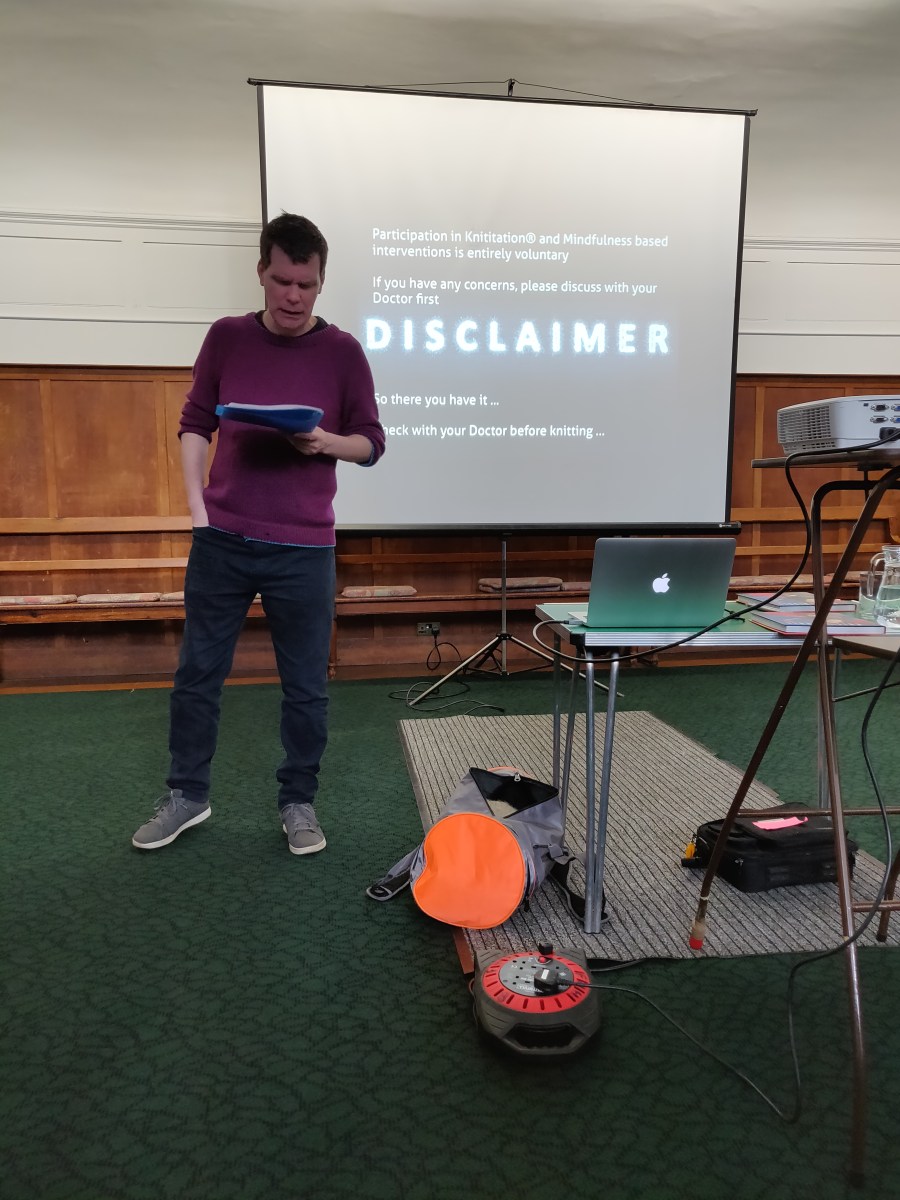
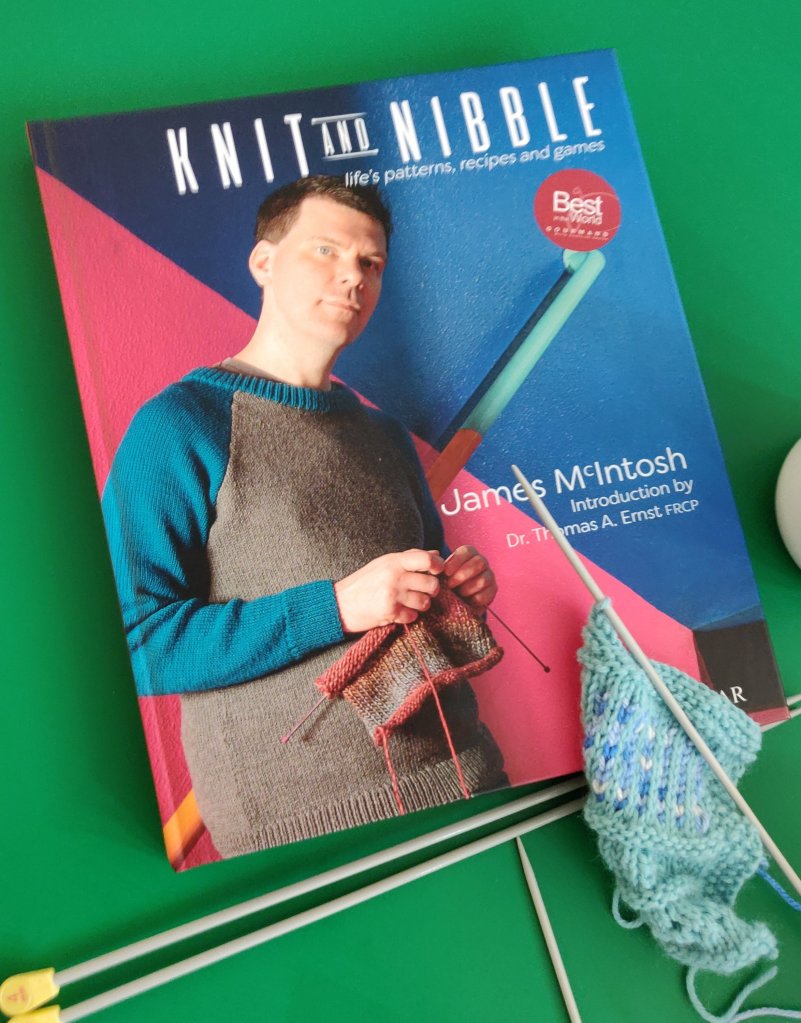
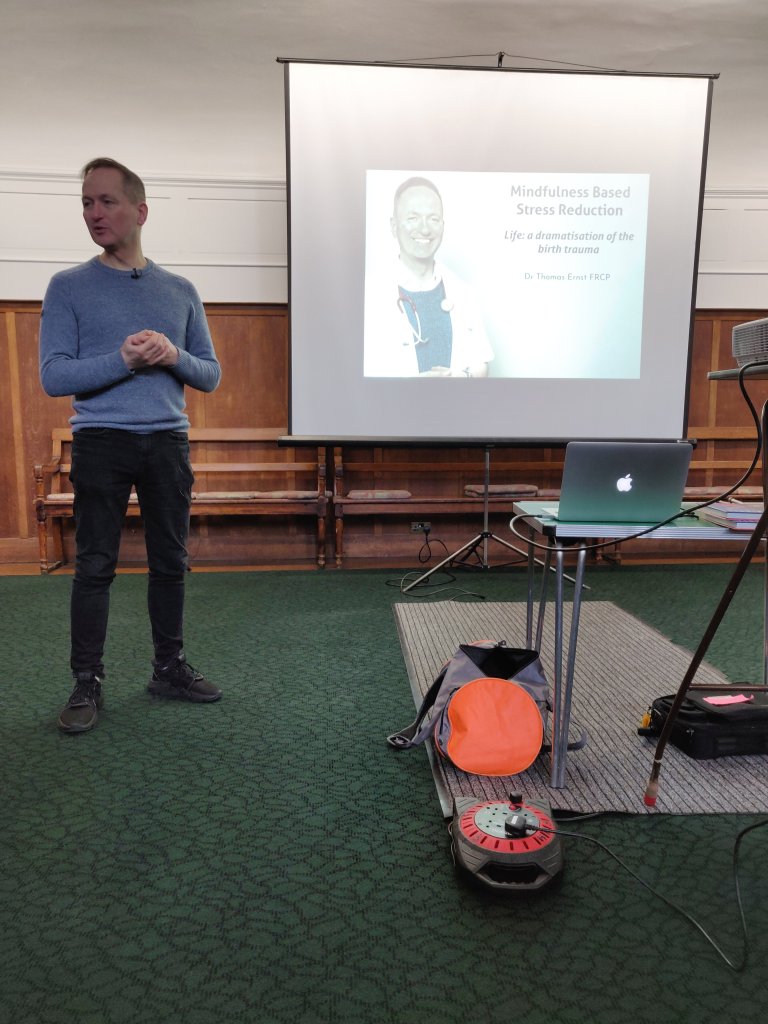
Today met James McIntosh and Dr Thomas Ernst, inventors of the term ‘knititation’ and authors of Knit and Nibble. They had been invited to speak at the University of Brighton School of Art’s Centre for Arts and Wellbeing event, Knitting and Wellness.

When we first met, James told me that he had found The Knitting Book really helpful when he was teaching himself to knit – which was truly gratifying feedback. It’s nice to find out how people use and value my contribution to sharing knowledge.

James was first to speak, and he described his personal journey through depression and how knitting mindfully enabled his recovery and brought colour back into his life. Thomas discussed the science behind mindfulness and it’s aptness to knitting.

Nina Dodds, author of Invisible Jumpers, and I provided yarn and needles so that everyone who wanted to could knit during the event. We were gratified that everyone took up the opportunity!

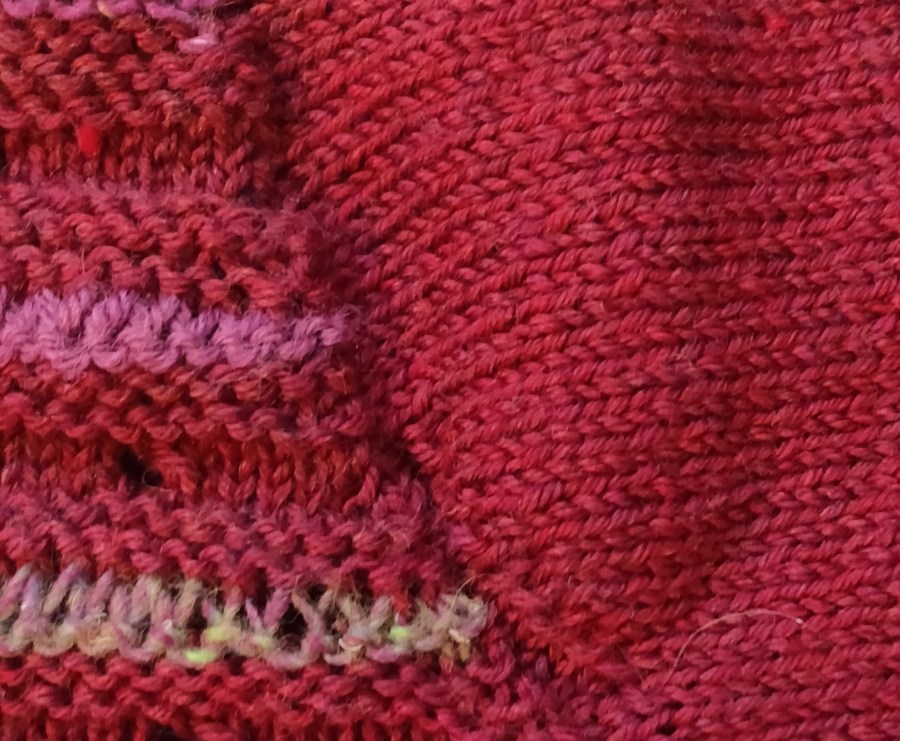
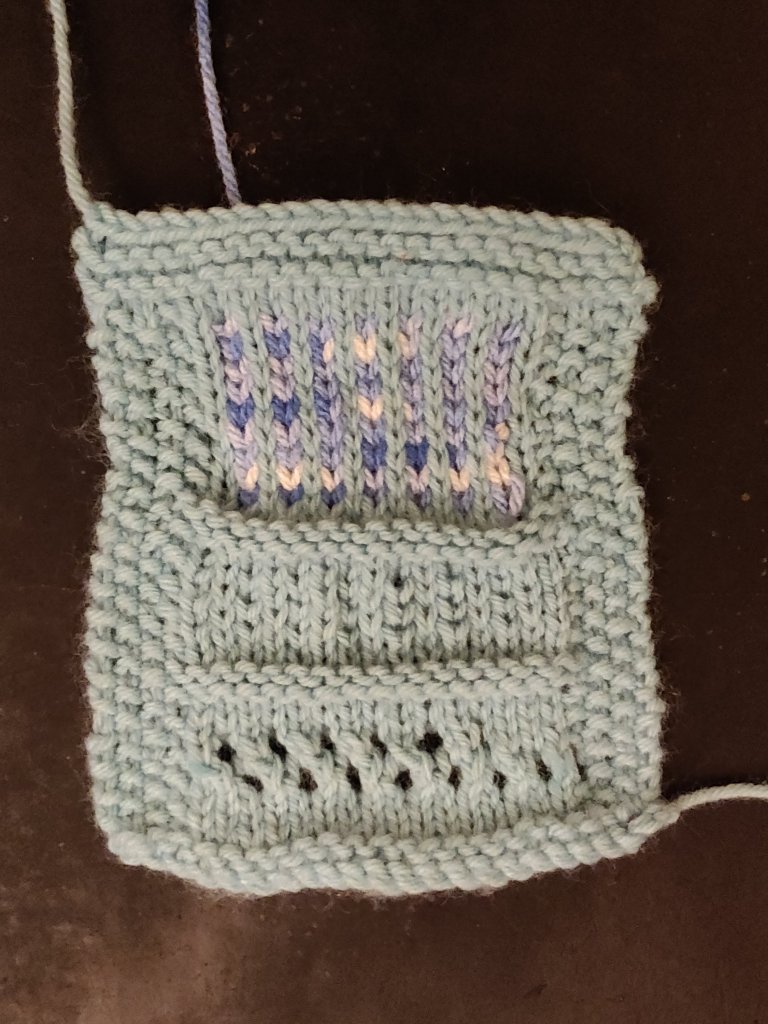
This was my piece of knitting.

It was a great talk, entertaining and interesting. James and Thomas kindly gave me a copy of their book which I am reading this weekend.

At the end Thomas led a short mindfulness session, which was a new expressive for some of the audience. Hopefully we all left feeling refreshed.

Like James, and so many others, I find hand knitting keeps me calm; it’s repetitive movements bringing my attention back in a rythmic cycle. So now I’ve written this it’s time to take up my needles for a soothing session.

Long Buckby machine knitting club talk

Today I had a lovely day with Long Buckby Machine Knitting Club. They had asked me to come and talk about my book Translating Between Hand and Machine Knitting and gave me a wonderfully friendly welcome. This meant talking about my experiences as a machine knitter was like sharing with friends.

I met so many interesting people who have interests in common and was pleased to see some younger faces on the audience.

Janet Collins, Chair of the Knitting and Crochet Guild was there and spoke to the meeting about the recent amalgamation of the Knitting and Crochet Guild and the Guild of Machine Knitters. She also gave an impassioned plea for members to encourage younger people to become members. She told me that if the Guild is not offering what young knitters want, the way forward is to find out what they do want and make this an aim, otherwise the Guild will dwindle. As there are 1,500 members this would be a real shame.

I’m now on my way home feeling a warm glow from the kind words and the opportunity to meet genie machine knitters with so many skills.

Visit to Diamond Fibres – wool processors

Today I accompanied a group of students on a visit to Diamond Fibres in Horam, Sussex. The company processes wool for worsted spinning, rather than woollen spinning, so concentrates more on longer staple fleece.

Starting in the sorting shed, we were shown round by Roger, the owner, and given a really thorough introduction to the processes involved in changing raw fleece into yarn.

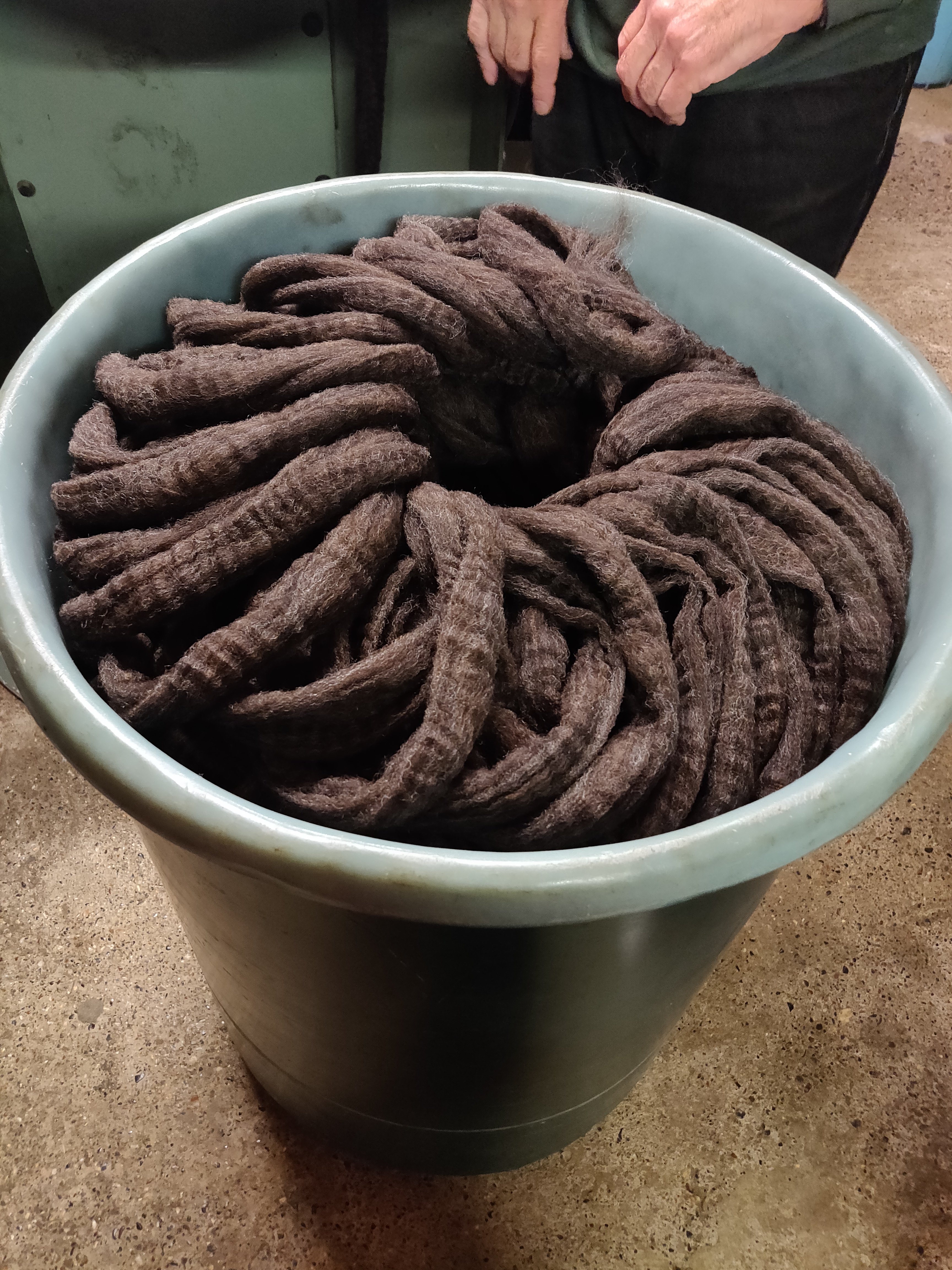
There was a Wensleydale fleece on the picker, which Roger explained had already been washed once at 60 degrees to remove the first lot of dirt and oil and then dried. After picking, which would open up the compressed curls that the first wash had not reached, it would be re-washed and dried before further processing. He reckoned that it may in fact require a third pick and wash.
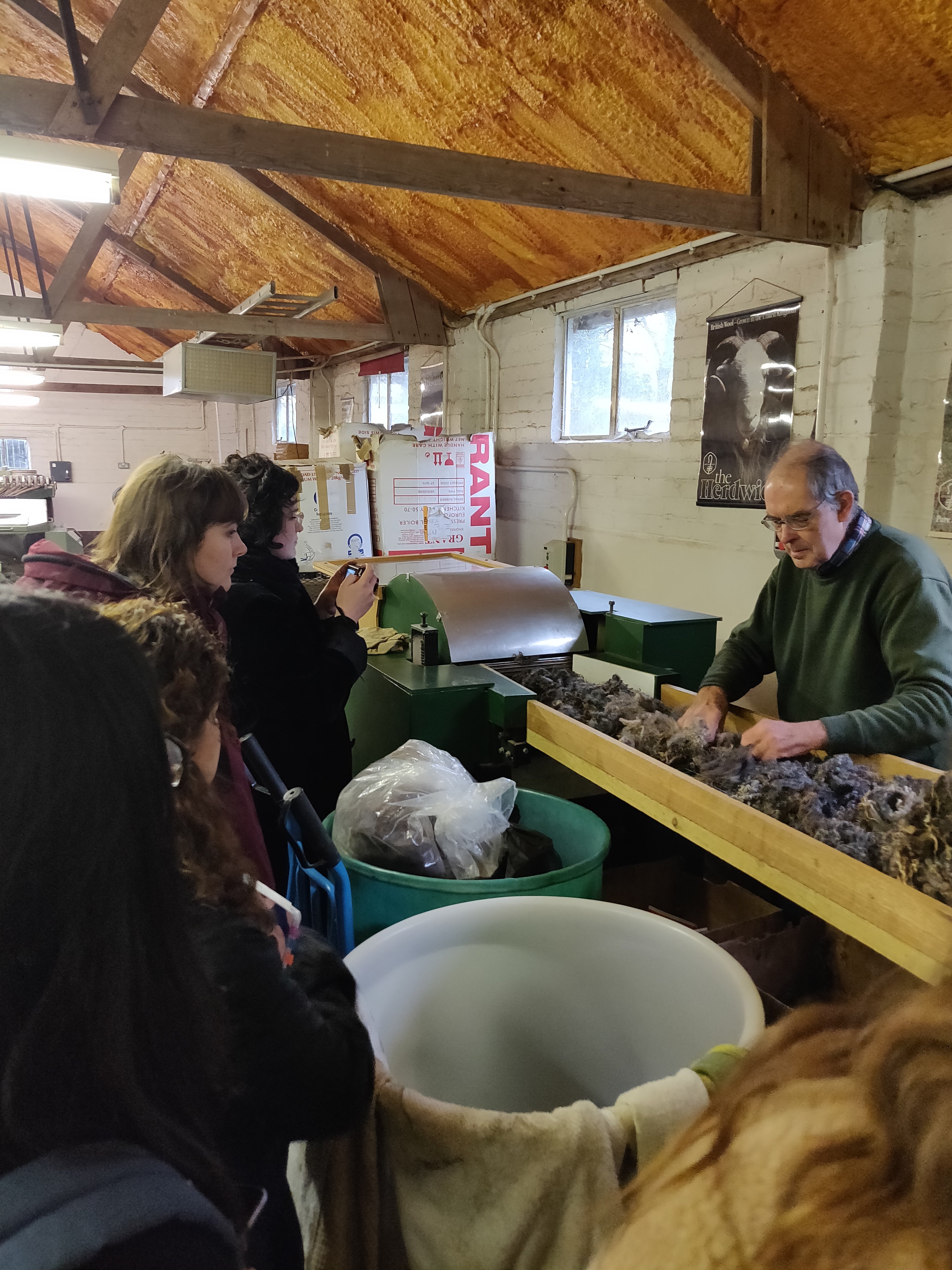
The students were looking tired just at the thought of this!

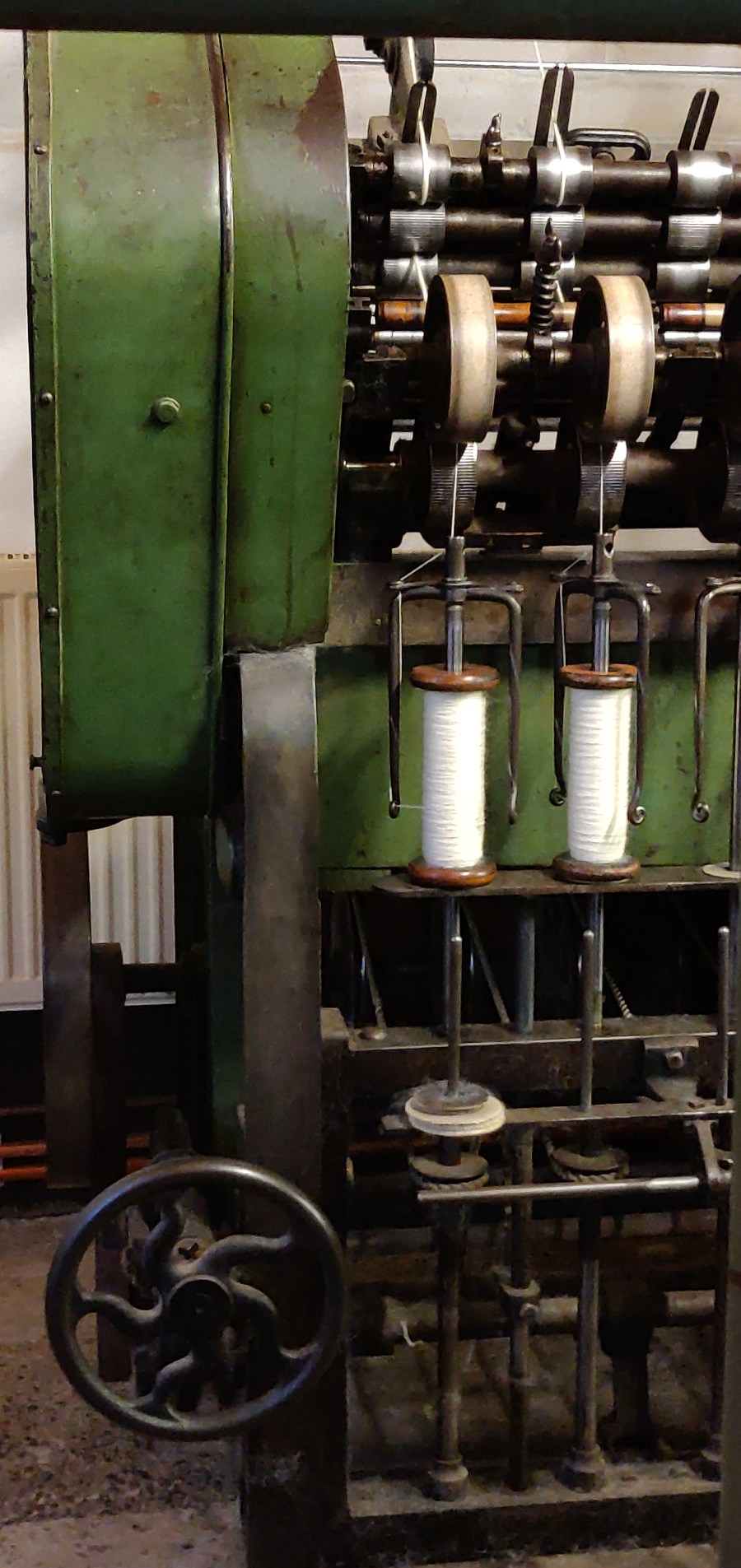
Following picking, the next process is carding the fibres to start aligning them in parallel into a continuous ”sliver’ of fibre. Unlike my meek little hand carder, they have a carding machine with 16 drums of metal, not wire, teeth. At this stage, any short fibres will still be in the sliver, it isn’t until combing that these will be removed.
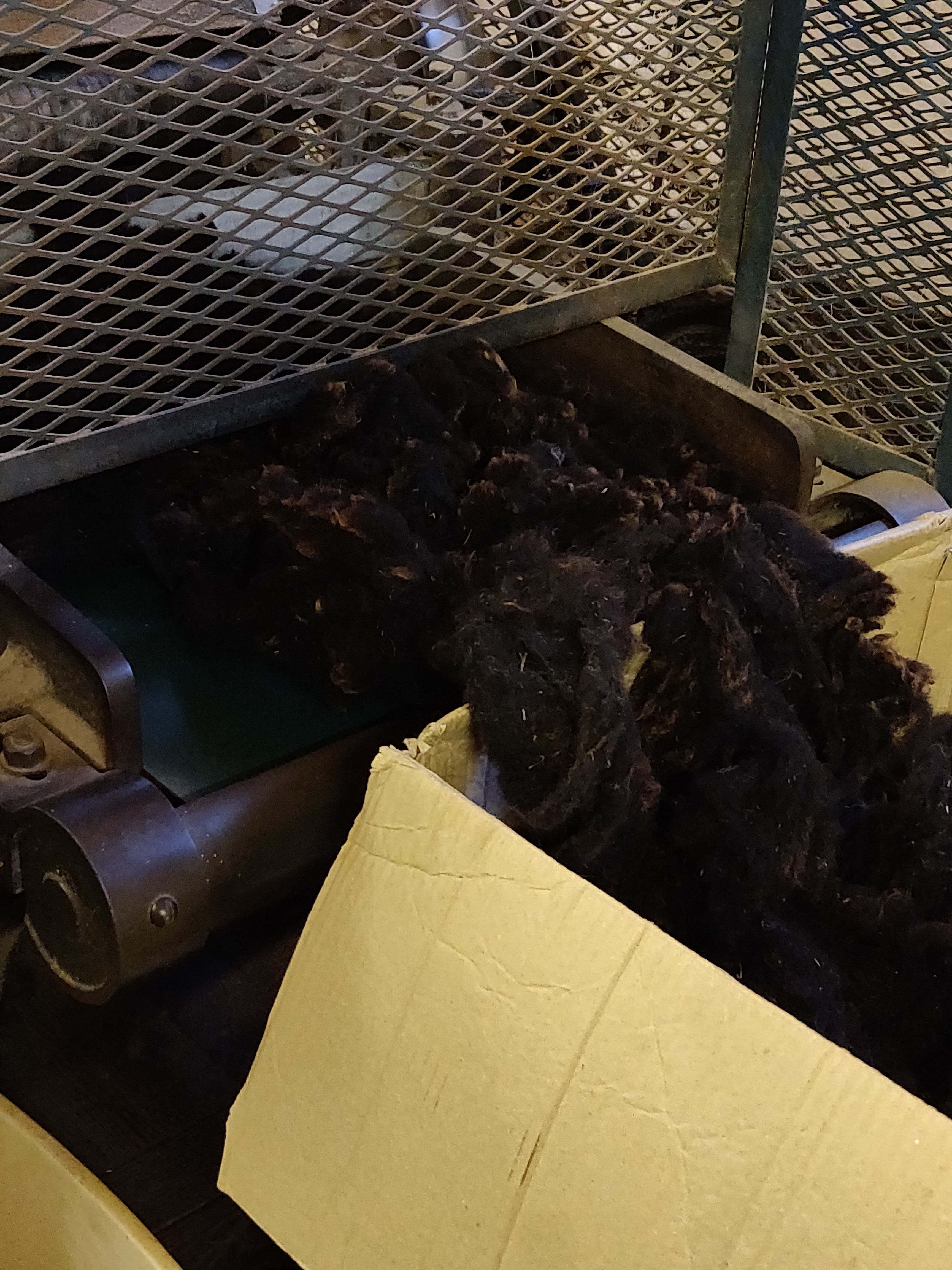
The sliver begins to look more like something that is spinnable, but there are still thin and thick sections along its length. To eliminate these and even out the sliver it goes through ‘gilling’. Diamond have two of these machines. The first one has wider spaced teeth, and is used at this point, whilst the second is much finer and bulks up and evens out the sliver later on after combing.
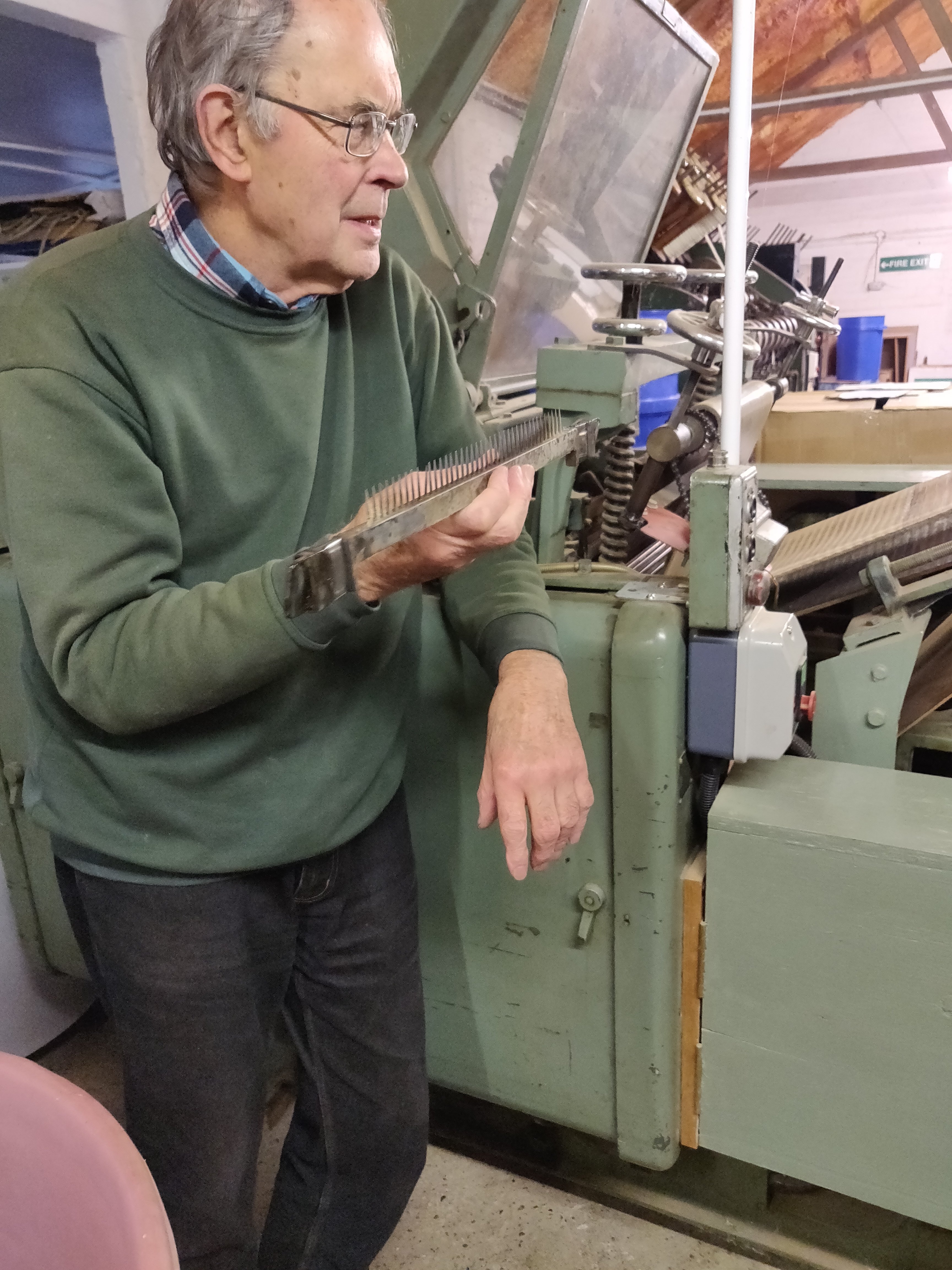
When the sliver goes into the gilling machine, two are fed in at once, producing one thicker sliver of uniform thickness.
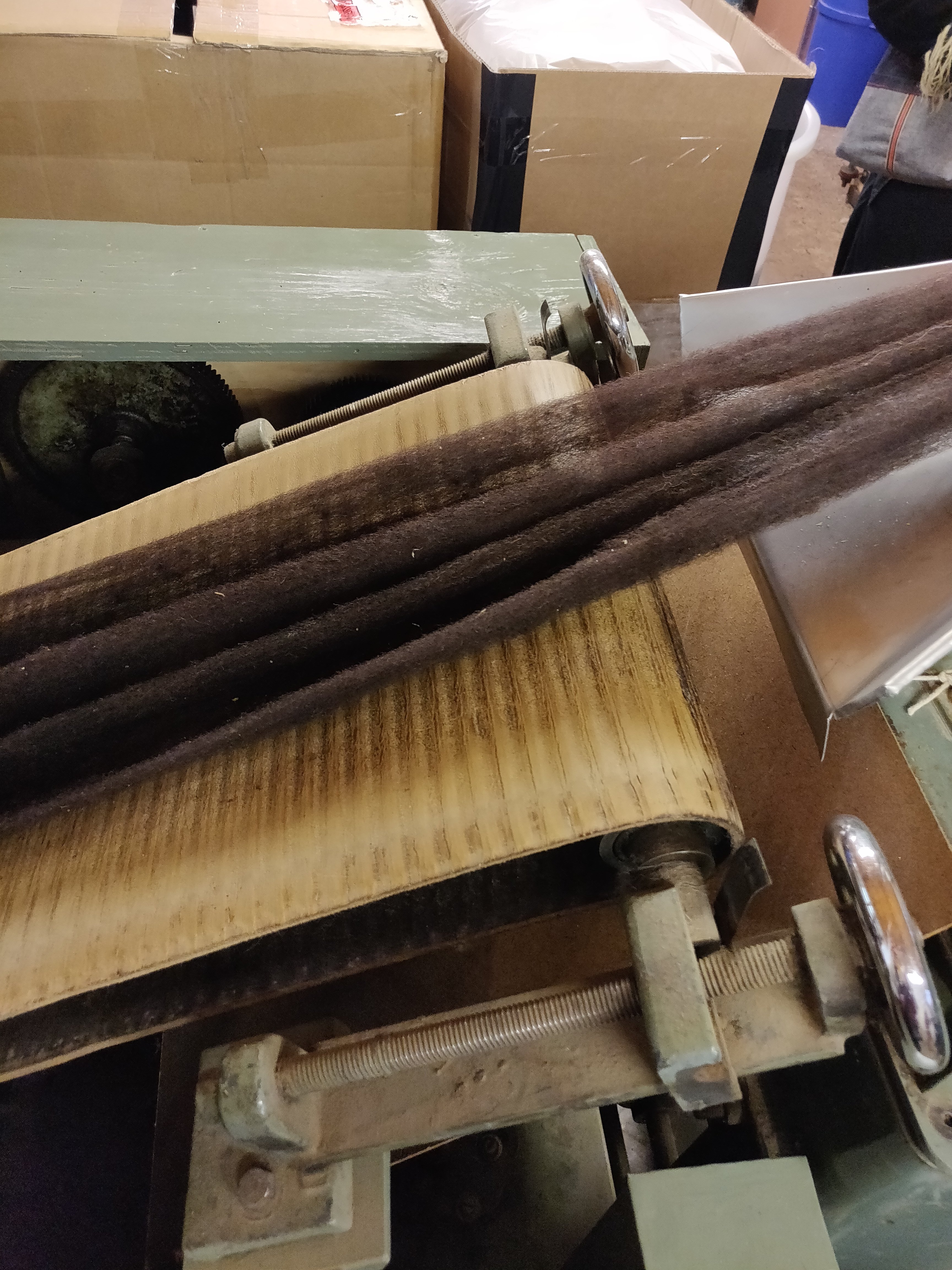
The fibre will in all likelihood go through a second gilling, during which the output sliver gradually bulks up, according to the machine settings, to achieve the required grams per metre.

If the requirement is for carded roving for hand spinning, this will be the last process. It may even be stopped earlier on, depending on what condition fibre is required.

If however, the desired outcome is combed sliver, then it has to go through the combing machine. This takes up to sixteen slivers side-by-side through the combs, crimping the final sliver to compress the fibres together and prevent breakage. It looks like doll’s hair emerging from the machine. Any remaining short fibres, nepps, noils or debris fall out into a waste bin beneath the combs.
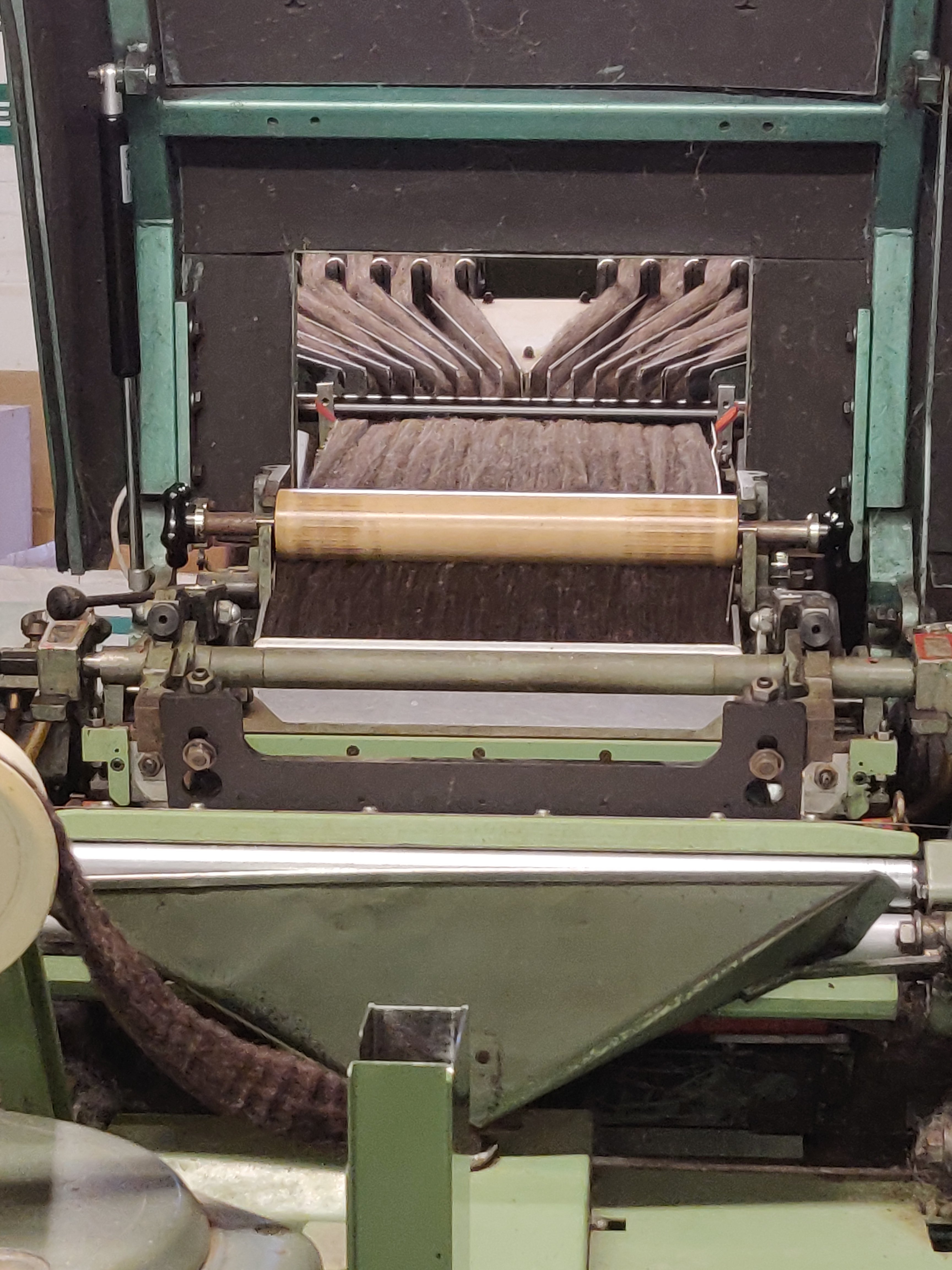
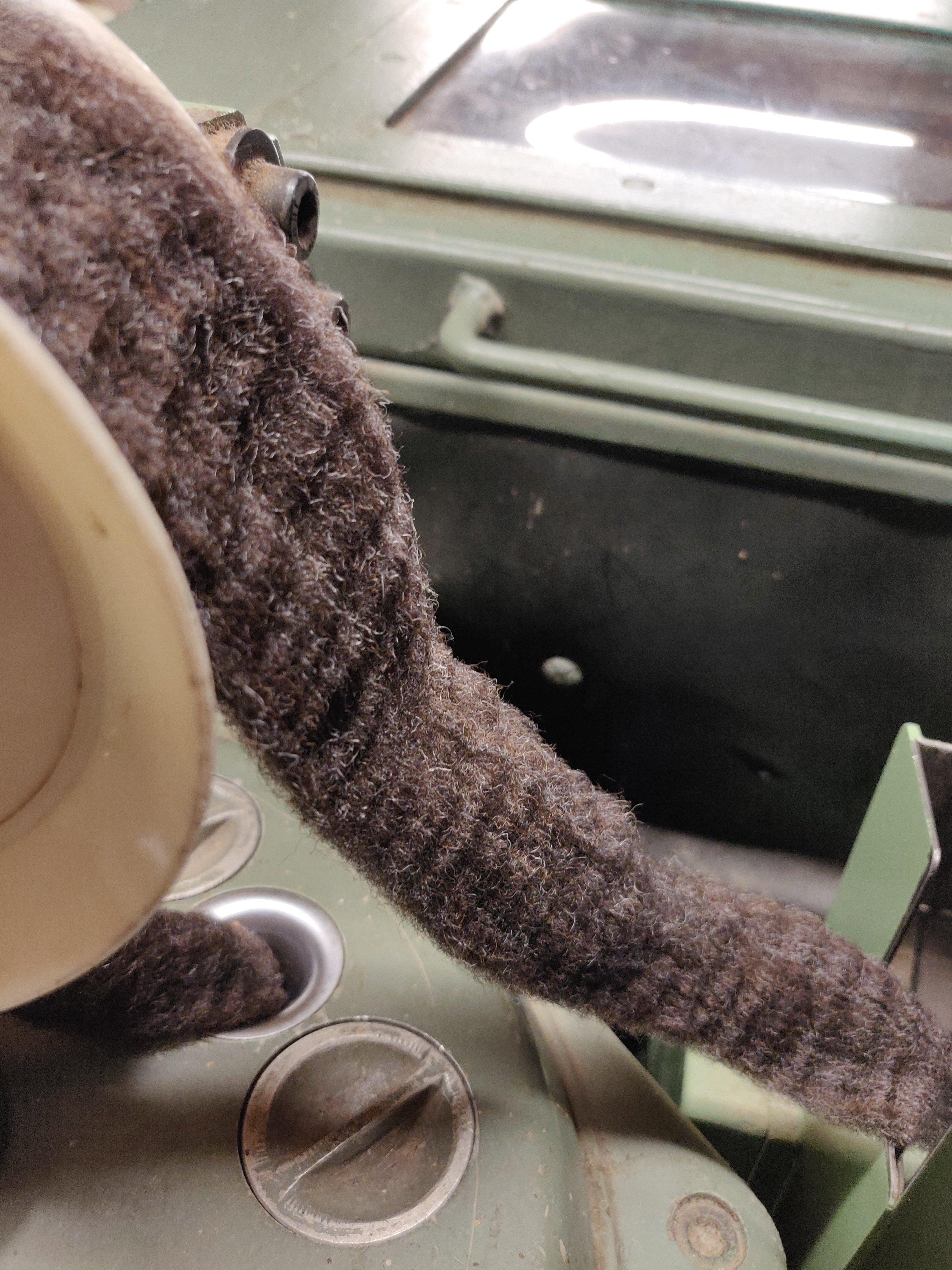
This combed sliver has become slightly uneven during the combing process, and this is when it goes through the finer gilling machine to produce a consolidated, even sliver ready to have a small amount of twist introduced, (about four turns per inch) to make a softly twisted roving.

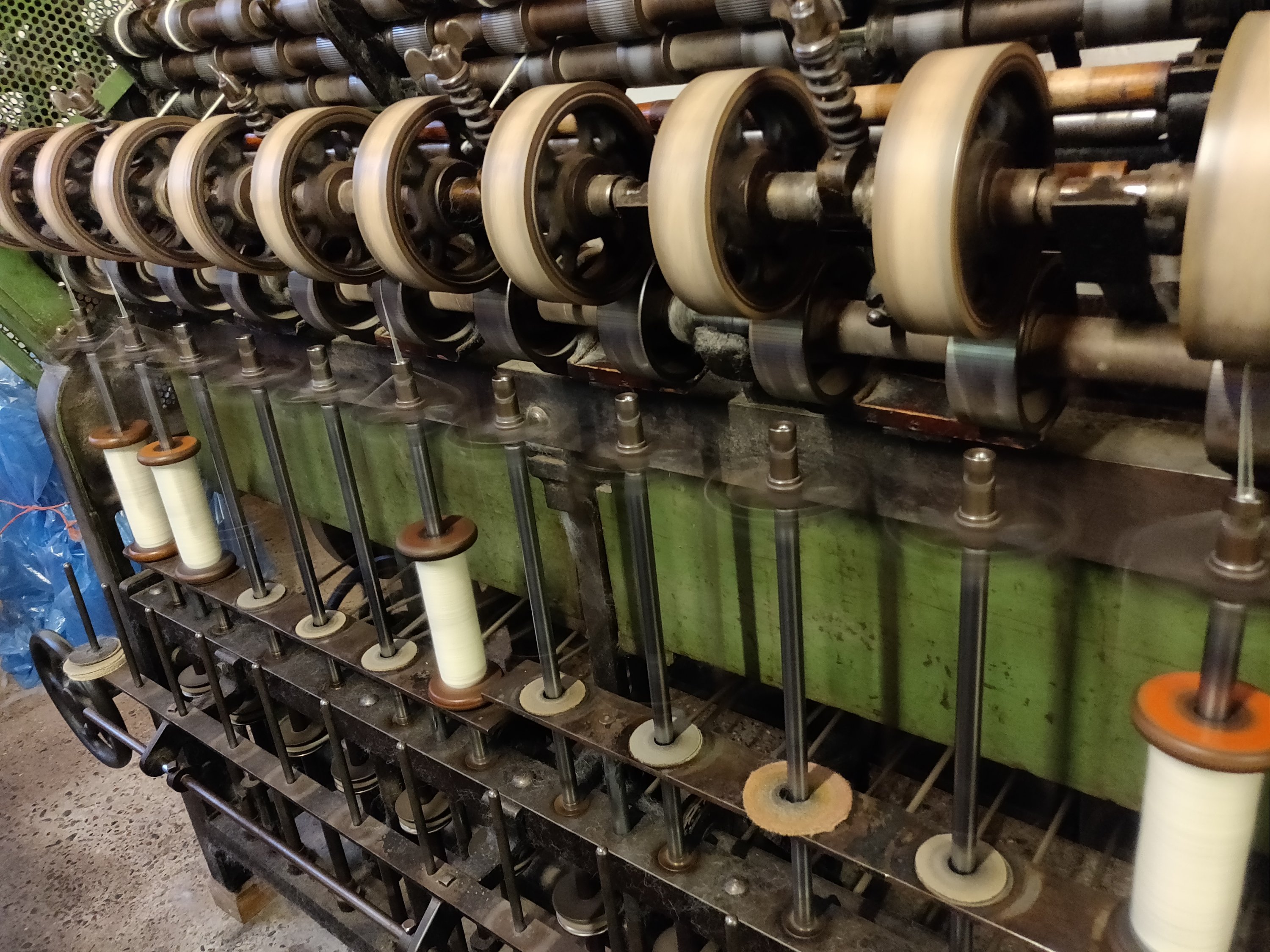
This roving is then drafted out into a thinner roving, and finally drafted and spun into singles weighing approximately 0.2g per metre. Amount of twist can be controlled to produce softer or firmer yarns at both singles and plying stages.
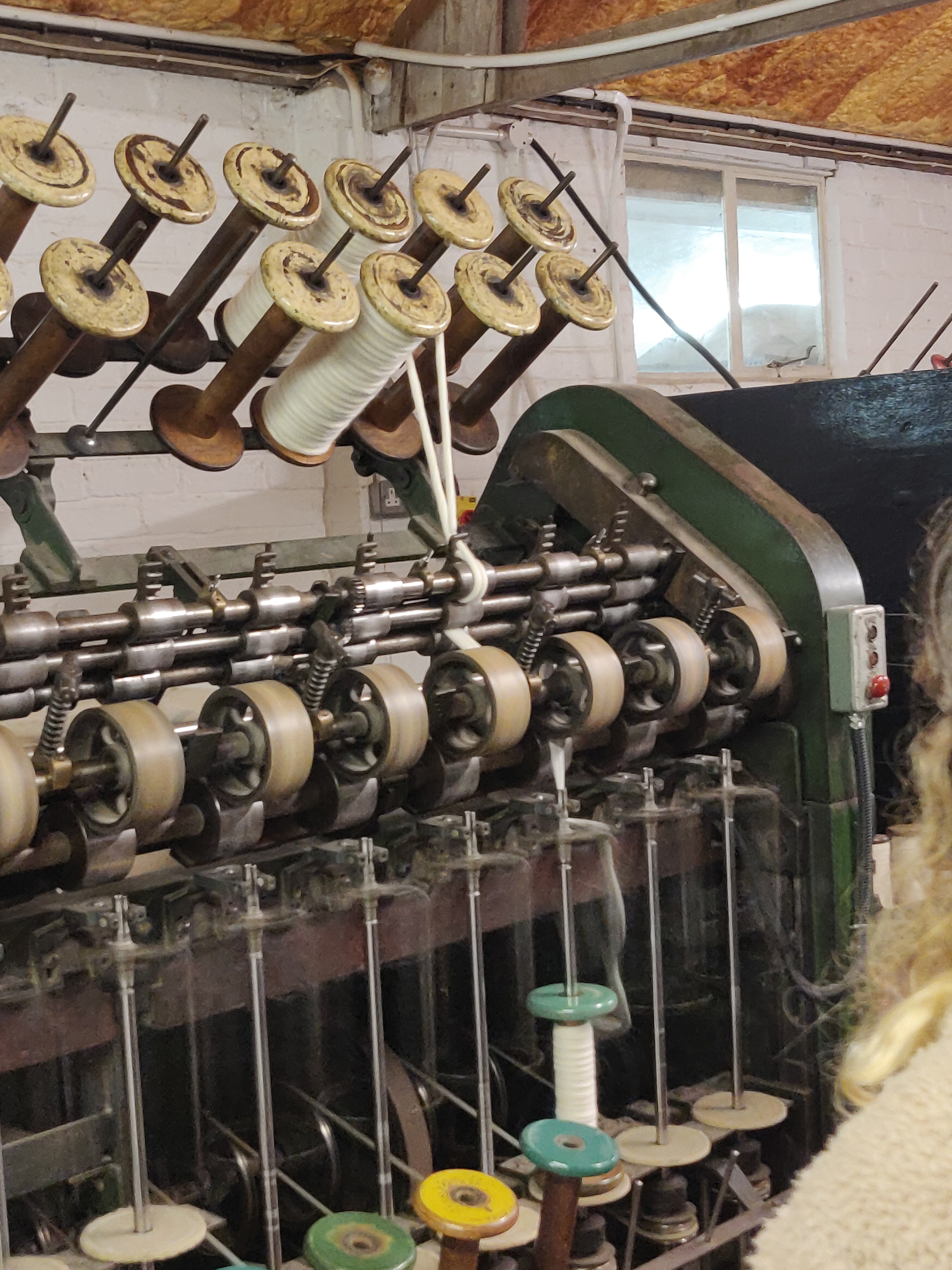
The singles can be plied into 2, 3, 4 etc ply yarns according to need. 2 ply tends to be flat, 3 ply rounded, and 4 ply has a square profile. To make a cable yarn, 2 x 2ply can be twisted together.

2ply yarn made from two of the 0.2g/metre singles would weigh approximately 0.4g per metre. This would yield something like 250 metres per 100g, which is within the DK category of yarn, and will be between 12-14 WPI.
Of course, as Roger pointed out, natural fibres do not conform as precisely as synthetics do, so there are highly likely to be variations in weight to length of a hank of yarn depending on humidity and other physical conditions when it is weighed. Oh the joy of natural fibres, thats why we love them!
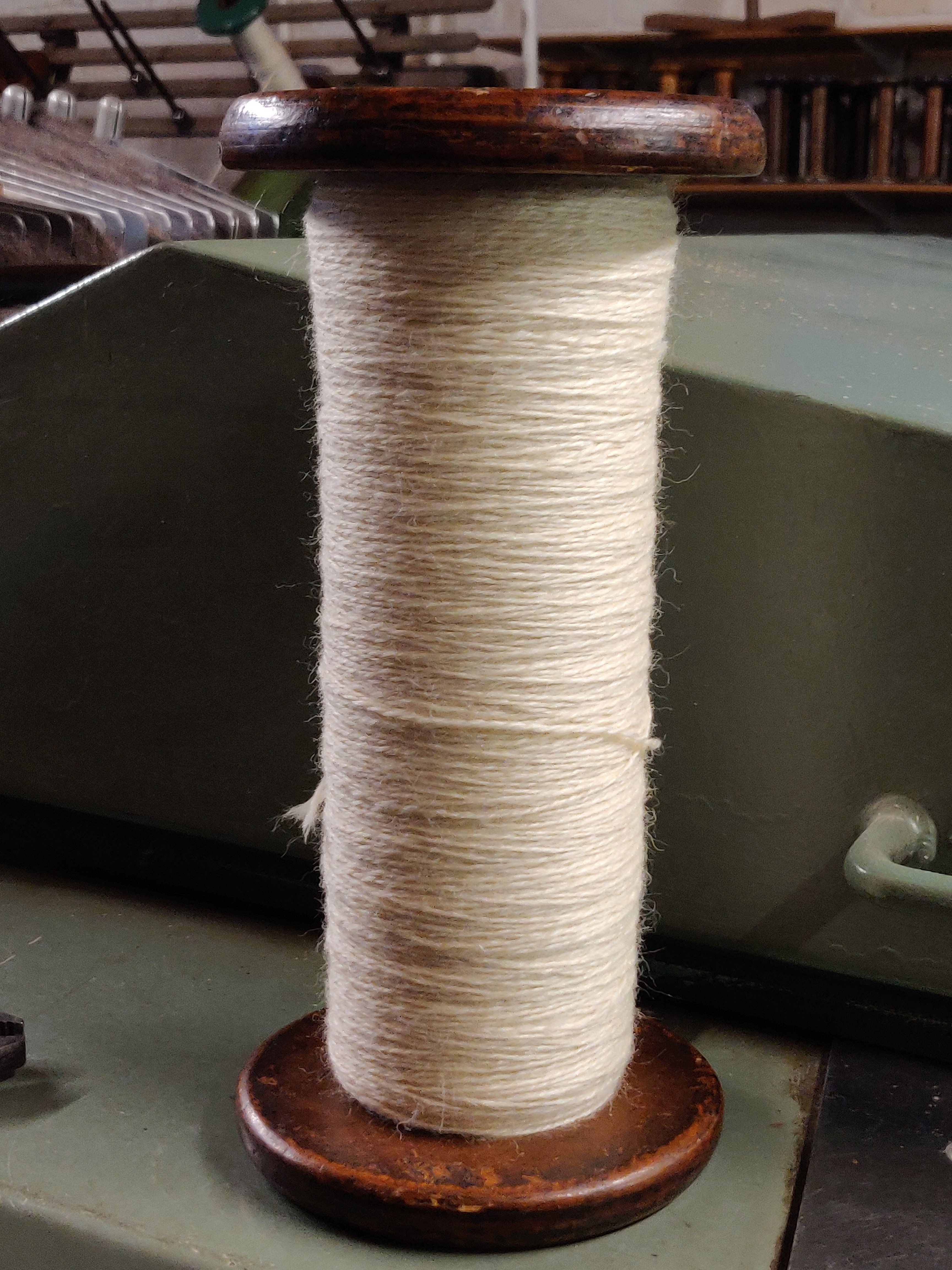
I think the students now really appreciate how much work goes into making the yarns they pick off the yarn-store shelf. One even went so far as to say that they would never again complain about yarn being so expensive!


“This book ought to be mandatory reading for every new machine knitter!”

I came across this review of my book, ‘Translating Between Hand and Machine Knitting’, and would like to share some of it with you.

“This book needs to be on every machine knitter’s manuals shelf, in pride of place, no matter if you use Silver Reed or Brother!”
“Where was this book when I was desperately trying to learn how to design lace/translate lace cards between Brother and Silver Reed?!?!”

This book is absolutely essential equipment as far as I am concerned!
The pictures will blow you away and they only get better.
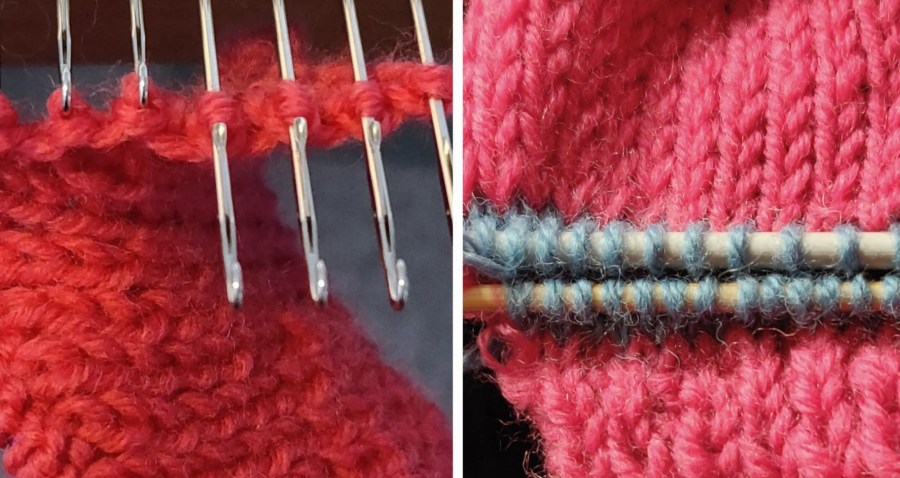
The details are absolutely in depth and extremely easy to understand with stupendously clear focused pin-pointed and highlighted photography and exemplary diagrams that compare every aspect of stitches, fabric, mechanics, of hand and machine knitting. 
It isn’t a how-to… it compares them and shows some GREAT visuals of them on and off the needles. Refer to your manual for specifics on how-to cast-on and cast-off. Basically, this book compiled most of the answers to questions I have asked in the past, questions I have hunted down answers to, and questions that I hadn’t even thought to ask. It is utterly fantastic.
Buy it! Buy it NOW!
I can not say enough how much you need this book! How much I needed this book… now if I can just convince her to write one on Passap…
No! I have no affiliation with the author… I wish I could say I know her.’
Thank you to B. Newson on Amazon.com


Machine Knitting workshop, Brighton TAG

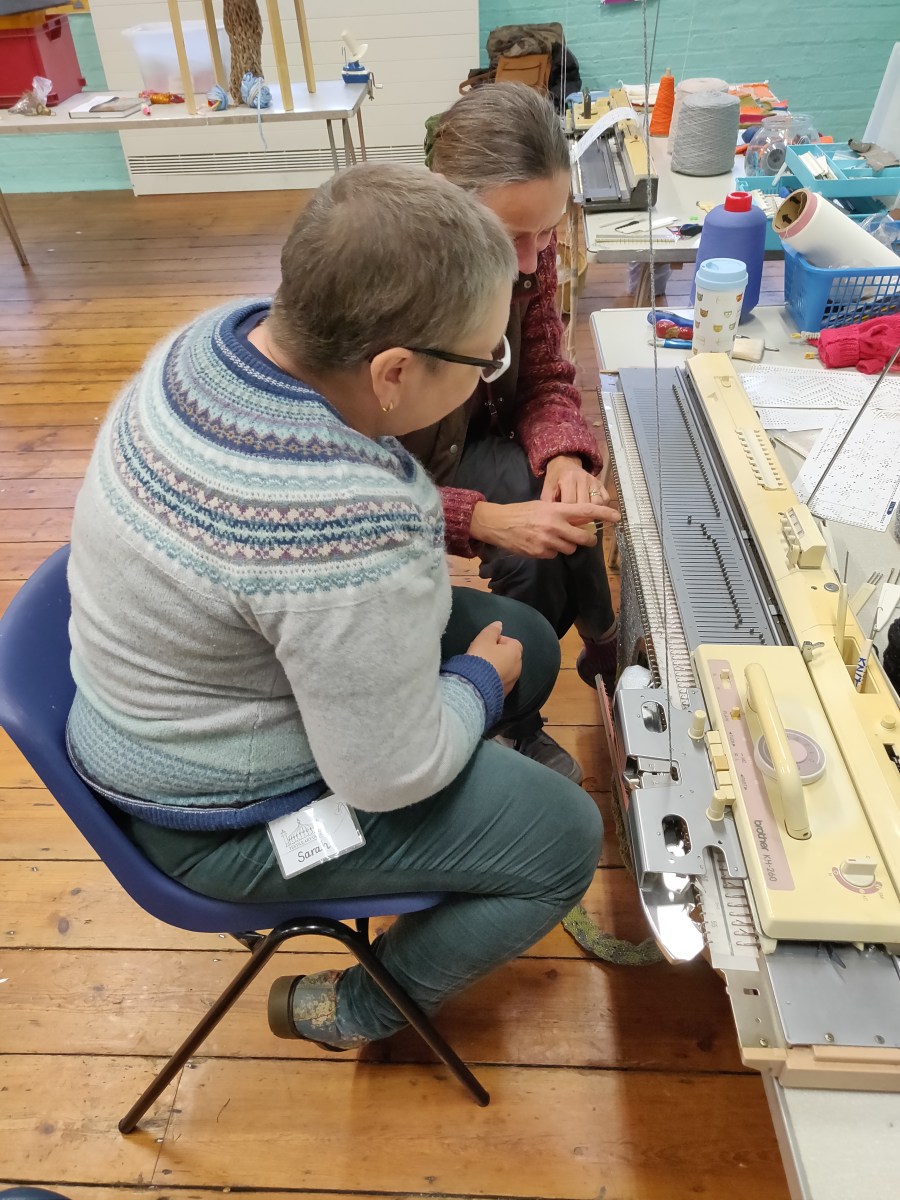
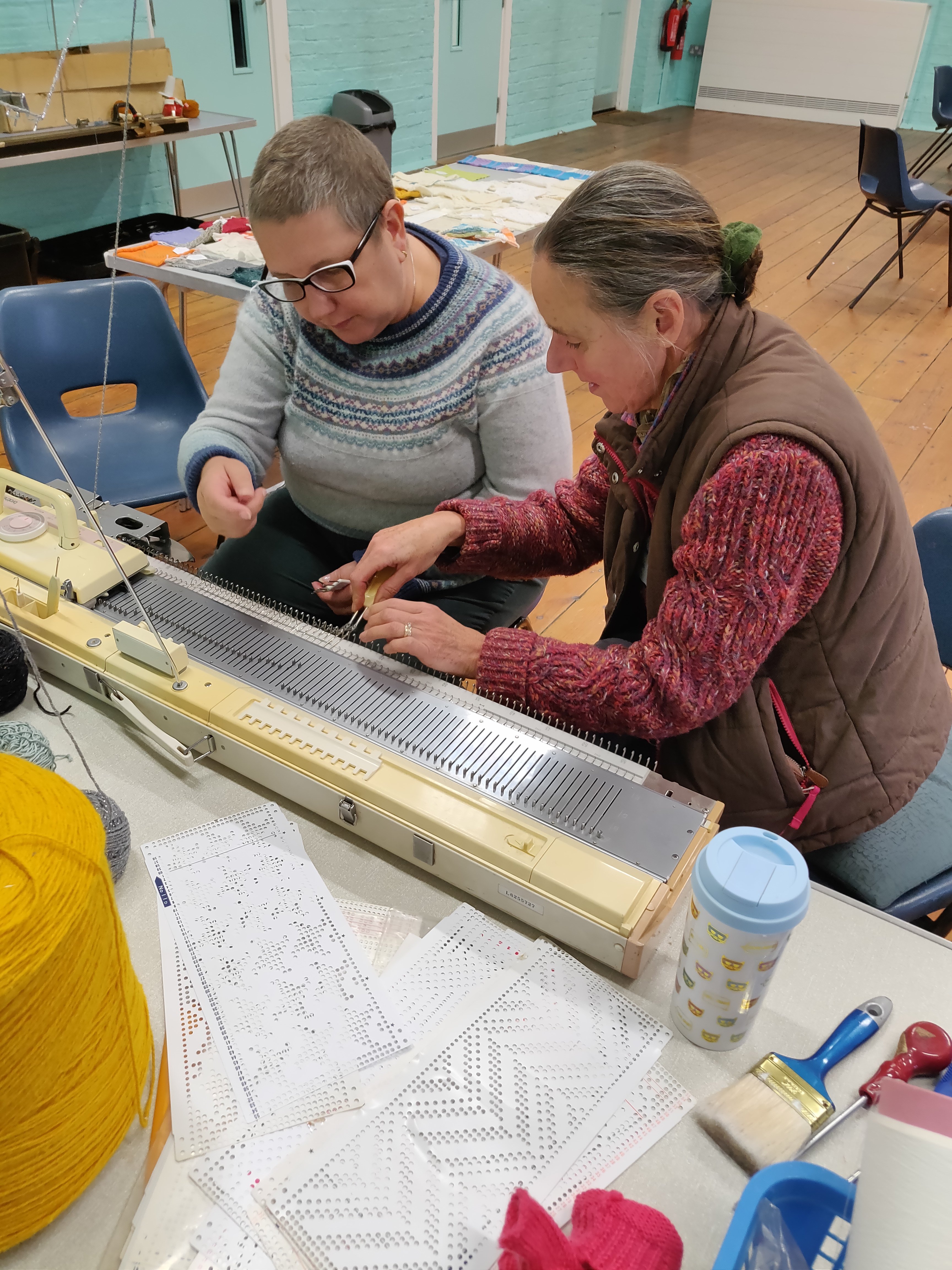
Today I ran a workshop that introduced members of Brighton Textile Art Group to machine knitting. To give a wider experience both a Knitmaster and a Brother machine were used, one standard and one chunky gauge. The chunky was particularly popular once it was found that it can knit handspun yarns.

Techniques explored included shaping, fair isle, single motif fair isle, knitwear (again great for hand spun), holding and short rows and simple, manual lace transfer.

I took along a little circular machine to demonstrate the difference between the two machine types, but the real interest was in the flat bed Japanese machines.

After the workshop response were really positive; people who had thought they would hate it had great fun, and those with machines were enthused to go home and get them out. Unfortunately the workshop clashed with the East Sussex Guild of Spinners, Weavers and Dyers meeting, so another workshop had been requested in the Spring or Summer of 2020.

Talk in March 2020

I will be talking to Long Buckby Machine Group next March about my career in knitted textile and knitwear design, and the inspiration behind ‘Translating Between Hand and Machine Knitting’.

I’m looking forward to meeting members of this well-established machine knitting group.

Don’t waste the demo yarn!

Whilst demonstrating as a member of a local textile group, Woolly Umbrella, at the Wild Chalk festival, I kept a drop-spindle of my own going with singles that I Andean plied at the end as part of the demo.

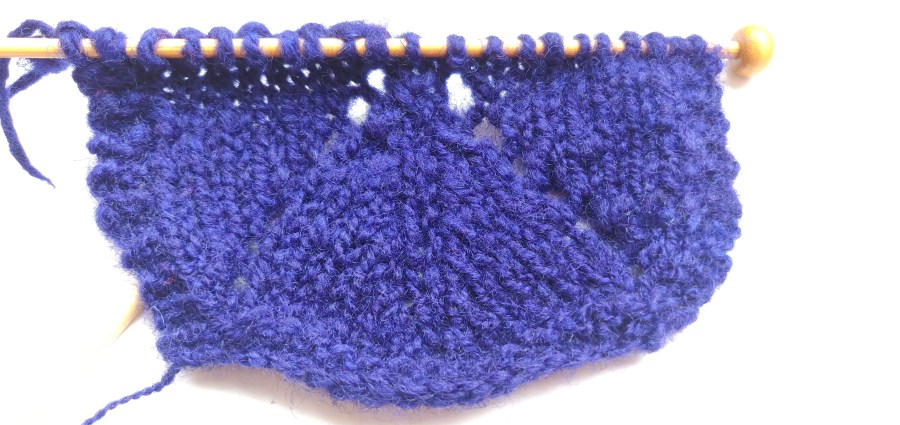
I don’t think repeatedly putting it down and restarting helped me get an even twist, or it may have been the plying, or a mixture of both, but the yarn isn’t balanced. I knitted a lace pattern with it, and the bias isn’t so pronounced as in stocking stitch, but I can see it.
For fun I added the knitted sample to a purple dye bath I had prepared to dye some other yarn, and here is the result.

Hand spun yarn dyed with purple acid dye.