Irish tension on a Schacht Matchless

Yesterday, a friend who I think has more spinning wheels than even I have, brought an older Louet wheel along to the monthly meeting of the Brighton Textile Arts Group. She didn’t know the model, and I still haven’t found it online, but that’s sort of irrelevant as it’s the Irish tension that caught my eye.

I have learned from many texts and posts online that ‘Scotch’ and ‘Irish’ don’t really relate to geographical origins. I also understand that ‘Scotch’ and double drive are both flyer-led and ‘Irish’ is bobbin-led (literal and more accurate descriptors), but the terms Scotch and Irish tension are in common use so I will stick to them here. In flyer led systems the wheel drives the flyer around the bobbin, and the bobbin is braked by either the brake band or the second loop of the double drive band. In bobbin led systems the bobbin is driven by the wheel so spins constantly, but the flyer, which feeds the yarn onto the bobbin is braked by either a leather band at the front (as on the Louet) or by using a brake band. In both systems, the spinner restrains the yarn from being pulled through the hooks/flyer and onto bobbin as twist is introduced in to the fibres and then releases their hold to allow the yarn to be drawn onto the bobbin. Both systems rely on some slippage of the bands, which is something I have not fully understood as yet, and am not sure is really necessary, but fascinating all the same. So far I am not sure how the difference in circumference of bobbin and flyer whorl affect each other in Irish tension as they do in double and Scotch tension systems. Another interesting thing to spend time testing out.

I learned to spin on a Westbury wheel, which was a gem of a wheel. My Mother bought it in Glastonbury as a kit – she was so excited, and my Dad built it for her and stained it dark walnut – not a fashionable option today, but it did look charming. The Westbury has both double drive and Scotch tensions, but I only used the Scotch option as we really didn’t understand the double drive. After this there was a gap in my spinning and Mum didn’t carry on with it for long, so that wheel has long gone, (something I really regret).

My interest in yarn design endured, but was industrially focused, so it was quite a few years later that I resumed hand spinning. I now prefer double drive but have several wheel which are switchable and value the flexibility this gives me. So that I can share with you, these are a Wee Peggy and a Schacht Matchless and an Ashford Traddie that I have converted to double drive but which still retains the option of Scotch tension. Of these the Matchless is a recent purchase, chosen after trying lots of wheels over longish periods of time, (hence my collection of wheels) and is my absolute favourite. It is a dream to spin on and has double treadles and a central orifice which is super ergonomic; I find single treadles can make me twist and lead to back and hip ache nowadays so can’t spin for too long on these.

So let’s get back to yesterday and the Louet wheel. Which is a sweetie I have to say. I like Louet wheels, (and of course own one) because they are so thoughtfully designed and this was no exception; sturdy with a central orifice and an onboard Lazy Kate, all made in lovely wood – very nice apart from the rather high treadle position. I’ve not used the Irish tension system before and so was keen to try it. I didn’t actually shove her out of the way, but hovered and green-eyed it and eventually asked if I could have a go. Generously she gave me fibre, and left me with it, saying she found it quite a challenge to be able to control what she was spinning, although I thought her samples were soft and pretty even. However, she was right!

After a while I managed to set the leather band so that the fibre wasn’t ripped from my fingers, and could start to spin. I found that very little tension was needed, which I am not sure is normal. We inspected the tension band, orifice and brass bearing and whilst the band didn’t look worn at all, the orifice outer was a bit sticky and the brass bearing seemed a bit rough. We cleaned these as best we could with what we had to hand which helped a little, but probably a gentle swab of alcohol on the orifice outer and brass would be a good idea.

Once it was going I was really surprised how different the Irish tension felt to the two other systems, and can see why it is good for thicker yarns because of its pretty intense pull-in. Plus I imagine it is great for plying. However I managed a reasonably even singles that was indeed thicker than I usually spin double drive, so that sort of proved it to me.

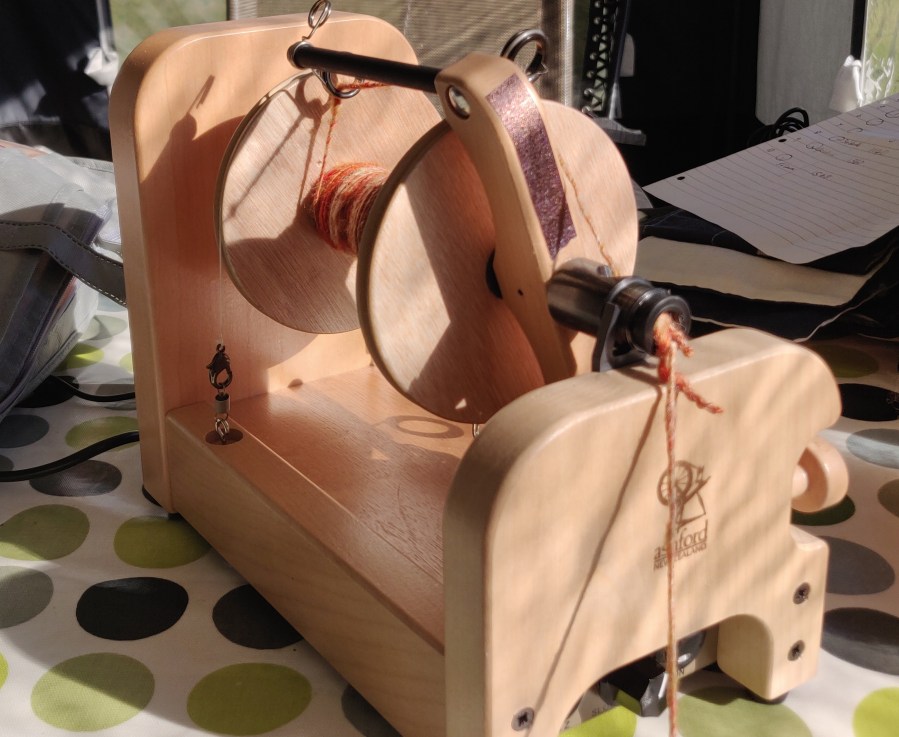
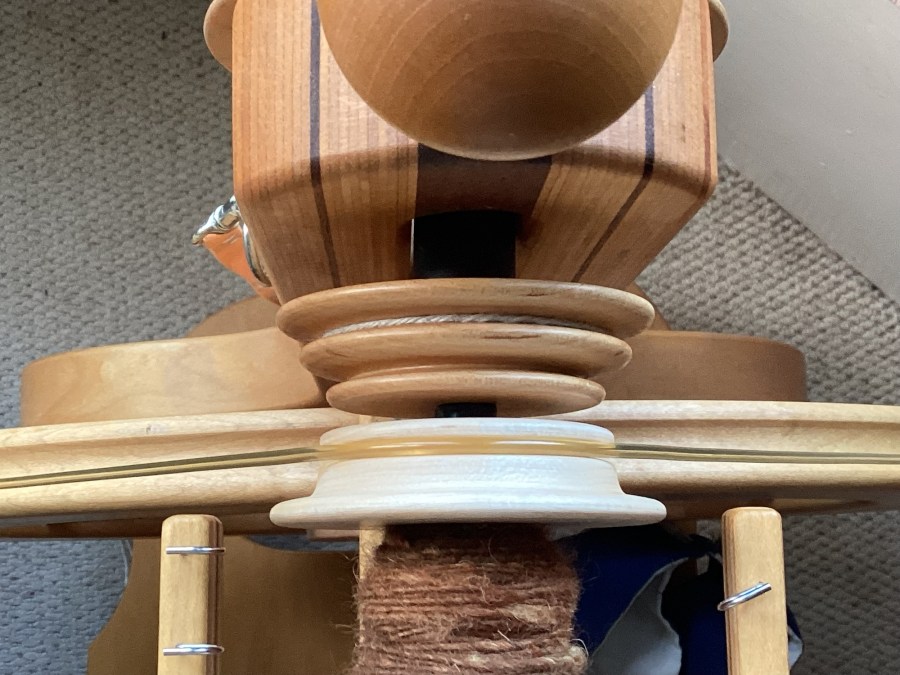
Being an equipment squirrel I immediately wanted an Irish tension wheel. So imagine my joy when I found that my Matchless would convert to Irish tension! In my excitement of first owning the Matchless I tried both double and Scotch tensions and have been using these both since then, but I clearly forgot that it has three tension modes. I’m not sure it tells you in the manual, but you simply swap the drive bands over. The wheel drive band goes on the bobbin, and the Scotch brake band on the flyer whorl. I have set mine with the larger bobbin whorl to the back with the medium flyer whorl, there may be better arrangements but I have yet to try these out.

The result felt very similar to the Louet, with the brake band needing hardly any tension, so maybe that is normal after all. I found starting needed care so that the fibre doesn’t pull away too rapidly, but once going it went well. It might be me, but most times after I moved hooks the pull-in became stronger, then settled down again. This must be because the smaller circumference of the bobbin to start with pulls the yarn in faster. Because of this I can see why a Woollee Winder type system might be useful with this tension system, but I am not tempted due to price. The hooks will do me just fine and I really don’t like the sliding hooks on any make so far.

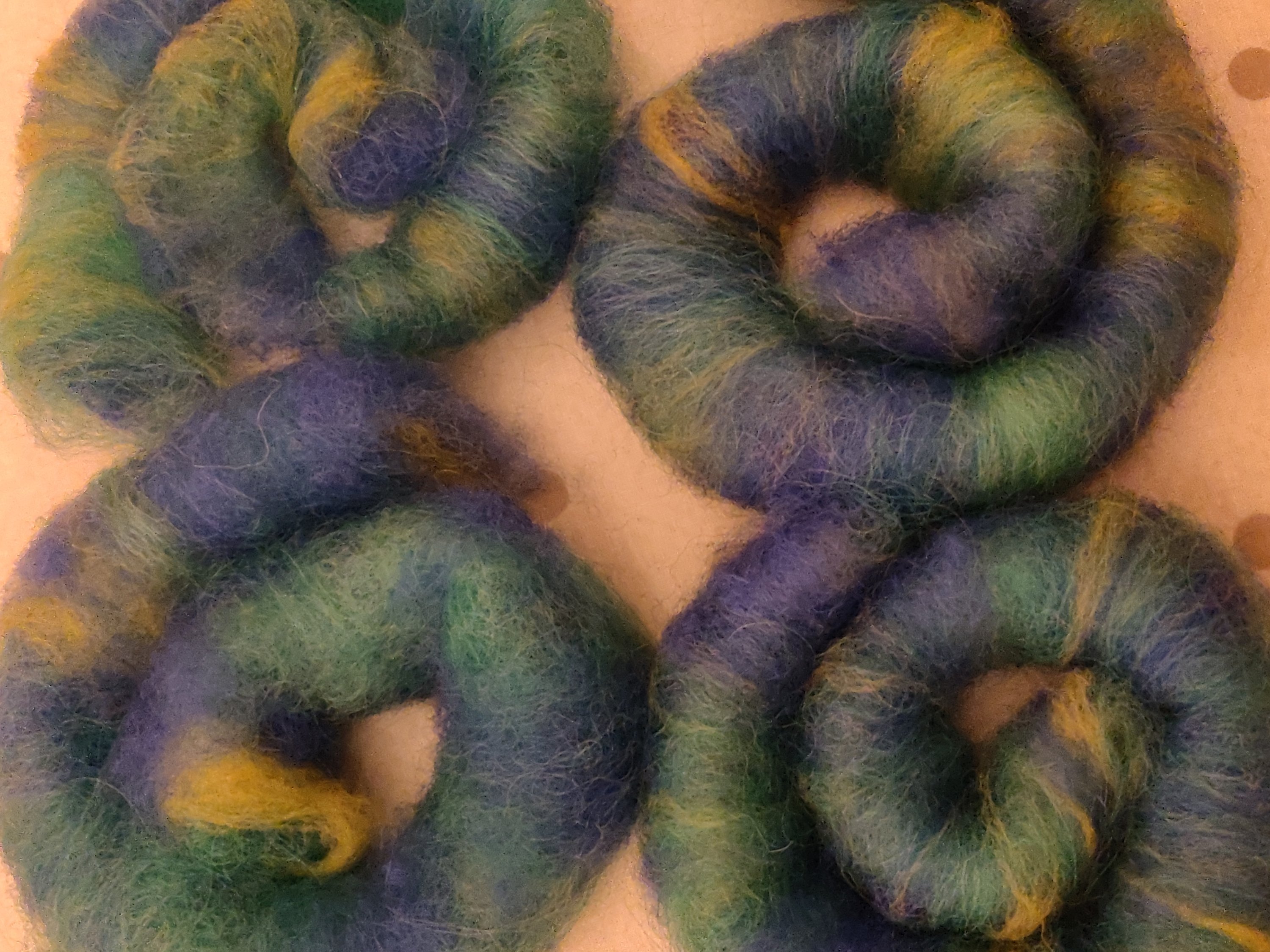
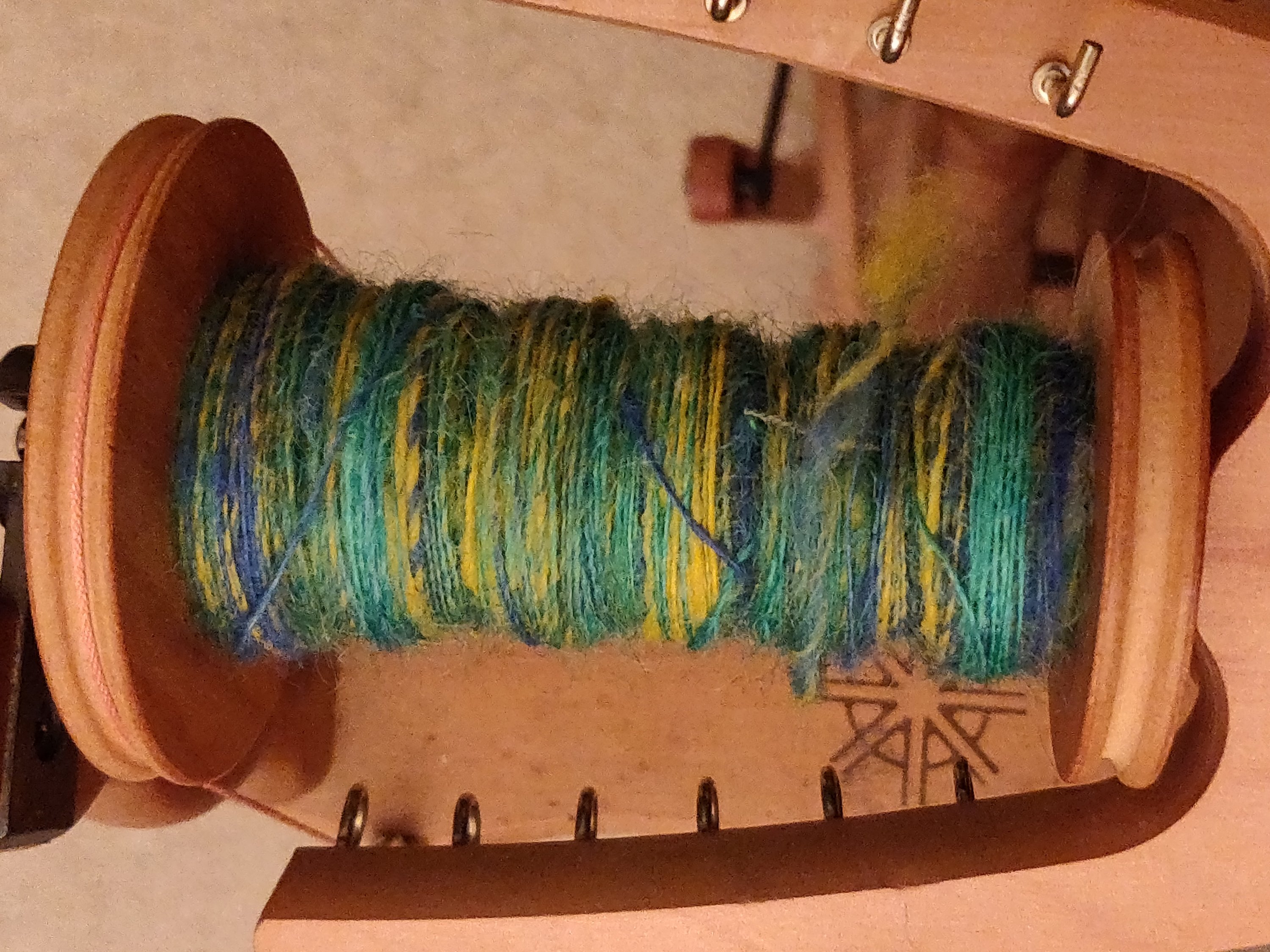
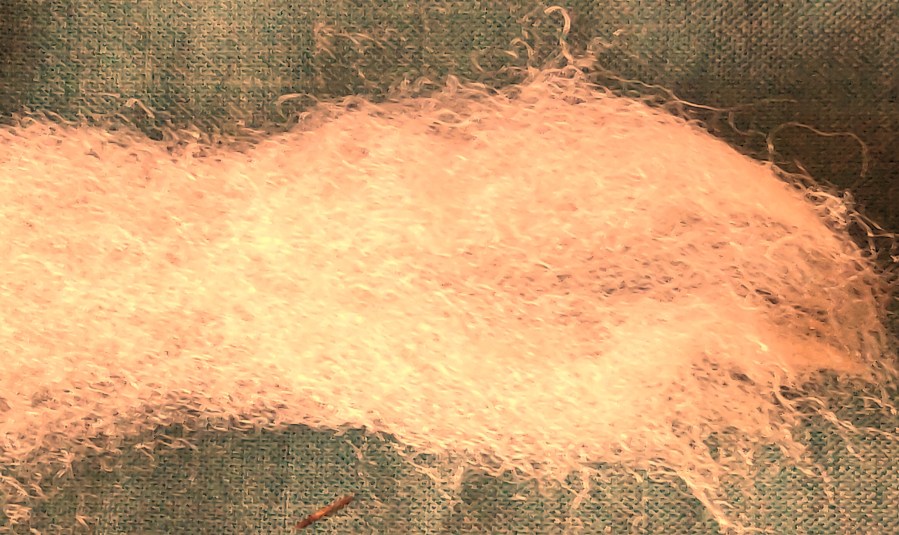
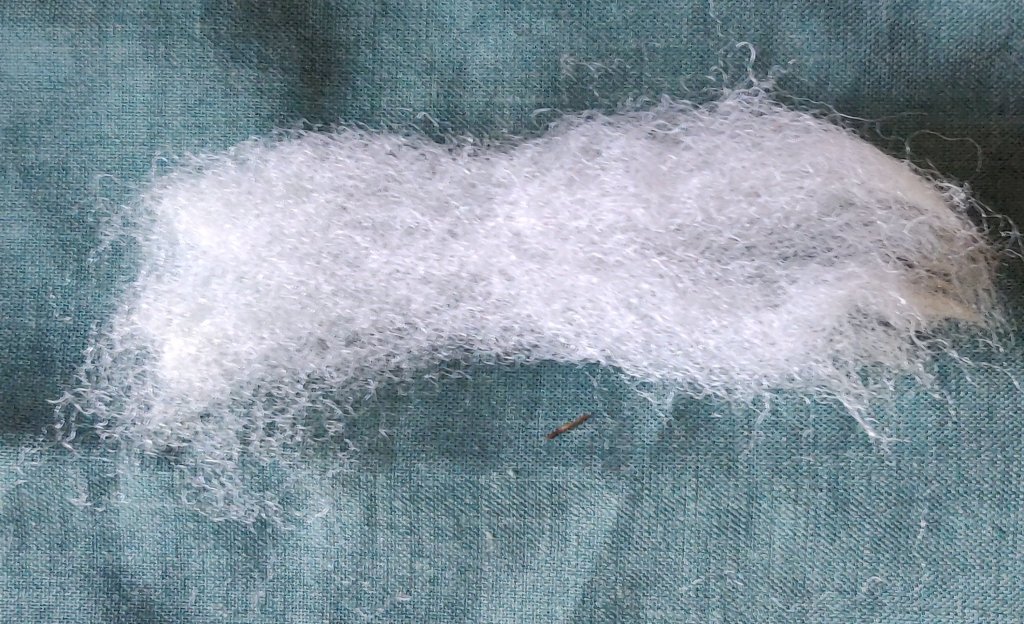
As you will see in the photos, the singles I spun are nothing to write home about, but its early days for the Irish tension set-up. The fibre is onion-skin dyed Lleyn blended, (rather poorly because I was in a hurry) with rust coloured Alpaca, then taken as tops off the drum-carder.
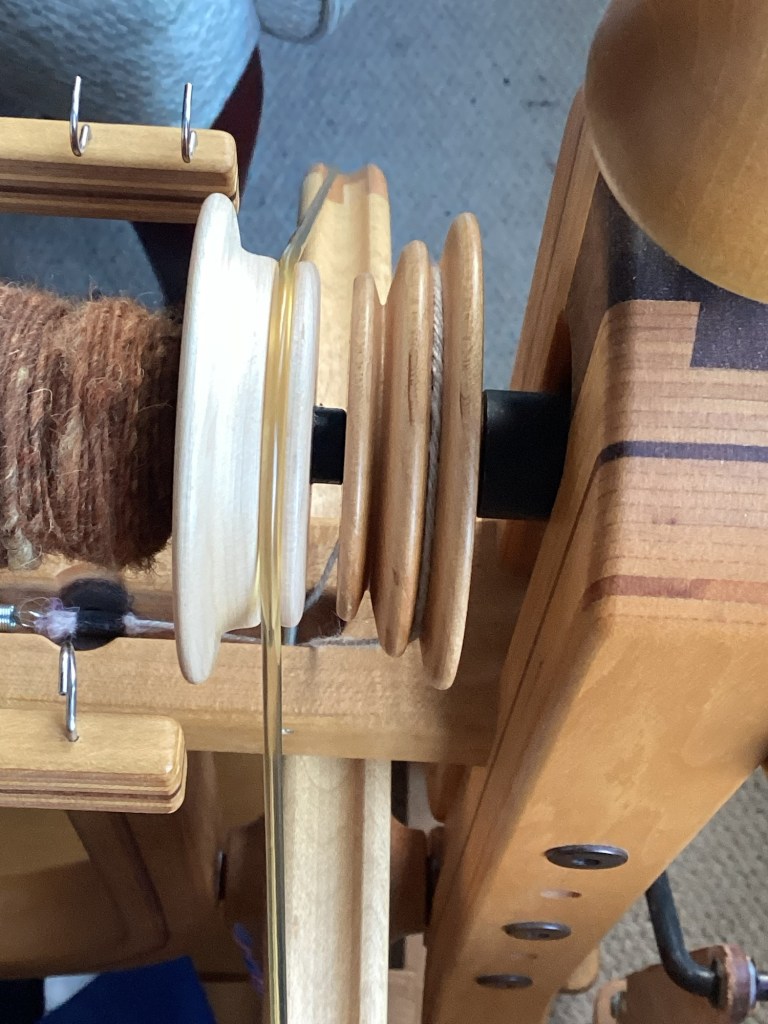
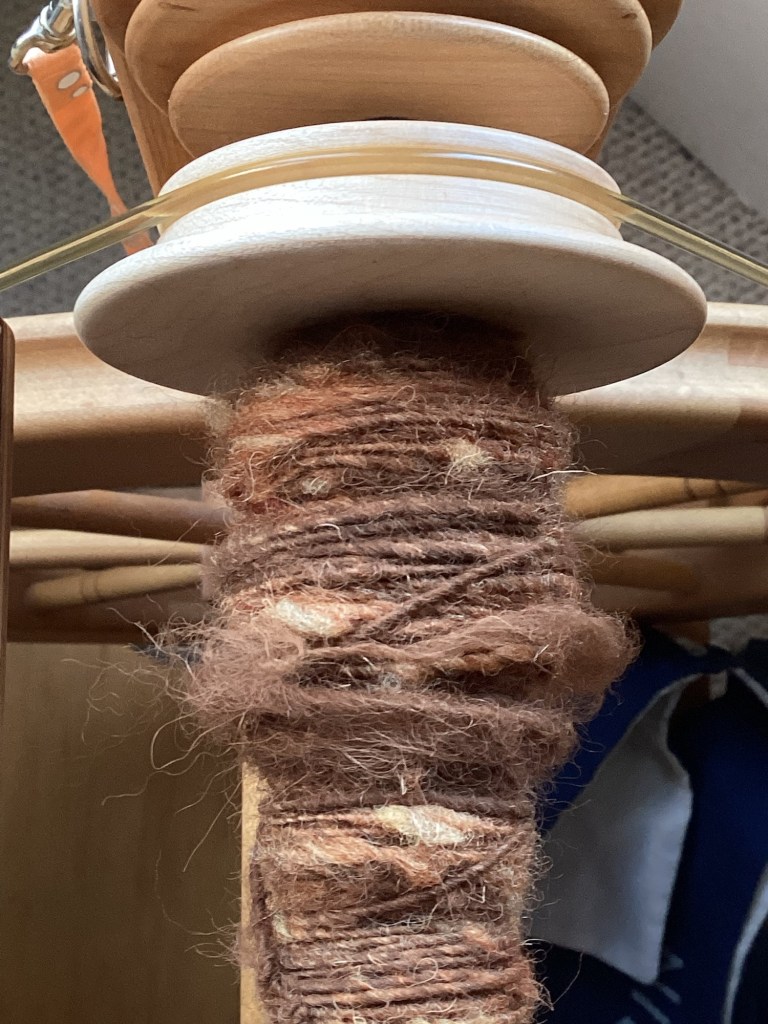
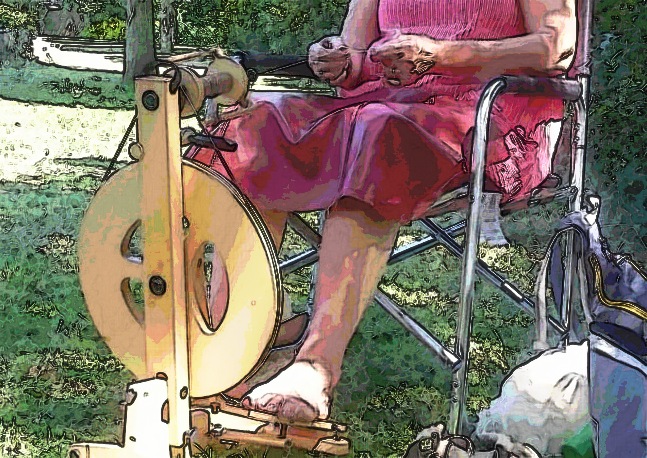
The Irish tension set up on my Matchless. The drive band is the one I use for Scotch tension – I have a cotton one for double drive. They both stay on the wheel tucked underneath. I am wondering what will happen if I put the brake band on the smaller flyer whorl?
The Lleyn was deliberately left with nepps to create a textured fibre, and the way the onion-skin dye has taken differently on the nepps enhances the texture. Roughly blended with the Alpaca – ‘do what I say not what I do’ is the underlying message here! I think I will ply with a finer singles made from undyed Lleyn for a tweedy final yarn.

Battery pack for Ashford E-spinner 3

I’ve just spent about an hour fiddling with the battery pack that came with my E-Spinner. The E-spinner was secondhand and was still unassembled and the battery never been used – the battery pack is not an Ashford one. I thought the details of the battery pack might be useful for anyone looking to buy one of these for their E-Spinner 3.

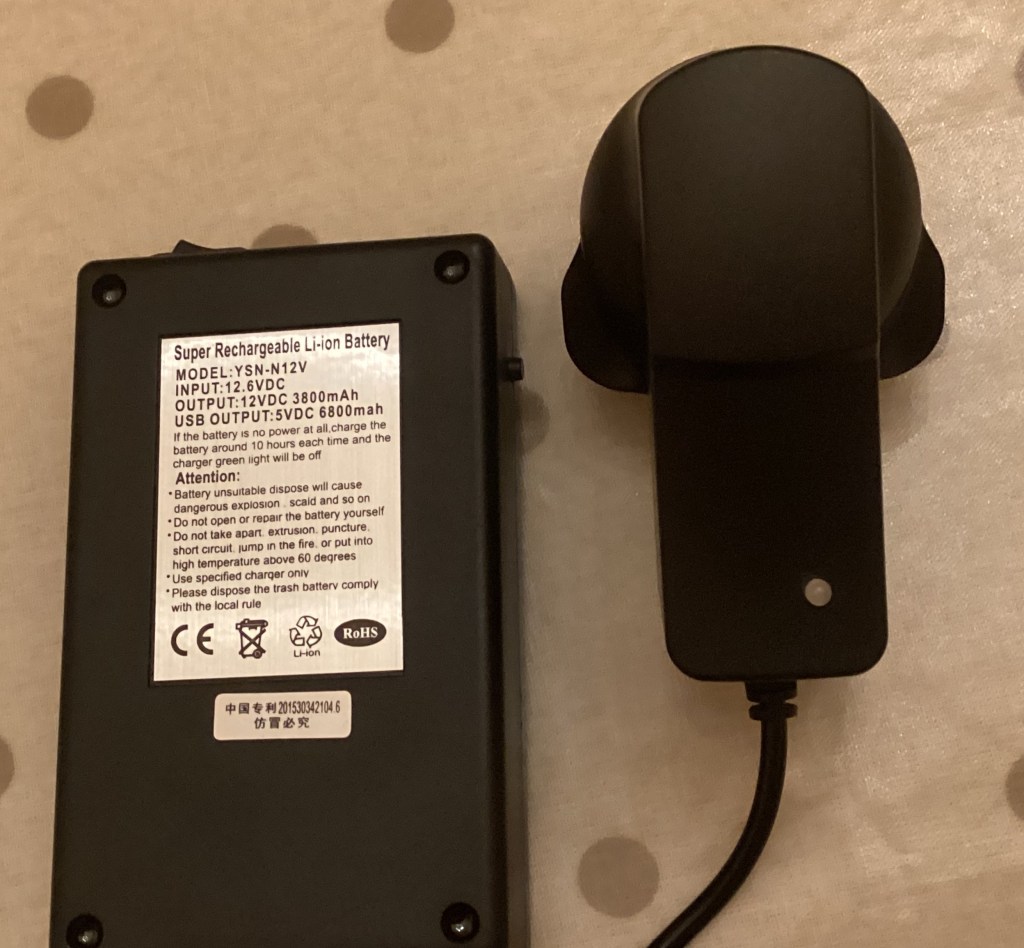
Super Rechargeable Li-ion Battery, YSN-N12V

Input: 12.5VDC

Output: 12VDC 3800mAh, (this is the DCin/out outlet, a round plug that leads to the E SPinner power plug when being run on battery).

Other output is: 5VDC 6800mAh – (the usb outlet).

Super Rechargeable Li-ion Battery, YSN-N12V

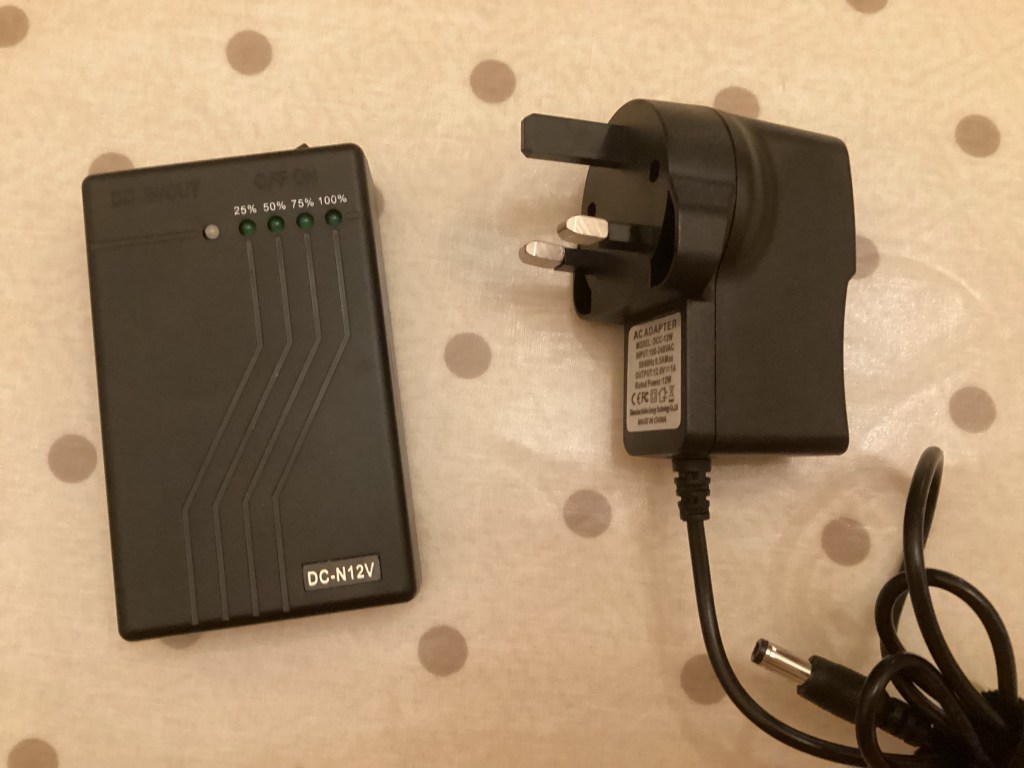
In my excitement I charged it rather haphazardly, but it has been working fine with the spinner. When I came to recharge it I found that it was not indicating charging as explained in the manual. However, a useful review on YouTube enabled me to understand what was going on. There is another lead with the battery, a round pin on one end (that is the same size as the outlet, and a much thinner pin on the other end – no idea what that is for). The lead from the battery to the E-spinner has the same sized pin on each end. It may have been purchased separately from the battery pack?

Basically the instructions were confusing about the charging process. The led on the plug the goes into the wall outlet is supposed to be red when the unit is plugged in to charge, and turn green when it is charged. The unit also must be switched on at its own on/off switch whilst charging, (if you leave it switched on when not in use it will discharge). The battery pack has five green lights on the top, one to show the pack is charged and four others labelled 100%, 75%, 50% and 25%. Nothing is said in the instructions about these, but trial and error showed that pressing the unlabelled button on the left side of the unit indicates the amount of power remaining in the unit using these lights.

I couldn’t find the battery pack on eBay or Amazon but did find it on AliExpress.

I found the same battery pack on aliexpress

I have used the battery for about 4-5 hours spinning before it needs recharging, so am really pleased with the unit. I have also bought the cigarette lighter plug connection so that I can use it on the 12v in our caravan. May be overkill as the battery is working well so far. The battery takes about 8 hours to charge.

Updated September 2025

Having been browsing I have found several posts about the battery for the E Spinner 3. Because mine does run out sometimes, I decided to purchase a second one and found this TalentCell one recommended on FB at a reasonable price so have taken the plunge.

Here is a link to the post on the Spinning Fibres group about the battery, which includes how to trim the plastic on the plug if it is too big for hole on the E- Spinner.

The details of the battery are : TalentCell Rechargeable 12V 6000mAh/5V 12000mAh DC Output Lithium ion Battery Pack – Portable Li-ion Power Bank with 12.6V Charger, Black.

I can give no guarantees that it will work, and have no affiliation to any of the companies named here.

I will post again if this does not work…

Acid dyeing session

Having acquired a Devon/Cornwall fleece that is quite similar to a Romney in feel and quality, I thought I’d dye some for blending. This fine will be great to comb for a semi-worsted spun yarn.

One of my favourite methods for safely dyeing fleece without matting the fibres is to use a slow cooker. I have a large family sized one that will dye 100g comfortably and 150g at a pinch, and a single-person one that does 20g for samples etc.

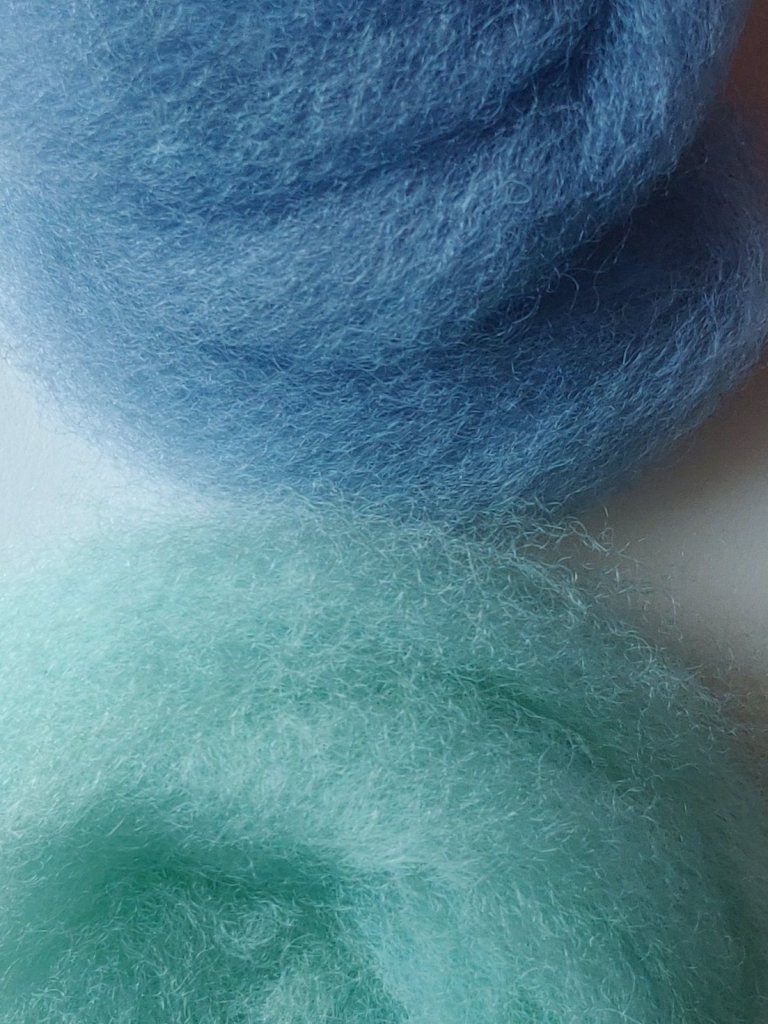
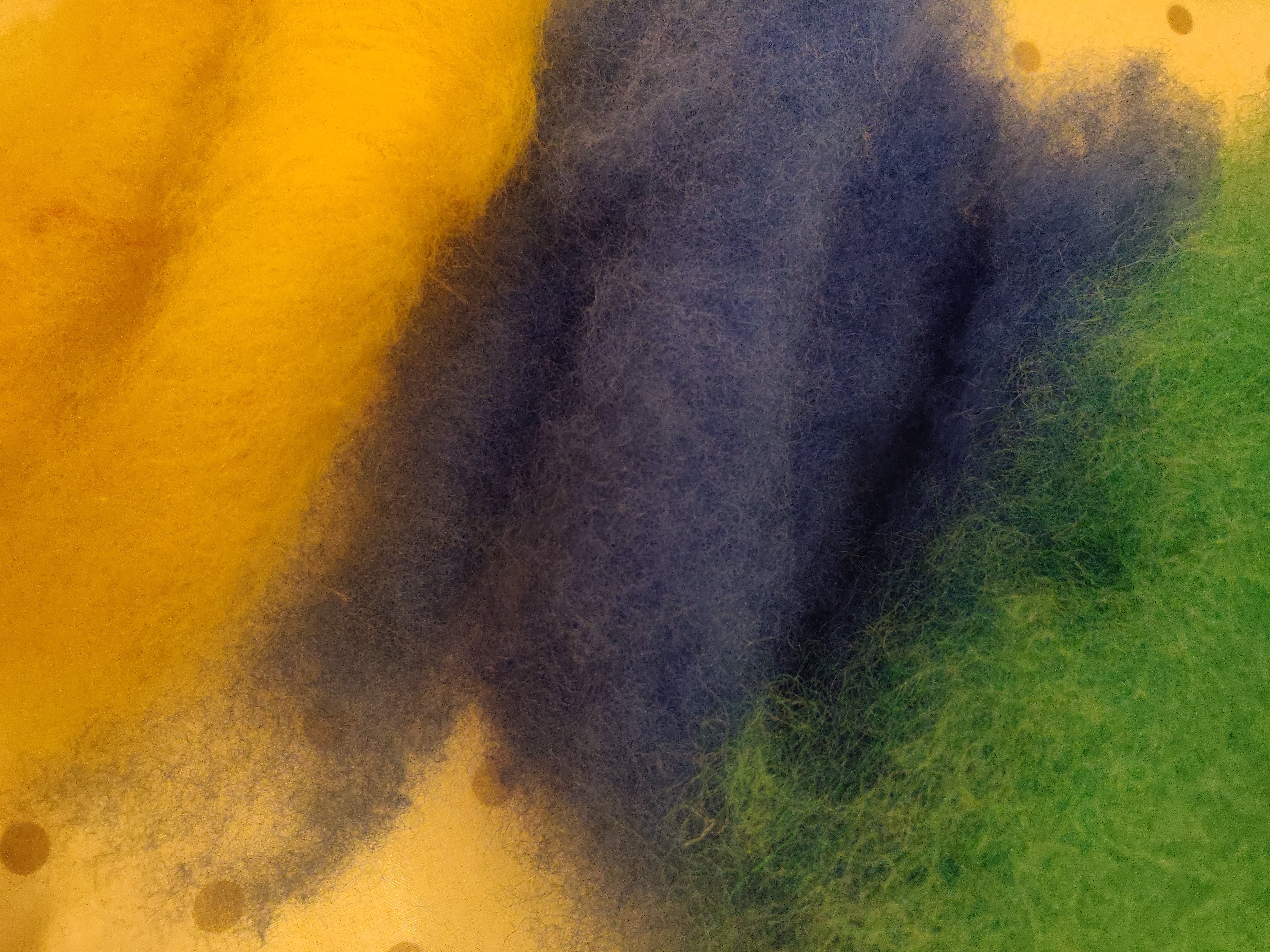
Using a pre-mixed colour I’ve used before I did a blue first. However, on this fleece it came out darker than I anticipated, but will probably lighten up once combed or carded and spun.

From the remains of the dyebath I got a pretty light turquoise.

The blue at the back, turquoise at the front

I have combed these colours as shown in this video.

Note that in this video I talk about ‘roving, but technically I am making ‘tops’. Roving is a similar narrow length of fibres drawn off a drum carder (usually, but can be hand carders) and has a slight twist added to keep the fibres together.
After combing, both colours have come out as
I hoped.

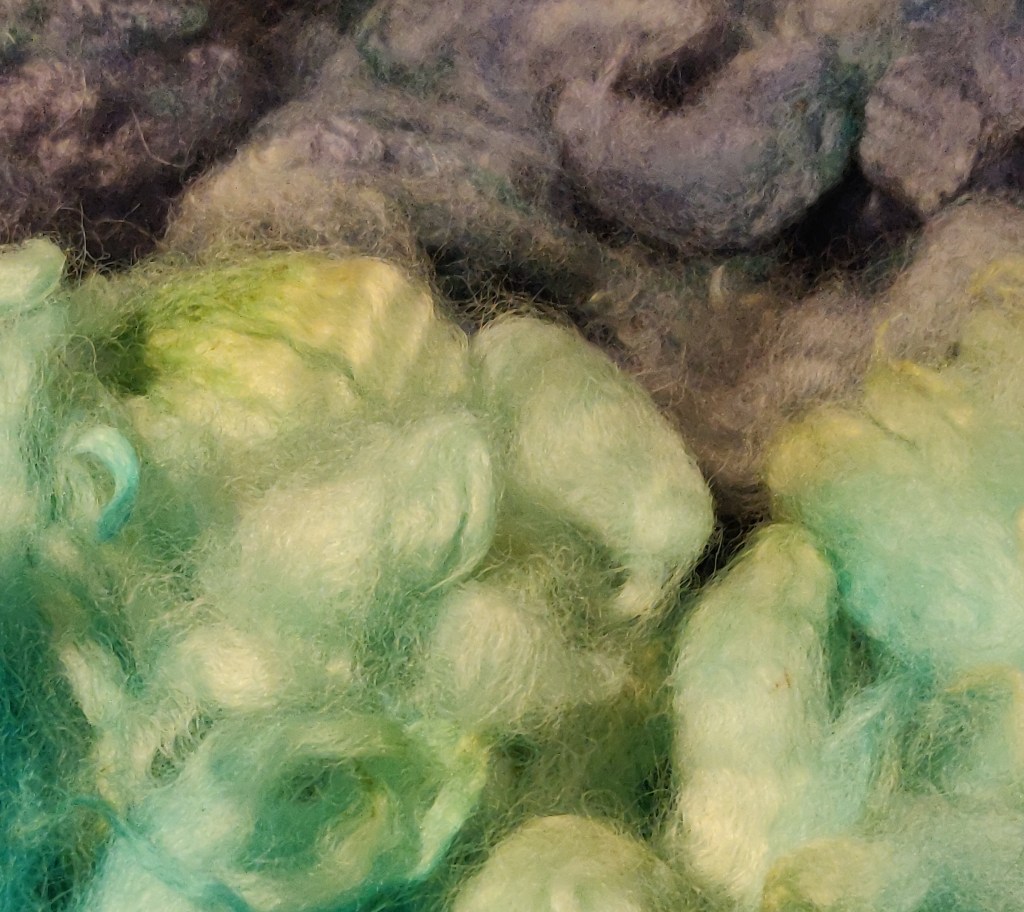
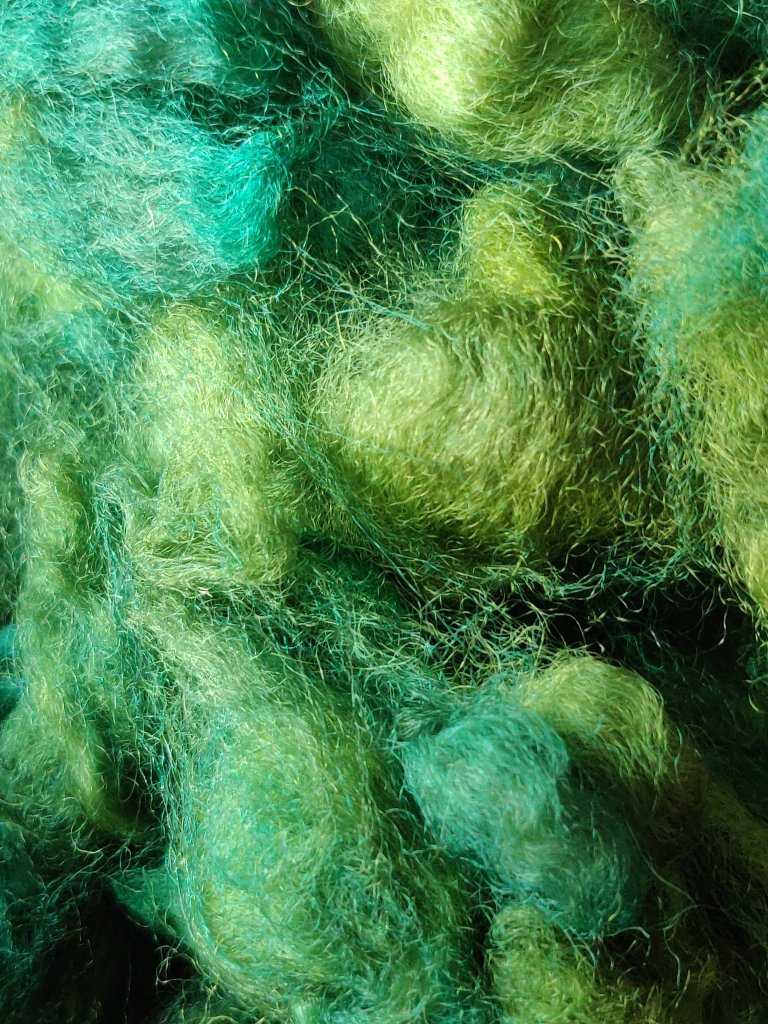
I also wanted an olive green, and have a recipe that worked perfectly on a Dorset fleece last year. I must have made a mistake somewhere, because I got a dark green instead. Maybe it is the different fleece, but I think I got my proportions wrong!

Pretty enough, but not olive green!

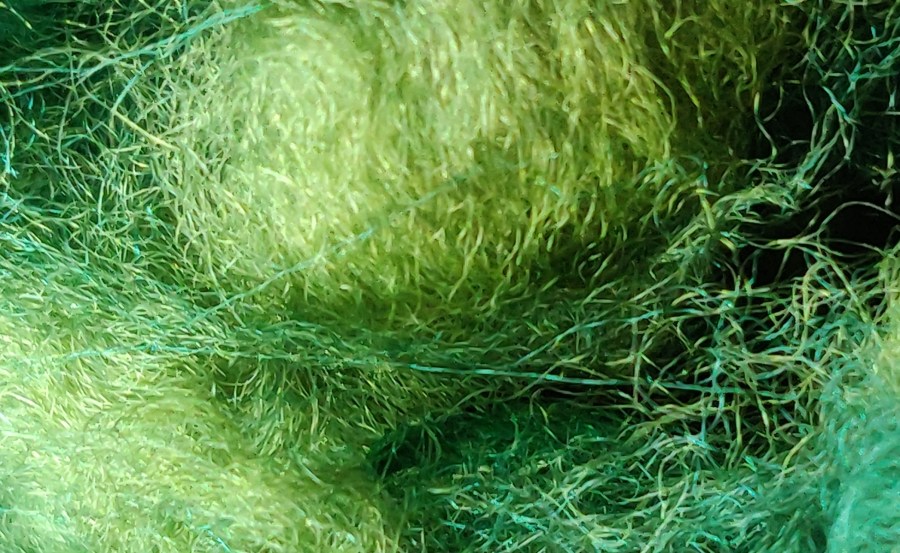
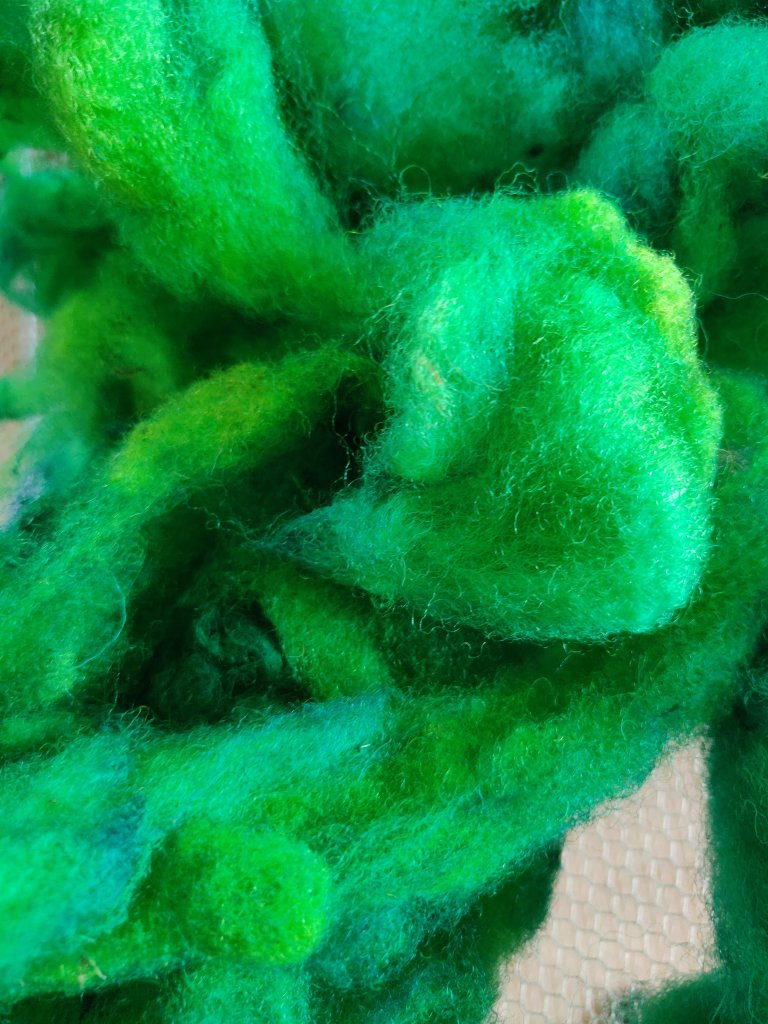
Once again they was some colour left in the bath, so in went 100g of Dorset fleece. OMG, the colour was bright! No idea what I did wrong, but it makes me blink.

The only compensation is that the fleece has not called at all due to using the slow cooker method.

That bright green total exhausted the dye – no surprise really! I will probably card this as the staples of the Dorset fleece are short and it is a soft fibre. Great for soft woollen spun yarn.

If you are interested in discovering the difference between different terms such as roving, tops etc, click here to read Abby Franquemont on Spin Off.

Plein-aire spinning

A bit like outdoor anything – providing its not raining or freezing – spinning is enhanced by the open-air. I took my little Louet wheel with me whilst on holiday on the Pembroke coast recently. We were being careful and avoiding towns etc in our caravan sitting on a farm, so there was plenty of opportunity to spin in the lovely sunshine. It seems ages ago now, but was so refreshing.

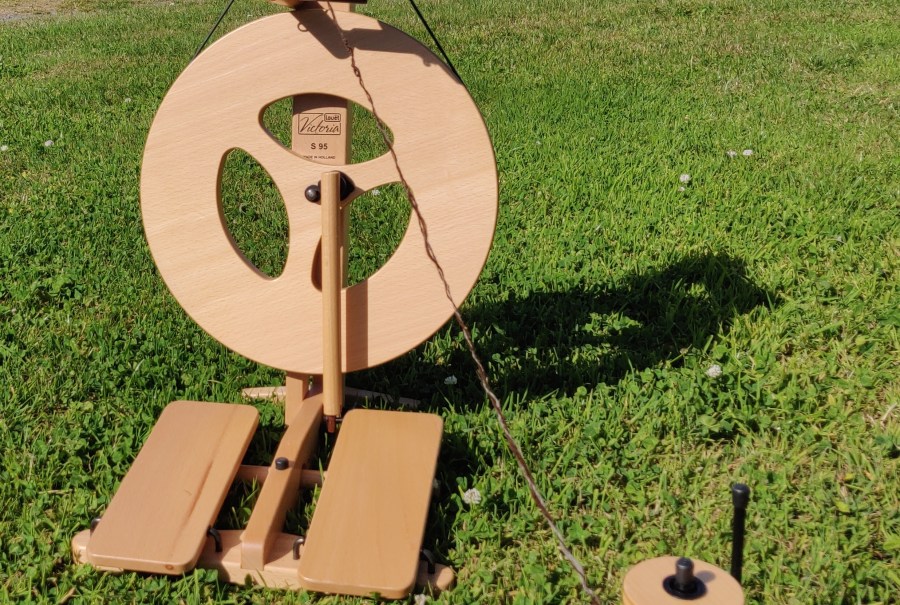
Victoria beside the caravan, enjoying the view.

I took a bag full of mixed colour Jacob’s fleece and sorted it into dark and light before hand carding it. Ifirst of all spun a skein of cream to test the tpi and grist I was aiming at and on a rainy day decided to dye it with the onion skins from our soup.

All very earthy!

I can’t resist a marl yarn, so plied the colours into variations on this.

From left: knot or knop marl, slubby marl, onion dyed 2 ply, chain plied random carded colours

With good weather, fleece washing starts…

Although I promised myself not to get any more fleece until I had emptied my cupboard, I’ve cheated . Well only a bit. Over the winter I have used a lot up, but not all of it!

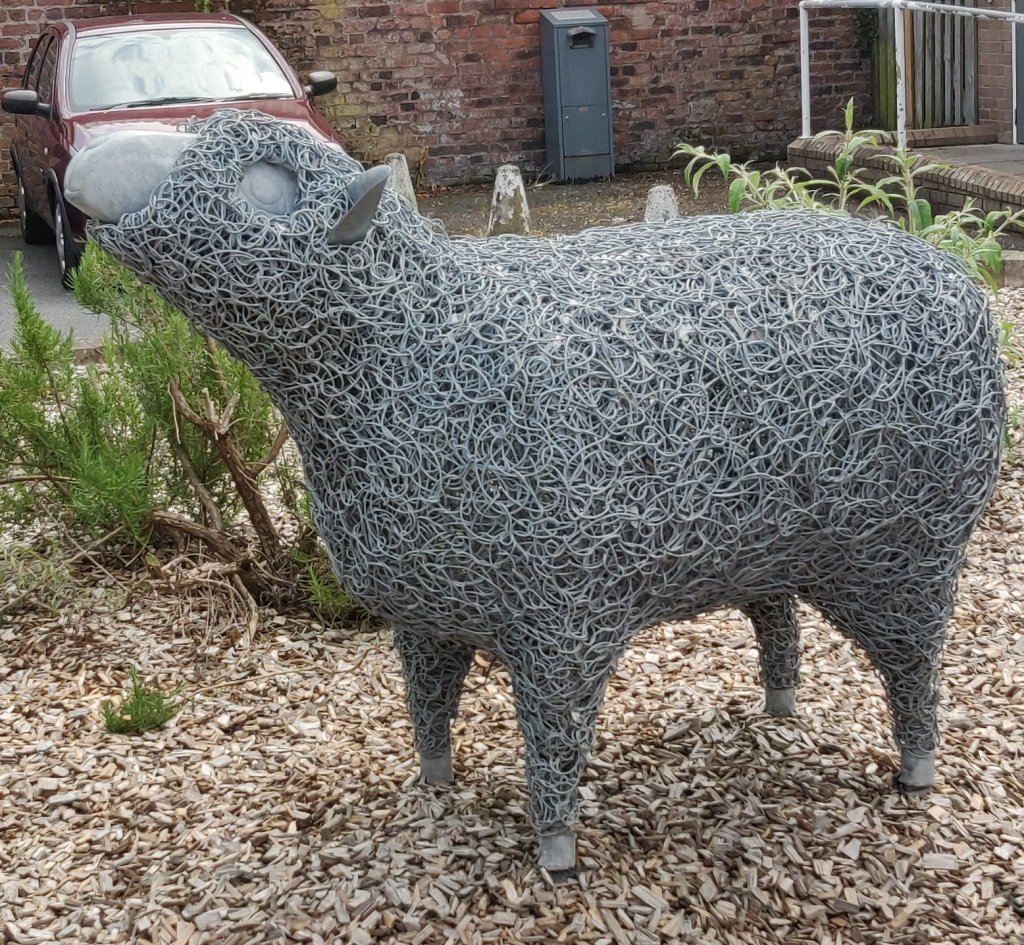
Having been to Herefordshire and seen the Ryeland sheep sculpture in Leominster I read up about the Ryeland breed and wanted to try a fleece. From what I understand the Ryeland was one of the breeds that can from the Romans crossing their imported Merino sheep with local British breeds. This is probably why they look like Teddy Bears with dense fleece. This breed was instrumental in the success of the British wool trade in the Middle Ages and after, which laid the foundations for wealth in Britain, especially in Herefordshire. Fascinating stuff!

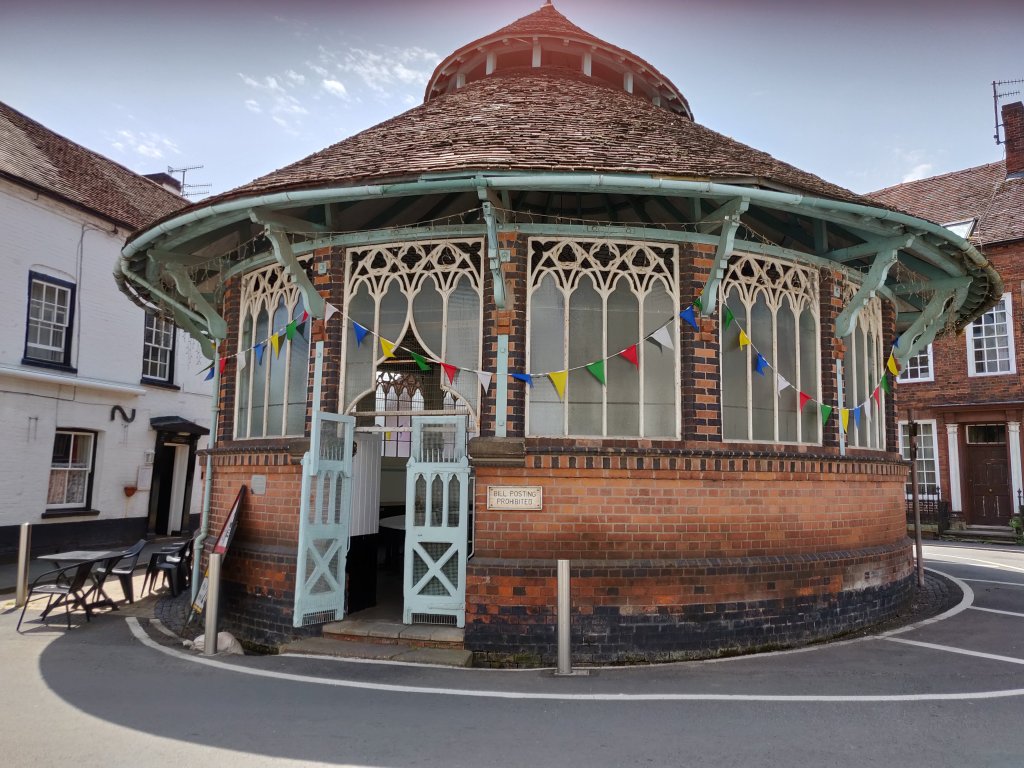
The Old Market hall. Tenbury Wells.
Sculpture of a Ryeland sheep in Leominster.

The long and the short of it is that I now have a Ryeland fleece to play with. I sorted out today and have started to wash it with promising results. Not to much VM, but a bit yellowed – the name for this escapes me right now, is it ‘yoked’? I’m guessing its last years crop.

You can see a staple in the photo, and i’ll post once I start spinning. I plan to spin Long Draw, ply and then to dye it.

Washed Ryeland staple. Its about 3.5 inches when straight, but is quite crimpy. Yummy.

Picking fleece for a marathon carding session

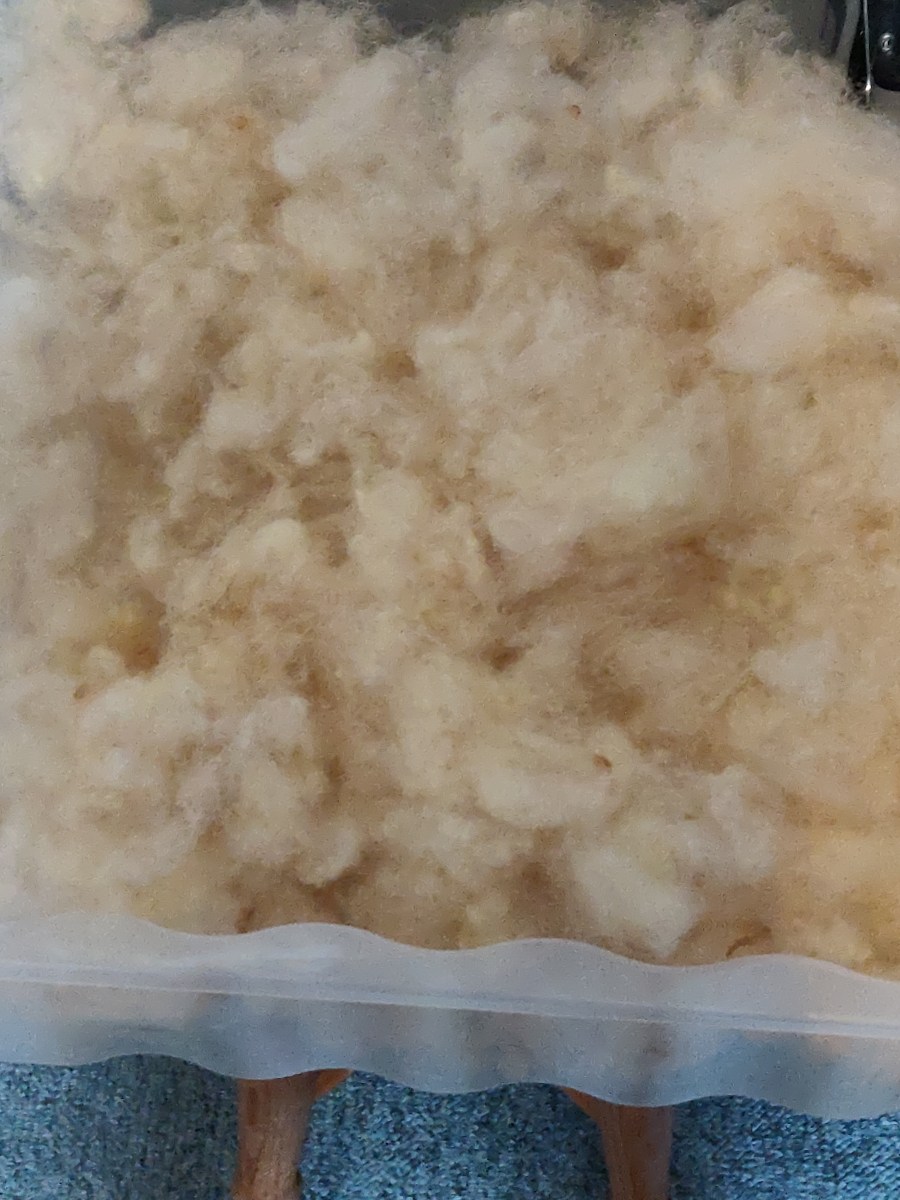
I have a large sack of Texel fleece that had been making me feel guilty for a while. It’s not the most soft of fleece so I decided to blend it with some Alpaca that has also been lurking in the cupboard. Unfortunately the Alpaca (from an animal called Kiki), has quite a bit of VM in it, but it is deliciously soft.

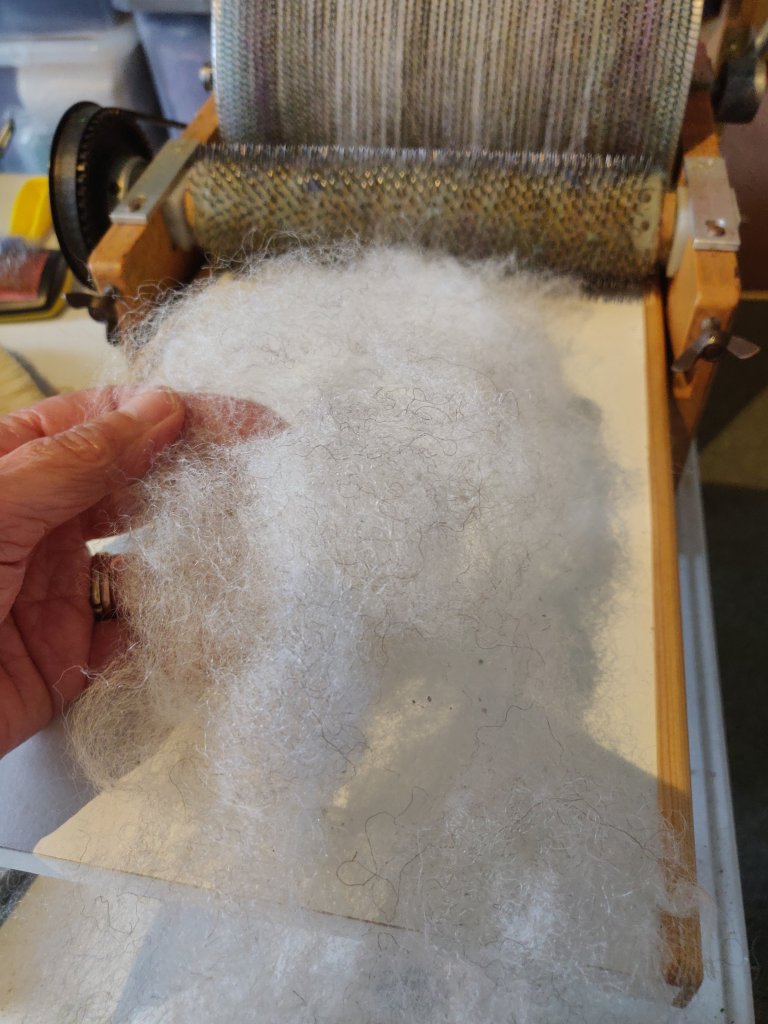
Picking and hand picking got a lot of the VM out, but sadly not everything. I carded both the Texel and Alpaca separately and then split the batts and layered them up in alternate layers; one wool, one Alpaca etc, and put them back in smaller batches through the drum carder.

As my carder is quite coarse I do a second run through for most fibres. So I did it for these batts. I think I probably should have done a third run, but I was afraid of over-carding the fibres and decided they had blended well enough. The result is a little uneven!

I’ve spun two small samples, one thick singles sort of semi-woollen and the other long draw woollen spun.

I’m now perfecting, (ha ha) my long draw technique with several hundred grams of comb waste that I have carded up. Hopefully by the time I get through that I will be proficient enough to tackle long draw spinning that large amount of Texel/Alpaca fibre!

I’ve hand knitted small samples of the both yarns The thicker spun on 6mm needles and the long-draw spun on 5mm needles

Left: Long draw spun yarn hand knitted on 5mm . Right: Thicker semi-woolen spun hand knittedon 6mm needles.

Spinning outdoors

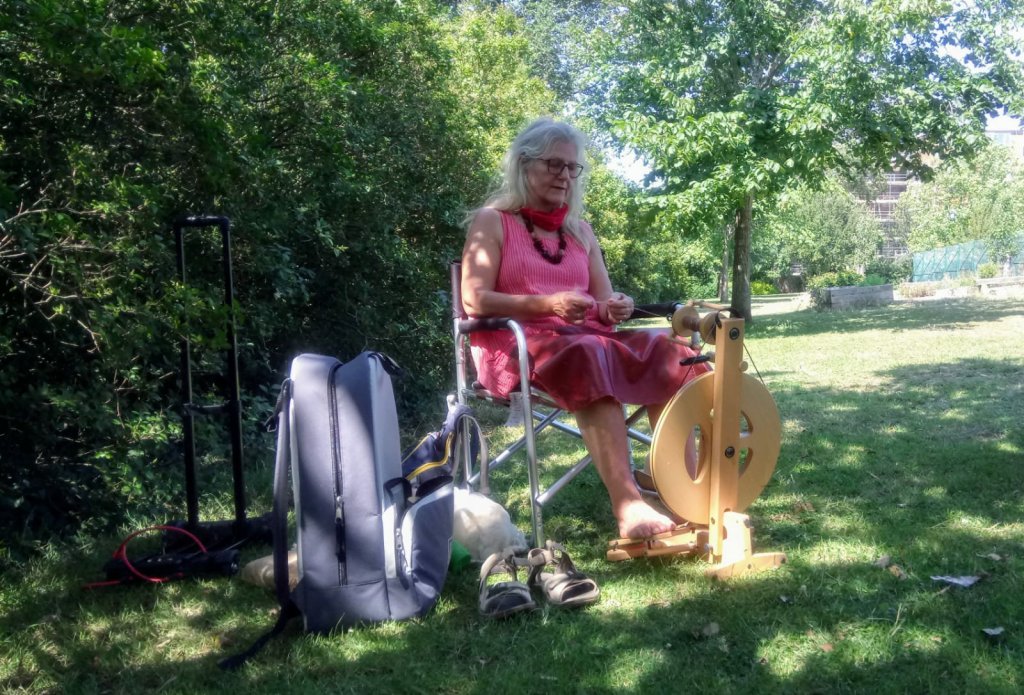
Is it risque? It’s certainly liberating. Given the restrictions on meeting up indoors, going to the park seemed the the perfect way to meet up when we can’t go to our normal groups.

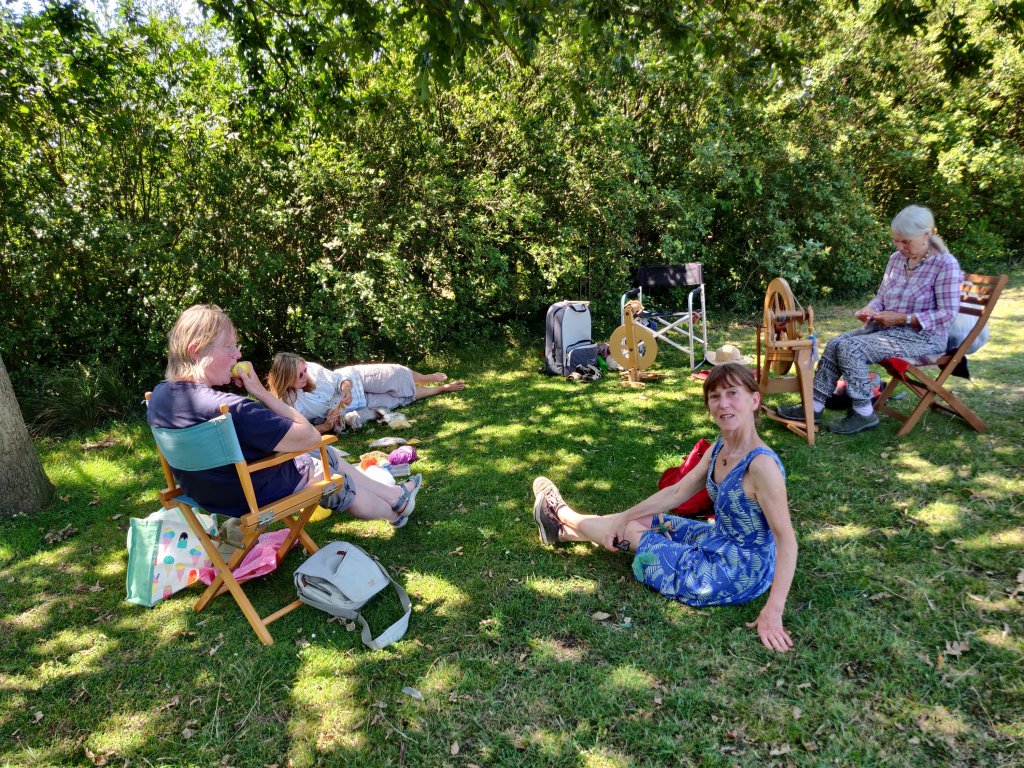
This is the second one I’ve organised and it was lovely way to spend a Friday afternoon. I took my portable Louet wheel and others brought wheels, drop spindles, knitting and crochet. And a picnic lunch!

Shade was mandatory as it was so hot, and we found a generous tree that have us a shady space big enough for plenty of social distancing.

I’m taking the photo…
So someone kindly took one of me

I took along a sack of stove-top rainbow dyed fleece as described on my Dyeing Wool page. It’s a little coarse, but in nicely formed locks, so I am flick carding it and spinning it quite thick for use in a rug, (maybe)?

Swinging the picker!

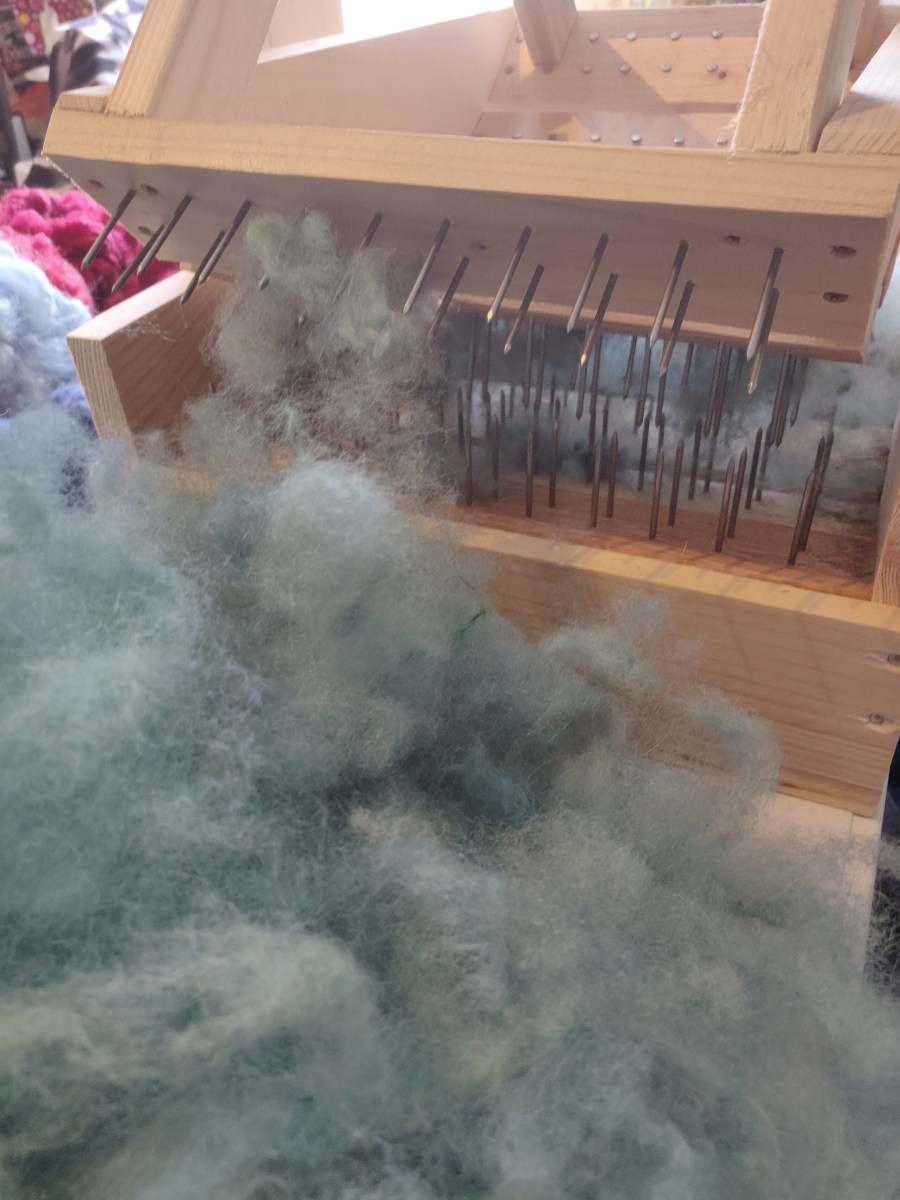
To chew my way through all that dyed fleece and open up the fibres I am using my swing picker.

As with any machine, I fiddle endlessly with the settings, but for the moment it’s picking like a good’un.

https://youtu.be/uLxuiqUJuY4

They are advantages to machinery. My son came in and is fascinated with the picker, so I can carry on carding whilst he does the picking!

I can’t believe how cloud soft the Dorset fleece I’m carding is after just a brief finger pick. You’d never have thought it would be like this if you’d seen the fleece before it was scoured!