Spinning fine yarns for machine knitting

If you have seen some of my earlier posts about machine knitting and spinning you might realise that I am keen to put the two together. I was given a fleece that is long-staple, not-very crimped and quite lustrous, but I don’t know what breed it is from. Its also quite coarse with well defined locks. The first batch I stove-top rainbow dyed, and spun from flicked locks. It worked OK, and I got a reasonably fine yarn. I also have a lovely soft, long staple Alpaca fleece, so I worked with the two as separate singles to ply together. This yarn worked at tension 8 on a standard gauge knitting machine.

However, I was determined to get it thinner. I started with the Alpaca, and after hand carding the fibres, spun it worsted using a double drive wheel with the lace flyer and was so pleased with the results. I got a 28wpi singles from the Alpaca which was quite dense, not light an airy, but I wanted it to match the coarser fibre’s density. To prepare the long-staple wool I decided to comb the locks on wool combs. At first I was slow, because although I have done this before I’ve not practised a lot. It was exciting to find I got faster quite quickly and began to get some lovely long slivers coming off the comb. After spinning in the same set up as the Alpaca, I have also managed to get the rather coarser wool to produce a 28wpi singles, so I am pretty pleased as this will give around 14wpi 2ply.

I have plied all of the yarn, and am waiting for the second skein to dry. Meanwhile I have knitted a tension swatch on the Knitmaste SK840 and can get it to knit at either tension 5 or 6. Tension 5 is a nice looking stitch, but the handle is stiff, so I opted for tension 6 instead. I probably should have tried between the two, but when each metre of yarn takes so long to prepare and spin I was reluctant to use too much on sampling at this stage. I will add photos of the fabric once I have given it a wash and steam.

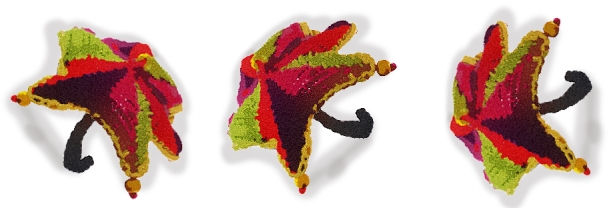
Woolly Umbrella, new website

I belong to a local community textile group, and we have just launched our new website. Please take a look and see what we have been doing. Of course that has not been a lot since April 2020 as much of what we do involves going to outside events to share skills and demonstrate.

Lets hope the coming year will allow us to start doing this again. Meanwhile we have been meeting (in 6’s only) during the summer to spin outdoors, but the latest lockdown, along with the colder, shorter days has put a stop to that. Online meetings are OK, and I have organised a few, but its not the same!

We hope to be able to take ourselves along to demonstrate natural dyeing, eco dyeing, spinning, and fibre preparation at Bentley Wood Fair near Ringmer in September. Allan will hopefully demonstrate his fascinating nettle fibre preparation methods, and we will all be suitably masked and socially distanced of course.

Avocado surprises

Having been eating loads of avocados last summer I dried the skins and stones for dye material later on in the year. I want sure if the colour outcome would be effected by drying so decided to try some out recently.

I took 60g dried avocado skins and two skeins of yarn; one 14g hand spun 50/50 cream wool and alpaca and 12g commercially spun 2/9nm will and nylon (sock yarn). I reckoned half yarn to dye material, but being dried may have made a difference.

I cold mordanted the yarns overnight and soaked and cooked up the skins. Stained the liquid and made up the due bath. Then gently simmered the yarn for about 60 minutes, with the skins in a muslin bag in the bath as well. After that I left the whole pot to cool overnight.

I was surprised that the hand spun did not take much colour whereas the wool and nylon took loads. Both had had same pretreatment.

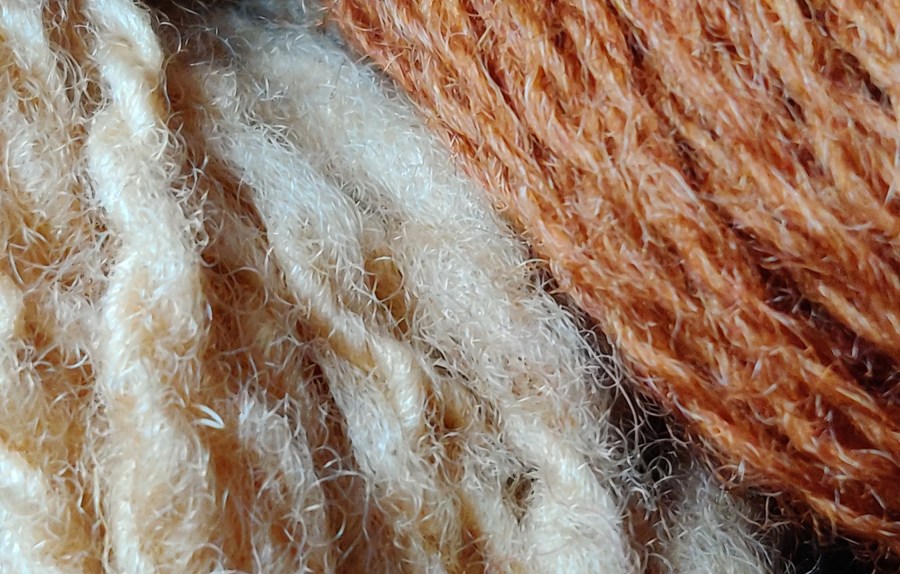
Left is hand spun 50/50 wool alpaca yarn, right is wool and nylon

I will be using the will nylon in machine knit socks, so pleased with the colour. It’s not as warm as the undried skins I’ve used in the past, more like onion skin colour.

UPDATE On reflection I think the Alpaca may have influenced the way the dye was taken up by the hand spun yarn