We are on holiday in Yorkshire and took the opportunity to visit the Ryedale Folk Museum in Hutton le Hole. The museum is a little gem, mostly outdoors it features original local buildings from different periods complete with information about those who lived in them. From the’ Witches Hovel’ to the Manor House, one can take a peak into the life of the people of Ryedale through the centuries.
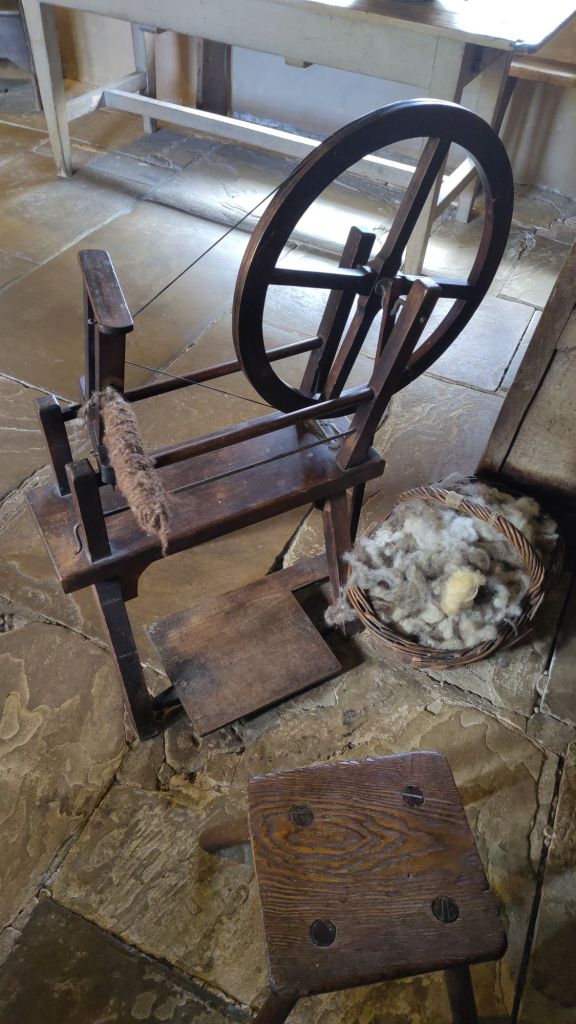
Pre the Industrial Revolution the village subsisted on small scale farming and at one time a quarter of the population of Hutton le Hole were employed as weavers. It is not explained whether it was cause or effect, but flax was grown in the area in the 1700s and the women would have spun the flax into linen yarn on spinning wheels, examples of which are present in the houses. It is likely that wool was also spun as villagers grazed cattle and sheep on the common land and most households were largely self sufficient.
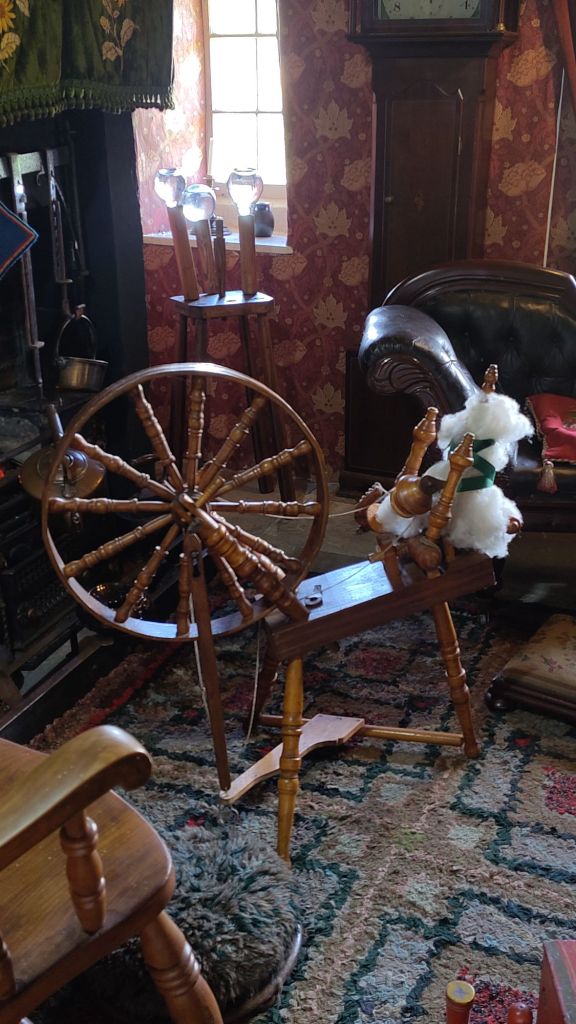
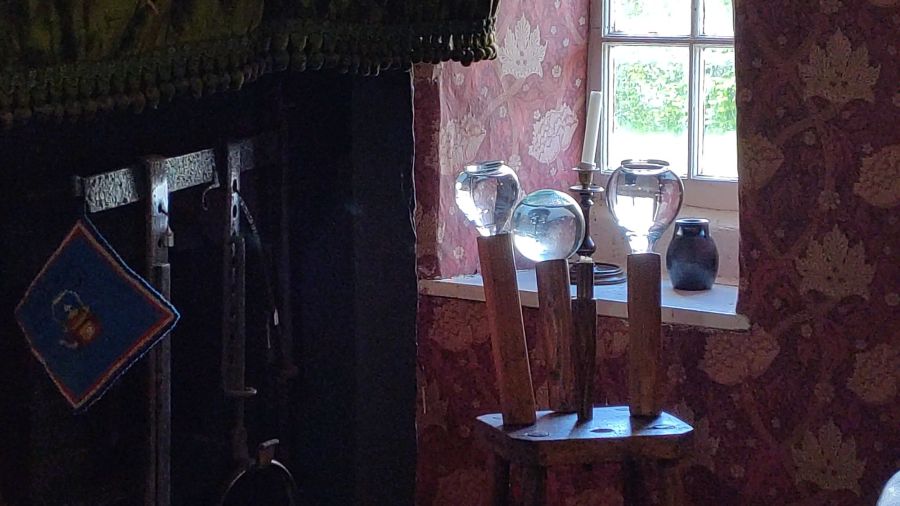
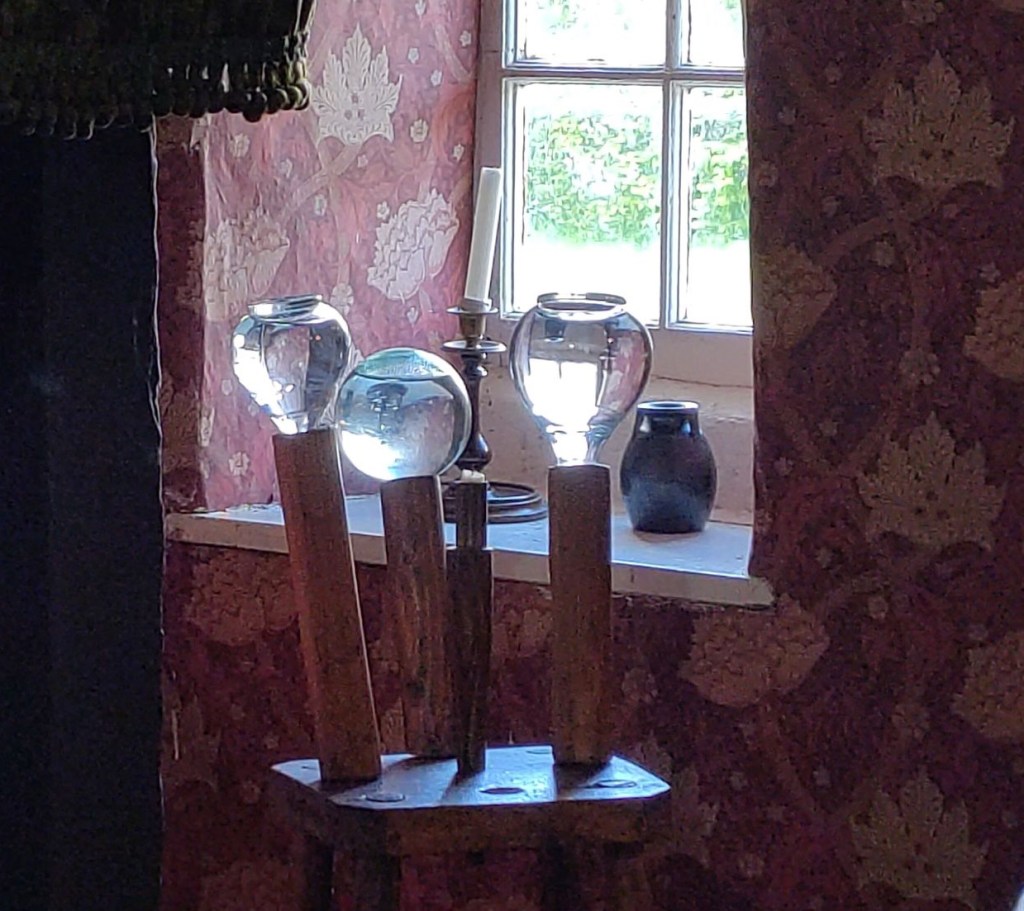
In the same room as the wheel shown above, there was a charming lace light. These glass globes amplified the light from the central candle and focused it onto the work of those sitting around the globes. I have not seen a triple globe stool version before, so that was a treat.
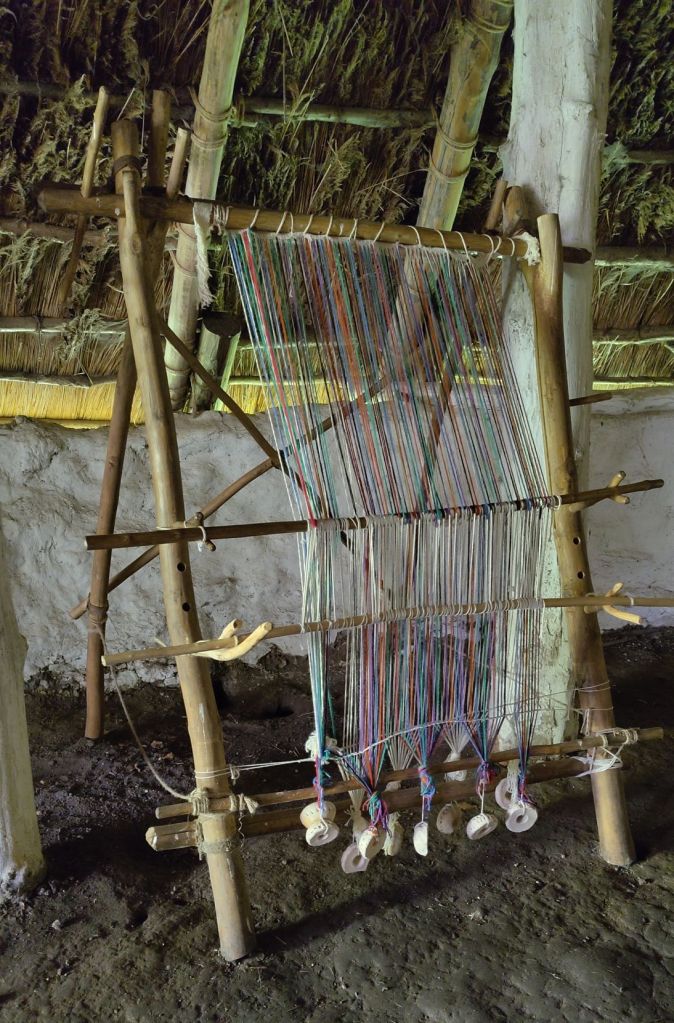
Towards the end of the path through the museum is an Iron Age roundhouse. Apparently the structure was built with wattle and daub, just as it would have been in the Iron Age. Inside there is an open fire and amongst other domestic artefacts there is a rough-built warp-weighted loom. Although there is a warp on it, there is no weaving in progress.
I am now itching to get home to do some weaving. Luckily I have my spinning wheel with me in the caravan where I am practising spinning flax in to linen yarn.

