Enthusiasm is trumped by poor organisation

When we moved house I had only the first few centimetres worked of a rather intricate (for my level of skill) pattern on my big Inkle loom. So I carefully tied it all down, added tape and made it secure on the loom. Wrapped it in bubble wrap etc etc. and it travelled fine.

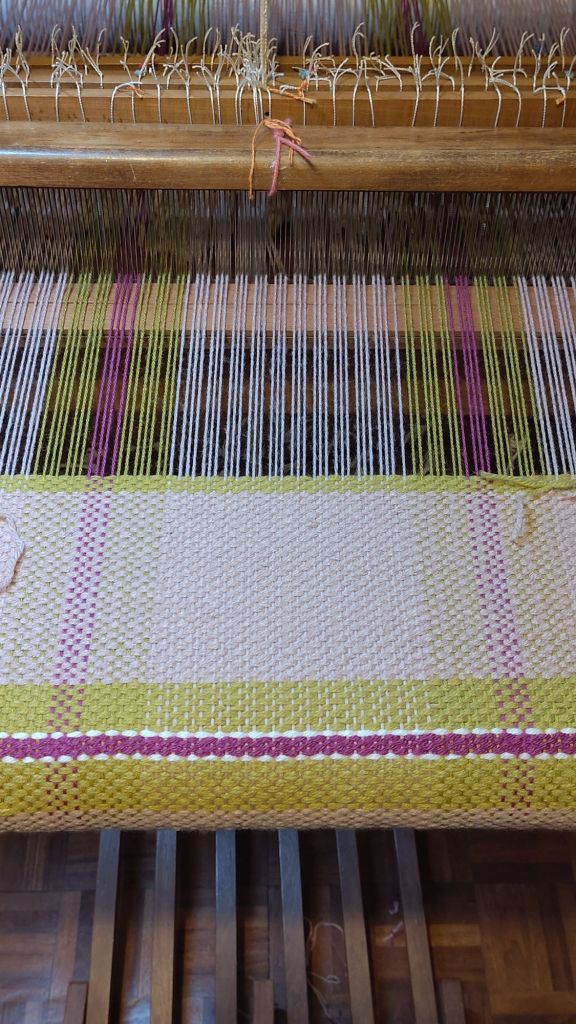
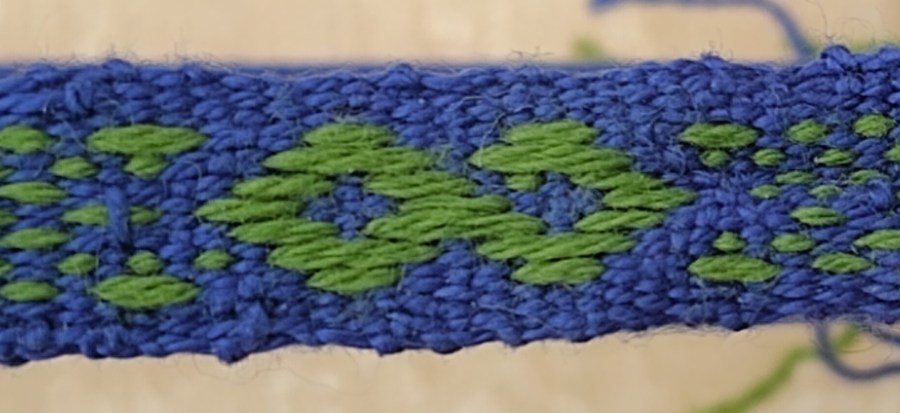
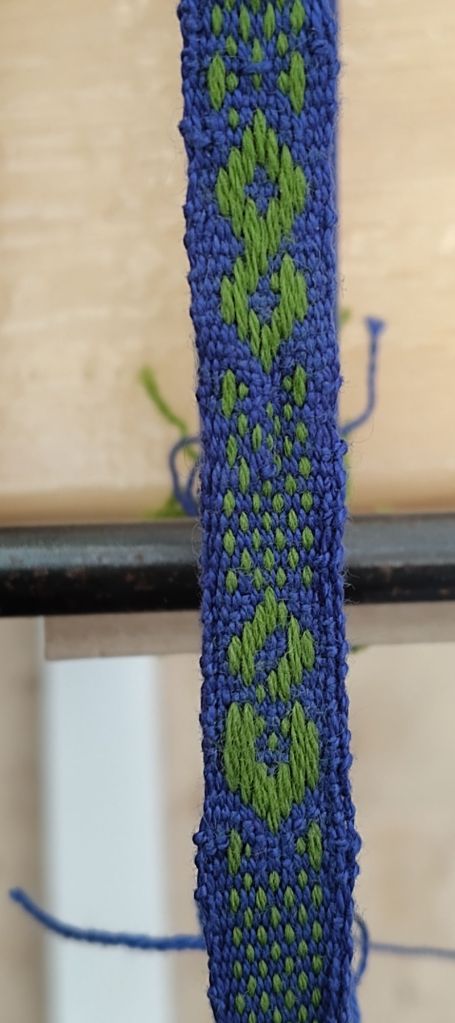
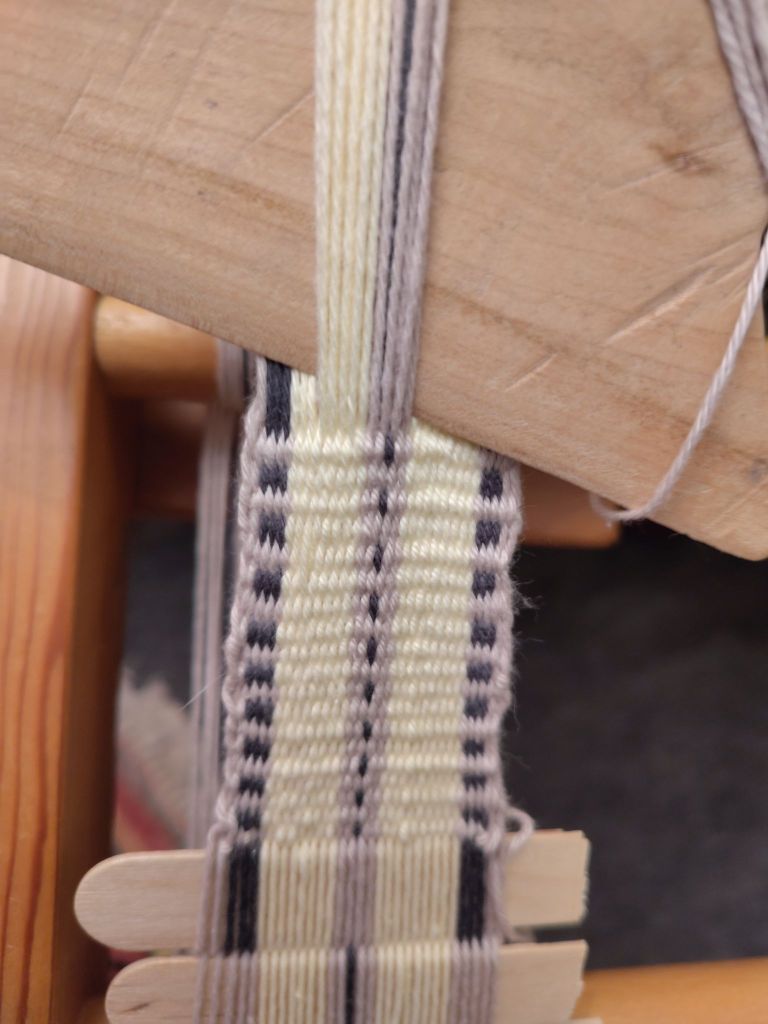
The first 4cm of pattern before I had to pack the loom.

Sadly, whilst unwrapping it, I somehow managed to cut the warp! Idiot….

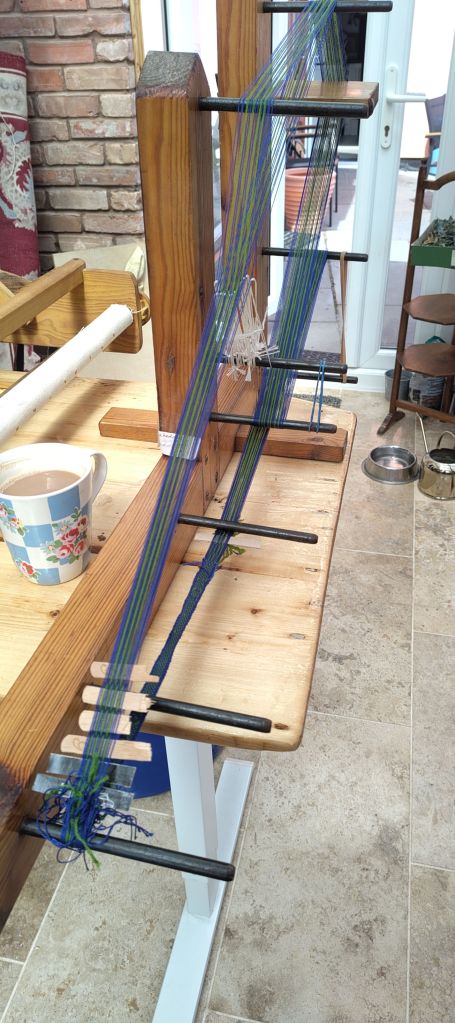
So the loom and dangling warp has languished in the conservatory for the best part of a year, unloved and testament to my incompetence. Today I decided, was the day to grapple with this and repair the warp. I refused to be beaten by it and started to analyse what needed to be tied to what. Luckily I had the written threading pattern to follow.

And I’ve done it! Only two mis ties hat to be undone and retied. I think that it will be OK. I’ve put in several pieces of card to re-tension and organise the warp and it looks good to go.

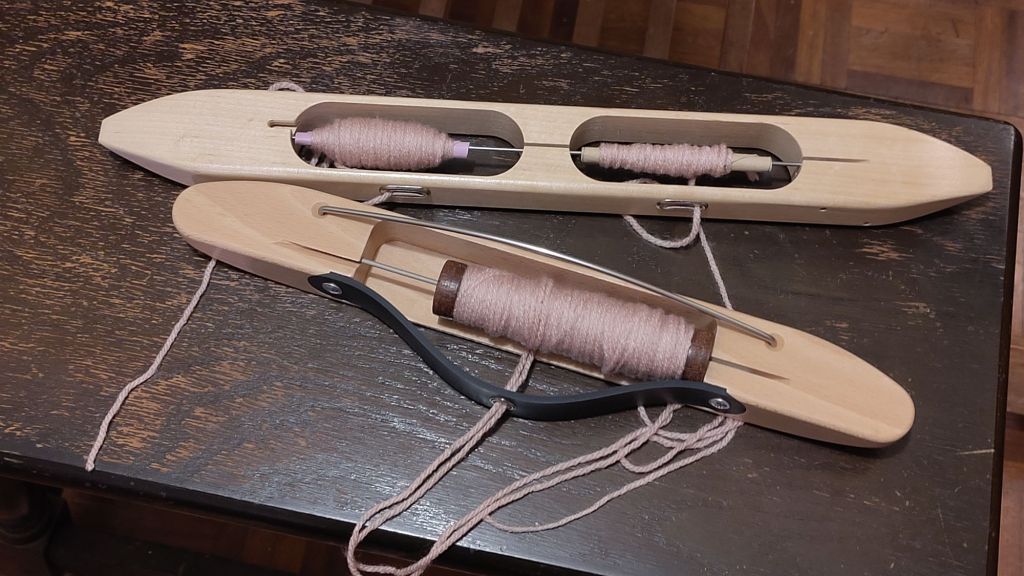
So I go to wind the shuttle, and realise I have no idea where the weft thread is! It’s somewhere in the loft in a box of unlabelled yarns, and believe me there must be about 20 of these… So do I want to go and search for it? Probably not today. That’s a job for later…

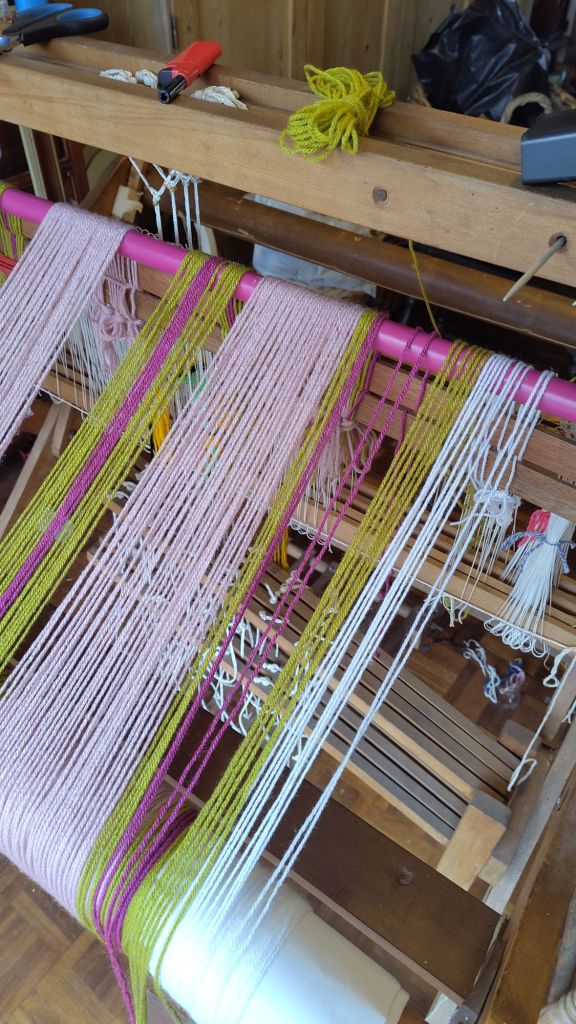
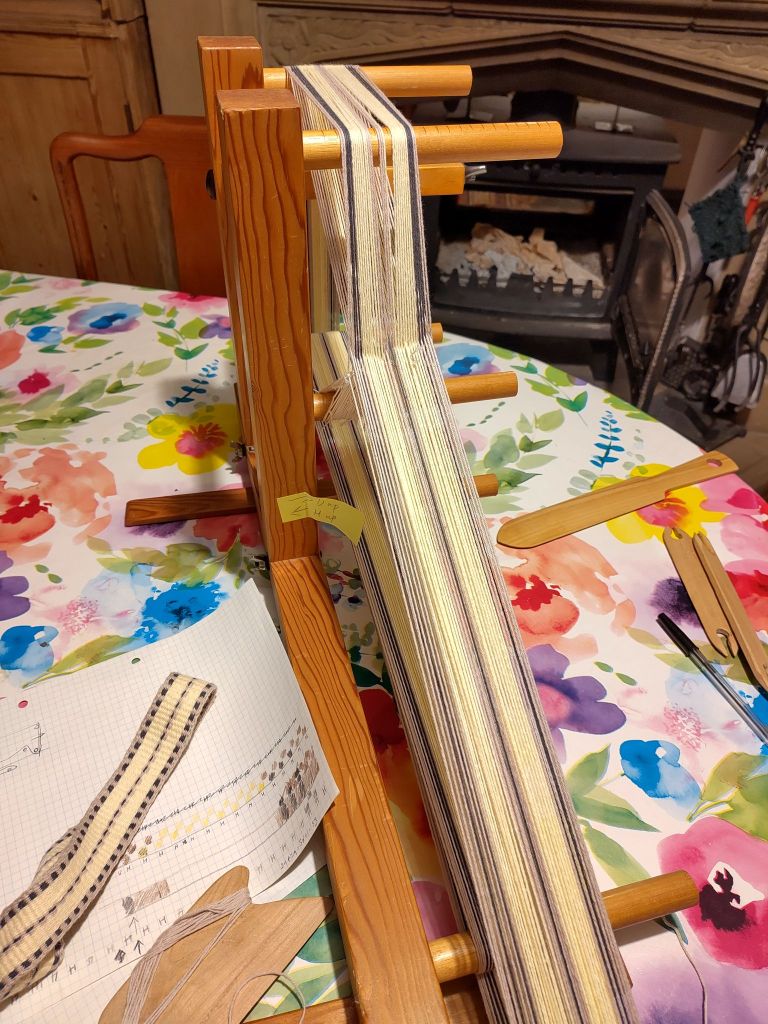
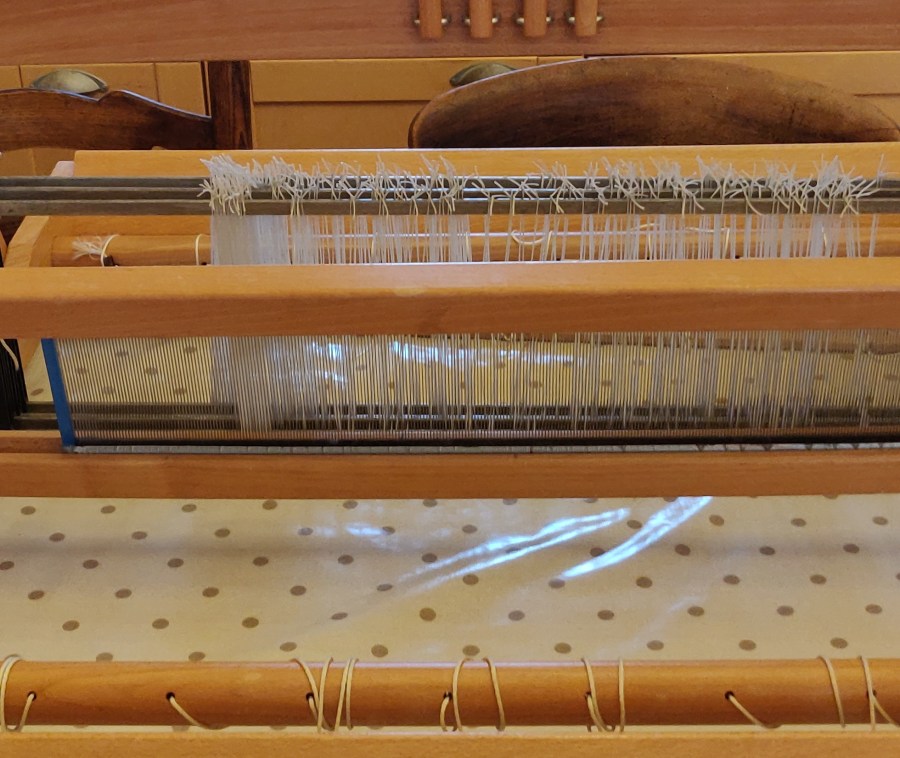
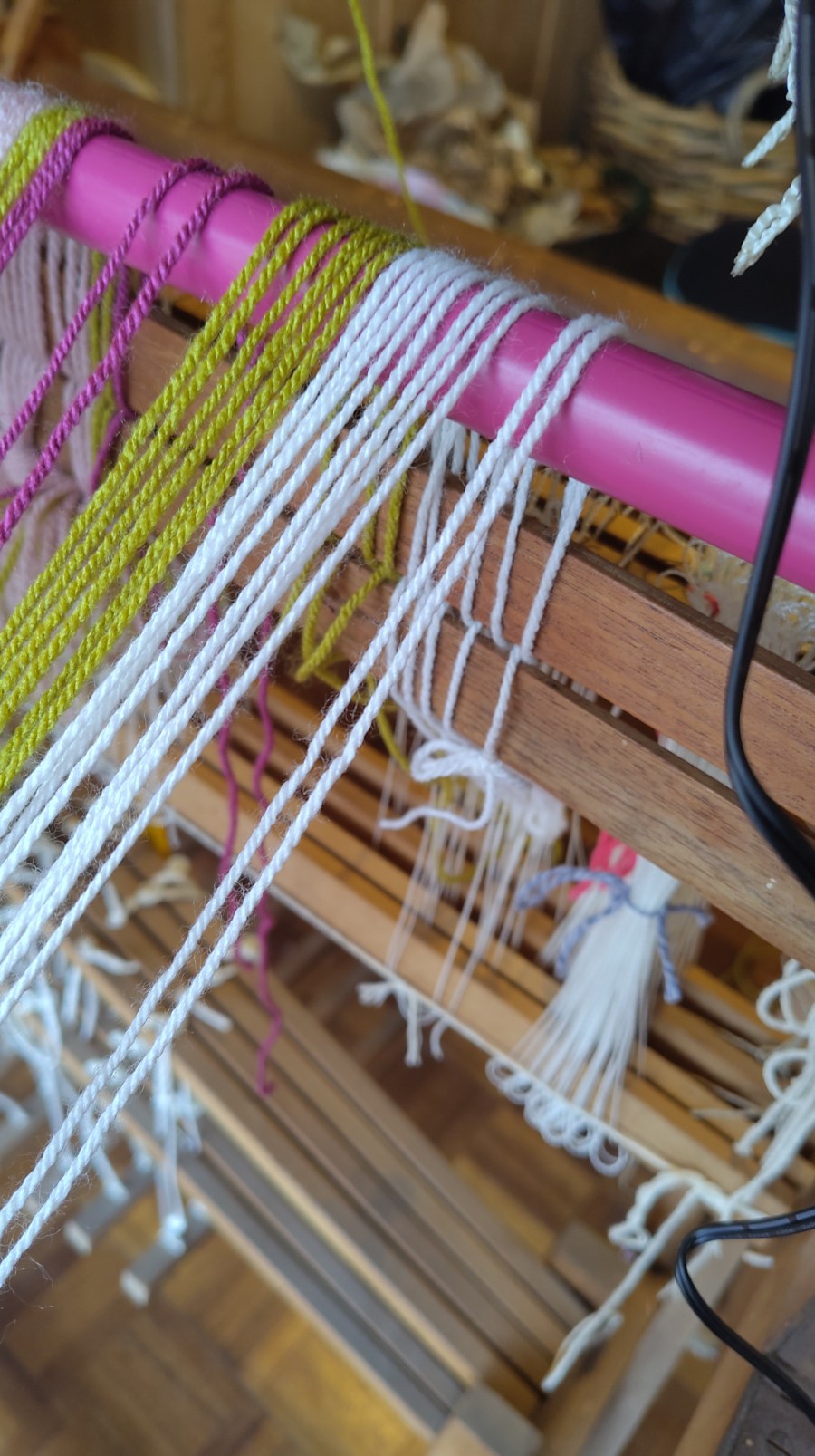
Inkle loom warped up and ready to go

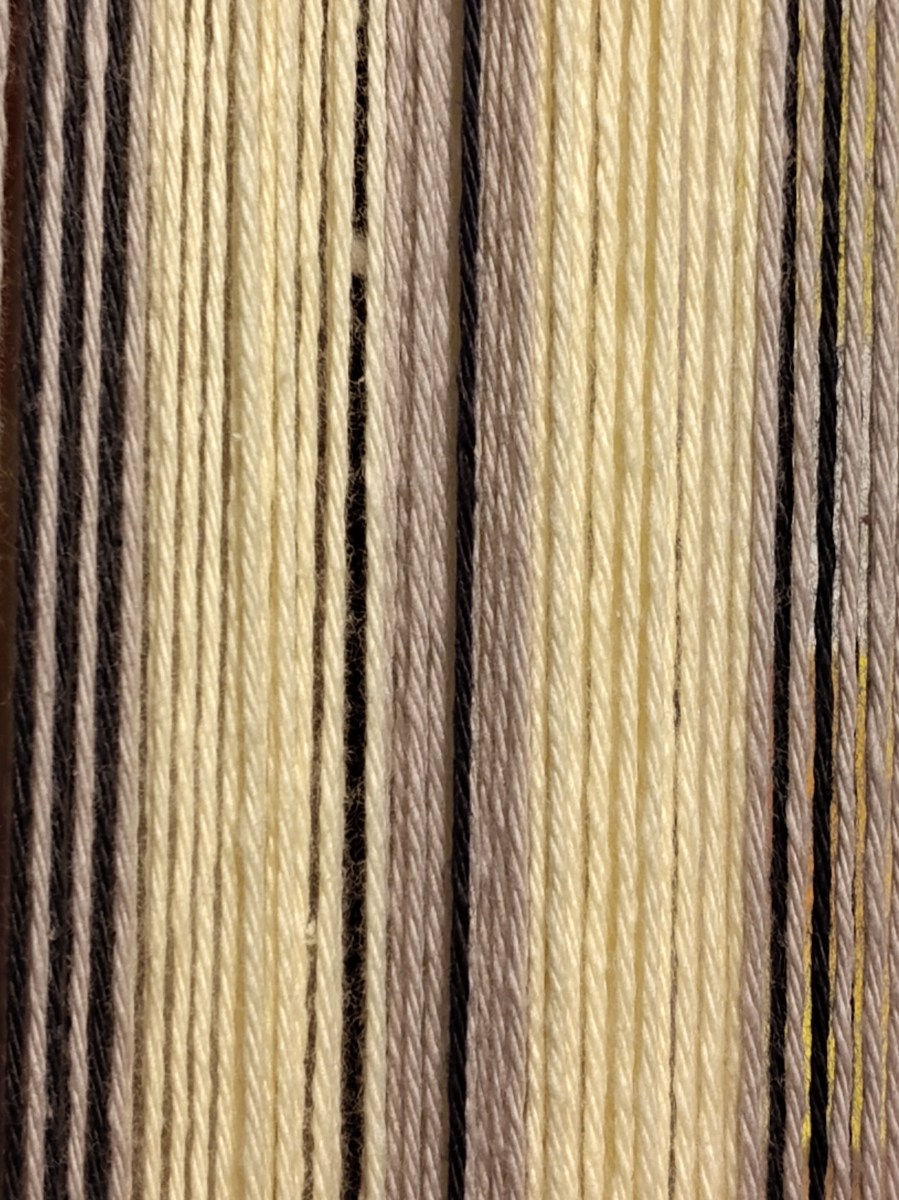
After almost a year I have got round to putting the warp on my Inkle loom to make the second curtain tie I started last April, (and ended up not finishing until July). The yarn is Drops 8/4 cotton.

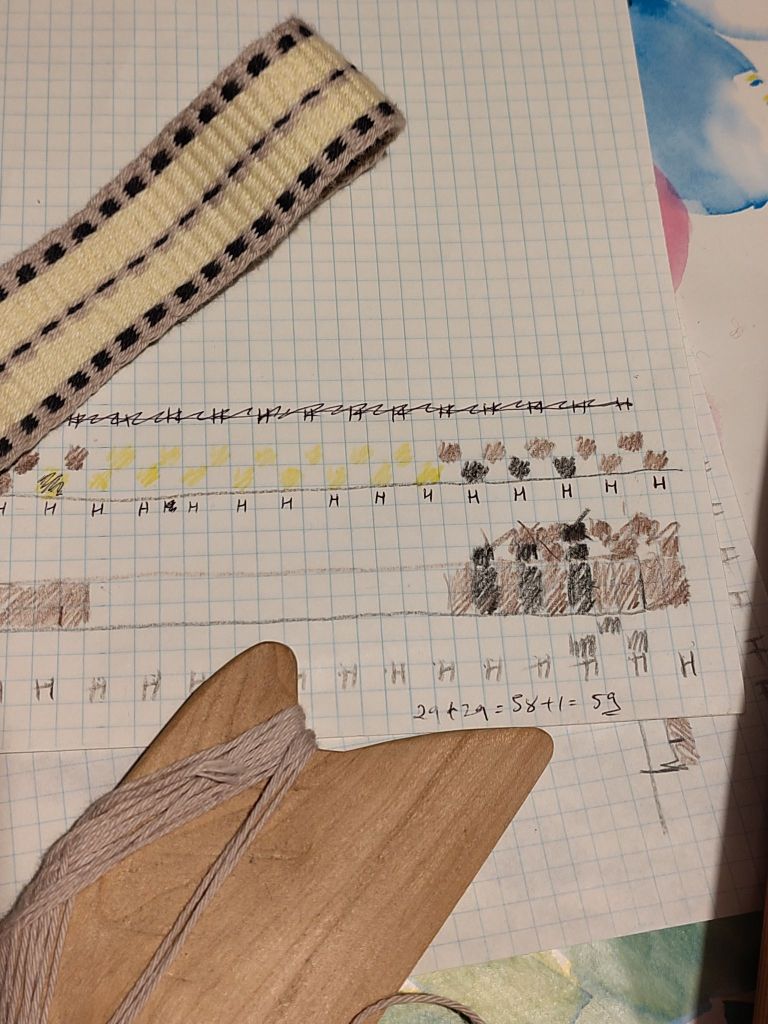
I hope I’ve got the warp threaded according to the pattern, but my notes were a little sketchy but I hope it will approximate it. Fortunately the curtains are at different sides of the room so there won’t be much opportunity to compare.

Of course not only had I forgotten the pattern, I’d forgotten how to put the warp on. So to begin with I put everything over the top bar and had to re-thread the first four or five threads.  Luckily I had saved my heddles so I know I’ve got the right number of threads because I’ve got the right number of heddles.

The first band I made is in the photo. After a wash the cotton becomes soft but still holds it’s shape.

Or really sorted up the process of warping to leave a long tail attached to the first thread and to tie every new thread onto that tail as I worked across the warp. So you don’t have to cut your threads  until get to the end which I really like.

Getting going

Making a warp for testing out my countermarch loom

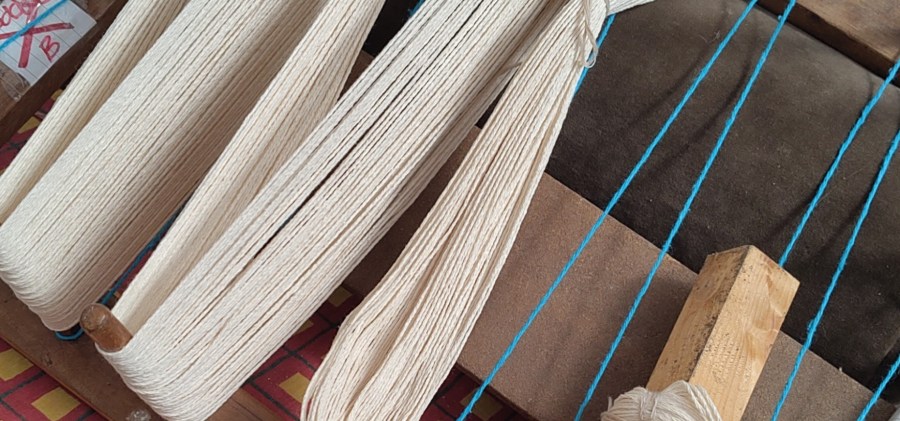
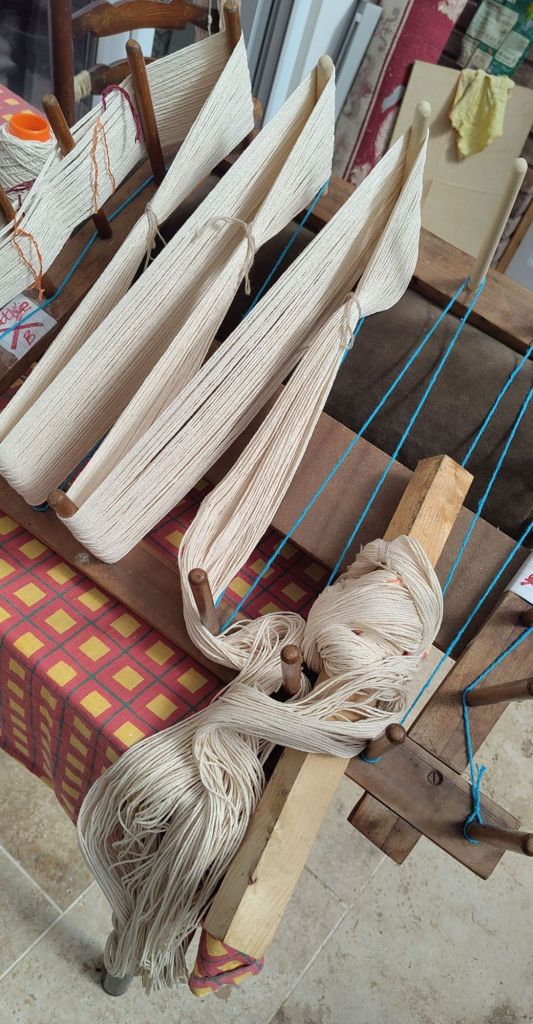
It’s taken me a while, but I have finally made the warp which I will use for testing out my new (to me) countermarch loom.

It’s taken me a while as we have building work going on in the house so I am moving from room to room to escape the chaos. I finally ran out of places to go, so ended up in the conservatory which is HOT. Lots of short breaks needed.

I am in two minds about what to weave. My heart says a fleece rug – I have two in bags in the shed, but my mind says ‘ do you need a rug,?’ What I really need is more tea towels, since my son burned a hole in one of my hand woven ones.

The loom has got an 8 dent reed and I am using a thickish cotton and making a sectional warp because my warping board pegs won’t take more than 80 ends of this. I’ll thread it up as a twill and let myself be guided by the spirit of the day I start to weave.

Winding the warp of the warping board onto a kite stick, as recommended by Peggy Osterkamp

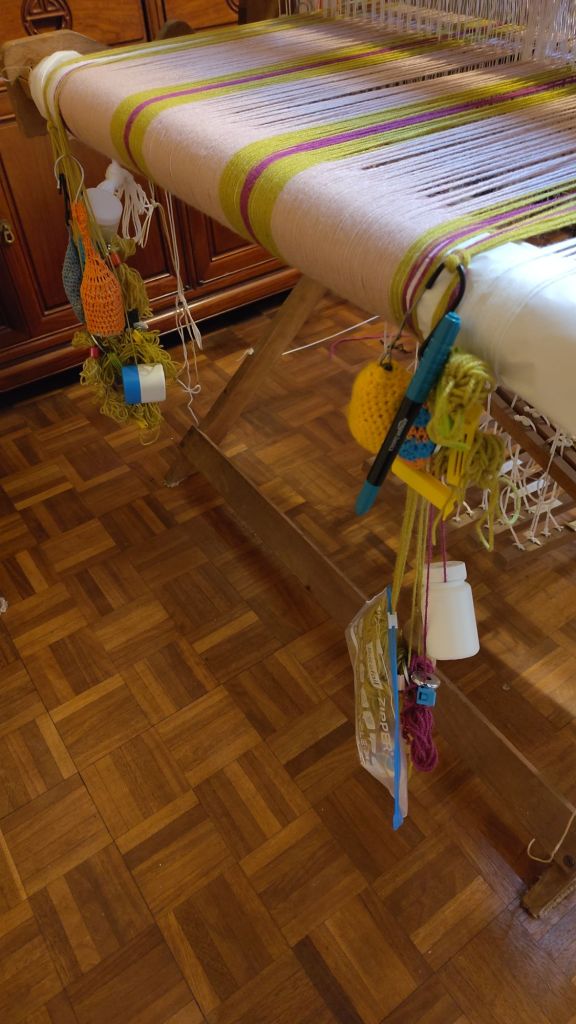
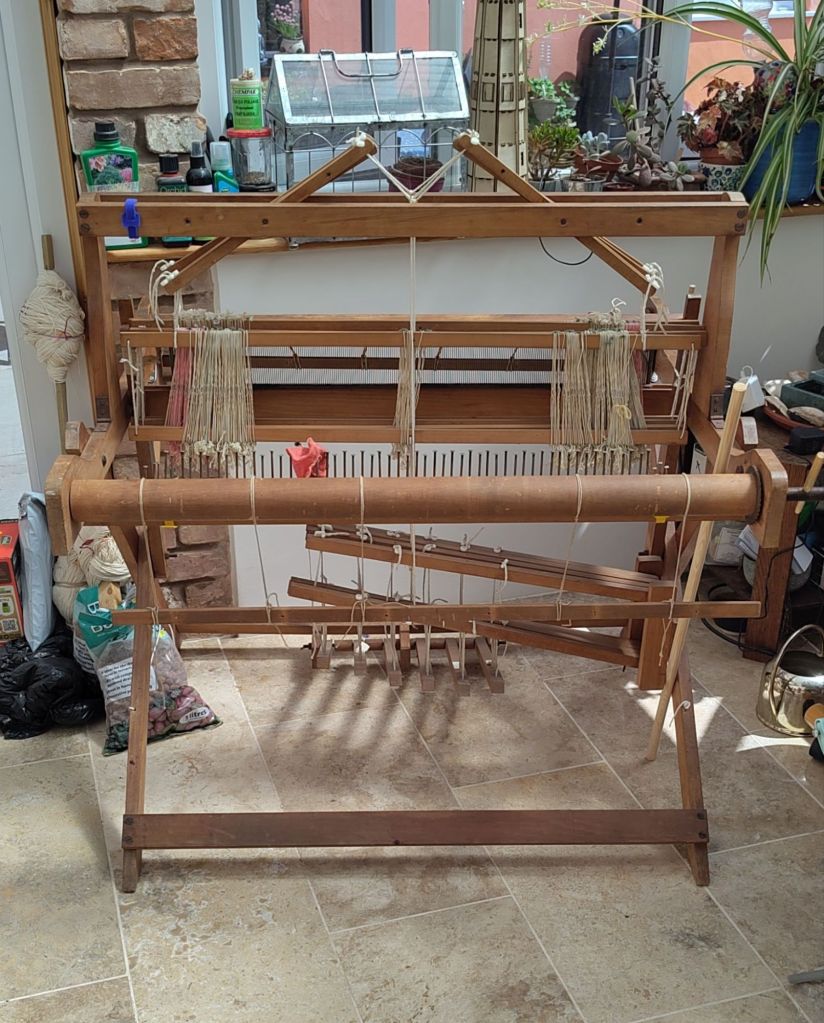
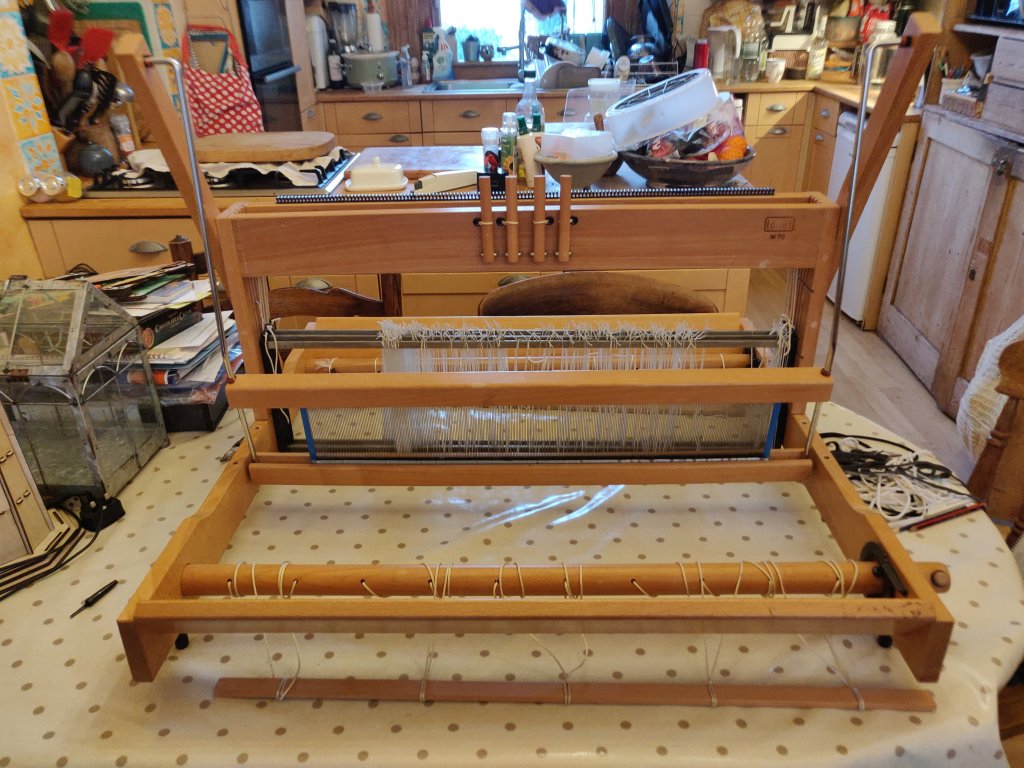
The loom waiting for the warp. I know I’ll be whining about back ache quite soon…

Twiddling with twill

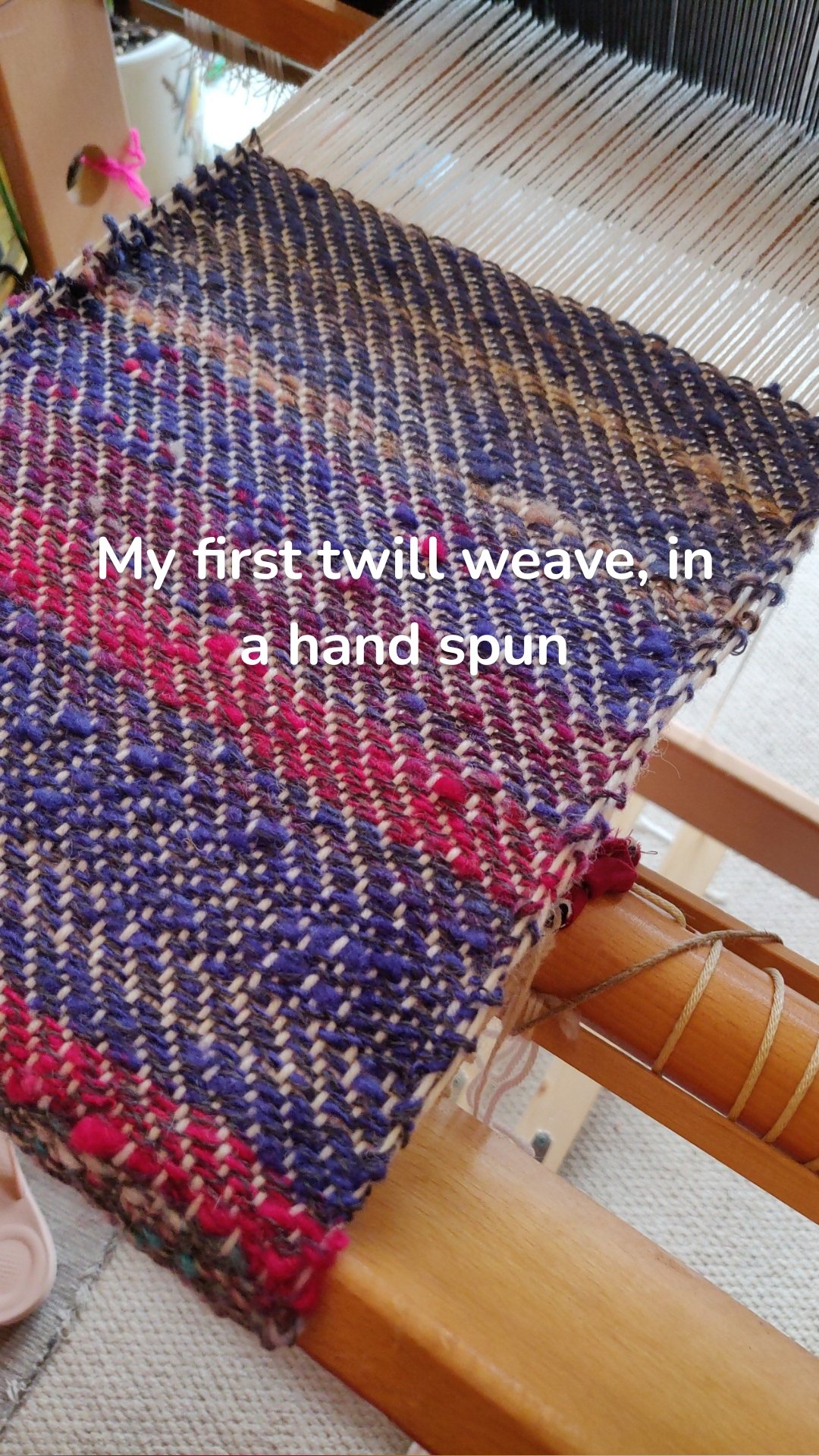
I am so lucky, I have been given Anne Dixon’s 4 shaft weaving book and am blown away by the number of possibilities with a simple 1, 2, 3, 4 threading. My first two attempts are very rewarding, but messy edges. I was to excited putting the warp on and forgot to pack the edges and add floating selvedges. I tried rethreading the 4 edge heddles but it’s not a brilliant finish. Still it’s only a short ‘test’ warp, and I will do better next time!

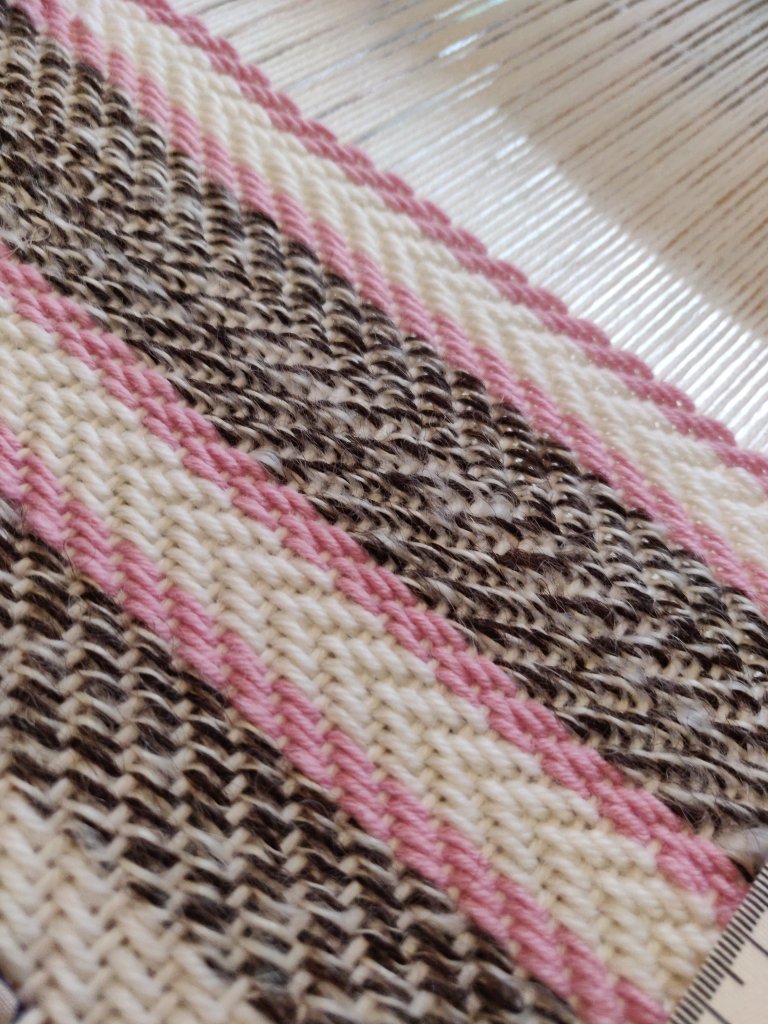
Before receiving the book I had worked out how to do herringbone and combine this with stripes. I liked this, especially with a marl hand spun between commercial yarn.

Herringbone and stripes

After getting the book I realised I could work with two treadles at a time and two shuttles.

I love this neater weave using 2 treadles

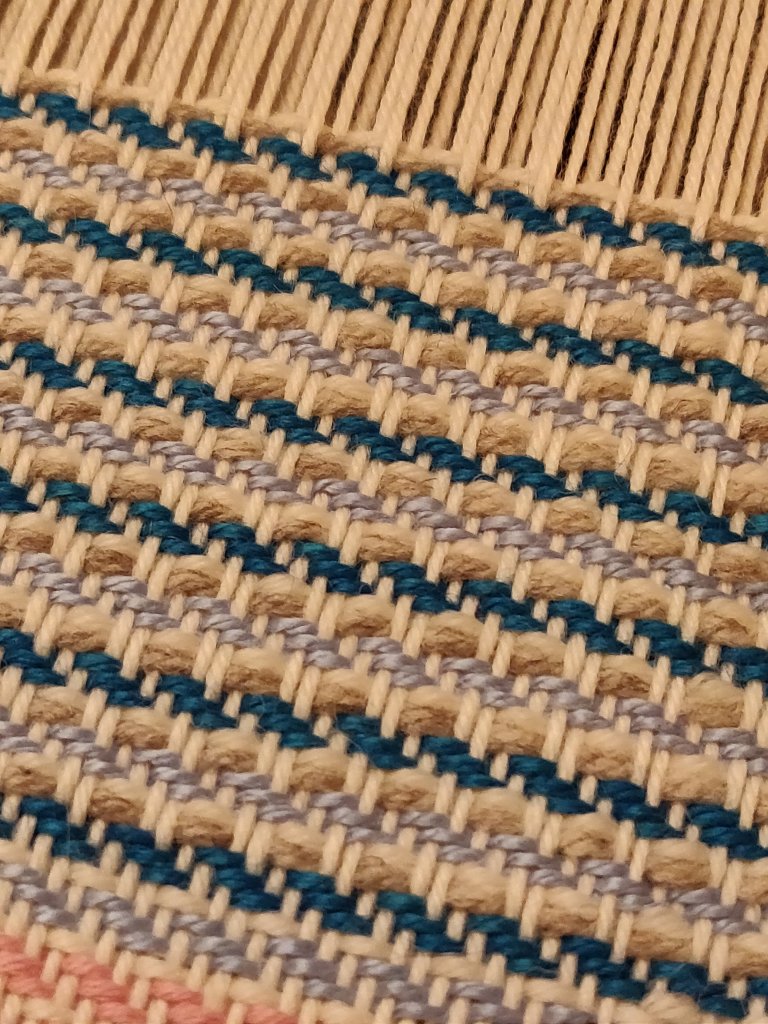
Now I am playing with colours and have added an extra pick to the pattern. Working this additional pick in thicker yarn increases the surface texture. And although it’s not clear on the photo, both blue yarns are mercerised so make a contrast to the woollier yarns.

Louet W70 loom

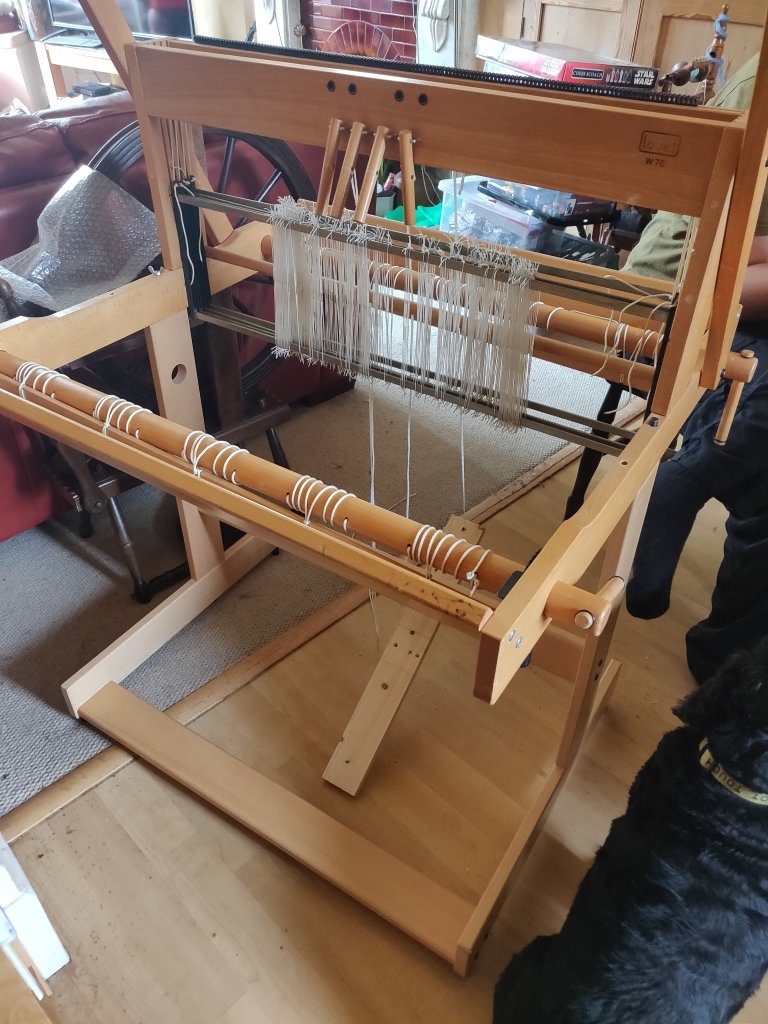
I have just bought a Louet W70 loom to expand my skills. It is a 4 shaft and has a stand. From my internet searches I understand this look to be the earliest version of the Louet Kombo Loom, that then became the Jane. It’s very sturdy and U think I am going to have fun with it!

On the dining room table, the stand is still in pieces…

I mentioned that it would be great if I could pedal the shafts. My son took one look at it and was determined to add those pedals!

Today we spent a lot of time trawling the internet for old instruction manuals and seeing what other people had done when converting table looks to treadle ones. There is one video on Facebook that we found very informative, and so we started. He has so far designed a direct tie-up method for lifting the shafts and is now working on designing the treadles. Meanwhile I have ordered Texsolv cord and clips to make the tie-up easier and so that the pedals can be disconnected to enable folding the loom away.

Testing out the first, makeshift pedal. The dog was not part of the experiment.

Update

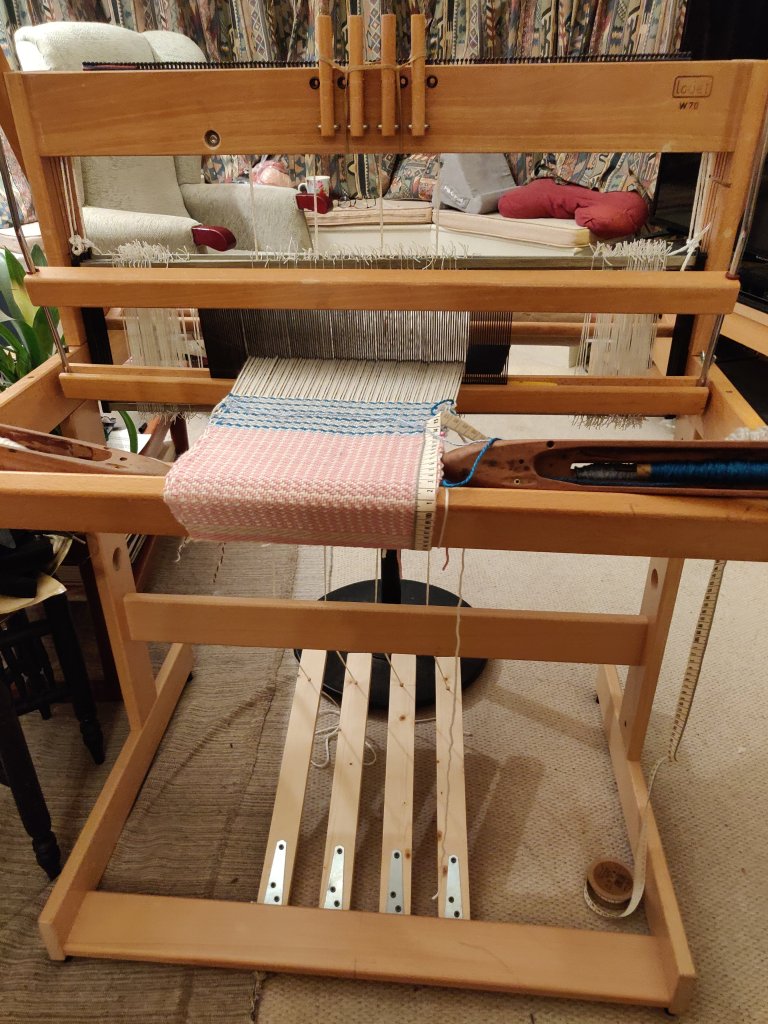
The loom is now working. It has four direct threaded treadles and I’m working on it with a short, narrow test warp using some wool/acrylic and a 10epi reed.

It’s taking over the living room, but will be moved soon

Rya weave cushion completed

Although it’s taken me a while I have finally finished this cushion.

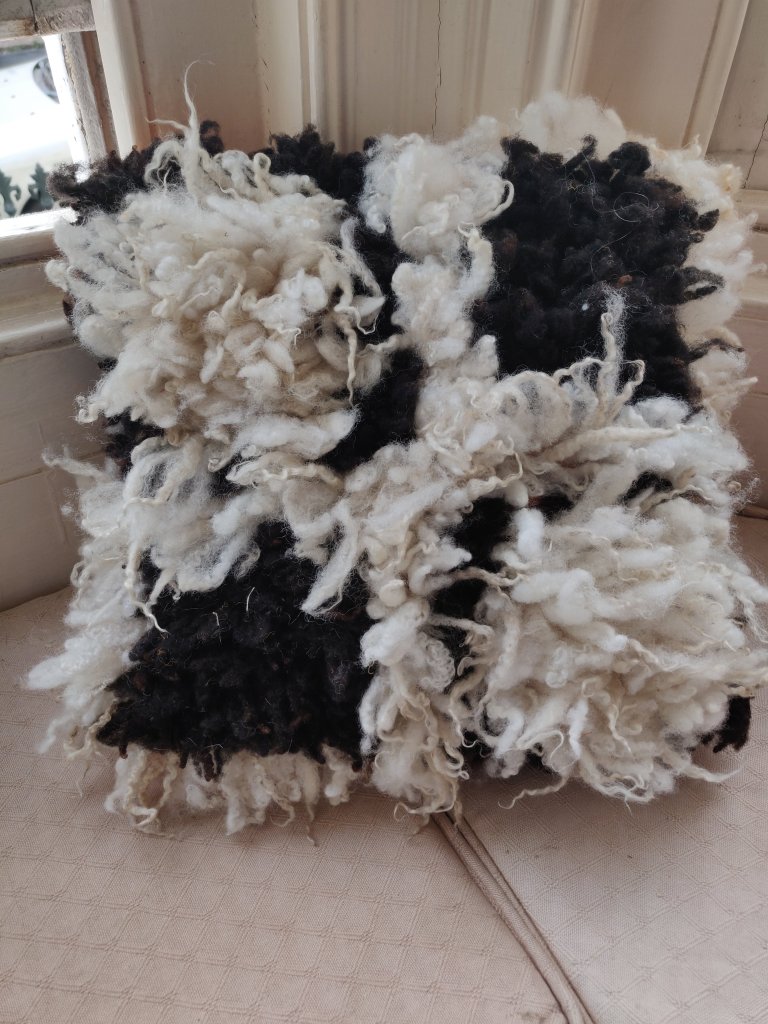
Front of the cushion. A tufted chequer board that is very tactile and squishy.

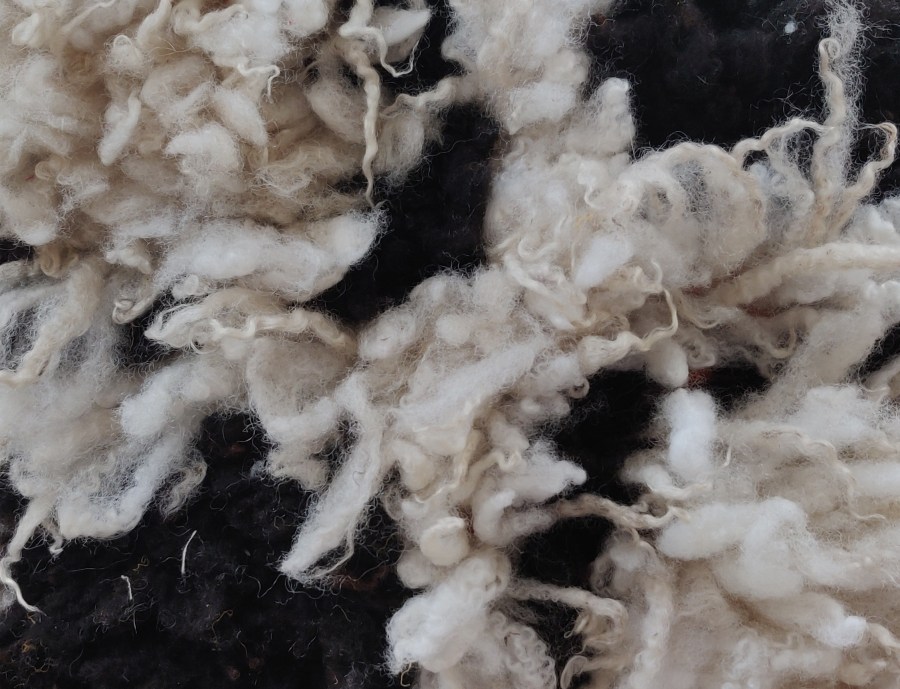
The front is Rya tufted and woven with a British wool rug yarn on a linen/cotton warp. The black tufts are Shetland staples and the cream is a mixture of Devon/Dorset staples. Although it’s not that clear in the photo, the squares are reversed; black edging with a cream centre and cream edging with a black centre.

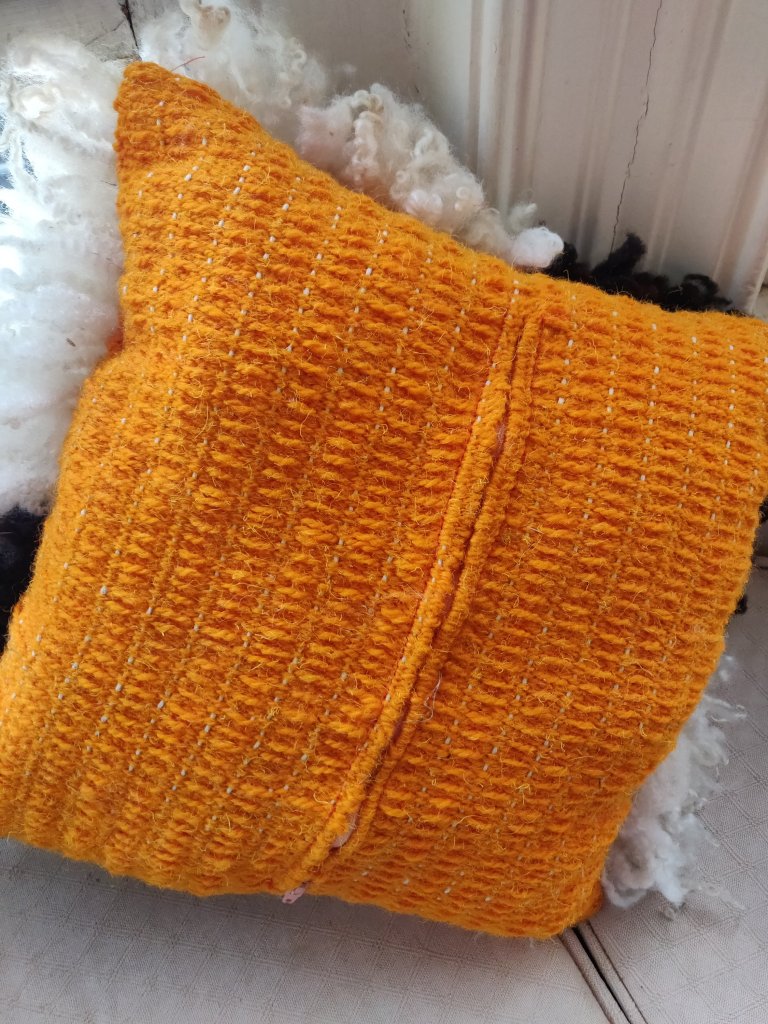
The reverse of the cushion is a faux waffle weave in the same rug yarn that underlies the Rya tufts. Because my rigid heddle loom is only a 20 inch wide, the cushion is composed of four pieces.

I took the opportunity to insert a zip in the centre back seam.

Instead of feathers or polyester wadding, the cushion is filled with a pad of lofty carded wool fleece. I will use this cushion to make my chair extra comfortable whilst spinning at my wheel.

Weaving today for a relaxing time

Today is ‘me time’, weaving with a local group, mostly members of the West Sussex Guild. Although I love knitting, it can sometimes seem like work because of my teaching and writing career. Weaving however, is a new skill to learn just for pleasure. Even though I haven’t heard grasped all the basics I am having fun designing fabrics using the simpler techniques.

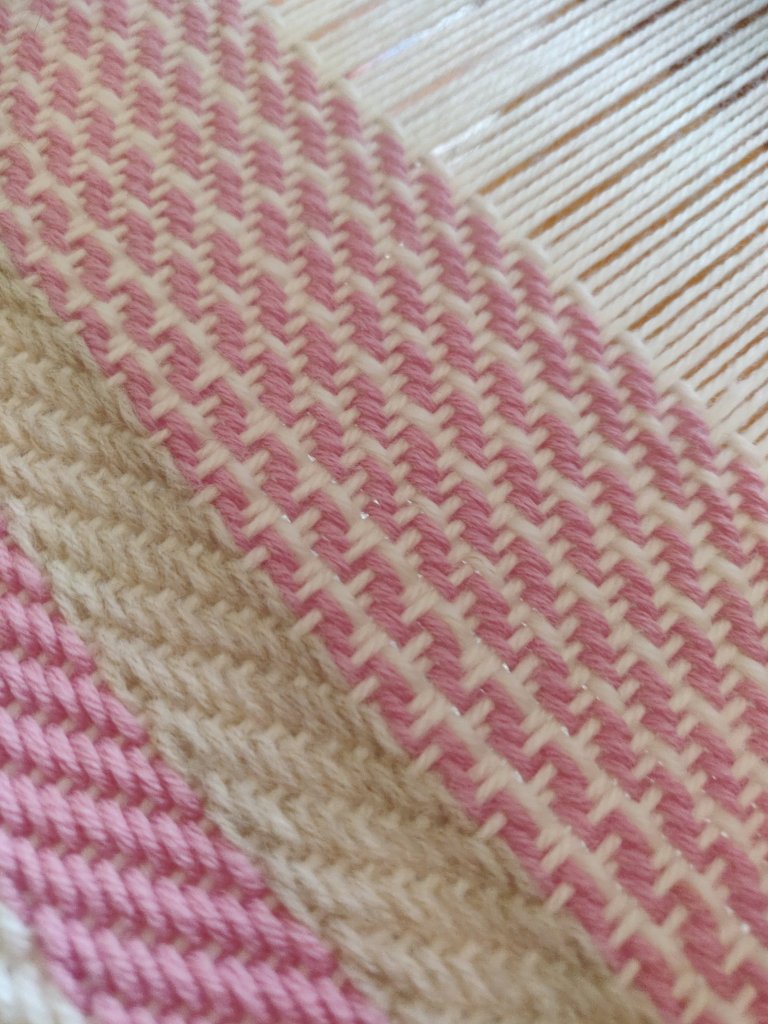
Waffle effect in 100% British wool. This will be the having for the Rya weave cushion cover front I have already completed.

Typically I have already acquired two kinds, both rigid heddle type, but perfect for my early steps.