‘Translating between Hand and Machine Knitting’ – publication date is 31st August

i have just received my pre-publication copy of ‘Translating between Hand and Machine Knitting’, it was waiting here on my arrival home from holiday. It’s a great welcome home present.
Here are some sample pages. 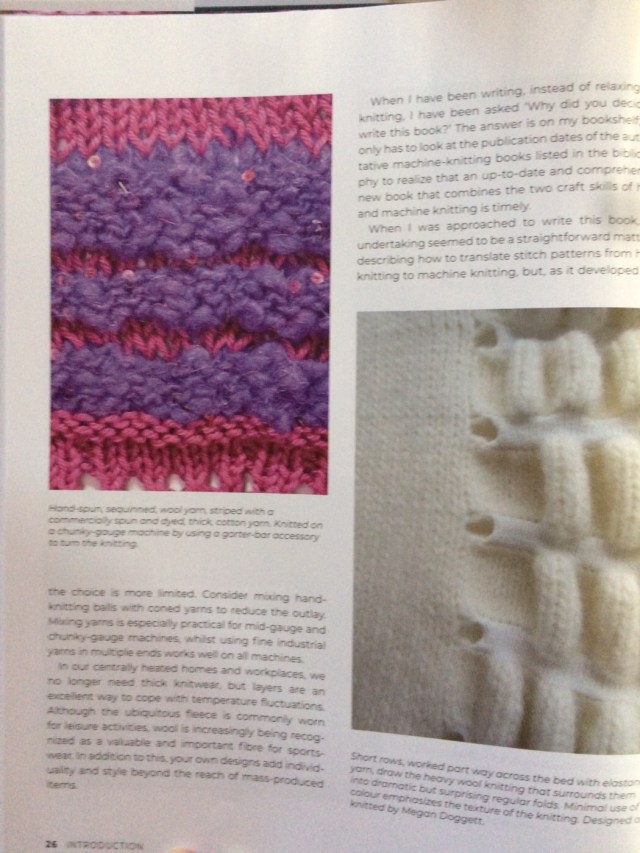
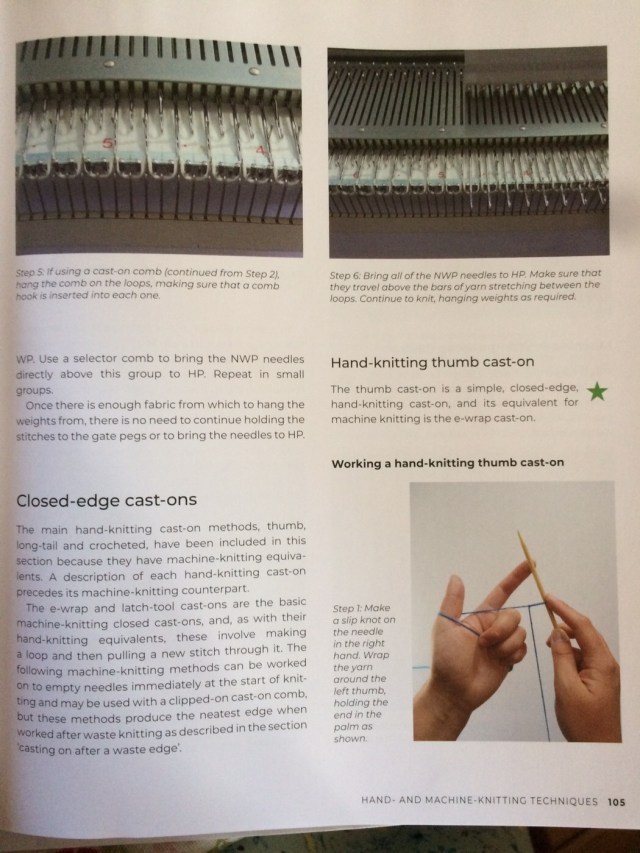
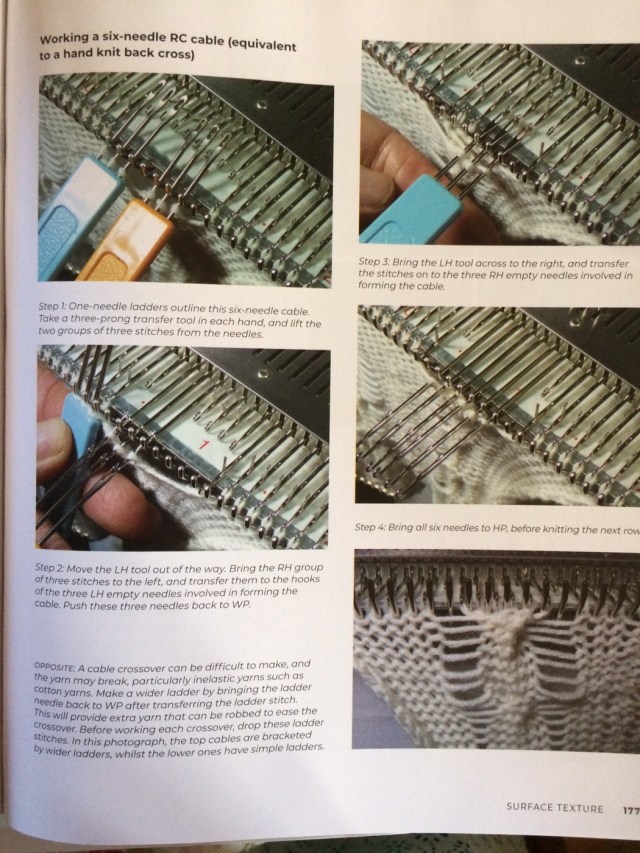
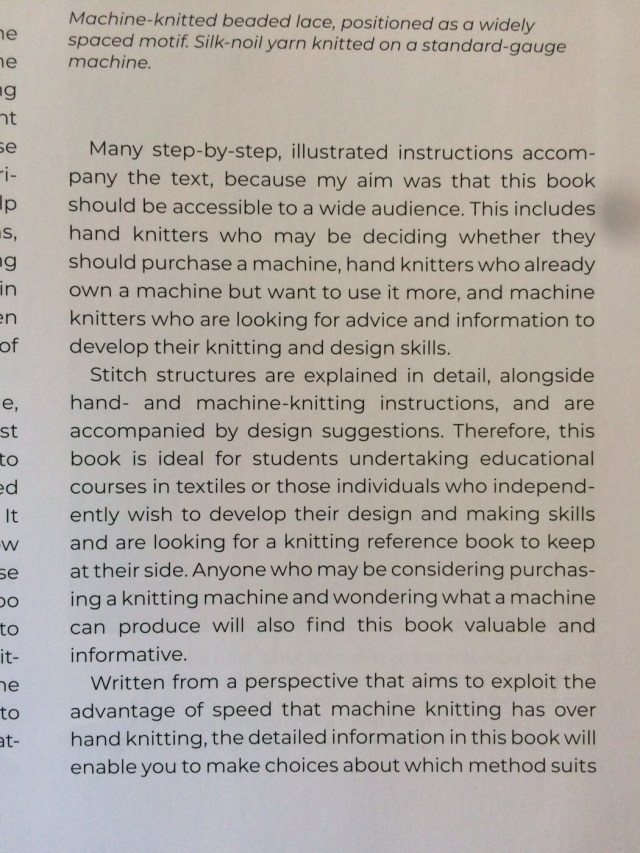
A pre-publication glimpse of my new book, Translating between Hand and Machine Knitting.
To be published by Crowood Press in summer 2018, this book is lavishly illustrated with clear step-by-step instructions on knitting techniques, stitch structures and fabric constructions.
Unlike many other knitting books, this one explains why knit stitches behave in certain ways, and how to achieve effects using combinations of stitches. Each stitch construction is analysed and explained with diagrams and examples, for example tuck stitch (in hand knitting this is known as broiche stitch) is clearly illustrated so that the route of the yarn is tracked, and effects on vertically and horizontally adjoining stitches can be seen. Fabrics made with this stitch in both hand and machine knitting are illustrated, explained and compared and contrasted in both methods of knitting. The most suitable method is highlighted and pros and cons of methods discussed.
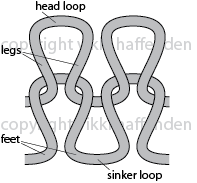
The constructions of textural and colour effects are explored and described by hand and machine knitting methods. There is a whole chapter explaining how to knit a hand knitting garment pattern on a machine, or vice versa, and how to subsitute yarns between both methods. Examples and illustrations support every step, and shortcuts and hints and tips are scattered strategically throughout the text.
I am proud to say that my book has been written with the primary aim to enable the reader to take control of their knitting and create exactly what they want in both knitted textiles and knitted garment shapes.
It will take pride of place on any knitter’s book shelf, sitting next to The Knitting Book and Knit Step-by-Step. Preorder on Amazon
More consideration seems to be being given to the problem of sizing in clothing; a subject of my own research that is close to my heart.
The BBC reported that H&M have announced they will be changing their sizing in the UK. I was asked by teh BBC to add some background to the story about the history of clothing sizing systems and how these have been implemented.
Read the article here:
BBC news H&M female clothes sizes bigger
According to the article, H&M offered the follwoing as an example of what they plan to do, ‘…the previous measurements and fit of a size 12 would now be the measurements of a size 10’. I am trying to get my head around that. So does that mean they will in effect re-label a size 12 as a size 10? Does that actually address the issue that has been brought to light?
One of the major changes in women’s size found by the 2002 national sizing survey Size UK was that of relative proportions. Women’s waists are much larger in proportion to their bust and hips than they were 50 years ago. The historically desirable female ‘hour-glass’ figure, achieved largely through the constriction of corsetry (latterly those ghastly panty girdles), is no longer a realistic shape for the average woman. So shouldn’t this be reflected by making waists larger rather than than just up-size all over?
If you want to read more about the social history of corsetry I recommend ‘Bound to Please, A History of the Victorian Corset‘, by Leigh Summers. Its easy to read and very informative.
Bloomsbury publishing link to Bound to Please
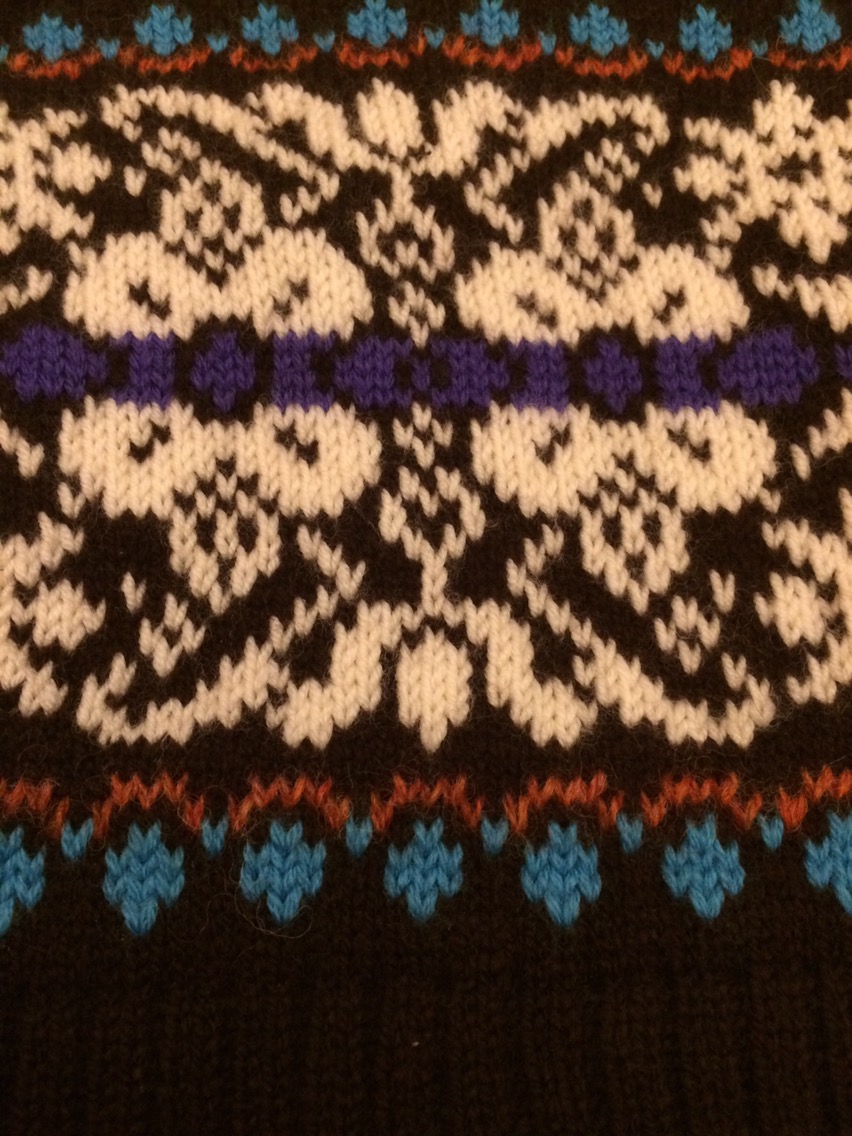 Time to play now that my manuscript has gone to the publishers.

‘The Knitting Book is the book of all books for the knitter, whether you are a beginner or have been knitting for years…This book is so full of great information that it’s an essential companion for every knitter.’
(Knitpicks.com )
The Knitting Book is available in Australia and the US, and the book has been translated into Dutch, German and Croatian.
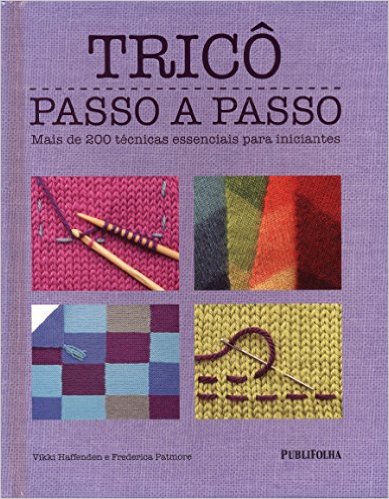
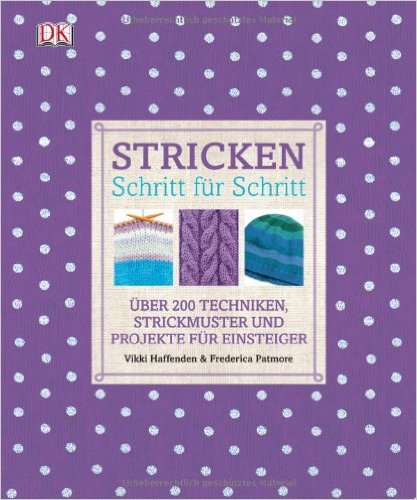
Knit Step by Step
is also available in German and Portugese.
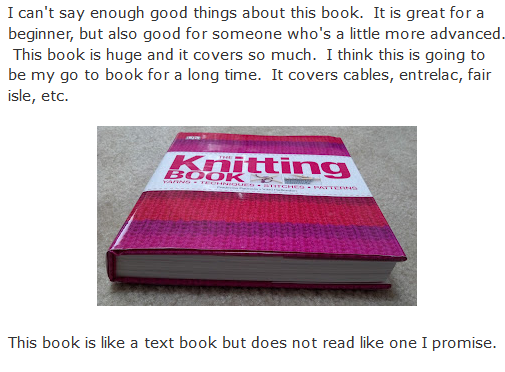
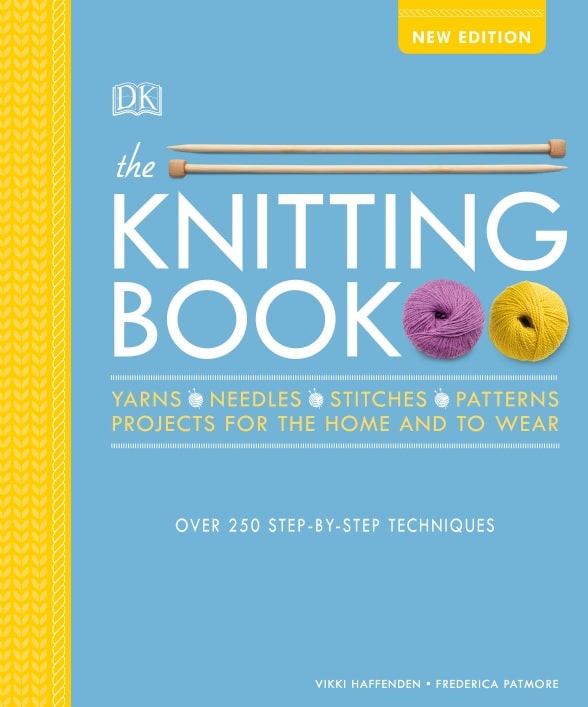
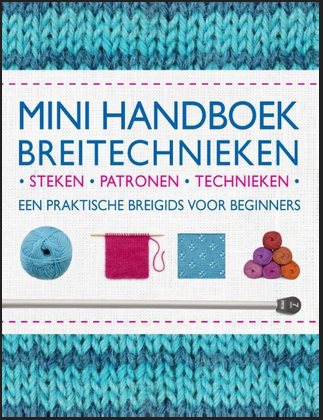
2019. A new edition of The Knitting Book is now available with updated techniques and new patterns. Also in a Dutch translation
Making up knitwear can be quite a chore, and using a linker makes it a lot quicker. Linkers make a chain stitch, which is extensible so will not burst the seam when the fabric is stretched.
Domestic linkers can be operated by hand or have a motor. The most common make in the UK is the Hague linker, which is blue, and made in the UK by Hague. It can used on a table, or mounted on its own stand. When joining large pieces whilst working a table you have to be careful that the pieces don’t drag as the dial revolves as this is likely to effect the stitch formation and make the machine heavy to use. Using a stand means that larger pieces can hang down and revolve with the dial.
Hague type linkers make the stitch on the outside of the dial where the needle is positioned, and the chain on the inside where the looper is situated. A linker is a usually circular, and has a dial of spikes radiating outwards. These are called ‘points’ and as with a knitting machine, the number of points per inch is used to describe the gauge of the linker.
Linkers have large eyed, usually curved, needles and are designed to be used with a similar weight yarn to that in which the garment has been knitted, e.g. a linker with 5 points to the inch will take yarn of similar diameter/count to that used on a domestic knitting machine. The linker in this video has more points per inch than one intended for use with domestic machines; it is probably a 10-12 point model.
Obviously its not possible to have a linker for each of your different machines, or for hand knits, but the good news is that you can use a linker for different gauges of knitting. If the stitches are wider spaced than the points, spread them out so that not every point has a stitch; the chain will carry over the odd empty point. If the stitches are closer together than the points, it is a little more difficult as you have to double them up on the points, and to frequent doubling can lead to a gathered seam, so I wouldn’t recommend using a domestic linker for finer than 8gge knitting.
Before starting, hold the knitting up to the dial (remember that the circumference of the dial is smaller at the inner end of the points, where the stitches are made), and estimate how often you need to add a space, or double-up on a point. Make a note of this, and put the stitches up onto the points with evenly spaced gaps or double stitches.
If the garment is knitted in a fancy of fluffy yarn, I recommend linking with a smooth, strong yarn of a suitably matching colour instead.
The tension of the chain stitch can be adjusted with a thumb screw, and it is important to use this adjustment to achieve successful linking. Put broadly, over-large and/or missing loops indicate loose tension, and skipping, dragging and stiff operation indicates too tight, but the only way to get it right is to practise on scraps of knitting prior to sewing the garment.
In very rare circumstances the timing of needle and looper can become disrupted, and it is impossible to get the linker to make stitches; the needle may break or bang into the looper, or the looper may be totally out of synch with the needle thrust. Although it is possible to adjust this yourself, unless you are very experienced with the machine and understand how the stitches are formed, I recommend sending the linker to Hague for repair.
When preparing knitting for point-to-point linking the last row of main yarn knitting is not bound off; the stitches are left ‘live’. Before removing the knitting from the machine, 10-20 rows of ‘waste’ yarn are knitted, then the piece is knocked off the machine without binding off. When choosing ‘waste’ yarn, aim for a strong colour contrast in a yarn that is slightly thicker than the main yarn. A thicker yarn will open the last row of stitches, making it easier to insert the points, and a contrast colour helps the operator pick the correct row of stitches to catch onto the points. Try to choose smooth waste yarns; fluffy ones may leave contrast colour fibres when the waste is removed.
The video above shows how to point-to-point link a double thickness, folded collar around the neckline of a garment. The collar in this example has been knitted across the needle bed of the knitting machine, with ‘live’ stitches left at both start and finish as follows:
See ‘Preparing your knitting’ for how to work the joining rows between main and waste yarn to facilitate easy linking.
Before starting to put the collar and garment on the linker, check whether your linker makes the stitches inside or outside the dial, and position the piecs accordingly. In my example, the stitches are on the outside, the loops inside.
Put the open stitches of the inner edge of the collar onto the points as described in the video, (wrong side facing in this example), and then put the garment neck onto the points (right side facing the operator in this example). Finally fold the collar over the top of the garment neck edge, and catch the open stitches onto the points – make sure to align the inner and outer stitches so that the collar is not twisted.
Sew through the three layers, and pull the end back through the last chain to secure the linking. Remove the garment and unravel the waste yarn back to the main stitches. Take care on the last row, and if any stitches have been missed, catch them with a pin or a strand of waste yarn. I find those little safety-pin stitch markers very useful for this on domestic- machine knits.
I was admitted to this company last month in an ancient ceremony at Goldsmith’s Hall in London. The Worshipful Company is one of the 108 Livery Companies of the City of London which evolved from the medieval trade Guilds which came about through the natural inclination of men in the same trades and occupations to join together for friendship, support and protection.
The website explains the history in full, but this quote explains some of this:
“The Worshipful Company of Framework Knitters had its origins in 1589 when William Lee of Calverton in Nottinghamshire is credited with the invention of a machine for knitting mechanically. It was incorporated by Oliver Cromwell, Lord Protector of the Commonwealth, on 13th June 1657 and was re-incorporated and its privileges extended by Letters Patent of His Majesty King Charles II on 19th August 1663 with the style, “The Master, Wardens, Assistants and Society of the Art or Mystery of Framework Knitters of the Cities of London and Westminster and the Kingdom of England and the Dominion of Wales”. 
me outside the Goldsmith’s Hall
See http://www.frameworkknitters.co.uk/ for more info
|
|
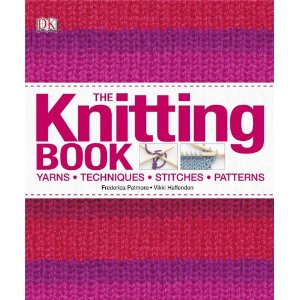
Best knitting information all in one volume is to be published on September 1st 2011.
The Knitting Book, written by Vikki Haffenden and Frederika Patmore, published by Dorling Kindersley is out on 1st September. Loads of technical info and samples as well as patterns, so whats not to like?
Worked on checking spreads/layouts for the book today, its coming along really well. Now have to catch up on my other writing.
 Vikki Haffenden