A bit of cotton dyeing using home made tannin extract

I posted recently about solar dying wool with mulberries and I thought I’d now have a go dying some commercially spun cotton that I have already, and conveniently, put up into hanks. There are six 50g hanks, so I am hoping for 300g of lovely coloured cotton to play with.

I don’t dye cotton often, but I do know that it requires tannin as a mordant. Well, being a bit disorganized, if I’ve got any commercial tannin mordant I can’t find, so it was a relief when after a quick look in Jenny Dean’s Colours from Nature, I found that bramble leaves and twigs contain tannin. A bit more research on the internet suggests that mulberry leaves also contain tannin. It looks like this is going to be a multi-day effort.

DAY 1

One thing we have in plenty in the garden and surrounding fields is brambles and of course we have a mulberry tree, so I went on a little foraging trip. I collected a basket full of mulberry leaves and brambles which I chopped up and boiled for an hour as instructed in the book.

DAY 2

I left these to soak overnight and have just strained the liquor off into a pan and slightly reheated this.

I’ve just submerged the damp cotton hanks in the tannin liquid, and will leave this for 24 hours for the cotton to absorb the tannin. According to Jenny Dean there is a likelihood this will stain my white cotton and is bleached white slightly yellow, so we will see.
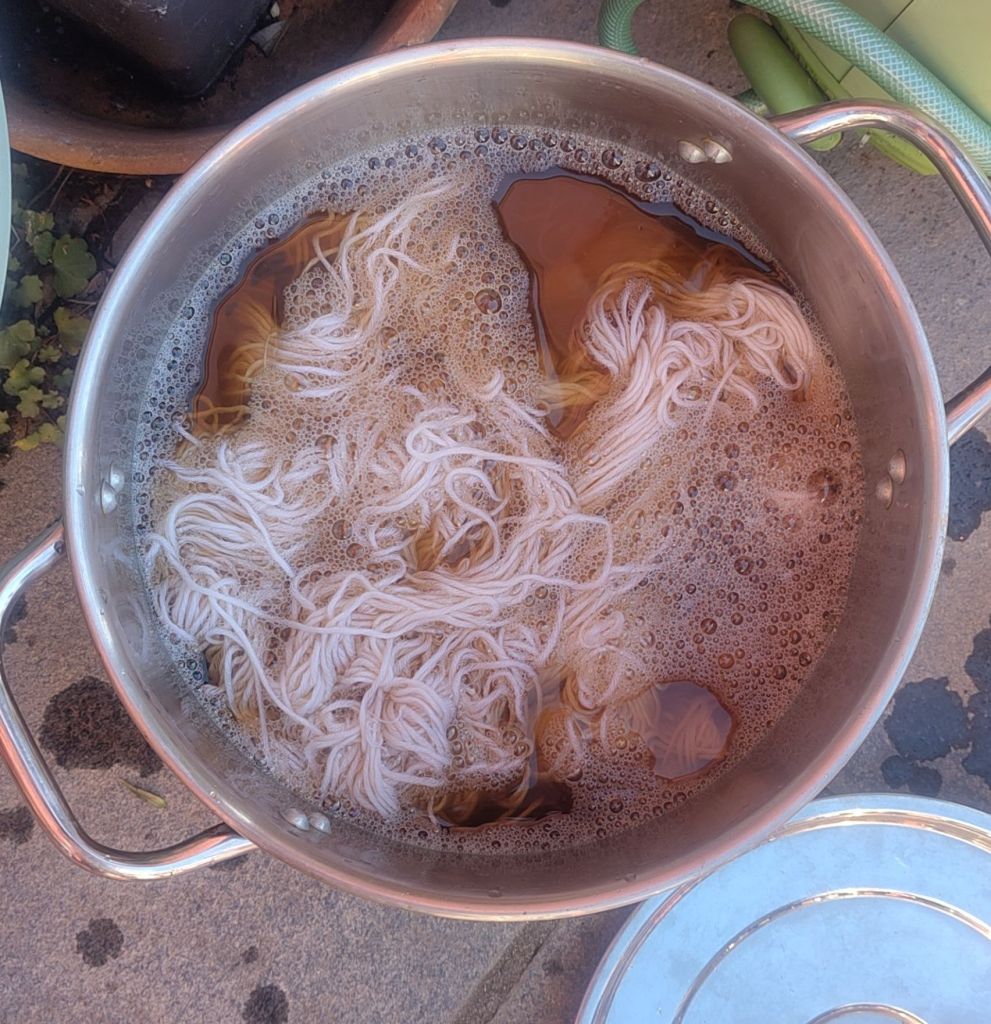
Hanks of cotton soaking in the home made tannin solution

Hopefully the mulberry dye will accommodate this and give me a nice color.

DAY 3
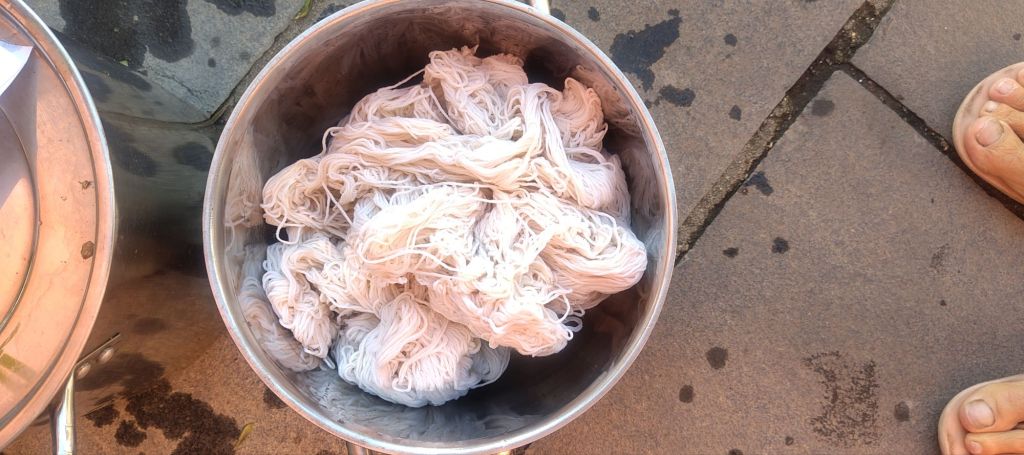
The cotton yarn after being soaked in tannin solution, a slight cream cast

After the tannin soak the cotton had taken on a slight creamy colour, not too bad at all. Maybe it didn’t take the tannin?

Straining the cooked and soaked mulberries to release the dye colour

I had prepared 1.5kg of mushy mulberries that weren’t really edible by cooking them up in some water and leaving them to soak and give up their colour overnight. I thought I was ready to get in with the dyeing, but luckily at this point I went back to Jenny’s book. Only then did I  realised that the cotton needed to be soaked in an alum mordant after the tannin. How did I miss this before?

The recommended amount is 4 tsp alum and 1.5 tsp of washing soda per 100g of fibre. Dissolve the alum and soda in enough water to cover the fibre,  and bring to a simmer. Then leave it to soak and cool for 12-24 hours.

DAY 4
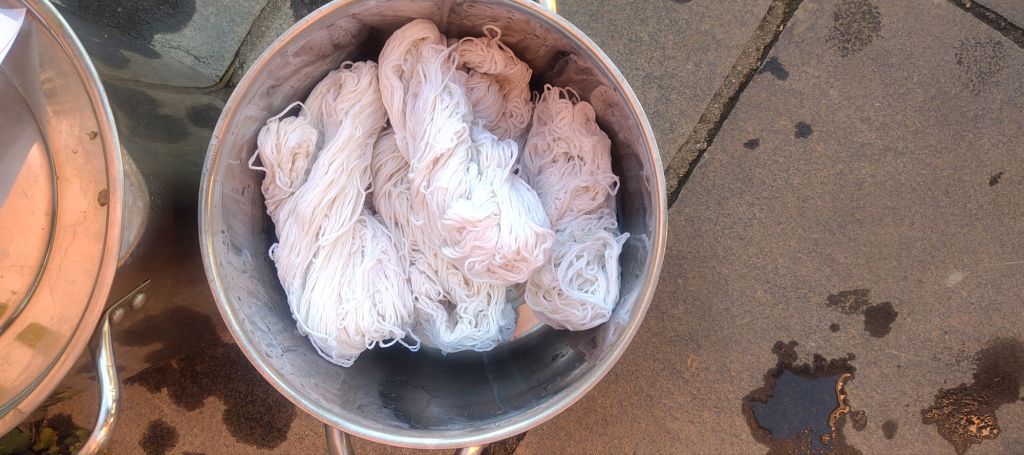
NOW I can put the hanks in the dye..

This afternoon I took the yarn out and rinsed it. Then strained the mulberry liqour and put it in the old slow cooker I use for dyeing. I added some salt (not sure why but seemed to remember it helps the dye take) and then added enough water so that the liquid would cover the fibre. After that I immersed the yarn in the dye.

Fingers crossed it will work.
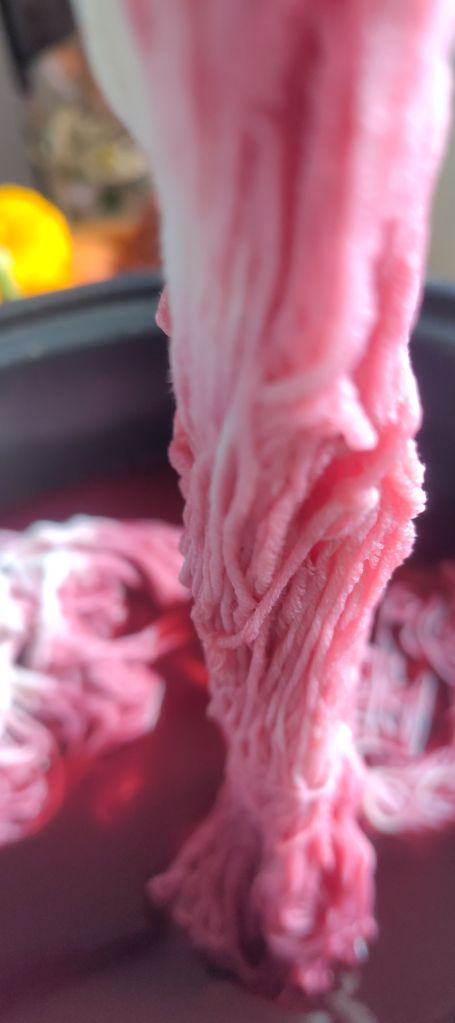
First dipped hank… Now it needs to sit in the dye overnight…but we all know it’s probably going to wash out…

Well, the hanks came out looking lovely, but as predicted, the colour mostly washed out. It’s not a bad colour, it’s very a pale, lilacy grey, just not the pink I hoped for.
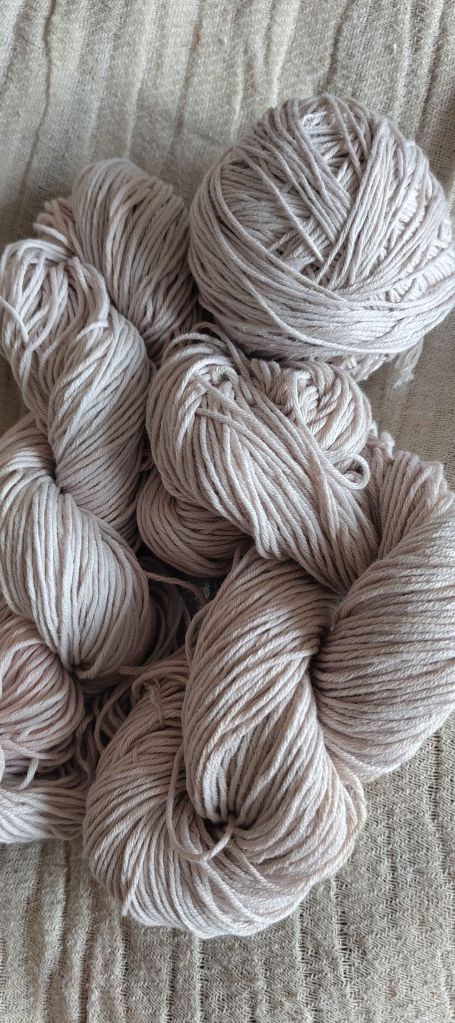
The final colour, a pale lilac grey.

Solar dyeing from the garden waste

As mentioned in my previous post we have a lot of fruit in the garden, a large amount of which is from a prolific Mulberry tree. I’ve made jam,  jelly, syrup, sauce, dried them and made fruit leathers. Plus Ross is making wine from three kilos of them.

One of the problems with mulberries is they have big pips and a stalk that is difficult to get out. Many of the things I’ve made have involved cooking the fruit up and then putting it through a Mouli or nylon sieve to get the pulp and juice and then working with that. As we have a lot of apples I use the windfalls to make pectin and sometimes add a few apples to give some body to the pulp.

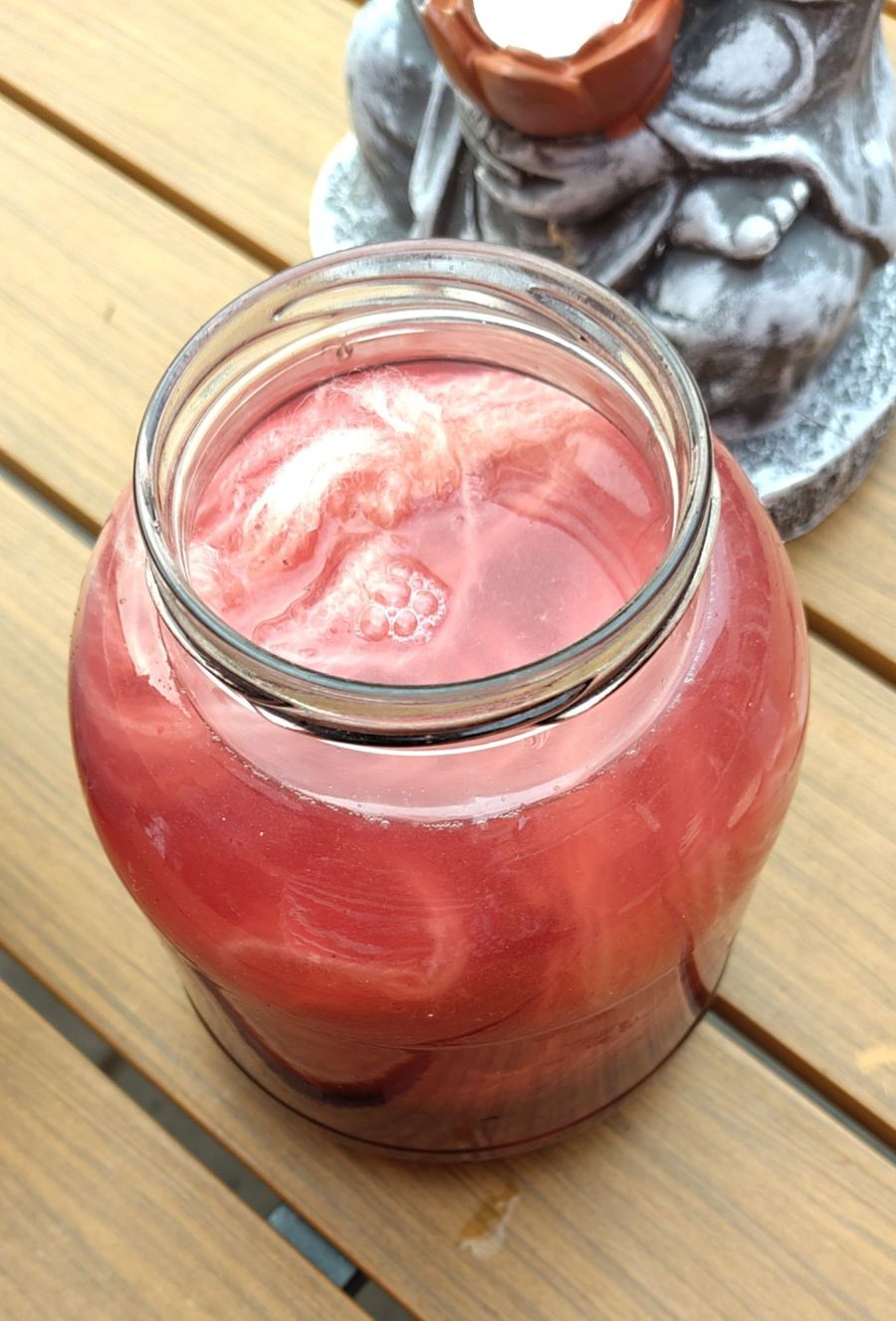
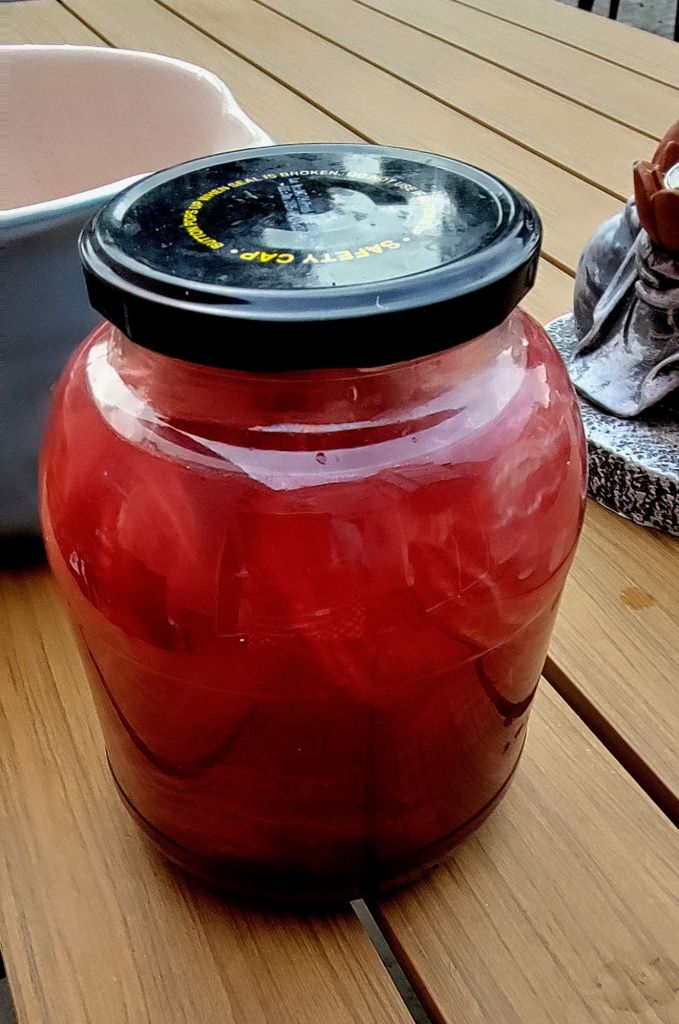
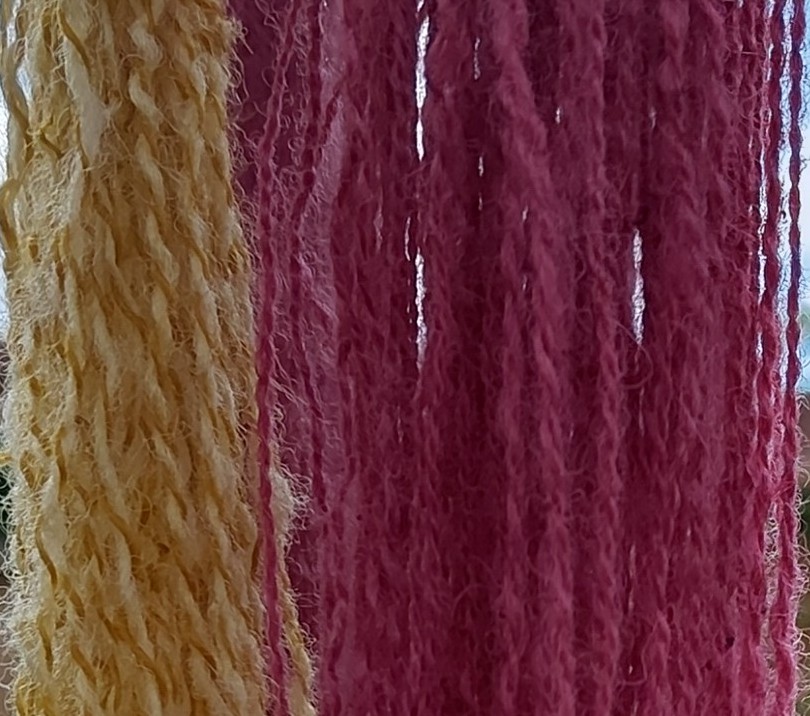
Of course you end up with a lot of mulberry mush with pips and stalks in it. However this still retains the really strong color, and staining ability, that the complete mulberries have. So I decided to do some dying with the pulp. Last year I solar dyed with raspberries, which gave me a gentle pink, so this year I worked with the mulberry pulp in a similar manner. I use my own handspun yarn and solar dying with the mulberry pulp, which gave a pretty, pale crimson. I boiled up the mulberry mush again with a bit more water and added any berries that hadn’t been good enough to go into the jam. When I thought I got as much color into the liquid that I was going to get I strained the liquid off through a fine sieve, being careful not to squash the pulp through as well. The liquid went into a big jar with 1% alum solution, some salt and a dash of white vinegar. After a good stir  the dye jar was ready. 

Before I started all this I had put a 100g hank of handspun wool  yarn to soak in hot water with washing up liquid and a little bit of soda. Although the yarn had been washed already, this extra soak and the soda in particular, removed any remaining oil, ready for it to take the dye. The yarn had been spun and plied 2ply from a Lleyn fleece.

After rinsing and removing extra water from the yarn I put it damp into the dye jar, put the lid on and gave it a good shake to distribute the dye around you the yarn. My plan was to shake the jar every day whilst it sat in the sun for a week to ten days, but I forgot so the hank is a slightly lighter colour one end, which is pretty but not a solid color I had intended.

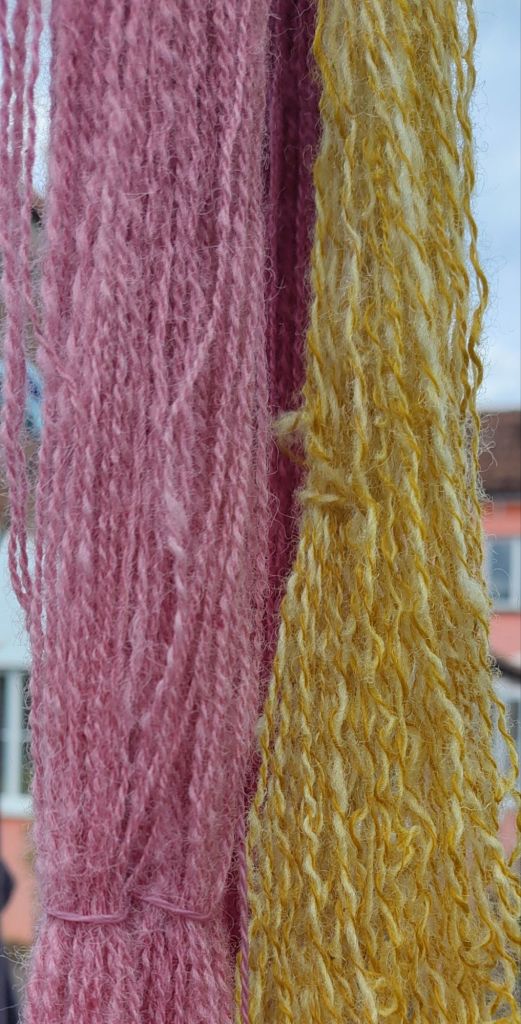
I follow the same process with marigold petals that I’d gathered  when deadheading the marigolds I’d grown this summer. These had been left to dry and were cooked up and strained in the same way as the mulberries. After removing this yarn, which was only a small hank, from the dye jar I found that one of the singles had taken the color much better than the other. This is because the 2 ply yarn on the bank was plied from two different fleece singles that were on odd bobbins, and I don’t remember which  forever either were from. So an interesting dye experiment, but lacking the control of knowing the fleece type.

On the left is the mulberry and on the right is the marigold dyed yarn.

Acid dyeing session

Having acquired a Devon/Cornwall fleece that is quite similar to a Romney in feel and quality, I thought I’d dye some for blending. This fine will be great to comb for a semi-worsted spun yarn.

One of my favourite methods for safely dyeing fleece without matting the fibres is to use a slow cooker. I have a large family sized one that will dye 100g comfortably and 150g at a pinch, and a single-person one that does 20g for samples etc.

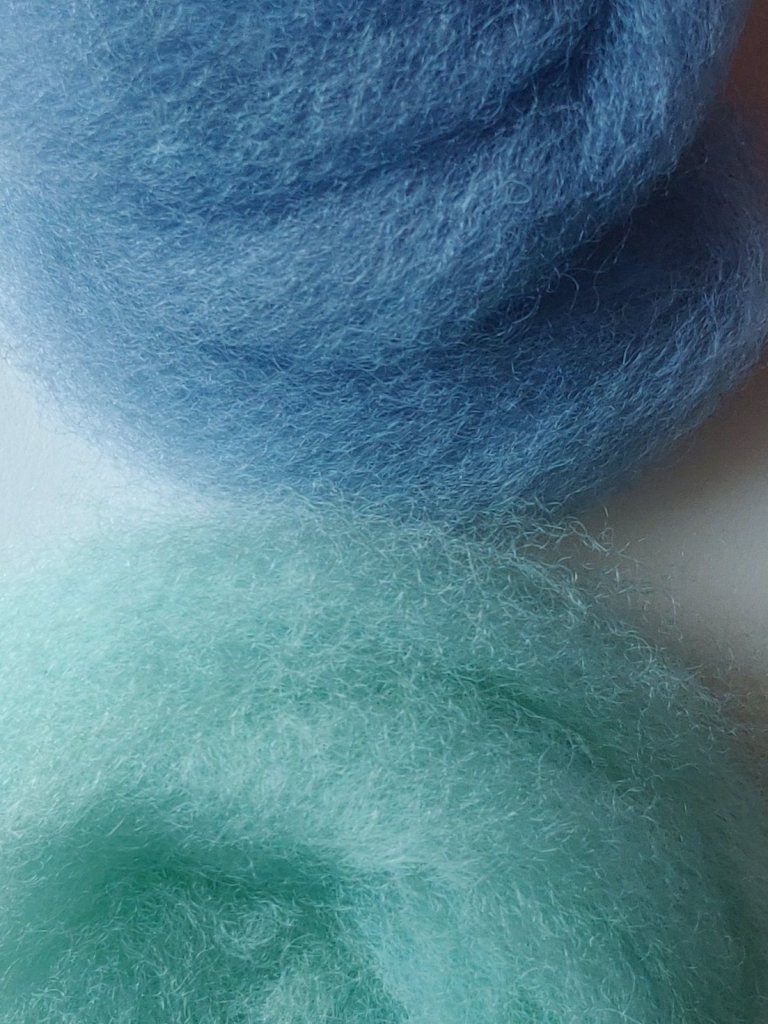
Using a pre-mixed colour I’ve used before I did a blue first. However, on this fleece it came out darker than I anticipated, but will probably lighten up once combed or carded and spun.

From the remains of the dyebath I got a pretty light turquoise.

The blue at the back, turquoise at the front

I have combed these colours as shown in this video.

Note that in this video I talk about ‘roving, but technically I am making ‘tops’. Roving is a similar narrow length of fibres drawn off a drum carder (usually, but can be hand carders) and has a slight twist added to keep the fibres together.
After combing, both colours have come out as
I hoped.

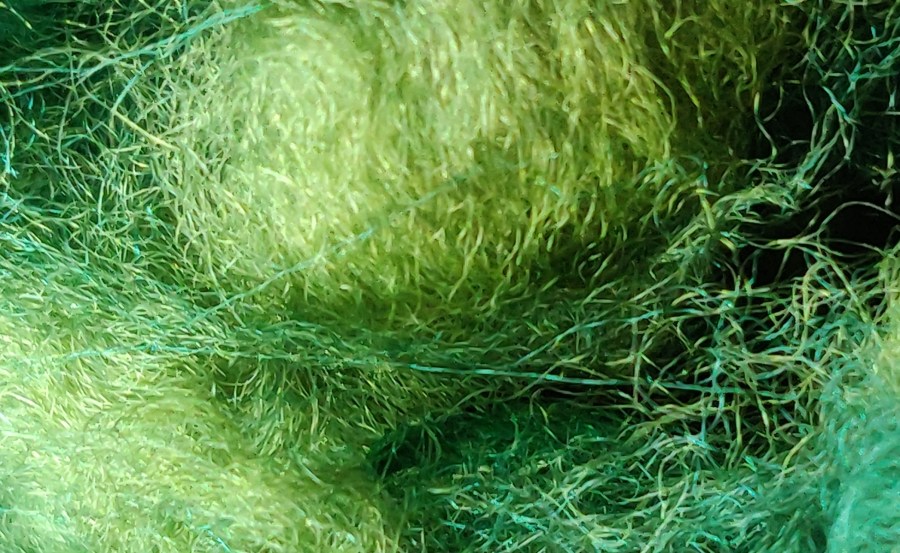
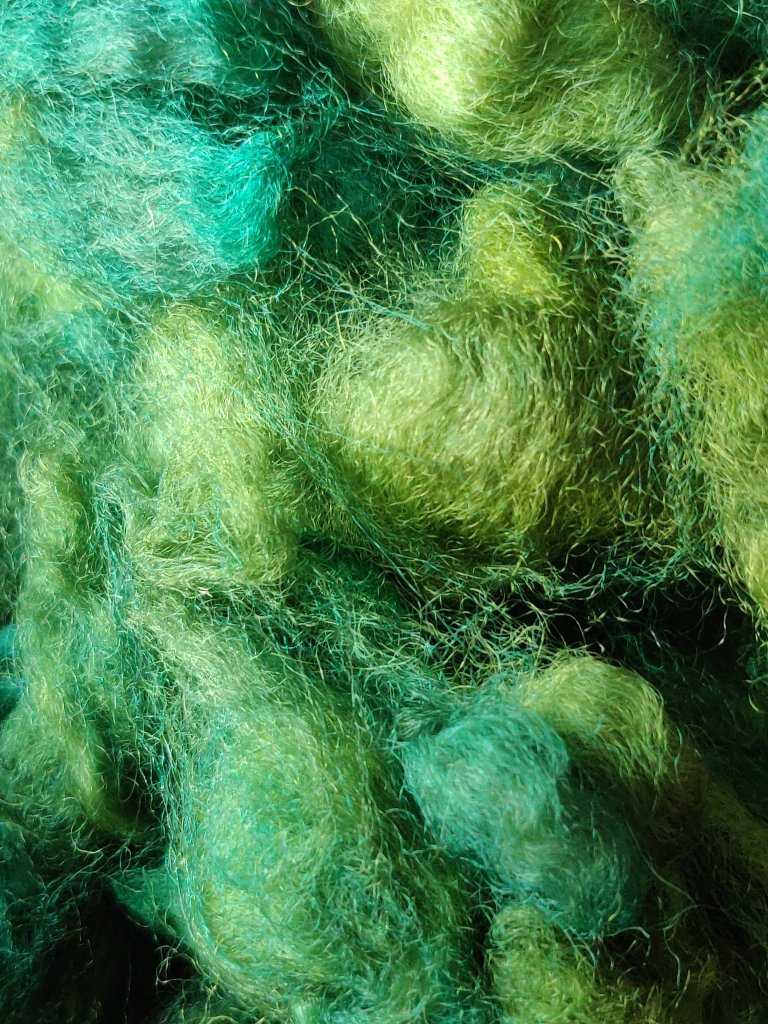
I also wanted an olive green, and have a recipe that worked perfectly on a Dorset fleece last year. I must have made a mistake somewhere, because I got a dark green instead. Maybe it is the different fleece, but I think I got my proportions wrong!

Pretty enough, but not olive green!

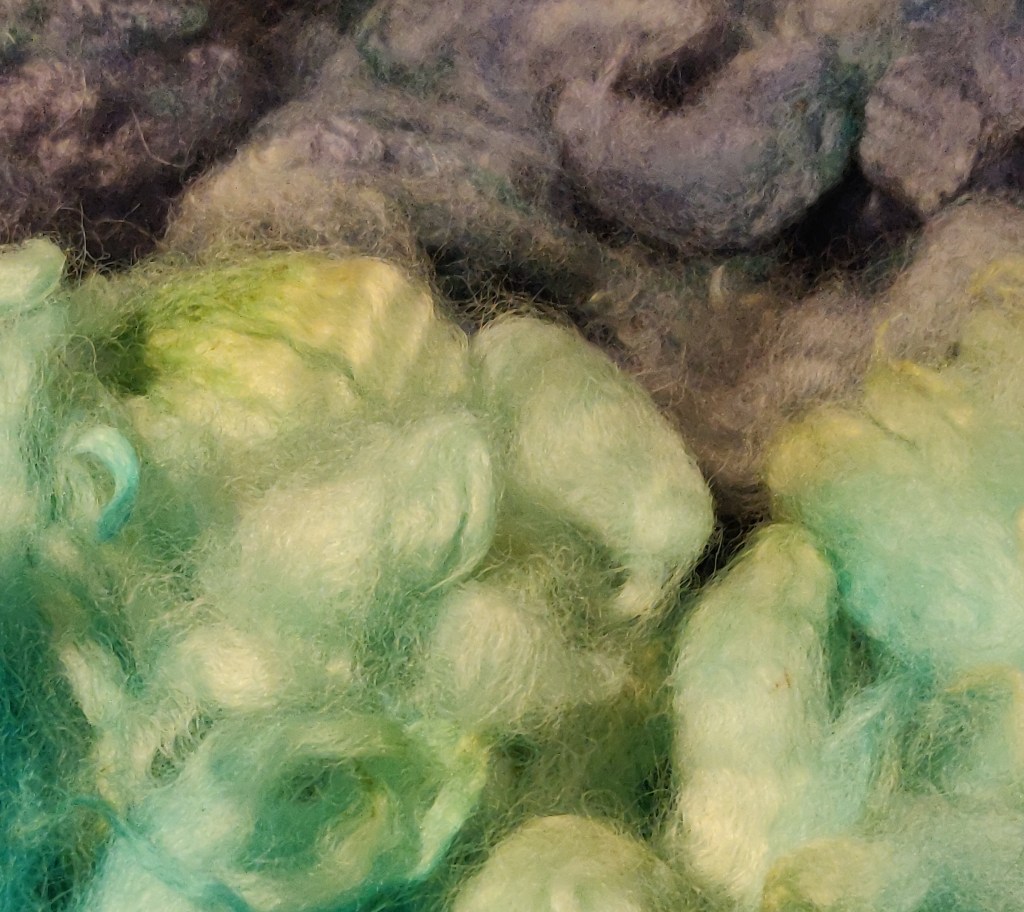
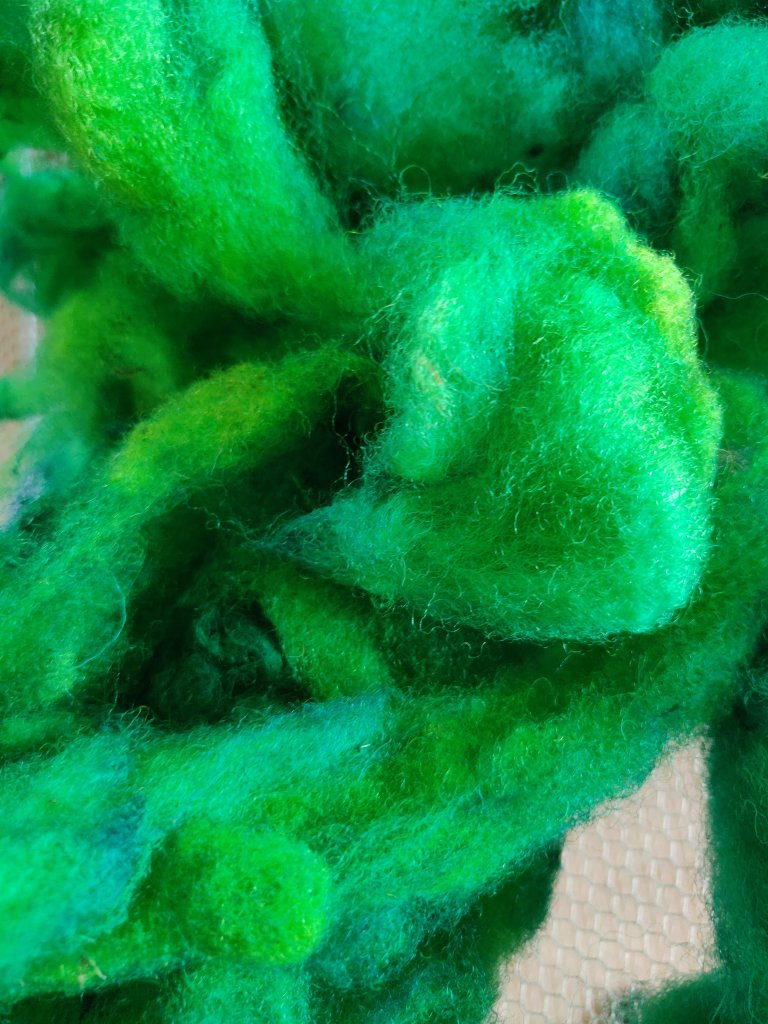
Once again they was some colour left in the bath, so in went 100g of Dorset fleece. OMG, the colour was bright! No idea what I did wrong, but it makes me blink.

The only compensation is that the fleece has not called at all due to using the slow cooker method.

That bright green total exhausted the dye – no surprise really! I will probably card this as the staples of the Dorset fleece are short and it is a soft fibre. Great for soft woollen spun yarn.

If you are interested in discovering the difference between different terms such as roving, tops etc, click here to read Abby Franquemont on Spin Off.

Prepping for online natural dye workshop on Friday

I’m practising my red cabbage dye recipes for Friday because if anything can go wrong it will. At least if I test the recipes it’s only likely to be the technology that glitches.

Red cabbage dye bath
Red cabbage with vinegar
A weak madder bath for a pale peach

Ha ha!


Friday p.m. update
Wow, I think that went well! My camera man was brilliant, he cued me to face one of the 3 cameras he was using according to the best view, and even made me a coffee!

We started with onion skins because as a substantive dye everyone could use these even if they had not mordanted their wool yarn. Some people used red skins only and got an olivey green whilst I used mixed and got a dark gold. Interestingly I popped a 50/50 acrylic wool skein in and got a brilliant yellow.

Second dye was another substantive material – avocado skins and pits. Some people mixed them, but I kept then separate. I soaked both overnight, in fact the pits were so hard I had to cook them overnight on a slow cooker in order to soften then enough to be able to chop them up and release more colour as they continued to cook this morning.

I added ammonia to the avocado skins as they soaked. I read somewhere that this develops the colour well – but maybe that was pits? The colour from the skins was a yellowy mid peach, and from the pits was a pinky deep peach.

Dyes four, five and six were red cabbage. But itself as for, but five had ammonia added to make it green whilst six had citric acid added to make it lilacy pink.

I have never had such great colours from cabbage before! Stunning, if fugitive as they will fade over time. I chopped half a large cabbage very small, layered it with 4 tablespoons of salt and covered it with water. Then cooked it to the boil and left it to soak overnight. Fab results!

The dark blues are amazing! See below…

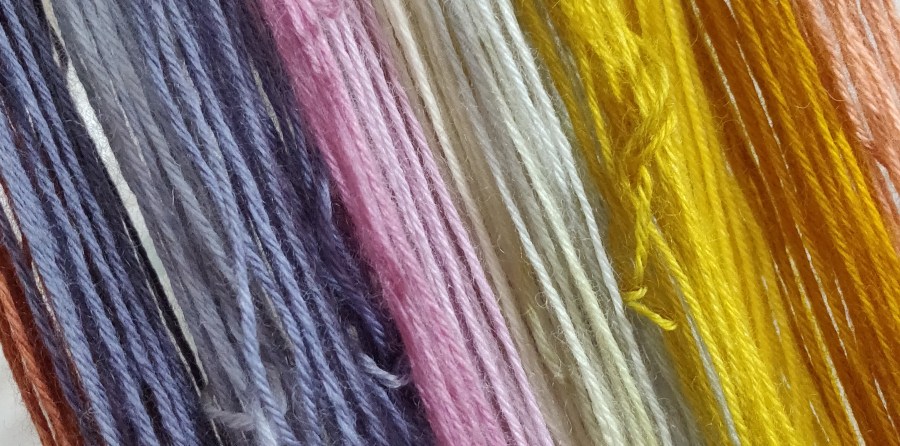
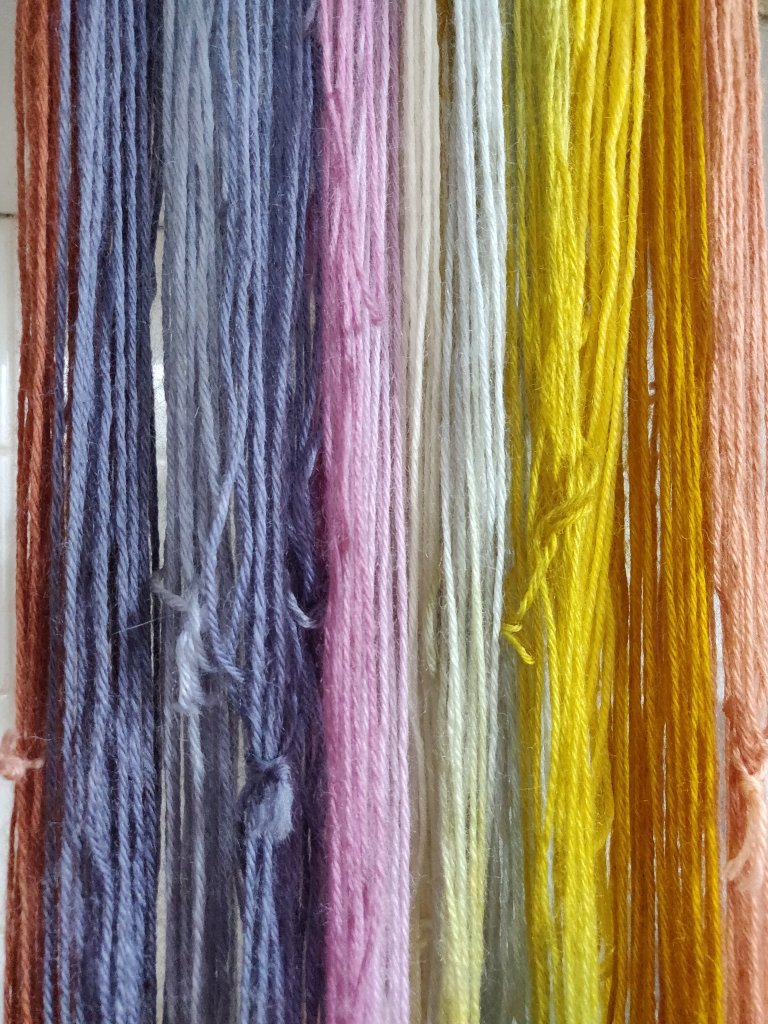
Left to right: avocado pits, red cabbage X3, red cabbage and ammonia, red cabbage and vinegar, dip dyed blue red cabbage, onionskin and turmeric X2, onionskin 50/50 wool/acrylic, onion skins, avocado skins.,

I’m now soaking some fleece in mordant to use up the red cabbage baths tomorrow. Plus have dyed 4 hanks of handspun wool/alpaca in the onionskin and avocado baths.

Black bean dyeing

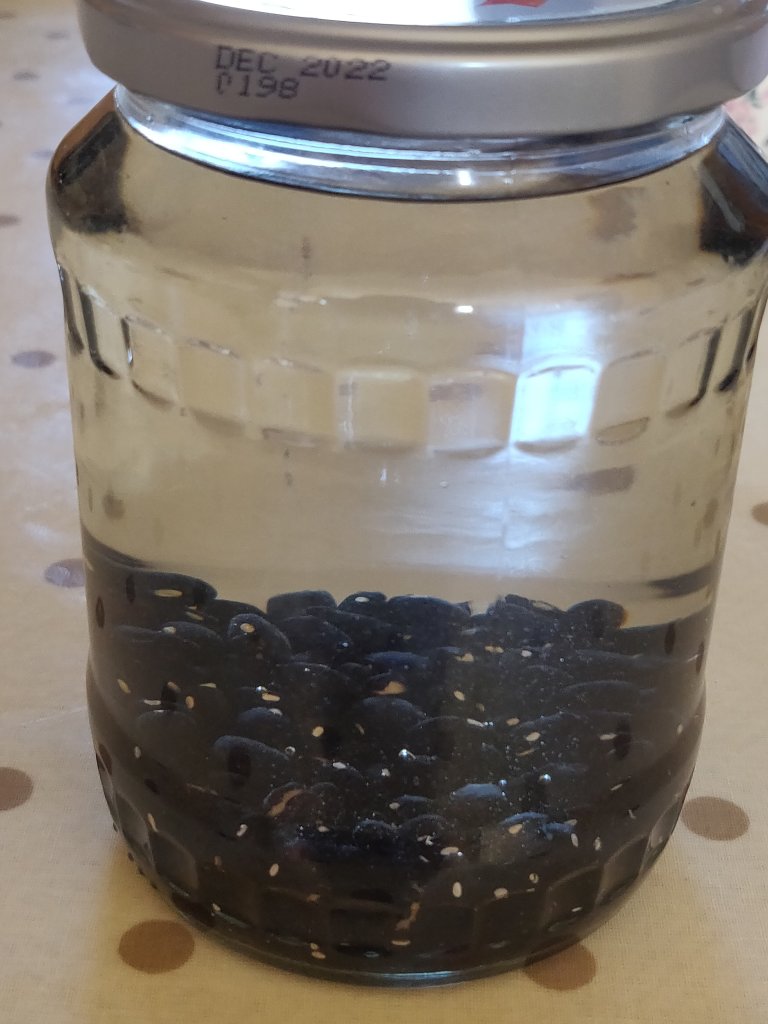
I’ve just put the beans to dial in cool water in a large jar. I’ve used 100g beans so will see what weight of yarn I can dye with these. Now I have to wait for 24 hours, shaking it gently now and then.

Starting point, 100g black beans in water

It’s 24 hours later, and time to get the due working. Of course I’d overlooked the problem of getting the liquid or without disturbing the beans. Instructions said to stop shaking the beans at least an hour before adding the fibre, so I did that. Then to remove the liquid carefully as any bean debris will turn the dye brown. However, it’s not easy to get the liquid out without the beans when you’ve stupidly put it in a narrow-ish mouthed jar!

Luckily I found a small ladle in the kitchen that just fitted, so managed to get some out. Not sure if it’s enough. I’ve added plenty of salt and enough water to cover the yarn and am now waiting…

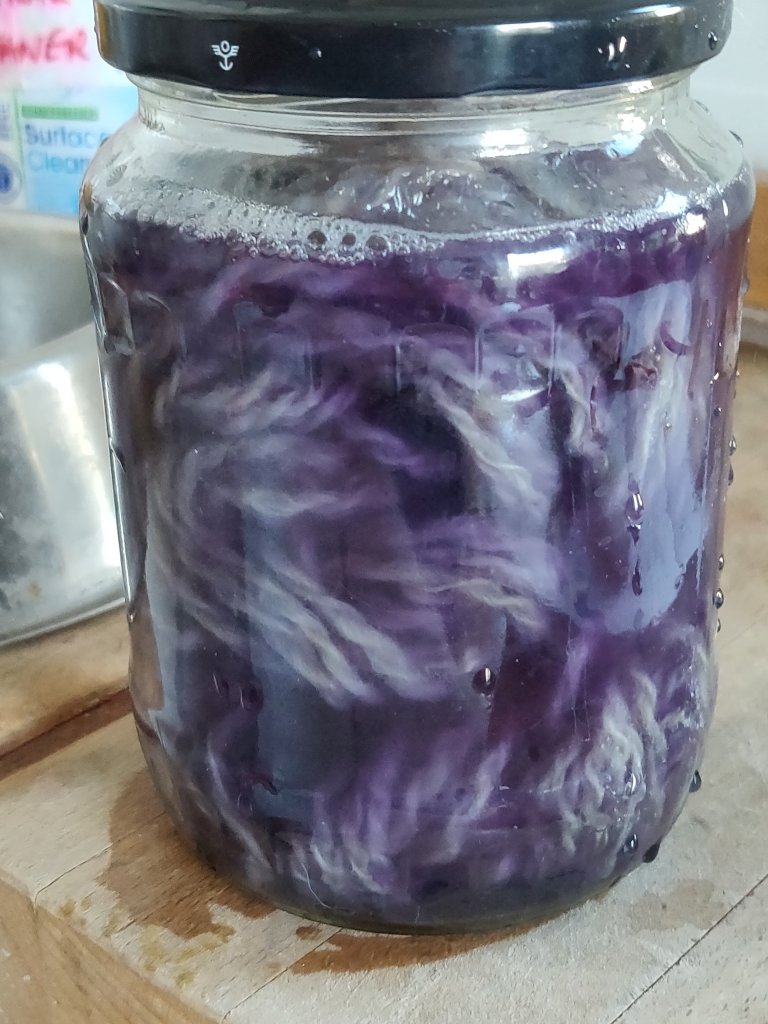
20g of hand spun wool now marinading in the black bean liquid

It did not work sadly. But I may try again with more means this time.

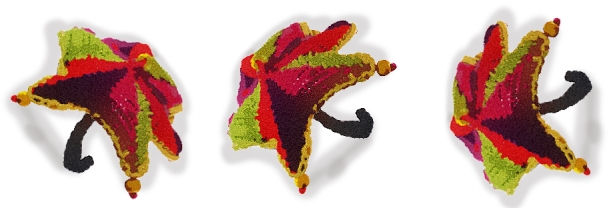
Woolly Umbrella, new website

I belong to a local community textile group, and we have just launched our new website. Please take a look and see what we have been doing. Of course that has not been a lot since April 2020 as much of what we do involves going to outside events to share skills and demonstrate.

Lets hope the coming year will allow us to start doing this again. Meanwhile we have been meeting (in 6’s only) during the summer to spin outdoors, but the latest lockdown, along with the colder, shorter days has put a stop to that. Online meetings are OK, and I have organised a few, but its not the same!

We hope to be able to take ourselves along to demonstrate natural dyeing, eco dyeing, spinning, and fibre preparation at Bentley Wood Fair near Ringmer in September. Allan will hopefully demonstrate his fascinating nettle fibre preparation methods, and we will all be suitably masked and socially distanced of course.

Avocado surprises

Having been eating loads of avocados last summer I dried the skins and stones for dye material later on in the year. I want sure if the colour outcome would be effected by drying so decided to try some out recently.

I took 60g dried avocado skins and two skeins of yarn; one 14g hand spun 50/50 cream wool and alpaca and 12g commercially spun 2/9nm will and nylon (sock yarn). I reckoned half yarn to dye material, but being dried may have made a difference.

I cold mordanted the yarns overnight and soaked and cooked up the skins. Stained the liquid and made up the due bath. Then gently simmered the yarn for about 60 minutes, with the skins in a muslin bag in the bath as well. After that I left the whole pot to cool overnight.

I was surprised that the hand spun did not take much colour whereas the wool and nylon took loads. Both had had same pretreatment.

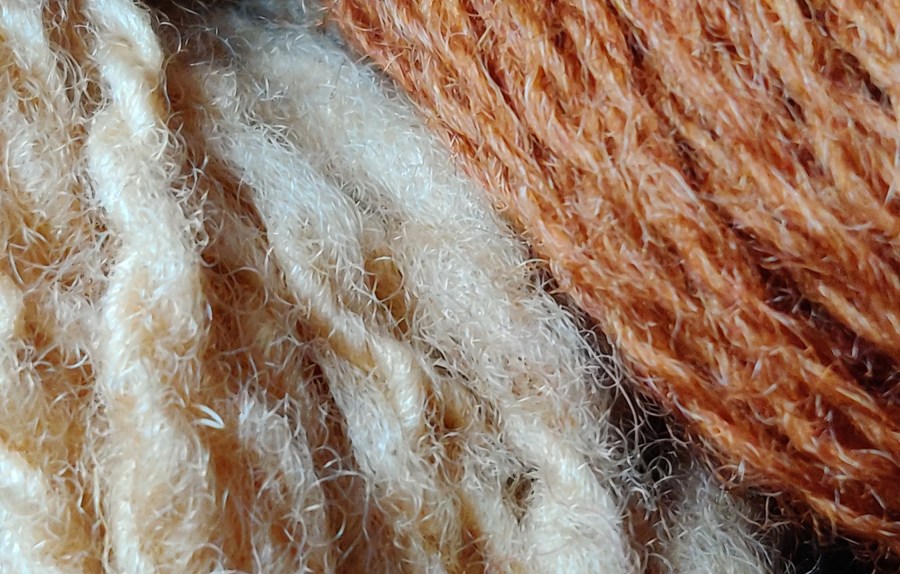
Left is hand spun 50/50 wool alpaca yarn, right is wool and nylon

I will be using the will nylon in machine knit socks, so pleased with the colour. It’s not as warm as the undried skins I’ve used in the past, more like onion skin colour.

UPDATE On reflection I think the Alpaca may have influenced the way the dye was taken up by the hand spun yarn