I’ve been having problems with adjusting the foot pressure on my Jones 125 machine. I’ve not seen one like it before and couldn’t work out how to use it. Today I’ve had 3 broken needles and I traced this to the really strong pressure on the foot. My Bernina 1030 doesn’t have this adjustment so it’s not something I work with much.
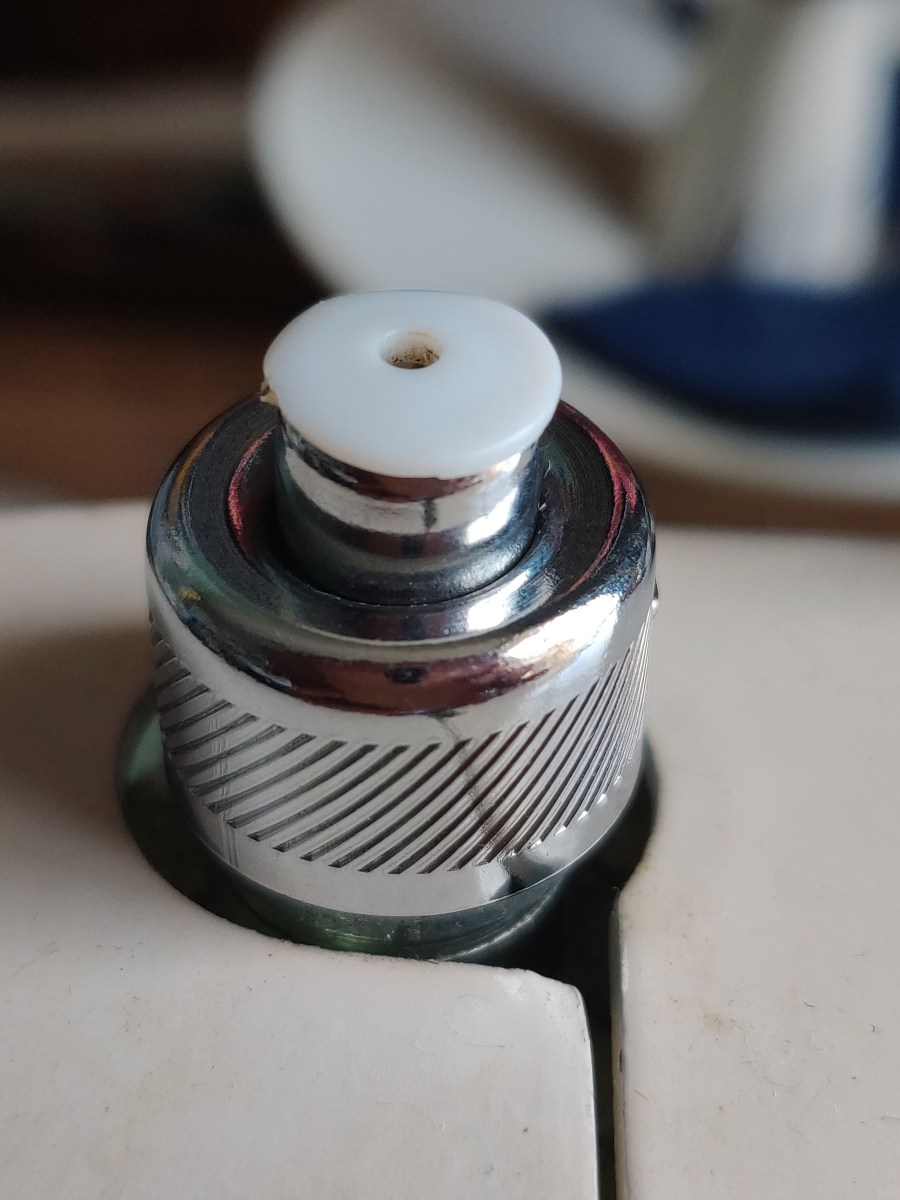
The pop darner for pressure adjuster on the Jones 125.
Before reading this I’d been twiddling it, popping it up, trying to unscrew it and seeing no difference. After reading this helpful page, it seems the Jones has a ‘pop darner’ style pressure adjuster. The central core pops up when you push down the outer ring, and then you depress the central core in increments to achieve the pressure you want. I imagine the name comes from popping it up to take pressure off when darning (or free embroidering) on the machine. Suddenly it all makes sense. The 3/4 position is so much better for what I am sewing today than all the way down, where it was because I couldn’t work out how to adjust it.
Probably common sense to others, but not to me!
Thank you to the kind person who took the time to write about the different methods of adjusting foot pressure, and for such a clear explanation.
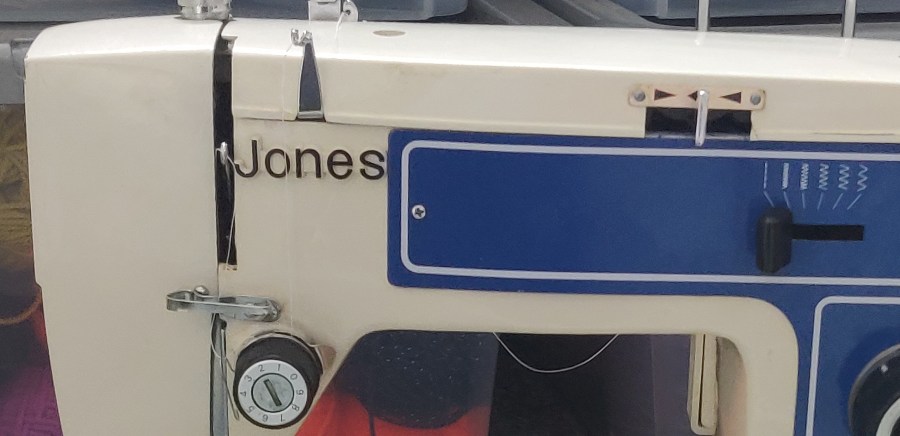
I’m doing quite a lot of sewing at the moment, so to supplement my Bernina 1030 I bought an old machine on eBay – not a modern one, an old second-hand 1980s model (my guess), very cheap and local pick up only. It’s a Jones, (later these were rebranded Brother), built like a tank and weighs a ton as the machine itself is all metal.
Its a Jones model number 125 with TUR 2 written on the motor at the back. I can’t find any info online about this machine, so if anyone has a manual or other info that would be helpful if be most grateful if you’d contact me.
The main problem was that the plastic case is degraded so the bed machine has dropped below the top edge of the case which means you couldn’t open the bobbin case, so that needed a bit of attention.
The Jones 125 machine
I have it several hours of TLC; opening the machine top, checking, cleaning and oiling everything. The bobbin and shuttle hook had all sorts of thread wrapped around it but that was easy enough to take out, clear and oil. Then I had to sort out the bobbin tension that was wildly awry. the light bulb had blown, and I will replace it with an LED version.
There was no manual with the machine just a foot pedal, a plastic need extension and some spare bobbins – which for the price I really didn’t mind. However someone had put the needle in with the hole from front to back, like my Bernina, when actually it should have been in so that you thread it left to right. Its been a while since I’ve used a machine which threads like that, so it took me a minute or two to work out why the bobbin thread was not being picked up. Once I put in a new needle that faced left or right it picked up the bobbin thread no problem.
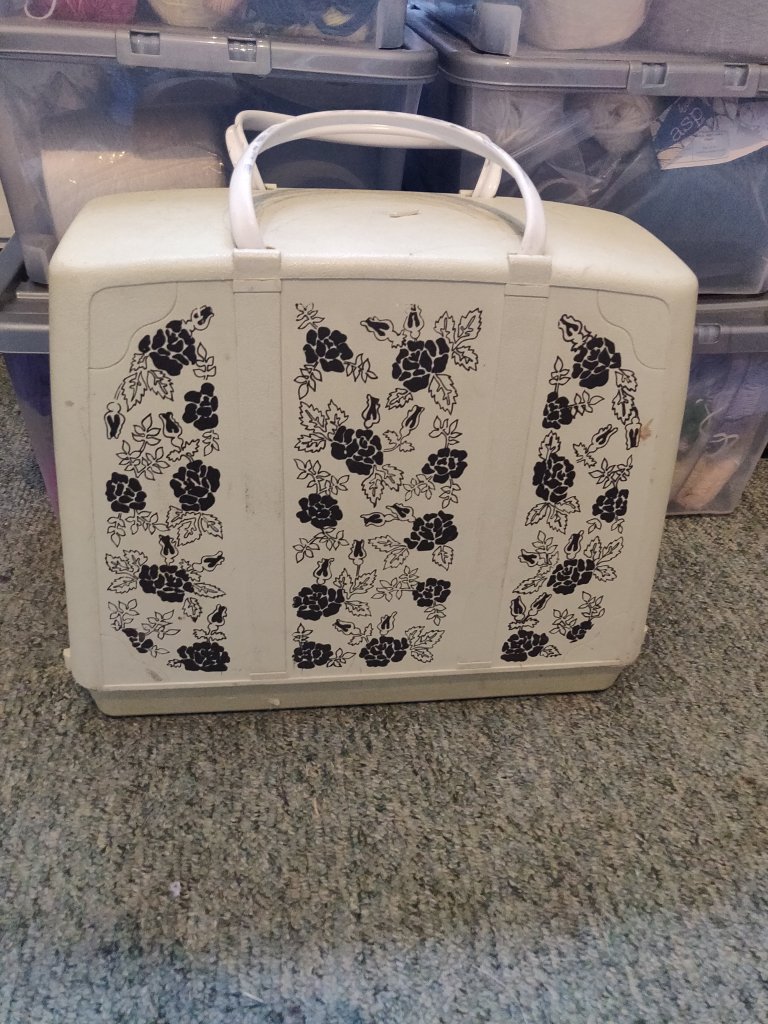
Going back to the bobbin and case. The machine has a side facing bobbin in a vertical shuttle that is accessed from the top, so it’s not as easy to get to as a front loading one. Because the bottom case in which the machine suits is degraded and the plastic hinges have broken, the machine has dropped below the level of the case-edge, making it hard to reach the bobbin. I’ve stuck some shims in the sides of the bottom case which have raised the machine bed so that the bobbin plate will now side open. This also means the bed extension will now for correctly. The machine is in one of those classic Jones and Brother flowery carry-cases and although the bottom case plastic is a bit fragile, this seems reasonably sound.
Unlike the Bernina the Jones has adjustable pressure on its presser foot which takes a bit of getting used to. Now I’ve got it sewing it’s working fine.
What’s nice is that the feed dogs will drop for free embroidery if needed. It has good stitch length and a nice wide zigzag, so does the face mask job perfectly.
Having got it sorted out I prefer to keep the Jones threaded for the masks and my Bernina for my personal sewing. OK, I’ll admit it, I’m a machine nerd!
I think the Jones is also a bit of a consolation prize to myself; I’ve bought myself a vintage Singer slant shank machine which I’m really looking forward to getting, but I can’t collect it because of Covid.
The Jones is a great everyday all-purpose robust machine. I do get fed up with those people on eBay who are selling old machines as ‘heavy-duty’ and ‘semi industrial’. There are industrial or domestic sewing machines, but none that I know of were ever sold originally as ‘semi-industrial’. I agree that some modern machines are a load of rubbish, plastic and not really got for purpose, not that only a few – believe me I have seen some in the course of helping people with their machines.
I’ve always preferred older machines, having owned a hand cracked Singer and a treadle one (I am filled with regret that I didn’t have the storage to keeping these), an Elna Supermatic (why oh why did I get rid of that?), a Singer Touch and Sew, and then a Bernina 730 (still got that one) and an Elna TS (had to go for lack of storage again).
Even the Touch and Sew would sew through loads of fabric, and I did like the pattern cams of that and the Supermatic. I think the slant needle slant shank machine I have just acquired probably won’t go through that many layers of fabric because the needle may possibly deflect? I will have to wait and see!
So now it’s back to my sewing.
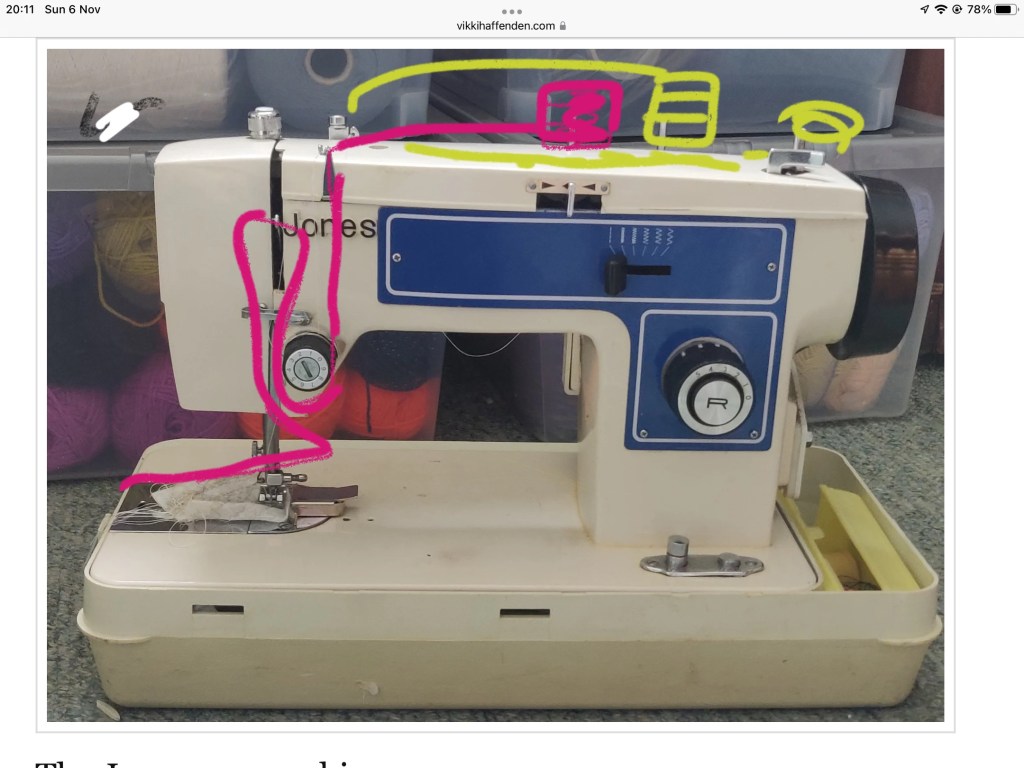
Someone has asked how to thread the machine, but as I no longer have the machine I have drawn onto the photo. Also see my post about adjusting the presser foot pressure. Search ‘Jones’ at the top of the page to find the post. I do hope this is helpful.
How to thread the machine . Pink is the top needle thread. Needle threads sideways. Yellow is the bobbin.



 Vikki Haffenden