Old photo finds and what we learn and remember

My brother sent me photo of a photo he found of our Dad. It is such a lovely photo of him I felt it was worth spending a bit of time editing the rather hasty phone photo into a more attractive format.

I guess Dad was about 20 in this photo, and was wearing his signature tweed jacket even at that age. He fought in the Second World War, and was stationed in Hong Kong and captured when the Japanese overran it on Christmas day 1941. After being kept prisoner in Shamshuipo Camp he was sent to Shanghai in the following Autumn on the Lisbon Maru along with 1816 other prisoners.
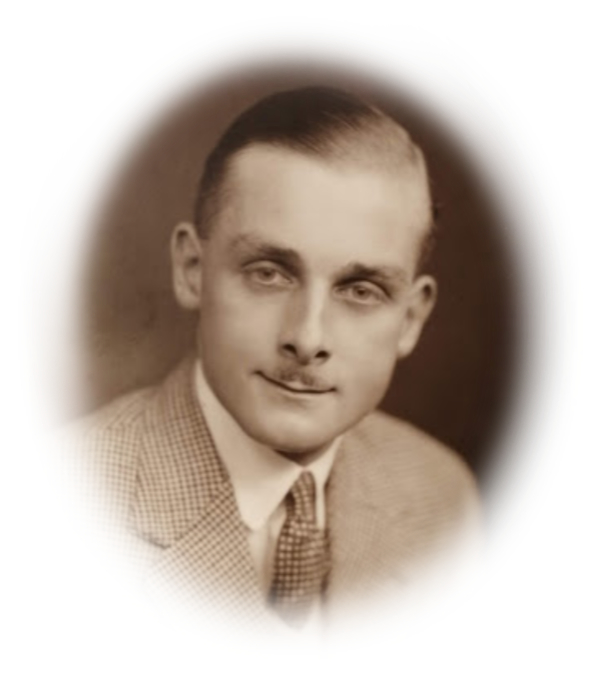
Major ‘Pip’ Bucke

The Lisbon Maru was torpedoed by U.S.S. Grouper on 30th September 1942. This mistaken was apparently because the ship did not display any indication of carrying POWs – it would have been normal practise to displayed some sign to prevent such disasters. Of these men, only 973 survived the sinking of the ship – 46% (843) of the prisoners died by some means or other.

Eventually the Japanese soldiers were transferred to another ship (taking all the lifeboats with them) and the prisoners battened down into the holds, and effectively left to drown. It was only their own resourcefulness that enabled some to escape, but a skeleton crew of guards shot those who tried to leave the hold until enough emerged to overpower them. Those prisoners who entered the water were not picked up by the Japanese naval boats until much, much later. This was after many had drowned, some pushed back into the water even if they managed to get on to a military boat, and some seemed to have been shot at.

Meanwhile local fishermen realised that the men in the water were POWs and set out to help them. Japanese fishermen’s families apparently treated those they rescued (around 200) with kindness and even arranged for three to escape.

Even after the Japanese navy reluctantly rescued the remaining POWs, they did not give them succour, but left the wet, exhausted and sick men on the deck so that some died of exposure. Luckily my Dad survived, and was shipped to Shanghai, and then to a prison camp where he spent the remainder of the war in the East. He kept some records, and wrote about his ordeal from memory, and it is a harrowing read. He did not talk to us about it, and it is only since his death that we have learned much of his story.

Like most survivors of such horrors, he was physically and emotionally scarred for the rest of his life.

References:

http://www.theroyalscots.co.uk/lisbon-maru/

https://www.cofepow.org.uk/hell-ships-casualties-list/lisbon-maru-full-list

The Sinking of the Lisbon Maru, Tony Baham
bbc lison maru

Prepping for online natural dye workshop on Friday

I’m practising my red cabbage dye recipes for Friday because if anything can go wrong it will. At least if I test the recipes it’s only likely to be the technology that glitches.

Red cabbage dye bath
Red cabbage with vinegar
A weak madder bath for a pale peach

Ha ha!


Friday p.m. update
Wow, I think that went well! My camera man was brilliant, he cued me to face one of the 3 cameras he was using according to the best view, and even made me a coffee!

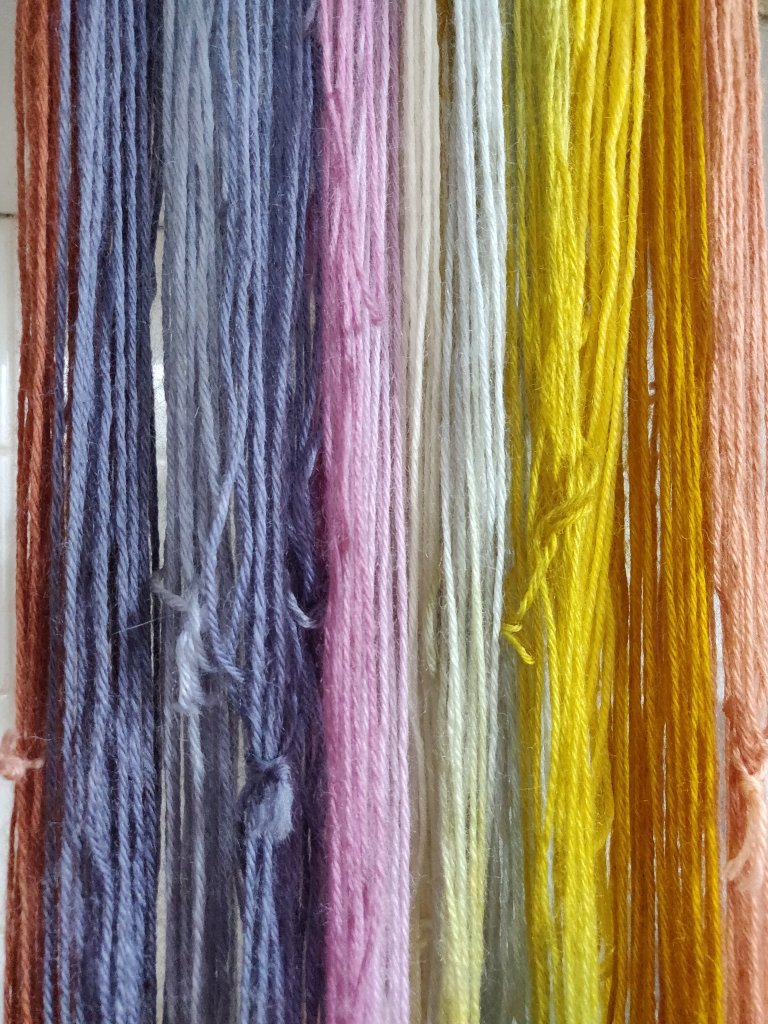
We started with onion skins because as a substantive dye everyone could use these even if they had not mordanted their wool yarn. Some people used red skins only and got an olivey green whilst I used mixed and got a dark gold. Interestingly I popped a 50/50 acrylic wool skein in and got a brilliant yellow.

Second dye was another substantive material – avocado skins and pits. Some people mixed them, but I kept then separate. I soaked both overnight, in fact the pits were so hard I had to cook them overnight on a slow cooker in order to soften then enough to be able to chop them up and release more colour as they continued to cook this morning.

I added ammonia to the avocado skins as they soaked. I read somewhere that this develops the colour well – but maybe that was pits? The colour from the skins was a yellowy mid peach, and from the pits was a pinky deep peach.

Dyes four, five and six were red cabbage. But itself as for, but five had ammonia added to make it green whilst six had citric acid added to make it lilacy pink.

I have never had such great colours from cabbage before! Stunning, if fugitive as they will fade over time. I chopped half a large cabbage very small, layered it with 4 tablespoons of salt and covered it with water. Then cooked it to the boil and left it to soak overnight. Fab results!

The dark blues are amazing! See below…

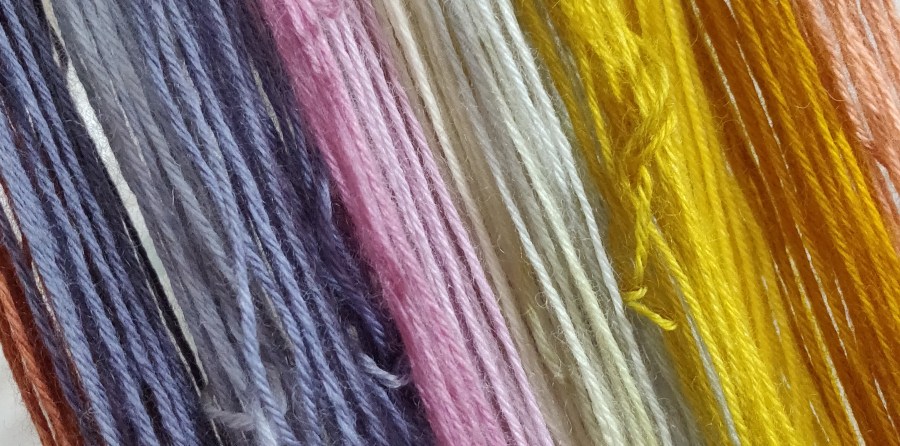
Left to right: avocado pits, red cabbage X3, red cabbage and ammonia, red cabbage and vinegar, dip dyed blue red cabbage, onionskin and turmeric X2, onionskin 50/50 wool/acrylic, onion skins, avocado skins.,

I’m now soaking some fleece in mordant to use up the red cabbage baths tomorrow. Plus have dyed 4 hanks of handspun wool/alpaca in the onionskin and avocado baths.

Black bean dyeing

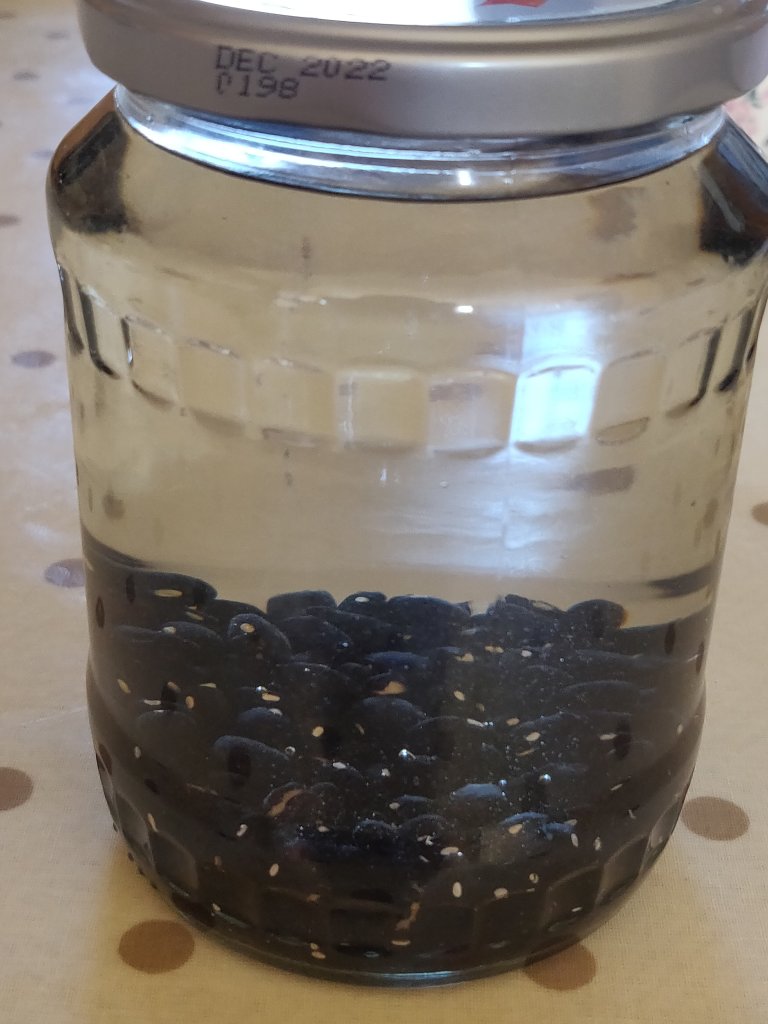
I’ve just put the beans to dial in cool water in a large jar. I’ve used 100g beans so will see what weight of yarn I can dye with these. Now I have to wait for 24 hours, shaking it gently now and then.

Starting point, 100g black beans in water

It’s 24 hours later, and time to get the due working. Of course I’d overlooked the problem of getting the liquid or without disturbing the beans. Instructions said to stop shaking the beans at least an hour before adding the fibre, so I did that. Then to remove the liquid carefully as any bean debris will turn the dye brown. However, it’s not easy to get the liquid out without the beans when you’ve stupidly put it in a narrow-ish mouthed jar!

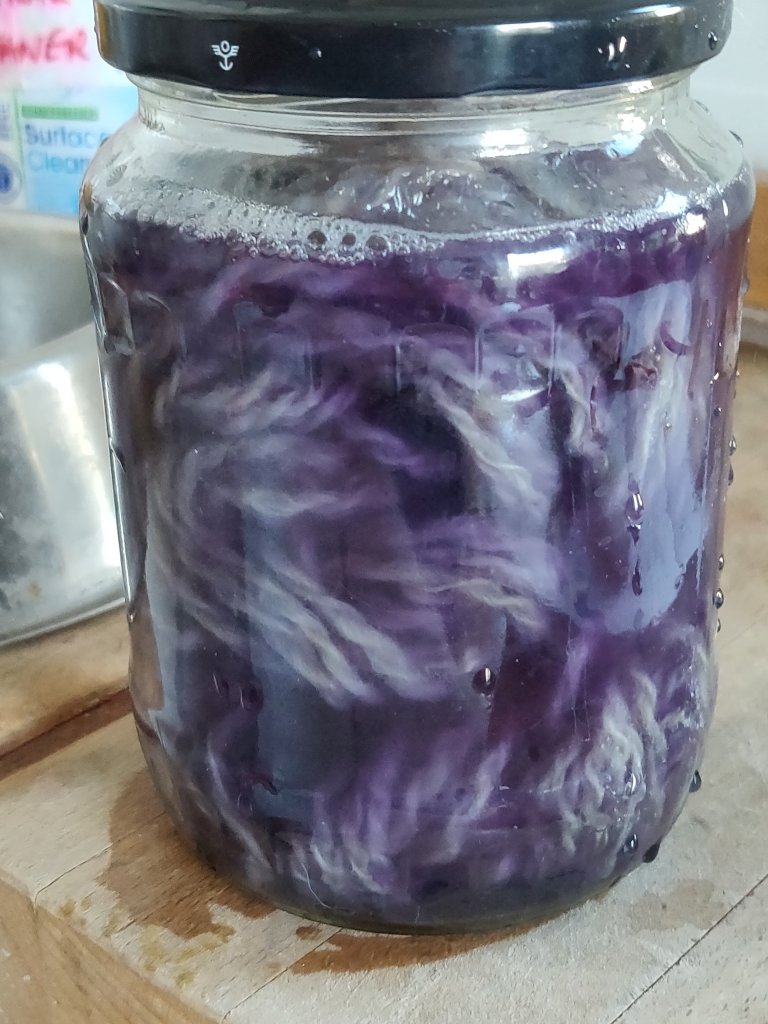
Luckily I found a small ladle in the kitchen that just fitted, so managed to get some out. Not sure if it’s enough. I’ve added plenty of salt and enough water to cover the yarn and am now waiting…

20g of hand spun wool now marinading in the black bean liquid

It did not work sadly. But I may try again with more means this time.

Dodgy iPhone connection on lightning charger lead

I replaced my iPhone 5s with an Android phone about 18 months ago. One of the reasons was that the charging was acting up. I tried it with two other leads, but it seemed to be the lightning port that was faulty. Of course there were other reasons – battery running out fast, storage limited, camera OK but not brilliant, apps getting slow and becoming un-updateable. Don’t start me about the iPad that is also getting totally unuseable because of these issues!

Anyway, Covid came along and I needed a webcam that had good resolution and zoom. I found out that I could use the old iPhone for this, and downloaded the IVCam app to my PC and iPhone on wifi. The app wasn’t brilliant, but I paid for the full version and updates have improved it hugely recently. The nice thing is you can use it wifi or with a lead. Wifi meant that the battery remained a problem, but on the lead it was excellent – except – the connection kept failing due to that dodgy port.

I did a bit of internet browsing and found a topic on a forum somewhere about this issue. The writer suggested using a wooden toothpick to clean any dust out of the port. Really? I thought, then I remembered the fluff and dust in my handbag and thought – yes, really, lets give it a go!

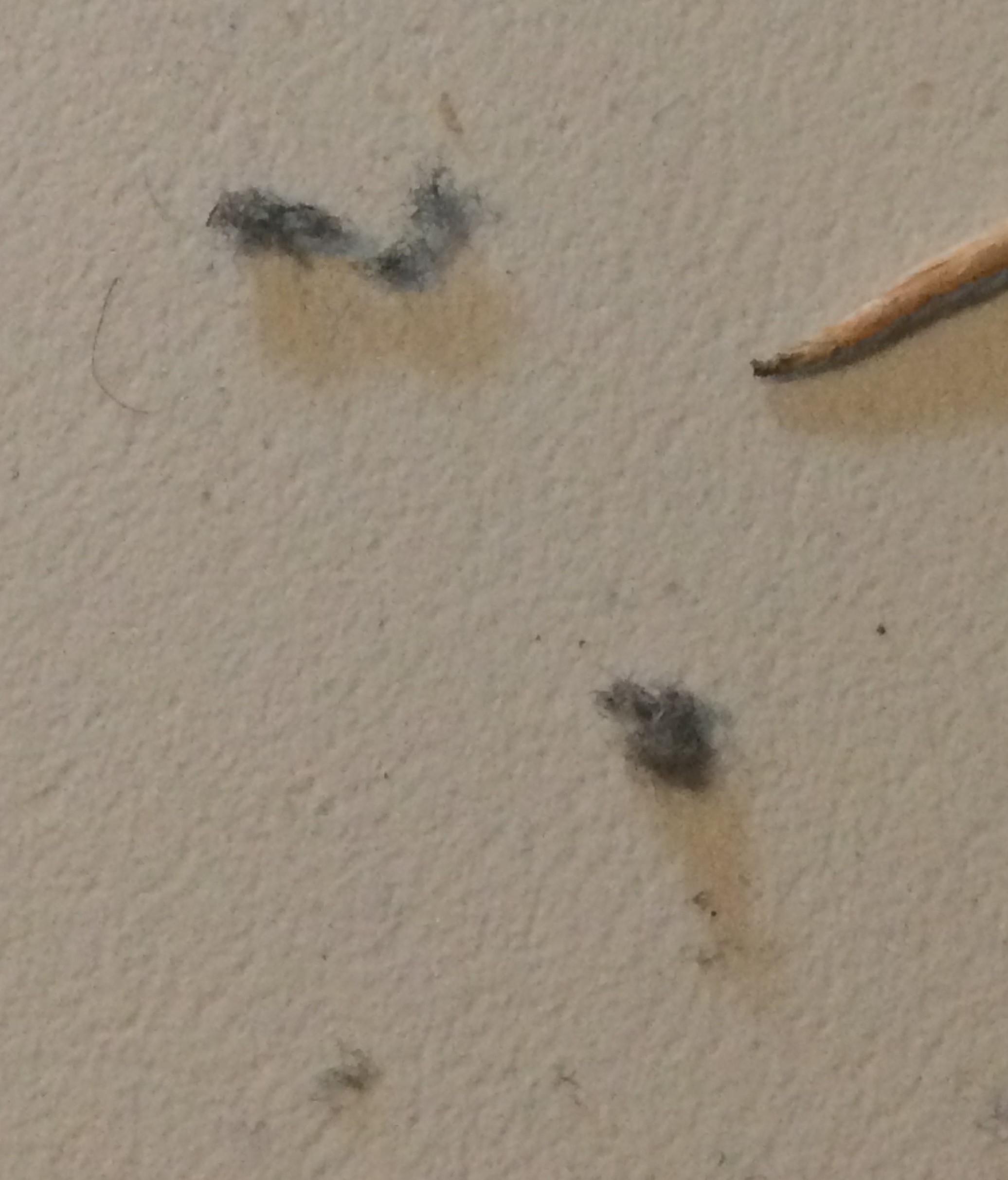
So I did, and its worked! Loads of fluff and dust came out and now the lead fits snuggly and securely in the port – its rare to loose the connection – and usually due to me tugging the lead. See how much fluff came out in the photo below. I still prefer the Android phone for use as a phone, but am chuffed to have found a use for my now redundant iPhone and to have solved the problem with the lightning port.

Only use a soft wooden toothpick, but it was certainly worth it for me. I guess because the lightning port doesn’t have a central bit you can’t really hurt it by poking something soft in there?

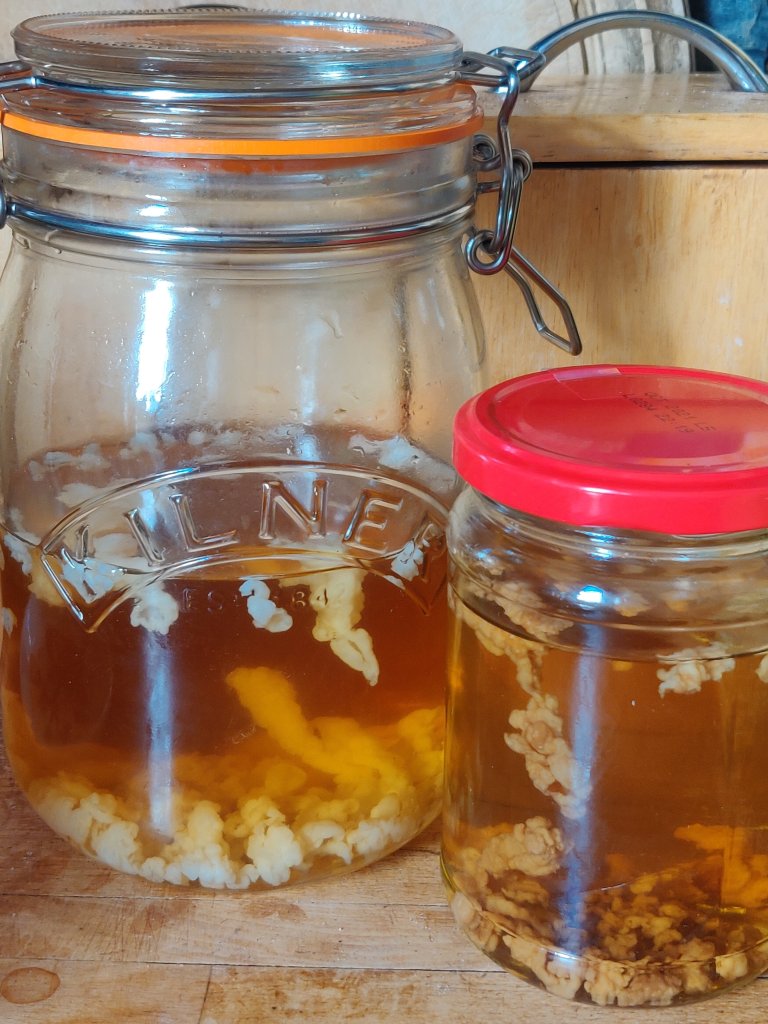
Water kefir experiment

Having found I had excess milk kefir grains I thought I’d see if they would convert to water grains. After a bit of reading up I decided to give it a try.

I put the excess grains (2 tbsp?) In a jar and added about 1.5 cups of tap water and 1/8 cup Demerara sugar, oh and a tiny pinch of salt. That seemed about right based on my reading.

I left them, with occasional swirls, for 4 days on the worktop. Then I drained the grains, re made the sugar solution and did it again, but for 3 days. And so it went on until it was down to 24 hours.

I started a second batch the day after, as the first ones went a weird brown colour. Both seem OK though.

The first, smaller jar had started to go cloudy, so I think I need a bigger jar and more solution.

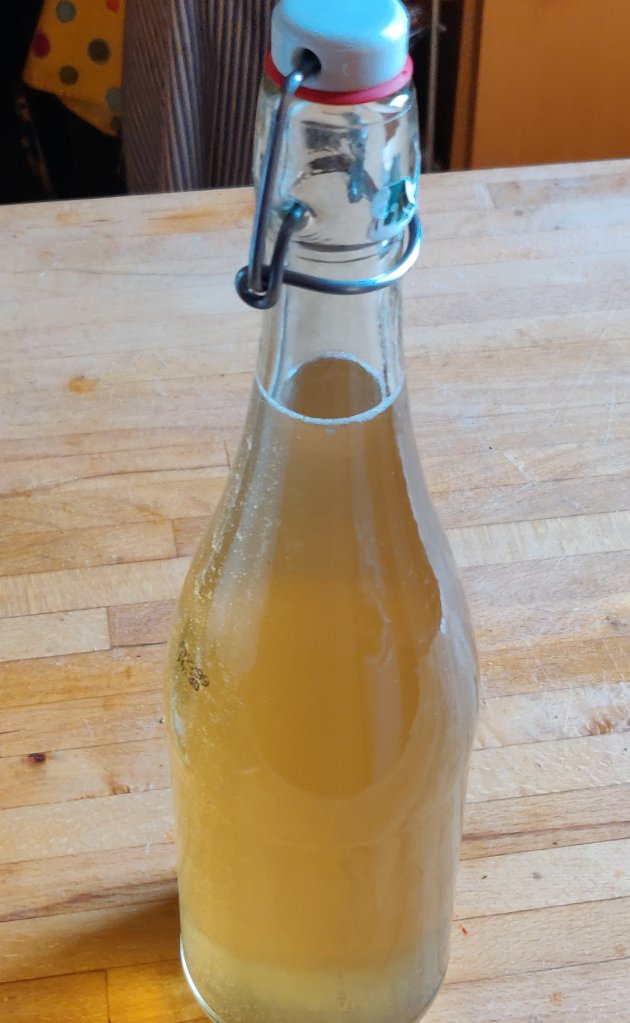
I started the second, bigger jar of as flavoured ‘pop’. I strained the liquid from larger jar and put the same amount of cold ginger and lemon tea into a Grolsch bottle. It’s sitting fermenting right now. Hope it works. I tasted it before sealing the bottle and it was good but not bubbly.

Let’s hope it tastes good in a day or so!

Picking fleece for a marathon carding session

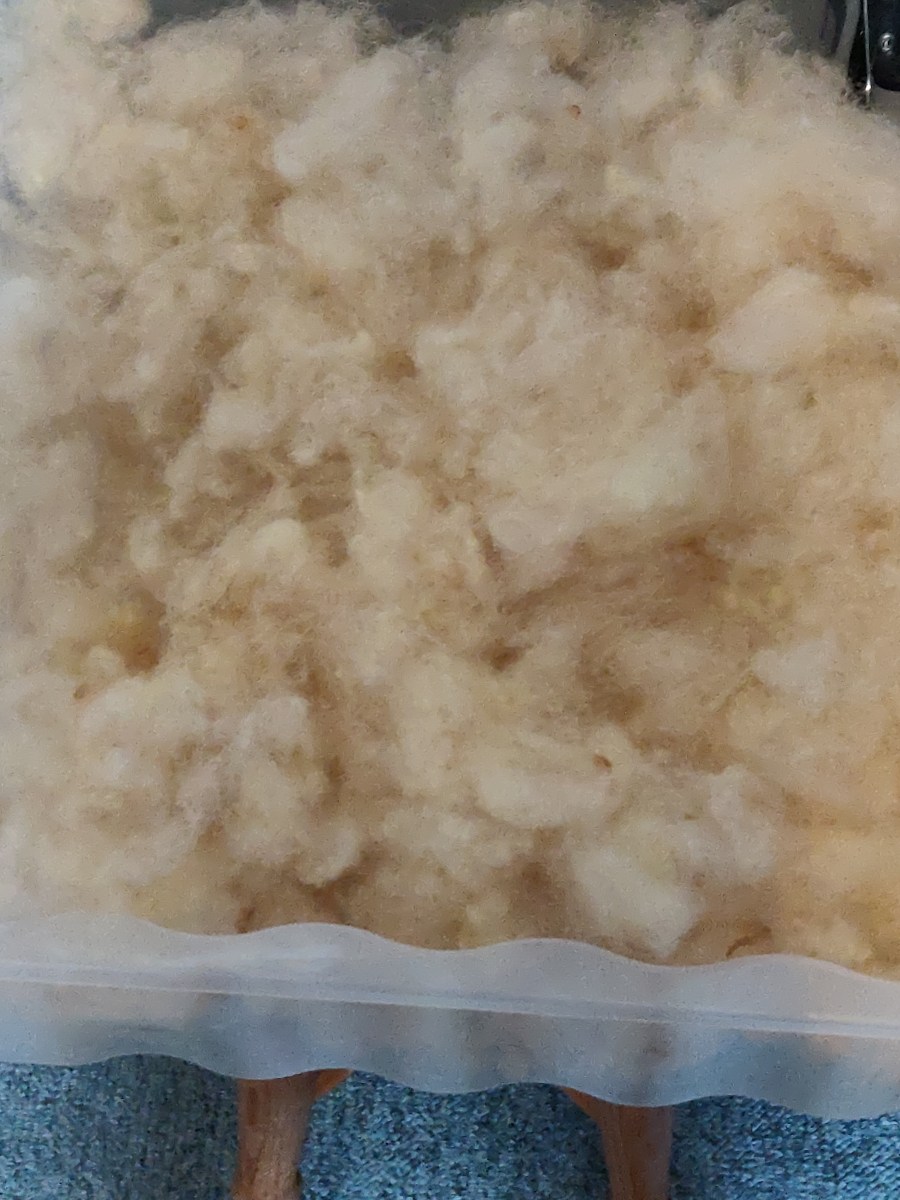
I have a large sack of Texel fleece that had been making me feel guilty for a while. It’s not the most soft of fleece so I decided to blend it with some Alpaca that has also been lurking in the cupboard. Unfortunately the Alpaca (from an animal called Kiki), has quite a bit of VM in it, but it is deliciously soft.

Picking and hand picking got a lot of the VM out, but sadly not everything. I carded both the Texel and Alpaca separately and then split the batts and layered them up in alternate layers; one wool, one Alpaca etc, and put them back in smaller batches through the drum carder.

As my carder is quite coarse I do a second run through for most fibres. So I did it for these batts. I think I probably should have done a third run, but I was afraid of over-carding the fibres and decided they had blended well enough. The result is a little uneven!

I’ve spun two small samples, one thick singles sort of semi-woollen and the other long draw woollen spun.

I’m now perfecting, (ha ha) my long draw technique with several hundred grams of comb waste that I have carded up. Hopefully by the time I get through that I will be proficient enough to tackle long draw spinning that large amount of Texel/Alpaca fibre!

I’ve hand knitted small samples of the both yarns The thicker spun on 6mm needles and the long-draw spun on 5mm needles

Left: Long draw spun yarn hand knitted on 5mm . Right: Thicker semi-woolen spun hand knittedon 6mm needles.